A Stranger Sat Beside Me at My Brother’s Wedding—Weeks Later, I Learned Who He Really Was

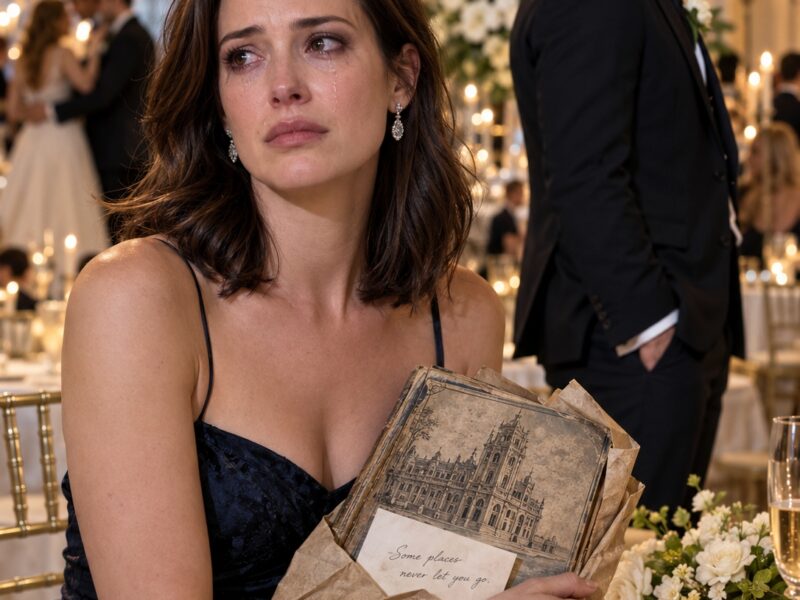
The night my younger brother got married, I was six weeks out from being left by the man I thought I would grow old with, seven months into the worst professional failure of my career, and exactly four minutes into pretending I was perfectly fine.
Then a stranger crossed the reception hall, pulled out the empty chair beside me, and said, “You’ve been sitting out two songs.”
I should have told him I wanted to be alone.
Instead, I looked up at him and said, “It’s an open bar. I’m thinking.”
“Fair,” he said.
And sat down.
What I didn’t know was that the quiet man beside me owned part of the building we were sitting in.
I didn’t know his family’s name was attached to one of the most powerful private preservation funds in Atlantic Canada.
I didn’t know that within weeks he would obtain a public copy of the failed proposal that had nearly broken me, send an out-of-print architecture book anonymously to my office, lead me toward twelve forgotten photographs that could change the historical record of a building, and force me to ask a question I had been avoiding since December.
Was I actually rebuilding my life?
Or had I simply become very good at standing still inside the ruins?
At that moment, though, he was only a stranger.
And I was only a woman holding a glass of wine she had not touched.
The table nearest the windows had four chairs. Three had been occupied most of the evening by people I barely knew—friends of Sylvie’s cousins, maybe, or cousins of friends. Wedding relationships. The sort of people you spoke to for ninety minutes and then never saw again.
They had gone to dance.
I remained.
Across the ballroom, my brother Owen stood beneath a chandelier with his new wife’s arm around his waist while the photographer moved around them in careful circles. Sylvie was laughing at something he had whispered. Owen was looking at her like he had forgotten there were two hundred people in the room.
It was beautiful.
That was part of the problem.
The entire room looked like evidence that life worked.
Candles burned low inside glass cylinders. White roses leaned over the edges of silver bowls. Older couples stood close on the dance floor while younger people crowded near the bar, already louder than they had been during dinner. The band played something slow and forgiving.
Everything was warm.
Everything was full.
Everything seemed to say that if you made the right choices and loved someone long enough, eventually you arrived at a room like this.
I pressed my thumbnail into the side of my middle finger until a pale crescent appeared.
It was an old habit.
I had done it in university libraries when I couldn’t solve a structural equation, on job sites while engineers argued over load paths, during client meetings when I knew someone was about to make an expensive mistake and was deciding how politely to tell them.
I did it when I needed to think.
And that winter, I had needed to think almost constantly.
Six weeks earlier, on a Wednesday morning, I had moved out of the apartment Daniel and I shared on Barrington Street.
Three boxes.
Two suitcases.
One dying houseplant.
Eight years of my life reduced to what fit in the back of my car.
Daniel technically hadn’t thrown me out.
That almost made it worse.
He had said I could stay until I found somewhere.
He had said there was no rush.
He had said he wanted to make this “as kind as possible.”
There are phrases you don’t realize you hate until someone uses them to dismantle your life.
We’ve been growing apart was one.
As kind as possible was another.
I had been thirty-six years old, standing in our kitchen with my work bag still over one shoulder, listening to a man I had slept beside for eight years explain the end of us like he was presenting a revised project schedule.
There had been no affair.
No thrown plates.
No screaming.
No secret child.
Nothing dramatic enough to hate properly.
Only a silence that had apparently been growing inside him while I was too busy working to notice.
Or while he was too afraid to tell me.
Depending on which version I was willing to believe.
The conversation had begun because I came home with bad news.
For eleven months, I had been working on the largest proposal of my career.
The old Fredericton Post Office had been vacant for six years behind a chain-link fence, deteriorating one wet season at a time. The building was mid-nineteenth century, structurally complicated, historically significant, and badly misunderstood by almost everyone who had assessed it.
I loved it immediately.
Restoration architecture does that to certain people.
We look at a building everyone else calls ruined and begin asking what is still there.
Not what is broken.
What remains.
I spent eleven months studying previous alterations, tracing structural loads, comparing mortar samples, reviewing drainage records, looking through historic plans and incomplete photographs. I built a rehabilitation strategy that could preserve the original masonry without turning the building into a museum version of itself.
My firm believed we had a real chance.
I believed it too.
Then the contract went to a Toronto firm that had existed for four years.
Their submission cost less.
Their timeline was shorter.
Their report was cleaner.
And, as I would learn much later, their technical analysis was substantially thinner than ours.
That night I told Daniel we had lost.
He put his hand over mine.
“I’m sorry.”
I remember thinking his hand felt cold.
Then he withdrew it.
“There’s something I need to tell you too.”
Three sentences later, eight years were over.
We’ve been growing apart.
I don’t think either of us has been happy for a long time.
Maybe we need to admit what this is.
I asked if there was someone else.
“No.”
I almost wished he had said yes.
At least betrayal had a shape.
Instead, he gave me absence.
How do you fight an absence?
How do you argue with a man who doesn’t accuse you of anything except no longer fitting inside the future he has imagined?
So I moved.
My mother thought Daniel couldn’t attend Owen’s wedding because of work.
That was what I had told her.
“The timing doesn’t work for him.”
She paused for exactly one second too long.
Then she said, “Of course.”
Nothing else.
My mother, Frances Elliot, had taught high school for thirty-one years. She could detect a lie delivered from the opposite end of a gymnasium.
Her decision not to ask was worse than interrogation.
At the wedding, she moved between tables in sensible shoes, talking brightly to relatives she had not seen in years. She did not once ask where Daniel was.
Neither did Owen.
The night before, during the rehearsal dinner, he had passed behind my chair and squeezed my shoulder.
That was all.
It was both the right thing and almost enough to make me cry into my soup.
Now, sitting alone near the windows, I watched him dance with his wife.
Then the first piano notes came.
I knew the piece before the second measure.
Chopin.
Nocturne in E-flat Major.
Opus 9, No. 2.
My father’s piece.
For one second, the reception hall disappeared.
I was nine years old again, sitting beside him on the bench of the secondhand upright piano in our front room in Truro while he showed me how to place my fingers.
“Not force,” he had said, guiding my hand.
“Weight.”
I had frowned.
“What’s the difference?”
He laughed quietly.
“Everything.”
He taught me four bars.
Only four.
I never learned the rest.
He played it at Christmases. Birthdays. My grandmother’s eightieth. Owen’s graduation. Random Sunday afternoons when my mother complained that dinner was getting cold.
Then, five years ago, he drove to a hardware store on a Saturday morning and never came home.
A cerebral aneurysm.
Fifty-nine years old.
No warning.
No goodbye.
For three years after he died, my mother kept the piano tuned even though no one played it.
Then the tuner told her the instrument needed more work than made sense.
She apologized to the piano before Owen helped move it into storage.
I had never listened to the Nocturne again.
Until my brother’s wedding.
The first notes hit me so unexpectedly that for several seconds I forgot to breathe.
Across the room, Owen saw me.
Our eyes met.
He gave me the smallest nod.
That was how I knew.
He had requested it.
Not for the room.
For Dad.
Maybe for me too.
I looked down at my wine because suddenly the candles had blurred.
That was when the stranger noticed me.
Two songs later, he crossed the ballroom.
He was tall, maybe late thirties, dressed in a dark suit that fit well without appearing designed to advertise how much it cost. His face was composed in a way I found difficult to read.
Not cold.
Not warm.
Attentive.
He moved like someone who rarely hurried because he rarely needed to.
“You’ve been sitting out two songs,” he said.
“It’s an open bar. I’m thinking.”
“Fair.”
He rested one hand on the empty chair beside me.
“Is this spoken for?”
“No.”
“May I?”
I looked at him more carefully.
He didn’t look like a man who needed permission to sit in an empty chair.
But he had asked anyway.
That mattered more than I understood at the time.
“Go ahead.”
He sat at an angle rather than facing me directly, joining the table without occupying it.
He didn’t introduce himself.
I didn’t ask.
For almost a minute neither of us spoke.
Strangely, the silence wasn’t awkward.
It was the first silence I had experienced in weeks that didn’t demand anything from me.
“My brother got married twenty minutes ago,” I eventually said.
Immediately, I wondered why.
“I know.”
“You were at the ceremony?”
“At the door.”
I glanced at him.
“I don’t remember you from the guest list.”
“You wouldn’t.”
The corner of his mouth moved.
“I was checking on the venue.”
“On a Saturday night?”
“We do walkthroughs.”
“We?”
A tiny pause.
“The building.”
He reached toward the place card in the center of the table and rotated it slightly with one finger.
Then he seemed to realize he had said too much.
I noticed.
Architects notice language the way we notice crooked lintels.
“You work here?” I asked.
“I look after it.”
That was his answer.
Not I manage it.
Not I own it.
I look after it.
Before I could ask more, he glanced toward the band.
“I owe you an apology.”
“For what?”
“The first song in the slow set.”
Every muscle in my hand went still around the stem of the wineglass.
“The Chopin?”
He nodded.
“I asked the band leader to follow the family’s request, but I didn’t know which piece they had chosen. When I saw you…”
He stopped.
He didn’t finish the sentence.
He didn’t need to.
“It wasn’t wrong,” I said.
He waited.
“It was both things.”
Painful and beautiful.
Cruel and kind.
Loss and love.
Some sentences only make sense to people who have buried someone.
He seemed to understand.
Most people, when confronted with grief, move closer. They touch your hand. Lower their voice. Tilt their head into an expression designed to demonstrate sympathy.
He did none of that.
He gave me space.
After a while he said, “I should let you have your table.”
He started to stand.
“You can stay.”
He paused.
“The table isn’t really mine.”
So he stayed.
We sat through most of another song without speaking.
When it ended, he finally stood.
“Can I bring you anything from the bar before I go?”
“No, thank you.”
He nodded.
Then, before turning away, he looked at me directly.
“I’m glad you stayed in.”
I had no idea what he meant.
Stayed in the room?
At the wedding?
In Halifax?
In my own life?
“So am I,” I said.
It was the first completely true thing I had said all evening.
Then he walked across the ballroom and disappeared through a door behind the stage that I had not noticed before.
Twenty minutes later, Owen dropped into the chair beside me.
His tie was loose. Sylvie’s lipstick was faintly visible on his cheek.
“You okay?”
“Yes.”
He looked at me.
I looked back.
He knew I was lying.
But Owen had always possessed the rare gift of knowing when he had asked enough.
“Okay,” he said.
Then he rested his shoulder against mine for a few seconds.
Neither of us mentioned Dad.
Neither of us needed to.
The next morning, I drove three hours home to Halifax.
The small towns along the highway passed in gray February light—post offices, churches, schools, hardware stores, houses built in periods I could identify almost without looking.
I had spent nine years learning how to read buildings.
Roof pitch.
Brick bond.
Window proportion.
Settlement cracks.
Later additions.
Repairs made carefully.
Repairs made cheaply.
Buildings always told you what had happened to them.
People were harder.
My new apartment looked exactly as I had left it.
Furniture that didn’t quite fit.
North-facing windows.
Too much silence.
The plant I had brought from Daniel’s apartment had lost two more leaves.
I stood in the kitchen staring at it.
“You and me both,” I said.
Then I unpacked.
I assumed I would never see the man from the wedding again.
Two weeks passed.
I went to work.
I completed a residential heritage assessment outside Wolfville.
I met my friend Ros for dinner on Thursday and did not tell her about the stranger because nothing had happened worth telling.
A man had sat beside me.
We had spoken.
He had left.
That was not a story.
Except I found myself thinking about one sentence.
I look after it.
During the first week, I searched the venue.
Professional curiosity, I told myself.
Pemberton Hall had been built in 1889, a Second Empire commercial building converted into a hotel and event property decades later. The restoration had happened in two phases. The second phase won a heritage preservation award.
I had read about it years ago.
The website described the history of the building extensively.
It did not clearly identify its current owner.
I closed the page.
Then on Tuesday morning of the third week, I walked into my office and found a parcel waiting on my drafting table.
Plain brown paper.
No return address.
Our receptionist, Melissa, appeared in my doorway.
“Someone dropped that off.”
“Courier?”
“A man.”
“What man?”
She shrugged.
“Tall. Dark coat. Very polite. Didn’t want a receipt.”
My stomach tightened.
I opened the package.
Inside was a book.
Not a new book.
A worn, withdrawn library copy of a 1994 volume on Canadian architecture. The old lending pocket was still glued inside the back cover. A faded library stamp marked the edges.
I turned to the title page.
There was a handwritten note.
Square letters.
Measured spacing.
Page 312.
Post offices of the Maritime Provinces.
The Halifax section has a footnote concerning the Fredericton building.
I thought you might want it.
No signature.
For several seconds, I simply stared.
Then I opened to page 312.
The footnote was there.
A short paragraph referenced uncertainty surrounding the Fredericton building’s construction date and cited a 1998 academic paper I had read once in university but had never returned to during the eleven-month proposal process.
I felt something cold move through me.
At first it was excitement.
Then suspicion.
How did he know?
I had never told the stranger what I did for a living.
I had never mentioned Fredericton.
I had barely told him anything at all.
I walked back to reception.
“The man who brought this. Are you sure you hadn’t seen him before?”
“No.”
“Did he say where he was from?”
“No.”
“Anything?”
Melissa thought.
“He asked if this was Norah Elliot’s desk.”
My grip tightened around the book.
“He knew my name.”
“Apparently.”
That Saturday, I walked six blocks to Pemberton Hall.
I wore my site-visit coat because I had no intention of pretending I had wandered in casually.
The mansard roof appeared before the rest of the building as I turned onto Hollis Street.
Even from across the road, I could tell the slate had been replaced properly.
Correct profile.
Correct tone.
Expensive.
Careful.
Someone had loved this building enough to refuse the easy version of restoration.
Inside, the lobby had the particular quiet of a hotel recovering from Friday night.
Original stone floors.
Pressed-tin ceiling.
Restored plaster molding.
Reproduction fixtures that respected the period without becoming theatrical.
A young man behind reception smiled.
“Can I help you?”
“I’m looking for whoever manages the building.”
“Mr. Garrison is in today.”
The name meant nothing for half a second.
Then something in my professional memory shifted.
Garrison.
“Your name?”
“Norah Elliot.”
He called upstairs.
A few minutes later, footsteps sounded along the corridor.
The man from the wedding appeared.
No suit this time.
Dark canvas jacket.
Gray shirt.
Keys clipped at his belt.
Yellow notepad tucked into one pocket.
Useful clothes.
He stopped when he saw me.
“You found it.”
“The footnote?”
“The building.”
“I’ve been in this building before.”
“I know.”
I stared at him.
“You know?”
“Your firm conducted a site visit here in 2019.”
“You looked up my firm.”
“Yes.”
There was no embarrassment in his answer.
Only accuracy.
“After?”
“After I looked up the Fredericton proposal.”
I felt heat move into my face.
“You looked up my proposal.”
“The committee process is public.”
“That isn’t what I asked.”
“No.”
He held my gaze.
“I requested the full decision file.”
I laughed once.
Not because anything was funny.
“You filed an information request over a proposal written by a woman you spoke to for twenty minutes at a wedding?”
“I filed a request concerning a preservation decision I thought was questionable.”
“And my proposal happened to be inside it?”
“Yes.”
“You expect me to believe that?”
“No.”
The answer stopped me.
“I expect you to decide what you believe after you’ve seen the documents.”
He reached into a folder on the hall table.
“The Toronto firm’s technical assessment was roughly a third as detailed as yours.”
My chest tightened.
“I didn’t come here for validation.”
“I know.”
“Then why send the book?”
He considered the question.
Not avoiding it.
Measuring it.
“The footnote you found has been cited incorrectly in at least three subsequent papers, including a paper used by one of the advisory members connected to the Fredericton process.”
I looked at him.
“You knew that?”
“I suspected it.”
“And you thought I should know.”
“I thought the person who spent eleven months on that proposal deserved to know.”
Eleven months.
The air seemed to change.
“How do you know I spent eleven months?”
“Document history.”
“You read the metadata.”
“Yes.”
“You are either extraordinarily thorough or deeply alarming.”
That almost made him smile.
“I’ve been told both.”
I folded my arms.
“You still haven’t told me your name.”
He was quiet.
Then he said, “Oliver Garrison.”
Everything inside me stopped.
The Garrison Heritage Fund was not obscure.
Not in my profession.
It was one of the largest private heritage preservation endowments in Atlantic Canada.
The Garrison name was attached to restored waterfront blocks, threatened nineteenth-century commercial buildings, church stabilization projects, archival programs and rural preservation initiatives.
And eight months earlier, I had applied to that fund for a research grant.
The application had been rejected.
“You’re that Garrison.”
“Yes.”
“The fund.”
“Yes.”
“You funded the second restoration phase here.”
“My father funded the first. I oversaw the second.”
“And you ‘look after’ the building.”
“Yes.”
“That is a spectacularly incomplete description.”
“I know.”
I stared at him.
Then another thought hit me.
“My grant application.”
His expression changed.
Not much.
Enough.
“You knew about it.”
“I learned about it in December.”
“It was rejected in November.”
“Yes.”
“By your fund.”
“By an independent selection committee.”
“But your fund.”
“Yes.”
The word sat heavily between us.
For weeks I had been trying to rebuild my professional confidence after two major rejections—the Fredericton contract and the research grant.
And now the stranger from my brother’s wedding was connected to one of them.
“Did you come over to me that night because you knew who I was?”
“No.”
Too fast to be rehearsed.
Too clean to hide behind.
“At the wedding,” he said, “I did not know your name.”
“Then why?”
“You had been sitting alone through two songs.”
“That’s it?”
“No.”
I waited.
He looked toward the lobby windows.
“When the Nocturne started, everyone else heard music. You looked like someone had opened a door you had spent years keeping shut.”
My throat tightened.
“I thought you might want company.”
“You didn’t even introduce yourself.”
“You didn’t ask.”
“That sounds convenient.”
“It probably is.”
He looked back at me.
“But the book came later.”
I said nothing.
“That,” he continued, “was not entirely professional.”
There it was.
One of the strangest admissions I had ever received.
Not romantic.
Not neutral.
Precise enough to be honest.
Ambiguous enough to scare me.
“I should go.”
“I understand.”
“Thank you for the book.”
“The footnote is worth pursuing.”
“I know.”
I turned toward the doors.
Then stopped.
“The grant program.”
“Yes?”
“The next rural documentation cycle. Is it still open?”
“Until March.”
“I’m resubmitting.”
Something changed in his face.
“I need to be clear, Norah. I cannot influence the result.”
“I know.”
“The committee is independent.”
“I heard you.”
“I mean it.”
I looked directly at him.
“So do I.”
Then I walked out.
Outside, cold harbor wind moved down Hollis Street and lifted my hair across my face.
For the first time in months, I wasn’t thinking about Daniel.
I was thinking about an incorrect footnote.
A rejected grant.
A man who could have sent me an expensive first edition and instead found a discarded library copy because the information mattered more than the gesture.
And the sentence not entirely professional.
That evening, I called Ros.
I told her everything while sitting on my kitchen floor with my back against the cabinets.
Ros had known me since our second year of university. She had seen me through five apartments, three serious relationships, one disastrous haircut, my father’s death, professional exams and every version of myself I had believed would be permanent.
When I finished, she was silent.
Then she said, “Oliver Garrison.”
“Yes.”
“The Oliver Garrison.”
“Yes.”
“He anonymously delivered an out-of-print architecture book to your office.”
“It was a discarded library copy.”
“That detail does not make this less intimate.”
“He looked up my proposal.”
“That detail makes it slightly more alarming.”
“He used a public information request.”
“Norah.”
“What?”
“You are defending the research methodology of a man who investigated you after meeting you once.”
“I am clarifying.”
“That is how you flirt.”
“I do not flirt by clarifying.”
Ros laughed.
“You absolutely do.”
I looked toward the windowsill.
My plant had not lost a leaf in three days.
“Are you going to see him again?” she asked.
“I don’t know.”
“That means yes.”
Six days later, a letter arrived.
An actual letter.
Cream paper.
Square handwriting.
Norah,
The 1998 paper referenced in the footnote is physically held in the Dalhousie architecture archive.
The archivist, Ms. Foron, discovered twelve original construction photographs of the Fredericton building two years ago. They do not appear in the published documentation.
I mentioned that you may contact her.
She has agreed to show them to you.
—O.
I read it twice.
Then I read it a third time.
I called the archive.
Ms. Foron agreed to meet me Thursday.
She was the sort of woman who had been doing one job for thirty years and therefore had no interest in impressing anyone with how much she knew.
She simply knew it.
The twelve photographs were kept inside a plain archival folder.
When she placed them in front of me, I forgot Oliver.
I forgot Daniel.
I forgot the grant.
For two hours, the world became structural framing.
One photograph showed the staircase tower during construction with enough clarity to answer a question that had bothered me for almost a year.
Another showed drainage conditions along the eastern foundation.
A third showed a framing relationship that had been described incorrectly in every later set of renovation drawings.
I leaned closer.
My pulse quickened.
“Oh my God.”
Ms. Foron looked over.
“You see it?”
“Yes.”
“The others didn’t.”
“Who?”
“Two researchers. An engineer.”
I placed the photographs side by side.
“They were looking at the crack.”
“And you?”
“I’m looking at what existed before the crack.”
She smiled.
There it was.
The entire problem.
The stress fracturing on the east wall was not random settlement.
It came from a specific structural relationship established during original construction and worsened by later alterations.
I knew why the wall was failing.
More importantly, I knew how to stabilize it without destroying the historical fabric.
Outside the library, I stood on the pavement with my notebook against my chest.
Then I texted Ros.
The photographs exist.
Twelve.
I know what is wrong with the east wall.
I know how to fix it.
Her reply came immediately.
The building or your life?
I laughed out loud.
That evening I wrote to Oliver.
Ms. Foron found them.
They answer three questions I had been treating as unanswerable.
I don’t yet know what this means for the larger project.
I do know what it means for the east wall.
Thank you.
—N.
Four days later his answer arrived.
Norah,
Ms. Foron has been trying to get someone interested in those photographs for two years.
I am glad you were the person who listened.
What are you doing Thursday at six?
I stared at the last line.
Then I wrote back.
Working.
What are you suggesting?
His answer:
There is a place on the waterfront called Aldo’s.
Small.
Good chowder.
If you have never been, go.
If you have, go again.
I had been.
I went again.
Oliver was already sitting at a corner table when I arrived.
He stood when I approached.
No performance.
No exaggerated charm.
Just habit.
That was one of the first things I began noticing about him.
He did not seem interested in being impressive.
Which was inconvenient because his lack of interest made him more so.
We ordered chowder.
He asked about the photographs.
And listened.
Really listened.
Not the version where someone waits for enough silence to insert their own story.
He asked questions about the staircase framing, the drainage pattern, the chronology of the east wall alterations.
Eventually I said, “I’m considering submitting directly to the provincial heritage board.”
“As an independent research contribution?”
“Yes.”
“That’s the right move.”
“My firm may not love it.”
“Why?”
“They’ll see it as a lateral project.”
“They should see it as significant archival documentation.”
“They may not.”
“Then they’ll be wrong.”
There was no aggression in his voice.
Only certainty.
I watched him.
“You’re very comfortable deciding committees are wrong.”
“I’ve spent enough time around committees.”
“That sounded almost emotional.”
“It was.”
I smiled despite myself.
Then I asked the question that had been sitting between us.
“How many buildings do you own?”
His expression shifted.
“Personally or through the fund?”
“That answer is already irritating.”
He almost smiled.
“Several.”
“How many?”
“Do you want the list tonight?”
I considered it.
“No.”
“All right.”
And he let it go.
No explanation.
No defense.
I was starting to understand that when Oliver asked a question and received an answer, he treated the answer as information rather than the beginning of a negotiation.
Later, he asked about the Nocturne.
“Did you know your brother had requested it?”
“No.”
I told him about my father.
The piano.
The four bars.
The hardware store.
The phone call.
My mother keeping the instrument tuned for three years after he died.
I had not told the whole story to anyone since December.
When I finished, Oliver put down his fork.
He did not say I’m sorry.
Instead he said, “I’m glad Owen asked them to play it.”
“I wasn’t.”
He waited.
“Then I was.”
“Yes,” he said.
As if that contradiction required no explanation.
He walked me home afterward.
At my door, he stopped.
“May I write to you again?”
I looked at him.
“You may.”
He nodded.
Then walked back toward the waterfront.
I stood inside my doorway after he left, listening to my own apartment.
Something about the silence had changed.
Not disappeared.
Changed.
His letters arrived every few days.
Short.
Specific.
The engineer reviewing your east-wall notes used the word meticulous. From him, this is essentially uncontrolled enthusiasm.
Another:
There is an abandoned nineteenth-century schoolhouse in Pictou County that appears not to have been properly assessed. I am not suggesting anything. I am merely informing you that it exists.
Another:
My assistant gives me a tin of biscuits every Christmas.
The current tin has been sitting unopened on my desk for four months.
Give me one reason to open it.
I wrote back:
Open it on the day you finally do something you have been postponing.
You’ll know what.
Three weeks passed.
I worked on the heritage-board submission every Sunday morning at my kitchen table.
The twelve photographs covered one end.
The old architecture book sat beside my elbow.
My plant grew two new leaves.
I noticed.
I pretended I didn’t.
Then Ros walked into my office one Thursday with her laptop already open.
“That man is not a building manager.”
“I know.”
“No. I mean you do not know.”
She turned the screen toward me.
A local business article identified Oliver as chair of the Garrison Heritage Fund and a major stakeholder in multiple preservation properties throughout Atlantic Canada.
Pemberton Hall.
Lunenburg.
Saint John.
Others.
I read it twice.
Something unpleasant moved under my ribs.
“He told me he looks after Pemberton.”
“He technically does.”
“He chairs the entire fund.”
“Apparently.”
“He didn’t say.”
Ros closed the laptop halfway.
“Did you ask?”
That stopped me.
No.
I hadn’t.
But suddenly that didn’t feel important enough.
I put on my coat.
“Where are you going?”
“To ask now.”
At Pemberton, the receptionist looked up before I reached the desk.
“Mr. Garrison is on the third floor.”
“I didn’t ask.”
“He said if you came in, you could go straight up.”
Of course he had.
His office door was open.
Oliver stood at the window overlooking Hollis Street.
He turned when he heard me.
He took one look at my face and waited.
“You’re chair of the fund.”
“Yes.”
“Not simply connected to it.”
“No.”
“You run it.”
“I chair it.”
“That distinction is not helping.”
“I didn’t think it would.”
“You let me believe you were basically a building manager.”
“I said I look after Pemberton.”
“That is like the president of a bank saying he checks the locks.”
A flicker appeared at the corner of his mouth, then disappeared when he saw I wasn’t joking.
“I should have told you more.”
“Yes.”
He put both hands in his pockets.
“I have been chair of the fund since I was twenty-eight.”
“And?”
“And for seven years, it has been the first thing almost everyone learns about me.”
I said nothing.
“When I sat down beside you at the wedding, you didn’t know.”
“You could have told me.”
“Yes.”
“Why didn’t you?”
He looked down briefly.
Then back at me.
“Because for twenty minutes I wanted to be a man who cared about an old building, not a man whose family name was attached to it.”
The anger inside me shifted.
Not gone.
Shifted.
“My grant was rejected by your organization.”
“I know.”
“You knew that when you sent me the book.”
“Yes.”
“You knew it when we had dinner.”
“Yes.”
“And you didn’t think that mattered?”
“I thought it mattered enough that I was afraid telling you would make everything else look transactional.”
“And hiding it did what?”
His jaw tightened slightly.
“That was my mistake.”
I hadn’t expected him to say that.
No qualification.
No defense.
Just the sentence.
I folded my arms.
“The Fredericton submission I’m writing. Does your fund have any influence over the provincial board?”
“No.”
“Any informal connection?”
“People know one another professionally, but I hold no seat, no voting role and no advisory authority over your submission.”
“You’re certain?”
“Yes.”
“What about my new grant application?”
“The research-grant committee remains independent.”
“But you chair the organization.”
“Yes.”
I looked at him for a long time.
“I need a few days.”
“All right.”
He didn’t move toward me.
Didn’t ask when he would hear from me.
Didn’t say don’t do this.
He gave me exactly what I asked for.
A few days.
I walked home furious.
Then confused.
Then furious at myself for being confused.
At the kitchen table, I laid out facts the way I would in a structural assessment.
Oliver had approached me before he knew my identity.
Fact.
He had hidden the extent of his position.
Fact.
He had accessed public records related to my work.
Fact.
He had not altered those records.
Fact.
He had pointed me toward a legitimate archival source.
Fact.
He had never offered money.
Never offered a contract.
Never suggested influence.
Never implied my professional future depended on him.
Fact.
The rejection from his fund had happened before we met.
Fact.
The decision had been made by an independent committee.
Fact.
He had told me my original application should have been funded.
Potential conflict.
But when I stripped away fear, there was something else.
The book.
Ms. Foron.
The letters.
The way he had listened.
None of it felt like a powerful man arranging gratitude.
It felt like a meticulous man paying attention.
That difference mattered.
Four days later, I mailed him a postcard showing the Halifax waterfront in 1892.
On the back I wrote:
The room is the right shape.
I’ll come Saturday.
When I walked into Pemberton, Oliver was standing in the east corridor with rolled drawings under one arm.
He looked up.
A quiet change moved through his face.
No dramatic smile.
Just relief.
“I opened the biscuits,” he said.
I stopped.
“When?”
“Wednesday.”
“What did you finally do?”
“Changed a governance rule I should have addressed two years ago.”
“And the biscuits?”
“Fine.”
“That sounds disappointing.”
“The meeting was better.”
I almost laughed.
We spent the morning walking through the building.
He showed me iron brackets, window replacements, plaster repairs and one third-floor frame that had been reconstructed in the 1990s with wood that was technically acceptable and aesthetically wrong.
I touched it.
“Too smooth.”
“Yes.”
“Wrong grain.”
“Yes.”
“Why haven’t you replaced it?”
“Because being annoyed is not conservation justification.”
“That is the first sensible thing you’ve said all morning.”
He looked at me.
“I’ve said eleven words.”
“Exactly.”
On the ground floor we stopped beside a thin diagonal crack.
“That’s not settlement,” I said.
“I know.”
“It’s stress transferred from the staircase-tower foundation.”
“I have had three engineers tell me it’s settlement.”
“They’re wrong.”
“I was hoping you would say that.”
I looked at him.
“You were?”
“I have photographs from later renovations, but nothing from original construction.”
“I do.”
His face changed.
“The Fredericton archive?”
“Similar structural relationship.”
I traced the line visually.
“I’ll send you the comparison.”
“I’d like that.”
Outside, we walked toward the harbor.
After a block, he said, “The Pictou schoolhouse.”
“I knew that was coming.”
“It is going to collapse within a few years if no one intervenes.”
“Has anyone assessed it?”
“Not properly.”
“Ownership?”
“Complicated.”
“Access?”
“Possible.”
“Records?”
“I have all publicly available documents.”
“Of course you do.”
He glanced at me.
“I’m predictable.”
“Only in very strange ways.”
I stopped walking.
“So let me say this clearly. I am resubmitting the Garrison grant regardless of whatever this is.”
“I know.”
“If the committee rejects me again—”
“I will not interfere.”
“And if they approve it—”
“I will not interfere.”
“And if we stop speaking?”
He was silent for half a second.
“The committee will still make its decision.”
I nodded.
“Good.”
Then he said, “For what it’s worth, your methodology section wasn’t the problem.”
I stared at him.
“Oliver.”
“I am not discussing your current application.”
“You’re discussing the previous one.”
“Yes.”
“Which you read.”
“Yes.”
“You truly cannot stop researching things.”
“I have not tried.”
“What was wrong with it?”
“The committee reader misunderstood the oral-history component. They treated it as anecdotal rather than evidentiary.”
My irritation vanished.
“That’s exactly what happened.”
“I know.”
“How?”
“I read the reviewer notes.”
Of course he had.
“And?”
“I recommended clearer reviewer guidance for future cycles.”
“You changed the process.”
“I suggested a correction to the process.”
“Because of my application?”
“Because your application exposed a weakness in the process.”
I looked at him.
“That distinction means a lot to you.”
“It should.”
For once, I understood why.
He wasn’t helping me.
He was fixing the structure.
That was a language I trusted.
My Fredericton submission went to the heritage board in late May.
Three days later I received acknowledgment that the newly documented photographs were historically significant and would be entered into the provincial record.
I read the email twice.
Then a text arrived from Oliver.
Congratulations.
The East Wall thanks you.
I wrote:
The East Wall owes me three Sundays.
His reply:
I owe you considerably more.
A second message came almost immediately.
That sounded wrong.
Sorry.
I stared at my phone.
Then typed:
It sounded fine.
Ros nearly threw a bread roll at me when I told her.
“The man found twelve photographs.”
“Ms. Foron found them.”
“He found Ms. Foron.”
“She was already employed at the archive.”
“Norah.”
“What?”
“You can stop doing this now.”
“Doing what?”
“Turning every feeling into a footnote.”
I looked away.
She softened.
“You know what your real problem is?”
“I assume you’re about to tell me.”
“You keep treating him like a building.”
“I’m an architect.”
“That is not a defense.”
“What does treating him like a building even mean?”
“You inspect every crack. Research every alteration. Check load-bearing capacity. Request documentation. Then stand outside because you’re afraid somebody forgot to disclose asbestos.”
“That is a surprisingly coherent metaphor.”
“Thank you.”
I took a sip of coffee.
“What do you suggest?”
“Walk inside.”
Three days later, I wrote Oliver a letter.
No revisions.
No second draft.
Oliver,
I walked past Pemberton yesterday and spent too long looking at the roof.
I thought about the man who says “I look after it” when what he means is something much larger.
I thought about the fact that he sent a discarded library book instead of something expensive, found an archivist instead of offering me a favor, and waited when I asked for time.
I have been very careful for seven months.
I am tired of being careful.
Come to dinner Friday.
I’ll cook.
—N.
He arrived Friday at exactly seven.
He brought nothing.
I had told him not to.
He listened.
That mattered.
We ate fish at my kitchen table.
Not an impressive meal.
A careful one.
He told me about spending a year in Vienna in his twenties working on a restoration project where an older architect taught him something he had never forgotten.
“Understanding a building’s intention,” Oliver said, “is not the same as understanding its structure.”
“What does that mean to you?”
“That good intentions don’t keep roofs from collapsing.”
I looked at him.
“That sounded personal.”
“It is.”
He told me about his father.
How the older Garrison had expanded the preservation fund.
How Oliver had spent years trying not to become merely the inheritor of someone else’s decisions.
How his father died suddenly at fifty-six.
A Tuesday in November.
In the Pemberton office.
In the chair Oliver now used.
On the corner of the desk had been a tin of ginger biscuits.
I went very still.
“The biscuits,” I said.
He nodded.
“My assistant sends the same kind every Christmas.”
“And you never open them.”
“No.”
“You know why.”
“Yes.”
“The same reason my mother kept the piano tuned.”
He looked at me.
“Yes.”
There are moments when two people understand each other so precisely that saying anything more would make the moment smaller.
We sat quietly.
After dinner, he helped with the dishes.
When he put on his coat, he did not ask if he could stay.
Did not manufacture a reason.
At the door he said, “May I write to you?”
I smiled.
“You keep asking that.”
“I keep wanting to.”
“Yes.”
He left.
I stood with my back against the closed door for a long time.
Ros was right.
I had spent months inspecting every emotional structure in my life for failure.
Daniel.
Work.
My own judgment.
I had become so afraid of missing a crack that I had forgotten some things needed to be lived inside before they could be understood.
The grant decision arrived in April.
I read the letter at my desk with my coat still on.
For several seconds the words did not register.
Then they did.
Approved.
Full funding.
My rural documentation project had been awarded the entire amount requested.
I sat down.
No triumph.
No scream.
Just a strange quiet.
I had spent so much of the previous year preparing for rejection that acceptance almost frightened me more.
The committee also wanted to discuss my revised oral-history methodology as a possible model for future applications.
I folded the letter.
Put it in my bag.
And walked six blocks to Pemberton.
The operations manager looked up from reception.
“Ms. Elliot.”
“Is Oliver in?”
“Third floor.”
He paused.
“He said if you came, you could go straight up.”
“When did he say that?”
“Last week.”
I stared.
“Last week?”
A nearly invisible smile touched the man’s face.
“He first told me in February.”
I laughed.
Actually laughed.
Then I took the stairs.
Oliver sat behind his desk.
The yellow notebook lay near his right hand.
The biscuit tin was gone.
He looked at my face.
He didn’t speak.
“The committee called me.”
Still nothing.
“They want to talk about the oral-history protocol.”
His eyes stayed on mine.
“The grant was approved.”
Something moved across his face.
Pride, perhaps.
Relief.
But he did not say congratulations.
Not yet.
I crossed the room.
“You didn’t influence it.”
“No.”
“I know.”
He exhaled.
Then I noticed the empty corner of his desk.
“You opened them.”
“The biscuits?”
“Yes.”
“In February.”
“After what?”
“After I changed the governance rule.”
“And?”
“They were ginger snaps.”
I smiled.
“My father liked ginger snaps.”
Oliver looked down at the desk.
“I realized I had been buying the same kind for six years.”
Neither of us spoke.
I placed my hand on the corner of his desk.
Not over his.
Just near him.
“Come to Pictou County with me Saturday.”
He looked up.
“You want to see the schoolhouse.”
“I do.”
“Bring boots.”
“Bring the land records.”
“I already have them.”
“Obviously.”
He almost smiled.
I reached the door and stopped.
“At the wedding.”
“Yes?”
“You told me you were glad I stayed in.”
“I remember.”
“I used to think you meant the reception.”
He waited.
“Now I think maybe you meant something larger.”
His answer was quiet.
“Yes.”
Saturday morning, we drove to Pictou County.
The schoolhouse sat beyond a stand of spruce on a gravel road outside a small town.
Single story.
Board-and-batten siding turned silver with age.
Clouded windows.
Northeastern foundation visibly distressed.
The moment I stepped out of the car, everything else disappeared.
I walked the perimeter.
Oliver stayed behind me.
Not beside me.
He knew by then that when I was reading a building, conversation was interference.
At the northeast corner I crouched.
“How long has it been empty?”
“Twelve years.”
“This movement is older.”
“There was flooding in 2004.”
“You have the municipal records?”
“In the car.”
I looked over my shoulder.
“Of course.”
He crouched beside me.
“What do you see?”
I touched the foundation.
Then the cladding.
Then I explained.
Drainage failure.
Foundation rotation.
Load transfer.
Moisture infiltration.
The sequence of deterioration.
How much time remained before reversible damage became irreversible.
I talked for twelve uninterrupted minutes.
Oliver listened.
When I finished, he looked at the schoolhouse.
“Salvageable?”
“Absolutely.”
“With the right money?”
“The right timeline.”
He looked at me.
“I have the commitment.”
I stood.
“I’d need a full assessment.”
“I know.”
“It will take time.”
“I have time.”
I looked at the building again.
Something inside me tightened.
Not fear.
Recognition.
I understood suddenly why abandoned buildings had always moved me.
Not because they were sad.
Because abandonment and destruction were not the same thing.
Something could be left and still remain structurally capable of becoming useful again.
On the drive home, I filled half my notebook.
After twenty minutes Oliver said, “You touched the wall before you spoke.”
I looked up.
“What?”
“At the schoolhouse.”
I remembered.
“Did you know you were doing it?”
“No.”
“You do that often.”
“Touch buildings?”
“When you need to understand them.”
I looked at my hand.
“My father did that.”
Oliver said nothing.
“He always touched the wall when he entered an unfamiliar room.”
Still nothing.
“He said you should know what something is made of before deciding what you think of it.”
Oliver kept driving.
Eventually I realized he was giving the memory space.
Again.
When we reached Halifax, he pulled over half a block from my apartment.
I closed my notebook.
Opened the door.
Then stopped.
“Oliver.”
“Yes?”
“Would you stay for dinner?”
For the first time since I had known him, his silence looked almost vulnerable.
“Yes.”
We went upstairs.
My kitchen was too small for two people who were trying not to bump into each other.
Eventually I handed him a spoon.
“Stir this.”
He accepted the spoon.
No argument.
No attempt to take over.
I smiled.
“What?”
“Nothing.”
The plant on the windowsill had five new leaves.
I had secretly counted every one.
After dinner, we stood at the window watching the city darken.
And I finally told Oliver the entire story of Daniel.
Not only that we had separated.
The Thursday.
The failed proposal.
The cold hand.
Three sentences.
We’ve been growing apart.
How I had spent months wondering if I had missed the collapse because I had been busy looking at the wrong structure.
Oliver listened.
When I finished he said, “I’m sorry the year was like that.”
Not I’m sorry Daniel hurt you.
Not Daniel was a fool.
Not I would never do that.
He did not turn my pain into an audition for himself.
Just:
I’m sorry the year was like that.
I looked out at the street.
“It’s better now.”
The words surprised me.
Then I realized they were true.
“It’s considerably better now.”
His hand moved carefully to the small of my back.
Barely any pressure.
A question, not a claim.
I let it remain.
Outside, thin Halifax rain began darkening the pavement.
I thought about February.
The table nearest the windows.
The untouched wine.
My father’s music.
The stranger who asked permission to sit in an empty chair.
Then I turned.
“Stay.”
Oliver looked at me.
“Are you sure?”
Seven months earlier, Daniel had told me we had been growing apart.
For months afterward, I had wondered whether certainty was something people invented only so they could survive their own decisions.
But in that kitchen, I understood there were different kinds of certainty.
The loud kind.
The desperate kind.
And the quiet kind that had been assembling itself unnoticed from a hundred small pieces.
A book.
A footnote.
Twelve photographs.
Letters on cream paper.
An opened tin of biscuits.
A man waiting when I asked for time.
“Yes,” I said.
“I’ve been sure for a while.”
He took my hand.
There is a photograph from Owen’s wedding I still don’t look at often.
I am somewhere near the window.
You can see the wineglass in my hand.
You can see the empty chair beside me.
If you know what happened later, the photograph looks like the beginning of something.
But it wasn’t.
Not really.
That is the mistake people make when they tell stories backward.
We turn every painful event into foreshadowing.
Every stranger into destiny.
Every closed door into proof that another door had been waiting.
Life does not feel that organized while you are living it.
That night I was not waiting for Oliver Garrison.
I was grieving Daniel.
I was angry about Fredericton.
I missed my father.
I believed I had become professionally ordinary at exactly the age when I was supposed to be becoming exceptional.
I was watching my younger brother begin a marriage while quietly mourning my own.
No part of me believed something beautiful was beginning.
And maybe that is why what happened mattered.
Oliver did not rescue me.
I need that understood.
He didn’t give me the Fredericton work.
He didn’t award my grant.
He didn’t discover the twelve photographs.
He didn’t rewrite my methodology.
He didn’t complete my heritage-board submission.
He didn’t save the schoolhouse.
He did something both smaller and rarer.
He noticed.
He noticed a woman sitting alone through two songs.
He noticed a footnote most people had ignored.
He noticed when my work was more rigorous than the decision made about it.
He noticed when silence was kinder than advice.
And then, instead of using those observations to make himself important, he placed them in front of me and let me decide what they meant.
For a long time after Daniel left, I believed the worst thing that had happened was that I had lost eight years.
I don’t believe that anymore.
Time is not wasted simply because something ends.
Buildings taught me that long before I was willing to apply it to people.
Every structure carries evidence of previous use.
A blocked doorway.
A repaired crack.
A beam blackened by an old fire.
A different brick where a window used to be.
Restoration does not mean erasing those marks.
Good restoration makes them legible.
It lets the building say:
This happened here.
I survived it.
I changed because of it.
And I am still useful.
The Fredericton proposal that failed led me back into an archive.
The archive gave me twelve photographs.
Those photographs gave me the east wall.
The east wall gave me the confidence to contribute directly to the provincial record.
The rejected grant forced me to clarify a methodology that later became stronger than the first version.
Daniel leaving gave me a brutal understanding of the difference between someone who avoids a difficult truth until it becomes an ending and someone who asks difficult questions before they become one.
None of those things made the losses good.
That matters too.
We are too eager to redeem pain.
My father should still have come home from the hardware store.
The Fredericton committee should have made a better decision the first time.
Daniel should have told me earlier.
The grant reviewers should have understood the methodology.
Not everything that hurts needs to become secretly beneficial in order for us to survive it.
Sometimes a bad thing is simply bad.
Healing is not proving otherwise.
Healing is refusing to let the bad thing become the only true thing.
Months later, I went with Owen to the storage unit in Truro.
We stood in front of Dad’s piano.
Dust lay along the lid.
The keys had yellowed slightly.
“You want it?” Owen asked.
“I don’t know.”
We uncovered it.
I sat on the old bench.
Pressed one key.
Terribly out of tune.
Owen winced.
“That’s brutal.”
I laughed.
Then I placed my hands where Dad had taught me.
Four bars.
That was all I knew.
The notes were wrong because the piano was wrong.
Still, I played them.
Again.
Then once more.
Owen leaned against a stack of boxes behind me.
Neither of us spoke.
When I finished, he said, “You know I almost changed the song at the wedding.”
I turned.
“Why?”
“I thought it might be too much.”
“It was.”
“Sorry.”
“No.”
I touched one of the keys.
“It was too much.”
He waited.
“And it was right.”
Owen nodded.
We arranged to have the piano assessed.
The technician later told me restoration would cost more than the instrument was financially worth.
I asked him to do it anyway.
Oliver did not offer to pay.
He knew better.
He only asked where I planned to put it.
“My apartment is too small.”
“Then you’ll need a different apartment.”
“That sounds suspiciously like advice.”
“It is architectural observation.”
Months after that, when the piano finally returned from restoration, the technician played the opening of the Nocturne.
Not the whole piece.
Just enough.
I stood beside Oliver listening.
When the fourth bar ended, his fingers touched mine.
No speech.
No grand statement.
Nothing that would look impressive in a photograph.
Just contact.
Weight, not force.
My father had been right.
There was a difference.
There always had been.
The Pictou schoolhouse took more than a year.
Its foundation was worse than I initially believed.
The town records were incomplete.
Ownership required negotiation.
Funding required patience.
There were months when nothing happened except reports, meetings and arguments about whether preserving a small rural schoolhouse was worth the expense.
Oliver never answered that question for me.
I did.
“Yes,” I told a committee one cold November morning. “Because historical significance is not determined by how wealthy the people inside a building were.”
The project went forward.
Not because Oliver Garrison wanted it.
Because the evidence justified it.
That distinction remained important to both of us.
So did boundaries.
Especially after my grant.
Especially because of his position.
Love does not make conflicts of interest disappear.
If anything, real love makes you more willing to name them.
We learned that.
Sometimes awkwardly.
Sometimes painfully.
But honestly.
One evening, almost two years after Owen’s wedding, I found the original discarded architecture book on a shelf in my office at home.
A piece of paper slipped from between the pages.
Oliver’s first note.
Page 312.
I thought you might want it.
I carried it into the kitchen.
The plant that had nearly died after I left Daniel had grown so large I had repotted it twice.
Oliver was making tea.
I placed the note beside him.
“Do you remember this?”
He read it.
“Yes.”
“What were you thinking?”
“When?”
“When you sent it.”
He looked embarrassed, which was rare.
“That it was useful.”
“Oliver.”
He sighed.
“That you were interesting.”
“That’s terrible.”
“I wasn’t finished.”
“Continue.”
“That you looked unhappy at the wedding.”
“I was.”
“And angry.”
“I was also angry.”
“And when I read your Fredericton proposal, I thought whoever wrote it was paying attention to things other people were not paying attention to.”
He looked at the note again.
“I recognized that.”
“Because you do it?”
“Because my father did.”
That answer surprised me.
He continued.
“My father used to say most preservation failures begin because someone decides a small detail is too small to matter.”
I smiled.
“That sounds like him.”
“You never met him.”
“I’ve met the result.”
Oliver looked around the kitchen.
At the piano.
At the books.
At the enormous plant by the window.
Then at me.
“So have I.”
For years I thought survival would feel dramatic.
Like walking away from an explosion.
Like closing a door.
Like signing something.
Like looking in the mirror one morning and realizing the old pain was gone.
It didn’t.
It was quieter.
My life returned in small increments.
The first new leaf on a dying plant.
The first Sunday I worked because I wanted to rather than because I was afraid of falling behind.
The first time I heard Daniel’s name and did not feel the need to rehearse what I would say if I saw him.
The first time I walked into Pemberton without wondering whether I belonged there.
The first note I played on my father’s restored piano.
The first night Oliver left a toothbrush in my bathroom and neither of us treated it as a milestone.
That was how it happened.
No announcement.
No clean line between broken and healed.
Only evidence.
A growing body of evidence that the structure was holding.
I still press my thumbnail into my finger when I think.
I probably always will.
Oliver notices.
Sometimes, during meetings, I catch him looking at my hand.
He never tells me to stop.
That matters too.
People who love you do not always remove your old habits.
Sometimes they simply learn what those habits mean.
The photograph from Owen’s wedding eventually went into an album.
I looked at it once more before I put it away.
There I was.
Thirty-six.
Alone at a table.
Trying to appear fine.
An empty chair beside me.
The photographer had captured the moment maybe thirty seconds before Oliver crossed the room.
For a long time I believed the empty chair was the important part.
Now I know better.
The important part was that I was still there to be found.
Not by him.
By myself.
I had not left the wedding.
I had not disappeared into grief.
I had not stopped caring about buildings just because one committee dismissed eleven months of work.
I had not become incapable of love because Daniel stopped choosing me.
I was wounded.
Embarrassed.
Tired.
Lonely.
Professionally shaken.
Still there.
That is not the same thing as being fine.
It is better.
Fine is a performance.
Still here is a fact.
And facts, I have learned, are where every honest restoration begins.









