He Spent Five Years Searching for the Woman Who Saved His Mother—Then Found Her About to Lose Everything

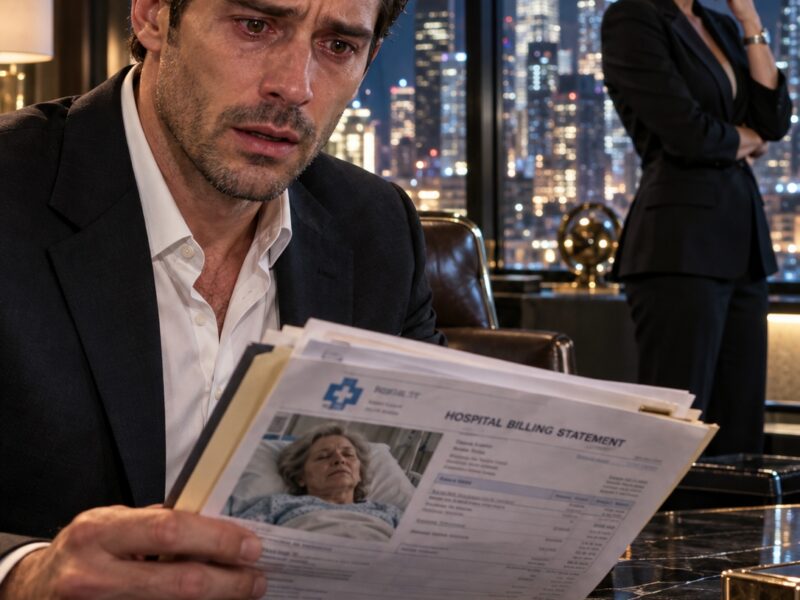
Five years before Daniel Carter became the kind of man whose name appeared on glass towers and business magazines, he stood under the fluorescent lights of a hospital billing department counting thirty-seven dollars from his wallet.
He counted it twice.
Not because the number might change.
Because his mother might die if it didn’t.
Across the counter, the hospital administrator looked down at the computer screen and then back at Daniel with the exhausted expression of a man who had already delivered the same bad news too many times.
“Mr. Carter, we’ve extended the deadline twice.”
Daniel swallowed.
“I know.”
“The outstanding balance is significant.”
“I know.”
“We can’t authorize the next round of treatment until—”
“My mother is still in there.”
His voice cracked on the final word.
The administrator stopped.
Daniel hated that.
He hated pity almost as much as he hated helplessness.
He looked toward the corridor beyond the billing desk, toward a set of double doors that opened every few minutes to release nurses, orderlies, and frightened families.
His mother, Margaret Carter, was somewhere behind those doors.
Three weeks earlier, she had still been teasing him for buying cheap coffee.
Two weeks earlier, she had been sitting upright in a hospital bed insisting that she was going home soon.
Four days earlier, the doctor had stopped using phrases like routine recovery.
Now every conversation seemed to include words Daniel did not want to hear.
Complication.
Additional treatment.
Immediate.
Necessary.
Payment.
“Please,” Daniel said.
The administrator lowered his voice.
“Mr. Carter—”
“Give me forty-eight hours.”
“You said that forty-eight hours ago.”
“Then give me twenty-four.”
“I can’t.”
“Twelve.”
The man behind the counter closed his eyes for half a second.
Daniel leaned forward.
“I’m not asking you to erase the bill. I’m not asking for charity. I will pay every dollar. Charge interest. Put me on a payment plan. Take my car. I don’t care.”
“Your car wouldn’t cover a fraction of it.”
Daniel knew that.
His eight-year-old Honda had 186,000 miles on it and a passenger window that occasionally refused to close.
But desperation made people offer ridiculous things.
“My mother is fighting,” he whispered. “Please don’t make money the reason she has to stop.”
The administrator’s face softened.
His answer didn’t.
“I have rules I have to follow.”
Daniel stared at him.
For a few seconds, the hospital seemed to lose all sound.
He could see mouths moving.
Phones ringing.
A child crying beside the elevators.
A nurse hurrying past with a clipboard.
But everything felt distant.
He opened his wallet anyway.
Two twenties.
A five.
Three ones.
Some receipts.
An expired insurance card.
A photograph of his mother taken at Coney Island when he was sixteen.
Daniel stared at the cash.
Forty-eight dollars.
He had thought it was thirty-seven.
For one absurd second, he almost laughed.
Eleven extra dollars.
As though that changed anything.
He closed the wallet.
Then his phone rang.
The doctor’s number.
Daniel answered immediately.
“Doctor?”
“Daniel, your mother is stable for now.”
For now.
Two words capable of terrifying a grown man.
“But we need to continue treatment,” the doctor said. “I don’t want an unnecessary interruption.”
Daniel looked at the billing administrator.
The administrator looked away.
“When?” Daniel asked.
“As soon as possible.”
Daniel pressed his fingers against his forehead.
“I’ll take care of it.”
There was a pause.
“Daniel—”
“I said I’ll take care of it.”
He ended the call before the doctor could hear the lie in his voice.
Then Daniel Carter walked away from the counter and stood beside a vending machine with forty-eight dollars in his wallet and absolutely no idea how he was going to keep his mother alive.
He had called everyone.
Former coworkers.
College friends.
A cousin in Ohio.
A man who owed him money from an old delivery job.
His former boss.
Even an ex-girlfriend he had not spoken to in three years.
Some offered hundreds.
One offered a thousand.
Most offered apologies.
Nobody had enough.
Daniel rested his forehead against the cold vending machine.
He had always believed effort mattered.
Work hard enough.
Stay honest.
Show up.
Keep your promises.
Find another shift.
Take another job.
Sleep later.
Wake earlier.
That philosophy had carried him through most of his life.
But a hospital bill didn’t care how hard he worked.
And death didn’t negotiate.
Across the driveway outside, behind the tinted window of a black luxury sedan, a woman Daniel had never met was watching him.
Victoria Hayes was supposed to have left the hospital eleven minutes earlier.
Her assistant, Sophia Bennett, had already reminded her twice that she had a dinner meeting downtown.
Victoria ignored her.
At thirty-nine, Victoria had built Hayes International into a sprawling investment and infrastructure company whose name appeared on projects across the country.
People called her brilliant.
Relentless.
Cold.
The last description amused her.
People often mistook self-control for coldness.
Victoria had simply learned young that emotion was expensive when displayed to the wrong people.
She sat in the back seat reviewing messages on her phone when movement beyond the hospital’s glass entrance caught her attention.
A man stood near the billing department.
Wrinkled shirt.
Unshaven face.
Wallet hanging loosely from one hand.
Even from that distance, something about his posture bothered her.
He wasn’t angry.
Angry people still believed they had power.
This man looked defeated.
Victoria watched him close his wallet.
“Sophia.”
“Yes?”
“Find out what’s happening.”
Sophia followed Victoria’s gaze.
“The man?”
“Yes.”
“Do you know him?”
“No.”
Sophia hesitated.
Victoria looked at her.
“That wasn’t a difficult instruction.”
“No, ma’am.”
Sophia stepped from the car.
Victoria went back to her phone.
Or tried to.
Three minutes later, she was still looking at the same email.
She finally locked the screen.
Through the windshield, she watched Sophia enter the hospital.
Victoria didn’t know Daniel Carter.
Didn’t know that he had spent the previous night sleeping upright in a plastic chair beside his mother’s bed.
Didn’t know he had skipped meals because hospital cafeteria food cost money he might need for parking.
Didn’t know he had spent the morning trying to sell the only thing his father had left him—a vintage watch that turned out to be worth far less than he had hoped.
She knew only what desperation looked like.
She had seen it before.
Long ago.
Before the penthouses.
Before the private cars.
Before reporters called her a billionaire.
Sophia returned several minutes later.
Victoria lowered the window.
“Well?”
“His mother is undergoing treatment. The family account is severely overdue. The hospital won’t approve the next phase unless the balance is resolved.”
“How much?”
Sophia told her.
Even Victoria paused.
“And he has no way to pay?”
“Apparently not.”
Victoria looked through the hospital doors again.
Daniel was now sitting alone.
His elbows rested on his knees.
His face was buried in his hands.
Sophia waited.
Victoria turned toward her.
“Take care of it.”
Sophia blinked.
“The outstanding portion?”
“All of it.”
“Victoria—”
“All of it.”
Sophia knew better than to argue.
She opened the door.
“And Sophia?”
“Yes?”
“Keep my name out of it.”
“Why?”
Victoria looked back at Daniel.
“Because if he knows who paid, then it becomes a transaction.”
Sophia studied her employer for a moment.
“And if he never knows?”
“Then it remains help.”
The door closed.
Victoria’s sedan pulled away twelve minutes later.
Daniel never saw it.
He never saw Victoria.
He never saw the woman who changed his life.
What he did see, forty minutes later, was the same administrator walking toward him with an expression Daniel couldn’t understand.
“Mr. Carter?”
Daniel stood.
“Yes?”
“We can continue your mother’s treatment.”
Daniel stared at him.
“What?”
“The balance has been cleared.”
For a second, Daniel thought exhaustion had made him misunderstand.
“Cleared how?”
“Paid.”
“By who?”
The administrator hesitated.
“I wasn’t given permission to disclose that.”
Daniel actually laughed this time.
Not because anything was funny.
Because the alternative was collapsing.
“You just told me an hour ago I owed more money than I’ve made in the last two years.”
“I know.”
“And now you’re saying somebody paid it?”
“Yes.”
“All of it?”
“All of it.”
Daniel stepped closer.
“Who?”
“No name was provided.”
“That doesn’t make sense.”
“I can only tell you what I know.”
“Was it a charity?”
“I don’t believe so.”
“Hospital assistance?”
“No.”
“My insurance?”
“No.”
“Then who?”
The administrator lowered his voice.
“A woman sent an assistant inside. The payment was processed. That’s all I know.”
Daniel stood perfectly still.
A woman.
“What woman?”
“I never met her.”
“Can you ask the assistant?”
“She already left.”
Daniel turned toward the entrance.
People moved in and out beneath the automatic doors.
There was nobody waiting for him.
No envelope.
No business card.
No explanation.
Nothing.
Behind him, the administrator said, “Mr. Carter?”
Daniel turned.
“Go be with your mother.”
That night, Margaret received the treatment.
The next morning, Daniel sat beside her bed and watched sunlight creep slowly across the blanket.
Her eyes opened.
“Daniel?”
He leaned forward instantly.
“I’m here.”
She studied his face.
“You look terrible.”
He laughed softly.
“You’re in a hospital and you’re criticizing me?”
“I’m your mother. It’s my constitutional right.”
The joke was weak.
So was her voice.
But Daniel had never heard anything more beautiful.
She squeezed his fingers.
“Did you find the money?”
Daniel’s smile disappeared.
“No.”
Margaret frowned.
“Then how did they—”
“Someone paid it.”
“What?”
“Everything.”
She stared at him.
“Who?”
“I don’t know.”
“Daniel.”
“I really don’t.”
He looked toward the window.
“They won’t tell me.”
His mother was silent for a moment.
Then she whispered, “Someone saved my life without telling us who they were?”
Daniel looked at her.
The sentence landed differently when she said it.
Saved my life.
He had been thinking about bills.
Numbers.
Accounts.
Debt.
But his mother understood what the money had actually purchased.
Time.
Daniel squeezed her hand.
“I’m going to find her.”
Margaret smiled faintly.
“You don’t even know who you’re looking for.”
“I’ll find her.”
“And then?”
Daniel looked at his mother.
“I’ll thank her.”
He had no idea that promise would take five years to keep.
He started with the hospital.
The financial office refused to reveal private payment information.
Daniel called again.
He wrote letters.
He requested records.
He asked nurses whether they remembered an assistant coming inside that afternoon.
One did.
Young woman.
Dark hair.
Professional clothes.
That described half of Manhattan.
Another remembered seeing a black sedan.
No plate.
No company logo.
Nothing useful.
Daniel kept trying.
His mother recovered slowly.
Then faster.
She returned home.
Daniel returned to work.
Life resumed the way life always does after nearly ending—as though the world had no idea anything extraordinary had happened.
But Daniel remembered.
Especially on difficult days.
Especially when his bank balance fell below zero.
Especially when he wondered whether trying anymore made sense.
Because somewhere in New York was a woman who had seen a stranger in trouble and decided his life mattered.
That became a strange kind of fuel.
Daniel had been considering starting his own logistics business before his mother’s illness.
Afterward, he stopped considering.
He started.
Carter Freight Solutions began with one rented office, two borrowed delivery vans, and a folding table Daniel found beside a dumpster.
The first year was brutal.
The second was worse.
There were weeks when Daniel slept four hours a night.
Months when payroll cleared only because he delayed paying himself.
Once, during a February snowstorm, he personally drove a shipment from Newark to Pittsburgh after two drivers called out.
Margaret hated watching him work like that.
“You’re going to kill yourself building this company,” she told him.
Daniel smiled.
“You survived. I’m not allowed to complain.”
“That is not how motherhood works.”
“It’s how sonhood works.”
She pointed a wooden spoon at him.
“I nearly died so you could become annoying?”
“You were already planning to survive. I just benefited.”
Margaret tried not to smile.
She failed.
Years passed.
The folding table became an office.
Two vans became twenty-three trucks.
Twenty-three became regional distribution contracts.
Daniel learned which risks mattered and which only looked impressive.
He hired people smarter than himself.
He remembered names.
He paid drivers before executives during bad months.
He built slowly.
Then suddenly.
By the fifth year, Carter Logistics Group operated nationally.
Daniel’s personal wealth had grown beyond anything the younger version of himself could have imagined while counting forty-eight dollars at a hospital counter.
He bought his mother a house.
She complained that it was too large.
He bought himself a better car.
She complained that it was too expensive.
He gave money to the hospital.
She approved of that.
But one promise remained unfinished.
Find her.
Daniel hired investigators.
He quietly contacted former hospital administrators.
His attorney searched payment structures.
Every trail disappeared behind privacy policies, intermediary accounts, and an assistant whose identity nobody seemed able to confirm.
Until a Tuesday afternoon in October.
Daniel was reviewing acquisition documents when his executive assistant, Ethan Cole, entered carrying a thin gray folder.
Ethan normally knocked.
That afternoon, he didn’t.
Daniel looked up.
“What happened?”
Ethan shut the door.
“I think we found her.”
Daniel didn’t move.
“Found who?”
Ethan put the folder on the desk.
“The hospital.”
For five years Daniel had imagined this moment.
In every version, he reacted immediately.
Instead, he simply stared at the folder.
“Are you sure?”
“Ninety percent.”
“I don’t want ninety.”
“Then look.”
Daniel opened it.
The first page contained transaction records.
The second contained a corporate payment authorization.
The third contained a photograph.
Daniel stopped breathing.
The woman was standing outside a charity gala wearing a black evening gown.
Elegant.
Composed.
Almost severe.
Beneath the photograph were two words.
Victoria Hayes.
Daniel knew the name.
Everyone in business knew the name.
Founder and CEO of Hayes International.
Infrastructure.
Commercial real estate.
Technology investment.
Transportation.
A woman whose estimated net worth had once crossed several billion dollars.
Daniel looked at Ethan.
“How?”
“One of the hospital finance employees remembered the assistant’s first name. Sophia. We matched her employment history. Sophia Bennett worked for Hayes International during the exact period. We found a reimbursement authorization connected to Victoria’s private office.”
Daniel looked back at the photograph.
Five years.
The person he had imagined as a shadow now had a face.
A name.
A life.
“That’s her,” he whispered.
“There’s something else,” Ethan said.
Daniel looked up.
Ethan placed another report beside the photograph.
“Hayes International is in trouble.”
Daniel’s expression changed.
“What kind?”
“Liquidity.”
Daniel began reading.
A major investment had collapsed.
Credit pressure.
Investors withdrawing.
Debt exposure.
Nothing terminal yet.
But serious.
Very serious.
Ethan watched him.
“Interesting timing.”
Daniel said nothing.
“You spend five years trying to find the woman who saved your mother,” Ethan continued, “and when you finally find her, she’s the one who needs help.”
Daniel closed the folder.
“No.”
“No?”
“She doesn’t need my help.”
Ethan frowned.
Daniel tapped the photograph.
“She needs a legitimate business solution. There’s a difference.”
That distinction would become more important than Daniel understood.
Because across Manhattan, Victoria Hayes was sitting alone in a dark office realizing that for the first time in her adult life, money might not be able to save her.
Hayes International wasn’t failing because its core businesses were worthless.
It was failing because Victoria had made one large bet at exactly the wrong moment.
A major infrastructure investment collapsed after financing disappeared.
Then another partner withdrew.
Then creditors became nervous.
Nervous creditors created nervous investors.
Nervous investors created headlines.
And headlines created predators.
Two private equity groups had offered emergency capital.
Both deals came with the same hidden price.
Control.
Victoria stood before the windows of her forty-sixth-floor office while the city glittered beneath her.
Sophia Bennett—still her assistant after all these years, now chief of staff—placed a folder on the desk.
“The investors need an answer by Friday.”
“No.”
“Victoria.”
“No.”
“You haven’t heard the revised terms.”
“I don’t need to.”
Sophia exhaled.
“They’ll provide enough liquidity to stabilize operations.”
“And receive three board seats.”
“Yes.”
“Plus veto authority on acquisitions.”
Sophia said nothing.
“Plus approval rights over executive compensation, restructuring, and asset sales.”
“Temporarily.”
Victoria turned.
“There is no temporary control.”
Sophia knew that tone.
“Then what’s the alternative?”
Victoria didn’t answer.
That was the problem.
For most of her life, Victoria had always possessed an alternative.
When one bank said no, she found another.
When a partner walked, she replaced him.
When competitors underpriced her, she outlasted them.
When men twice her age dismissed her, she bought companies they depended on.
There had always been another door.
Now every door seemed to lead to the same room.
Surrender.
On her desk stood an old photograph of her father.
Robert Hayes had died nine years earlier.
He had been difficult.
Demanding.
Often emotionally distant.
But he had taught Victoria one rule she had built her life around.
If you build something, build it strongly enough that nobody can take it away from you.
She had.
Or believed she had.
Now strangers were waiting for weakness.
Sophia watched her.
“You could sell the western portfolio.”
“At a distressed price.”
“Yes.”
“No.”
“The hotel assets?”
“No.”
“Then we’re running out of options.”
Victoria’s jaw tightened.
“I know.”
Sophia had worked for her long enough to understand what those two words cost.
Before she could respond, Victoria’s phone rang.
Her attorney.
Victoria answered.
“Yes?”
“There’s another investor requesting a meeting.”
“No.”
“I think you should hear the name.”
Victoria looked toward the windows.
“Who?”
“Daniel Carter.”
She turned.
“Carter Logistics?”
“Yes.”
Victoria knew his reputation.
Fast-growing.
Privately controlled.
Disciplined acquisitions.
Almost no public scandals.
Daniel Carter was not old money.
He had built everything himself.
“What does he want?”
“A partnership.”
“Control?”
“He specifically says no.”
That made Victoria more suspicious, not less.
“Nobody brings money into a distressed company without wanting leverage.”
“Apparently Carter does.”
Victoria looked at Sophia.
Sophia raised an eyebrow.
“Tomorrow morning,” Victoria said.
The next day, Daniel arrived twelve minutes early.
He stood alone in the conference room when Victoria entered.
For five years he had imagined what he would say to the woman who saved his mother.
Thank you.
You saved us.
My mother survived because of you.
I never forgot.
Instead, when Victoria walked through the door, Daniel stood and said, “Ms. Hayes.”
“Mr. Carter.”
They shook hands.
Her grip was firm.
Her expression unreadable.
She had no idea who he was.
Daniel found that unexpectedly painful.
Not because he wanted recognition.
Because one of the most important moments of his life had been so small in hers that she had forgotten it.
Then he remembered why.
She hadn’t done it to be remembered.
That was the point.
Victoria sat.
“I’ve read your proposal.”
Daniel took the chair opposite her.
“And?”
“I don’t understand it.”
“That sounds encouraging.”
Her eyebrow lifted.
“You’re offering capital without operational control.”
“Yes.”
“Why?”
“Because I think Hayes International remains fundamentally strong.”
“That wasn’t my question.”
Daniel almost smiled.
“No?”
“You know it wasn’t.”
Victoria leaned back.
“Investors don’t rescue companies because they admire balance sheets.”
“I agree.”
“So what do you want?”
“A partnership.”
“That’s a word people use when they don’t want to say what they actually want.”
Daniel looked at her.
“You’ve had unpleasant partners.”
“I’ve had realistic ones.”
“What would convince you I’m realistic?”
“Tell me where the knife is.”
Daniel laughed.
Victoria didn’t.
“What knife?”
“The part of the contract where you eventually get what you really came for.”
“There isn’t one.”
“There is always one.”
Daniel studied her.
For the first time, he saw something beneath the billionaire image.
Not arrogance.
Fear.
Victoria expected betrayal because betrayal was familiar.
Trust was the thing she found suspicious.
Daniel slid the proposal toward her.
“Then have your attorneys tear it apart.”
“They already have.”
“And?”
“They’re confused too.”
“That’s flattering.”
“Mr. Carter.”
“Daniel.”
Her gaze sharpened.
“Daniel. What do you get?”
He could have told her.
He could have said:
Five years ago you gave my mother another chance to live.
Five years ago you gave me hope when I had none.
Five years ago you paid a debt and disappeared.
Instead he said, “A stake in a company I believe is undervalued and a strategic relationship with a business that complements mine.”
Victoria waited.
“That’s it?”
“That’s enough.”
She watched him for several seconds.
Daniel knew what she was doing.
Searching his face for the hidden clause.
She didn’t find one.
That didn’t mean she trusted him.
But she didn’t reject him either.
“I’ll consider it.”
Daniel stood.
“Take your time.”
He reached the door.
“Daniel.”
He turned.
Victoria was still sitting at the table.
“Why Hayes?”
There it was again.
The question beneath the question.
Why me?
Daniel held her gaze.
“Because sometimes good companies deserve another chance.”
Then he left.
Victoria remained in the conference room long after the door closed.
She had no idea that five years earlier, Daniel Carter had been the man sitting beside a vending machine with his face buried in his hands.
And Daniel decided not to tell her.
Not yet.
Because gratitude could corrupt everything that came afterward.
If Victoria learned the truth now, every conversation would change.
Every disagreement would carry guilt.
Every business decision would become repayment.
Daniel didn’t want that.
He wanted her to choose the partnership because it made sense.
He wanted her to know him as Daniel Carter, not as the desperate son whose mother she had saved.
What he did not anticipate was that the longer he kept the truth from her, the more dangerous the truth became.
Victoria accepted his proposal four days later.
Their companies began working together.
At first, everything between them was numbers.
Debt schedules.
Shipping costs.
Asset valuations.
Contracts.
Board strategy.
Daniel learned quickly that Victoria was even more formidable than her reputation suggested.
She read everything.
Remembered everything.
If someone presented twenty pages, she found the weakness on page seventeen.
If a banker tried to bury a concession inside technical language, she noticed.
She was also impatient.
“You’re impossible,” Daniel told her after she rejected a restructuring model for the third time.
“It doesn’t work.”
“It works.”
“It works for you.”
“That is generally how negotiations work.”
Victoria looked at him.
“Then negotiate better.”
Daniel laughed.
She stared.
“What?”
“You enjoy this.”
“I enjoy being correct.”
“That’s not the same thing.”
“For me it is.”
Slowly, the walls moved.
Daniel noticed things that didn’t appear in financial reports.
Victoria knew the night security guard’s wife had recently undergone surgery.
She knew which receptionist was studying for law school.
She remembered birthdays.
She sent food downstairs when analysts worked late.
One afternoon, Daniel saw her stop beside a young employee crying quietly near the elevators.
Victoria could easily have walked past.
She didn’t.
“Claire?”
The woman wiped her face.
“I’m sorry, Ms. Hayes.”
“What’s wrong?”
“Nothing.”
Victoria waited.
Claire broke.
Her father had been hospitalized.
She had already used most of her vacation days.
She was terrified she would lose her job if she left again.
Victoria said, “Go.”
Claire stared at her.
“What?”
“Go to the hospital.”
“But the quarterly reports—”
“Will still be ugly tomorrow.”
A nervous laugh escaped Claire.
“My job—”
“Will be here.”
“Ms. Hayes—”
“Your father may not always be.”
Claire’s eyes filled again.
“Thank you.”
Victoria nodded and walked toward the elevators.
Daniel followed.
Inside, he said quietly, “You do that a lot.”
Victoria pressed the lobby button.
“Do what?”
“Help people when nobody’s watching.”
She looked at him.
“Are you watching me now?”
“Apparently.”
The elevator descended.
“People helped me once,” she said.
Daniel’s heartbeat changed.
“When?”
Victoria shrugged.
“Long time ago.”
“You never talk about it.”
“Because kindness doesn’t become more valuable when you advertise it.”
The elevator doors opened.
Victoria walked out.
Daniel remained inside for half a second longer.
The irony almost hurt.
She still had no idea.
Weeks passed.
Their partnership became easier.
Then personal.
They began having dinner after meetings.
At first, because work ran late.
Then because neither suggested going home.
Victoria learned Daniel hated olives but always forgot to request dishes without them.
Daniel learned Victoria loved terrible black-and-white mystery movies.
He told her that was inconsistent with her personality.
“How?”
“You spend twelve hours a day eliminating uncertainty, then relax by watching stories where nobody knows anything.”
“Maybe I enjoy watching other people be confused.”
“That I believe.”
She laughed.
Daniel loved the sound more than he should have.
One night they stayed at a small restaurant until the staff began stacking chairs around them.
They talked about childhood.
Daniel told her his father had died when he was nineteen.
Victoria told him her mother had left when she was eleven.
“My father raised me,” she said.
“Was he good at it?”
Victoria considered the question.
“He was good at preparing me.”
“For what?”
“The world.”
“That wasn’t what I asked.”
She looked at him.
Daniel expected her to retreat.
Instead she smiled sadly.
“No. He wasn’t always good at being a father.”
Daniel nodded.
No judgment.
No easy reassurance.
Victoria noticed.
“You don’t rush to fill silence.”
“Silence usually says something.”
“And what’s this one saying?”
Daniel looked at her.
“That you miss him anyway.”
Victoria’s expression changed.
Daniel knew he had touched something private.
Then she looked down at her wine.
“Yes,” she whispered.
That was the night Daniel realized he had a problem.
He had spent five years looking for Victoria Hayes because he owed her gratitude.
Now he wanted to see her tomorrow because he liked the way she looked at him when she forgot to be guarded.
Those were not the same thing.
And the difference frightened him.
Because every day he waited to tell her the truth made the eventual confession more complicated.
He almost told her twice.
The first time, Sophia interrupted them.
The second time, Victoria received a call from a creditor.
Then the financial crisis worsened.
Three investors withdrew in one week.
A credit facility came under review.
Rumors reached the press.
Victoria returned to old habits.
She slept at the office.
Skipped meals.
Answered emails at 3:00 a.m.
Stopped laughing.
One night, Daniel left headquarters shortly before midnight.
Halfway home, he realized his phone was still on the conference table.
He returned.
The building was almost dark.
Victoria’s office wasn’t.
He found her sitting behind her desk with the lights off.
Only Manhattan illuminated the room.
“You’re still here.”
She looked up.
“So are you.”
“I came back for my phone.”
“Convenient excuse.”
Daniel walked closer.
Documents covered her desk.
“What happened?”
“Nothing.”
“Victoria.”
She closed her eyes.
“The investors are pulling out.”
Daniel sat opposite her.
“How many?”
“Enough.”
“What are the projections?”
“Worse.”
“Let me see.”
“No.”
“Why?”
“Because for once I don’t want to talk about numbers.”
That stopped him.
Victoria Hayes always wanted to talk about numbers.
Daniel leaned back.
“All right.”
Silence.
Then she said something he had never heard her say.
“I’m tired.”
Daniel looked at her.
Victoria stared at the papers.
“I’ve spent my whole life making sure nobody could take anything from me.”
Her voice was quiet.
“My father taught me that dependence was dangerous. So I built something large enough that I thought I’d never have to depend on anyone.”
She laughed once.
No humor in it.
“Turns out you can build a billion-dollar company and still end up terrified in a dark office.”
Daniel said nothing.
Victoria’s eyes were glossy now.
“If this gets worse, I’ll have to sell pieces of it.”
“Maybe.”
“I could lose control.”
“Maybe.”
She looked at him sharply.
“You’re terrible at reassurance.”
“You don’t need reassurance.”
“What do I need?”
“The truth.”
“And what’s the truth?”
Daniel leaned forward.
“You may lose something.”
Victoria looked away.
“But you’re not going to lose yourself.”
“That sounds like something people say when they don’t have a solution.”
“Probably.”
She almost smiled.
Daniel continued.
“And you don’t have to solve everything tonight.”
“People depend on me.”
“I know.”
“I don’t get to fall apart.”
“Why not?”
“Because somebody has to remain standing.”
Daniel reached across the desk.
His hand covered hers.
Victoria froze.
“You’re not alone,” he said.
Three words.
Nothing dramatic.
Yet Victoria stared at their hands as though he had placed something dangerous between them.
“I’ve never been good at letting people help me.”
“I noticed.”
“How?”
“You treat accepting help like signing a confession.”
That made her laugh.
A small laugh.
But real.
Daniel smiled.
They remained like that.
No negotiations.
No strategy.
No promises.
Just two exhausted people in a dark office.
When Daniel finally stood, Victoria said his name.
He turned.
“Thank you.”
“You don’t have to thank me.”
Her expression became strange.
Almost thoughtful.
“I think I do.”
Daniel walked out.
The door closed.
Victoria stared at the empty chair.
Something had changed.
And she understood exactly why it frightened her.
She trusted Daniel Carter.
Not completely.
Not recklessly.
But enough that losing him had quietly become a possibility she cared about.
Daniel understood something too.
He could no longer postpone the truth.
The next afternoon, he asked Victoria to meet him at a café several blocks from headquarters.
No attorneys.
No assistants.
No documents.
Victoria arrived seven minutes late.
She sat opposite him and immediately frowned.
“You look like you’re about to fire me from my own company.”
Daniel didn’t smile.
Her expression changed.
“What happened?”
“Nothing.”
“Daniel.”
“There’s something I should have told you when we met.”
Victoria became still.
Daniel felt his pulse in his throat.
“Five years ago,” he said, “you were at a hospital.”
Victoria frowned.
“What hospital?”
He told her.
Something flickered across her face.
Recognition.
“I had an appointment there.”
“I know.”
“How?”
Daniel looked directly at her.
“My mother was a patient.”
Victoria said nothing.
“I was at the billing desk that afternoon.”
Her eyes narrowed.
“I couldn’t afford her treatment.”
The café seemed to disappear around them.
Daniel continued.
“The hospital was going to delay the next round until I paid the outstanding balance.”
Victoria stared at him.
“I had forty-eight dollars in my wallet.”
Her lips parted slightly.
“I begged them for more time.”
Daniel paused.
“Then someone paid everything.”
Victoria stopped breathing.
“No.”
Daniel nodded.
“Your assistant came inside.”
“Sophia?”
“Yes.”
Victoria leaned back.
Her face had lost color.
“That was you?”
“I was the man you saw.”
Victoria looked away.
Daniel let her process it.
After several seconds she whispered, “Your mother.”
“She survived.”
Victoria closed her eyes.
When she opened them again, they were wet.
“She survived?”
“Yes.”
“She’s alive?”
“Yes.”
Victoria covered her mouth briefly.
Daniel had imagined this conversation hundreds of times.
He had never imagined Victoria looking overwhelmed.
“I didn’t know,” she whispered.
“I know.”
“I never knew what happened.”
“I know.”
Her eyes suddenly hardened.
“Why didn’t you tell me?”
Daniel had known the question was coming.
“Because I didn’t want this.”
“This?”
“The way you’re looking at me now.”
Victoria stared.
“I didn’t want gratitude between us. I didn’t want you wondering whether every proposal I made was repayment. I wanted the business decision to stand on its own.”
“So you knew who I was before our first meeting?”
“Yes.”
“You came because of me.”
“Yes.”
“And you said nothing.”
“Yes.”
Victoria stood.
Daniel’s stomach tightened.
She walked toward the window.
For several seconds she faced the street.
“You let me trust you without telling me the most important reason you entered my life.”
Daniel didn’t defend himself.
Because she wasn’t wrong.
“I did.”
Victoria turned.
“Do you understand how that feels?”
“Yes.”
“No, you don’t.”
“Then tell me.”
Her eyes flashed.
“It feels like every moment we’ve had has another version underneath it.”
Daniel absorbed that.
Every dinner.
Every conversation.
Every touch.
Every silence.
“That’s fair.”
“I don’t want fair.”
“What do you want?”
“I want to know why.”
Daniel stood.
“I spent five years looking for you.”
Victoria’s anger faltered.
“What?”
“Five years.”
“Why?”
“At first?”
He smiled sadly.
“To say thank you.”
Victoria stared at him.
“You built a company. You became successful. You hired people to search for someone just to thank her?”
“You saved my mother.”
“You don’t owe me anything.”
“I know.”
“Then why keep looking?”
That was the question Daniel had been avoiding even inside himself.
He walked closer.
“Because eventually I realized I wasn’t only looking for the woman who paid a hospital bill.”
Victoria didn’t move.
“I wanted to know what kind of person sees a stranger at his worst moment and helps him without even wanting credit.”
Her anger was disappearing.
Something more dangerous was replacing it.
Daniel continued.
“Then I found you.”
“And discovered I was less impressive?”
He smiled.
“Much more difficult.”
Despite herself, she almost laughed.
“Daniel.”
“I didn’t come into your life to repay you.”
“Then why?”
He looked at her.
“Because once I found you, I wanted the chance to know you.”
Victoria’s eyes filled.
Daniel’s voice softened.
“And somewhere between the contracts and arguments and terrible dinners you insist are excellent—”
“They are excellent.”
“—I stopped thinking about what I owed you.”
“Then what were you thinking about?”
Daniel hesitated.
The answer was too large.
So he gave her the truth without naming it.
“You.”
Victoria looked away.
Neither said love.
Not yet.
Love was too convenient a word for something built from gratitude, suspicion, admiration, loneliness, and trust.
But both knew the relationship had crossed a line neither could uncross.
Victoria barely slept that night.
For years she had believed people approached her because of what she possessed.
Money.
Influence.
Access.
Power.
Daniel had approached because of something she had forgotten doing.
That should have comforted her.
Instead, it unsettled her.
Because money created understandable relationships.
You could measure money.
Negotiate it.
Return it.
Gratitude was messier.
Affection was worse.
The next morning, Victoria entered her office and found Daniel waiting.
A folder sat on her desk.
Her defenses rose immediately.
“What is that?”
“A restructuring proposal.”
She didn’t touch it.
“Daniel, if this is because of your mother—”
“It isn’t.”
“You expect me to believe that?”
“Yes.”
“Why?”
“Because if you reject it, I’ll still be here.”
Victoria stared at him.
Daniel pushed the folder forward.
“I spent most of last night with our finance team. There’s a way to restructure the debt without giving up control.”
She opened the folder reluctantly.
Ten minutes passed.
Then fifteen.
Daniel said nothing.
Victoria reached page eighteen.
Went back to page eleven.
Then page six.
“This could work.”
“It will.”
“How?”
“I spoke with the investors.”
Her head snapped up.
“You did what?”
“They’re willing to extend maturities if Carter Logistics guarantees part of the transportation contracts.”
“You’re putting your company into this.”
“Not irresponsibly.”
“You did this overnight?”
“I made calls.”
“Daniel.”
He smiled.
“I make excellent calls.”
Victoria closed the folder.
“This is repayment.”
“No.”
“Then what is it?”
Daniel’s smile disappeared.
“Care.”
She looked at him.
He continued.
“You helped my family when you didn’t know my name.”
“That doesn’t mean—”
“I know.”
“You owe me nothing.”
“I know.”
“Stop saying that.”
“Then stop telling me I owe you something.”
Victoria fell silent.
Daniel stepped closer.
“You saw somebody who needed help.”
He touched the folder.
“Now I see somebody who needs help.”
“I am not helpless.”
“I never said you were.”
“I can save my company.”
“I know.”
“Then why are you here?”
“Because strong people are allowed to have someone standing beside them.”
Victoria looked at him for a long time.
“And if I say no?”
“I’ll respect it.”
“No pressure?”
“No.”
“No guilt?”
“No.”
“No reminding me that I saved your mother?”
“Never.”
Victoria slowly smiled.
“You really are impossible.”
“I’ve been told.”
She laughed.
And something inside the room loosened.
The restructuring moved forward.
Not magically.
There were arguments.
Legal reviews.
Bank negotiations.
Board resistance.
One investor nearly walked.
Another demanded revised terms.
Victoria rejected three provisions.
Daniel rejected two of hers.
They fought over risk until midnight twice.
But slowly, the crisis lifted.
Hayes International kept its core assets.
Victoria kept control.
Employees kept their jobs.
The headlines faded.
One evening, after signing the final documents, Victoria sat beside Daniel in the conference room.
Everyone else had gone.
She looked at the stack of papers.
“It’s strange.”
“What?”
“I thought I’d feel triumphant.”
“You don’t?”
“Mostly exhausted.”
“That’s less cinematic.”
Victoria smiled.
Then became serious.
“You know what scares me?”
“Your ability to find flaws in every contract?”
“You.”
Daniel turned.
She shook her head.
“Not like that.”
“That’s reassuring.”
“I trust you.”
Daniel said nothing.
Victoria looked at him.
“I’ve spent most of my adult life making sure I never needed to say that about anyone.”
“And now?”
“Now I’m beginning to understand that needing people and trusting people aren’t the same thing.”
Daniel held out his hand.
Victoria looked at it.
Then placed hers in his.
Their fingers intertwined.
No kiss.
No declaration.
No promise that everything would work.
Neither of them needed one.
For once, uncertainty did not feel like danger.
Several months later, Daniel called Victoria on a Saturday morning.
“Are you busy?”
“Yes.”
“Cancel it.”
She laughed.
“You don’t get to order me around because you helped save my company.”
“I’ve been ordering you around since before that.”
“And I’ve been ignoring you.”
“Excellent. Meet me downstairs in twenty minutes.”
“Where are we going?”
“Somewhere important.”
“That’s vague.”
“Trust me.”
Victoria paused.
Daniel heard the smile in her voice.
“That phrase has become annoyingly effective.”
Twenty minutes later, she entered his car.
Daniel gave the driver an address.
Victoria didn’t ask again.
Not until they turned onto a street she recognized.
Her smile disappeared.
The hospital.
She looked at Daniel.
“Why are we here?”
“You’ll see.”
They walked through the entrance.
Five years had changed the lobby.
New paint.
Different furniture.
Electronic check-in kiosks.
But Victoria remembered enough.
The glass doors.
The driveway.
The place where her car had been waiting.
She suddenly imagined Daniel there.
Younger.
Terrified.
Forty-eight dollars in his wallet.
She had never seen his face that day.
Now she could.
Daniel led her toward a quiet seating area.
An older woman stood when she saw them.
Victoria stopped.
Margaret Carter looked healthier than Victoria had imagined.
Her hair was silver now.
Her face carried the softness of age and survival.
Daniel smiled.
“Mom.”
Margaret’s eyes were already fixed on Victoria.
“So,” she said, “you’re the woman I’ve heard about for five years.”
Victoria laughed nervously.
“I’m afraid Daniel probably exaggerated.”
“Not even close,” Daniel said.
Margaret approached.
For once, Victoria Hayes—the woman who could negotiate with bankers, boards, politicians, and billionaires—didn’t know what to do with her hands.
Margaret solved the problem.
She took them.
Both of them.
“I’ve wanted to meet you for a very long time.”
Victoria swallowed.
“You don’t have to thank me.”
“I know.”
Margaret squeezed her fingers.
“But I’m going to.”
Victoria looked down.
Margaret continued.
“You didn’t just pay a bill.”
Her voice trembled.
“You gave my son hope when he thought he was about to lose everything.”
Victoria’s eyes filled.
She looked at Daniel.
“He gave me something too.”
Daniel smiled.
“What?”
Victoria considered her answer.
“A reason to stop believing I have to do everything alone.”
Margaret looked between them.
A knowing smile appeared.
Daniel saw it.
“Mom.”
“I didn’t say anything.”
“You’re thinking loudly.”
“I nearly died. I’m allowed.”
Victoria laughed through tears.
The three of them walked outside.
The afternoon was warm.
Hospital doors opened and closed behind them.
Ambulances came and went.
Somewhere inside, another family was probably receiving the worst news of their lives.
Another person was probably staring at a bill.
Another stranger was probably discovering how quickly an ordinary day could split into before and after.
Daniel stopped beside the car.
Margaret had already gone ahead with the driver, leaving them alone.
Victoria looked back at the hospital.
“You really spent five years searching for me?”
“Yes.”
“That’s slightly insane.”
“I’ve had time to reflect on that.”
“And you finally found me.”
Daniel looked at her.
“Yes.”
Victoria tilted her head.
“Was I worth the search?”
Five years earlier, Daniel might have answered immediately.
He might have talked about the money.
His mother.
The life Victoria had saved.
Now the answer was different.
“More than you know.”
Victoria stepped closer.
“What happens now?”
Daniel took her hand.
He could have promised forever.
He could have said he loved her.
He could have turned five years of searching into a perfect ending.
But life had already taught both of them that perfect promises were often just fear wearing beautiful clothes.
So Daniel smiled.
“Now we keep getting to know each other.”
Victoria looked at him.
“No grand plan?”
“No.”
“No five-year forecast?”
“Absolutely not.”
“That doesn’t sound like you.”
“I’m trying something new.”
She squeezed his hand.
They began walking toward the car.
Halfway there, Victoria stopped.
Across the driveway, a young man stood beside the hospital entrance arguing quietly on the phone.
His shoulders were hunched.
One hand covered his eyes.
Victoria watched him.
Daniel followed her gaze.
For a moment, neither spoke.
Five years collapsed into a single image.
A hospital.
A frightened son.
A problem too large for one person.
Victoria reached into her purse for her phone.
Daniel looked at her.
“What are you doing?”
She glanced at him.
“Nothing important.”
He smiled.
“Of course.”
Victoria made the call.
She didn’t tell Daniel what she said.
She didn’t need to.
Then she slipped the phone back into her purse and took his hand again.
Behind them, the hospital doors opened.
Ahead of them, there was no certainty.
No guarantee that love would be easy.
No guarantee Hayes International would never face another crisis.
No guarantee Daniel and Victoria would never hurt each other, disappoint each other, or discover parts of themselves they had not yet learned how to share.
But that was no longer the point.
Five years earlier, Victoria Hayes had looked through a car window and seen a stranger losing hope.
She had helped him without asking his name.
Daniel Carter had spent years believing that kindness created a debt.
Eventually, he understood the truth.
Some debts should never be repaid.
They should be carried forward.
Sometimes they return as gratitude.
Sometimes as trust.
Sometimes as the hand you finally allow yourself to hold.
And sometimes, quietly, when nobody is keeping score, the kindness you once gave to a stranger finds its way back to you wearing a face you never expected to love.
Daniel opened the car door for Victoria.
She paused before getting inside.
“Daniel?”
“Yeah?”
“If you ever spend five years secretly investigating me again, we’re going to have a problem.”
He smiled.
“That’s fair.”
“And don’t tell your mother I said this.”
“Said what?”
Victoria looked back at the hospital, then at him.
“I’m glad you found me.”
Daniel’s smile faded into something quieter.
“So am I.”
Victoria climbed into the car.
Daniel followed.
The door closed.
And as the black sedan disappeared into the Saturday traffic, neither of them noticed the young man outside the hospital suddenly lower his phone and stare through the glass in disbelief.
Someone had just told him that a portion of his family’s medical bill had been taken care of.
He asked who had paid it.
The administrator couldn’t tell him.
There was no name.
No message.
No request to be thanked.
Only help arriving at the exact moment hope was beginning to disappear.
And somewhere several blocks away, Victoria rested her head against the seat while Daniel’s hand remained quietly wrapped around hers.
The circle had begun again.









