He Was Warned Not to Marry a 39-Year-Old Widow With Three Children — His Answer Changed All Four of Their Lives
“No decent man is going to chain himself to another man’s leftovers.”
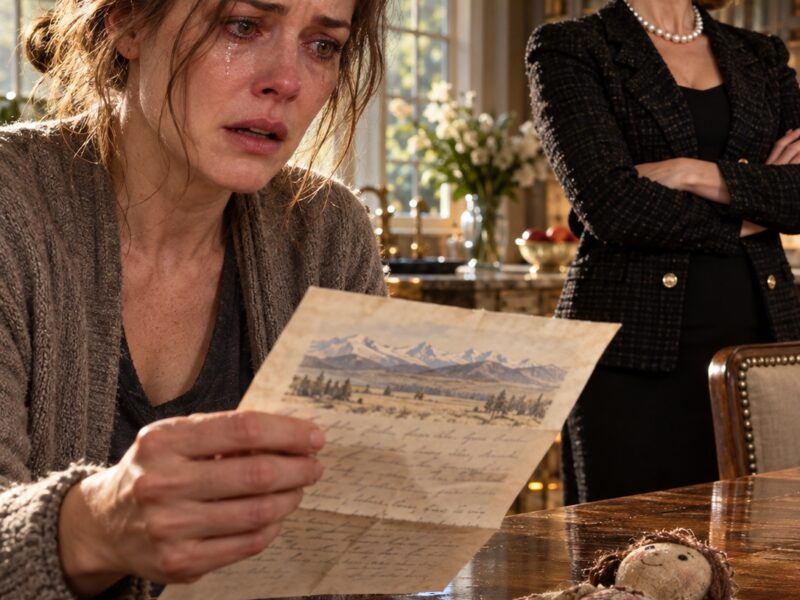
Margaret Hollis said it in Rosalie Ashcroft’s kitchen.
She said it loudly enough for all three children to hear.
That was the part Rosalie would remember.
Not the rain ticking against the window. Not the gray dishwater cooling around her hands. Not the stack of mending waiting beside the stove or the envelope from the landlord sitting unopened beneath a chipped blue cup.
She would remember the silence that came afterward.
Eight-year-old Clara stood frozen in the doorway.
Five-year-old Thomas had both fists clenched against his trousers.
And three-year-old May hugged the rag doll her dead father had given her so tightly that one of its crooked button eyes pressed into her cheek.
Margaret looked from one child to the next.
“Three children, Rosalie. Three. You’re thirty-nine years old, whether you admit it in those letters or not. Daniel left you with nothing but debts and mouths to feed. You need to stop behaving as though some miracle is coming.”
Rosalie slowly lifted her hands from the dishwater.
Soap slid down her wrists.
“Don’t talk about them that way.”
Margaret’s expression hardened.
“I’m talking about reality.”
“No. You’re talking about my children.”
“I’m trying to keep them from starving.”
Clara moved before Rosalie could answer.
She stepped farther into the kitchen, small shoulders squared beneath a dress Rosalie had already let out twice at the seams.
“We’re not starving.”
Margaret turned.
“I wasn’t speaking to you.”
“You were speaking about us.”
“Clara.”
Rosalie’s voice was quiet.
Her daughter stopped.
But she did not lower her eyes.
That frightened Rosalie more than if Clara had shouted.
Children were supposed to be allowed the luxury of looking away.
Clara had stopped looking away fourteen months earlier, when her father had gone from coughing at breakfast to dead before the following Thursday.
Daniel’s death had changed each child differently.
Thomas had developed a stutter that appeared whenever he was frightened.
May had almost stopped speaking altogether.
And Clara—
Clara had become a soldier.
Eight years old, and already convinced that if she relaxed for even a moment, something else would be taken from them.
Margaret picked up her gloves from the table.
“You asked for my advice.”
“I asked if you knew of more sewing work.”
“And I told you sewing won’t save you.”
Margaret nodded toward the newspaper on the counter.
The matrimonial advertisements were folded open in the back.
“You need a husband.”
Rosalie almost laughed.
There was nothing funny in it.
“A husband.”
“A practical arrangement.”
“I had a husband.”
“And now you don’t.”
The words landed harder than Margaret seemed to realize.
Or perhaps she realized exactly how hard they would land.
Rosalie stared at her.
For one dangerous second, she imagined taking the wet dishcloth in her hand and throwing it directly into Margaret Hollis’s perfectly arranged face.
Instead, she folded it.
Once.
Then again.
Daniel had always said Rosalie became most dangerous when she started folding things.
The memory nearly broke her.
She set the cloth down.
Margaret continued, “There are ranchers out West looking for wives. Farmers. Widowers. Men with land who need women capable of work.”
“And what exactly happens to my children?”
“That depends on the man.”
“No.”
“Rosalie—”
“No man gets me without them.”
Margaret gave a short, exhausted sigh.
“There. That attitude is exactly your problem.”
Rosalie felt Clara listening.
Thomas too.
May understood more than people thought she did.
So Rosalie chose the next words carefully.
“My children are not my problem.”
Margaret looked at her for a long moment.
Then she said the sentence that would travel more than a thousand miles with Rosalie.
“No. But to any man with sense, they will be.”
Margaret left ten minutes later.
Clara waited until the front door closed.
Then she asked, “What does leftovers mean?”
Rosalie shut her eyes.
There were moments in motherhood when the world handed you something ugly and expected you to translate it into language a child could survive.
This was one of them.
She crouched in front of Clara.
“It means Aunt Margaret was angry and said something cruel.”
“But what does it mean?”
Thomas had come closer now.
May remained near the doorway, silent, clutching her doll.
Rosalie looked at all three of them.
“It means something left behind.”
Clara’s jaw tightened.
“By Papa?”
Rosalie’s heart seemed to stop.
“No.”
“But that’s what she meant.”
“Clara—”
“That’s what she meant.”
Rosalie reached for her daughter.
Clara stepped back.
That hurt.
But Rosalie understood it.
“She’s wrong,” Rosalie said.
Clara’s eyes shone, but she refused to cry.
“How do you know?”
Because I’m your mother, Rosalie almost said.
Because I love you.
Because your father loved you.
Because children should never have to prove they deserve to remain in the world after somebody leaves it.
Instead she said the only thing she believed strongly enough to make a promise from.
“Because anyone who looks at you and sees something left behind isn’t someone whose opinion we need.”
Clara studied her.
Then she nodded once.
It was too adult a nod.
Rosalie hated it.
That night, after the children were asleep, she sat alone at the kitchen table.
The landlord’s envelope was finally open.
The numbers did not improve because she stared at them.
Her savings had lasted eight months after Daniel died.
By November she had taken in washing.
By December she was doing alterations for three households.
By February she had sold Daniel’s good watch.
By March there was almost nothing left to sell except the housewares they needed to live.
Pride was a beautiful thing when there was food in the pantry.
It became something else when there wasn’t.
Rosalie reached for the newspaper Margaret had left behind.
Twelve men.
That was how many she eventually wrote to.
Four never answered.
Three stopped writing after she mentioned the children.
Two were blunt enough to say they wanted a wife without “encumbrances.”
One sent a letter so disturbing she burned it before Clara could find it.
Another seemed respectable until his second letter explained that Clara and Thomas would be expected to work from sunrise and May could be left with neighbors.
Rosalie burned that one too.
Then, on an ordinary Tuesday morning, the final reply arrived.
The handwriting was careful.
Unhurried.
The letter was only one page.
Rosalie stood at the kitchen table while May tugged on her skirt and read it.
Then she read it again.
Then a third time.
The man’s name was Silas Granger.
He owned a cattle ranch outside Mill Haven, Montana.
Six hundred forty acres.
A house.
A barn.
Two hired hands.
He was thirty-four years old.
He did not drink.
He had never been married.
Then came the line that made Rosalie sit down.
I am not looking for a housekeeper or a woman to fill a position.
She kept reading.
I am looking for a family.
Her breathing changed.
And then:
If you have children, that is not a complication.
That is the point.
Rosalie stared at those words until the ink blurred.
Behind her, Thomas and Clara were arguing about a tin soldier.
May leaned against her knee.
Outside, Kansas City continued exactly as it had before the letter arrived.
A wagon rattled past.
Someone shouted in the street.
Rainwater dripped from the eaves.
But something had shifted.
Something so small she was almost ashamed to name it.
Hope.
Rosalie folded the letter immediately.
Hope had become dangerous.
That night she read it twice more.
Then she wrote Silas Granger the truth.
Almost all of it.
Daniel had been dead fourteen months.
Clara was eight, fiercely protective and difficult when frightened.
Thomas was five, gentle, observant, and sometimes stuttered.
May was three and had spoken only a handful of words since her father died.
Rosalie had no dowry.
No property.
No family money.
She would arrive with three grieving children and one battered suitcase.
She deliberately made herself sound like the worst possible bargain.
There was only one lie.
Her age.
Twenty-nine, she wrote.
Not thirty-nine.
Margaret had insisted.
Rosalie hated herself for listening.
Silas answered four days later.
He thanked her for telling him the truth.
He said Clara sounded like a child who had learned too early that the world would not protect her unless she protected herself.
He said Thomas’s stutter did not concern him.
His youngest brother had stuttered too.
About May, he wrote:
She’ll talk when she’s ready.
Then beneath it:
Or she won’t.
Either way, she is still welcome.
Rosalie had to stop reading.
She pressed the heel of her hand against her mouth.
Nobody had said welcome in a long time.
The final lines were practical.
Come in April when the passes are clear.
I’ll have the east room ready for the girls and the small room off the kitchen for Thomas.
S.G.
Rosalie read that letter until the folds softened.
And eventually, against every instinct that had kept her alive for the previous fourteen months, she bought four train tickets to Montana.
The journey took three days.
Clara spent most of it staring through the window like she was memorizing the route back.
Thomas counted horses.
May sat against Rosalie holding Daniel’s rag doll.
Rosalie barely slept.
On the second night she lay awake listening to the children breathe and constructed every possible version of disaster.
Silas would see her at the station and realize she was ten years older than she had claimed.
His expression would change.
He would tolerate the children rather than want them.
He would be cruel behind closed doors.
Or controlling.
Or drunk despite what he had written.
Or simply disappointed.
Disappointment frightened her most.
Because disappointment could be polite.
It could smile.
It could help you unload your suitcase before telling you there had been a misunderstanding.
Rosalie turned toward May in the narrow berth and breathed in the scent of her hair.
Then she remembered Margaret standing in the kitchen.
Another man’s leftovers.
Whatever waited in Montana, Rosalie decided, it could not be worse than teaching her children to believe that sentence was true.
The train reached Mill Haven late in the afternoon.
The station was smaller than Rosalie expected.
She stepped onto the platform with May on one hip and her suitcase in the other hand.
Clara climbed down behind her.
Thomas followed.
Then Rosalie saw him.
A tall man stood several yards away from the crowd.
Dark hair.
Work-worn coat.
Weathered hat already removed and held in both hands.
She knew immediately.
Silas Granger.
He looked at her.
Then at Clara.
Thomas.
May.
Rosalie stopped breathing.
This was the moment.
The change in his face.
The calculation.
The regret.
She had rehearsed it for three days.
But it never came.
Instead, something much stranger crossed Silas’s expression.
Recognition.
As though he had been trying to imagine four people for months and was relieved to discover they were real.
He approached.
“Mrs. Ashcroft.”
“Mr. Granger.”
His gaze moved toward the children.
Clara stared back without blinking.
Thomas went silent.
May buried half her face against Rosalie’s neck.
Silas did not crouch dramatically or attempt to charm them.
He simply asked, “Long trip?”
“Three days.”
“You hungry?”
Clara answered before Rosalie could.
“We’re not charity cases.”
“Clara.”
Silas looked directly at the girl.
“I know.”
Clara seemed almost irritated that he had not taken offense.
“I was asking because I brought food. It’s about two hours to the ranch.”
“What food?” Thomas asked.
“Bread. Cold chicken. Apples.”
Thomas glanced at Clara.
Then at Silas.
“You brought apples?”
“I figured children like apples.”
“I like apples.”
“Good.”
Silas lifted Rosalie’s suitcase.
No speech.
No performance.
He simply carried it toward the wagon.
Clara came close to her mother.
“He didn’t look at us like we were a problem.”
“No,” Rosalie whispered.
“He didn’t.”
Clara narrowed her eyes at Silas’s back.
“That could be good.”
“It could.”
“Or it could mean he doesn’t see things clearly.”
Despite everything, Rosalie almost smiled.
“We’ll keep both possibilities open.”
Clara nodded.
“Good.”
Forty minutes into the wagon ride, Rosalie could no longer bear the lie.
“I need to tell you something.”
Silas kept his eyes on the road.
“All right.”
“I’m not twenty-nine.”
Nothing.
No visible reaction.
“I’m thirty-nine.”
The wagon rolled across a rut.
Thomas shifted in his sleep.
Rosalie forced herself onward.
“My sister-in-law told me no man would consider a thirty-nine-year-old widow with three children. I listened to her. I shouldn’t have. I lied to you, and I’m sorry.”
Silas was quiet.
Rosalie’s stomach tightened.
Then he said, “I figured.”
She turned toward him.
“What?”
“You wrote about fourteen months of raising three children alone after your husband died. Taking in washing. Making every decision. Keeping the household going.”
He glanced at her.
“You don’t sound twenty-nine.”
Rosalie stared.
“That doesn’t bother you?”
“The lying does a little.”
Her stomach dropped.
Then he added, “The ten years don’t.”
She swallowed.
“Most men—”
“I know what most men would do.”
His voice remained calm.
“I’m not most men.”
He seemed to reconsider the sentence.
“That sounded more self-important than I meant it to.”
For the first time, Rosalie almost laughed.
Silas continued.
“I wrote to the woman who told me the truth about her children. The woman who said she had no money and no property and wasn’t going to pretend to be easier than she was.”
He looked back at the road.
“You said you had nothing to offer except the truth.”
A pause.
“That isn’t nothing.”
Rosalie looked down at her hands.
Something inside her shifted.
Not opened.
Not yet.
But shifted.
Then the wagon crested a hill.
The ranch appeared below them.
White house.
Red barn.
Fences running toward a horizon so wide Rosalie could not immediately understand the scale of it.
Cattle moved like dark punctuation through the grass.
Clara leaned forward before she could stop herself.
Silas noticed.
“The east pasture has a creek,” he said. “Good climbing tree about a quarter mile down.”
Clara immediately sat back.
“I don’t climb trees.”
“You don’t have to.”
Thomas woke as they entered the yard.
He blinked at the house.
At the barn.
At the mountains in the distance.
Then he asked the question nobody was ready for.
“Is this really going to be our home?”
Silence filled the wagon.
Rosalie looked at Silas.
Silas looked at Thomas.
And for the first time since Daniel died, Rosalie realized she was not most afraid that the answer would be no.
She was afraid of how badly she wanted it to be yes.
That evening, Silas showed them the rooms.
The girls’ room had two beds.
Thomas had the smaller room off the kitchen exactly as promised.
Nothing was elaborate.
Everything was prepared.
That detail unsettled Rosalie more than extravagance would have.
He had expected them.
Not a wife.
Them.
All four.
On May’s pillow sat a small carved wooden horse.
One ear was chipped.
Silas picked it up.
“Dropped it while I was making it.”
May stared at the horse.
“I can make another one.”
May reached out immediately and took it.
Silas looked at the damaged ear.
“Or that one’s still a good horse.”
May held the horse beside her rag doll.
She looked at Silas.
And although she said nothing, Rosalie saw something in her daughter’s face loosen.
That night Rosalie lay awake listening for trouble.
None came.
The next morning she woke to Thomas talking.
Not stuttering.
Talking.
She followed his voice into the kitchen and found him sitting at the table with warm milk and buttered bread.
Silas stood at the stove.
Thomas was explaining the difference between two kinds of tin soldiers.
One had been lost during the move.
It had been blue.
A cavalry soldier with a sword.
Silas asked, “Town has a general store. Want me to see if they have one?”
Thomas immediately looked down.
“You don’t have to buy me things.”
“I know.”
“My mom says we shouldn’t ask.”
Silas set a plate on the table.
“I didn’t hear you ask.”
Thomas considered this.
Silas looked toward the doorway and saw Rosalie.
“Coffee’s made.”
That was all.
No expression asking for gratitude.
No silent announcement that he had been kind to her child.
Rosalie poured herself coffee and watched Thomas continue talking.
And one of the walls inside her developed a crack.
Clara was harder.
Of course she was.
Eight days later, Rosalie overheard her in the barn.
“I didn’t ask for your help.”
Silas answered, “I know.”
“Then why are you here?”
“I was checking on you.”
“I don’t need checking on.”
“I know.”
“Then stop.”
Silence.
Rosalie remained outside where neither could see her.
Then Silas said, “I’m not going to pretend I wasn’t checking. You went quiet after breakfast. You’ve been in here an hour. I noticed.”
Clara’s voice changed.
“How?”
“What?”
“How did you notice?”
“I can fix fence and notice things at the same time.”
Another silence.
Then Clara said something she had not said to any adult since they arrived.
“My dad used to check on me.”
Silas did not rush to answer.
“What was he like?”
Clara’s armor slipped.
“Loud.”
A tiny laugh escaped her.
“He laughed really loud. At church too. It was embarrassing.”
She paused.
“I miss it.”
Rosalie pressed one hand against the barn wall.
“The house got really quiet after he died.”
Silas answered softly.
“Yeah.”
“You’re quiet too.”
“I am.”
“Why?”
“I’ve always been quiet.”
Clara considered that.
Then she asked, “Does that mean you don’t care about things as much?”
“No.”
Silas’s answer came immediately.
“It means sometimes I care about things so much I need longer to figure out what to say.”
Rosalie closed her eyes.
She would remember that sentence later.
Because it was true.
And because one day, his silence would hurt them.
But not yet.
For now, trust arrived in pieces.
Thomas started following Silas toward the barn.
Clara stopped asking Rosalie every night how much money they had left.
May carried the carved horse everywhere alongside Daniel’s rag doll.
Rosalie reclaimed a neglected patch of soil beside the house.
She planted vegetables first.
Later, lavender.
“You know lavender’s difficult here,” Silas said.
“I know.”
“South corner’s hard soil.”
“I know.”
He looked at her.
“You’re planting it anyway.”
“Yes.”
An almost-smile touched his mouth.
Rosalie would eventually learn that Silas’s almost-smiles were worth waiting for.
Then May got sick.
It began with heat.
By evening, she was burning.
By midnight, Rosalie was certain she was going to lose another person she loved.
Silas rode for Dr. Whitmore.
The doctor arrived exhausted and stayed.
Clara sat awake in a corner.
Thomas stood in the hallway gripping a flat pink-striped stone he carried when frightened.
May barely opened her eyes.
And Silas—
Silas disappeared into himself.
Rosalie saw it happen.
His face became still.
His voice became clipped.
Useful.
Controlled.
He brought water.
Changed cloths.
Kept the fire.
Did everything necessary.
But some part of him had gone somewhere she could not reach.
By dawn, Rosalie was angry enough to hate him for it.
Then May’s fever broke.
Her eyes opened.
“Mama.”
One word.
Rosalie nearly collapsed over the bed.
Dr. Whitmore checked her pulse.
Then nodded.
Clara covered her face with both hands.
Thomas released a breath from the hallway that sounded like something breaking free.
Rosalie eventually found Silas in the kitchen.
He stood at the window watching the Montana sky lighten.
“She’s better,” Rosalie said.
Silas closed his eyes.
His jaw tightened.
Then he told her why he had gone cold.
“My brothers were James and Owen.”
Rosalie said nothing.
“James died of fever when he was six. Owen was nine. Same winter.”
He looked toward the window.
“I was fourteen.”
Rosalie felt her anger rearrange itself.
“I’ve never been in a room with a sick child without thinking about them.”
There it was.
Not indifference.
Terror.
Silas had not left May emotionally because she meant too little.
He had disappeared because she had begun to mean too much.
Rosalie moved closer.
Not touching.
Just closer.
Silas stared at the dawn.
And for the first time she understood that this man had walls too.
His were simply quieter.
Weeks later his mother arrived unannounced.
Eleanor Granger stepped from a wagon, removed Silas’s hat from his head as if he were still twelve, introduced herself to Rosalie, and announced that she intended to meet the children.
Silas looked resigned.
“She does this.”
“I do,” Eleanor said.
Within two hours she had Thomas hauling water, Clara helping prepare lunch, May eating dried apple at the table, and Rosalie wondering how a woman could invade a household so completely without making it feel invaded.
Later, working beside Rosalie, Eleanor said, “He was alone too long.”
Rosalie looked toward the window.
“I know.”
“I tried to get him to write for years.”
“He wanted children.”
“He wanted a family.”
Eleanor corrected her gently.
“There’s a difference.”
Rosalie stopped working.
Eleanor continued.
“He didn’t want to acquire children. He wanted to become part of something already happening.”
Then she looked directly at Rosalie.
“How are you?”
“The children are—”
“I didn’t ask about the children.”
Rosalie froze.
Eleanor waited.
“How are you?”
It took Rosalie longer than it should have to answer.
“I don’t know.”
Eleanor nodded.
“Fair enough.”
That evening, Rosalie realized something frightening.
She had spent so long asking whether Silas would choose them that she had never seriously asked whether she was choosing him.
There was a difference.
And once she saw it, she could no longer avoid it.
She watched him with Thomas.
With Clara.
With May.
She watched him apologize when he was wrong.
She watched him make mistakes.
She watched him retreat sometimes.
She watched him return.
And slowly she stopped waiting for the hidden cruelty.
Not because she became naive.
Because enough days passed without it.
One morning, she was kneeling beside the lavender when Silas came from the barn.
He stopped at the edge of the garden.
His hat was in his hands.
The same way it had been at the station.
“Rosalie.”
She stood.
“I know I said I’d wait until you were ready.”
Her heart began beating harder.
“And maybe you’re still not.”
“Ask me.”
He looked at her.
“Will you marry me?”
No ring held dramatically toward the sun.
No speech.
Rosalie had dirt beneath her fingernails.
Her hair was coming loose.
The lavender behind her was barely three inches tall.
It was exactly right.
“Yes.”
Silas exhaled.
She stared.
“Did you think I might say no?”
“I don’t take things for granted.”
“You told me you chose this.”
“Saying it and being asked directly are different.”
Rosalie considered that.
Then smiled.
“You’re right.”
The children learned at breakfast.
Thomas said, “I know.”
Clara asked, “When?”
May said nothing.
Instead, she picked up the carved horse.
She walked it across the table.
Placed it beside Rosalie’s coffee.
Then she carried Daniel’s rag doll across the table and set it beside the horse.
Everyone stopped.
Thomas whispered, “She put them together.”
Silas looked at the two toys.
Something unguarded moved through his face.
“Yeah.”
His voice was rough.
“She did.”
They married in September.
Rosalie carried lavender she had grown herself.
Clara wore a dress she had helped hem.
Thomas carried his striped stone in his pocket.
May wore white and kept the rag doll and carved horse together on her windowsill.
Silas said his vows quietly.
But when he reached the word we, Rosalie heard the weight beneath it.
A man who had been alone a long time was saying we.
And meaning it.
The first winter was hard.
There were arguments.
Thomas got sick.
Clara and Silas had a fight that was supposedly about a wet book and actually about fear.
Silas went cold for a day.
Rosalie refused to pretend that day had not hurt.
They talked.
He apologized.
They stayed in the room.
That mattered more than never making the mistake.
In February, Rosalie discovered she was pregnant.
She waited two days to tell Silas.
When she finally did, he went still.
Then his first question was not whether he was getting a son.
It was not whether she was happy.
It was:
“Are you all right?”
Rosalie looked at him.
“I’m scared.”
“I know.”
“I’m also something else. I don’t know the word.”
“You don’t need one tonight.”
He sat beside her.
She put her head on her arms and cried.
His hand rested on her back.
Nothing more.
The baby arrived the following October.
A boy.
Rosalie had already chosen the name.
“James Owen.”
Silas looked at her as if she had reached into a locked room inside him and lit a lamp.
“Are you sure?”
“Yes.”
His voice failed him.
So he simply put his hand over hers.
When James Owen Granger was born, Thomas appeared almost immediately.
Clara pretended she had not been waiting outside.
May came last.
She touched the baby’s hand with one finger.
His tiny fist closed around it.
May stared.
She did not speak.
She did not need to.
The household changed around the baby.
Silas learned fatherhood the same way he learned everything else.
Deliberately.
Imperfectly.
He asked questions.
He got things wrong.
He corrected them.
Thomas became an expert in interpreting the baby’s cries.
One morning James Owen began screaming.
Silas looked at Thomas.
“Which one is this?”
Thomas listened seriously.
“The other one.”
“Meaning?”
“Not hungry.”
“What is it?”
Thomas shrugged.
“I don’t know.”
Silas nodded.
“Okay.”
He leaned over the crib beside the boy.
“Let’s figure it out.”
Clara watched from the doorway.
Then stepped into the room.
And Rosalie understood something she had once gotten completely wrong.
Love was not something you fell into.
Falling was passive.
This was not passive.
Love was built.
A breakfast.
An apology.
A fever survived together.
A carved horse with a chipped ear.
A man asking permission before taking a silent child to see the horses.
A woman admitting she had lied about her age.
A frightened girl being allowed to miss her father without being asked to replace him.
A boy being invited to help an adult solve something the adult did not know.
A lavender plant placed in stubborn soil.
Choosing.
Again.
And again.
And again.
Six months after James Owen was born, May walked into the kitchen.
Silas was at the stove.
“The horse needs water,” she said.
Silas turned.
Rosalie froze.
Thomas’s mouth dropped open.
Clara stared.
May continued calmly.
“Midnight was looking at the trough. It’s low.”
Silas recovered first.
“Good eye. I’ll get it.”
“I already told Gil.”
May sat down.
Thomas pointed at her.
“You—”
“I talk.”
“Not like that.”
May frowned.
“I talk when I have something to say.”
Nobody moved.
“I’ve been listening,” she added. “That’s different.”
Rosalie covered her mouth.
May looked at her.
“Don’t cry, Mama. I’m fine.”
“I know.”
“Then don’t cry.”
“I’m not.”
“Your face is doing the thing.”
Rosalie laughed through the tears.
Clara looked at her mother.
“She was always going to be okay.”
“When did you know?”
Clara glanced toward the windowsill.
“The horse.”
“What?”
“The morning she put the horse next to your coffee and the doll beside it.”
Clara shrugged.
“That was when I knew.”
Two autumns after the wedding, a letter arrived from Kansas City.
Rosalie’s old friend June had encountered Margaret at the market.
Margaret had said only one thing.
I heard it worked out for her out there.
Rosalie read the sentence twice.
Once, those words might have enraged her.
Now they simply seemed very far away.
She remembered the Kansas City kitchen.
Clara standing in the doorway.
Thomas’s fists.
May nearly tearing the seams of Daniel’s rag doll.
Leftovers.
For years, Rosalie had carried that word as though Margaret had named something true.
Now she understood differently.
She wrote June back.
Tell her it did.
Tell her we’re well.
Nothing more.
Then she returned to the garden.
The lavender was three years old.
Established now.
Thick enough to cut and bring inside.
The hard southern soil had changed because someone had kept working it.
James Owen rested on Rosalie’s hip.
Thomas was somewhere in the east pasture with Silas.
Clara was inside reading one of the books Silas ordered especially for her.
May was probably with Midnight, the difficult horse who walked to the fence whenever she approached.
Rosalie stood in the autumn light and listened.
In the distance, Thomas shouted something excitedly.
Silas answered.
Rosalie could not make out the words.
She did not need to.
That is my son.
That is my husband.
They are in a field in Montana.
They are all right.
Not perfectly.
Never perfectly.
Clara still armored herself sometimes.
May still disappeared into silence on difficult days.
Silas could still become cold when fear struck too deeply.
Rosalie could still close herself off and stand emotionally near an imaginary door.
Daniel was still dead.
That grief had not been erased by another man.
It had simply found a place to live without consuming every other room.
They were all right in the real meaning of the words.
Not because nothing broke.
Because broken things were repaired.
May’s rag doll had been resewn so many times that some seams were more thread than original cloth.
The fences needed checking every season.
The lavender needed cutting back.
People needed apologies.
Marriages needed conversations.
Children needed room to become people their parents had not predicted.
And the little wooden horse still had its chipped ear.
Nobody ever repaired it.
Nobody intended to.
It was still a good horse.
James Owen rested his forehead against Rosalie’s shoulder.
She held him tighter.
Once, she had believed we was a word that had died with Daniel.
She had believed the ending of one family meant the ending of her capacity to have one.
She had been wrong.
Not because life guaranteed second chances.
It did not.
Not because good people were always rewarded.
They were not.
And not because courage guaranteed a happy ending.
Rosalie knew better than that.
She had simply confused the end of one thing with the end of everything.
There was a difference.
She looked toward the lavender.
Three years earlier she had put fragile roots into soil everyone told her was too hard.
Silas had warned her they might not take.
She had planted them anyway.
Now the plants moved softly in the Montana wind.
Behind her, the house held the imperfect objects of an imperfect family.
A rag doll from a dead father.
A carved horse from a living one.
Books.
Tin soldiers.
Baby blankets.
Work boots.
Letters.
Scars.
Things lost.
Things found.
Things nobody had expected to survive.
Rosalie touched one lavender stem with her fingertips.
For a moment she saw herself as she had been in Kansas City—thirty-nine, exhausted, frightened, sitting beneath an oil lamp and reading a stranger’s letter five times while refusing to hope.
She wished she could speak to that woman.
Not to promise her everything would work out.
That would have been a lie.
She would have told her something harder.
Wanting a life would cost her something.
Trusting again would cost her something.
Staying would cost her something.
But refusing to want anything because it might be taken would cost more.
Somewhere across the pasture, Thomas laughed.
It was loud.
Rosalie smiled.
Daniel had laughed loudly too.
Perhaps that was another thing she had misunderstood.
The people we lost did not always disappear from the life that came afterward.
Sometimes they remained in a rag doll.
In a child’s laugh.
In the way a mother became afraid during a fever.
In the names James and Owen.
In the knowledge that love could end and still have been worth having.
Silas’s voice carried faintly across the field.
James Owen shifted against her.
The lavender bent and rose again in the wind.
Rosalie looked at it for a long time.
Then, without knowing exactly why, she thought one word.
Grow.
And it did.









