MY DAUGHTER CALLED A STRANGER “DAD”—THEN I REALIZED HE WAS THE MAN I’D BURIED 8 YEARS AGO
The first time my eight-year-old daughter called a man “Dad,” she was pointing at a stranger I had buried in my mind eight years earlier.
My fork stopped halfway to my mouth.
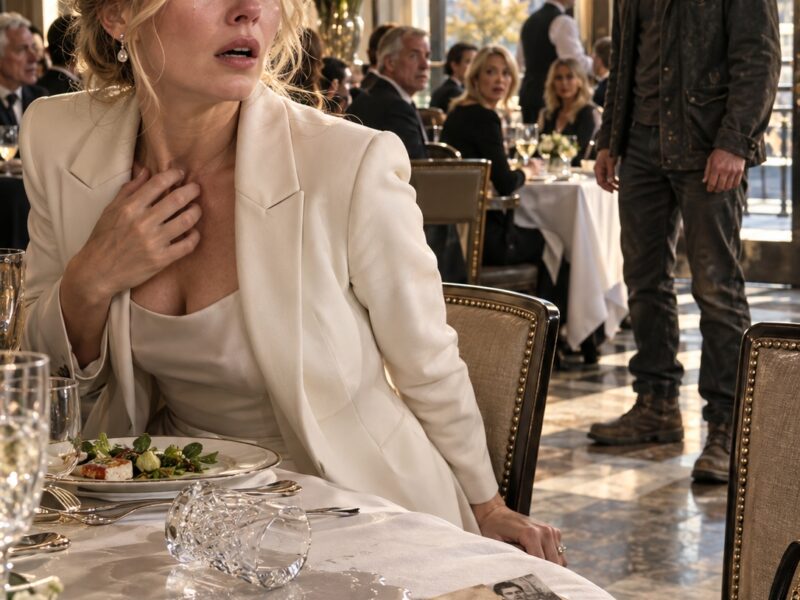
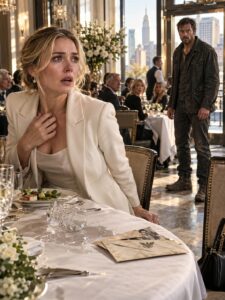
Across the dining room of the Belmont Grand, sunlight poured through forty-foot windows and flashed against crystal glasses, silverware, and polished marble. Around us sat senators’ wives, technology founders, hedge-fund managers, people accustomed to pretending they never stared.
That afternoon, every one of them stared.
Maris leaned forward in her yellow floral dress, her brown hair falling over one shoulder, and looked past me toward the rugged man standing beside the restaurant entrance.
Then she asked again.
“Mom?”
I couldn’t answer.
She pointed at the empty chair beside her.
“Can Dad eat with us?”
The glass in my hand slipped half an inch before I caught it.
Someone at the next table stopped speaking.
The waiter behind me froze.
And the man by the entrance slowly turned his head.
For one terrible second, I saw only pieces.
A faded charcoal jacket.
Old work boots.
A battered canvas tool bag.
Broad shoulders that seemed slightly bowed beneath an invisible weight.
Then he stepped into the light.
My body recognized him before my mind allowed his name to exist.
The scar near his left eyebrow was new.
The silver at his temples was new.
The exhaustion in his face was new.
But his eyes—
God.
His eyes were exactly the same.
Gray with a ring of blue around the iris.
The eyes I had watched close eight years ago in a photograph the Navy had given my family after telling us Rowan Mercer was presumed dead.
My chair scraped backward.
“No.”
The word came out so softly I barely heard it.
The man’s face changed.
Not surprise.
Not confusion.
Pain.
Pure, immediate pain.
“Celeste?”
My daughter looked from him to me.
I stood so fast my knee struck the underside of the table.
The crystal water glass tipped over.
Water spread across the white linen like something bleeding through a bandage.
“No,” I said again.
His lips parted.
“Celeste, I—”
“You’re dead.”
There are sentences you say because you believe them.
And there are sentences you say because the alternative would destroy the architecture of your entire life.
You’re dead.
I had repeated those words in hospital bathrooms when I was pregnant and vomiting so violently I thought I would faint.
I had repeated them in the nursery while assembling a crib alone.
I had repeated them on Maris’s first birthday when she smashed cake across her face and laughed with Rowan’s exact dimple.
I had repeated them every time she asked why other children had fathers in school photographs and she didn’t.
You’re dead.
You’re dead.
You’re dead.
But Rowan Mercer was standing thirty feet away from me, breathing.
And my daughter had somehow called him Dad before anyone had told her who he was.
Rowan took one cautious step forward.
I stepped back.
The movement hurt him. I saw it.
He stopped immediately.
“I didn’t know you were here.”
His voice was lower than I remembered. Rougher.
I stared at him.
“What?”
“I came to repair the refrigeration control unit downstairs. The restaurant manager called us yesterday. I was leaving.”
His hand tightened around the strap of his tool bag.
“I didn’t know you were here.”
Maris tugged my sleeve.
“Mom.”
I looked down.
Her expression had changed from curiosity to concern.
“Why are you scared?”
“I’m not.”
Children know when adults lie badly.
Maris glanced at Rowan again.
“Do you know him?”
That question nearly broke me more than seeing him had.
Do you know him?
I knew how Rowan Mercer took his coffee.
Black, one spoonful of honey when he thought nobody was watching.
I knew he hated sleeping with closet doors open.
I knew he drummed his thumb against his steering wheel whenever he was thinking.
I knew he had wanted a dog as a child but his mother was allergic.
I knew the exact place beneath his right ribs where he was ticklish.
I knew the way his voice changed when he was afraid but pretending not to be.
I had once believed I knew every important thing about him.
Then the government called and informed me that his unit had been hit during a classified operation overseas.
Several men confirmed dead.
Several missing.
Lieutenant Rowan Mercer among the missing, presumed dead.
I had been eleven weeks pregnant.
And I had never gotten the chance to tell him.
“Mom?”
Maris’s voice brought me back.
I looked at Rowan.
His gaze had dropped to her face.
He wasn’t looking at her the way adults usually looked at children they didn’t know.
He was studying her.
Her eyes.
Her nose.
The slight tilt of her chin.
His gaze moved to me.
Then back to her.
Something shifted behind his face.
“Celeste.”
It was almost a whisper.
“No.”
This time I knew exactly what he was asking.
He looked at Maris again.
“How old is she?”
My heartbeat slammed against my ribs.
“Mom,” Maris said, “why does he know your name?”
Rowan’s hand began to tremble.
He noticed and curled it into a fist.
“How old is she?”
I wanted to lie.
I had negotiated acquisitions worth billions of dollars without blinking. I had sat across from hostile investors, predatory competitors, federal regulators, reporters hoping I would make one careless statement.
I knew how to control a room.
But I could not control that restaurant.
Not with Rowan standing there.
Not with our daughter sitting between us.
“Eight,” I said.
He closed his eyes.
Only for a second.
When he opened them again, the color had drained from his face.
Maris watched him with the solemn intensity children reserve for adults who have forgotten they are being observed.
Then she slid out of her chair.
“Maris.”
She ignored me.
She walked toward Rowan.
He didn’t move.
Every muscle in his body seemed to lock.
She stopped three feet in front of him and looked upward.
“You look sad.”
A strange sound escaped him, halfway between a breath and a laugh.
“I guess I am.”
“You can sit with us.”
“Maris,” I said more sharply.
She turned.
“There’s an empty chair.”
Rowan looked at me.
He would not sit unless I allowed it.
That realization was almost unbearable.
Eight years earlier, Rowan had been the one man in my life who never waited for permission from anyone. He was funny, stubborn, impossibly alive. He drove too fast on empty highways and sang badly to old rock songs. He kissed me in elevators. He argued with my father without lowering his eyes.
The man standing before me now seemed to be asking permission just to exist in my daughter’s presence.
I looked at the empty chair.
Then at Maris.
Then at the ghost I had loved.
“Sit down,” I whispered.
Rowan placed his tool bag beside the wall.
He approached the table carefully, and only then did I notice something else.
He favored his left leg.
Not enough that most people would notice.
I noticed.
Once, I had known every movement his body made.
He pulled out the chair.
Before sitting, he paused.
His eyes moved automatically across the restaurant.
Entrance.
Kitchen doors.
Emergency exit.
Balcony staircase.
Hands of the man seated behind me.
Hands of the waiter approaching from his right.
He chose an angle that put his back against the wall.
And suddenly I understood something I had been too stunned to see.
Rowan had survived.
But survival had not returned him to me unchanged.
Maris climbed back into her seat.
“I’m Maris.”
He swallowed.
“I’m Rowan.”
“I know.”
His eyebrows drew together.
“You do?”
“The manager said your name.”
That explained it.
A little.
Not enough.
Maris studied him.
“You fix things?”
“I try.”
“Like refrigerators?”
“Sometimes.”
“Cars?”
“Sometimes.”
“Broken toys?”
He smiled faintly.
“Depends how broken.”
She nodded as though conducting a serious job interview.
“Mom throws broken things away.”
I almost laughed.
Almost.
Rowan looked at me.
“I remember.”
There was eight years of history inside those two words.
I reached for my napkin because my hands needed something to do.
Maris pushed the bread basket toward him.
“You can have one.”
“Thank you.”
He took a roll, but he didn’t eat.
Instead, he listened as Maris began telling him about a science project involving bean plants, soil acidity, and an argument she was having with a classmate named Zoe who apparently believed changing the amount of sunlight halfway through an experiment was “not technically cheating.”
Normally I would have reminded Maris not to monopolize a conversation.
That afternoon I said nothing.
I watched Rowan.
He listened to every word.
Not politely.
Completely.
His guarded face softened when Maris got excited. The corner of his mouth lifted when she made a joke. Once she pushed her hair behind her ear, and Rowan’s expression changed so abruptly that I felt it like a physical blow.
I did that.
When I was nervous, I pushed my hair behind my left ear exactly the same way.
He noticed.
Of course he noticed.
The waiter approached.
“Ma’am, would you like me to bring another place setting?”
I opened my mouth.
Rowan said, “I’m fine.”
Maris frowned.
“You need a plate.”
“I’m not hungry.”
“Everybody gets hungry.”
The waiter smiled nervously.
“I can bring the lunch menu, sir.”
Rowan looked at me.
I nodded.
The waiter hurried away.
For a few seconds, nobody spoke.
Then Maris asked the question I had feared since she was old enough to understand families.
“Do you have kids?”
Rowan stopped breathing.
I stared at the tablecloth.
He answered carefully.
“No.”
I closed my eyes.
“Not that I know of.”
The words hung there.
Maris considered them.
“That’s weird.”
Rowan gave a tiny laugh.
“Yeah.”
She dipped a piece of bread into olive oil.
“You’d probably be good at it.”
His eyes filled before he could stop them.
He turned his face toward the windows.
I wanted to say something.
I didn’t know what.
There are wounds money can hide.
There are wounds status can hide.
There are wounds eight years can cover with routines, meetings, private schools, security gates, charitable foundations, magazine profiles, annual reports and expensive clothing.
Then someone says six innocent words at a lunch table, and suddenly every wound is open again.
A tray crashed behind us.
The sound was explosive in the high-ceilinged dining room.
Rowan was on his feet before the plates hit the floor.
His chair slammed backward.
His body turned.
One hand reached instinctively toward his waist.
There was nothing there.
His eyes swept the room with terrifying speed.
Waiter.
Broken plates.
No weapon.
No threat.
No danger.
Only silence.
Everyone was staring again.
Rowan’s chest rose and fell.
He looked down at his hand.
Then slowly lowered it.
“I’m sorry.”
The waiter who had dropped the tray shook his head quickly.
“No problem, sir.”
But Rowan was no longer really in the restaurant.
I could see it.
His pupils were wider.
His jaw clenched.
He counted something under his breath.
“Rowan.”
He looked at me.
I remembered that look.
Not the fear.
The effort to hide fear.
“Sit down,” I said quietly.
He did.
Maris reached across the table.
Without asking, she placed her small hand over his.
His entire body went still.
“It was just plates,” she said.
Rowan looked at her hand.
“Yeah.”
“You’re safe.”
His throat moved.
“Yeah.”
Maris squeezed his fingers.
“You’re safe.”
For a man who had survived an explosion, captivity and years I knew nothing about, those two words appeared to hurt more than any weapon possibly could.
He looked away.
And that was when I realized I no longer wanted to ask how Rowan Mercer was alive.
I needed to know what had happened to him after he failed to die.
Eight years earlier, I had been twenty-six and arrogant enough to believe money could protect me from almost anything.
I was wrong.
My father, Victor Vale, had taught me that control was the closest thing human beings ever came to safety.
He built Vale Meridian Capital from a regional investment company into an international empire. By sixty, he could make governors return his calls and banks reconsider lending decisions with a single conversation.
He loved me.
I still believe that.
But Victor Vale had a dangerous way of loving people.
He believed protection and control were the same thing.
When I introduced him to Rowan, he disliked him instantly.
Not because Rowan was rude.
Rowan was never rude to my father.
That would have been easier.
He simply refused to be impressed.
At our first family dinner, my father asked Rowan what he planned to do after the Navy.
“Breathe,” Rowan replied.
My mother nearly choked on her wine.
Dad smiled without humor.
“I mean professionally.”
“So do I.”
I kicked Rowan under the table.
Later, in the driveway, I hissed, “You were deliberately difficult.”
“He asked a stupid question.”
“He was trying to understand your plans.”
“He was trying to calculate my value.”
“That’s unfair.”
Rowan leaned against his truck and looked toward the enormous Georgian house behind us.
“No, Celeste. It’s accurate.”
“You don’t know him.”
“And he doesn’t know me. But he decided I wasn’t enough for you before dessert.”
I folded my arms.
“You don’t know what enough for me is.”
His expression softened.
“I know.”
Then he kissed me beside his old pickup while my father watched through the library window.
I sometimes think that was the exact moment Dad decided Rowan Mercer would never belong in my life.
Two months later, Rowan received deployment orders.
He told me on a rainy Wednesday evening in my apartment.
I cried.
He pretended not to.
“How long?”
“I don’t know.”
“You always know something.”
“Not this time.”
“That means it’s dangerous.”
“All deployments are dangerous.”
“Don’t do that.”
“Do what?”
“Use a technically correct sentence to avoid telling me the truth.”
He stared at me.
Then he took my face between his hands.
“I have to go.”
“I know.”
“I’m coming back.”
“You can’t promise that.”
“Yes, I can.”
“No, Rowan.”
“I’m coming back.”
He kissed my forehead.
“Make plans.”
“For what?”
“For when I get home.”
I tried to smile.
“What kind of plans?”
“Something irresponsible.”
“Very specific.”
“A road trip.”
“Where?”
“Anywhere your father would hate.”
I laughed through my tears.
“Then we have forty-nine states to choose from.”
He grinned.
There he was.
My Rowan.
Alive.
Impossible.
Certain.
The night before he left, we sat on the floor of my apartment eating Chinese takeout because nearly everything else was packed. My father had pressured me to move into one of the company’s Manhattan properties, and I had finally agreed.
Rowan held up his fortune cookie.
“It says, ‘A surprising opportunity will arrive soon.’”
“That’s not a fortune. That’s LinkedIn.”
He laughed.
“What does yours say?”
I opened mine.
“‘What you love will return to you.’”
Rowan became quiet.
Then he folded the small paper and tucked it into his wallet.
“That one’s mine.”
“You can’t steal my fortune.”
“Already did.”
He left the following morning.
Four weeks later, I discovered I was pregnant.
I bought three tests.
Then two more.
I lined them up on the bathroom counter as if five identical answers might somehow form a committee and overturn reality.
Pregnant.
I sat on the bathroom floor for almost an hour.
Then I laughed.
Then I cried.
Then I put my hand over my still-flat stomach and whispered, “Your dad is going to lose his mind.”
I tried to contact Rowan.
Nothing.
That wasn’t unusual.
There were stretches during deployments when communication stopped.
I wrote him an email anyway.
Then another.
I drafted the message telling him about the baby at least twenty times.
I never sent it.
I wanted to tell him when I could hear his voice.
I wanted to experience his silence, then his disbelief, then that laugh.
I wanted one normal human moment before everything changed.
The call came eleven days later.
Not from Rowan.
From a naval liaison officer.
My father was beside me when I answered.
I remember the officer’s voice more clearly than I remember what I wore at my daughter’s birth.
There had been an incident.
Details were classified.
Several casualties confirmed.
Several personnel missing.
Lieutenant Rowan Mercer was among those missing.
Search and recovery operations were ongoing.
They did not officially say dead.
Not at first.
Hope can be cruel when institutions give it bureaucratic language.
Missing.
Unaccounted for.
Recovery operation.
Presumed.
Weeks passed.
Then months.
No Rowan.
His mother, Lorraine, called me every few days until grief made conversations impossible.
One night she whispered, “I keep thinking he’ll knock on the door.”
I understood.
I slept with my phone beside my face.
My pregnancy progressed.
My father began speaking about the baby as a problem requiring management.
“You need privacy.”
“I need Rowan.”
“You need reality.”
“He may be alive.”
“Celeste.”
“You don’t know.”
“The military has essentially concluded—”
“Essentially isn’t dead.”
He lowered his voice.
“You cannot build your life around a man who may never come home.”
“I’m having his child.”
Dad looked away.
That was the first time I understood he had hoped I might not.
He never directly asked me to end the pregnancy.
He was too intelligent for that.
He simply placed possibilities in front of me.
My age.
My career.
The press.
The instability.
The burden.
The absence of a father.
The effect on Vale Meridian’s succession strategy.
Every sentence sounded practical.
Every sentence made me feel sick.
Finally, I stood in his office and said, “If you mention my pregnancy as a corporate liability again, you will never meet your grandchild.”
My father stared at me.
I had never threatened him before.
He nodded once.
“All right.”
After that, he became supportive.
Or what Victor Vale considered supportive.
He arranged private doctors.
Security.
A remodeled penthouse.
A trust for the baby.
A nursery designed by someone whose consultation fee was larger than Rowan’s annual military salary.
But there was one thing all my father’s money could not purchase.
The man whose child I was carrying.
Maris was born during a thunderstorm.
Six pounds, nine ounces.
A furious little face.
A full head of dark hair.
When the nurse placed her against my chest, she stopped crying almost immediately.
I looked down.
And I saw Rowan.
Not literally.
Not yet.
But something inside me recognized him.
I began sobbing.
The nurse thought I was overwhelmed by childbirth.
I was.
But I was also grieving a man who would never know he had a daughter.
I named her Maris because Rowan once told me that if he ever owned a boat, he would name it Maris after the Latin word for “of the sea.”
He had been joking.
I remembered.
That was enough.
For eight years, I raised her alone.
The world eventually turned me into exactly what my father had always expected.
Disciplined.
Successful.
Controlled.
When Dad suffered a stroke five years later and stepped down, I became CEO of Vale Meridian.
Business magazines called me ruthless.
Financial newspapers called me visionary.
Employees called me demanding.
Competitors called me worse.
None of them knew that every night, regardless of where I was in the world, I called my daughter.
None of them knew there was still an old photograph in the locked drawer beside my bed.
Rowan in a Navy T-shirt, smiling at me from a beach in Virginia.
None of them knew I occasionally took it out after midnight.
None of them knew that I had never married.
There had been men.
Good men, mostly.
Educated.
Successful.
Appropriate.
One proposed.
I said no.
Another asked if I was still in love with Maris’s father.
I answered honestly.
“I don’t know how to stop loving someone who never got the chance to disappoint me.”
That relationship ended a week later.
Eventually I stopped trying.
It was easier to build companies than relationships.
Numbers followed rules.
Markets had patterns.
People vanished.
Until that Saturday afternoon at the Belmont Grand.
Maris returned to the table carrying a slice of chocolate cake large enough for three people.
A staff member followed her.
“I may have made a bad judgment regarding portion size,” the woman said apologetically.
Maris shook her head.
“It’s perfect.”
She sat beside Rowan again.
Then she noticed his expression.
“You’re crying.”
He wiped beneath one eye quickly.
“Something in it.”
Maris looked around.
“In your eye?”
“Yeah.”
“Both eyes?”
Rowan almost smiled.
“Apparently.”
She considered this suspicious answer and then cut a piece of cake with her fork.
She transferred it onto his untouched plate.
“There.”
He looked down.
“What’s that?”
“Emergency cake.”
I blinked.
“Emergency cake?”
Maris nodded seriously.
“Nana says chocolate helps when adults are having emotions they refuse to talk about.”
My mother.
Of course.
Rowan looked at me.
“You’re raising a dangerous woman.”
“She’s raising herself at this point.”
He laughed.
It was quiet.
But for one second, the years vanished.
He was twenty-nine again.
I was twenty-six.
And the future still belonged to us.
Then he reached for the fork.
His sleeve pulled back.
I saw the scars.
Not one.
Many.
Thin white lines crossed his forearm. A larger scar disappeared beneath his shirt cuff.
I stared.
He noticed.
He lowered his sleeve.
Maris was eating cake and didn’t see.
I did.
“Rowan.”
“Later.”
“What happened?”
“Not here.”
My voice tightened.
“You died.”
“No.”
“You disappeared for eight years.”
His jaw shifted.
“I didn’t choose that.”
“I know.”
“No.” He looked directly at me. “You don’t.”
The old defensive part of me rose instantly.
“Then explain it.”
Maris looked between us.
Rowan noticed.
His expression softened.
“Not here.”
I wanted to demand answers.
Instead, I looked at my daughter.
He was right.
Maris should not hear the worst parts of what happened in a dining room.
I signaled the restaurant manager.
“Is the private salon available?”
“Of course, Ms. Vale.”
Ten minutes later, we were seated in a smaller room overlooking the garden courtyard.
Maris had gone with the concierge to see the pastry kitchen after extracting a promise from me that no one would leave before she returned.
The door closed.
Silence.
Rowan and I were alone.
I spoke first.
“Start at the explosion.”
He looked toward the windows.
“There isn’t a version of this story you’re going to like.”
“I spent eight years believing you were dead. I think I can survive disliking the explanation.”
A muscle moved in his cheek.
Then he began.
The operation had taken place in a region he still would not name.
Even after eight years.
A convoy route.
Bad intelligence.
An explosive device large enough to lift the lead vehicle off the road.
Rowan remembered sound.
Then no sound.
He remembered waking with blood in his mouth and dust so thick he couldn’t see his hands.
Several members of his team were dead immediately.
Others were badly injured.
He had a fractured leg, cracked ribs and a deep wound across his back.
They moved anyway.
“There were six of us alive at first,” he said.
At first.
The phrase chilled me.
“What happened?”
His gaze lowered.
“We tried to reach the extraction point.”
“And?”
“Three of us did.”
My mouth went dry.
He told me enough to understand.
Not enough to make me see everything.
Perhaps that was mercy.
For days, they avoided armed patrols while carrying one teammate who could barely walk.
Water became a calculation.
Sleep became impossible.
On the fifth day, they were found.
“Rescued?”
He shook his head.
My hands tightened together.
“You were captured.”
“Yes.”
“How long?”
“I don’t know exactly.”
“How can you not know?”
“Because nobody gives prisoners calendars.”
The words came out sharper than he intended.
He immediately looked away.
“I’m sorry.”
“Don’t apologize.”
He rubbed his thumb against the edge of the table.
There it was.
The old habit.
Except now it looked less like thought and more like survival.
“Months,” he said. “Long enough.”
My eyes burned.
“Were you—”
“Celeste.”
The way he said my name stopped me.
“No.”
I understood.
He would not describe it.
Not today.
Possibly not ever.
“How did you escape?”
“There were two of us left. We got an opportunity. We took it.”
“Two?”
He nodded.
“What happened to the other man?”
Rowan stared past me.
“He made it home.”
Something in his voice said that was not the whole story.
I let it go.
“For a while, the Navy couldn’t release information about what happened. Parts of the operation were still active. There were security concerns. Medical evaluations. Debriefings.”
“You were in a hospital?”
“Several.”
“For how long?”
“About fourteen months, on and off.”
I felt physically ill.
“Fourteen months.”
“My leg needed reconstruction. There were infections.”
He paused.
“And other things.”
“Why didn’t anyone tell me?”
“You weren’t next of kin.”
“I was your partner.”
“We weren’t married.”
The sentence cut more deeply than it should have.
He saw it.
“I’m not saying that to hurt you.”
“I know.”
“My mother got limited information. By the time I was stable enough to ask questions, she had moved to Arizona to live with my sister. I asked about you.”
My heartbeat changed.
“What were you told?”
“That the Vales had relocated. Your old apartment was gone. Your number was disconnected. Your father’s office said you were unavailable.”
I stared at him.
“What?”
Rowan’s expression hardened slightly.
“I called Vale Meridian twice.”
“When?”
“About sixteen months after the mission.”
My skin went cold.
“Who did you speak to?”
“I don’t know. An assistant. Then someone from your father’s office.”
“What did they say?”
“That you had moved forward with your life and that contacting you would be disruptive.”
The room seemed to tilt.
“They said what?”
“I assumed you had gotten married.”
“I didn’t.”
“I know that now.”
“Did you leave your information?”
“Yes.”
“With whom?”
“I don’t remember the name.”
My father’s face appeared in my mind.
Not cruel.
Never openly cruel.
Controlled.
Certain.
Protective.
You cannot build your life around a man who may never come home.
I stood abruptly.
“Celeste.”
I walked to the window.
Outside, pedestrians moved along the avenue without knowing my life was collapsing behind glass.
“Did you try again?”
“Yes.”
“How many times?”
“Enough.”
“That isn’t a number.”
“Three calls. One letter.”
I turned.
“A letter?”
“Yes.”
“To where?”
“Your father’s office.”
I could hear blood rushing in my ears.
“I never received a letter.”
Rowan’s face changed.
Not much.
Enough.
“I figured.”
“No.”
“Celeste—”
“No, don’t do that. Don’t say it like you expected this.”
“I didn’t know what to expect.”
“You thought I ignored you?”
“For a while.”
The words punched the air out of me.
“You thought I knew you were alive and ignored you?”
“I was in bad shape.”
“That isn’t an answer.”
“It’s the only one I have.”
His voice remained controlled, but I saw his fingers tightening around the chair.
“I came home missing pieces of myself. Everybody I knew had built lives while I was gone. You were becoming successful. Your father’s people made it clear I wasn’t welcome.”
“So you stopped looking?”
His eyes flashed.
There he was.
The man who used to argue with me.
“No. I tried to find you privately. But you had security around you by then. Different addresses. Different numbers. Everything ran through Vale offices.”
“You could have shown up.”
“And done what?”
“Shown up!”
“Like today?”
“Yes!”
He stood.
His chair scraped backward.
“Look at what happened when I accidentally walked into the same restaurant as you.”
I flinched.
He saw it and lowered his voice.
“I didn’t know if you wanted me in your life.”
“You should have asked me.”
“I tried.”
The words landed between us.
I had no answer.
He turned away.
“I should have tried harder.”
His shoulders dropped.
“I know that.”
My anger cracked around the edges.
“When did you stop?”
“Trying to contact you?”
“Yes.”
“About four years ago.”
“Why?”
He laughed once, without humor.
“Because eventually silence becomes an answer.”
I looked at him.
He had carried that answer for four years.
And I had known nothing.
“When did you find out I wasn’t married?”
“A year ago. Article about you.”
“You knew where I was.”
“I knew where your company was.”
“And you still didn’t come.”
“I almost did.”
“When?”
“Last December.”
“What stopped you?”
His eyes met mine.
“I stood across the street from your headquarters for forty minutes.”
My breath caught.
“Then I watched you walk out with Maris.”
Silence.
“You saw her?”
“Yes.”
“Did you know?”
“No.”
His voice broke slightly.
“I thought she was your husband’s daughter.”
I closed my eyes.
“My nonexistent husband.”
“I didn’t know that.”
“You could have searched.”
“I didn’t want to become a man who stalked a woman from his past.”
I turned away.
The logic was reasonable.
That made it worse.
Two intelligent adults.
Two lives.
Eight years.
Destroyed not by one enormous betrayal but by a hundred small absences of information.
Then Rowan asked the question I knew had been coming since the moment I told him Maris was eight.
“Is she mine?”
My throat closed.
I looked at the man I had once loved enough to plan an entire future around.
He had survived what should have killed him.
He had spent eight years believing I had chosen a life without him.
And now I had to tell him he had lost something even greater than me.
“Yes.”
He didn’t move.
“Say it.”
“Rowan.”
“Please.”
I forced myself to breathe.
“Maris is your daughter.”
He stared at me.
Then he sat down.
Not gracefully.
His knees seemed to stop supporting him.
He covered his mouth with one hand.
For several seconds, nothing happened.
Then his shoulders began to shake.
I had seen men cry before.
My father cried at my mother’s funeral.
Executives cried after bankruptcies.
Friends cried through divorces.
This was different.
Rowan made no sound.
He simply folded forward as though some invisible force had struck him directly through the chest.
I moved toward him.
Stopped.
Then moved again.
I placed my hand on his shoulder.
He flinched.
Not from me.
From contact.
I almost pulled away.
Then he reached up and covered my hand with his.
“She’s mine.”
“Yes.”
“All this time?”
“Yes.”
“I have a daughter.”
“You have a daughter.”
His fingers tightened over mine.
“I have a daughter.”
This time the words came apart.
I sat beside him.
For one minute, maybe two, neither of us spoke.
Then he lifted his head.
His face was wet.
“Did she know about me?”
“No.”
“Why?”
“What was I supposed to tell her? That her father disappeared before I could tell him she existed? That he was probably killed somewhere I wasn’t even allowed to know about?”
“You could have told her my name.”
“I was afraid.”
“Of what?”
“That she would spend her life waiting for a dead man.”
The cruelty of the sentence reached me after I said it.
Rowan looked away.
“I’m sorry.”
“No.”
“I didn’t mean—”
“You did.”
His voice was gentle.
“And you weren’t wrong.”
That hurt more.
“I told her you died before she was born.”
He nodded slowly.
“She asked questions sometimes.”
“What did you say?”
“That you were brave. That you served your country. That you would have loved her.”
His eyes closed.
I whispered, “I never told her your name.”
“Why did she call me Dad?”
“I don’t know.”
We both looked toward the door.
Somewhere beyond it, Maris was probably asking a pastry chef twenty-seven questions about chocolate tempering.
Rowan rubbed both hands across his face.
“I can’t walk into her life because of biology.”
“No.”
“I know that.”
“I know.”
His voice became rough.
“But I want to know her.”
I looked at him.
“Celeste, I don’t know what I’m allowed to ask for.”
There was that word again.
Allowed.
It broke something in me.
“You’re allowed to want your daughter.”
His eyes met mine.
“Wanting isn’t enough.”
“No.”
“What does she need?”
The question surprised me.
Not what are my rights.
Not why did you keep her from me.
Not what do I get.
What does she need?
I sat back.
“She needs stability.”
“Okay.”
“She needs honesty.”
“Okay.”
“She gets attached to people easily.”
He swallowed.
“Okay.”
“You cannot appear in her life and disappear.”
Something moved in his face.
“I won’t.”
“You cannot promise that casually.”
“I’m not.”
“You don’t know what your life looks like six months from now.”
“Neither do you.”
“This is different.”
“How?”
“Because she already knows I stay.”
His expression hardened.
“So did you think I wouldn’t?”
“I don’t know.”
“That’s fair.”
The answer disarmed me.
He looked down.
“But if I say I’m staying, I mean it.”
I believed him.
That frightened me more than if I hadn’t.
The door opened.
Maris appeared carrying a small white box.
“Chef Lucia says these are macarons and technically they’re difficult, but I think she just doesn’t want people trying to make them at home.”
She stopped.
She saw our faces.
“You both cried.”
“No,” I said automatically.
Maris frowned.
“Mom, your mascara is under your eye.”
I wiped beneath it.
Rowan almost smiled.
Maris held up the box.
“I brought emergency dessert.”
Rowan looked at me.
Then at her.
Something fragile entered his expression.
Hope.
The most dangerous thing in the room.
That evening, after we returned home, Maris asked about Rowan before I had removed my shoes.
“Is he my dad?”
I stopped in the foyer.
Our house outside Greenwich had fourteen rooms, twelve bathrooms, a wine cellar I never used and enough square footage to make silence feel architectural.
That night, there was nowhere to hide.
“Why do you ask?”
“You told me Dad died.”
“He did. I thought he did.”
“So Rowan is Dad?”
I sat on the staircase.
Maris remained standing.
“How did you know?”
She shrugged.
“I didn’t.”
“You called him Dad.”
“I know.”
“Why?”
Another shrug.
“He looked at me funny.”
“Funny how?”
“Like I was something he lost.”
The answer took my breath away.
Children sometimes say things adults spend years avoiding because children have not yet learned to protect themselves from obvious truths.
I patted the stair beside me.
Maris sat.
“Yes,” I said. “Rowan is your father.”
Her eyes widened.
“Really?”
“Yes.”
“And he’s not dead?”
“No.”
“Was he pretending?”
“No.”
“Were you lying?”
“No.”
Her face changed.
“But you said he died.”
“I believed he had.”
“How do you believe someone dies when they don’t?”
There was no simple answer.
So I gave her the most honest one I could.
“Sometimes grown-ups receive information that isn’t complete. And sometimes terrible things happen far away, and people don’t know the whole truth for a long time.”
Maris was quiet.
“Did he know about me?”
“No.”
That hurt her.
I saw it instantly.
“He didn’t know you existed.”
“Why didn’t you tell him?”
“I tried to contact him when I was pregnant, but he disappeared before I could.”
“You didn’t find him after?”
“I thought he was dead.”
“He didn’t find us?”
“He tried.”
Maris looked at me sharply.
“What happened?”
I hesitated.
“I’m still figuring that out.”
She leaned against the stair rail.
“So he missed eight birthdays.”
“Yes.”
“Eight Christmases.”
“Yes.”
“My kindergarten graduation.”
“Yes.”
“The time I broke my wrist.”
“Yes.”
Her lip trembled.
“He didn’t know.”
“No, sweetheart.”
She stared at the floor.
Then she asked, “Is he sad?”
“Yes.”
“Are you?”
“Yes.”
“Are you mad at him?”
I thought about the hospital.
The scars.
The unanswered calls.
The letter I never received.
“I don’t know yet.”
Maris nodded.
For eight years old, she had always been frighteningly observant.
Then she asked the question I hadn’t prepared for.
“Do you still love him?”
I laughed softly from shock.
“Maris.”
“That means yes.”
“That means it is complicated.”
“Adults say complicated when the answer is yes but they don’t like it.”
I stared at her.
“Your grandmother teaches you too much.”
“Nana says you teach me not enough.”
That sounded exactly like my mother.
I covered my eyes.
Maris leaned against me.
“Can I see him again?”
My hand dropped.
“Do you want to?”
“Yes.”
“Why?”
She thought.
“Because he looked like he wanted to know me.”
That was the moment I understood this no longer belonged only to Rowan and me.
For years, I had controlled the story because I was the only person left to tell it.
Now the story had three owners.
And the smallest one had already begun making decisions.
Rowan did not call that night.
He did not call Sunday morning either.
By noon, I was irritated.
By two, I was angry.
By four, I realized I had become ridiculous.
I had spent eight years without him and somehow twenty-four hours of silence now felt insulting.
At 4:17 p.m., my phone rang.
Unknown number.
I answered immediately.
“Hello?”
“Hi.”
Rowan.
My stomach tightened.
“Hi.”
“I almost texted.”
“You could have.”
“I spent fifteen minutes wondering whether that would be too casual.”
Despite everything, I laughed.
He exhaled.
“Okay. That’s good.”
“What is?”
“You laughing.”
Silence.
Then he said, “How is she?”
“Maris?”
“Yes.”
“She knows.”
Another silence.
“How did she take it?”
“She has approximately forty thousand questions.”
“Sounds reasonable.”
“She wants to see you.”
I heard his breath stop.
“When?”
I looked through the kitchen window.
Maris was outside with our gardener, attempting to move a potted rosemary plant she had been explicitly told was too heavy.
“Wednesday?”
“I can make Wednesday.”
“Four o’clock.”
“I’ll be there.”
“Here.”
He hesitated.
“At your house?”
“Yes.”
“Do I need to wear something that will survive being judged by security personnel?”
“Probably.”
His humor surprised me.
Then I remembered.
It wasn’t new.
It had merely been buried beneath pain.
On Wednesday, Rowan arrived at 3:42.
Security called me.
“Ms. Vale, a Rowan Mercer is at the gate.”
“I know.”
There was a pause.
“He says he has an appointment.”
“He does.”
Another pause.
“Should we conduct standard visitor screening?”
I looked through the windows toward the gatehouse.
“No.”
“Ma’am?”
“Let him in.”
Rowan drove an eleven-year-old Ford pickup.
I knew its age because Maris researched the model the moment it reached the driveway.
“It’s old.”
“So is our house.”
“Our house has geothermal heating.”
“Cars don’t have geothermal heating.”
“Exactly.”
I looked at her.
“That argument made no sense.”
“It made enough.”
Rowan stepped out carrying a small paper bag.
No flowers.
No expensive gift.
No attempt to impress.
He looked at the house, then at me.
“Subtle.”
“I didn’t design it.”
“Your father?”
“My grandfather.”
“Somehow worse.”
Maris ran outside.
I nearly told her not to run down the stone steps.
Then I saw Rowan’s face.
I stayed quiet.
He crouched automatically as she approached.
“Hi.”
“Hi.”
“I brought something.”
He gave her the paper bag.
She opened it.
Inside was a small wooden box.
Not polished perfectly.
Not store-bought.
Handmade.
She lifted the lid.
Inside were compartments containing seeds.
Tomatoes.
Carrots.
Basil.
Sunflowers.
“Your mom said you garden.”
I blinked.
“I said that?”
“At lunch.”
I didn’t remember.
Rowan had.
Maris held up a packet.
“You bought me seeds?”
“No.”
“You stole them?”
He smiled.
“I collected some from the community garden where I volunteer and bought the rest.”
“Oh.”
She looked pleased.
Then suspicious.
“Are they expensive?”
“No.”
“Good.”
He glanced at me.
“Why is that good?”
“Mom buys expensive presents when she feels guilty.”
“Maris.”
Rowan coughed into his fist to hide a laugh.
She took his hand.
“Come see my garden.”
His face changed when she touched him.
He looked at me.
I nodded.
They walked toward the backyard.
I followed several paces behind.
For the next hour, Rowan did not act like a man trying to make up eight years in sixty minutes.
That might have been the thing that impressed me most.
He did not overwhelm her with affection.
He did not tell her she was beautiful every three minutes.
He did not demand a hug.
He did not call himself Dad.
He asked questions.
He listened.
When Maris showed him her failing tomato plant, he crouched in the dirt wearing a clean shirt and examined the leaves.
“Too much water.”
“I water every day.”
“That’s the problem.”
“Plants need water.”
“Yes.”
“So more water should be better.”
“That logic will destroy half the world.”
Maris frowned.
“What?”
“Nothing.”
He showed her how to check the soil with two fingers.
Then he let her do it.
I stood beneath the terrace and watched.
My phone vibrated repeatedly.
I ignored it.
Eventually Rowan noticed.
“You have somewhere to be?”
“I always have somewhere to be.”
“You can go.”
The words pricked me.
“This is my house.”
“That’s not what I meant.”
“I know.”
He returned to the garden.
There was no accusation in him.
That made me feel worse.
My phone vibrated again.
Chief operating officer.
Board issue.
I silenced it.
That evening Rowan stayed for dinner.
Not in the formal dining room.
Maris insisted on the kitchen.
She made grilled cheese with help from our housekeeper and burned one side badly enough to fill the room with smoke.
The alarm chirped.
Rowan stiffened.
Just for a second.
He looked toward the ceiling.
His breathing changed.
I saw it.
Maris didn’t.
“Sorry,” she said.
He blinked.
“For what?”
“The sandwich.”
He looked at the blackened bread.
“I’ve eaten worse.”
“How much worse?”
“Military food.”
“That bad?”
“International crime.”
She laughed.
Something inside me hurt.
Not because the scene was sad.
Because it was so ordinary.
Ordinary was what we had lost.
The following weeks became a careful experiment.
Rowan saw Maris twice a week.
At first, always with me nearby.
Then alone for short periods.
They went to a public garden.
A science museum.
A hardware store, which Maris somehow described as “surprisingly educational.”
One Saturday, Rowan invited us to the veteran center where he volunteered.
It was in a converted brick building outside Stamford.
Nothing about it looked like the facilities my foundation usually funded.
No glass atrium.
No donor wall.
No expensive branding.
Just old couches, folding tables, a workshop, a kitchen and people who looked as though they had learned not to expect much from institutions.
A man with a prosthetic leg saw Rowan enter.
“Well, look who brought civilians.”
Rowan gave him a look.
“Maris, Celeste, this is Ben Torres.”
Ben held out his hand to Maris.
“I served with your dad.”
It was the first time anyone had used those words casually.
Your dad.
Maris looked at Rowan.
He looked away.
She smiled.
Ben caught it.
His eyes softened.
“He talk about me?”
Maris asked.
Ben barked a laugh.
“He talks about you constantly.”
Rowan stared at him.
“I’ve known her three weeks.”
“Exactly. Imagine month two.”
Maris grinned.
Rowan muttered something inappropriate under his breath.
Ben laughed harder.
Later, while Rowan helped Maris sand a piece of wood in the workshop, Ben found me near the coffee machine.
“You’re Celeste.”
“I am.”
He studied me.
“You’re the photograph.”
My stomach tightened.
“What?”
Ben seemed to realize he had said too much.
“Nothing.”
“Mr. Torres.”
“Ben.”
“What photograph?”
He looked toward Rowan.
“He kept one.”
“For eight years?”
Ben didn’t answer directly.
“He had a rough time.”
“I know.”
“No.”
The word landed exactly as it had when Rowan said it.
Ben’s voice lowered.
“You know facts.”
I stared at him.
“What don’t I know?”
“That he almost didn’t make it home after he made it home.”
My chest tightened.
Ben took a paper cup from the dispenser but didn’t fill it.
“He couldn’t sleep. Couldn’t be around crowds. Wouldn’t ride in cars unless he was driving. Certain smells took him somewhere else. Some days he could barely leave his apartment.”
I looked through the workshop doorway.
Rowan was showing Maris how to hold sandpaper.
His hands were steady.
“He got better.”
“He got functional.”
I looked at Ben.
“There’s a difference?”
“Big one.”
My throat tightened.
“What helped?”
“Time. Therapy eventually. Work. Helping other guys. Routine.”
“And the photograph?”
Ben gave me a sad smile.
“You.”
I looked down.
“He thought you had moved on. Still kept it.”
“Why?”
“You’d have to ask him.”
I already knew.
That was the problem.
On the drive home, Maris fell asleep in the back seat.
I drove instead of using our chauffeur.
Rowan sat beside me.
For several miles, we said nothing.
Then I asked, “What photograph?”
His head turned.
“Ben talks too much.”
“What photograph?”
Rowan looked out the window.
“You at Virginia Beach.”
I remembered.
White sundress.
Wind destroying my hair.
Rowan holding the camera.
“You kept that?”
“Yes.”
“Why?”
“Celeste.”
“Answer me.”
He sighed.
“Because there were years when I needed proof my life before the mission was real.”
My grip tightened on the steering wheel.
“You thought it wasn’t?”
“Sometimes.”
I swallowed.
“Do you still have nightmares?”
He looked at me sharply.
“Ben again?”
“No.”
“You’re getting better at spotting things.”
“I used to know you.”
His expression shifted.
“Used to.”
That hurt.
“Do you?”
“Yes.”
“How often?”
“Less.”
“That isn’t a number.”
“Two or three nights a week.”
My chest tightened.
“That’s less?”
“It used to be every night.”
We drove another mile.
“Why didn’t you take the security jobs?”
“Who told you about those?”
“Maris asks questions. You answer them.”
“I answer hers.”
“And not mine.”
“Yours are harder.”
“Why?”
“Because I care what you think of the answers.”
The words silenced me.
He continued looking through the windshield.
“After I got out, some private companies offered a lot of money.”
“Security contracting.”
“Yes.”
“You refused.”
“Yes.”
“Why?”
“I was good at violence.”
The bluntness made my stomach twist.
“I didn’t want the rest of my life to reward me for the worst thing that ever happened to me.”
I had no answer.
“I fix machines because machines make sense,” he said. “Something breaks. You diagnose it. Replace what’s damaged. Repair what can be repaired.”
“And people?”
He smiled without humor.
“People keep broken parts.”
I looked at him.
He knew I wasn’t asking generally.
“What parts are you keeping?”
He stared ahead.
“All of them.”
The answer followed me home.
My father learned about Rowan three days later.
I had intended to tell him myself.
I should have known Victor Vale would never allow me that advantage.
He called at 7:03 on Monday morning.
“I hear Rowan Mercer is alive.”
No greeting.
No question.
I sat upright in bed.
“How?”
“Celeste.”
“How did you hear?”
“That is not important.”
“It’s important to me.”
“Your security reports eventually reach people who manage family risk.”
I closed my eyes.
“Dad.”
“I want to see you.”
“No.”
“Today.”
“No.”
“Celeste.”
“Did Rowan contact your office seven years ago?”
Silence.
There it was.
Not an admission.
Worse.
My father was rarely silent unless he was calculating.
“Did he?”
“I think this conversation should happen in person.”
My hand went cold.
“Did Rowan Mercer contact your office after he came home?”
“Come to the house.”
I hung up.
My father lived in Westchester, in the same property where he had judged Rowan over dinner a decade earlier.
I arrived forty minutes later.
He was in the library.
Older now.
Thinner.
The stroke had slowed his left hand but not his mind.
He looked at me as I entered.
“You should have told me.”
“You knew.”
“I heard yesterday.”
“No. Seven years ago.”
His expression remained controlled.
“Sit down.”
“I’m not sitting.”
“Celeste.”
“Did he contact you?”
My father looked toward the windows.
“Yes.”
The word detonated more quietly than the tray at the restaurant.
I stared at him.
“What did you do?”
“Nothing.”
“That’s impossible.”
“I did not facilitate contact.”
“Use normal language.”
His jaw tightened.
“I told my staff not to connect him to you.”
My vision blurred.
“You knew he was alive.”
“Yes.”
“When?”
“Approximately sixteen months after the incident.”
“And you didn’t tell me.”
“You were rebuilding your life.”
“I was raising his child!”
“You were also running a division of the company and recovering from years of grief.”
“Years?”
I laughed.
It sounded ugly.
“It had been sixteen months!”
“You were vulnerable.”
“He was alive.”
“He was unstable.”
I went still.
“What?”
“His medical situation was complicated.”
“How would you know?”
“I made inquiries.”
Of course he had.
Victor Vale never made a decision without creating a file.
“You investigated him.”
“I investigated a man who suddenly reappeared after being missing in a classified combat operation.”
“He was the father of my child.”
“He did not know that.”
“Because I never got to tell him!”
My father raised his voice.
“And telling him then would have solved what?”
The question stunned me.
He stood slowly.
“He had significant physical injuries. Psychological evaluations. No stable career. No stable home. You had an infant.”
“So you decided for me.”
“I protected you.”
“You lied to me.”
“I withheld information.”
I stared at him.
“Do you hear yourself?”
His face hardened.
“You are alive, successful, secure, and your daughter has had every opportunity.”
“She spent eight years without her father.”
“She had you.”
“That does not erase him!”
“No. But it gave her stability.”
I stepped closer.
“You let me mourn a living man.”
For the first time, something cracked in his expression.
Only slightly.
“I believed eventually you would stop.”
“Stop what?”
“Waiting.”
I laughed again.
This time tears came.
“You thought grief was safer than love.”
“I thought certainty was safer than chaos.”
“He wrote me a letter.”
My father looked away.
That was answer enough.
“Where is it?”
“Celeste.”
“Where is the letter?”
“I don’t know.”
“Don’t lie to me now.”
“I don’t know if it still exists.”
“You read it?”
“Yes.”
“What did it say?”
My father closed his eyes briefly.
“He apologized for contacting you. He said he had survived. He said he understood if you had moved on.”
I could barely breathe.
“What else?”
“He said he had tried several times to reach you.”
“What else?”
Silence.
“Dad.”
“He said if any part of you still wanted to speak to him, he would answer whenever you called.”
Something inside me shattered.
I turned away.
“Celeste.”
“Don’t.”
“I genuinely believed—”
“You had no right.”
“I am your father.”
“That gave you responsibilities. Not ownership.”
His face paled.
I had never spoken to him that way.
I didn’t care.
“You stole a decision from me. You stole one from Rowan. And you stole eight years from Maris.”
“I did not know the man would become capable of being a father.”
I turned so quickly he stepped back.
“You didn’t know?”
“No.”
“Neither did I.”
My voice dropped.
“That was supposed to be our risk to take.”
I left him standing in the library.
In the hallway, my hands shook so badly I couldn’t unlock my phone.
I called Rowan from the driveway.
He answered on the third ring.
“Celeste?”
“I know.”
Silence.
“I know about my father.”
More silence.
Then, “Okay.”
“He admitted it.”
“I’m sorry.”
“Why are you apologizing?”
“Because I know what that’s going to do to you.”
I closed my eyes.
“Do you still have the letter?”
“No.”
“He destroyed it.”
“I don’t know.”
“Tell me what you wrote.”
“Celeste.”
“Please.”
His breath moved through the phone.
“I don’t remember exactly.”
“You remember everything.”
“I remember pieces.”
“Tell me.”
He was silent for several seconds.
Then he said, “I wrote that I was alive.”
My eyes filled.
“I wrote that I should have found a way to contact you sooner.”
A tear slid down my face.
“I wrote that coming home wasn’t what I thought it would be.”
I covered my mouth.
“And I wrote that if you were happy, I wouldn’t interfere.”
“Rowan.”
“I said I loved you enough to leave you alone.”
I bent forward over the steering wheel.
“That’s the sentence he kept from me.”
Neither of us spoke.
Then Rowan said softly, “Maybe he thought he was protecting you.”
“You’re defending him?”
“No.”
“Then what are you doing?”
“Trying not to let the next eight years get destroyed by the last eight.”
I sat there in my father’s driveway and cried harder than I had the day the Navy told me Rowan was missing.
Because grief had been terrible.
But grief had been clean.
This was different.
This had a person to blame.
And blame is intoxicating when pain finally discovers an address.
For two weeks, I did not speak to my father.
Rowan never told me I should.
He also never encouraged my anger.
That irritated me.
One evening, after Maris had gone upstairs, he found me in the kitchen opening a bottle of wine.
“You’re angry at me.”
“No.”
“Yes.”
“I’m angry at everyone.”
“Better.”
“What does that mean?”
“It means I’m included in everyone.”
I poured a glass.
“You aren’t angry enough.”
“At your father?”
“Yes.”
“He took years from you.”
“He took years from you.”
“That too.”
“How can you be calm?”
Rowan leaned against the counter.
“I’m not calm.”
“You look calm.”
“I spent years learning how to look calm.”
The sentence stopped me.
He looked toward the stairs.
“Your father made a terrible decision.”
“A terrible decision?”
“You want me to call him evil?”
“I want you to hate him.”
“No.”
“Why?”
“Because Maris loves him.”
I stared.
“She barely sees him.”
“She still loves him.”
“That is not your problem.”
“Yes, it is.”
“No, it isn’t.”
“If I’m her father, then things that hurt her become my problem.”
My anger collapsed.
He continued.
“I’m not forgiving him today. Maybe not ever. But I’m not going to make your daughter choose between loving me and loving her grandfather.”
Our daughter.
He had said her.
Then our relationship to her.
Something about it reached inside me.
“You keep doing that.”
“What?”
“Being reasonable when I need someone to help me burn down a building.”
He smiled.
“I can recommend several safe demolition procedures.”
I laughed despite myself.
He smiled wider.
The room changed.
It was the first time we had been alone together at night since he returned.
I suddenly became aware of everything.
His sleeves rolled to his forearms.
The faint scar at his temple.
The distance between us.
The silence.
Eight years.
I looked away first.
Rowan noticed.
Of course he did.
“We should talk about something.”
My pulse changed.
“What?”
“Boundaries.”
That was not what my body had expected.
I almost laughed.
“Very romantic.”
“Exactly why we need them.”
I stared at my wine.
“We aren’t together.”
“No.”
“That was fast.”
“You want me to lie?”
“No.”
He crossed his arms.
“I loved you.”
I looked up.
“Past tense?”
He held my gaze.
“I don’t know what tense eight years does to love.”
Neither did I.
“So what boundaries?”
“I’m Maris’s father.”
“Yes.”
“I don’t want her thinking us being in the same room means we’re becoming a couple.”
My chest tightened.
“She hasn’t said that.”
“She asked me whether I’m going to marry you.”
I nearly dropped my glass.
“When?”
“Yesterday.”
“What did you say?”
“That you’d murder me if I answered.”
“Good.”
“She seemed disappointed.”
I rubbed my forehead.
“Of course she did.”
Rowan’s expression became serious.
“I won’t use her to get close to you.”
“I know.”
“And I don’t want you letting me get close to you because you feel guilty.”
“I’m not.”
“You feel guilty.”
“Yes.”
“So do I.”
“For what?”
“For not finding you.”
“You tried.”
“Not enough.”
“Rowan.”
“I could have done more.”
“You had just survived—”
“Don’t.”
His voice sharpened.
“Don’t turn me into something fragile because of what happened.”
“I’m not.”
“You are.”
“I’m trying to understand.”
“I know.”
His expression softened again.
“Just don’t make every bad decision I made sacred because I was injured.”
The insight stunned me.
For weeks, I had unconsciously begun excusing everything.
His silence.
His withdrawal.
His decisions.
Because suffering made criticism feel cruel.
He was telling me not to.
“You’re right.”
“I know.”
I threw a dish towel at him.
He caught it.
For one brief second, he smiled the exact grin I remembered.
My heart reacted before my mind could stop it.
He saw that too.
The smile disappeared.
Neither of us moved.
Then Maris called from upstairs.
“Mom!”
I stepped away.
“What?”
“Dad said I can use a power drill!”
I looked at Rowan.
He winced.
“I said eventually.”
“You have been a father for six weeks.”
“Apparently I’m already failing.”
“Go home, Rowan.”
He laughed.
And for the first time since he came back into my life, I watched him leave without fearing he would disappear forever.
Progress was strange like that.
It did not announce itself.
Sometimes it looked like trusting someone to drive away.
Months passed.
Not easily.
Not perfectly.
There were setbacks.
One night Rowan woke from a nightmare while staying in the guest room after a storm made driving unsafe.
I heard something crash at 2:14 a.m.
I found him sitting on the bathroom floor.
The lamp was broken.
His breathing was ragged.
He stared at the wall as if he didn’t know where he was.
I crouched several feet away.
“Rowan.”
No response.
“Rowan, you’re in my house.”
His eyes moved toward me but didn’t focus.
“Greenwich.”
Nothing.
“Maris is asleep upstairs.”
His breathing changed.
I continued.
“You came for dinner. There was a storm. The road flooded near the bridge. You stayed here.”
Slowly, the room returned to his face.
He looked at the broken lamp.
“Damn.”
“It’s a lamp.”
“I’m sorry.”
“Stop apologizing for furniture.”
He rubbed his hands over his face.
“I should leave.”
“It’s two in the morning.”
“I shouldn’t be here.”
“Why?”
He looked at me.
“You shouldn’t have to see this.”
There are moments when love does not feel like desire.
It feels like fury at someone for believing they must suffer invisibly to remain lovable.
I sat on the floor.
“You think hiding this makes it disappear?”
“No.”
“You think Maris will never see you struggle?”
His face tightened.
“I don’t want her to.”
“She will.”
“Celeste.”
“She will see me struggle too. She already has.”
“This is different.”
“Because yours has a diagnosis?”
He looked away.
“Because I could scare her.”
“Then teach her what’s happening.”
He stared at me.
“She’s eight.”
“She is eight, not stupid.”
“What do I tell her?”
“The truth in words she can carry.”
He laughed bitterly.
“You make that sound easy.”
“It isn’t.”
I leaned against the cabinet.
“But lying was easier for my father. Look what that did.”
He became quiet.
After a while, I asked, “What did you dream?”
He shook his head.
“All right.”
“You’re not going to ask again?”
“No.”
He looked almost suspicious.
I smiled faintly.
“I’m learning boundaries too.”
He lowered his head.
“Thank you.”
I stayed on the bathroom floor until his breathing returned to normal.
We did not kiss.
We did not confess love.
We did not turn trauma into romance.
At 3:07 a.m., we ate cereal in the kitchen because neither of us could sleep.
It was one of the most intimate nights of my life.
Maris learned about Rowan’s nightmares two weeks later.
Not because we planned it.
Because she overheard him speaking to his therapist on the phone.
She approached me that evening.
“Does Dad get scared?”
“Yes.”
“Of what?”
“Things that happened when he was in the military.”
“But they’re over.”
“Yes.”
She frowned.
“Then why is he still scared?”
I searched for the right words.
“Have you ever touched something hot?”
“Yes.”
“And afterward, when you saw the same stove, did you become more careful?”
“Yes.”
“Your brain remembered the danger.”
She nodded.
“Dad’s brain remembers danger very strongly. Sometimes even when he is safe.”
She thought for a while.
“Can it get better?”
“Yes.”
“Will it go away?”
“I don’t know.”
She considered this.
Then she asked, “Do I make him better?”
I immediately shook my head.
“That is not your job.”
Her expression fell.
“You make him happy. That’s different.”
“What’s the difference?”
“Making someone happy is something love can do. Making someone healthy is work they have to do too.”
She absorbed this.
“Okay.”
The next time a plate broke while we were eating dinner, Rowan stiffened.
Maris noticed.
She did not touch him.
She did not announce that he was safe.
She simply continued talking about school until his breathing settled.
After dinner he found me on the terrace.
“You taught her that.”
“Taught her what?”
“Not to make my fear the center of the room.”
“I explained some things.”
He looked through the glass doors at Maris.
“She’s incredible.”
“She is.”
“She gets that from me.”
I laughed.
“There he is.”
“Who?”
“The arrogance.”
“You missed it.”
I looked at him.
“Yes.”
The humor vanished from both our faces.
I could have taken the words back.
I didn’t.
“Yes,” I repeated. “I missed it.”
Rowan stared at the garden.
“I missed you too.”
Eight years compressed into silence.
Then he said, “I don’t know what we are.”
“Neither do I.”
“I don’t want to ruin this.”
“This?”
“Maris having both of us.”
“You won’t.”
“You can’t promise that.”
I smiled sadly.
“You used to hate when I said that.”
“I learned.”
“So did I.”
He looked at me.
“What do you want?”
The question was too large.
I answered the smallest part first.
“I want you to kiss me.”
His expression changed.
He did not move.
“Celeste.”
“I know.”
“Do you?”
“No.”
That made him laugh softly.
Then he stepped closer.
He stopped inches away.
Eight years ago, Rowan Mercer would have kissed me without hesitation.
This man waited.
I closed the distance.
The kiss was not dramatic.
No thunder.
No music.
No cinematic collapse into each other’s arms.
His mouth touched mine carefully.
Almost sadly.
The familiarity was worse than anything new could have been.
I remembered.
My body remembered.
Then he pulled away.
His forehead rested against mine.
“I’m not twenty-nine anymore.”
“I’m not twenty-six.”
“I’m difficult.”
“So am I.”
“I have days when I can’t be what you need.”
“You don’t know what I need.”
He closed his eyes.
“Neither do you.”
He was probably right.
I kissed him again anyway.
We did not suddenly become a couple.
That would have been easier to write about and harder to survive.
We dated.
Awkwardly.
Carefully.
Sometimes badly.
Our first actual dinner alone ended in an argument because I tried to pay for replacing the transmission in his truck.
“I can afford it.”
“I know.”
“Then why is this a fight?”
“Because it’s my truck.”
“That is not an explanation.”
“It is to me.”
“Your transmission is dying.”
“So I’ll fix it.”
“You work sixty hours a week.”
“Celeste.”
“Rowan.”
“You can’t solve every inconvenience by writing a check.”
“I can solve this one.”
“I don’t want you to.”
“Why?”
He stopped.
Then answered honestly.
“Because sometimes your money makes me feel like there’s no place in your life where I can contribute anything you don’t already have.”
The anger left me instantly.
I sat back.
“That isn’t true.”
“I know intellectually.”
“What do you think I need from you?”
His jaw tightened.
“I don’t know.”
“Then listen carefully.”
I leaned forward.
“I can hire drivers. Chefs. Security teams. Gardeners. Tutors. Lawyers. Therapists. Financial advisers.”
He looked down.
“I cannot hire someone to make Maris look the way she looks when you show up.”
He went still.
“I cannot hire someone who remembers who I was before everyone started calling me Ms. Vale.”
His eyes met mine.
“And I cannot buy eight years back.”
My voice softened.
“So stop competing with money. Money has already lost.”
He looked at me for a long time.
Then he smiled.
“Still not paying for the transmission.”
I threw my napkin at him.
Three months after Rowan returned, my father asked to see Maris.
I had been avoiding the decision.
Rowan knew.
“You have to decide.”
“I did.”
“No. You delayed.”
“He lied to us.”
“Yes.”
“He stole eight years.”
“Yes.”
“And you think I should let him see her?”
“I didn’t say that.”
“You’re thinking it.”
“I’m thinking Maris should eventually understand what happened.”
“She’s eight.”
“She doesn’t need every detail.”
I turned from the window.
“Why are you pushing this?”
He was quiet.
Then he answered.
“Because I know what it feels like when people decide who belongs in your life without asking you.”
That ended the argument.
We told Maris a version of the truth.
Grandpa had learned Dad was alive.
Grandpa made a wrong decision.
He believed he was protecting Mom.
He should have told her.
Maris listened without interruption.
Then she asked, “Did Grandpa make Dad go away?”
“No,” Rowan said.
We were sitting together in the family room.
“He didn’t cause what happened to me.”
“But he stopped you coming here.”
“He made that harder.”
“Are you mad?”
Rowan thought.
“Yes.”
“Do you hate him?”
“No.”
“Why?”
He looked at me before answering.
“Because being angry and hating someone are different.”
Maris looked at me.
“Do you hate Grandpa?”
Children are merciless.
“I’m working on my feelings.”
“That means maybe.”
Rowan coughed to hide a laugh.
I glared at him.
Maris stared at the rug.
“Can I see him?”
My chest tightened.
“Do you want to?”
“Yes.”
“Why?”
“Because he did something bad.”
“That’s why you want to see him?”
“I want him to explain.”
I stared at her.
Rowan smiled slightly.
“That definitely comes from you.”
My father arrived the following Sunday.
For perhaps the first time in his life, Victor Vale looked nervous entering my house.
Maris waited in the living room.
Rowan stood near the windows.
Dad stopped when he saw him.
Eight years of decisions stood between the two men.
“Rowan.”
“Mr. Vale.”
My father looked older.
“I owe you an apology.”
Rowan’s expression revealed nothing.
“You owe several people one.”
“Yes.”
Maris looked at her grandfather.
“Why didn’t you tell Mom?”
Dad turned toward her.
“Because I thought I was protecting her.”
“From Dad?”
“Yes.”
“Why?”
My father glanced at Rowan.
“He had been through very difficult things. I was afraid he could bring uncertainty into your mother’s life.”
Maris frowned.
“Was Mom happy?”
My father did not answer immediately.
“She was successful.”
“That’s not what I asked.”
I looked at Rowan.
He looked at the floor to hide a smile.
Dad swallowed.
“No.”
“Then your plan didn’t work.”
No executive in thirty years had dismantled Victor Vale that efficiently.
He nodded.
“No. It didn’t.”
Maris considered him.
“Did you think Dad was bad?”
“I thought he was damaged.”
Rowan’s expression tightened.
Maris looked at him.
Then back at my father.
“My tablet has a cracked screen.”
Dad blinked.
“What?”
“It still works.”
Silence.
“Dad has scars. He still works too.”
I covered my mouth.
My father closed his eyes.
When he opened them, they were wet.
“You’re right.”
Maris folded her arms.
“You have to say sorry to him.”
“I have.”
“Do it where I can hear.”
Rowan stepped forward.
“Maris.”
“No.”
He looked at her.
“This part is between adults.”
“But I’m in it.”
That silenced everyone.
She was right.
My father looked at Rowan.
“I was wrong.”
Rowan did not rescue him from the discomfort.
Dad continued.
“I believed your injuries and your circumstances meant you could only destabilize Celeste’s life. I did not trust her to make her own decision.”
His voice became quieter.
“And I did not know Maris existed when you first contacted me, but once I understood the full consequences of what I had done, I was ashamed.”
I stared at him.
“You knew later?”
“Yes.”
“How much later?”
“About a year.”
“And still said nothing.”
He looked at me.
“By then the lie had become larger than my courage.”
That was the most honest sentence I had ever heard my father speak.
Rowan looked at him.
“I don’t forgive you yet.”
Dad nodded.
“I understand.”
“But I won’t ask Maris to stop loving you.”
My father’s composure finally broke.
He looked away.
“Thank you.”
Rowan shook his head.
“Don’t thank me.”
He glanced at Maris.
“Earn it.”
My father did.
Slowly.
Not perfectly.
There were no dramatic family reunions.
No magical forgiveness.
He showed up.
He stopped trying to manage.
He learned to ask permission.
For Victor Vale, asking permission was practically a spiritual conversion.
Six months after the restaurant, I found Rowan and Maris beneath the oak tree behind our house.
Maris had a math workbook on her lap.
Rowan held an apple.
“This fraction makes no sense,” she said.
“It makes perfect sense.”
“It’s stupid.”
“Mathematics doesn’t care about your feelings.”
“Mom says people who say that usually have bad emotional intelligence.”
I stopped behind the open terrace door.
Rowan sighed.
“Your mother has weaponized therapy language.”
“I heard that,” I called.
He looked up.
Maris waved.
“Mom, Dad says fractions matter.”
“They do.”
“Why?”
“Because one day someone will offer you twenty-five percent ownership of something and hope you don’t understand that they’re cheating you.”
Rowan stared at me.
“That’s the darkest explanation of fractions I’ve ever heard.”
“It’s practical.”
He cut the apple.
“See? Half.”
Maris stared.
“I understood half before.”
“Quarter.”
“I understood quarters.”
“Then what don’t you understand?”
“Why I have to do homework on Saturday.”
Rowan looked at me.
“She’s yours.”
“Ours.”
The word came out naturally.
He froze.
So did I.
Maris did not notice.
Or pretended not to.
She stole a piece of apple and returned to her worksheet.
I walked across the grass.
Rowan’s eyes followed me.
There was still an empty place beside him on the blanket.
I sat.
Maris leaned against his shoulder.
Then, without looking up, she reached over and took my hand.
For a while, none of us spoke.
Sunlight moved through the oak leaves.
Somewhere near the garden wall, sprinklers clicked on.
A dog barked on the neighboring property.
Three ordinary sounds.
An ordinary afternoon.
Once, I had believed security meant gates.
Money.
Plans.
Knowing where danger was.
Controlling what happened next.
Rowan taught me something different.
Sometimes safety is not certainty.
Sometimes it is knowing that when certainty disappears, someone will remain beside you anyway.
A year after the Belmont Grand, Rowan spoke at a fundraiser for the veteran center.
He hated public speaking.
I knew because he had complained about it for three weeks.
“You’ve been shot at,” I told him backstage.
“People shooting at me were easier.”
“How?”
“I knew what they wanted.”
“And these people?”
“They want inspiration.”
“That does sound dangerous.”
He smiled.
Maris adjusted his tie.
“You’re crooked.”
“I was told this was straight.”
“Who told you?”
“Your mother.”
Maris looked at me.
“Mom is bad at ties.”
“Thank you.”
She fixed it.
Then she pulled a folded piece of poster board from behind the curtain.
“No.”
Rowan narrowed his eyes.
“What is that?”
“Nothing.”
“Maris.”
She grinned and ran toward the auditorium.
“What did she make?”
“I have no idea.”
“You know.”
“I genuinely don’t.”
He looked suspicious but was called toward the stage before he could interrogate me.
The auditorium held nearly six hundred people.
Donors.
Veterans.
Families.
Doctors.
Volunteers.
Rowan walked to the podium.
For a moment, he simply stood there.
I knew what he was doing.
Finding exits.
Measuring the room.
Breathing.
Then he began.
“I was asked to talk tonight about survival.”
His voice was steady.
“I’m not very good at that subject.”
A few people laughed.
He continued.
“Most of us imagine survival as one dramatic moment. A battlefield. A hospital room. A car accident. A diagnosis. A day where something terrible happens and somehow you remain alive.”
He paused.
“But staying alive and living are not always the same thing.”
The room became very quiet.
“When I came home, people called me lucky.”
His hands rested on the podium.
“They were right.”
He looked down.
“They were also wrong.”
I felt my throat tighten.
“I had survived something I was not supposed to survive. And for a long time, I believed that meant I should automatically know how to be grateful.”
He looked toward several men from the center.
“But gratitude doesn’t cure nightmares.”
A few nodded.
“Being called a hero doesn’t teach you how to stand in a grocery store when someone drops a glass bottle behind you.”
A deeper silence.
“And surviving war does not automatically teach you how to survive peace.”
I saw Ben Torres wipe beneath his eye.
Rowan continued.
“What helped me were not dramatic things.”
His gaze found Maris and me.
“They were small things.”
My heart began to pound.
“Someone sitting near me without demanding that I explain why I couldn’t sleep.”
He looked at me.
“Someone trusting me to show up even after life had taught them people disappear.”
Then he looked at Maris.
“And one day, an eight-year-old girl offered me a chair.”
Maris lifted her poster.
MY DAD IS MY HERO.
Rowan stopped.
The entire room disappeared from his face.
For one second, he was only a father looking at his daughter.
His eyes filled.
Maris grinned.
He exhaled shakily.
“I should clarify that she has very low standards.”
Laughter broke through the room.
Maris shouted, “Keep talking!”
He laughed.
Then his expression became serious again.
“We talk a lot about second chances.”
His gaze moved across the audience.
“But second chances are misleading.”
I listened.
“You rarely get the first life back.”
Those words settled over me.
“You don’t return to the person you were before the thing that broke you. You don’t erase the years you lost. You don’t undo every mistake.”
He looked toward me again.
“You build something new with what survived.”
My eyes blurred.
“That is harder than pretending the past never happened.”
His voice softened.
“But it is also more honest.”
Afterward, hundreds of people wanted to speak with him.
He endured it for twenty-three minutes.
Then I saw his shoulders tighten.
I touched his arm.
“You’ve done enough.”
He looked relieved.
We slipped through a side hallway toward the courtyard.
Maris ran ahead.
Outside, the night air was cool.
Rowan loosened his tie.
“You did that.”
“What?”
“The sign.”
“I did not.”
“She spelled hero correctly.”
“She has spell-check.”
He looked offended.
“She used poster board.”
“Yes.”
“You bought poster board.”
“Rowan.”
He smiled.
Maris was spinning beneath the courtyard lights.
He watched her.
“You know what scares me?”
I slipped my hand into his.
“What?”
“That I love this enough to lose it.”
I looked at him.
There are fears you should not dismiss.
So I didn’t tell him nothing bad would ever happen.
I didn’t say we had already suffered enough.
The universe does not negotiate with fairness.
Instead, I squeezed his hand.
“So do I.”
He looked at me.
“That’s your comforting response?”
“Yes.”
“It’s terrible.”
“It’s honest.”
He smiled.
I leaned against his shoulder.
“For years, I thought loving someone meant believing they would never leave.”
He looked down at me.
“I was wrong.”
“What does it mean?”
“Choosing them even though one day you might lose them.”
Rowan was quiet.
Then he kissed my forehead.
“Still terrible.”
I smiled.
“Still honest.”
Two years after the Belmont Grand, we returned to that restaurant.
Not deliberately.
The reservation had been made for my mother’s birthday, and I realized where we were only when we walked through the doors.
Maris realized immediately.
“This is the Dad Restaurant.”
Rowan groaned.
“We are not calling it that.”
“Yes, we are.”
My mother laughed.
My father, who had become significantly less terrifying since semi-retirement and humiliation by his granddaughter, said nothing.
The host led us toward a large table near the windows.
I stopped.
Same section.
Almost the same table.
Rowan noticed.
“You okay?”
I looked toward the entrance.
I could still see him there.
Faded jacket.
Tool bag.
Ghost.
Then I looked at the man beside me.
He still wore scars.
He still had nightmares.
He still volunteered three days a week at the veteran center and repaired industrial equipment the rest of the time.
He had moved into our house only after a year of arguing that he did not want to “accidentally become financially dependent on a billionaire.”
We had eventually compromised.
He paid half the grocery bill.
It was ridiculous.
It mattered to him.
Therefore it mattered to me.
He had proposed beneath the oak tree with a ring he bought himself despite my repeated statement that I could not possibly care less what it cost.
I said yes before he finished asking.
We were getting married in the spring.
Small ceremony.
No magazines.
No press.
Maris was planning most of it, which meant there was a nonzero possibility of sunflower-yellow tablecloths and a chocolate fountain.
I looked at Rowan.
“I’m okay.”
He studied me to make sure.
Then nodded.
At the table, Maris sat between us.
Again.
Exactly as she had the first afternoon.
A waiter approached.
“Would anyone like sparkling water?”
Maris answered for everyone.
“Dad wants regular.”
Rowan looked at her.
“I can speak.”
“I’m helping.”
“I don’t need help.”
“Mom says everyone needs help.”
He looked at me.
“You have created a monster.”
“Genetics.”
“Unclear which side.”
“Definitely yours.”
Maris rolled her eyes.
Then she saw something near the entrance.
A restaurant employee stood beside a little boy, perhaps six years old. The child looked frightened.
His mother appeared moments later, rushing from the restroom.
The boy grabbed her hand.
Nothing dramatic.
Nothing important to anyone else.
But Rowan watched them.
His expression became distant.
I touched his wrist.
He looked at me.
“You here?”
His mouth lifted.
“Yeah.”
He turned his hand and laced his fingers through mine.
“I’m here.”
Maris heard him.
She leaned against his arm.
He kissed the top of her head.
For eight years, I believed the greatest tragedy of my life was that Rowan Mercer had died before learning he was a father.
Then I discovered something more complicated.
He had lived.
And living had not guaranteed us anything.
Not reunion.
Not forgiveness.
Not family.
Those things had to be chosen.
Again and again.
My father had spent his life believing love meant preventing pain.
I once believed love meant holding on tightly enough that nobody could disappear.
Rowan believed for years that love meant leaving people alone if you thought your presence might burden them.
We had all been wrong.
Love was not control.
It was not absence.
It was not sacrifice performed without permission.
Sometimes love was simply telling the truth and trusting another person with what they chose to do with it.
Sometimes it was staying in the room after the truth hurt.
Sometimes it was apologizing without demanding forgiveness.
Sometimes it was accepting that healing did not return anyone to the person they had been before.
And sometimes—
sometimes it was an empty chair in an expensive restaurant.
A little girl who did not understand why her mother had gone pale.
A tired man who believed the best years of his life were already behind him.
And six words nobody at that table would ever forget.
Can Dad eat with us?
Years later, when Maris asked me whether I believed she had somehow recognized Rowan that afternoon, I told her the logical answer.
No.
She had overheard his name.
She noticed that he knew mine.
She saw the way we looked at each other and made a child’s intuitive guess.
There were explanations.
There are always explanations.
Maris listened patiently.
Then she smiled.
“That’s not what happened.”
“What happened?”
She was older by then.
Old enough to roll her eyes at almost everything I said.
Old enough that Rowan had begun pretending not to panic whenever she mentioned dating.
She looked toward the backyard where her father was repairing one of the garden gates.
“I just knew him.”
I smiled.
“That isn’t scientific.”
“I know.”
“Your father will be disappointed.”
“No, he won’t.”
She was right.
Rowan hated explanations that tried to make every human mystery smaller.
Maris stepped toward the door, then stopped.
“Mom?”
“Yes?”
“Are you glad I asked him to sit down?”
Through the window, Rowan looked up.
Our eyes met.
Even after all those years, I could still see every version of him at once.
The young Navy officer promising he would come home.
The man standing inside the Belmont Grand with scars beneath his sleeves.
The father crying silently after discovering he had an eight-year-old daughter.
The survivor sitting on a bathroom floor at two in the morning.
The man beneath the oak tree teaching fractions with an apple.
The husband who still occasionally woke reaching for dangers that were no longer there.
The father who showed up.
Again.
Again.
Again.
I looked at Maris.
“Yes.”
Outside, Rowan lifted one hand impatiently, signaling that he needed someone to hold the gate straight.
Maris opened the door.
“He needs help.”
I followed her into the sunlight.
“No,” I said softly. “I think we all did.”
And that was the part of our story nobody could see from the outside.
People loved telling the dramatic version.
The billionaire woman.
The presumed-dead soldier.
The daughter who recognized her father.
The impossible reunion.
They wanted to believe the miracle happened when Rowan walked into the restaurant alive.
It didn’t.
That was only the beginning.
The miracle was everything afterward.
It was Rowan choosing therapy on mornings when disappearing into himself would have been easier.
It was me learning that money could provide comfort without purchasing healing.
It was my father learning that protecting people by controlling them could wound them more deeply than the danger he feared.
It was Maris discovering that fathers were not heroes because they never became afraid.
They were heroes because sometimes they were afraid and stayed anyway.
It was all of us understanding that second chances are not given in one glorious moment.
They are built quietly.
Dinner by dinner.
Conversation by conversation.
Apology by apology.
Ordinary Saturday by ordinary Saturday.
Until one day, years after everything fell apart, you look across a backyard and realize the life you believed was destroyed did not return.
Something else grew in its place.
Not perfect.
Not untouched.
Not the life we had planned when we were young enough to believe plans mattered more than people.
Something scarred.
Something difficult.
Something honest.
Something ours.
Rowan finally managed to straighten the garden gate.
Maris stepped back and inspected his work.
“It’s crooked.”
“It is not.”
“It definitely is.”
I stood beside her.
“It’s a little crooked.”
Rowan stared at both of us.
“I survived captivity for this?”
Maris smiled.
“You survived so Mom could annoy you forever.”
He looked at me.
“Apparently.”
I slipped my arm around his waist.
He kissed my temple.
And beneath the old oak tree, on an afternoon nobody would ever write an article about, Rowan Mercer laughed.
Not like the man he had been before.
Not exactly.
Like the man he had fought very hard to become.
I listened.
And for once, I did not think about the eight years we lost.
I thought about the years waiting ahead.
Not guaranteed.
Not controlled.
Not protected from pain.
Simply ours to live.
Together.
And for the first time in my life, that was enough.









