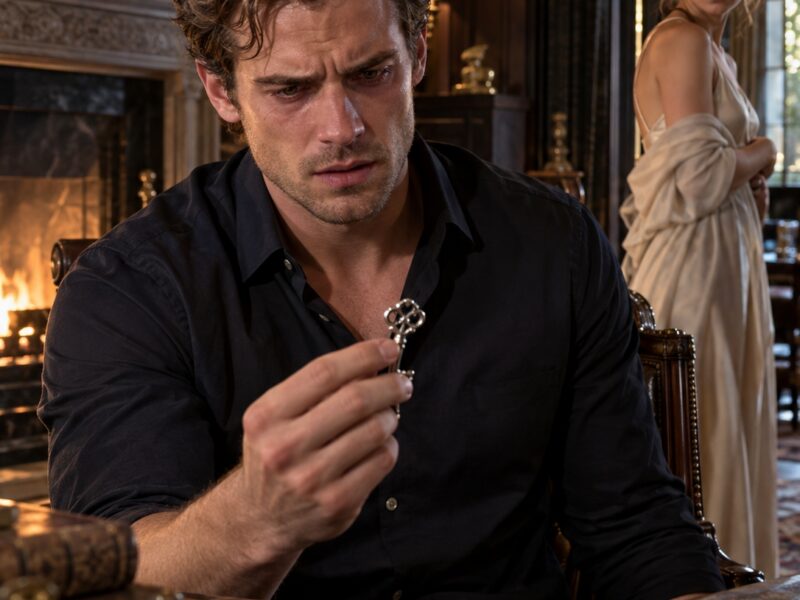
My Housekeeper’s Three-Year-Old Daughter Made a Face Only My Missing Girlfriend Used to Make — Then Her Mother Told Me Emily Had Sent Her Into My House
“Lucas, Rosie isn’t the secret I’ve been keeping from you.”
For several seconds, I couldn’t hear anything except the antique clock ticking behind me.
Tick.
Tick.
Tick.
It was ridiculous how loud it suddenly seemed.
Clara stood in the doorway of the dressing room, one hand wrapped around the tiny fingers of her three-year-old daughter. A few minutes earlier, Rosie had been smiling at me with the fearless curiosity children have before adults teach them which rooms they are allowed to enter and which questions they are not supposed to ask.
Now she wasn’t smiling.
Neither was Clara.
And I had the unmistakable feeling that something I had spent three years trying to bury was about to climb out of the ground.
I looked at Clara.
“Then what is?”
Her eyes dropped.
“Not here.”
I almost laughed.
There was nothing funny about the expression on her face.
“Clara, you just admitted you’ve been keeping something from me for almost two years.”
“I know.”
“And now you’re telling me we can’t talk about it?”
“Not in front of Rosie.”
My anger arrived quietly.
That was usually how it happened with me.
I had grown up in a family where shouting was considered a failure of control. Whitmore men didn’t slam doors. We didn’t throw glasses. We didn’t raise our voices across dining tables.
We destroyed one another politely.
“Then tell me what you can tell me.”
Clara’s mouth opened.
Before she could answer, Rosie tugged on the side of her skirt.
“Mommy?”
Clara immediately looked down.
“Yes, sweetheart?”
“Are you sad?”
The question changed her face.
For half a second, whatever fear had been there disappeared and something softer replaced it.
“No.”
Rosie frowned.
“You have crying eyes.”
“I’m okay.”
It was the kind of lie adults told children because we believed changing the vocabulary could change the truth.
Rosie didn’t believe her.
She lifted one tiny hand and wiped Clara’s cheek.
And something inside me stopped.
Emily used to do that.
Not exactly that.
She didn’t wipe tears from my face.
Emily touched people when words failed her.
A hand on my wrist under a restaurant table when she sensed I was uncomfortable.
Her fingers brushing my shoulder as she passed behind my chair.
A palm pressed briefly against my chest after an argument, as though she needed to remind herself that beneath all my defenses there was still a heartbeat.
Small gestures.
Almost nothing.
Except when you loved someone.
Then they became a language.
And Rosie had been speaking that language since the moment she wandered into a room she had never been invited into.
I turned away.
“Take her downstairs.”
Clara straightened.
“I’ll come back.”
“No.”
She froze.
“Leave Rosie with Mrs. Dalton in the kitchen. Then come to my study.”
My voice was colder than I meant it to be.
Clara nodded.
Rosie didn’t.
She planted her little shoes against the carpet and frowned at me with such seriousness that under different circumstances I might have laughed.
“Are you going to yell at Mommy?”
The question caught me off guard.
“No.”
“Promise?”
I looked into her enormous hazel eyes.
Those eyes bothered me.
The shape.
The color.
The way she narrowed them when she didn’t believe an adult.
I had seen that before too.
“I promise.”
Rosie considered me for another second.
Then she pointed two fingers at her own eyes and turned them toward me.
“I’ll know.”
A breath of laughter escaped me before I could stop it.
Rosie seemed satisfied.
Clara didn’t.
She took her daughter’s hand and led her from the room.
Their footsteps faded along the corridor.
I remained where I was.
Alone.
Eventually, I turned toward the mirror.
A thirty-two-year-old man stared back at me.
Successful by every definition my father had taught me to respect.
Whitmore Development operated projects in five states. Newspapers occasionally printed photographs of me standing beside mayors and investors while holding ceremonial shovels at construction sites. Business magazines had described me as disciplined, private, strategic, and once—my father had framed this particular article—“the natural continuation of an American real-estate dynasty.”
The house outside Boston had twelve bedrooms.
Two kitchens.
A wine cellar I barely entered.
A library large enough to belong to a university.
Enough polished stone that every footstep echoed.
Enough money to ensure I never had to wait for a table, stand in an airport security line longer than necessary, or wonder whether a medical bill would ruin my life.
And somehow none of it had been enough to find one missing woman.
Three years earlier, I had convinced myself losing Emily was a wound that would eventually become a scar.
Something visible but painless.
Something I could organize into the architecture of my life.
I had been wrong.
Because a three-year-old girl had walked into my private room and made one expression with her face.
One expression.
And suddenly Emily was everywhere again.
I went downstairs.
Clara was waiting in my study.
She stood beside the fireplace with both hands clasped tightly in front of her.
The fire wasn’t lit. The October afternoon had turned the windows gray, and the room seemed colder than the rest of the house.
I closed the door behind me.
“Start talking.”
Clara swallowed.
“Rosie’s father was Daniel Bennett.”
I stared at her.
“My husband,” she added.
“You told the agency you were widowed.”
“I am.”
Her voice cracked.
“Daniel died before Rosie was born.”
Something inside me loosened.
Relief.
Immediate.
Ugly.
I hated myself for it.
I walked behind the desk and placed both palms against the wood.
“So Rosie isn’t—”
“No.”
Clara knew what I was asking before I could finish.
“She isn’t your daughter.”
I nodded once.
Of course she wasn’t.
There had been no reason to think she was.
No rational reason.
But resemblance is dangerous when grief has been starving for evidence.
For one absurd moment, seeing Rosie mimic Emily had made my mind construct possibilities faster than logic could destroy them.
The answer should have ended the question.
Instead, it created another.
“Then why did you look terrified when I noticed the resemblance?”
Clara said nothing.
“And don’t tell me there isn’t one.”
“I wasn’t going to.”
“Rosie looks like Emily.”
A pause.
Then Clara whispered, “Yes.”
One word.
That was all.
Yet the room seemed to shift around it.
I stared at her.
“How do you know Emily?”
Clara closed her eyes.
When she opened them again, tears were gathering along her lower lashes.
“Because Emily is my sister.”
I didn’t move.
For a moment I genuinely believed I had misunderstood her.
“No.”
“She is.”
“Emily’s last name was Carter.”
“Her professional name.”
“She never mentioned a sister named Clara Bennett.”
“My name wasn’t Clara Bennett when you knew her.”
Clara looked directly at me.
“I was Clara Carter.”
Something cold moved through my chest.
Memory is cruel because it rarely returns in order.
It gives you fragments.
A rainy Sunday.
Emily sitting barefoot on my kitchen counter.
A half-finished cup of coffee.
My asking whether she had family somewhere.
Her saying, “Not much.”
Another evening.
A Vermont postcard on her refrigerator.
My asking who sent it.
“My sister.”
I had forgotten that.
No.
That wasn’t true.
I had buried it.
“You’re the sister who moved to Vermont.”
Clara’s expression changed.
“You remember?”
“Emily said you married someone who restored old houses.”
For the first time that afternoon, Clara almost smiled.
“Daniel.”
Her gaze drifted toward the floor.
“He could repair anything except his own terrible coffee.”
The smile disappeared as quickly as it came.
“He died in a highway accident six weeks before Rosie was born.”
My anger didn’t vanish.
But for a moment it had nowhere to go.
“I’m sorry.”
“Thank you.”
I sat slowly.
The woman who had worked inside my house for nearly two years was the younger sister of the woman I had once planned to marry.
There are revelations so large your mind refuses to absorb them all at once.
Instead, it begins rearranging smaller details.
The first morning Clara arrived.
The way she paused when she saw the library.
The questions she asked about which rooms needed cleaning.
The fact that she never seemed impressed by the house.
The occasional expression on her face when she looked at me too long.
“You applied for this job knowing exactly who I was.”
“Yes.”
“Why?”
Clara looked toward the window.
Beyond it, the Whitmore grounds disappeared beneath a flat Massachusetts sky.
“Because Emily asked me to.”
My body went completely still.
“When?”
“Two years ago.”
The chair scraped violently across the floor when I stood.
“You spoke to Emily two years ago?”
“Yes.”
“Where?”
“I can’t tell you.”
I stared at her.
“You can’t tell me?”
“I promised her.”
“She disappeared from my life.”
“I know.”
“No goodbye. No explanation. One week we were looking at apartments together, and the next her phone had been disconnected.”
“I know.”
“I went to her building. Her landlord told me she had moved out.”
“I know.”
“I called every hospital I could think of.”
Clara looked down.
“I know.”
My throat tightened.
“I thought she was dead.”
That finally broke something in Clara.
Her hand rose to her mouth.
“I know.”
I turned away because I couldn’t look at her anymore.
Three years.
Three years of wondering whether Emily had stopped loving me.
Three years wondering whether she had been hurt.
Three years waking occasionally at three in the morning with the irrational certainty that if I checked my phone, there would finally be a message.
There never was.
I had hired investigators.
I had searched public records.
I had called people who barely remembered her.
Eventually, everyone around me began saying the same thing in different ways.
Lucas, if someone wants to disappear, sometimes you have to let them.
So I had tried.
I buried myself in Whitmore Development.
I bought properties.
I restored buildings.
I negotiated deals.
I became very good at being a man who didn’t need answers.
And all that time, Emily’s sister had been walking through my front door every morning.
Polishing furniture.
Speaking to Mrs. Dalton.
Packing Rosie’s lunch.
Watching me.
“Why would Emily send you here?”
“She didn’t send me here to watch you.”
I turned.
“Then why?”
Clara’s answer was almost too soft to hear.
“To watch the house.”
A different kind of silence followed.
“What does that mean?”
“She wanted to know whether someone was still coming here.”
“Who?”
“I don’t know.”
“You expect me to believe that?”
“I know how it sounds.”
“No, Clara. I don’t think you do.”
She reached into the pocket of her apron.
When her hand emerged, something small rested in her palm.
She crossed the room and placed it on my desk.
A key.
Silver.
Old.
I recognized it immediately.
And just like that, my anger disappeared.
“Where did you get this?”
“Emily.”
I picked it up.
The metal was cold against my fingertips.
Three years earlier, that key had opened a narrow drawer built into an antique writing desk in my library.
Emily loved that desk.
Sunday mornings, she would sit there surrounded by books, architectural drawings and coffee cups while sunlight moved slowly across the rug.
She called it her corner.
I used to tease her because technically the entire library belonged to me.
She would look over her glasses and say, “Money bought the room. I claimed the corner. Different legal systems.”
After she disappeared, I opened that drawer.
Empty.
The key was gone.
So was Emily.
Now I was holding it again.
“What did she tell you?”
Clara’s voice dropped.
“She said if you ever recognized Rosie’s expression, it meant you still remembered enough to hear the truth.”
I looked at her.
“That makes no sense.”
“It didn’t make sense to me either.”
“Where is Emily?”
“I genuinely don’t know now.”
One word caught me.
“Now?”
Clara hesitated.
“The last time I saw her was eighteen months ago.”
My heartbeat changed.
“She was alive eighteen months ago?”
“Yes.”
“Was she safe?”
Clara didn’t answer immediately.
That hesitation frightened me more than almost anything else she had said.
“Clara.”
“She was frightened.”
“Of whom?”
“She wouldn’t tell me.”
I stepped closer.
“Then tell me why she left.”
Clara’s eyes filled again.
“She thought you betrayed her.”
The sentence landed somewhere deeper than anger.
“Betrayed her how?”
“I don’t know everything.”
“Then tell me what you do know.”
Clara lowered herself into the chair opposite my desk.
“About three weeks before Emily disappeared, she found documents connected to Whitmore Development.”
“What documents?”
“I never saw them.”
“Financial?”
“I think so.”
“That makes no sense. Emily was an architectural historian. She had nothing to do with our finances.”
“She was researching one of your restoration projects.”
And suddenly I knew which one.
“The Ashford.”
Clara nodded.
The Ashford Hotel.
A nineteenth-century property near Beacon Hill.
Whitmore Development had acquired it with plans to restore the exterior, modernize the interior, and preserve several historically significant sections.
Emily had loved the project.
She spent months buried in original architectural plans, preservation records, old photographs, deeds and ownership archives.
At the time, I thought it was just another building to her.
Apparently it wasn’t.
“She found something in the old records,” Clara said. “Something that didn’t match the modern ownership documents.”
“What?”
“She wouldn’t tell me over the phone.”
“Why?”
“Because she thought someone was listening.”
My first instinct was disbelief.
Then memory answered before I could.
The last month Emily and I were together.
She had changed.
Not dramatically.
That was what bothered me now.
The signs had been small enough to dismiss.
She checked windows.
She once asked whether my office computers were secure.
Another night, while we were eating dinner, she asked whether my father still had access to my private company accounts.
I laughed.
I told her Theodore Whitmore could barely attach a file to an email without calling his assistant.
Emily didn’t laugh.
At the time I thought she was tired.
Now I could see the expression on her face.
She had been afraid.
“Why didn’t she tell me?”
Clara looked at me.
“She tried.”
“What?”
“The night before she disappeared.”
“No.”
“She went to see you.”
“She didn’t.”
“She did.”
“I was in New York.”
Clara frowned.
“You weren’t.”
“I was at the Mercer Hotel in Manhattan.”
“No, Lucas. Emily called me from outside this estate.”
The room seemed to contract.
“She said your car was here.”
“That’s impossible.”
“She said she saw you through the library window.”
“I was in Manhattan.”
“She believed you were here.”
I was about to repeat myself.
Then a memory surfaced.
My car.
At the time, I owned two identical black Mercedes sedans.
One was usually kept at the Boston office.
My father occasionally used it.
So did my executive assistant.
“Did she speak to me?”
“No.”
“Then she didn’t see me.”
“She thought she did.”
“What happened?”
Clara looked uncomfortable.
“She saw someone leave your study carrying the Ashford files.”
“Who?”
“She never told me.”
“Why not?”
“Because she recognized them.”
I caught the word.
Them.
Not him.
Not her.
Them.
“Someone she knew?”
“Yes.”
“And then?”
“She received an envelope.”
“What was inside?”
“Photographs.”
My stomach tightened.
“Photographs of what?”
“You.”
“With whom?”
“I don’t know. She destroyed them.”
I let out a short, bitter laugh.
“So someone sends Emily photographs of me, she decides I’m involved in whatever she discovered, and then she disappears?”
“It wasn’t that simple.”
“Then make it simple.”
Clara stood.
“She believed those photographs proved you were connected to whatever she had found.”
“And you believed her?”
“I believed my sister was terrified.”
“That isn’t what I asked.”
She met my eyes.
“No.”
I waited.
“I never believed you wanted to hurt her.”
I hated how much that mattered.
I looked down at the silver key.
“What does this open now?”
“The same drawer.”
“It’s empty.”
“No.”
My eyes lifted.
Clara shook her head.
“Emily put something back.”
“When?”
“Eighteen months ago.”
I didn’t ask another question.
I left the study.
Clara followed me through the hallway.
The library doors were open.
Inside, the familiar smell of leather, cedar and old paper greeted me.
Nothing had changed.
That was the strange thing about houses.
People could disappear.
Marriages could collapse.
Families could lie for generations.
But furniture waited patiently in the same place.
I crossed directly to Emily’s writing desk.
My hand trembled slightly when I inserted the key.
It turned.
I pulled the drawer open.
Empty.
I looked at Clara.
“There’s nothing here.”
“She said you’d need to look beneath it.”
I removed the drawer completely.
For years I had owned that desk without realizing the wooden base underneath was slightly raised.
I pressed it.
Nothing.
I pressed again, harder.
Click.
A thin wooden panel lifted.
My breathing stopped.
An envelope lay beneath it.
My name was written across the front.
LUCAS.
I knew that handwriting.
I still had birthday cards in a box upstairs bearing those same letters.
Emily.
For the first time in years, my hands genuinely shook.
I opened the envelope.
A photograph slid into my palm.
Emily stood outside a small coastal house.
Her hair was shorter.
She looked thinner.
Older somehow.
Not old.
Changed.
But she was smiling.
Alive.
I stared at her until the room around me disappeared.
There she was.
The woman I had mourned without knowing whether I had the right to mourn her.
The woman I had hated on some nights because hating her hurt less than missing her.
The woman whose coffee mug I had kept for a year before finally letting Mrs. Dalton put it away.
Alive.
At least when the photograph was taken.
I turned it over.
Three handwritten lines covered the back.
If Clara gives you this, then something changed.
My chest tightened.
Below it:
I’m sorry I believed what they wanted me to believe.
And finally:
But I still can’t come home.
I read the words once.
Then again.
Then a third time.
I looked at Clara.
“Why?”
“I don’t know.”
“You saw her.”
“Yes.”
“She gave you this.”
“Yes.”
“And you never asked why she couldn’t come home?”
“Of course I asked.”
“And?”
“She wouldn’t tell me.”
I wanted to be angry.
But my anger had become too crowded.
There was relief inside it now.
Fear.
Hope.
Betrayal.
And something even worse.
Possibility.
For three years, I had learned how to survive Emily’s absence.
Now someone had handed me proof that the absence had been a choice made under circumstances I didn’t understand.
That meant I could lose her all over again.
I turned the photograph over.
Something else remained in the envelope.
A folded sheet of paper.
I opened it.
Only four lines.
Lucas, the Ashford records were never about the hotel.
They were about your family.
Ask your father why Margaret Whitmore’s name was removed from the original trust.
And whatever he tells you, ask to see the blue ledger.
I stared at the words.
Margaret Whitmore.
My grandmother.
She had died when I was eleven.
“What blue ledger?”
“I don’t know,” Clara said.
Neither did I.
But I knew someone who might.
My father lived in the guest house on the eastern side of the estate.
Calling it a guest house was an example of the language wealthy families use to make absurd things sound ordinary.
It had four bedrooms, a library, a private terrace, and a greenhouse Theodore Whitmore treated with more tenderness than he had ever shown most human beings.
At seventy-one, my father was officially retired from Whitmore Development.
In practice, retirement meant he called executives at inconvenient hours and reminded them he had founded the company.
I found him in the greenhouse.
The air smelled of wet soil and roses.
He was trimming a rosebush.
“Lucas.”
He glanced at me.
Then at the photograph in my hand.
The shears stopped.
That was all.
A tiny movement.
But I had spent thirty-two years studying Theodore Whitmore.
I knew the difference between surprise and fear.
And for perhaps the first time in my life, I watched my father become afraid.
“Where did you get that?”
I held Emily’s note toward him.
“What is the blue ledger?”
He didn’t answer.
I stepped closer.
“What is it?”
Theodore slowly placed the shears on the bench.
“Close the door.”
“No.”
“Lucas.”
“Three years ago, Emily Carter disappeared.”
His jaw tightened.
“Today I learned she discovered something involving our family. So you have two choices. You tell me what this is right now, or I start calling attorneys, auditors, archivists and every board member who has ever worked for Whitmore Development.”
My father studied me.
Then something in his posture collapsed.
Not dramatically.
His shoulders simply dropped.
“I wondered when this would come back.”
My pulse accelerated.
“What would?”
He walked to an old wooden bench and sat.
“The company you inherited isn’t exactly the company I built.”
“That sounds like a riddle.”
“No.”
He looked up.
“It’s a confession.”
I said nothing.
For the first time, Theodore looked seventy-one.
“When your grandmother Margaret died, she left controlling interests in several properties to a trust.”
“I know.”
“No.”
His eyes held mine.
“You know the version we told you.”
My stomach tightened.
“What version?”
“The trust had another beneficiary.”
“Who?”
“A woman named Eleanor Vale.”
I searched my memory.
Nothing.
“Who was she?”
My father took a breath.
“Margaret’s daughter.”
I stared at him.
“My aunt?”
“Your half-aunt.”
“My grandmother had another daughter?”
“Yes.”
“And no one thought I should know?”
“My father refused to acknowledge her publicly.”
There was shame on Theodore’s face now.
Something I had almost never seen.
“Eleanor was born before Margaret married your grandfather.”
The greenhouse suddenly felt too warm.
“What does any of this have to do with Emily?”
“The Ashford Hotel was one of the properties originally belonging to Eleanor’s share of the trust.”
“But Whitmore Development owns the Ashford.”
“Yes.”
“How?”
My father looked away.
“That’s the problem.”
“Theodore.”
He hated when I called him by his first name.
He had hated it since I was seventeen and discovered it was the fastest way to remind him that being my father didn’t make him my king.
This time he didn’t correct me.
“The documents were changed after Margaret died.”
I felt cold despite the greenhouse heat.
“Changed by whom?”
“My father.”
My grandfather.
The man whose portrait hung in the Whitmore Development boardroom.
The man whose name was engraved on buildings.
The man I had been raised to admire as if ambition could become morality simply by surviving long enough.
“Did you know?”
“Not initially.”
“But later?”
“Yes.”
“And you did nothing?”
“I was twenty-eight.”
I laughed once, without humor.
“You were old enough to know what theft was.”
“The company was collapsing.”
“So?”
“My father told me correcting the records would destroy everything. Hundreds of people could lose their jobs.”
“That isn’t an answer.”
“No.”
Theodore stared at the floor.
“It was the answer I accepted.”
Silence filled the greenhouse.
Somewhere behind me, water dripped from an irrigation pipe.
Once.
Twice.
Three times.
I thought about the company.
About the Whitmore name.
About all the speeches my father had given me about stewardship.
Responsibility.
Legacy.
Words wealthy families love because they make inheritance sound like sacrifice.
“Where is Eleanor?”
“She died years ago.”
“Did she have children?”
My father looked at me.
“One daughter.”
Something tightened inside my chest.
“What was her name?”
He hesitated.
“Marianne.”
“And Marianne?”
“I lost track of her.”
“You lost track of her?”
“She changed her name.”
“To what?”
“I don’t know.”
I stared at him.
Then I began seeing Emily again.
Emily surrounded by old property records.
Emily searching family trees.
Emily comparing deeds.
Birth certificates.
Trust documents.
Ownership transfers.
Emily wasn’t only researching a building.
She had been excavating a family.
“She found Eleanor.”
My father slowly nodded.
“I think so.”
“And someone wanted her to stop.”
His expression changed.
“I never wanted Emily harmed.”
I looked at him.
“That wasn’t what I asked.”
“I know.”
“Who else knew?”
He didn’t answer.
“Who else knew, Dad?”
“Lucas, this isn’t something you solve by confronting people.”
“Apparently ignoring it for thirty years didn’t work either.”
I turned toward the greenhouse door.
“Wait.”
I stopped.
“The blue ledger.”
I looked back.
My father was pale.
“It belonged to Margaret.”
“What was in it?”
“Everything.”
“Define everything.”
“Your grandmother kept handwritten records. Properties. Trust payments. Transfers. Beneficiaries. She didn’t trust accountants to be the only people who knew where money went.”
“Where is it?”
“I thought it had been destroyed.”
“Thought?”
“If Emily found it…”
He stopped.
“If Emily found it, what?”
“She could prove Eleanor’s inheritance was diverted.”
The sentence hung between us.
Proof.
Not suspicion.
Not a discrepancy buried in old archives.
Proof.
“Where would Margaret have hidden it?”
Theodore shook his head.
“I don’t know.”
I believed him.
That frightened me too.
I left without saying goodbye.
For the rest of the afternoon, I couldn’t think about anything except Emily.
Alive.
At least eighteen months earlier.
I returned to the library and laid her photograph on the desk.
Clara remained nearby but gave me space.
I studied every detail.
Emily’s shorter hair.
The way the wind had pushed several strands across her cheek.
The white porch railing.
Gray shingles.
A blue mailbox.
A narrow strip of ocean visible behind the house.
I tried to identify the coastline.
Maine?
Massachusetts?
Rhode Island?
Somewhere farther south?
Then I noticed something I had missed.
A reflection in the window behind Emily.
Someone had taken the photograph.
Obviously.
But the glass had caught part of the photographer.
A vague human shape.
A woman.
I took out my phone and photographed the original, then enlarged the reflection.
Pixels blurred.
The face was impossible to see.
Clara leaned over my shoulder.
“Do you recognize her?”
“No.”
I enlarged it again.
Clara suddenly went still.
“What?”
She pointed.
“Her necklace.”
The reflected woman wore a circular pendant.
Small.
Metallic.
Clara touched her own throat unconsciously.
“I’ve seen that before.”
“Where?”
“Emily had one exactly like it.”
I looked from Clara to the photograph.
“Then who is holding the camera?”
Clara stared at the reflection.
“I don’t know.”
Tiny footsteps sounded in the hallway before either of us could say anything else.
Rosie appeared in the library doorway.
Mrs. Dalton hurried behind her.
“I’m sorry, Mr. Whitmore. She escaped.”
Rosie ignored the accusation.
She marched toward me with the solemn purpose of someone delivering classified information.
In both hands, she carried a plate.
On the plate sat one crooked cookie.
“I brought you this.”
I crouched.
“For me?”
“You look sad.”
“I’m okay.”
Rosie frowned immediately.
“That’s what Mommy says when she’s not okay.”
Behind her, Clara covered the beginning of a smile.
I took the cookie.
“Thank you.”
“You have to eat it.”
“Right now?”
“Yes.”
“Is that part of the deal?”
She nodded.
“Okay.”
I took a bite.
It was slightly burned on one side.
Rosie watched until she was convinced I had fulfilled my contractual obligation.
Then her attention shifted.
She noticed the photograph in my other hand.
Her entire face changed.
“Oh!”
Clara stiffened.
“What, sweetheart?”
Rosie stepped closer.
One tiny finger landed directly on Emily’s face.
“That’s Aunt Emmy.”
Nobody moved.
I looked at Clara.
Clara looked at Rosie.
Then back at me.
“You told me Rosie hadn’t seen Emily since she was a baby.”
“She hasn’t.”
Rosie shook her head vigorously.
“Yes I did.”
Clara crouched.
“Rosie.”
“Yes?”
“When did you see Aunt Emmy?”
Rosie thought.
Watching a three-year-old search her memory is different from watching an adult do it.
Adults look inward.
Children look around as though the answer might be sitting somewhere in the room.
Finally, Rosie pointed toward the windows.
“When the leaves were orange.”
I stopped breathing.
Autumn.
Last autumn.
Months ago.
Not eighteen months.
I looked at Clara.
She seemed as shocked as I was.
“Rosie,” she said carefully, “where did you see Aunt Emmy?”
“At the little house.”
“What little house?”
“The one with the ducks.”
Clara’s voice changed.
“Who took you there?”
Rosie smiled.
“Grandma.”
Clara stopped breathing.
I looked between mother and daughter.
“Your mother?”
Clara stood slowly.
“Our mother died twelve years ago.”
Rosie frowned.
“No, Mommy.”
She pointed at Emily’s photograph.
“Grandma has the same necklace.”
I looked down at the reflection again.
The circular pendant.
Clara grabbed the edge of the desk.
“My mother had one like that.”
“You just said she died.”
“She did.”
“How?”
“A fire.”
Something about the way she answered bothered me.
“Did you see her body?”
Clara looked at me.
The color drained from her face.
“No.”
The word barely existed.
I felt a chill crawl along my arms.
“You never saw her?”
“There was a fire. We were told—”
She stopped.
Rosie tugged at her skirt.
“Mommy?”
Clara looked down as if she had temporarily forgotten her daughter was there.
Rosie pointed toward Emily’s photograph again.
“Grandma said Aunt Emmy was waiting for Angry Face to remember.”
My heart stopped.
“Angry Face?”
Rosie looked at me.
There was no hesitation.
She meant me.
I crouched again until our eyes were level.
“What exactly did Grandma say?”
Rosie became serious.
“She said you have something that belongs to Aunt Emmy.”
“What do I have?”
Rosie shrugged.
For a second I thought that was all we would get.
Then her eyes widened.
She remembered.
“The blue book.”
Clara made a small sound behind me.
I stayed perfectly still.
The blue ledger.
“Rosie, did Grandma show you the blue book?”
She nodded.
“Where?”
Rosie turned.
She scanned the library.
Bookshelves.
Windows.
Fireplace.
Then she raised one arm.
Her finger pointed directly above the mantel.
At the enormous portrait of Margaret Whitmore.
“Behind that lady.”
I slowly stood.
My grandmother stared down from the painting.
Margaret Whitmore.
I remembered almost nothing about her death.
I was eleven.
What I remembered was her perfume.
Her hands.
The strange hard candies she kept in a silver dish.
And a sentence she once told me when I broke an antique compass and tried to hide it.
People usually hide things close to where they want them remembered.
At eleven, I thought she was talking about the compass.
Now I wasn’t sure.
The portrait had hung there for thirty years.
I had walked underneath it thousands of times.
My father had walked underneath it.
Executives.
Attorneys.
Accountants.
Guests.
Emily.
I looked at Clara.
She looked terrified.
“Help me.”
We moved a chair away from the wall.
The frame was heavier than it appeared.
Together, we lifted it.
The bottom edge came away first.
Then the top.
Dust drifted through the air.
And behind Margaret Whitmore’s portrait was something that should not have been there.
A narrow brass panel.
My heartbeat became audible.
I ran my fingers along the edge.
There was a small recessed latch.
I pressed it.
Click.
The panel opened.
Inside was a hidden compartment.
And sitting inside it was a faded blue leather ledger.
For a moment, nobody spoke.
I reached toward it.
Then Clara gasped.
Not because of the ledger.
Because something was resting on top of it.
An envelope.
White.
Clean.
No yellowing.
No dust.
Recent.
Very recent.
I stared at it.
Then at the handwriting across the front.
My blood went cold.
I knew those letters.
I had just seen them on the photograph.
I had birthday cards upstairs covered in them.
Emily.
Someone had placed this envelope inside a compartment hidden behind my grandmother’s portrait.
Someone who knew the blue ledger was here.
Someone who had been inside this house recently.
My hand hovered above it.
“Lucas…”
Clara’s voice sounded far away.
I picked up the envelope.
Six words were written across the front.
Six words that changed every answer I thought I had found that day.
LUCAS — DO NOT TRUST CLARA YET.
For several seconds, I couldn’t move.
Then I turned around.
Clara was staring at the envelope.
Her face had gone completely white.
“What is this?” I asked.
She shook her head.
“I don’t know.”
“Emily wrote it.”
“I can see that.”
“She told me not to trust you.”
“Lucas—”
“You came into my house because she asked you to.”
“Yes.”
“You knew she was alive.”
“Yes.”
“You knew she thought someone had betrayed her.”
“Yes.”
“You had the key.”
“Yes, but—”
“And now I find this sitting on the evidence she disappeared over.”
“I have never seen that envelope before.”
Her voice cracked.
For the first time since the conversation began, I didn’t know whether the fear in her face meant she was frightened for me—
or frightened of what I was about to discover about her.
I looked down at the blue ledger.
Thirty years of family history might have been trapped inside it.
Property transfers.
Payments.
Names.
Proof that the company I had inherited was built partly on an inheritance stolen from a woman whose existence my family had erased.
Emily had found the trail.
My father had known part of the truth.
Someone had manipulated Emily into believing I was involved.
Someone had frightened her badly enough to disappear.
And somehow a three-year-old child knew more about where Emily had been than either Clara or I supposedly did.
The room suddenly felt different.
Not like my library.
Like a crime scene no one had realized was a crime scene.
I looked at Clara again.
Her eyes were wet.
“Lucas, please.”
“Please what?”
“Whatever you’re thinking, don’t decide anything until you open it.”
“The ledger?”
“The envelope.”
I stared at the handwriting.
Emily’s handwriting.
Three years ago, I would have trusted those letters more than almost anything in the world.
Three hours ago, I would have trusted Clara more than I did now.
Three minutes ago, I thought the greatest secret in the room was hidden inside a blue leather book.
I had been wrong every time.
And then, beside Clara, Rosie whispered something so quietly I almost didn’t hear her.
“Mommy…”
Clara looked down.
Rosie pointed at the envelope in my hand.
Her little face had lost all trace of playfulness.
“That’s what Grandma told Aunt Emmy too.”
Clara froze.
I stared at Rosie.
“What did Grandma tell Aunt Emmy?”
But Rosie only moved closer to her mother.
Outside the windows, evening had begun to settle over the estate.
The library darkened around us.
Margaret Whitmore’s portrait rested crookedly against the wall.
The hidden compartment stood open.
The blue ledger waited inside.
And in my hand was a message from the woman I had spent three years trying to forget.
DO NOT TRUST CLARA YET.
For the first time that day, I understood the most frightening possibility of all.
Emily had not simply disappeared because she believed a lie.
She had spent three years trying to decide whom she could safely tell the truth to.
And somehow, after all that time, she still wasn’t sure about her own sister.









