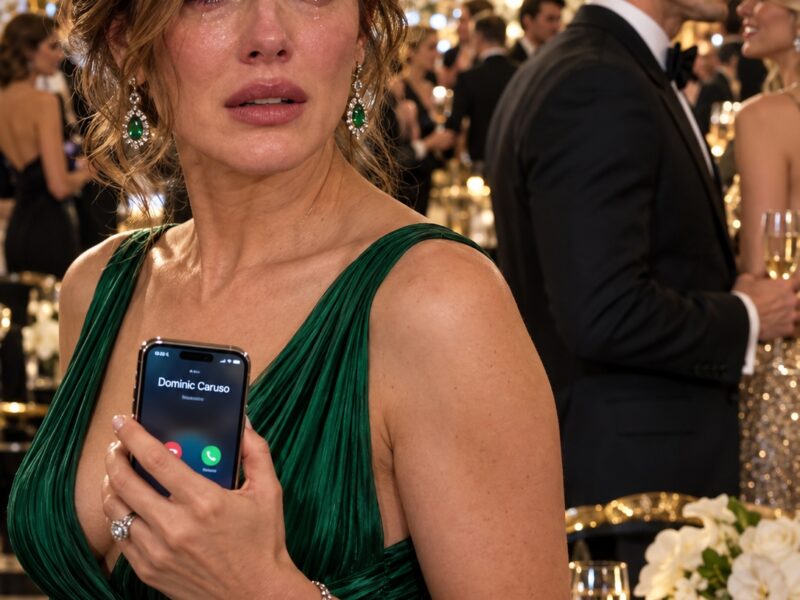
MY HUSBAND IGNORED ME ALL NIGHT—THEN THE MOST FEARED MAN AT HIS GALA CALLED AND TOLD ME WHAT MY HUSBAND HAD STOLEN

The night I decided to leave my husband, he didn’t notice.
That was the part that hurt most.
Not the woman in the red dress touching his lapel.
Not the champagne.
Not the laughter drifting beneath the chandeliers of one of Seattle’s most expensive hotel ballrooms.
Not even the fact that I had spent three weeks choosing an emerald-green dress because Elliot had once told me that color made my eyes impossible to ignore.
He ignored them anyway.
For forty-three minutes, I stood twenty feet from my husband and watched him become the man everybody else loved.
Elliot Harrington moved through the charity gala like the room had been constructed for him personally. He shook hands with executives, touched elbows, remembered wives’ names, laughed at jokes that weren’t funny, and made every person he spoke to feel as if they had been the reason he’d come.
He had always been gifted that way.
Once, I had mistaken it for warmth.
After seven years of marriage, I understood it was something closer to technique.
“Mara.”
A server appeared beside me carrying champagne.
I knew him from previous hospital fundraisers.
“Thank you, Daniel.”
He blinked.
“You remembered.”
“Of course.”
I took a glass I didn’t want.
Across the ballroom, Elliot leaned toward a woman in a backless red gown.
She whispered something.
He laughed.
Her fingertips rested on his chest for half a second too long.
I waited.
I don’t know what I was waiting for.
For him to look across the room and find me?
For embarrassment?
For guilt?
For some invisible thread between husband and wife to tighten and remind him that I existed?
Nothing happened.
Daniel followed my gaze and politely looked away.
That small act of kindness nearly broke me.
I put the champagne back on his tray.
“Would you tell the bartender I said good night?”
“Of course, Dr. Harrington.”
I walked toward the elevators.
Nobody stopped me.
And Elliot never turned around.
That was how my marriage ended.
Not with screaming.
Not with broken glass.
Not with another woman’s lipstick on a shirt collar.
It ended with an elevator door closing while my husband was laughing at something another woman had said.
By the time the doors opened in the lobby, I was no longer crying.
I hadn’t even realized I had started.
Outside, November rain had polished downtown Seattle into black glass. Headlights stretched across wet pavement. The air coming off Elliott Bay cut through my dress immediately.
I hadn’t brought a coat.
I hadn’t planned on leaving.
That seemed important somehow.
Most life-changing decisions, I would later understand, do not arrive looking like decisions.
Sometimes they look like a woman standing outside a hotel without a coat.
I pulled out my phone.
My sister was first.
I left the gala. I’m okay. Don’t call yet. I’ll explain tomorrow.
Then Elliot.
I typed three different messages.
Deleted all of them.
Finally, I wrote:
I’m done trying. Don’t wait up.
My thumb hovered over SEND.
Seven years.
A wedding in Napa.
Two apartments.
One house.
Three miscarriages we had stopped talking about because Elliot dealt with grief by working harder and I dealt with it by pretending I understood.
Hundreds of dinners.
Thousands of mornings.
His hand on the small of my back when we were young.
His silence when we weren’t.
I pressed SEND.
Then I turned off the phone.
For the first time in years, I had no idea what happened next.
And strangely, that felt more honest than anything my marriage had become.
I started walking.
My heels were ridiculous for it, but I kept going anyway.
Past Pike Place.
Past dark storefronts.
Past restaurants where couples sat across from each other beneath warm pendant lights.
I wondered how many were happy.
I wondered how many were pretending.
Mostly, I wondered how long I had been pretending.
People imagine marriages end because of one unforgivable thing.
Sometimes they do.
Mine didn’t.
Mine ended from accumulation.
A birthday Elliot forgot and compensated for with earrings his assistant ordered.
A weekend in San Juan canceled thirty minutes before departure.
A dinner reservation where I waited alone for ninety minutes before asking for the check.
The promotion I received at Harborview that he congratulated me on while answering an email.
The night I came home after losing a nineteen-year-old patient on the operating table and found him asleep, his laptop still open on his chest.
I had sat on the edge of the bed for ten minutes hoping he would wake.
He didn’t.
I had never hated him for those things individually.
That was the problem.
Individually, everything was forgivable.
Together, they had become my life.
Eventually my feet carried me into a twenty-four-hour diner near Pioneer Square.
I had gone there during residency, back when sleep was something I borrowed in twenty-minute increments and dinner sometimes meant toast at three in the morning.
The same brass bell still hung above the door.
The same cracked red booths lined the window.
I ordered coffee.
Then another.
I was halfway through the second cup when I remembered something my mother had said six months before she died.
She had stayed married to my father for thirty-two years.
Twenty-eight of them unhappily.
At the end, sitting in a hospital room with afternoon sunlight across her blanket, she had looked at me and said:
“The bravest thing isn’t holding on, Mara.”
I had expected something sentimental.
Instead she smiled.
“Sometimes the bravest thing is admitting something is finished.”
At 11:47 p.m., I turned my phone back on.
Thirty-one missed calls.
Twenty-two from Elliot.
Four from his assistant.
Three from my sister.
One from an unknown number.
And one from a name that made me sit straighter.
Dominic Caruso.
Before I could decide what it meant, the phone rang again.
Same name.
Dominic Caruso.
I had met him four times.
That was enough.
Some men become powerful because they speak loudly.
Dominic was powerful because other people lowered their voices when he entered.
Officially, he was an investor.
Shipping. Commercial real estate. Logistics. Private equity.
Unofficially?
People became vague.
Elliot became especially vague.
The Caruso family had been in Seattle for generations. Their legitimate businesses were extensive enough that nobody needed to discuss the rest.
Dominic was sixty-one.
Widowed.
Controlled.
Almost unnervingly observant.
At my wedding, he’d asked me about trauma surgery and listened to the answer.
At a Christmas dinner, he’d remembered the name of a medical program I’d mentioned once.
At a charity auction two years later, he’d outbid Elliot for a painting I had been studying.
Then he’d donated it to Harborview.
Elliot had been furious for three days.
I never understood why.
I answered.
“Mr. Caruso?”
“Mara.”
His voice was low and unhurried.
“I understand this evening has been difficult.”
Despite everything, I almost laughed.
“That’s a diplomatic description.”
“Are you somewhere safe?”
The question stopped me.
Not Where are you?
Not What happened?
Not Has Elliot contacted you?
Are you somewhere safe?
“I’m at a diner.”
“Alone?”
“Yes.”
“Which diner?”
I hesitated.
He heard it.
“You don’t have to tell me.”
That mattered.
I gave him the location.
There was a pause.
“Stay there.”
My fingers tightened around the phone.
“Why?”
“I’m sending someone.”
“No.”
Silence.
Not offended silence.
Listening silence.
“Mr. Caruso, I don’t know what Elliot told you, but I don’t need rescuing.”
“I know.”
Something about the immediate answer disarmed me.
“Then why are you sending someone?”
“Because there are things you deserve to know before you decide what to do tomorrow.”
My heartbeat changed.
“What things?”
“Not over the telephone.”
“That sounds ominous.”
“I am specifically trying not to be ominous.”
“You aren’t succeeding.”
For the first time, I heard the faintest trace of amusement in his voice.
Then it vanished.
“Mara, your marriage is not the only thing ending tonight.”
I stopped breathing.
“What does that mean?”
“It means Elliot has made decisions you do not know about. Those decisions may become relevant to your divorce. They may also affect your safety.”
The diner suddenly felt colder.
“Did Elliot hurt someone?”
“Not in the way you’re asking.”
“Did he commit a crime?”
Another pause.
Longer this time.
“I think that is a conversation you should have after you’ve seen the documents.”
Documents.
My eyes went to the rain beyond the window.
“What do you want from me?”
“Tonight?”
“Yes.”
“Nothing.”
I didn’t believe him.
Perhaps he knew that.
“Eventually,” he continued, “I may ask you to hear me out about several matters. You will be free to say no.”
“That’s conveniently vague.”
“It is deliberately precise.”
I should have hung up.
Instead I asked, “Why me?”
His answer came quietly.
“Because your husband has spent fourteen months behaving as if you would never discover who he really is.”
A chill moved through me that had nothing to do with November.
“And because,” Dominic added, “I think he is wrong about you.”
Twenty-two minutes later, a black sedan stopped outside.
The man who entered wore a charcoal coat and had the stillness of someone who had spent years learning how to notice exits.
“Dr. Harrington?”
“Yes.”
“Mr. Caruso asked me to take you to him. You’re under no obligation to come.”
“And if I don’t?”
“I’ll take you anywhere else you’d like to go and wait until you’re safely inside.”
That answer disturbed me more than pressure would have.
Because it sounded like Dominic.
I left five dollars beneath my coffee cup and followed him into the rain.
The drive took us across Lake Washington toward Medina, where wealth stopped trying to impress people because everybody already knew what it cost.
Dominic’s property sat behind stone walls and cedar trees.
No gold gates.
No fountains.
No theatrical mansion.
The house was glass, timber, dark stone and restraint, built into the hillside above the lake.
Dominic opened the door himself.
He wore a black sweater and gray trousers.
No suit.
No tie.
It was the first time I had seen him look almost ordinary.
Almost.
His gaze moved over my bare shoulders.
“You don’t have a coat.”
“I hadn’t planned on leaving.”
Something passed through his expression.
Not pity.
Understanding, perhaps.
He stepped aside.
“Come in.”
A fire burned in a sunken living room overlooking the water.
He handed me a blanket rather than commenting on my dress.
Then he poured two drinks.
I didn’t touch mine.
Dominic sat opposite me.
For several seconds, he said nothing.
Finally:
“You’re leaving Elliot.”
It wasn’t a question.
“Yes.”
He nodded once.
“Then I need to tell you what your husband has done.”
He opened a leather folder.
Inside were bank statements.
Wire transfers.
Corporate records.
Dates.
Signatures.
Some of them were Elliot’s.
“What am I looking at?”
“Approximately fourteen months ago, Elliot began covering private investment losses using corporate funds.”
I stared at him.
“His company?”
“Initially.”
“Initially?”
Dominic met my eyes.
“Then mine.”
The room became very quiet.
I looked back at the papers.
“How much?”
He told me.
For several seconds I genuinely thought I had misunderstood.
“That’s impossible.”
“No.”
“He would never—”
I stopped.
The old reflex embarrassed me.
Dominic noticed but did not exploit it.
Instead he said, “I imagine there were many things you once believed Elliot would never do.”
That hurt because it was true.
“Was he stealing?”
“Yes.”
No euphemism.
No softened language.
My hands remained perfectly steady.
They always did in emergencies.
That was what trauma surgery had taught me: panic could exist everywhere except the hands.
“From you?”
“From business structures controlled by my family.”
“Why isn’t he in jail?”
“That question has a complicated answer.”
“I have time.”
His mouth almost curved.
“I suspected you might.”
He explained.
Elliot had made aggressive private investments.
Some failed.
Then more.
Instead of reporting the losses, he moved money.
First internally.
Then through shell entities.
Then through financing arrangements linked to Caruso-controlled logistics companies.
Each solution created another problem.
Each problem required more money.
Fourteen months later, Elliot wasn’t hiding one mistake.
He was maintaining an architecture of them.
“Does he know you know?”
“He knows I know something.”
“How much does he think you know?”
“Considerably less than I do.”
I looked at him.
“Why tell me tonight?”
“Because tomorrow Elliot will begin protecting himself.”
A colder understanding arrived.
“From me.”
“Among others.”
Dominic slid another document across the table.
It was a preliminary asset map.
My marriage.
Reduced to numbers.
Properties.
Investment accounts.
Holding companies.
Trusts.
One line had been highlighted.
I recognized the name.
“That’s our investment vehicle.”
“Yes.”
“Why is it connected to this?”
“Because Elliot used marital structures to conceal transfers.”
I looked up sharply.
“Without my knowledge?”
“Your signature appears on two authorizations.”
My stomach dropped.
“I never signed those.”
“I know.”
The words came too quickly.
I stared at him.
“How do you know?”
“Because one of them was executed on March seventeenth.”
“So?”
“You were performing surgery from 6:12 a.m. until 2:46 p.m.”
I went still.
Dominic continued.
“The authorization was electronically signed at 11:08.”
I couldn’t speak.
“You checked my schedule?”
“We checked everything.”
“We?”
“My attorneys.”
I stood.
Too quickly.
The room tilted.
Dominic didn’t touch me.
That mattered too.
He simply waited.
I walked to the window.
Across the lake, Seattle glittered.
Somewhere in that city was my husband.
Probably furious.
Probably calling.
Probably already constructing a version of tonight in which I had betrayed him.
And for the first time, I understood that I had been asking the wrong question.
I had spent years wondering whether Elliot still loved me.
I should have been asking whether I knew him at all.
Behind me, Dominic said quietly:
“There’s something else.”
I closed my eyes.
“Of course there is.”
“Your husband filed preliminary divorce documents three weeks ago.”
I turned around.
The room seemed to contract.
“What?”
“He didn’t file them with the court. His attorneys drafted them.”
“Three weeks ago?”
“Yes.”
My voice came out almost inaudible.
“Before tonight.”
“Yes.”
The woman in red flashed through my mind.
Then the forgotten dinners.
The missed weekends.
His indifference.
Tonight hadn’t surprised Elliot.
Maybe he had been waiting for me to leave.
“Why?”
Dominic’s face became unreadable.
“Because if you initiated the separation before certain financial irregularities became public, he believed he could characterize several accounts as assets outside the marital estate.”
I stared at him.
“He wanted me to leave.”
“I believe he wanted you angry enough to leave quickly.”
Suddenly I remembered the red dress.
Her hand on his lapel.
Elliot looking everywhere except at me.
Had that been carelessness?
Or theater?
The realization was worse than infidelity.
“He staged tonight.”
“I cannot prove that.”
“But you think it.”
Dominic didn’t answer.
He didn’t need to.
My phone began vibrating on the table.
Elliot.
Dominic looked at it.
Then at me.
“Answer if you want.”
I did.
“Mara.”
Elliot sounded furious.
“Where the hell are you?”
I looked at Dominic.
He gave me nothing.
No instruction.
No gesture.
My choice.
“I’m safe.”
“Where?”
“Why?”
“Because you’re my wife.”
The sentence would once have meant something.
Tonight it sounded like ownership.
“I was your wife forty-three minutes ago when you couldn’t be bothered to look at me.”
“Mara, don’t do this.”
“Do what?”
“Turn one stupid party into a crisis.”
I almost smiled.
One stupid party.
Of course.
Then he said something that changed everything.
“Come home before you make this worse.”
Not before we make this worse.
Before you make this worse.
“What exactly am I making worse, Elliot?”
Silence.
Small.
Almost imperceptible.
But I heard it.
“Where are you?”
“Answer me.”
“You’re upset.”
“No. I’m becoming informed.”
Another silence.
This one wasn’t small.
“Mara.”
His voice changed.
“Who are you with?”
I looked across the room at Dominic.
And suddenly I knew Elliot understood.
“Good night.”
“Mara, if you’re with Caruso—”
I ended the call.
My heart was pounding.
Dominic remained seated.
“How much danger am I in?”
“Tonight?”
“Don’t do that.”
“Do what?”
“Answer only the exact question because it lets you avoid the larger one.”
Something almost like approval appeared in his eyes.
“Fair.”
He leaned forward.
“I do not believe Elliot intends physical harm.”
“That’s carefully phrased.”
“Yes.”
“What do you believe?”
“I believe frightened men make unpredictable decisions when money, reputation and freedom begin disappearing simultaneously.”
I looked at the dark windows.
“I can’t go home.”
“No.”
It was the first answer that felt simple.
Dominic stood.
“The east guest room is prepared.”
“You already prepared a room?”
“I prepared several possibilities.”
“Three steps ahead?”
“Whenever possible.”
Despite everything, I laughed.
It came out broken.
Dominic didn’t laugh with me.
He simply waited until I was finished.
Then he said:
“Mara, nothing has to be decided tonight.”
“My marriage is over.”
“That may be decided.”
“It is.”
He studied me.
Then nodded.
“Then everything else can wait until morning.”
I slept for nine hours.
It was the longest I had slept in months.
When I opened the bedroom door, a tray sat outside.
Coffee.
Fruit.
Toast.
And a handwritten note.
No pressure. Stay as long as you need. — D.C.
I stayed four days.
At first, I told myself it was practical.
My attorney needed time.
I needed clothes.
My sister knew where I was.
Hospital administration quietly changed the parking access attached to my employee profile after I explained that I was separating from my husband.
All practical.
All reasonable.
But there was another reason.
Dominic never asked me to perform gratitude.
He didn’t hover.
Didn’t flirt.
Didn’t turn my vulnerability into an opportunity.
He simply made space.
We ate breakfast at opposite ends of a long kitchen island.
At dinner he asked about medicine.
Actually asked.
When I explained the strange intimacy of trauma surgery—how you could know the inside of someone’s body better than you knew their name—he listened without checking his phone.
It shouldn’t have felt extraordinary.
It did.
On the third morning, a courier arrived.
Elliot’s divorce petition.
He had moved fast.
Too fast.
I read the proposed settlement twice.
Then a third time.
The insult was almost elegant.
Publicly traceable assets were included.
Private investments were minimized.
Several joint structures had vanished completely.
Accounts I knew existed were described as liabilities.
The house valuation was laughable.
Elliot wasn’t offering me half of our life.
He was offering me the version of our life he thought I could prove existed.
Dominic found me in the garden room.
“Bad?”
I handed him the papers.
He read silently.
Then:
“He’s offering you almost nothing.”
“He’s offering what he thinks I’ll accept.”
“No.”
Dominic placed the document on the table.
“He’s offering what he thinks he can make you believe you’re entitled to.”
I looked at him.
“Difference?”
“An important one.”
“Why?”
“Because accepting less is a decision. Believing you deserve less is conditioning.”
That sentence stayed with me.
Maybe because it wasn’t only about money.
“I need a lawyer.”
“Yes.”
“Not yours.”
“Agreed.”
That surprised me.
Dominic took a card from his pocket.
“Prescott Halford. Family law. Forensic finance. He owes me nothing and is irritatingly independent.”
“That’s your recommendation?”
“It’s one of them.”
“One?”
“I have four names.”
I smiled despite myself.
“Of course you do.”
Prescott was seventy, sarcastic and unimpressed by everyone.
I liked him immediately.
He spent two hours reviewing the documents.
Then he removed his glasses.
“Your husband has made a mistake.”
“Which one?”
Prescott smiled.
“Assuming surgeons don’t understand numbers.”
That afternoon, we began.
Forensic accountants.
Subpoenas.
Asset tracing.
Metadata.
Authorization records.
Elliot’s elegant financial architecture started coming apart one brick at a time.
And with every brick, another question appeared.
Why had he transferred $680,000 through a Nevada holding company?
Why had one marital account guaranteed a loan I had never seen?
Why did my electronic signature appear on documents signed while I was inside operating rooms?
Why had Elliot increased our umbrella insurance three months before his losses accelerated?
And why had he withdrawn $240,000 two days before the gala?
Prescott looked at me across his conference table.
“That last one bothers me.”
“Why?”
“Because people don’t usually take that much cash out to pay attorneys.”
“What do they use it for?”
He closed the file.
“Things they don’t want recorded.”
That evening I returned to Dominic’s house with my nerves stretched thin.
He was in the library reading.
He closed the book when I entered.
Not marked the page.
Not finished the paragraph.
Closed it.
Full attention.
“Bad day?”
“I don’t know yet.”
I told him about the cash.
His expression changed.
Barely.
But by then I had begun learning his face.
“You know something.”
“I know possibilities.”
“Tell me.”
“Mara—”
“No.”
My voice sharpened.
“If I’m staying in your house because you think Elliot may be unpredictable, then I don’t get protected through ignorance.”
Silence.
Then Dominic nodded.
“You’re right.”
He walked to his desk and unlocked a drawer.
Inside was another folder.
He set it before me.
Photographs.
Elliot meeting a man outside a private aviation hangar.
Another at a marina.
A third showed an envelope changing hands.
“Who is he?”
“Daniel Mercer.”
“Should I know that name?”
“No.”
“Do you?”
“Yes.”
“What does he do?”
Dominic sat down.
“He makes problems difficult to trace.”
The phrase landed badly.
“What kind of problems?”
“Financial. Reputational. Occasionally personal.”
I stared at the photograph.
“Did Elliot hire him?”
“We don’t know.”
“When were these taken?”
“Two days before the gala.”
The same day as the cash withdrawal.
A cold sensation moved along my spine.
“Why didn’t you tell me?”
“Because suspicion isn’t proof.”
“You told me my safety might be involved.”
“Yes.”
“But you withheld this.”
“Yes.”
I pushed the photographs away.
“That’s not honesty.”
“No.”
His answer stopped me.
He didn’t defend himself.
“I made a judgment,” he said. “Perhaps the wrong one.”
“Why?”
“Because you had already discovered your marriage was ending, your husband had stolen money, your signature had been forged, and he had prepared divorce papers before you left. I believed adding an unconfirmed threat would frighten you without helping you.”
“You don’t get to decide what I can handle.”
“No.”
Again.
No defense.
Just acceptance.
He looked at me steadily.
“I won’t make that mistake twice.”
Something in my anger loosened.
Not disappeared.
Loosened.
“Do you promise?”
“I don’t make promises casually.”
“Then don’t answer casually.”
He held my gaze.
“I promise.”
That was the night I began trusting Dominic Caruso.
Not because he had been right.
Because when he was wrong, he admitted it.
Six weeks after the gala, I was still living in his house.
I could have left.
I had an apartment in Queen Anne that I’d bought before marrying Elliot because my grandmother had once told me never to give away every key to your own life.
I had money.
Friends.
A career.
A sister who would have let me sleep on her couch indefinitely while loudly insulting my husband.
I stayed because I wanted to.
That distinction became important.
One cold Sunday morning, Dominic handed me coffee and said:
“I want to show you something.”
He led me beyond the formal garden to a cedar gate almost hidden by ivy.
Behind it was another garden.
Wild.
Lavender.
Old rose canes.
Moss-covered stone.
A weathered bench facing the lake.
“My wife made this.”
I stopped.
Dominic rarely spoke about Elena.
“She was a landscape architect,” he continued. “She believed formal gardens were for being admired and wild gardens were for thinking.”
He touched the back of the bench.
“She died seven years ago.”
“I’m sorry.”
“Pancreatic cancer.”
His voice stayed even.
“Four months from diagnosis.”
I sat beside him.
For a while, neither of us spoke.
Then he said:
“I have spent seven years being useful.”
I turned toward him.
“Useful?”
“Running companies. Solving problems. Protecting people. Making decisions.”
“And?”
“I confused usefulness with living.”
The honesty of it hurt.
“What changed?”
He looked at me.
“You answered your phone.”
I almost laughed.
“That’s all?”
“No.”
His expression softened.
“You asked questions when easier people would have accepted answers. You argued with me when I deserved it. You stayed when you didn’t need to.”
He paused.
“And I discovered I cared whether you stayed tomorrow.”
My heart began beating harder.
“Dominic.”
“I am not asking you for anything.”
“Then why tell me?”
“Because withholding it would be dishonest.”
There it was again.
Not seduction.
Not pressure.
Truth offered without demand.
His hand rested on the bench between us.
I looked at it.
Then placed mine over it.
His fingers closed around mine.
Warm.
Steady.
“I care too,” I whispered.
He raised my hand and kissed the back of it.
Nothing more.
Somehow it was more intimate than being kissed on the mouth.
For years, Elliot had touched me without seeing me.
Dominic could touch two inches of my skin and make me feel entirely visible.
That frightened me.
But not enough to pull away.
Two months after I left Elliot, he arrived at Dominic’s gate.
Sober.
Calm.
Smiling.
That was worse.
Dominic’s security called from the entrance.
I was in the library.
“Mr. Harrington is requesting access.”
Dominic looked at me.
“No,” I said.
Then I stood.
“But I’ll speak to him.”
“I’ll come.”
“I can handle Elliot.”
“I know.”
He came anyway.
Not in front of me.
Beside me.
Elliot stood beyond the gate in a charcoal overcoat.
He looked thinner.
Still handsome.
Still polished.
Still capable of making strangers believe him.
His gaze found me.
Then Dominic.
Understanding sharpened his face.
“I should have known.”
“Known what?” I asked.
“All those conversations. Charity dinners. Auctions.”
He gave a short laugh.
“Caruso was waiting.”
Dominic said nothing.
I did.
“No, Elliot.”
“What?”
“He wasn’t waiting.”
I stepped closer to the gate.
“You just can’t imagine someone seeing value in me unless he wants to take something.”
His jaw tightened.
“I came to talk to my wife.”
“Ex-wife soon.”
“We’re not divorced.”
“Then perhaps you should have remembered that before forging my signature.”
The smile disappeared.
Just for a second.
There.
Fear.
“You don’t know what you’re talking about.”
“I know about March seventeenth.”
Silence.
“Eleven-oh-eight in the morning,” I continued. “I was in surgery.”
Elliot’s eyes moved to Dominic.
“You.”
Dominic finally spoke.
“Mara asked you a question.”
“This is between my wife and me.”
“No,” I said.
“It isn’t anymore.”
Elliot stepped toward the gate.
Security shifted behind us.
He noticed.
Stopped.
Then smiled again.
“I’ve been talking to people, Dominic.”
Dominic’s expression did not change.
“Have you?”
“Federal people.”
My stomach tightened.
“People who would be very interested in the Caruso family’s business arrangements.”
Dominic almost looked bored.
“I’ve spoken with them too.”
Elliot blinked.
“For considerably longer than you have.”
The air seemed to leave the driveway.
Dominic took one step forward.
“I would recommend that before threatening anyone, you ask your attorney about the current status of the forensic review of Harrington Capital.”
Elliot’s face changed.
Dominic continued.
“Particularly the Mercer payments.”
That did it.
All color drained from Elliot’s face.
I looked between them.
“What Mercer payments?”
Neither answered immediately.
“Elliot?”
He stared at Dominic.
“What did you do?”
Dominic’s voice stayed quiet.
“Nothing.”
“You’re destroying me.”
“No.”
Dominic’s gaze hardened.
“You did that yourself. I merely stopped standing between you and the consequences.”
Elliot turned to me.
“Mara, you don’t understand who this man is.”
“Maybe not completely.”
“You think he’s saving you?”
“No.”
I surprised myself with how calm I sounded.
“I saved myself when I walked out of that hotel.”
Elliot flinched.
“Dominic just told me where the ground was.”
For the first time in seven years, Elliot had no response ready.
He looked at me as though I had become someone unfamiliar.
Maybe I had.
Or maybe I had finally stopped shrinking into the woman he preferred.
“This isn’t over,” he said.
Dominic’s reply was almost gentle.
“That is usually what people say when they have run out of leverage.”
Elliot left.
I watched his car disappear.
Then I turned to Dominic.
“What Mercer payments?”
His eyes closed briefly.
He remembered his promise.
No more protecting me through ignorance.
“Come inside.”
The truth was worse than I expected.
Mercer hadn’t been hired to hurt me.
Not physically.
Elliot had paid him to investigate me.
My accounts.
My apartment.
My professional history.
My communications.
Anything that could be used in divorce proceedings.
Mercer had even contacted the family of a patient who had died during emergency surgery three years earlier, looking for a possible malpractice complaint.
I stared at the report.
“He used a dead patient against me?”
“He tried.”
My hands started shaking.
For the first time since the gala.
Not because I was frightened.
Because there are betrayals so intimate that anger arrives before grief has time to dress itself.
I remembered that patient.
Nineteen.
Motorcycle accident.
His mother had held my hand afterward and asked whether he had been afraid.
I had lied.
I told her no.
Sometimes medicine requires mercy more than accuracy.
Elliot had reached into one of the worst nights of my career and tried to turn it into leverage.
I closed the folder.
“I want everything.”
Dominic watched me.
“Everything?”
“Every record. Every transfer. Every forged signature. Every Mercer payment.”
“For Prescott?”
“For whoever needs it.”
He nodded.
“All right.”
“I don’t want you to protect Elliot.”
“I wasn’t planning to.”
“I don’t want you to destroy him either.”
That surprised Dominic.
“Why?”
“Because then he’ll spend the rest of his life believing another powerful man ruined him.”
I stood.
“I want him to know he did it himself.”
The divorce changed after that.
Elliot’s attorneys stopped being arrogant.
Then they became cooperative.
Then frightened.
Prescott was delighted by the evolution.
“For the record,” he said one morning, “I prefer frightened. They return emails.”
The forensic audit uncovered enough that Elliot’s original settlement proposal became almost comical.
Properties reappeared.
Accounts reappeared.
Investment structures became marital assets again.
The forged signatures became impossible to explain away.
And the Mercer payments ensured that any attempt to attack my professional reputation would become its own legal disaster.
I didn’t take everything.
I took what was mine.
There was a difference.
Elliot signed the final settlement on a gray Tuesday morning.
I signed an hour later.
When Prescott pushed the documents toward me, I stared at the line above my name.
Seven years.
Reduced to ink.
“Ready?” he asked.
“No.”
He waited.
I smiled faintly.
“But I’m doing it anyway.”
I signed.
Outside, rain moved across Seattle.
I stood beneath the awning and expected triumph.
It didn’t come.
Neither did grief.
What came instead was quiet.
For years I had thought freedom would feel like flying.
It didn’t.
It felt like putting down something heavy you had carried so long you’d forgotten your hands were allowed to be empty.
Dominic was waiting at home.
Home.
I had started thinking of it that way accidentally.
He was in the kitchen making coffee.
“Finished?” he asked.
“Finished.”
He didn’t celebrate.
Didn’t open champagne.
Didn’t say he’d told me so.
He simply opened his arms.
I walked into them.
That was enough.
Over the following months, we stopped pretending nothing was happening between us.
Not dramatically.
There was no reckless affair.
No cinematic night where restraint disappeared.
It happened through accumulation too.
But this time, the accumulation built something instead of destroying it.
Coffee left beside my medical journals.
His hand briefly against my back when we passed in the kitchen.
My shoes beside his at the door.
A toothbrush I stopped carrying back to my room.
The first time he called from San Francisco and said, “I miss you,” as if reporting a fact he found mildly inconvenient.
The first time I laughed and answered, “Good.”
One evening in March, I found him in Elena’s garden.
He stood by the bench looking over the lake.
I knew immediately he had been crying.
Not recently enough to see tears.
Recently enough to see what remained after them.
I walked beside him.
He didn’t hide.
“Bad day?”
“No.”
He looked toward the roses that had not yet returned.
“Important day.”
I understood.
“The anniversary?”
He nodded.
I took his hand.
After a long silence, he said:
“She would have liked you.”
I swallowed.
“I think I would have liked her.”
Dominic looked at me.
There was no jealousy in loving someone who had died.
Only respect for the fact that another woman had helped shape the man standing beside me.
I squeezed his hand.
“You don’t have to stop loving her to love whatever comes next.”
His face changed.
“Mara.”
“I mean it.”
“I know.”
“No. Listen.”
I turned toward him.
“I spent years believing love was something you proved by staying. Maybe sometimes love is also making room.”
His thumb moved across my knuckles.
“For the dead?”
“For the living too.”
He kissed me then.
Slowly.
Carefully.
Like asking.
I answered.
A month later, at two seventeen in the morning, I found Dominic downstairs.
I couldn’t sleep.
He couldn’t either.
I made tea.
We talked for an hour about absolutely nothing.
A broken sprinkler.
A hospital administrator I disliked.
A book he thought I would love.
Whether tomatoes belonged in the refrigerator.
Then, while I was pouring more hot water, Dominic said:
“I would like to marry you.”
I nearly dropped the kettle.
He remained perfectly serious.
“That is an alarming transition from tomatoes.”
“I have been considering it for some time.”
“Of course you have.”
“I considered a more elaborate proposal.”
“And?”
“It felt dishonest.”
I laughed.
Then stopped because his eyes had become vulnerable in a way I had rarely seen.
“I don’t want to replace your previous life,” I said.
“You couldn’t.”
It should have hurt.
Instead it reassured me.
“And you are not replacing mine,” he continued. “Elena existed. Elliot existed. Grief existed. Mistakes existed.”
He stepped closer.
“I am not asking for a clean history.”
His voice softened.
“I am asking whether you want to build the next part with me.”
The kettle clicked as it cooled.
I thought of the gala.
Emerald silk.
Champagne.
A woman in red.
An elevator closing.
I thought of myself standing in November rain believing I was watching my life collapse.
I had been wrong.
Something had collapsed.
But it wasn’t my life.
It was the room I had mistaken for the whole house.
“Yes,” I said.
Dominic didn’t move.
“Yes?”
“I’m willing.”
Only then did he smile.
We married in June.
In Elena’s garden.
That had been my idea.
Dominic had gone completely silent when I suggested it.
“Are you certain?”
“Yes.”
“Mara—”
“She built something beautiful. Why should love make it smaller?”
So we restored the garden.
I found one of Elena’s former students, now a landscape architect in Portland.
When I told her what we were doing, she cried.
The roses returned.
Lavender filled the stone borders.
The old bench stayed exactly where Elena had placed it.
Thirty-two people attended.
My sister cried before breakfast.
Prescott came and claimed he was only there because he had invested too many billable hours in my happiness to miss the conclusion.
Several surgeons from Harborview attended.
So did a small group from Dominic’s world—men and women who rarely spoke about what they did and noticed everything.
The ceremony was simple.
No ballroom.
No press.
No performance.
When Dominic said his vows, his voice broke once.
Only once.
I loved him more for it.
During the reception, I saw a dark sedan at the bottom of the private lane.
Then another.
A man stood at the gate.
Elliot.
Dominic followed my gaze.
His body immediately changed.
Not fear.
Readiness.
“I’ll handle it.”
I touched his arm.
“No.”
“Mara.”
“Stay here.”
I walked down the lawn alone.
Still wearing my wedding dress.
Ivory silk.
No veil.
No bouquet.
The summer sun warmed my shoulders.
Every step toward Elliot seemed to cross a year.
He looked different.
Older.
His company had survived, barely, after a restructuring that removed him from executive control.
There had been investigations.
Settlements.
No prison.
Consequences do not always arrive dramatically.
Sometimes they arrive as offices you no longer enter, invitations that stop coming, phone calls that aren’t returned, and a name that no longer opens doors.
“Mara.”
“Elliot.”
His eyes moved toward the house.
“Caruso sent you?”
“No.”
“He knows I’m here.”
“Everyone knows you’re here. You’re standing outside a security gate.”
His mouth tightened.
“I wanted to see you.”
“You have.”
“Mara.”
Something in his voice almost sounded like the man I married.
That was the dangerous thing about memory.
It could resurrect people who no longer existed.
“I was angry,” he said.
“About what?”
“Everything.”
“That’s not an answer.”
“I thought I was losing everything I’d built.”
“You were.”
“I panicked.”
“For fourteen months?”
He looked away.
I waited.
Eventually he said, “I don’t expect forgiveness.”
“Then why are you here?”
He looked at my wedding dress.
“I don’t know.”
That might have been the first completely honest thing he’d said to me in years.
I studied him.
Once, I had known every expression on that face.
Or believed I did.
Now he looked like someone I had once sat beside on a long flight.
Familiar.
Distant.
“I hated him,” Elliot said.
“Dominic?”
“Yes.”
“Why?”
“Because he saw you.”
The answer stunned me.
Elliot gave a bitter laugh.
“I knew.”
“Knew what?”
“Every time you talked to him, you changed.”
“I barely knew him.”
“Didn’t matter.”
His eyes met mine.
“He listened to you.”
For a moment, neither of us spoke.
Then Elliot said:
“I think I knew I had stopped doing that.”
There are apologies that repair things.
And apologies that arrive only to prove the speaker finally understands what cannot be repaired.
This was the second kind.
“I loved you,” I said.
“I know.”
“No.”
I shook my head.
“I don’t think you did.”
Pain moved through his face.
“I loved you enough to keep forgiving things I should have confronted. I loved you enough to keep making excuses for why you weren’t present.”
I looked back toward the garden.
Dominic stood where I had left him.
He had not followed.
Had not interfered.
Had not come to rescue me from a conversation I had chosen to have.
Then I looked at Elliot again.
“But somewhere along the way, I became the only person doing the loving.”
He lowered his eyes.
“I’m sorry.”
“I know.”
And I realized I meant it.
I believed him.
It simply didn’t change anything.
“I hope you find something real, Elliot.”
He looked up.
“I mean that.”
“You don’t hate me?”
I considered the question.
“No.”
His face crumpled slightly.
Perhaps hatred would have been easier.
“I don’t need to anymore.”
I turned.
“Mara.”
I stopped.
“I did notice the dress.”
My throat tightened.
“What?”
“The green one. That night.”
I didn’t turn around.
“You looked beautiful.”
Rain that no longer existed seemed to touch my skin.
For months, I had believed he hadn’t seen me.
Maybe that had never been the truth.
Maybe the truth was worse.
He had seen me.
He had simply chosen not to come over.
I looked back once.
“That’s worse, Elliot.”
Then I walked away.
Dominic was waiting halfway across the lawn.
He held out his hand.
I took it.
“All right?” he asked.
“Yes.”
“What did he want?”
“I think he wanted to know whether there was still a door.”
“And?”
“There isn’t.”
Dominic nodded.
Nothing triumphant.
Nothing possessive.
Just understanding.
We walked back into the garden together.
Five years later, I stood beneath the cedar trees watching our three-year-old daughter sleep in a stroller.
Her name was Elowen.
Dominic liked old names.
I liked that it meant elm tree.
Roots.
Endurance.
Growth.
She had his dark eyes and my refusal to surrender an argument once I had decided I was correct.
Dominic called it determination.
My sister called it genetic revenge.
That afternoon, Elowen was sleeping with one fist wrapped around a maple leaf she had refused to give up.
Dominic came through the garden carrying two mugs of coffee.
“Still holding it?”
“Apparently it’s hers now.”
“Naturally.”
He bent over the stroller and looked at our daughter.
I still loved watching his face change around her.
Power disappeared.
Strategy disappeared.
The careful man the world knew simply ceased to exist.
He became her father.
He handed me coffee.
The roses Elena had planted were blooming behind us.
For years, I had wondered whether it was strange to raise our daughter in a garden created by Dominic’s first wife.
Eventually I understood the garden better.
Nothing living begins from empty ground.
Everything grows among what came before.
Roots beneath roots.
Old grief feeding new life.
Beauty refusing to erase history.
“I’ve been thinking about something,” I said.
Dominic sighed.
“That phrase has historically been expensive for me.”
I laughed.
“The night you called me.”
His expression softened.
“The diner.”
“You already knew about Elliot.”
“Yes.”
“You already had attorneys working on it.”
“Yes.”
“You knew about the money.”
“Most of it.”
“You had security watching him.”
“Yes.”
“You had already decided what you were going to do.”
“Broadly.”
I looked at him.
“But the first thing you asked me wasn’t where I was.”
He waited.
“You asked if I was safe.”
The humor left his face.
I had wondered about that question for five years.
At first I thought it was simply the instinct of a powerful man accustomed to risk.
Then I wondered whether it had been strategy.
A way of gaining trust.
A carefully chosen sentence from someone who was always three steps ahead.
But five years is enough time to learn the difference between a man’s methods and his nature.
“You could have told me what Elliot had done,” I said. “You could have told me what you needed. You could have treated me as part of the problem.”
Dominic looked toward the water.
“But you asked whether I was safe first.”
“Yes.”
“Why?”
He was quiet for several seconds.
Then he looked at me.
“Because it mattered.”
“Strategically?”
“No.”
“Legally?”
“No.”
“Then why?”
His answer was so simple that it almost hurt.
“Because you mattered.”
I looked down at my coffee.
Five years earlier, I might have needed more words.
Now I didn’t.
Dominic touched my cheek.
“Everything else that night was complicated,” he said. “Elliot. The money. The investigation. The divorce. My reasons for calling.”
His thumb moved once across my skin.
“But that wasn’t complicated.”
“What wasn’t?”
“Wanting you safe.”
Behind us, Elowen shifted in her sleep but refused to release the leaf.
I smiled.
“Stubborn.”
“Clinically precise.”
“Your daughter.”
“Convenient revisionism.”
I leaned into him.
Below the hill, the lake caught the afternoon light.
Behind us grew a garden planted by a woman I had never met and had somehow come to love through the man who still loved her.
Ahead of us was a life neither of us had planned.
And somewhere inside me still lived the woman in the emerald dress.
The woman standing alone in a ballroom while her husband laughed with someone else.
The woman who walked into November rain without a coat.
For years I had wanted to go back and tell her she would be all right.
That she would survive the divorce.
That the forged signatures would be discovered.
That Elliot’s secrets would stop being hers to carry.
That she would fall in love again.
That she would become a mother.
That one day she would drink coffee in a wild garden while her daughter slept beneath cedar trees.
But standing there beside Dominic, I finally understood I wouldn’t tell her any of those things.
She didn’t need spoilers.
She needed trust.
So if I could return to that wet Seattle sidewalk for only ten seconds, I would stand beside her before she sent that final text.
I would watch her frightened thumb hover over the screen.
And I would tell her only this:
Send it.
Not because another man is waiting.
Not because a better life is guaranteed.
Not because walking away always leads somewhere beautiful.
Sometimes it doesn’t.
I would tell her to send it because there comes a moment when staying requires you to abandon yourself.
And no marriage is worth that price.
No house.
No history.
No promise.
No fear.
Five years earlier, I thought my life changed when Dominic Caruso called me.
I was wrong.
It changed approximately an hour before that.
It changed when an elevator door closed between me and a ballroom full of people.
It changed when I stepped outside without a coat.
It changed when I finally stopped asking whether Elliot would notice me leaving.
And walked away anyway.
Dominic wrapped an arm around my waist.
“Cold?”
“No.”
“You sure?”
I looked at him.
The same dark eyes.
The same unhurried voice.
The same man who, before asking where I was or what I knew or what I intended to do, had asked one question.
Are you somewhere safe?
“I’m sure.”
In the stroller, our daughter slept with her fist closed stubbornly around a leaf.
The roses moved softly in the wind.
The lake below us kept catching the light.
And for once, nothing in my life needed to be chased, defended, explained or earned.
It had been chosen.
Every difficult part of it.
Every beautiful part.
Mine.









