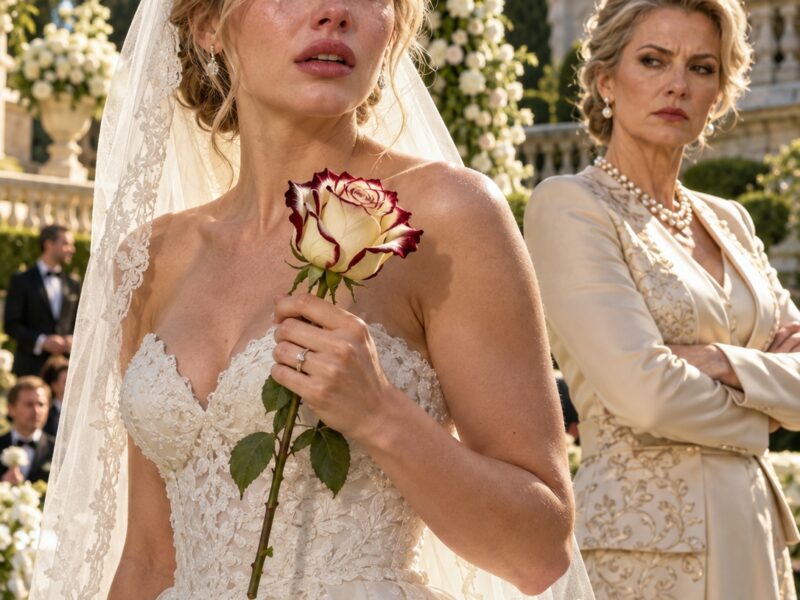
MY MOTHER CALLED HIM “THE HELP” AND DISOWNED ME FOR LOVING HIM—THEN HIS FATHER WALKED INTO OUR WEDDING
The first time my mother humiliated Lucas Bennett, he was on his knees picking broken porcelain out of the grass while thirty people drank champagne and pretended not to stare.
The second time, she fired him in front of the entire household.
The third time, she told me that if I walked out of the Hartley estate to be with him, I would no longer be her daughter.
I walked out anyway.
What I didn’t know was that Lucas had been hiding something from me too.
And I discovered it at our wedding.
Right after I promised to love him for the rest of my life.
Right before one of the richest men in the state walked through the doors, stared at my gardener husband, and said one word that stopped the ceremony cold.
“Son.”
But that came later.
Before the secrets, before the wedding, before I learned that people could lie about their names without lying about their hearts, there was a broken flowerpot.
And a garden.
And a man my family thought was beneath me.
The Hartley estate sat on eleven manicured acres outside Greenwich, Connecticut, behind stone gates that opened silently for people whose names mattered.
My mother, Margaret Hartley, believed that told you almost everything worth knowing about us.
Old house.
Old money.
Old rules.
The summer garden party was one of those rules.
Every June, my mother invited people she claimed were friends and privately described as “useful.” Bankers, developers, attorneys, board members, women whose charity committees functioned like intelligence agencies.
I was twenty-six that summer and had spent most of my life learning how to smile at people I didn’t particularly like.
I was standing near the terrace sketching the lavender beds when I heard porcelain break.
The sound wasn’t dramatic.
Just a sharp crack.
But in my mother’s world, embarrassment traveled faster than sound.
She turned immediately.
A young gardener stood beside an overturned ceramic planter. Soil had spilled across the pale stone walkway, along with shards of a hand-painted Italian pot my mother had probably mentioned the price of at least six times.
Lucas Bennett.
I knew his name because I’d seen it on the household staff schedule.
I’d noticed him before too.
That part I hadn’t admitted to anyone.
He was tall, broad-shouldered, usually sun-browned from working outside, with dark hair that refused to stay neat and hands that looked permanently scratched by thorns and soil.
He wasn’t conventionally polished.
That was probably why I noticed him.
Everyone at my mother’s parties looked polished.
Lucas looked alive.
Unfortunately, my mother was already marching toward him.
“The help should stay behind the hedges,” she said.
Several conversations died instantly.
Lucas crouched and began gathering the pieces.
“I’m sorry, Mrs. Hartley.”
My sister Caroline glanced down at her cream-colored heels.
“Lucas, do you know what these shoes cost?”
He looked at the dirt near them.
“More than the pot, ma’am?”
Someone choked on a laugh.
Caroline’s face tightened.
My mother’s did something worse.
It became perfectly still.
“I’ll clean it,” Lucas said.
“Before you break something else, preferably.”
“Yes, Mrs. Hartley.”
My mother turned toward me and noticed I was watching.
“Don’t stare, Olivia. People will talk.”
That sentence summarized most of my childhood.
Don’t laugh too loudly.
Don’t disagree at dinner.
Don’t wear that.
Don’t date him.
Don’t mention money even though nearly every decision we made was about money.
And above all, don’t give people anything to talk about.
I looked back at Lucas.
A thin line of blood had appeared across his palm.
He’d cut himself on the porcelain.
Nobody else seemed to notice.
I did.
And somehow that tiny red line bothered me more than everything my mother had said.
Ten minutes later, I slipped away from the party.
I found him behind the hedges near the potting shed.
He was washing his hand beneath an outdoor faucet.
“I’m sorry.”
He looked over.
“For what?”
“My mother.”
One corner of his mouth lifted.
“You didn’t say it.”
“No.”
“Then you don’t owe me the apology.”
I crouched beside the remaining pieces of porcelain.
“Still.”
“Careful.”
“What?”
“You’ll cut your hands.”
I looked at him.
“You did.”
“I get paid to.”
That made me laugh.
A real laugh.
Not the quiet social one I’d perfected at seventeen.
His eyes flicked toward my sketchbook.
“You were drawing earlier.”
“You saw that?”
“I notice things.”
“Dangerous habit around this family.”
He smiled.
“What were you drawing?”
I turned the book toward him.
The lavender beds.
A section of stone wall.
Three bees hovering above the flowers.
Lucas studied the page longer than I expected.
“You got the bees.”
“You noticed the bees?”
“I told you. Dangerous habit.”
For reasons I couldn’t explain, I felt myself blush.
The following afternoon, I brought him a paper bag from the bakery in town.
He looked inside.
Two sugar cookies.
“Peace offering from the enemy’s house?”
“Is it working?”
“Depends.”
“On?”
“Are they poisoned?”
“Only with sugar.”
He broke one in half and offered me the larger piece.
That was how it started.
Not with fireworks.
Not with some dramatic forbidden kiss.
With sugar cookies behind a hedge.
I started finding reasons to go into the garden.
At first I told myself I liked drawing there.
That wasn’t technically a lie.
Lucas worked differently when nobody was watching.
Patiently.
He’d kneel beside a damaged plant for ten minutes before cutting anything.
One afternoon I asked him why.
“Plants tell you what’s wrong,” he said.
“You just have to stop assuming you already know.”
“Does that work with people?”
“No.”
I laughed.
“People lie.”
There was something in the way he said it.
A shadow.
It vanished before I could ask about it.
Instead, I pointed toward the pruning shears hanging from his belt.
“They look ancient.”
“They were my mother’s.”
“Was she a gardener?”
His expression changed.
“She was.”
Was.
I immediately regretted asking.
“I’m sorry.”
Lucas ran his thumb over the worn wooden handle.
“She would’ve liked you.”
“You don’t know me.”
“You noticed the bees.”
As if that explained everything.
Maybe to him it did.
Behind the greenhouse was a section of garden my mother rarely visited.
It was less perfect there.
Which meant I loved it.
Wild hydrangeas leaned over stone borders. Ivy had escaped its trellis. A rusted iron bench sat beneath an old maple.
And against the south wall grew six rosebushes unlike any roses I’d seen.
Cream petals.
Dark red edges.
They looked as though someone had dipped each flower in wine.
“What are they called?”
Lucas went quiet.
“They don’t have a name.”
“Every rose has a name.”
“Not these.”
“Who planted them?”
He looked toward the flowers.
“Someone who never got to finish.”
Again, that shadow.
Again, I let it pass.
That became the first secret between us.
Not what he told me.
What I didn’t ask.
By August, I was drawing him more than the garden.
Lucas pretended not to notice.
“You’re supposed to be painting the rose.”
“I am.”
“You drew me.”
“You were blocking the rose.”
“You put dirt on my face.”
“Accuracy matters.”
He laughed.
That sound did something dangerous to me.
Nobody in my mother’s house laughed like that.
They performed amusement.
Lucas laughed with his whole body.
One afternoon, a thunderstorm rolled over the estate so quickly we barely made it into the greenhouse.
Rain hammered the glass.
I was soaked.
Lucas was worse.
We stood between rows of potted seedlings while water dripped from my hair onto my blouse.
“My mother would faint if she saw me.”
“She’d fire me twice.”
“She already wants to.”
“That makes me feel better.”
Lightning flashed.
I looked at the shears in his hand.
“Teach me something.”
“What?”
“Anything.”
He hesitated, then pulled a small rose plant between us.
“Pruning.”
“That sounds romantic.”
“It isn’t.”
He touched a dead branch.
“You cut away what’s dead so the rest has room to live.”
I stared at him.
“That sounds exactly like my family.”
His eyes met mine.
For a moment neither of us smiled.
“Everyone’s always chosen for me,” I said quietly.
“What school. What friends. What apartment. Which charity board. Even what color I wore to my cousin’s wedding because apparently burgundy photographs badly.”
Lucas leaned against the worktable.
“And what would you choose?”
The answer came before I could stop it.
“Something real.”
The rain seemed louder.
He stepped closer.
Not enough to touch me.
Enough that I noticed.
I thought he might kiss me.
Instead, he reached past me and cut one of those strange cream-and-red roses.
He placed it in my hand.
“Take this.”
“Why?”
“So tomorrow, when you’re back inside that house, you remember this was real.”
That was worse than a kiss.
Because I carried the rose upstairs.
And kept it beside my bed.
My grandmother noticed it the next morning.
Rose Hartley was eighty-one, sharp-eyed, unapologetic, and the only person alive who could insult my mother without being asked to leave.
She looked at the flower.
Then at the soil on my shoes.
Then at me.
“Oh, darling.”
“What?”
“I have eyes.”
I sat beside her.
“Is it that obvious?”
“Only to someone who once did exactly the same thing.”
I frowned.
“What does that mean?”
“Your grandfather.”
“Grandpa Henry?”
“The very one.”
“He was from a good family.”
“Eventually.”
She grinned.
“When I met him, he was a mechanic.”
I stared at her.
“My great-grandfather let you marry a mechanic?”
“No.”
“What happened?”
“I married him anyway.”
“Nana.”
“Fifty-one years.”
Her expression softened.
“Best decision I ever made.”
I looked toward the garden.
“Did he make you happy?”
“Every single day.”
Then she studied me.
“Does yours?”
I hadn’t called Lucas mine.
Not even privately.
But something inside me answered anyway.
“Yes.”
Nana smiled.
“Then the difficult part is coming.”
She was right.
It arrived three days later wearing a navy suit and a Rolex.
His name was Preston Wells.
His family owned a large portion of the Connecticut waterfront, which my mother mentioned before she’d mentioned anything about his personality.
We had dinner.
Preston spent forty minutes talking about development permits.
Then he looked at me across the table.
“We’ll make a fine match.”
I lowered my wineglass.
“Will we?”
“Our families think so.”
“Our families.”
He smiled.
“You’ll come around.”
Something inside me went cold.
He didn’t speak to me like a woman.
He spoke to me like an acquisition.
After dinner, I went straight to the garden.
Lucas was covering seedlings against the cold.
“They’re marrying me off.”
He stopped.
“To Wells?”
“You know him?”
“I know his family owns half the waterfront.”
“How nice for the waterfront.”
Lucas almost smiled.
Then he saw my face.
“What do you want, Olivia?”
There it was again.
The question nobody else asked.
Not what was sensible.
Not what was expected.
What did I want?
I stepped closer.
“You.”
His breathing changed.
“Don’t say that unless you mean it.”
“I’ve meant it since the broken pot.”
“Olivia—”
I kissed him.
It wasn’t elegant.
My hand hit his shoulder awkwardly. His glove dropped into the dirt.
For one heartbeat, Lucas didn’t move.
Then his hand came around my waist.
And every careful decision I’d made in twenty-six years disappeared.
Unfortunately, we weren’t alone.
A shadow moved behind the greenhouse.
My sister Caroline stood twenty feet away.
Her mouth was open.
Then she smiled.
Not kindly.
“Oh,” she said.
“Mother is going to love this.”
At eight the next morning, every member of the household staff was ordered onto the south lawn.
Lucas stood among them.
My mother descended the terrace steps.
“Mr. Bennett. Step forward.”
I came outside barefoot.
“Mother, what are you doing?”
“Go inside.”
Lucas stepped forward.
My mother’s voice remained perfectly calm.
“You will leave this property within the hour.”
“May I know why?”
“You know why.”
“No, ma’am.”
Her eyes flicked toward me.
“Servants don’t touch what isn’t theirs.”
Something changed in Lucas’s face.
Not anger.
Something quieter.
More dangerous.
“She isn’t anyone’s, Mrs. Hartley.”
The lawn went silent.
“Mother, stop.”
“Olivia. Inside.”
“No.”
Lucas turned toward me.
“Go inside.”
I stared at him.
“Don’t.”
“Don’t lose your family over me.”
And that was when I understood something.
He genuinely believed he was the thing I would lose.
Not the thing I would choose.
“You’re not something I’d lose,” I said.
My mother froze.
I looked directly at Lucas.
“You’re something I’d choose.”
His face changed.
For the first time since I’d known him, he looked afraid.
My mother dismissed the staff.
Then she gave Lucas one hour.
He packed everything he owned into one duffel bag.
Before he left, Nana found him by the service gate.
“You were going without saying goodbye?”
“I didn’t want you in trouble, Rose.”
She snorted.
“Trouble and I are old friends.”
Then she slipped an address into his hand.
“A friend of mine owns a bakery on Elm Street. There’s a room upstairs.”
Lucas stared at her.
“Why are you helping me?”
“Because once upon a time somebody helped a mechanic.”
He hugged her.
“I’ll come back.”
Nana held him tighter.
“You’d better.”
Then he looked toward the house.
Toward my window.
But I wasn’t there.
Because my mother had locked my bedroom door.
And downstairs, Preston Wells was waiting with a diamond ring.
“He proposed,” my mother told me that evening.
I stared at her.
“You cannot be serious.”
“I am always serious.”
“I won’t marry him.”
“Then you’ll make a different choice.”
She placed my credit cards and car keys on the table.
“Mr. Wells and this family…”
She paused.
“…or the gardener and nothing.”
For the first time in my life, I saw my mother clearly.
She loved me.
I believe that.
But she loved a version of me she could understand.
A daughter who stayed inside the boundaries she’d built.
A daughter whose happiness could be scheduled, vetted, and seated beside the right family at dinner.
“You’d really make me choose?”
“I already have.”
My hands started shaking.
I thought bravery would feel powerful.
It didn’t.
It felt like nausea.
I went upstairs.
Packed two sweaters, jeans, underwear, my sketchbooks, toiletries and the red-edged rose Lucas had given me.
Nana found me closing the suitcase.
“I’m scared.”
“Good.”
I stared at her.
“Good?”
“Brave people are always scared, darling. Otherwise they’re just reckless.”
Downstairs, my mother waited beside the front door.
I placed my keys on the table.
Then my cards.
She looked at my suitcase.
“If you walk out that door, Olivia, you are no longer a Hartley.”
That hurt.
More than I expected.
I looked at the staircase where I’d sat as a child.
At the piano my father used to play before he died.
At the doorway where my mother had measured my height in pencil until I was fourteen.
I wasn’t walking away from a mansion.
I was walking away from every version of myself I’d ever been.
Then I opened the door.
“Maybe,” I said, “I’ll finally get to find out who I am.”
Lucas lived above Bellini’s Bakery.
The apartment had one bedroom, a leaking faucet, two mismatched chairs and a window overlooking an alley.
The whole place smelled like bread.
He opened the door and stared at my suitcase.
“Olivia?”
“I chose.”
His eyes dropped to the suitcase.
Then back to me.
“You gave up everything.”
“No.”
I stepped inside.
“I kept the only thing that mattered.”
For a long moment, he couldn’t speak.
Then he pulled me against him.
That first night, we ate leftover focaccia sitting on the floor because there wasn’t a dining table.
I counted the money in my wallet.
Forty-two dollars.
Lucas looked at it.
“Then we’re rich.”
I laughed until I cried.
And for the first time, nobody told me to stop.
Freedom was romantic for approximately three days.
Then rent was due.
Lucas found work maintaining three gardens on Maple Street.
I tried selling drawings.
My first customer was an elderly woman who bought a watercolor rose for ten dollars after I asked for five.
I nearly cried.
Then Caroline found me.
She stepped out of a Mercedes with two friends.
“Oh my God.”
She looked at my folding table.
“Liv is selling doodles on the street.”
I kept arranging my paintings.
She picked one up.
“Five dollars?”
Her friends laughed.
“Is that what a Hartley is worth now?”
I looked at her.
“No.”
I took the painting from her hand.
“More than you’ll ever understand.”
That evening Lucas found me crying behind the bakery.
He didn’t ask me to pretend I wasn’t.
He sat beside me.
“Your sister?”
I nodded.
“Then she doesn’t get your tears.”
I wiped my face.
“You make everything sound simple.”
“It isn’t simple.”
He took my hand.
“It just doesn’t have to belong to her.”
That night we ate pasta by candlelight because the kitchen light had burned out.
“Very romantic,” I said.
“Very cheap.”
I laughed.
Then I asked the question I had avoided for months.
“Do you miss home?”
Lucas looked toward the windowsill.
A cutting from the nameless rose was growing in a chipped ceramic pot.
“I miss my mother.”
He rarely spoke about her.
“She grew roses?”
“She created them.”
“The red-edged ones?”
He nodded.
“She used to say every flower needs someone stubborn enough to wait.”
I leaned against him.
“Then she’d like me.”
“Why?”
“I’m extremely stubborn.”
Lucas smiled.
But there was grief behind it.
“She would’ve loved you.”
He looked at the rose.
Then away.
And I still didn’t know that somewhere across the state, another man had just received a phone call about that exact flower.
A florist had recognized it.
A rose nobody sold.
A rose created years earlier by a woman named Elena Thornbury.
And when Edward Thornbury heard where it had been found, the billionaire banker dropped the phone against his desk.
Because only one person still grew Elena’s roses.
His missing son.
Lucas proposed six months later.
Nana had come to visit our “palace,” as she called it.
She brought soup, towels, and absolutely no respect for personal boundaries.
Lucas waited until she went downstairs.
Then he took my hands.
“I don’t have anything to give you.”
“You keep saying that.”
“I mean it.”
“I know.”
He reached into his pocket.
“Except this.”
The ring was tiny.
Silver-colored.
A small glass stone caught the kitchen light.
“Olivia Hartley…”
He swallowed.
“…will you marry me?”
I covered my mouth.
“Yes.”
He exhaled.
“Yes?”
“A thousand times yes.”
He slid the ring onto my finger.
“It cost forty cents.”
I stared at it.
“Then you overpaid.”
His face fell.
I kissed him.
“It’s worth every cent.”
Later, Nana examined it.
“Beautiful.”
“Mother will say it’s embarrassing.”
“Your mother regrets lunch, darling.”
I laughed.
Then I cried.
“No one from my family will come.”
Nana’s expression softened.
“When I married Henry, my father didn’t come either.”
“Did you regret it?”
“Only that I waited so long to be brave.”
She reached for my hand.
“Love is a seed. You don’t stop watering it because the neighbors laugh.”
Then she asked about my dress.
I told her I couldn’t afford one.
She disappeared for an hour.
When she returned, she carried a long cream box.
Inside was lace.
Old.
Soft.
Beautiful.
“I wore this when I married Henry fifty-one years ago.”
“Nana…”
“You’re not taking it.”
She touched my cheek.
“I’m giving it. There’s a difference.”
Lucas watched from the doorway.
His eyes were wet.
That night, after Nana left, he stood alone beside the rose on our windowsill.
“I should tell her everything,” he whispered.
I didn’t hear him.
If I had, perhaps our wedding would have been very different.
We married in a small community garden behind the bakery.
Twenty-four folding chairs.
White flowers.
Borrowed suit.
Nana’s veil.
Lucas had spent two weeks turning the neglected garden into something beautiful.
My mother came.
So did Caroline.
Not because they’d forgiven me.
Caroline announced their reason loudly enough for everyone to hear.
“We came to watch you ruin your life.”
Nana pointed toward a chair.
“Margaret, sit quietly or leave.”
My mother sat.
For once.
Lucas stood beneath an arbor covered in climbing roses.
When he saw me, his expression broke.
I had never felt more beautiful.
Not because of the dress.
Because of the way he looked at me.
The minister began.
When it was time for our vows, Lucas took my hands.
“I can’t give you a palace.”
My mother’s jaw tightened.
Lucas continued.
“I can give you a garden. I can give you mornings when the coffee is terrible, winters when the pipes freeze, and probably more dirt on the floor than any reasonable person should tolerate.”
People laughed softly.
“But I can give you all of me.”
My throat closed.
Then it was my turn.
“Everyone has chosen my life for me.”
I looked toward my mother.
Then back at Lucas.
“So today I’m choosing.”
His hands tightened around mine.
“I choose you.”
The minister smiled.
“If anyone objects to this marriage, speak now or forever hold your peace.”
Silence.
For one beautiful second, I thought we’d made it.
Then the doors behind the chairs opened.
A man in a charcoal suit walked into the garden.
He was in his early sixties.
Silver hair.
Expensive coat.
Two men remained near the gate behind him.
Lucas went completely still.
The man’s gaze moved past everyone else.
Straight to the roses decorating the arbor.
His face crumpled.
“Elena’s roses.”
Lucas whispered one word.
“Dad.”
My mother stood.
Caroline stared at the stranger.
“Who is that?”
My mother’s face had gone pale.
“Edward Thornbury.”
Even I knew the name.
Everyone did.
Thornbury Financial.
Banks.
Real estate.
Investment funds.
Hospitals.
His family’s name was on buildings throughout Connecticut and New York.
Caroline whispered, “He owns half the banks in this state.”
Edward wasn’t looking at us.
He was looking at Lucas.
“Seven years,” he said.
Lucas’s jaw clenched.
“You found me on my wedding day?”
“I couldn’t wait one more.”
I turned slowly toward the man I had been seconds away from marrying.
“Lucas?”
His eyes found mine.
And I saw fear.
Not surprise.
Fear.
Edward stepped closer.
“Your mother’s roses brought me here.”
My stomach dropped.
“Lucas…”
“Olivia, please.”
I stepped backward.
“Bennett isn’t your name?”
“It was my mother’s name.”
My mother made a sound somewhere between a laugh and disbelief.
“Thornbury?”
I stared at Lucas.
“Your father is Edward Thornbury?”
“Yes.”
“You’re a Thornbury?”
“Yes.”
The garden blurred around me.
“You let my mother humiliate you.”
“Olivia—”
“You lived above a bakery.”
“I know.”
“You let me think we had forty-two dollars.”
“We did.”
“You told me you had nothing.”
“I had nothing I wanted to use.”
My chest tightened.
“Why?”
His answer came quietly.
“Because I needed you to choose me.”
I stared at him.
“You already knew I loved you.”
“I needed to know you loved Lucas Bennett.”
“And who exactly is Lucas Bennett?”
His face broke.
“The same man standing here.”
I shook my head.
“No.”
“Olivia.”
“I chose you when you had nothing.”
“I know.”
“I lost my family.”
“I know.”
“I sold paintings on the sidewalk while my sister laughed at me.”
“I know.”
“And every single day, you could’ve told me.”
“Yes.”
That one word hurt more than any excuse.
I pulled my hands from his.
“I don’t know who I’m marrying.”
Then I walked away from my own wedding.
Behind me, Lucas didn’t follow.
Not immediately.
Edward stopped him.
“Let her breathe.”
Lucas turned on his father.
“You weren’t there when Mom died.”
Edward’s face collapsed.
“I know.”
“You were in a board meeting.”
“I know.”
“She asked for you.”
Edward closed his eyes.
“Her last word was your name.”
Lucas stopped.
“What?”
“She asked me to find you.”
Edward looked at the roses.
“And she asked about these.”
Lucas’s anger trembled.
“I couldn’t save her.”
“So you saved her roses.”
“They were all I had left.”
Edward looked at his son.
“You saved more than roses.”
But Lucas wasn’t ready to hear that.
Neither was I.
Nana found me sitting behind the bakery with my veil in my lap.
“Well,” she said, sitting beside me, “that’s certainly a wedding nobody will forget.”
“Nana.”
“A little funny.”
“It isn’t funny.”
“Your mother’s face was.”
Despite myself, a laugh escaped.
Then I started crying.
“He lied to me.”
“Yes.”
“For two years.”
“Yes.”
“You’re supposed to tell me I’m right.”
“I am telling you you’re right.”
I looked at her.
“Then why do you sound like you’re defending him?”
“I’m not.”
She took my hand.
“I’m asking you to decide what he lied about.”
“His name. His family. His entire life.”
“Did he lie about loving you?”
I couldn’t answer immediately.
Because that was the terrible part.
“No.”
“Did he fake the mornings?”
“No.”
“The frozen pipes?”
“No.”
“The jobs?”
“No.”
“The forty-cent ring?”
I looked down.
“No.”
Nana squeezed my fingers.
“Then he hid his name, darling.”
She paused.
“Not his heart.”
I stared at her.
“That’s supposed to make it okay?”
“No.”
“Then what?”
“It makes it complicated.”
She smiled sadly.
“Most things worth keeping are.”
Then she told me something I’d never known.
Grandpa Henry had hidden the fact that he couldn’t read properly for nearly a year after meeting her.
“Why?”
“He thought I’d see him as less.”
“Did you?”
“I was furious.”
“What happened?”
“I taught him.”
She looked toward the garden.
“Pride is a stubborn weed, Olivia. So is shame.”
Then she stood.
“He wanted to know whether someone could love him as a gardener.”
She touched my shoulder.
“And you did.”
Lucas approached ten minutes later.
He stopped several feet away.
No touching.
No excuses.
“I’m not asking you to forgive me today.”
“Then what are you asking?”
“Let me tell you everything.”
I looked toward the potted rose beside the bakery door.
“Start with that.”
He sat opposite me.
“My mother created it.”
“Elena.”
“Yes.”
“She bred roses for years. That was her last one.”
“Why doesn’t it have a name?”
“Because she died before she named it.”
His voice cracked.
“When she died, my father and I destroyed each other with grief. He disappeared into work. I blamed him. Eventually I left.”
“You took her name.”
“Bennett was hers.”
“And the rose?”
“I took one cutting.”
He looked toward it.
“That plant is the last living thing she touched.”
Suddenly the nameless rose made sense.
Someone who never got to finish.
The old shears.
His silence whenever I asked about home.
“I couldn’t name it without her.”
I reached toward the leaves.
“Then don’t.”
He looked at me.
“Not yet.”
I swallowed.
“We’ll name it when we’re ready.”
Hope appeared in his face.
Small.
Careful.
Then Edward walked toward us.
He stopped at a respectful distance.
“I came too late to my son’s life.”
Lucas looked away.
Edward continued.
“I won’t come late to yours.”
Then he looked at me.
“You loved him when you believed he had nothing.”
I said nothing.
“That is all his mother ever wanted for him.”
Lucas closed his eyes.
I looked at the man I’d loved behind the hedges.
The gardener who noticed bees.
The man who taught me that pruning meant deciding what had to die so something healthier could live.
Maybe Lucas had hidden a fortune.
But I had hidden things too.
Fear.
Resentment.
The belief that love was only real if it arrived without complications.
I stood.
Lucas did too.
“Ask me again.”
He blinked.
“What?”
“You heard me.”
“Olivia…”
“Ask me again.”
His eyes filled.
“But this time…”
I touched his chest.
“…use your real name.”
Lucas swallowed.
Then he lowered himself onto one knee.
No forty-cent ring this time.
I was already wearing it.
“Olivia Hartley…”
He smiled through tears.
“…will you marry Lucas Thornbury?”
I shook my head.
His face fell.
“The real you,” I said.
“Ask me if I’ll marry the real you.”
He laughed softly.
Then tried again.
“Olivia Hartley, will you marry me? The real me. The gardener. The coward. The son who ran away. The idiot who should’ve trusted you with the truth.”
I looked toward Nana.
She was crying.
Edward was too.
My mother stood at the far end of the garden.
Still silent.
I turned back to Lucas.
“Yes.”
He exhaled.
“Yes?”
“Yes.”
I pulled him up.
“Now hurry before the minister leaves.”
We finished the ceremony.
When the minister pronounced us husband and wife, Lucas kissed me beneath his mother’s roses.
My mother approached afterward.
For a moment neither of us spoke.
Then she looked at Lucas.
“I suppose congratulations are in order.”
Caroline smiled.
“You married well after all.”
Something inside me hardened.
I looked at my mother.
“Money can buy a garden.”
Lucas glanced at me.
I continued.
“But it can’t make anything grow.”
My mother’s face changed.
Because she remembered.
The broken pot.
The gardener she’d humiliated.
The daughter she’d thrown away.
“I know,” she said quietly.
“I learned that too late.”
She touched my veil.
“That’s Rose’s.”
“She gave it to me when you wouldn’t.”
My mother’s hand dropped.
“It suits you.”
It wasn’t an apology.
Not yet.
But sometimes doors don’t open all at once.
Sometimes they move an inch.
Edward asked Lucas to come home.
Lucas said yes.
With conditions.
“I keep working.”
Edward laughed.
“You’re worth millions and you want to prune roses?”
“I’m a gardener.”
“Good.”
Edward looked toward his enormous property in the distance.
“Then perhaps I’ll finally have a decent garden.”
Lucas didn’t move into a penthouse.
We didn’t suddenly abandon the bakery apartment for marble floors.
For several months, we stayed exactly where we were.
I sold more paintings.
Then more.
Eventually a small gallery in Stamford carried my work.
Lucas opened a landscape studio.
Not because he needed money.
Because he loved making things grow.
And the nameless rose came with us.
One year after our wedding, it bloomed again.
Not in the Hartley garden.
Not in Edward’s estate.
In ours.
Lucas and I had bought a modest old house with a deep backyard and terrible plumbing.
Nana came that morning.
Edward arrived carrying champagne.
My mother came too.
Slowly.
Carefully.
Still learning.
The first flower had opened overnight.
Cream petals.
Red edges.
Perfect.
Nana leaned over it.
“Well?”
“Well what?” Lucas asked.
“Are you finally naming the poor thing?”
Lucas looked at me.
I nodded.
He crouched beside the flower.
“My mother was Elena.”
Then he looked at Nana.
“And Olivia’s grandmother is Rose.”
Nana’s mouth opened.
“So…”
I attached the small brass plaque.
ELENA ROSE.
Nana began crying immediately.
“Oh, darling.”
Lucas kissed her cheek.
“I knew if I complained enough you’d listen,” she said.
Edward stared at the flower for a long time.
“She would’ve loved that.”
Lucas put a hand on his father’s shoulder.
“I know, Dad.”
Behind us, my mother was looking at one of my paintings.
It showed the original Hartley garden.
The hedge.
The lavender.
And a young gardener kneeling beside a shattered pot.
“It’s beautiful,” she said.
“Thank you.”
“Who’s the artist?”
I looked at her.
“I am.”
For a second, we were both back at that party.
Then a young landscaping assistant hurried past carrying a tray of seedlings.
His boot clipped the edge of a planter.
It tipped.
My mother’s reflex was immediate.
“The help should watch where they—”
She stopped.
The young man froze.
My mother looked at him.
Then at Lucas.
Then at me.
Something passed through her face.
Shame, perhaps.
Or memory.
She crouched.
Actually crouched.
Margaret Hartley, in a designer dress, knelt in the dirt and helped a twenty-year-old employee gather spilled soil with her bare hands.
“You didn’t have to do that, ma’am,” he said.
She smiled faintly.
“Someone taught me how.”
She handed him the plant.
“And never let anyone make you feel small.”
The words hit me harder than I expected.
Because once, she had been the person making others feel small.
Maybe she finally understood that.
Maybe that was the beginning.
Later, Edward raised his glass beside the Elena Rose.
“To Elena,” he said.
Nana lifted hers.
“And stubborn people who wait.”
My mother looked at Edward.
“Your son taught my daughter to leave.”
Edward smiled.
“Your daughter taught my son to stay.”
Everyone laughed.
Near sunset, Lucas and I slipped away from them.
We walked toward the hedge at the edge of our garden.
He still had dirt beneath his fingernails.
I still had paint on mine.
“Do you ever miss it?” I asked.
“What?”
“Being Mr. Bennett behind the Hartley hedges.”
Lucas considered the question.
“Only one thing.”
“What?”
“The view.”
He looked at me.
“You on the other side.”
I leaned against him.
“Thank you for waiting.”
He kissed my forehead.
“Thank you for choosing me.”
Behind us, the Elena Rose moved gently in the evening wind.
For years, Lucas had refused to give it a name because naming it felt like accepting that his mother was gone.
I had spent nearly as long allowing other people to give names to me.
Hartley.
Heiress.
Daughter.
Disappointment.
Rebel.
Thornbury.
Wife.
But standing there with dirt beneath my shoes and Lucas’s hand around mine, I finally understood what Nana had been trying to teach me.
Love doesn’t rescue you from every painful choice.
Sometimes love is the painful choice.
Sometimes becoming yourself costs you the life everyone prepared for you.
Sometimes the person standing on the wrong side of the hedge isn’t beneath you.
He’s simply the first person brave enough to see you without your last name.
And sometimes the things that survive aren’t the things protected behind stone walls.
They’re the things somebody was stubborn enough to keep watering after everyone else said they were finished.
The Elena Rose bloomed until November that year.
Long after every other rose in the garden had gone quiet.
Lucas said it was unusual.
Nana said it was stubborn.
I thought perhaps those were the same thing.
And on the final morning before the frost, I found one last flower open against the cold—cream at the center, dark red around the edges, trembling in the wind but refusing to fall.
I didn’t cut it.
I didn’t bring it inside.
I left it exactly where it was.
Growing.









