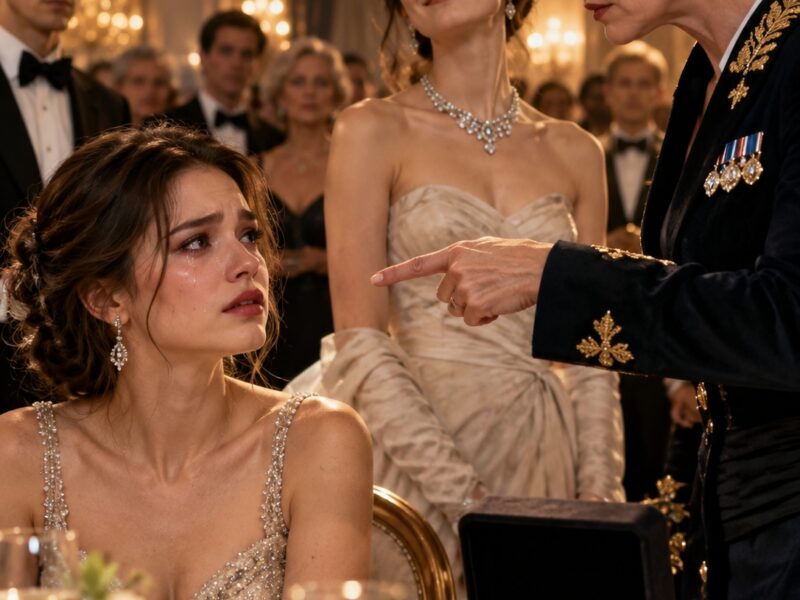
MY MOTHER CALLED ME UNWORTHY IN FRONT OF 300 GUESTS—THEN A CONVOY OF BLACK SUVs ARRIVED FOR ME
The first time my mother destroyed my life, three hundred people applauded her for being principled.
It happened beneath six crystal chandeliers in one of Washington’s oldest private ballrooms, where senators laughed beside defense contractors, ambassadors drank champagne under portraits of dead statesmen, and everyone seemed to know exactly where everyone else belonged.
I was standing beside my father’s empty chair when Margaret Caldwell lifted her glass and smiled at me.
“Mia,” she said, “our families have been circling one another for twenty years. Perhaps it’s time we stopped circling.”
The room softened into expectant silence.
Across from me stood Adrien Caldwell, the only son of one of the most powerful political families on the East Coast. He was polished, educated, careful with every word. The kind of man newspapers photographed stepping out of black cars.
Then Margaret looked toward my mother.
“Victoria, what would you say to an engagement between Adrien and Mia?”
For one impossible second, I thought my life was finally about to become normal.
Not because I was desperately in love with Adrien.
I wasn’t.
But because everyone knew what such an offer meant.
It meant respect.
It meant that despite everything my mother had said about me behind closed doors, despite every birthday she had forgotten and every comparison I had lost, another powerful family had looked at me and decided I was worthy of being chosen.
I turned toward General Victoria Sinclair.
My mother.
Decorated officer. National security adviser. The woman magazines called “America’s Iron General.” The woman who had spent her entire career lecturing rooms full of powerful men about integrity, fairness, discipline, and justice.
She stared at me.
Then she laughed.
Not loudly.
That would have been kinder.
It was a small, incredulous laugh, as if Margaret Caldwell had suggested marrying Adrien to the coat-check girl.
“Absolutely not.”
A few people shifted.
Margaret’s smile disappeared.
My mother set down her champagne.
“Mia is jealous, ill-mannered, impulsive, and entirely without the temperament required for a family like yours.”
My fingers tightened around my glass.
“Victoria,” someone murmured.
She continued.
“She mistakes stubbornness for strength. She has no political instinct, no discipline, and very little understanding of sacrifice. Adrien deserves a woman who knows how to place family above herself.”
I could feel every eye in the ballroom turning toward me.
The humiliation wasn’t loud.
It moved through the room in whispers.
A lifted eyebrow.
A hidden smile.
A wife leaning toward her husband.
A young woman pretending not to stare.
My face burned.
Then my mother reached for Sienna.
My cousin had been standing three steps behind her in an ivory dress and my grandmother’s diamond necklace.
Of course it was my grandmother’s necklace.
Everything beautiful eventually ended up around Sienna’s neck.
My mother drew her forward.
“Sienna, however, has grace.”
Sienna lowered her eyes.
“She understands duty. She is composed. Thoughtful. Generous.”
My mother smiled at her with a tenderness I had spent nineteen years trying to earn.
“If the Caldwells are truly interested in strengthening the connection between our families, Sienna would be the more appropriate choice.”
Someone inhaled sharply.
I stopped hearing the room.
All I could hear was the blood pounding inside my skull.
Sienna whispered, “Aunt Victoria, please. I don’t want Mia to feel—”
“Nonsense,” my mother said gently. “You have nothing to apologize for.”
Nothing to apologize for.
I set my champagne on a passing tray before my hand could shake badly enough to spill it.
Then I walked away.
No one stopped me.
That somehow hurt more.
I reached the small library lounge beside the ballroom and closed the door, but I didn’t cry.
Not yet.
I had learned young that crying around powerful people was like bleeding near sharks.
I stood with both palms pressed against an antique desk and concentrated on breathing.
Then voices approached outside.
My mother.
And her longtime aide.
“General, was that necessary?”
My mother sighed.
“You saw Mia’s face when Margaret mentioned Adrien.”
“She was embarrassed.”
“She has feelings for him.”
I almost laughed.
That was what she thought?
“If Mia marries into the Caldwell family,” my mother continued, “everyone will accuse me of favoring my biological daughter.”
My breath stopped.
“And Sienna?” her aide asked.
“She has no mother. She has no one advocating for her. Mia already has every advantage of birth.”
A pause.
“I’m protecting both girls.”
I closed my eyes.
There it was.
The sentence that had explained my entire childhood.
Protecting both girls.
My mother had been protecting Sienna for nineteen years.
She protected her by giving her the diamond necklace my father bought for me in Geneva.
She protected her by sending Sienna to the tutors hired with money from my family trust.
She protected her by banning chestnuts from our home because Sienna had a nut allergy, even though chestnut pastries had been my favorite thing in the world when I was little.
She protected her by coming home from a military summit for Sienna’s eighteenth birthday.
On mine, she sent an email.
Busy. Don’t make this difficult.
I had waited until midnight anyway.
Because children can be remarkably stupid when hope is involved.
Outside the door, my mother continued.
“Once Sienna is secure, Mia will understand.”
I opened my eyes.
No.
For the first time in my life, I understood perfectly.
My mother wasn’t trying to make the world fair.
She had simply decided that every kindness Sienna received had to be taken from me first.
And tonight she had finally taken something she could not give back.
My name.
When I returned to the ballroom, conversations died one by one.
Margaret Caldwell had not made a final decision.
Helena Blackwood was standing now.
Helena had been my mother’s friend and occasional political rival for years. Elegant, silver-haired, impossible to intimidate.
“Victoria,” she said, “enough.”
My mother stiffened.
Helena looked directly at me.
“Mia is nothing like the woman you just described.”
“You don’t know my daughter.”
“I know what I’ve seen.”
“She is my daughter,” my mother replied. “I know exactly who she is.”
Something inside me went strangely quiet.
Then my mother placed an arm around Sienna.
“In fact, I have instructed my attorneys to begin adoption proceedings.”
This time the ballroom truly went silent.
Sienna’s head lifted.
Mine did too.
My mother smiled.
“In every way that matters, Sienna will be my daughter.”
That was the moment.
Not the insults.
Not Adrien.
Not the laughter.
That sentence.
She was replacing me.
Publicly.
Legally.
Deliberately.
Margaret Caldwell considered the situation before giving a slow nod.
“In that case, we would certainly be willing to discuss Adrien and Sienna.”
Sienna looked stunned.
Then pleased.
She lowered her eyes with perfect modesty.
“Thank you, Mrs. Caldwell.”
Margaret turned toward me.
“As for Mia, Adrien’s cousin Nathan is unattached.”
A few people looked away.
Everyone knew Nathan Caldwell.
Nightclubs.
Crashes.
Women.
Settlements.
The family disaster hidden beneath expensive tailoring.
“Perhaps,” Margaret continued, “that could preserve the alliance.”
Helena rose immediately.
“Mia will decide whom Mia marries.”
I looked at Margaret.
“Thank you, Mrs. Caldwell.”
My voice was remarkably steady.
“But I will not marry Nathan Caldwell.”
Then I looked at my mother.
She was watching me as if I had embarrassed her again.
That was when I made a promise she couldn’t hear.
You will never choose me.
So I am done waiting.
My mother summoned me to her study that night.
She poured water into a crystal glass and pushed it across the desk.
“At least you showed enough judgment not to fight Sienna over Adrien.”
I stared at her.
“You destroyed my reputation.”
Her expression barely changed.
“Don’t dramatize.”
“You told three hundred people I was jealous, unstable, selfish, and unworthy.”
“I said you weren’t suited to Adrien.”
“By tomorrow, every political family in Washington will know my own mother thinks I’m defective.”
“You’ll survive gossip.”
I laughed.
A broken little sound.
“Do you ever hear yourself?”
Her eyes hardened.
“Sienna has no mother.”
There it was again.
“You have parents,” she continued. “A name. Security. Privilege. Why must you fight a girl who has less?”
I looked around her study.
Military commendations.
Photographs with presidents.
Medals behind glass.
Evidence everywhere that Victoria Sinclair had spent her life protecting people.
“I live in the bedroom Sienna rejected.”
My mother frowned.
“I wear clothes she didn’t want. I used her old furniture until I was sixteen. Dad sent me birthday gifts from overseas, and you gave them to her.”
“That is not—”
“When I was ten, I heard you tell the housekeeper, ‘Sienna has no mother. Mia can do without.’”
Her face changed slightly.
I kept going.
“Apparently I’ve been doing without ever since.”
“Mia.”
“You came home for her eighteenth birthday.”
“I had availability.”
“You flew eleven hours.”
“That is irrelevant.”
“On mine, you sent an email.”
Silence.
“I waited for you until midnight.”
My voice cracked, and I hated myself for it.
“I thought maybe you were surprising me.”
For the first time, she looked uncomfortable.
I wiped my eyes.
“You weren’t.”
She stood.
“The Caldwell matter is finished.”
Then she opened a drawer.
“I have arranged another match.”
She slid a folder toward me.
OWEN PIERCE.
Junior military liaison.
Respectable family.
No meaningful political connections.
My mother folded her hands.
“He’s quiet. Stable. He won’t encourage your more reckless tendencies.”
I stared at her.
Sienna would marry the heir to a dynasty.
I was being assigned a man my mother believed would manage me.
“No.”
Her jaw tightened.
“Excuse me?”
“I’m not marrying him.”
“This isn’t a debate.”
“Dad hasn’t approved it.”
“The announcement will be made before Jonathan returns.”
I pushed the folder away.
“You can’t force me.”
Her hand struck my face.
The sound was shockingly small.
My shoulder hit the bookshelf.
For several seconds neither of us moved.
My cheek burned.
My mother looked almost surprised by what she had done.
Then her expression closed.
“We’ll see.”
I left without another word.
Tessa, the maid who had practically raised me, found me upstairs.
When she saw my face, she dropped the towels she was carrying.
“Oh, sweetheart.”
That almost broke me.
She pressed ice against my cheek.
Then she remembered the envelope in her pocket.
“Helena Blackwood’s driver brought this.”
Inside was an antique ruby brooch.
And a note.
Three words.
Wait for me.
—D
My fingers closed around the ruby.
For the first time that night, I felt something other than pain.
Three days.
I only had to survive three more days.
The estate transformed itself for Sienna.
Flowers arrived by the truckload.
Designers came and went.
My mother emptied portions of the family safe.
Jewelry.
Vintage gowns.
Furs.
Things that had belonged to women whose portraits hung in our halls.
Tessa watched three cases being carried toward Sienna’s room.
“That should be yours.”
I surprised myself by shrugging.
Possessions had stopped hurting.
Then the housekeeper came for me.
“The general wants you downstairs.”
The moment I entered the drawing room, a porcelain cup exploded against the wall beside my head.
“Apologize,” my mother snapped.
Sienna stood beside a ruined ivory gown.
Black ink soaked the silk.
“For what?”
“You destroyed her engagement dress.”
“I didn’t touch it.”
“Chloe saw you.”
The maid standing near the fireplace went pale.
I looked at her.
“What time?”
“Nine-thirty.”
“Where?”
“East corridor.”
“What was I wearing?”
Chloe hesitated.
“A lavender sweater.”
Tessa stepped forward.
“The east corridor lights have been broken for a week. At nine-thirty you couldn’t tell lavender from black.”
Chloe’s face collapsed.
“I’m sorry.”
Sienna went still.
Chloe began crying.
“I spilled it. It was an accident. I panicked.”
My mother turned on her.
“You framed Mia?”
Chloe dropped to her knees.
“I’m sorry.”
Sienna quickly moved toward me.
“Mia, I’m so sorry. I had no idea.”
I looked at her.
Something in her performance was too perfect.
My mother waved her hand.
“A misunderstanding. It’s over.”
“No.”
Everyone looked at me.
“If I had destroyed that gown, would it be over?”
My mother’s mouth tightened.
“You’ve been cleared.”
“That wasn’t my question.”
“Mia.”
“If I had done it, would you call it a misunderstanding?”
Silence answered me.
My mother finally said, “Chloe is dismissed.”
Security took the sobbing maid away.
Then my mother looked at the destroyed gown.
“There isn’t enough time to replace it.”
Her eyes moved to me.
“Give Sienna your grandmother’s Valentino.”
The air disappeared from my lungs.
“No.”
“It’s appropriate.”
“That was Grandma’s last gift to me.”
“Sienna has photographers attending the engagement reception.”
“So?”
“You’re marrying Owen Pierce. Your wedding will be smaller.”
I stared at her.
She actually believed that explained everything.
“What do you need couture for?” she asked.
That sentence hurt worse than the slap.
I whispered, “Dad gave it to me because he knew who his daughter was.”
My mother’s eyes narrowed.
“You never did.”
“Mia.”
“Sometimes I wish you weren’t my mother.”
Her face went white.
I should have stopped.
Instead I said the truest thing I had ever said to her.
“Then maybe it wouldn’t hurt so much when you act like you aren’t.”
The room froze.
My mother’s voice became quiet.
“Take her downstairs.”
Tessa stepped between us.
“General—”
“Move.”
Two security officers came toward me.
That was when I understood what was about to happen.
The punishment room had another name in the household.
The training room.
My mother called what happened there discipline.
Years later, I would finally call it what it was.
Abuse.
She forced me to my knees.
The first strike tore a scream out of me.
After that, time became sound.
Leather cutting air.
My breath breaking.
Tessa crying somewhere behind the locked door.
My mother telling me I needed to learn humility.
Eventually the pain became so enormous that my body seemed to abandon me.
I remember blood on my lip.
I remember the floor tilting.
And I remember my mother saying, “One day you will understand why I had to correct you.”
My last thought before everything went dark was strangely peaceful.
No, Mom.
I understand now.
My greatest mistake was believing pain was the price I had to pay for your love.
I don’t owe you that anymore.
That night I lay facedown in bed.
Sienna entered without knocking.
She placed a tube beside me.
“Aunt Victoria sent ointment.”
Then she looked at my back.
And smiled.
“I ruined my own dress.”
I turned my head.
She leaned against the dresser.
“Chloe did exactly what I told her.”
I said nothing.
“And your grandmother’s Valentino?”
Her smile widened.
“It looks beautiful in my closet.”
I felt something colder than anger.
“Why?”
She shrugged.
“Because you still keep thinking being her biological daughter means something.”
Then she left.
Tessa opened the tube.
The moment the gel touched my skin, agony ripped through me.
I screamed into the pillow.
Tessa jerked backward and smelled the tube.
Her face drained.
“This isn’t medicine.”
She grabbed a towel.
“It’s corrosive.”
“Don’t tell my mother.”
“Mia—”
“She’ll believe Sienna.”
“But this could scar you.”
“She’ll believe her.”
Tessa began crying.
I took her hand.
“Tomorrow, take me to a clinic quietly.”
“How do you keep surviving this?”
I closed my eyes.
“I keep thinking it’ll be over tomorrow.”
I had been telling myself that since I was eight.
Sometime after midnight, fever dragged me in and out of consciousness.
I heard my mother outside my room.
“I shouldn’t have punished her that severely.”
The housekeeper said nothing.
My mother exhaled.
“She forced my hand.”
Even half-delirious, I almost laughed.
“Once Sienna’s engagement is settled,” she continued, “I’ll make it up to Mia. We’ll have time.”
Time.
Nineteen years, and she still thought love could be postponed.
I closed my eyes.
She didn’t know yet.
She wasn’t going to have time.
Three mornings later, black SUVs rolled through the gates.
My mother assumed the Caldwells had arrived.
Instead Damian Blackwood stepped from the lead vehicle.
He was tall, broad-shouldered, quiet in a way that made other men unconsciously move aside.
His mother, Helena, emerged behind him.
Damian’s eyes searched the entrance.
Then they found me.
I was standing at the top of the staircase.
His expression changed.
Not dramatically.
That was never Damian.
His jaw simply tightened.
He turned toward one of his men.
“Bring the doctor inside.”
My mother stepped forward.
“Mr. Blackwood, what is the meaning of this?”
Damian looked past her.
“I’m here for Mia.”
The hall went silent.
He walked toward me.
My mother’s face changed as she began assembling pieces she had never bothered to notice.
Helena defending me.
The ruby brooch.
My refusal of Nathan.
My indifference toward Adrien.
It had never been Adrien.
Damian stopped beneath the stairs.
“I came to ask Mia Hart to marry me.”
My mother actually laughed.
“She is already promised elsewhere.”
“No, she isn’t.”
“You don’t have authority—”
“I do.”
The voice came from behind us.
I knew it instantly.
My father.
Jonathan Hart walked through the open doors carrying a travel bag in one hand.
My mother stared at him.
“You weren’t due home for a month.”
“If I had waited another month, apparently my daughter would have been engaged to a stranger without anyone bothering to tell me.”
“Jonathan, I can explain.”
“I’m sure you can.”
Sienna rushed forward.
“Uncle Jonathan, Aunt Victoria was only trying to help Mia.”
My father looked at her.
Really looked.
“The affairs of my daughter are not yours to explain.”
Her eyes filled immediately.
My mother moved between them.
“Don’t speak to her like that.”
My father’s gaze shifted to me.
To the fading bruise on my face.
To the way I was standing too carefully.
Then Damian said quietly, “There’s more.”
My mother ignored him.
“You’re creating a political disaster. I arranged Sienna with Adrien. Now you’re giving Mia to the Blackwoods?”
“I’m not giving Mia to anyone,” my father said. “She chooses.”
Damian opened a leather portfolio.
“A marriage agreement. Independent property. Full financial autonomy. No claim against Mia’s inheritance. No political obligations. No conditions.”
Then he looked at me.
“And it means nothing unless she says yes.”
My throat tightened.
That was the difference.
Everyone else had discussed me like property.
Damian asked.
“Mia?”
“Yes.”
My mother’s face lost all color.
Damian extended his hand.
I descended the stairs.
Before I reached him, a staff member hurried inside.
“Sir? General? There’s a physician at the gate asking for Miss Hart.”
My mother frowned.
“A physician?”
“He says there’s an unpaid medical bill.”
Her embarrassment instantly became suspicion.
She looked at Damian.
“Before you marry my daughter, perhaps you deserve to know what she has been doing.”
I stared at her.
Even now.
Even after everything.
Her first instinct was to suspect me.
“Bring him in,” she ordered.
Dr. Morrison entered carrying a folder.
My mother folded her arms.
“What was my daughter treated for?”
He looked at me.
I nodded.
Then he opened the file.
“Extensive soft-tissue trauma across the back. Multiple lacerations. Severe bruising and inflammation.”
My father stopped breathing.
The doctor continued.
“Several wounds were subsequently exposed to a corrosive chemical compound. By the time I examined her, portions of the tissue had begun necrotizing.”
My father’s voice was almost unrecognizable.
“Who did that to my daughter?”
No one moved.
My mother whispered, “I disciplined her.”
Jonathan stared at his wife.
“You what?”
“She was defiant.”
Then realization struck my mother.
She turned toward Sienna.
“I gave you medication to take upstairs.”
Sienna stepped backward.
“I did.”
“Tessa,” I said.
Tessa emerged from behind the staff.
She was crying before she even spoke.
“The tube Miss Sienna brought contained corrosive gel.”
Sienna shook her head.
“That’s a lie.”
“I smelled it myself.”
“You’re a servant.”
Tessa flinched.
Damian did not.
He simply looked at Sienna.
For the first time, she stopped performing.
Tessa continued.
“Miss Mia wouldn’t let me tell anyone because she said the general would believe Sienna.”
My mother looked at me.
I held her gaze.
Tessa’s voice broke.
“She had a fever all night. She couldn’t afford the clinic from her own account. They treated her on credit.”
My father closed his eyes.
The daughter of one of the wealthiest families in Washington had needed credit for medical care.
Because the money designated for her had somehow always become Sienna’s.
Damian climbed the final stair and stood beside me.
His hand touched mine.
“You’re safe now.”
Three words.
No speeches.
No promises he couldn’t guarantee.
Just three words I had never believed anyone could say to me.
My mother turned toward Sienna.
“You knew?”
Sienna began crying.
“Aunt Victoria—”
My mother struck her.
Sienna fell.
I should have felt satisfaction.
I didn’t.
Watching my mother finally turn against Sienna did not repair anything.
It only proved she had always been capable of seeing cruelty.
She had simply refused to see it when I was the victim.
By evening, my father had ordered a full audit.
Staff members were interviewed.
Accounts were frozen.
Records were opened.
A pattern emerged.
Meals reduced because Sienna wanted specialty food.
Medical appointments redirected.
Tutors reassigned.
My gifts transferred.
Household employees bribed to report my movements.
Sienna had learned how to weaponize the one thing my mother had given her without limit.
Protection.
My mother had created the system.
Sienna had merely learned how to use it.
Damian’s medical team treated my back.
For the first time in days, I slept without pain waking me every hour.
When I opened my eyes the next afternoon, my father was sitting beside me.
He had a small pastry box.
“Damian found out you liked these.”
Inside were chestnut pastries.
I stared.
“I haven’t had one since I was four.”
“Why?”
“Sienna’s allergic.”
My father looked toward the window.
“So your mother banned them?”
I nodded.
He rubbed both hands over his face.
“Nineteen years.”
“What?”
“I’ve been your father for nineteen years, and I didn’t know you liked chestnuts.”
I took one bite.
Sweetness and roasted nuts dissolved on my tongue.
Suddenly I was five years old again.
I began crying.
My father reached toward me, then hesitated.
That hesitation mattered.
He was asking permission without words.
I leaned toward him.
His hand settled gently on my hair.
After a while, he said, “The doctor arriving when he did. Tessa being ready to speak. Damian showing up.”
I looked at him.
“You planned it.”
“Yes.”
“Does that frighten you?”
“No.”
He shook his head.
“It breaks my heart.”
I looked away.
“You shouldn’t have needed strategy to survive your mother.”
He swallowed.
“I spent my career teaching diplomats how to recognize manipulation and threats. Your mother spent hers reading battlefields.”
His voice broke.
“And somehow our daughter learned both because home became the place she needed those skills most.”
A knock sounded.
My father glanced toward the door.
“Your mother is outside.”
Every muscle in my body tightened.
“She wants to apologize.”
I stared at the wall.
For nineteen years, I had lived for those words.
I’m sorry.
I imagined them on birthdays.
After arguments.
After every time she chose Sienna.
Now they were on the other side of the door.
And I felt nothing.
“Do you want to see her?”
“No.”
“Mia—”
“I don’t want another explanation.”
Outside the door, silence.
I knew she could hear me.
Good.
For once, I wanted her to.
My mother moved temporarily into the Hart Foundation’s military training center.
She called it giving me space.
My father called it running away.
Damian never forced himself into my recovery.
Instead, something arrived every day.
Books.
Chocolate.
Flowers without cards.
A first edition of a novel I had once mentioned liking at fifteen.
He remembered things I had forgotten saying.
My mother remembered every medal she had ever received.
Damian remembered what made me smile.
One afternoon my father confronted Victoria at the training center.
“Come home.”
She stood with her back to him.
“How is Mia?”
“Come ask her.”
“She won’t speak to me.”
“Then apologize.”
“I have.”
“No. You’ve explained.”
My mother turned.
“I punished the staff. I froze Sienna’s accounts. I restored Mia’s property.”
My father stared at her.
“You still think this is accounting.”
“I am trying to fix it.”
“You can’t return nineteen years.”
My mother’s face tightened.
“I did what I believed was fair.”
“Fair?”
“Cecilia died in my arms.”
There it was.
The reason.
Sienna’s mother.
My mother’s closest friend.
“Her last words were asking me to take care of Sienna,” Victoria said. “Cecilia had nothing. A terrible marriage. No security. I had everything.”
“And therefore Mia deserved less?”
“I couldn’t let my daughter have everything while Cecilia’s daughter had nothing.”
My father stared at her in disbelief.
“So you took from Mia.”
“I balanced things.”
“You robbed one child to pay a debt to another.”
“That’s not what I did.”
“It is exactly what you did.”
My mother’s eyes filled.
“You don’t understand.”
“No, Victoria. You don’t.”
He stepped closer.
“Mia is not an entry in your moral ledger.”
She looked away.
“I was trying to honor my friend.”
“You honored a dead woman by destroying your living daughter.”
That landed.
My father’s next words landed harder.
“And if you keep defending it, you’re going to lose me too.”
He walked away.
For the first time in her life, General Victoria Sinclair had no argument.
I moved into the Blackwood estate a week later.
My mother arrived too late.
My bedroom was empty.
My closets bare.
My father was standing near the staircase.
“You let her leave.”
“She’s nineteen.”
“You let Helena take her.”
“She accepted Helena’s invitation.”
“People will talk.”
My father laughed bitterly.
“People have been talking since the night you humiliated her.”
My mother gripped the banister.
“What did she say?”
My father hesitated.
Then told her.
“She said Helena Blackwood has shown her more maternal kindness in one year than you did in nineteen.”
My mother sat down.
For once, there was no audience.
No uniform.
No staff.
No Sienna to rescue.
Just a woman confronting the ruins of something she had assumed would always wait for her.
My father looked at her.
“You failed her, Victoria.”
She closed her eyes.
“And being her mother was the one role that never required a medal.”
Helena Blackwood’s home felt nothing like mine.
There were flowers because someone liked flowers, not because photographers were coming.
People knocked.
Rooms were warm.
The first morning I showered there, I cried because the water stayed hot.
Helena never asked why.
She simply had breakfast waiting downstairs.
On my bed was an ivory quilt embroidered with birds.
“It’s beautiful.”
Helena touched the fabric.
“I made it for my daughter.”
I looked at her.
“I didn’t know you had one.”
“She died young.”
Her voice remained composed, but her fingers tightened around the quilt.
“She would be around your age.”
“I’m sorry.”
“Years ago, at a diplomatic reception, I was hiding behind a hedge because it was the anniversary of her death.”
Memory returned.
A woman crying quietly.
Fifteen-year-old me sitting beside her.
Not asking questions.
Just staying.
Helena smiled.
“You protected my grief when you could have turned it into gossip.”
“I didn’t do anything.”
“You stayed.”
She touched my cheek.
“Sometimes staying is everything.”
My eyes burned.
“I wanted to take you home that night.”
“Why didn’t you?”
“You had a mother.”
A sad smile crossed her face.
“I thought that meant you had someone.”
That sentence nearly broke me.
Helena pulled me against her.
“If Damian ever makes you feel small, you come to me.”
I laughed through tears.
“He’s your son.”
“And you’ll be my daughter.”
There was no adoption announcement.
No ballroom.
No speech about fairness.
She simply held me.
And somehow that was the first time the word daughter had ever felt safe.
Damian and I married in September.
Wildflowers from Montana lined the aisle.
My father walked beside me.
Halfway down, I noticed his eyes were red.
“You okay?”
“No.”
I smiled.
“Good.”
He laughed quietly.
Before the ceremony, Damian found me alone in the garden.
He took my hand.
“You nervous?”
“Yes.”
“Want to leave?”
I stared at him.
He meant it.
If I said yes, he would cancel everything.
Not argue.
Not shame me.
Not remind me what the wedding cost.
Just leave.
I shook my head.
“No.”
He kissed my fingers.
“You are not a burden, Mia.”
My throat tightened.
“You are my choice.”
Then he added, “Today. Tomorrow. Every day you still choose me back.”
My mother did not attend.
She sent her grandmother’s diamond bracelet.
I left it unopened.
Two days later, Damian and I prepared to fly to Montana.
My father came to the airfield.
My mother came too.
She stood far from the plane.
The wind pulled strands of gray hair across her face.
For a moment, nineteen years of instinct screamed at me to go to her.
Make peace.
Comfort her.
Be a good daughter.
Then Damian took my hand.
I boarded the plane.
I didn’t wave.
My mother returned to Washington alone.
That evening, a man appeared at the estate.
Robert Vale.
Sienna’s father.
He smelled of whiskey.
“Heard my girl was marrying a Caldwell.”
My mother stared at him.
“That engagement is finished.”
Robert laughed.
“What happened?”
“Your daughter poisoned mine.”
His grin disappeared.
My mother stepped toward him.
“I spent twenty years caring for Sienna because I owed Cecilia.”
Robert began laughing again.
Not politely.
Violently.
“You owed Cecilia?”
My mother froze.
“What’s funny?”
“You still don’t know?”
“Know what?”
Robert wiped his mouth.
“Your precious best friend hated you.”
My mother’s expression hardened.
“Get out.”
“She wanted Jonathan.”
Silence.
“The night before your wedding, Cecilia planned to get him drunk, sleep with him, get pregnant if she could, and force the issue.”
“You’re lying.”
“She went into the wrong room.”
My mother stopped breathing.
“My room.”
Robert smiled bitterly.
“She woke up next to me.”
“No.”
“That’s how Sienna happened.”
My mother gripped the table.
“Cecilia loved me.”
“Cecilia wanted your life.”
“No.”
“She wanted your husband, your money, your name.”
Robert stepped closer.
“And you spent twenty years punishing your own daughter because you felt guilty for having more than a woman who tried to steal everything from you.”
My mother’s knees almost gave out.
Suddenly every sacrifice she had demanded from me became unbearable even to her.
Every birthday.
Every gift.
Every insult.
Every bruise.
The punishment room.
The night she promised herself there would be time later.
She had built an altar to a friendship that had never existed.
And sacrificed her daughter on it.
My mother chartered a flight to Montana that night.
By morning, she stood outside the Blackwood ranch.
Security would not let her through.
She called me.
I didn’t answer.
She called again.
Then again.
Eventually she stood at the property line with prairie wind tearing through her coat.
“Mia!”
I was inside.
I heard nothing.
Maybe that was mercy.
Maybe it wasn’t.
She called my name until her voice broke.
But some apologies arrive so late that the person they were meant for no longer lives there.
The girl who had waited for Victoria Sinclair was gone.
Years passed.
Damian and I stayed in Montana.
He ran much of Blackwood Security from an office overlooking the mountains.
I helped establish a rehabilitation program for veterans and military families.
It was strange.
I had spent my childhood surrounded by soldiers but had never understood safety.
Now I helped people rebuild it.
Helena visited twice a year and stayed three times longer than planned.
My father came whenever diplomacy allowed.
He and Damian sat on the porch at sunset, saying almost nothing.
That was their friendship.
My mother wrote.
Every month.
Thick envelopes.
I never opened them.
I never destroyed them either.
Tessa kept them in a box upstairs.
Year after year, the box became heavier.
Then came children.
Our daughter had Damian’s dark hair and my stubborn chin.
Our son had the dangerous habit of believing furniture existed to be climbed.
One summer evening, they chased fireflies across the lawn while Damian and I sat on the porch.
“She came again,” he said.
I knew who he meant.
“My birthday?”
He nodded.
“Security saw her at the property line.”
I watched our daughter cup a firefly between her palms.
“Did she ask to come in?”
“Yes.”
“What did you say?”
“What you told me to say.”
I looked at him.
“No.”
“No.”
He took my hand.
“If that changes someday, it changes.”
“And if it doesn’t?”
“Then it doesn’t.”
Simple.
No guilt.
No lecture about forgiveness.
No demand that blood obligate me to reopen a door I had almost died behind.
I leaned against his shoulder.
For nineteen years, I had believed healing meant someday hearing my mother say the perfect words.
I was wrong.
Healing was reaching the point where I no longer needed them.
Tessa came onto the porch carrying lemonade.
Silver threaded her hair now.
She watched the children.
“Bed in thirty minutes.”
Damian groaned.
“They’ll revolt.”
“You’re the security expert.”
“Not against those two.”
He crossed the lawn and scooped up both children.
Their laughter rose into the evening.
I watched him carry them toward the house.
Our daughter would never wonder whether her brother deserved more love.
Our son would never learn that affection could be revoked for disappointing us.
Neither child would spend a birthday listening for a car that never came.
Tessa sat beside me.
“Are you happy, Miss Mia?”
I watched the mountains turn purple.
The stars appeared slowly.
There were more of them here than in Washington.
Or maybe Washington had simply contained too much artificial light for me to notice.
“Yes.”
I smiled.
“I really am.”
Somewhere far away, my mother still had her medals.
Her photographs.
Her commendations.
Rooms full of evidence that she had spent her life serving her country with distinction.
Perhaps she still sat down once a month and wrote another letter.
Perhaps she still came to the ranch every year.
Perhaps she finally understood that loving someone in your heart means very little if every choice you make teaches them they are unwanted.
I did not hate her.
Hatred requires a kind of intimacy.
I did not wish her pain.
I did not wish her happiness either.
For years, I had believed the opposite of love was hatred.
It wasn’t.
The opposite of love was what remained when the waiting finally ended.
Nothing.
And as my children’s laughter drifted through the open windows behind me, I realized that nothing no longer frightened me.
Because my mother had spent nineteen years teaching me what it felt like not to be chosen.
The life I built afterward taught me something far more important.
I could choose myself.









