My Mother Forced Me to Marry My Dead Sister’s Husband—Then He Found the Letter She Never Meant Him to Read
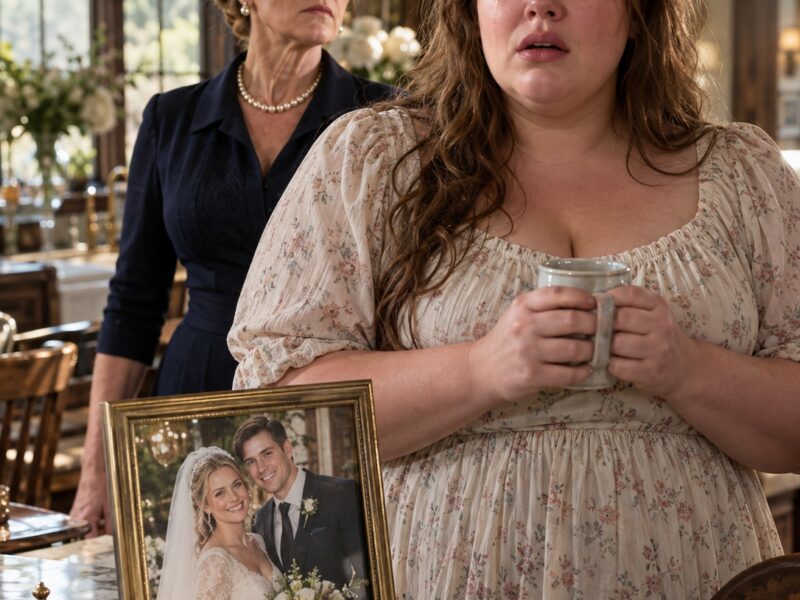
The morning my mother told me I was going to marry my dead sister’s husband, she said it as if she were assigning me a chore.
Not asking.
Not suggesting.
Assigning.
“You have nothing keeping you here, Hazel.”
I stood at the kitchen window with both hands wrapped around a chipped coffee cup, staring at the yard while chickens scratched at the October dirt.
Behind me, my mother’s voice remained calm.
Practical.
That was always the most dangerous version of her.
“Henry is alone,” she continued. “Lily has no mother. She’s two years old. Your sister’s child wakes up calling for someone who isn’t there.”
I tightened my fingers around the cup.
Outside, nothing looked different.
The road was empty.
A wagon rut held last night’s rain.
A maple leaf dragged itself across the porch in the wind.
Ordinary things.
It seemed impossible that the world could look so ordinary while my mother rearranged the rest of my life behind me.
“She needs family,” Mother said.
I closed my eyes.
“Then help him.”
“I am helping him.”
“No.” I turned. “You’re giving him me.”
Her face changed slightly.
Not enough for anyone else to notice.
I noticed.
I always noticed.
“You say that as though marriage to Henry is some punishment.”
“You say it as though I’m livestock.”
“Hazel.”
“What?”
Her mouth tightened.
We had been arguing for twenty minutes, but the real argument had started three years earlier.
Maybe longer.
Then she said the sentence I had known was coming.
“You loved him once.”
The kitchen went still.
My mother stepped closer.
“You told me yourself.”
I looked at her.
Three years disappeared.
I was twenty-seven again, sitting at this same table with flour on my sleeve and my heart doing something foolish inside my chest.
Mama, I think I have feelings for Henry.
I remembered the exact silence afterward.
Then the laugh.
Small.
Almost accidental.
But unmistakable.
My mother had looked at my broad shoulders, my heavy body, my plain face, the thick brown hair I usually tied back because there was always work to do.
Then she laughed.
“Oh, Hazel.”
Just that.
Two words.
Two words were enough.
She had gone back to kneading dough.
“June suits him better,” she had said. “She’s prettier beside him. Lighter. Easier. June fits a man like Henry.”
I had stared at the grain of the table until the lines blurred.
Six months later, my younger sister walked down the aisle toward Henry Hall wearing our grandmother’s lace.
I stood at the back of the church pouring coffee.
Now June was dead.
And suddenly I fit.
“You were already in love with him,” Mother said again. “So I don’t understand the problem.”
I placed my cup on the windowsill.
Very carefully.
“I wanted to be chosen.”
She stared at me.
I swallowed.
“Not assigned.”
For one second, something like shame passed across her face.
Then it disappeared.
“What about Lily?”
There it was.
The weapon she knew would work.
I looked toward the corner.
Lily was sitting on the floor near the flour sacks, arranging wooden spools into crooked little rows.
Dark hair.
Gray eyes.
June’s mouth.
Henry’s serious little frown whenever she concentrated.
My niece had been barely a year old when June died.
Now she knew me.
Trusted me.
Reached for me before almost anyone else.
Mother lowered her voice.
“She calls for you.”
“Don’t.”
“She needs you.”
“Don’t use her.”
“How can you call it using her when it’s true?”
I turned away.
And then the back door opened.
Cold air moved through the kitchen.
Henry Hall stood in the doorway.
For one terrible second, I wondered how much he had heard.
He was thirty-four, tall and lean from ranch work, still wearing his dark work coat, his hat held in one hand.
Wind had reddened his face.
Grief had changed it more.
Three years earlier, Henry had been the kind of man who smiled without knowing people noticed.
After June died, smiling seemed to require permission he rarely gave himself.
His gaze moved from Mother to me.
Then to Lily.
He understood immediately that he had walked into something.
“Papa!”
Lily scrambled to her feet.
Henry crouched just in time to catch her.
She wrapped herself around his neck.
He held her tightly.
Then her eyes found me.
“Haza.”
Her arms stretched toward me.
“Haza!”
Something inside me broke exactly where it always broke.
Henry looked at me.
Then he carried Lily across the kitchen.
She practically launched herself from his arms into mine.
The second I held her, she settled.
No hesitation.
No adjustment.
Her cheek found my shoulder as though it had memorized the place.
I felt Henry watching.
Mother said nothing.
Lily’s fingers curled into my collar.
Within minutes, her breathing slowed.
The child who had been restless all morning fell asleep against me.
Henry spoke quietly.
“Hazel.”
I looked at him.
His voice dropped so only I could hear.
“You don’t have to do this.”
I said nothing.
“Whatever your mother said, whatever anyone thinks is best…” He glanced at Lily, then back at me. “You have a choice.”
That almost made me laugh.
Not because it was funny.
Because choice was such a beautiful word when spoken by someone who had always possessed one.
Henry’s expression tightened.
“I mean it.”
I looked down at Lily.
June’s daughter.
My blood.
My sister’s last living piece.
Then I looked at my mother.
The woman who once decided I was not beautiful enough for Henry Hall and now had decided I was useful enough to replace his wife.
Finally, I looked at Henry.
He was waiting.
Not demanding.
Waiting.
“Tell him I’ll come,” I said.
Mother exhaled.
“At the end of the week.”
Relief flooded her face.
“Oh, Hazel—”
“Don’t.”
She stopped.
“Please. Don’t say anything else.”
I carried Lily to the chair beside the window and sat down.
A few minutes later, Mother went outside with Henry.
I did not watch them.
I stared at the empty road instead.
Because somewhere between my mother’s cruelty and Henry’s kindness, I had just agreed to marry the only man I had ever loved.
And I had never felt less chosen.
That night, I opened the cedar box beneath my bed for the first time in three years.
At the bottom was my journal.
I found an entry from the winter before Henry married June.
The creek froze today.
Henry came to help Father stack wood before the storm.
Everyone went inside when the wind got bad, but I stayed to finish.
He came back.
He took the heavy logs from me without saying anything.
Then he noticed my hands.
My knuckles were split from the cold.
He pulled off his wool mittens and tucked them into my apron pocket.
“Keep them,” he said. “Your hands do more work than anyone else’s in this county.”
I have been warm all evening.
I do not know what to do with that.
I read the passage twice.
Then I closed the journal.
Those mittens had once been enough to build an entire imaginary life around.
That was the pathetic truth.
When you spend your life being overlooked, being noticed once can feel dangerously similar to being loved.
I placed the journal inside my traveling bag.
Then I looked toward the candle burning beside my bed.
I had lit one every night for three years.
Some nights because I wanted to read.
Some nights because darkness made the room feel too much like everything I had accepted about myself.
That night, I blew it out early.
For once, I let the dark be dark.
The wedding was five days later.
Mother buttoned my dress before sunrise.
Neither of us spoke until she fastened the last button.
The dress was white.
That was the only bridal thing about me.
In the mirror, I looked large and pale and painfully still.
Mother rested her hands on my shoulders.
“You’ll be good for him.”
I met her eyes in the reflection.
“You said that about June.”
Her fingers stopped.
For once, she did not defend herself.
“I know.”
Two words.
Quiet.
Almost broken.
It was the closest thing to an apology she had ever given me.
The church ceremony was small.
No musicians.
No flowers beyond what neighbors had brought.
No laughter spilling through the doors like there had been at June’s wedding.
Henry stood beside me.
The preacher spoke.
I repeated what I was supposed to repeat.
My voice never shook.
It almost never did.
People mistake steadiness for strength.
Sometimes steadiness is simply what happens when a woman learns no one is coming to rescue her.
When the preacher reached for the ring, Lily escaped my mother.
“Haza!”
She ran down the aisle.
A few people laughed softly.
I bent and lifted her.
She buried her face against my neck and grabbed my dress.
The preacher hesitated.
Henry looked at Lily.
Then at me.
“Continue,” he said.
So I married Henry Hall with his daughter half asleep on my shoulder.
When the ceremony ended, Henry did not kiss me.
Neither of us expected him to.
Instead, his hand came to rest between my shoulder blades.
Flat.
Warm.
Steady.
No pressure.
No possession.
Just there.
It was the kindest touch I had received in years.
And somehow that hurt more than cruelty would have.
The wagon ride to his ranch took nearly an hour.
Lily slept between us.
Henry kept his eyes on the road.
Eventually he said, “Thank you.”
I turned toward him.
“For what?”
“For coming.”
“Don’t thank me.”
He glanced over.
“It makes it sound like a favor.”
He was silent.
“What should it sound like?”
I had no answer.
The ranch house appeared near sunset.
I had been there many times when June was alive.
But entering it as Henry’s wife was different.
June was everywhere.
Her yellow curtains.
Her recipe tin.
Her handwriting.
Her blue serving bowl.
Her apron hanging behind the pantry door.
Even the lanterns sat where she had placed them.
Nothing was haunted.
That was worse.
Ghosts would have made sense.
Instead, June remained through ordinary objects.
Henry carried my bag down the hallway.
Then he opened the master bedroom.
My breath stopped.
The quilt on the bed was June’s.
She had sewn it herself.
I had watched her.
For one moment I imagined lying beneath it while Henry slept beside me.
My stomach turned.
Not because I did not love him.
Because I did.
Henry set my bag down.
“I need to check the stock before dark.”
Then he left.
I sat on the edge of the bed.
Mother’s final advice returned.
Do not pull away from him.
A man has needs.
If you must close your eyes, close them.
A wife endures certain things with grace.
My hands locked together.
I had imagined Henry touching me more times than I was willing to confess even to myself.
But not like this.
Never from obligation.
Never because a preacher had said I belonged to him.
Never because I was the surviving sister available to fill an empty space.
By the time I heard his boots in the hall, my heart was pounding so hard it hurt.
He entered.
Stopped.
Looked at me.
I saw the moment he understood.
My rigid shoulders.
My white face.
My hands clenched in my lap.
Henry’s jaw tightened.
He did not come closer.
“Hazel.”
I could barely look at him.
Then he picked up my bag.
“Come with me.”
I stared.
He walked across the hall and opened another door.
A small room.
Single bed.
Window facing the yard.
Fresh sheets.
Empty drawers.
“Your room,” he said.
I could not speak.
“Your space.”
He placed the bag inside.
“There is no pressure here. Of any kind.”
Something burned behind my eyes.
Henry met my gaze.
“You don’t owe me your body because you married me.”
The sentence nearly destroyed me.
Because no man had ever said anything like that to me.
And because some broken part of me had expected him to prove my mother right.
He stepped back.
“Good night, Hazel.”
He went into his room and closed the door.
I sat alone in the dark.
Relieved.
Humiliated by my relief.
Grateful.
Ashamed of my gratitude.
And more in love with him than I had been that morning.
That was the problem.
The next day I made his coffee without thinking.
He took one sip.
Then stopped.
“How did you know?”
“Know what?”
“How I take it.”
I froze.
Black.
One spoon of brown sugar.
A little cream only in winter.
I knew because I had noticed for years.
“June wrote letters,” I said.
His eyes stayed on me.
“She told you how I take my coffee?”
“She wrote about everything.”
That was partly true.
Henry took another drink.
“You were part of her life.”
I turned toward the stove.
“So were you.”
I felt his gaze on my back.
Then he went outside.
It was only our first morning, and I had already revealed too much.
The days became weeks.
Lily was the only thing between us that felt natural.
Every morning she called for me.
Every night I read to her.
She followed me from room to room, carrying spoons, stones, ribbons, pieces of paper—anything she considered important enough to show me.
With her, I never wondered whether I belonged.
Children are sometimes kinder than adults because they have not yet learned to rank love according to beauty.
But outside Lily’s room, I lived like a guest.
I did not move June’s things.
Not one.
I cleaned around them.
Protected them.
Preserved them.
I ran the house efficiently enough that no one could accuse me of failing.
But I never claimed it.
Henry noticed.
One evening he stood in the kitchen doorway.
“You can change things.”
I kept stirring stew.
“The curtains. The shelves. Anything.”
“It works fine.”
“It’s your house now.”
My hand stopped for half a second.
Then continued.
“I’m just here, Henry.”
Silence.
“You’re not just here.”
I wanted to ask what I was, then.
His wife?
June’s replacement?
Lily’s caretaker?
The woman his neighbors had decided would solve the practical problem grief had left behind?
Instead, I said nothing.
Neither did he.
But something changed in his face before he walked outside.
Ten days later, Henry found June’s letter.
He had been looking through the desk for the deed to the north pasture.
The envelope had never been mailed.
It was addressed to our mother.
He almost put it back.
Then he saw my name.
Mama,
Please stop sending Hazel here so often.
I know you mean well, but it isn’t fair to her.
And if I’m honest, it isn’t easy for me either.
I see the way she looks at Henry.
I’ve always seen it.
I told myself she would get over it.
I told myself that because she never said anything, it couldn’t be serious.
I was wrong.
She deserves better than standing at the edge of our life watching something she once wanted.
Please let her stay home.
Henry read it twice.
Then a third time.
Suddenly little memories became different things.
The book I had given him before his wedding.
The coffee.
The way I avoided being alone with him.
The winter evening when he had given me his mittens.
The time he had caught me laughing in my mother’s kitchen and stared a second longer than politeness required.
Memories do not change.
Meaning does.
Henry folded the letter and placed it in his coat.
He did not tell me.
Not yet.
Then Mother came.
She walked through the house once and saw everything.
June’s curtains.
June’s bowls.
June’s apron.
My absence inside my own marriage.
“It still looks like June’s house.”
I was reading to Lily.
“It is June’s house.”
“It is Henry’s house.”
Mother looked directly at me.
“And you are Henry’s wife.”
I closed the book.
“Am I?”
She had no answer.
Later she found Henry near the fence.
“She isn’t settling.”
Henry looked toward the house.
“She’s disappearing in there. I’m taking her and Lily home for a few days.”
“Does Hazel want to go?”
Mother blinked.
Henry repeated it.
“Does she want to?”
The question seemed to confuse her.
That was my mother’s tragedy.
Not that she hated me.
She didn’t.
She loved me in the only way she understood.
But she had spent so many years deciding what was sensible for me that she had forgotten I could want things.
By the time Henry returned to the house, my bag was packed.
Mother stood near the door.
Lily was on my hip.
Her fingers clutched my collar.
Henry stopped.
His gaze moved to the bag.
Then to Mother.
Then to me.
Something in him changed.
“Hazel.”
I waited.
He swallowed.
“Please stay.”
No one moved.
I had heard men say my name before.
Asking for bread.
Asking where Mother was.
Asking whether the washing was finished.
Asking if June was home.
No man had ever said my name like Henry said it then.
As if my leaving would alter the room after I was gone.
Mother stared at him.
Henry did not look away from me.
“I won’t stop you if you want to leave,” he said. “But if you’re leaving because someone else decided it for you…”
His eyes flicked briefly toward Mother.
“…then don’t.”
I looked at the bag.
Three weeks earlier, he had given me a door.
You have a choice.
Now he was not closing that door.
He was simply asking me not to use it.
There was a difference.
I put my bag down.
Mother’s face changed.
She looked at me.
Really looked.
Maybe for the first time.
Then she picked up her coat.
At the door she stopped.
“Hazel.”
Her voice sounded small.
“I didn’t know.”
Three words.
I watched her leave.
That night, I opened my journal.
I read the entry I had written before June’s wedding.
Then I wrote a new one.
I did not write about Henry.
Not at first.
I wrote about myself.
That was new.
A few days later, Henry removed June’s yellow curtains.
I came into the kitchen and found him folding them.
“What are you doing?”
“They’re worn.”
They weren’t.
Not really.
I knew it.
He knew I knew it.
I looked at the naked window.
Morning light poured through.
“What should go there?” I asked.
“Whatever you like.”
Not whatever suits the house.
Not whatever June would have chosen.
Whatever you like.
That became his way.
Small things.
Questions.
What books do you like?
Do you prefer roses or wildflowers?
Should we move the table closer to the window?
Do you like cinnamon in apples?
At first, I distrusted every kindness.
Warmth had betrayed me before.
I had learned to build castles out of crumbs.
One evening, I found a book on the kitchen table.
A novel I had mentioned two days earlier.
Henry was outside.
There was no note.
I held it for a long time.
Later, after Lily was asleep, we sat in the same room reading.
The lamp burned between us.
I looked up.
Henry was already watching me.
He looked back at his book.
So did I.
Neither of us said anything.
But silence had changed.
Then Lily tore a page from my journal.
She was two.
Destruction was one of her more reliable talents.
She pulled the journal from my traveling bag, tore out a page, and proudly carried it to her father.
Henry took it automatically.
Then he saw my handwriting.
I crossed the room.
“Give it to me.”
He looked down.
My stomach dropped.
He read.
Tonight at supper Henry asked whether I had read the book I recommended.
He said he stayed awake two nights finishing it and couldn’t decide whether to thank me or be angry with me.
I laughed.
He looked at me when I laughed.
Not through me.
Not past me.
At me.
Like a man trying to remember something.
I have been thinking about it all evening.
I don’t know what to do with it.
I’m going to stop writing before I say something I cannot take back.
Henry raised his eyes.
I held out my hand.
He did not return the page.
“How long?”
My throat closed.
Lily sat between us playing with my handkerchief.
“How long, Hazel?”
I could have lied.
I was exhausted from lying.
“Before June.”
He went completely still.
“Before you married her.”
His face changed.
“Since when?”
“Since the first night you ate at our table.”
He said nothing.
“You carried the plates afterward.”
His brow furrowed.
“You probably don’t remember.”
“I remember.”
“No, you remember now because I’m telling you.”
“Hazel—”
“Everyone got up from the table. You saw me collecting everything and just started helping. Nobody asked.”
I laughed once.
It sounded terrible.
“That was all it took.”
His expression hurt.
“I refused men because of you,” I continued. “Good men. Men who might have loved me. I refused them because they weren’t you.”
“Why didn’t you tell me?”
I looked at him.
“Because you never asked.”
His mouth opened.
“And because I had already been told what a woman like me was worth.”
Understanding moved across his face.
My mother.
June.
The wedding.
Three years of silence.
I looked around the kitchen.
“And now I’m here. In my dead sister’s house. Wearing the title she used to have. Loving her child. Loving…” My voice failed.
I stopped.
Henry reached into his coat.
He placed an envelope on the table.
“I found this.”
I recognized June’s handwriting.
I read the letter.
Once.
Then again.
June knew.
My beautiful sister.
The one everyone believed moved through life without uncertainty.
She had known.
She had seen me standing at the edges.
And somewhere beneath whatever happiness she had built with Henry, she had understood the cost.
She deserves better than watching this from the edges.
My eyes filled.
“She knew.”
Henry nodded.
“She never told me.”
“She wouldn’t.”
“Why?”
“Because what would it have changed?”
His answer came quietly.
“Maybe everything.”
I looked up.
Henry crossed the kitchen.
He reached for my hands.
I let him take them.
His thumbs rested against my cracked knuckles.
For years I had hated my hands.
Too big.
Too rough.
Hands made for carrying.
Scrubbing.
Lifting.
Useful hands.
Never beautiful ones.
Henry looked at them.
Then at me.
“I see you.”
I stopped breathing.
“Not June’s sister.”
His grip tightened slightly.
“Not Lily’s aunt.”
His voice roughened.
“You.”
The words I had wanted for three years were finally in the room.
And they did not fix me.
That surprised us both.
I slowly pulled my hands away.
“Seeing me now doesn’t change what those years looked like.”
“I know.”
“You married June.”
“I loved June.”
“I know.”
“I won’t insult either of you by pretending otherwise.”
That hurt.
It also saved something.
Henry stepped back.
“But loving her doesn’t mean I understand everything I failed to see before her.”
I shook my head.
“Please don’t turn me into a second chance.”
“I’m not.”
“What am I, then?”
He stared at me.
And for the first time, Henry Hall had no careful answer.
“I don’t know yet.”
That was the most truthful thing he could have said.
I went to Lily.
Henry left the house.
Two hours passed.
Night settled over the ranch.
I sat in my small room.
Then, for the first time since arriving, I lit a candle.
Not because I expected anything.
Because I was tired of proving I could survive darkness.
A strange glow appeared outside.
At first I thought the barn was burning.
I ran to the door.
Then stopped.
The field was full of candles.
Dozens.
Maybe more.
Little flames stretched from the porch toward the road.
Henry stood among them.
Neighbors stood along the edges.
Mrs. Carter from the feed store.
Old Mr. Bell.
The Whitfields.
People who had known me all my life.
People who knew me as the woman who carried extra chairs, washed dishes after church socials, sat with sick children, hauled flour, patched coats.
The useful daughter.
The plain sister.
The dependable one.
Henry lit the final candle.
Then turned.
He walked toward me.
“What is this?”
He stopped a few feet away.
“You once wrote that keeping a candle burning made the dark feel less permanent.”
My heart dropped.
“The journal.”
“I saw another page before Lily destroyed half your belongings.”
Despite myself, a laugh escaped.
Henry’s face softened.
“I should have understood.”
“Understood what?”
“That you had spent your whole life keeping your own candle lit.”
He looked around the field.
“Because nobody else thought to.”
My eyes filled.
“I’m three years late.”
The wind moved between us.
“I know what those years cost you.”
He extended his hand.
“I’m not asking you to forget.”
I stared at it.
“I’m not asking you to pretend June didn’t exist.”
My throat tightened.
“I’m not even asking you to love me because you once did.”
Then his voice dropped.
“I’m asking whether I can be the man who keeps a candle burning for you now.”
I looked around.
At the people standing quietly in the dark.
At the house behind me.
At the man in front of me.
I thought about those wool mittens.
How I had once mistaken ordinary kindness for love because I was starving for tenderness.
This was different.
Not because it was grand.
Because Henry knew grand gestures could not erase old wounds.
He was not offering erasure.
He was offering witness.
So I put my hand in his.
No applause followed.
Thank God.
No cheering.
Just a collective breath from somewhere near the road.
Then Henry and I walked inside.
The candles continued burning behind us.
He put water on for tea.
I sat at the kitchen table.
For a long time, neither of us spoke.
Eventually I said, “I want blue curtains.”
He looked over.
“What?”
“For the bedroom.”
A smile touched his mouth.
“Blue.”
“Yes.”
“Then blue.”
I pointed toward the kitchen window.
“And yellow here.”
“Yellow?”
“Not June’s yellow.”
He understood.
“Your yellow.”
“Yes.”
Spring came quietly.
It did not arrive as a miracle.
Henry and I still argued.
I still slept in my own room for months.
Sometimes grief entered the house without knocking.
Sometimes Henry said June’s name and went silent afterward.
Sometimes I found myself comparing my body to hers even though she was dead and there was no cruelty more useless than competing with a ghost.
Henry never demanded I stop.
He simply remained.
One evening he told me something I had never expected.
“I noticed you before.”
I looked up from my book.
“When?”
“Before June.”
My heart stumbled.
He leaned back in his chair.
“You gave me that novel.”
“I remember.”
“You said I would like it.”
“You did.”
“I did.”
A pause.
“I wondered why you knew.”
I said nothing.
“I noticed you reciting poetry while washing dishes once.”
Heat climbed my neck.
“You were standing there?”
“Longer than I should have been.”
“Why didn’t you say anything?”
His expression became sad.
“Because I didn’t understand what I was noticing.”
There it was.
Not a secret declaration that rewrote the past.
Not a lie claiming he had always loved me.
Something messier.
More human.
He had seen pieces of me.
He simply had not understood their importance.
Sometimes the tragedy is not being invisible.
Sometimes it is being seen by people who do not yet know how to recognize what they are seeing.
By April, my room had blue curtains.
The kitchen had yellow ones.
My yellow.
June’s recipe tin stayed beside the stove.
I never moved it.
That mattered too.
Loving my life did not require erasing hers.
One morning, I was sitting at the table writing when Henry came inside.
Mud on his boots.
Sun on his shoulders.
He stopped behind my chair.
His fingers moved my hair aside.
Slowly.
Giving me enough time to pull away.
I didn’t.
He bent and kissed the back of my neck.
His stubble scratched my skin.
His breath was warm.
I closed my eyes.
Not because my mother had once told me to.
Not because endurance was expected.
Because I wanted to feel it completely.
I reached up and covered his hand with mine.
Henry stayed there.
No hurry.
No taking.
Just warmth.
Then the back door slammed.
“Haza!”
Lily came running inside with a crushed purple flower in her fist.
“Haza! Look!”
I turned.
She held it up as though she had discovered gold.
I gasped appropriately.
Henry laughed.
Lily climbed into my lap.
I kissed her forehead.
Outside, the south field was turning green.
The same field that had held a hundred candles through an October night.
Somewhere in the kitchen, water began boiling.
Henry went to lift the kettle.
Lily pushed the flower into my journal and closed the cover with both hands.
And for one strange, quiet moment, I thought about the woman I had been three years earlier.
The woman at the back of a church holding a coffee pot while her sister married the man she loved.
She had believed she was standing there because that was where women like her belonged.
At the edge.
Useful.
Quiet.
Unchosen.
I wished I could go back and tell her the truth.
Not that Henry would eventually love her.
That would have been the wrong lesson.
I would tell her something harder.
Henry choosing her would never be the thing that made her worthy.
She had been worthy while holding the coffee pot.
Worthy when her mother laughed.
Worthy when Henry married someone else.
Worthy while sleeping alone.
Worthy when she said yes for the wrong reasons.
Worthy when she finally learned to say no.
Worthy before anyone saw it.
That was what I had spent years failing to understand.
Henry placed a cup beside me.
Exactly how I liked it.
I looked up.
He did not ask whether he had gotten it right anymore.
He knew.
Lily squirmed from my lap and ran toward the window.
“Papa!”
Henry turned.
She pointed outside.
A single candle sat on the porch rail.
Unlit.
Left over from October.
Neither of us had noticed it survived the winter.
Henry walked over and picked it up.
He looked at me.
I smiled.
“You can throw it away.”
He considered that.
Then shook his head.
“No.”
He placed it on the kitchen shelf beside June’s recipe tin.
Not lit.
Not needed.
Just there.
A reminder.
Some things are worth keeping even after you no longer need them to survive.
I opened my journal.
The pressed purple flower fell between the pages.
Henry leaned against the table.
Lily began explaining something very important about mud.
And morning light moved through the yellow curtains I had chosen myself.
For years, I believed love meant waiting quietly until someone finally noticed me.
I had been wrong.
Love was not the waiting.
It was not the suffering.
It was not the reward given to the woman patient enough to endure being overlooked.
Love began much later.
It began the first time I understood that being wanted and being worthy were not the same thing.
It began when a man offered me a separate room instead of taking what marriage supposedly gave him.
When he asked whether I wanted to leave.
When he asked me to stay but left the door open.
When he removed another woman’s curtains without removing her memory.
When he admitted he had failed to see me instead of pretending he had loved me all along.
And perhaps most of all, it began when I finally understood that I could answer him.
Yes.
No.
Not yet.
Stay.
Go.
Come closer.
Those were small words.
But for a woman who had spent most of her life being spoken for, they felt like an entire language.
Lily climbed back into my lap.
Henry reached across the table and took my hand.
Outside, the ranch woke slowly beneath the spring sun.
There were no candles burning in the field anymore.
There did not need to be.
The darkness had never disappeared completely.
Maybe it never does.
But it no longer felt permanent.
And for the first time in my life, neither did silence.
Because I had finally learned that I was allowed to speak.
And someone was listening.









