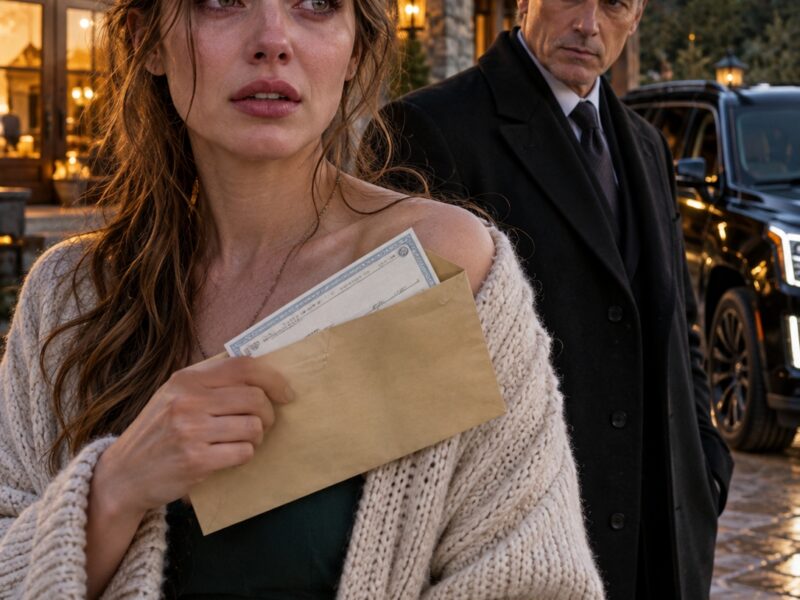
MY MOTHER LEFT ME A BROKEN CABIN AFTER I BECAME HOMELESS—THEN A STRANGER OFFERED $75,000 FOR THE LAND AND SAID FIVE WORDS THAT CHANGED EVERYTHING

The first time Victor Hayes offered me seventy-five thousand dollars for my mother’s worthless cabin, I almost laughed.
The second time he came, he brought lawyers.
The third time, he stopped pretending he wanted the cabin at all.
He stood at the edge of my porch in a charcoal coat that probably cost more than everything I owned six months earlier, staring past me toward the pine forest.
Then he said five words that turned my blood cold.
“Your mother knew what’s underneath.”
I didn’t answer.
I couldn’t.
Because Victor didn’t know that three nights earlier, I had pulled up a loose floorboard inside that cabin and discovered a staircase descending into darkness.
He didn’t know I’d found my dead mother’s coffee mug sitting on a desk beneath the earth.
He didn’t know about the crates.
The maps.
The photographs.
The jars filled with cash.
And he definitely didn’t know about the final page of Martha Brooks’s journal—the page I hadn’t yet been brave enough to read.
At least, I prayed he didn’t.
Victor looked at me as though he could hear every thought crashing through my head.
“Seventy-five thousand,” he repeated. “Cash offer. Clean transfer. You could be gone by Friday.”
Six months earlier, I would have signed before he finished the sentence.
Six months earlier, I had forty-eight dollars to my name.
Six months earlier, I was sleeping in a Denver women’s shelter with my mother’s scarf wrapped around my shoulders because it was the last thing in the world that still smelled like her.
But six months can turn a frightened girl into somebody even she doesn’t recognize.
I folded Victor’s check once.
Then again.
I held it out to him.
“No.”
For the first time, his pleasant expression cracked.
And that was when I understood something I should have understood sooner.
He wasn’t surprised that I refused.
He was angry.
There is a difference.
And my mother had known he would come.
I just didn’t know why.
Not yet.
A year before Victor Hayes stood on my porch, my life had been painfully ordinary.
I was twenty-three, broke, halfway through a community-college degree I kept promising myself I would finish, and living with my mother in a cramped apartment outside Denver.
The heater made a metallic banging noise every winter.
Our upstairs neighbor seemed to vacuum exclusively at midnight.
The kitchen wallpaper had been peeling behind the refrigerator since I was sixteen.
And every Sunday morning, my mother made blueberry pancakes.
Not good blueberry pancakes.
That part matters.
Martha Brooks believed measuring cups were “suggestions,” which meant breakfast could range from thin blue soup to something sturdy enough to patch drywall.
I complained every week.
I ate every bite.
One Sunday she placed a burned pancake on my plate and said, “Promise me something.”
I stared at it.
“That I won’t sue?”
“Sadie.”
Her tone changed.
I looked up.
My mother was fifty-three then. Her brown hair had begun graying at the temples, though she refused to dye it because, according to her, she had “earned every silver strand dealing with you.”
That morning, however, she wasn’t smiling.
“Promise me you’ll always have somewhere to go.”
I laughed.
“Mom, I can’t afford tires. Where exactly am I going?”
“I’m serious.”
“So am I.”
She reached across the little table and touched my wrist.
“I’m not talking about a house.”
“Then what are you talking about?”
She thought about it.
“Hope.”
I rolled my eyes.
I actually rolled my eyes.
That’s one of the memories grief likes to punish me with.
You remember all the moments you didn’t know were important.
The ordinary breakfast.
The impatient answer.
The door you walked through without turning around.
Three months later, my mother collapsed at work.
Stage four pancreatic cancer.
The doctor kept talking after that, but the words stopped having meaning.
Metastatic.
Treatment.
Management.
Months.
Maybe.
Maybe is a cruel word when somebody you love is dying.
It gives you just enough hope to torture yourself.
I quit school.
Then I picked up another job.
Then another.
I worked mornings at a coffee shop and evenings processing returns at a warehouse.
I sold my car.
Then my laptop.
Then the little gold necklace my grandmother had given me.
Every time I sold something, I told myself the same lie.
This buys us time.
But time wasn’t for sale.
One night near the end, I sat beside Mom’s hospital bed while snow fell outside the window.
She looked tiny beneath the blankets.
That terrified me more than anything.
My mother had never been tiny.
She was the woman who carried groceries in one trip because “two trips are for quitters.”
The woman who once changed our alternator in a grocery-store parking lot.
The woman who had raised me alone and somehow made poverty feel temporary even when it lasted twenty years.
Now I could see the blue veins beneath the skin of her hand.
“I’m sorry,” I whispered.
Her eyes opened.
“For what?”
“For not saving you.”
For a second, she looked almost offended.
Then her face softened.
“Oh, sweetheart.”
“I tried.”
“I know.”
“I should’ve found another doctor. Another hospital. Maybe if we’d—”
“Sadie.”
I stopped.
“You were never supposed to save me.”
I hated her for saying it.
I hated the calmness in her voice.
I hated the machines.
I hated God.
I hated every person walking outside that hospital who still had somewhere ordinary to be.
“I can’t do this without you.”
“Yes, you can.”
“No.”
“Yes.”
“I don’t want to.”
That finally broke her.
Her mouth trembled.
She squeezed my hand with what little strength she had left.
“When everything falls apart,” she whispered, “don’t be afraid to begin again.”
Three weeks later, she died.
And everything fell apart.
Not dramatically.
That’s the strange part.
There was no cinematic explosion.
Life simply began removing pieces.
One at a time.
First Mom.
Then the hospital bills.
Then the missed rent.
Then the final notices.
Then the savings account.
Three hundred seventy-two dollars.
One hundred eighty-nine.
Ninety-six.
Forty-eight.
I remember the number because I stared at it for almost an hour.
$48.17.
That was what remained of the life Martha Brooks and I had built.
The night before I lost the apartment, I sat on the kitchen floor because I had already sold the table.
Mom’s scarf was wrapped around my shoulders.
The rooms echoed.
Everything important had either been sold, packed, or taken away.
“I don’t know how to do this without you,” I said aloud.
Silence.
I waited anyway.
That’s another thing grief does.
It makes intelligent people wait for impossible answers.
Nothing came.
Two weeks later, on my twenty-fourth birthday, I woke inside a women’s shelter.
Thirty-two women slept in that room.
Some snored.
Someone was crying quietly behind a divider.
A radiator hissed beneath the window.
Snow pressed against the glass.
I lay there staring at the ceiling and thought:
So this is twenty-four.
No mother.
No home.
No degree.
No car.
No plan.
Forty-eight dollars.
Happy birthday.
At breakfast, I didn’t tell anyone.
I ate half a piece of toast and drank bad coffee.
Then Ms. Reynolds, the shelter manager, appeared in the doorway.
“Sadie?”
Something in her face made me stand.
“Did I do something?”
“No.”
“Then what?”
“Come with me.”
Her office smelled like peppermint tea and printer toner.
She closed the door.
That made me nervous.
Then she opened the bottom drawer of her desk.
“I’ve been waiting a long time to do this.”
She removed a yellowed envelope.
My name was written across it.
Sadie.
One word.
My mother’s handwriting.
My knees nearly buckled.
“Where did you get that?”
Ms. Reynolds didn’t answer immediately.
“Your mother gave it to me.”
“My mother knew you?”
“For years.”
I stared at her.
“What?”
“She volunteered here.”
I actually laughed because the alternative was screaming.
“My mother worked two jobs most of my childhood.”
“She still came.”
“When?”
“Usually evenings. Sometimes holidays.”
“Why didn’t she tell me?”
Ms. Reynolds’s eyes lowered to the envelope.
“I think she wanted some parts of her life to belong only to her.”
That hurt more than it should have.
Dead people aren’t supposed to become strangers.
You’re supposed to know them completely because you’ve already lost your chance to ask questions.
But suddenly my mother had an entire life I had never seen.
“Why give this to me now?”
Ms. Reynolds looked directly at me.
“Because those were her instructions.”
“What instructions?”
She hesitated.
Then she repeated the sentence my mother had apparently spoken years earlier.
“Don’t give this to my daughter until she loses everything.”
The room went silent.
My fingers went cold.
“She said that?”
“Yes.”
“That’s insane.”
“Maybe.”
“She knew this would happen?”
“I don’t know.”
“She knew I would become homeless?”
“I don’t think that’s what she meant.”
“What else could she possibly mean?”
Ms. Reynolds didn’t answer.
She pushed the envelope toward me.
“Open it.”
Inside were three things.
A letter.
A property deed.
And a notice from a lawyer.
TRANSFER FEE DUE: $20.
Below it was an address.
PARCEL 27B.
SILVER CREEK, WYOMING.
I read it three times.
“Wyoming?”
Ms. Reynolds nodded.
“My mother didn’t own property.”
Apparently, she did.
“No. We rented our apartment.”
“I know.”
“We were broke.”
“I know.”
“Then how—”
“Read the letter.”
My hands were shaking when I unfolded it.
The first sentence destroyed me.
My dearest Sadie,
If you’re reading this, then life has broken your heart the way it once broke mine.
I stopped.
Couldn’t breathe.
Ms. Reynolds reached for the tissue box.
I shook my head.
If I started crying, I wasn’t sure I’d stop.
I kept reading.
I prayed this day would never come. But if it did, I needed you to know there is still somewhere for you to go.
Silver Creek.
Parcel 27B.
I didn’t leave you a fortune.
I left you a chance.
Take it.
Love,
Mom.
That was it.
No explanation.
No story about Wyoming.
No reason she’d hidden property from me for my entire life.
Just a chance.
I spent twenty-eight dollars of my remaining money on a one-way bus ticket.
Twenty dollars went toward the transfer fee.
That left me with exactly seventeen cents.
Ms. Reynolds watched me count the coins.
“You’re really going?”
“What exactly am I staying here for?”
She smiled sadly.
“Fair point.”
At the bus station, she hugged me.
“You sure?”
“No.”
“Good.”
I pulled away.
“Good?”
“The choices that change us usually don’t feel safe.”
“That sounds like something printed on a coffee mug.”
“Your mother used to say it.”
I stared at her.
Of course she did.
Then I boarded the bus.
The trip took almost eighteen hours.
Denver disappeared behind me.
Then highways.
Then plains.
Then towns so small they seemed to exist only because someone had forgotten to remove them.
I barely slept.
Every mile produced another question.
Why Wyoming?
How had Mom paid for land?
Who was Arthur Blake, the attorney whose name appeared on the documents?
Why had she waited until I had nothing?
And the ugliest question of all:
If she had property, why did she let us struggle?
I hated myself for thinking it.
Then I thought it again.
Silver Creek looked like the kind of place people accidentally drove through and never remembered.
Population: 1,843.
One grocery store.
One church.
A diner with a flickering red sign.
A gas station.
A hardware store.
Mountains in every direction.
And silence.
After Denver, the silence felt unnatural.
I dragged my suitcase to Turner & Blake Attorneys at Law.
The bell above the door rang.
An elderly man emerged from a back room.
Gray hair.
Flannel shirt beneath a brown jacket.
Warm eyes that changed the moment he saw me.
“Sadie Brooks.”
It wasn’t a question.
“You’re Arthur?”
He nodded.
Then, to my surprise, his eyes filled with tears.
“You have your mother’s face.”
I immediately disliked him.
Not because he’d done anything wrong.
Because he knew something about her that I didn’t.
“How well did you know my mother?”
Arthur looked toward the empty chair opposite his desk.
“Sit down.”
“I’d rather stand.”
That surprised him.
“Okay.”
“How well?”
“Very.”
“How?”
“She spent summers here when she was young.”
“She never told me.”
“I know.”
“Apparently everybody knew my mother except me.”
“That isn’t fair.”
“No? I slept in a shelter last night while she secretly owned property three hundred miles away. Tell me what part I’m supposed to find fair.”
Arthur absorbed that without defending himself.
That made it harder to stay angry.
Finally he opened a folder.
“Your mother asked me to respect her timing.”
“She died.”
“I know.”
“So maybe we’re past her timing.”
His jaw tightened.
“You sound exactly like her.”
“People keep saying that.”
He slid the deed across the desk.
Stamped.
Signed.
Legal.
Parcel 27B belonged to me.
“What’s on it?”
Arthur rubbed his chin.
“A structure.”
“A house?”
“That depends how generous you’re feeling.”
Ten minutes later, I understood.
The cabin was horrible.
Not quaint.
Not rustic.
Horrible.
Half the roof sagged.
The porch leaned sideways.
One window was shattered.
Another was covered with plywood.
Snow had drifted against the north wall.
Paint hung from the siding in long dead strips.
I stood beside Arthur and stared.
“This is it?”
“Yes.”
“This?”
“Yes.”
I started laughing.
Arthur said nothing.
I laughed harder.
Then the laugh broke in the middle.
Suddenly I was sobbing.
Not beautiful movie tears.
Ugly, choking sobs.
I had crossed two states chasing my mother’s final promise.
I had spent my last dollar.
And she had left me a collapsing shack.
“I thought…” I couldn’t finish.
Arthur waited.
“I thought maybe she’d fixed something.”
His expression changed.
“I thought for once something would be easy.”
“Your mother never believed in easy.”
I wiped my face angrily.
“Yeah, well, easy would’ve been nice.”
He reached into his coat.
An old brass key rested on his palm.
“She asked me to give you this.”
I stared at it.
“And she asked me to tell you something.”
“What?”
Arthur’s voice softened.
“She said, ‘Tell Sadie she’s stronger than she thinks.’”
I wanted to throw the key into the snow.
Instead I took it.
That first night nearly broke me.
The cabin had electricity in exactly two outlets.
The plumbing didn’t work.
Wind came through gaps around the door.
Arthur had arranged an old mattress and several blankets, but I still slept wearing my coat.
At 2:17 a.m., something moved beneath the kitchen.
I sat upright.
Another scratch.
Mouse.
Hopefully.
“Great,” I whispered. “I inherited roommates.”
I almost laughed.
Instead I cried into my mother’s scarf.
But morning came.
That’s the annoying thing about mornings.
They keep arriving even when you don’t feel capable of participating.
So I got up.
I found work washing dishes at Nancy’s diner.
Nancy Parker was fifty-eight, loud, red-haired, and incapable of minding her own business.
“You Martha’s girl?”
I nearly dropped a plate.
“How does everybody know my mother?”
Nancy shrugged.
“Small town.”
“I’ve noticed.”
She handed me an apron.
“Seven dollars cash plus meals until we get the paperwork sorted.”
“I’ll take it.”
“You any good at dishes?”
“No.”
“Excellent. You’ll fit right in.”
For the first time in months, I smiled.
Days became weeks.
I washed dishes.
Swept floors.
Carried groceries up the mountain.
Patched holes with whatever materials Arthur brought.
At night, I read Mom’s letter.
Over.
And over.
One sentence bothered me.
There are things beneath the surface that only reveal themselves when you’re ready to see them.
I assumed it was metaphorical.
My mother loved metaphors.
Then one Thursday evening, I moved a bookshelf beside the fireplace.
The floor made a hollow sound.
I stopped.
Tapped again.
Thud.
Three feet away.
Knock.
Different.
I knelt.
One floorboard was darker than the others.
My fingers found a narrow gap.
I stared at it.
“No.”
I found a screwdriver.
The board resisted.
I pushed harder.
It lifted.
Cold air touched my face.
Underneath was darkness.
A staircase descended beneath the cabin.
Every sensible instinct told me to get Arthur.
Instead I grabbed a flashlight.
“Mom,” I whispered, “if there’s a dead body down here, I’m going to be extremely upset.”
The stairs creaked.
Eight steps.
Nine.
Ten.
Then my flashlight illuminated stone walls.
Shelves.
Three wooden crates.
A desk.
And a blue ceramic mug.
I stopped breathing.
White daisies.
Tiny crack beside the handle.
Mom’s mug.
The one she’d used every night at home.
I touched it.
My fingers trembled.
“What were you doing here?”
There was a leather journal on the desk.
MARTHA BROOKS.
I opened it.
My dearest Sadie,
If you found this room, then you finally came home.
I sank into the chair.
Photographs slipped from between the pages.
Mom at twenty-five.
Mom standing beside the cabin.
Mom laughing with dirt on her cheek.
Mom beside a man I didn’t recognize.
Maps.
Blueprints.
Receipts.
Land surveys.
Then I opened the crates.
The first contained documents.
The second contained family photographs.
The third contained money.
Not stacks like some movie drug deal.
Glass jars.
Dozens of them.
Twenties.
Fifties.
Hundreds.
Cash rolled tightly and sealed against moisture.
I opened one.
Real.
Another.
Real.
I sat on the cellar floor surrounded by more money than I’d ever held.
And I became furious.
“Are you kidding me?”
My voice echoed off stone.
“You had this?”
I started crying.
“You had this while I sold my car?”
No answer.
“While I worked two jobs?”
Nothing.
“While you were dying?”
Only silence.
I grabbed the journal.
Turned pages too quickly.
Gardening notes.
Repair costs.
Recipes.
Then I found an entry written years earlier.
If I give Sadie everything before she knows who she is, the world will teach her to measure herself by what she owns.
I slammed the journal shut.
“That’s not your decision.”
I hated her then.
For maybe thirty seconds.
Maybe thirty minutes.
Grief makes love ugly sometimes.
Then I opened the journal again.
Another entry.
I never wanted to make life easy for you, Sadie. I wanted to make sure you never gave up on yourself.
My anger collapsed.
I pressed both hands over my face.
And cried for the woman I’d lost.
For the woman I was only now meeting.
For every secret she’d carried.
For every terrible night when I’d thought she’d left me with nothing.
I didn’t tell Arthur about the cellar.
Not immediately.
For nearly a week, I covered the hatch with a rug.
Every night after work, I descended with the journal.
Slowly, Martha stopped being only my mother.
She became a woman.
A frightened twenty-year-old.
A single mother.
A woman who had been abandoned by my father.
A woman who bought Parcel 27B with money earned cleaning motel rooms during summers.
A woman who learned roofing from Arthur’s father.
A woman who hid cash because she’d once lost everything herself.
One passage changed me.
You will meet people who think your worth depends on what you own.
They’re wrong.
Your worth is measured by what you build after you’ve lost everything.
I read it until I knew it by heart.
The next morning I stood outside the cabin.
For the first time, I didn’t see a ruin.
I saw work.
That was different.
I bought shingles.
Lumber.
A secondhand ladder.
Arthur arrived that afternoon.
He looked at the supplies.
“Somebody rob a hardware store?”
“No.”
“Win the lottery?”
My body went still.
He noticed.
His smile disappeared.
“Sadie?”
“Just saved some money.”
The lie came too quickly.
Arthur studied me.
Then nodded.
“Need help?”
Every instinct said no.
But another sentence from Mom’s journal returned.
Strength isn’t refusing help. It’s learning you’re worthy of receiving it.
“Yeah,” I said. “Actually, I do.”
We rebuilt the cabin together.
Not quickly.
Not magically.
I hammered my thumb.
Twice.
Installed a window backward.
Fell off a ladder into a juniper bush.
Arthur laughed so hard he had to sit down.
“You could’ve died.”
“I’m aware.”
“You looked like a startled raccoon.”
“I hate you.”
“No, you don’t.”
And somehow I laughed.
Really laughed.
The sound startled me.
Nancy brought casseroles.
Walter Greene, an eighty-year-old neighbor, appeared with rose seeds.
“Every home needs something beautiful.”
“I don’t know how to grow roses.”
“Neither do roses. They figure it out.”
People began appearing.
Not because they wanted something.
Because that’s what people in Silver Creek did.
They showed up.
Spring melted the snow.
I painted the cabin white.
Rebuilt the porch.
Planted tomatoes.
The first green shoots appeared in May.
I knelt beside them with dirt beneath my fingernails and cried because suddenly I remembered Mom doing exactly the same thing in pots outside our Denver apartment.
That evening Arthur sat beside me on the porch.
“Your mother knew you’d come.”
“How?”
“She didn’t.”
“You just said—”
“She hoped.”
I looked at him.
“There’s a difference.”
He took a sip of coffee.
“She used to say, ‘My daughter doesn’t know it yet, but one day she’ll build something bigger than this cabin.’”
I smiled.
“Sounds like her.”
Then Arthur’s expression became strange.
Almost guilty.
“What?”
“Nothing.”
“Arthur.”
He looked toward the forest.
“Just remember something.”
“What?”
“If anyone comes asking about this property, call me before you answer questions.”
The warmth left the evening.
“Why would anyone ask?”
He stood.
“Just promise me.”
“Arthur.”
“Promise.”
I did.
Three days later, the black SUV arrived.
Victor Hayes stepped out.
Polished shoes.
Expensive coat.
Silver watch.
He looked at my property the way a butcher looks at livestock.
“Miss Brooks?”
“Yes.”
“Victor Hayes. Hayden Ridge Development.”
He explained luxury eco-resorts.
Private mountain communities.
Sustainable tourism.
Then he offered me $75,000.
For everything.
The cabin.
The forest.
Parcel 27B.
I stared at the check.
Seventy-five thousand dollars.
Six months earlier I’d slept in a shelter.
My brain immediately began spending it.
Apartment.
Car.
School.
Health insurance.
A bed that didn’t creak.
A refrigerator filled with food.
Security.
Victor saw all of that on my face.
“You could go back to Denver.”
I looked toward my repaired porch.
“Why would I?”
He smiled.
“You’re young. Surely you don’t intend to spend your life up here.”
“Maybe I do.”
“Seventy-five thousand is a generous offer.”
“Then why are you offering it?”
The smile paused.
Only for a second.
But I saw it.
“What do you mean?”
“This cabin looked like it should’ve been condemned when I got here. The road barely exists. You aren’t buying this because it’s beautiful.”
“We’re interested in the acreage.”
“Why?”
“Development potential.”
“There’s land everywhere.”
His eyes changed.
Then the pleasant mask returned.
“Think about it.”
“No.”
“Don’t answer emotionally.”
“I’m not.”
“You haven’t even considered—”
“It’s not for sale.”
Victor slipped the check back into his coat.
Then he said it.
“Your mother said the same thing.”
Everything inside me stopped.
“You knew my mother?”
“I met her.”
“When?”
“Years ago.”
“Why?”
His smile returned.
“You should ask Arthur Blake.”
Then he left.
That night I went into the cellar.
I searched Mom’s journal.
Not for comfort.
For answers.
Receipts.
Photographs.
Surveys.
Then a folded map fell from the back cover.
A blue line crossed Parcel 27B.
Three circles had been drawn in red.
Beside them, Mom had written:
SPRING SOURCE.
PURE WATER.
PROTECTED.
NEVER SELL.
My heartbeat became loud.
I kept reading.
My grandfather had discovered the spring nearly sixty years earlier.
Water rose through limestone beneath the mountain.
Mom had paid for independent testing twice.
Mineral profile.
Contaminant analysis.
Flow measurements.
Rights documentation.
Then one name appeared repeatedly.
HAYDEN RIDGE.
Another.
VICTOR HAYES.
And suddenly the cabin wasn’t the inheritance.
It was the lock.
The land was the vault.
The next morning I stormed into Arthur’s office.
I dropped the map onto his desk.
“You knew.”
He removed his glasses.
“So you found it.”
I almost slapped him.
“You knew.”
“Yes.”
“You lied to me.”
“I withheld information.”
“That’s what lawyers call lying?”
“Usually.”
“Why?”
“Because your mother made me promise.”
“She is dead, Arthur!”
His face tightened.
“I am painfully aware of that.”
“Then stop protecting her secrets and tell me what the hell is under my property.”
Arthur stared at me for a long time.
Then he locked the office door.
“Water.”
“I know that.”
“No. You don’t.”
He pulled out an old file.
“Your spring is unusually clean. Stable flow. Protected aquifer. Your mother had it tested repeatedly.”
“So?”
“Out here?”
He leaned forward.
“Water is land. Water is development. Water is agriculture. Water is leverage.”
“How valuable?”
“Potentially?”
He paused.
“Far more than seventy-five thousand dollars.”
I sat down.
Victor hadn’t been trying to rescue me from a worthless cabin.
He’d been trying to buy something from me before I knew I owned it.
“Why didn’t Mom register it publicly?”
“Protection.”
“From Victor?”
“From everyone.”
Arthur looked toward the mountains.
“Your grandfather understood what he had. Your mother understood it better.”
“Then why leave it to me?”
Arthur gave me a sad smile.
“Because you’re her daughter.”
“That isn’t an answer.”
“No.”
He slid Martha’s journal toward me.
“But maybe this is.”
Near the final pages, I found writing shakier than the earlier entries.
Mom had written it near the end.
My dearest Sadie,
If you’ve reached this page, then you know the truth.
This spring could make you wealthy.
But wealth is a strange thing.
It doesn’t only change people.
It reveals them.
People will tell you what your land is worth.
They will tell you what your future should cost.
They may even convince you that fear is wisdom.
Promise me something.
Never let fear make your decisions.
And never let money become your home.
A home is something else entirely.
It’s the people you protect.
The life you build.
And the courage to stay when leaving would be easier.
Love,
Mom.
I read it three times.
Then I asked Arthur, “What happens if I don’t sell?”
His answer wasn’t comforting.
“They’ll probably make your life difficult.”
He was right.
The certified letter arrived six weeks later.
Hayden Ridge Development requested access through Parcel 27B.
Public-interest language.
Environmental surveys.
Compensation.
Legal threats buried beneath polite phrases.
I read it until the words blurred.
That old fear returned.
The hospital fear.
The eviction fear.
The shelter fear.
The certainty that anything I loved could be taken from me.
That night rain struck the repaired roof.
I lay awake.
Maybe I should sell.
Take the money.
Leave.
Why fight people with lawyers and corporations and resources I didn’t have?
At three in the morning, I went into the kitchen.
My mother’s scarf still hung over the chair.
I touched it.
And remembered her standing beside tomato plants years earlier.
“Roots matter, Sadie.”
I had been twelve.
A storm had broken one of her plants.
“Just throw it away,” I’d said.
She had tied the stem carefully to a wooden stake.
“You don’t throw roots away because storms come.”
At sunrise, I drove to Arthur’s office.
I put the letter on his desk.
“They want my land.”
“They want your water.”
“Can they take it?”
Arthur read the document.
Then he smiled.
Not his friendly smile.
A lawyer’s smile.
“They can try.”
So we fought.
Quietly.
Paper by paper.
Survey by survey.
I learned water rights.
Easements.
Land-use restrictions.
Environmental review.
Title history.
Every meeting terrified me.
I went anyway.
Victor increased the offer.
$125,000.
No.
$200,000.
No.
Then $300,000.
I stared at that number longer than I want to admit.
Arthur didn’t pressure me.
“What do you want?”
“I don’t know.”
“Then don’t sign anything until you do.”
That night I sat in the cellar.
The jars of money remained mostly untouched.
Mom’s journal rested in my lap.
For the first time, I understood why she’d hidden everything.
She wasn’t testing whether I deserved money.
She was giving me time to decide what money meant.
Those are not the same thing.
The next morning I rejected the offer.
Victor came personally.
He didn’t bother smiling.
“You’re making a mistake.”
“Maybe.”
“Three hundred thousand dollars.”
“I can read.”
“You wash dishes in a diner.”
“Sometimes.”
“You live in a cabin.”
“Yes.”
“You have no idea what you’re giving up.”
Something inside me became very calm.
“I was homeless six months ago.”
He stopped.
“I slept in a room with thirty-one strangers.”
He said nothing.
“My mother died while I held her hand. I sold everything I owned trying to keep her alive. Then I lost my apartment.”
Victor shifted his weight.
“I don’t see what that has to do with—”
“It has everything to do with this.”
I stepped off the porch.
“You think you’re offering me security.”
“I am.”
“No. You’re offering me a number.”
“A very large number.”
“I know.”
“And you’re rejecting it for sentiment.”
I looked around.
The roses Walter had planted.
The porch Arthur and I rebuilt.
The tomatoes.
The kitchen window where Nancy left pies when I worked late.
The cabin that had once looked as broken as I felt.
“Maybe.”
Victor laughed without humor.
“You’ll regret this.”
“Maybe.”
“You keep saying that.”
“Because I finally understand something.”
“What?”
“I can survive regret.”
His face hardened.
“I already survived losing everything.”
Victor stared at me.
And suddenly I realized why he would never understand.
He believed the worst thing that could happen to a person was becoming poor.
I’d already been poor.
I’d been homeless.
I’d buried my mother.
I’d woken up with seventeen cents and no plan.
Money no longer frightened me enough to control me.
Victor left.
His SUV disappeared down the mountain.
I stood there until I couldn’t hear the engine anymore.
Then my knees began shaking.
Courage doesn’t always feel brave.
Sometimes courage waits until the danger leaves before it lets you collapse.
Arthur found me sitting on the porch twenty minutes later.
“Did you refuse him?”
“Yes.”
“How much?”
“Three hundred.”
He whistled.
“Don’t.”
“Sorry.”
“Do you think I’m stupid?”
Arthur sat beside me.
“No.”
“Then why do I feel stupid?”
“Because doing the right thing and doing the comfortable thing are rarely identical.”
I looked at him.
“Another Martha quote?”
“No.”
He smiled.
“That one’s mine.”
Hayden Ridge eventually withdrew its claim.
Not because corporations suddenly develop consciences.
Because Arthur found an old conservation restriction Martha had prepared years earlier, and because the company’s proposed access route couldn’t survive environmental review without exposing exactly why it wanted Parcel 27B.
Victor stopped calling.
The letters stopped.
For weeks, I kept expecting another attack.
None came.
And slowly I understood:
It was over.
I had kept the land.
But something else had happened during the fight.
People learned my story.
First Silver Creek.
Then the county.
Then a reporter.
The local paper ran a photograph of me standing on the porch beneath a headline I hated.
HOMELESS WOMAN INHERITS MOUNTAIN SECRET, REFUSES DEVELOPER’S FORTUNE.
“Homeless woman?” I complained.
Nancy slid pie across the counter.
“You were homeless.”
“That’s not the point.”
“You also look terrible in the photo.”
“Thank you.”
“I’m here for you.”
A regional magazine called.
Then a podcast.
People began driving to Silver Creek.
Some wanted to see the spring.
I refused.
Some wanted photographs.
I refused those too.
Others came because they’d lost something.
Those were harder to turn away.
One November afternoon, someone knocked on my door.
A young woman stood outside.
Maybe twenty-two.
Duffel bag.
Swollen eyes.
No coat warm enough for Wyoming.
“Are you Sadie?”
“Yes.”
“My name’s Clare.”
She swallowed.
“I heard what happened to you.”
I almost told her reporters had exaggerated everything.
Then I noticed the way she held the bag.
Tightly.
Like everything she owned was inside it.
I knew that grip.
“Come in.”
She sat beside the fire.
For almost ten minutes she said nothing.
I made tea.
Finally she whispered, “My dad got sick.”
My hand stopped.
“I’m sorry.”
“Medical bills.”
I sat down.
“Yeah.”
“Then rent.”
“Yeah.”
“I thought I could fix it.”
My throat tightened.
“Yeah.”
Her eyes filled.
“I couldn’t.”
And suddenly I wasn’t sitting across from Clare.
I was looking at myself.
The hospital.
The bills.
The suitcase.
The shelter.
“I don’t know where I’m going tomorrow,” she said.
The sentence broke something open inside me.
“You can stay tonight.”
She looked up.
“I can’t pay.”
“I didn’t ask.”
“I don’t want charity.”
“Neither did I.”
That made her angry.
Good.
Anger meant there was still fight left.
“What does that mean?”
“It means somebody once gave me somewhere to go.”
I thought of Martha.
Ms. Reynolds.
Arthur.
Nancy.
Walter.
People who had kept doors open until I could stand again.
“You can sleep here tonight,” I said. “Tomorrow we’ll figure out tomorrow.”
Clare stayed four nights.
Then six.
Then twelve.
She found work at the grocery store.
Saved money.
Eventually rented a room above Nancy’s diner.
The morning she moved out, she hugged me.
“You saved me.”
“No.”
“Yes.”
“No, Clare.”
I pulled back.
“You did the hard part.”
After she left, I went downstairs.
Mom’s journal sat on the desk.
I opened it randomly.
A sentence stared back at me.
A home becomes meaningful when there’s room in it for someone besides you.
I laughed.
“Okay, Mom.”
The tool shed behind the cabin became my next project.
Arthur walked around it once and said, “Burning it would be cheaper.”
“We’re fixing it.”
“Of course we are.”
Nancy donated a small table.
Walter built a porch railing.
Mrs. Harper brought curtains.
Someone from church donated a bed.
I painted a wooden sign.
SECOND CHANCE COTTAGE.
Arthur stared at it.
“You realize this is going to get out of hand.”
“I hope so.”
The first guest stayed two weeks.
The second stayed three months.
Then another came.
A widow whose landlord had sold her home.
A young mother escaping an abusive household.
A woman rebuilding her life after addiction.
I didn’t save them.
That distinction mattered to me.
I gave them a bed.
Food when they needed it.
Time.
Sometimes silence.
Sometimes a ride into town.
And one rule.
“When you’re back on your feet, help somebody else.”
Years passed.
The tomatoes returned every summer.
Walter’s roses spread along the porch.
Nancy never stopped bringing pie.
Arthur retired but appeared every Friday anyway, insisting retirement only meant he could “annoy me professionally for free.”
The jars of cash eventually funded repairs and the cottage.
The spring remained protected.
I never bottled it.
Never sold the rights.
Never built a resort.
Some people called that foolish.
Maybe it was.
But I had stopped measuring every decision by its price.
One autumn evening, I climbed the hill behind the cabin.
Mom’s grave sat beneath two pines overlooking the valley.
We’d moved her remains there after I decided Silver Creek was home.
I brushed leaves from the stone.
MARTHA BROOKS.
BELOVED MOTHER.
SHE ALWAYS LEFT THE DOOR OPEN.
The valley glowed orange beneath the setting sun.
Below me, lights came on inside the cabin.
Another light appeared in Second Chance Cottage.
Someone was staying there.
Someone whose life had fallen apart.
Someone who probably believed this was the end.
I smiled.
“You were right.”
Wind moved through the pines.
“I hated you for a while.”
I laughed softly.
“You probably knew I would.”
My eyes burned.
“I thought losing you was the end of my life.”
For a moment, I couldn’t continue.
Then I looked down at the cabin.
The repaired roof.
The straight porch.
The chimney smoke.
The little guest cottage.
Everything that had grown from the place I once called worthless.
“It wasn’t.”
A tear rolled down my cheek.
“It was the beginning.”
I used to think my mother had left me a cabin.
Then I thought she’d left me money.
Then I discovered the spring and thought that was the real inheritance.
I was wrong every time.
Martha Brooks had left me somewhere to begin again.
And she had known something I couldn’t understand at twenty-four.
A home isn’t a building.
It isn’t an address.
It isn’t money hidden beneath floorboards or water hidden beneath stone.
Home is the place where fear stops making every decision.
It’s where grief can sit beside you without owning you.
It’s where you learn that needing people isn’t weakness.
It’s where the person you used to be can finally rest while the person you’re becoming learns how to stand.
The first winter after Second Chance Cottage opened, snow arrived early.
I stood on the porch with coffee warming my hands.
Behind me, laughter came from the kitchen.
The woman staying in the cottage had come over for dinner.
Nancy was arguing with Arthur about pie.
Someone had burned the rolls.
The windows glowed yellow against the snow.
Years earlier, I had stood outside an apartment with one suitcase and believed I had lost everything.
Maybe I had.
But losing everything and having nothing are not always the same thing.
Sometimes loss clears a space.
Sometimes the door you think has closed forever is only forcing you toward another one.
Sometimes the inheritance that changes your life isn’t the thing somebody leaves in your hands.
It’s the thing they leave inside you.
I touched the old brass key hanging beside the front door.
The same key Arthur had placed in my palm when I was broke, angry, terrified and certain my mother’s final gift was a cruel joke.
Then I looked toward the cottage.
Its porch light was on.
The door was unlocked.
Someone inside was beginning again.
And suddenly I could hear my mother’s voice as clearly as if she were standing beside me.
Promise me you’ll always have somewhere to go.
For most of my life, I thought she was talking about me.
Standing there in the snow, watching another frightened woman discover that tomorrow was still possible, I finally understood.
She wasn’t.
She was asking me to build that place for someone else.
So I did.
And every time someone arrived at my door with a suitcase, a broken heart, and nowhere left to go, I opened it.
Because my mother had taught me the strangest truth of all:
Sometimes the place where your old life ends becomes the place where somebody else’s begins.









