
She Came to Marry a Stranger and Rob Him Before Dawn—76 Years Later, She Finally Confessed What Happened on Their Wedding Night
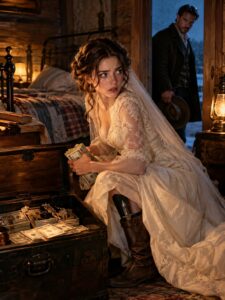
Margaret Ellison was ninety-four years old when she finally confessed that she had married her husband intending to rob him before sunrise.
She had carried the secret for seventy-six years.
Not one of her children knew.
Not her pastor.
Not the neighbors who had called her marriage one of the great love stories of their Montana county.
And not even Elias Ellison—the man she had married—had ever known exactly what she had done inside his house while he slept in the barn on their wedding night.
At least, that was what Margaret had believed.
Until the morning after the wedding.
Until she put a knife on the breakfast table between them.
Until Elias looked at it, looked at her, and quietly said:
“I knew.”
But I am getting ahead of her story.
Margaret told it to me during the last winter of her life, in a nursing home outside Helena, while snow pressed against the windows and the afternoon light turned the mountains the color of old steel.
I had gone there for something far less interesting.
I was helping assemble a county history.
The sort of book that gets printed in a small run, placed on a library shelf, opened occasionally by somebody searching for a dead relative, then left to gather dust.
Margaret was one of the last surviving women in the area who had come west as a mail-order bride.
I expected dates.
Prices.
Names.
I wanted to know what flour cost in 1871.
What Miles Crossing looked like.
How long the train journey took.
What women wore.
What weddings cost.
She answered every question patiently.
Her voice was dry but clear. Her memory was astonishing.
Her hands rested on a faded quilt she told me she had sewn before my mother was born.
I had filled several pages of my notebook when I finally closed it.
“Thank you, Mrs. Ellison.”
She looked at the notebook.
Then at me.
“You’ve asked me everything except the one thing worth asking.”
I stopped.
“What would that be?”
Her pale eyes held mine.
“My wedding night.”
For a moment, I thought she was teasing me.
“I wouldn’t presume.”
“Presume?”
A tiny smile touched her mouth.
“I’m ninety-four. The man’s been dead forty years. Who exactly are you protecting from scandal?”
I didn’t answer.
Her smile disappeared.
“There’s something I did that night.”
Her fingers tightened slightly on the quilt.
“Something I never told my children. Never told the preacher. Never told another living soul.”
She looked toward the window.
“I carried it seventy-six years.”
Then she turned back to me.
“I don’t intend to carry it into the ground.”
I opened my notebook again.
Margaret watched me carefully.
“If I tell you,” she said, “you have to get it right.”
“I’ll try.”
“That’ll do.”
She nodded once.
“Trying is most of honesty anyway.”
Then her hands moved slowly across the quilt, smoothing a wrinkle that did not need smoothing.
And when she spoke again, the ninety-four-year-old woman seemed to disappear.
“I was eighteen,” she said, “when I stepped off a train in Montana Territory to marry a man I had never seen.”
She paused.
“And I had a knife hidden in my boot.”
I stared at her.
Margaret’s expression didn’t change.
“My plan was to marry him, find his money, steal the best horse he owned, and be gone before he woke the next morning.”
Outside the window, snow moved silently across Montana.
Margaret leaned back.
“That,” she said, “is the part nobody ever knew.”
Then she told me what kind of girl she had been.
Not wicked.
That distinction mattered to her.
But not innocent either.
“I wasn’t some sweet girl ruined by one bad decision,” she said. “People like their stories that way because it makes everything tidy.”
Her father died when she was eleven.
Her mother remarried in St. Joseph, Missouri.
Margaret never described in detail what her stepfather did.
She didn’t need to.
She simply said:
“He looked at me in a way that made my mother understand I needed to stop being in that house.”
Before Margaret turned fourteen, her mother found her work.
First at a glove factory.
Then at a laundry.
She lived in rented rooms with other girls, sometimes three or four to a room.
She learned to sleep with her belongings beneath her mattress.
She learned which streets not to walk after dark.
She learned how quickly a man offering help could turn the help into a debt.
And she learned something else.
Beauty could be dangerous when you were poor.
“I was pretty,” she said matter-of-factly. “I knew it because men made certain I knew what they thought it was worth.”
She learned to look down.
Then she learned looking down made some men bolder.
So she learned to look directly at them.
She learned to make her face empty.
She learned to make her voice cold.
Most importantly, she learned not to expect kindness without a price attached.
By seventeen, Margaret believed she understood the world.
Every gift had a hook.
Every favor became a debt.
Every open door eventually locked behind you.
Then she met Coyle.
She never gave me his first name.
Maybe she had forgotten it.
Maybe she wanted to.
Coyle ran a gambling house in St. Joseph and, according to Margaret, “several businesses underneath it that respectable people pretended not to know about.”
He offered her a room.
Meals.
Protection.
At seventeen, exhausted and frightened, she accepted.
By the time she understood what he expected in return, Coyle had already calculated the price of everything he had supposedly given her.
Margaret didn’t describe that year.
She merely said:
“By the end of it, I had two thoughts left in my head.”
The first was that she had to leave St. Joseph.
The second was that somebody owed her.
Coyle owed her.
Her stepfather owed her.
Every man who had ever looked at her and seen something available for taking owed her.
Eventually, in Margaret’s mind, they became indistinguishable from the rest of the world.
The world had taken.
She would take something back.
Then one afternoon at the laundry, another girl found a matrimonial newspaper.
They passed it around during their break, laughing over advertisements from lonely farmers, widowers and ranchers looking for wives.
Margaret didn’t laugh.
One advertisement stopped her.
A rancher in Montana Territory.
Thirty-four years old.
Sober.
Hard-working.
Owner of land and cattle.
Looking for a wife willing to become “a partner for a hard life in a beautiful country.”
Margaret read it twice.
Land.
Cattle.
A house.
Isolation.
A man lonely enough to advertise for a stranger.
She didn’t see a husband.
She saw an exit.
“He sounded like a fool,” she told me.
A fool with money.
A fool hundreds of miles away from Coyle.
A fool with no neighbors close enough to ask uncomfortable questions.
That night Margaret wrote him a letter.
She lied almost from beginning to end.
She told him she was gentle.
She said she was devout.
She claimed she dreamed of quiet country life.
She wrote about wanting an honest husband, a modest home and the chance to build something meaningful beside a good man.
“And while I was writing all that,” Margaret told me, “I was already deciding how to rob him.”
The plan was simple.
She would marry him.
Wait until he slept.
Find whatever cash he kept in the house.
Take a horse.
Ride back to the railroad.
Disappear.
If necessary, she would use the knife she had learned to keep in her boot.
She told herself she would never kill him.
But when I asked whether she truly believed that, Margaret became quiet.
Finally she said:
“I believed whatever I needed to believe about myself in those days.”
His name was Elias Ellison.
Eli.
His first reply arrived within a month.
Margaret opened it expecting information.
She read his letters, she told me, “the way a thief reads a map.”
Where was the opening?
What did he own?
How isolated was the ranch?
How easily could she escape?
Instead, Elias wrote about winter.
He warned her that Montana was brutally cold.
He told her the nearest neighbor was four miles away.
He said the work could break a soft person in a single season.
He admitted he was thirty-four, not particularly handsome and too stubborn.
He also confessed to having a temper.
“I’ve spent ten years learning to keep it on a short rope,” he wrote.
That sentence interested Margaret.
Men rarely warned women about their own faults.
Elias did.
He told her his mother was dead.
His brother too.
His father had been difficult.
He had built the ranch mostly alone and discovered that success could become another kind of emptiness when there was nobody beside you to share it.
Then came the line Margaret remembered word for word for the next seventy-six years.
He told her he was not looking for a servant.
And he was not looking for a possession.
He wanted a partner.
If that wasn’t what Margaret wanted, Elias wrote, she should not come.
He would think no less of her.
He would rather remain lonely than become the sort of husband who kept a wife the way a man kept livestock.
Margaret folded the letter.
Then unfolded it.
Then read that section again.
“I hated him for writing it.”
“Why?”
“Because kindness complicated things.”
She had prepared herself for greed.
She understood greed.
She understood lust.
Cruelty was predictable.
Violence was predictable.
A selfish man would have been easy to rob because Margaret had already decided men like that deserved whatever happened to them.
But what was she supposed to do with a man who warned her about his temper before she had even agreed to marry him?
What was she supposed to do with honesty when every line she sent him was a lie?
She decided kindness itself must be the trick.
Men had tricks.
This was simply a more sophisticated one.
She packed Elias’s letters anyway.
Then she boarded the train west.
The knife went into her boot.
Three days later, the train stopped at Miles Crossing.
Margaret stepped down onto a wooden platform and saw Montana sky for the first time.
She had grown up between buildings.
Brick walls.
Laundry steam.
Factory windows.
Crowded rooms.
She wasn’t prepared for a sky that seemed to begin at her feet and go on forever.
“It made me feel small,” she said. “I didn’t like feeling small.”
Then she saw Elias.
He stood at the far end of the platform holding his hat with both hands.
Margaret recognized him immediately.
Not because she had seen a photograph.
Because he was obviously waiting for someone and looked terrified she might actually arrive.
He was tall.
Broad-shouldered.
Weathered.
His hands were heavily scarred from work.
His face was not handsome, just as he had warned.
But when he saw Margaret, something moved across it.
Hope.
Fear.
Disbelief.
She would remember that expression for the rest of her life.
The expression of a lonely man watching the possibility of no longer being lonely step off a train.
“Miss Margaret?”
“Mr. Ellison.”
“Eli.”
He almost smiled.
“If we’re going to be married, you can’t call me Mr. Ellison. That was my father, and we didn’t get along well enough for me to enjoy hearing his name attached to me.”
Margaret almost laughed.
Almost.
Then Elias looked at her luggage.
“Was the journey difficult?”
“No.”
“You look tired.”
“I’m fine.”
“All right.”
He didn’t argue.
“I got you a room at the boarding house.”
Margaret stared at him.
“A room?”
“For tonight.”
His face reddened slightly.
“Mrs. Parker runs it. Deacon’s widow. Strict woman. Respectable place.”
Margaret said nothing.
“I thought we’d marry tomorrow morning,” he continued. “Then ride to the ranch afterward.”
“Why tomorrow?”
“You’ve been on a train three days.”
He looked genuinely confused by the question.
“The ranch is another four hours by wagon. Didn’t seem decent to drag you over bad roads today too.”
Margaret felt something unpleasant move through her chest.
Elias had thought about how tired she might be.
No man in her recent memory had done that.
Not Coyle.
Not her stepfather.
Not the factory supervisor who made girls work until their fingers bled.
This stranger had rented her a separate room because he thought she might need sleep.
The knife suddenly felt noticeable against her ankle.
She told herself not to be stupid.
A considerate thief was still a thief.
A considerate liar was still a liar.
And a considerate man could still become dangerous once the door closed.
She knew that.
She knew men.
She had survived because she knew men.
Yet that night, alone in Mrs. Parker’s boarding house, Margaret found herself rereading Elias’s letters.
She slept badly.
The following morning they married in the boarding house parlor.
Mrs. Parker served as one witness.
The freight agent was the other.
The ceremony lasted approximately four minutes.
Margaret lied through every vow.
Elias didn’t.
That was worse.
She could see it in his face.
He meant the promises.
Afterward they climbed into his wagon and began the long journey to the ranch.
Elias talked because silence apparently made him nervous.
He showed Margaret the country.
He named the creeks.
He pointed toward a ridge where snow stayed late into spring.
He told her where elk descended in autumn.
Where the river flooded.
Where wildflowers appeared after the thaw.
Where lightning had killed two cattle the previous summer.
Margaret listened.
Or pretended to.
Mostly she was calculating.
Two horses pulling the wagon.
Healthy animals.
Worth money.
His coat was good quality but old.
His boots were repaired rather than replaced.
That suggested a man who saved.
The wagon was well maintained.
The harness too.
Again: careful with money.
He probably kept cash at home.
The ranch was too far from town to rely on a bank for every transaction.
She watched his hands on the reins.
Strong hands.
If he caught her stealing, she could not overpower him.
The knife would matter.
Margaret looked away.
“You all right?” Elias asked.
“Yes.”
“Too rough?”
“No.”
“We can stop.”
“I said I’m fine.”
He became quiet.
Margaret immediately regretted snapping at him.
Then she became angry at herself for regretting it.
Four hours later, the house appeared.
Small.
Square.
Built of logs.
A barn stood nearby, along with a corral, sheds and fenced pasture.
It was not a wealthy man’s mansion.
It was the home of someone who had built everything with his own hands.
Margaret noticed something immediately.
Part of the house was older.
Gray timber.
Weathered.
But one side had been extended with fresh pale logs.
A new room.
Elias noticed her staring.
“I built that this spring.”
“Why?”
He looked embarrassed.
“Before you wrote.”
Margaret turned toward him.
“You built a room for a wife you didn’t have?”
“I suppose.”
“That doesn’t make sense.”
“No.”
He smiled awkwardly.
“Didn’t feel sensible while I was doing it either.”
He tied the horses.
“I told myself I was building it for the hope of somebody.”
Margaret didn’t know what to say.
Then Elias became serious.
“That room is yours.”
She thought she had misunderstood.
“Mine?”
“Yours.”
He walked toward the new section of the house.
“There’s a separate door inside. And a bolt.”
He looked directly at her.
“On your side.”
Margaret stopped moving.
Elias seemed to misunderstand her silence as confusion.
“I know we’re married.”
His voice became careful.
“But we’re strangers too.”
He gestured toward the door.
“I won’t enter that room unless you open it for me.”
Something inside Margaret went perfectly still.
“Why?”
“Why what?”
“Why would you do that?”
Elias looked almost surprised.
“Because it’s your room.”
“I’m your wife.”
“Yes.”
“So?”
“So being my wife doesn’t mean you stopped belonging to yourself this morning.”
Margaret stared at him.
The Montana wind moved through the grass around their feet.
Elias continued.
“Whatever happens between us, however long it takes before we’re comfortable together, that door is yours.”
He hesitated.
“I wanted it to be the first thing you knew about this house.”
Margaret’s throat tightened.
“What?”
“That you’re safe in it.”
She looked away before he could see her face.
Because suddenly she understood what he had built.
Not a bedroom.
A boundary.
A door she controlled.
A lock nobody else could open.
At eighteen years old, Margaret Ellison had been given something she could barely recognize because nobody had ever given it to her before.
The right to say no.
And instead of gratitude, she felt rage.
Because she had built her plan around knowing what men were.
She knew what a husband would expect on his wedding night.
She knew what she might have to endure.
She had prepared herself for it.
She had even intended to use his cruelty as justification for robbing him.
But Elias had removed the cruelty before it happened.
Without knowing it, he had taken away the story Margaret needed to tell herself.
She had come to punish a man for being like every other man.
What if he wasn’t?
That evening Elias cooked supper.
Elk.
Biscuits.
Potatoes.
Margaret watched him work.
“You cook?”
“Usually.”
“I can cook.”
“All right.”
“You don’t believe me.”
“I didn’t say that.”
“You made a face.”
“I did not.”
“You did.”
Elias considered this.
“Maybe a small face.”
Against her will, Margaret laughed.
It escaped before she could stop it.
Elias looked so delighted by the sound that she immediately stopped.
They ate at a table he had built himself.
Elias didn’t drink alcohol.
He didn’t touch her.
He asked about St. Joseph.
Margaret lied.
He listened to those lies as though she were handing him valuable pieces of herself.
Every minute made the knife in her boot feel heavier.
When supper ended, Margaret stood to collect the plates.
Elias took them first.
“I’ll do it.”
“You cooked.”
“You traveled three days.”
“That was yesterday.”
“Still counts.”
“According to whom?”
“Me.”
“That seems convenient.”
“My house.”
He stopped.
Then corrected himself.
“Our house.”
The words landed harder than they should have.
Later, he walked her to the door of her room.
Margaret waited.
This was the moment.
Whatever kindness had preceded it, she knew the night would reveal what he actually expected.
Instead Elias rubbed one hand across the back of his neck.
“I’ll sleep in the barn.”
Margaret thought she had misheard him.
“What?”
“Barn loft.”
“Why?”
“It’s warm enough.”
“You have a bed.”
“You have a bed.”
“There are two rooms.”
“Yes.”
“So sleep in yours.”
Elias shook his head.
“I think you should have the house alone tonight.”
Margaret studied his face.
“What are you doing?”
“Going to sleep?”
“No.”
Her voice sharpened.
“What are you really doing?”
Elias stared at her.
Then understanding seemed to reach him.
“Nothing.”
“Men don’t do nothing.”
Something changed in his expression.
Not anger.
Sadness.
But he did not ask what had happened to make an eighteen-year-old girl say such a thing.
Instead he stepped farther away from her door.
“Then tonight I’ll prove one does.”
Margaret couldn’t speak.
“There’s no hurry,” he said.
“We’ve got the rest of our lives to learn each other.”
He smiled faintly.
“I’d rather do it slow and right than fast and wrong.”
Then he picked up a blanket.
“I’ll make coffee in the morning.”
And Elias Ellison walked out of his own house on his wedding night.
He closed the door behind him.
Margaret stood alone.
She listened to his footsteps cross the yard.
The barn door opened.
Closed.
Silence.
She walked into her room.
The new timber still smelled fresh.
There was a narrow bed.
A washstand.
A small chest.
A window facing the mountains.
And on the door, exactly where Elias had promised, was a bolt.
Margaret touched it.
She slid it closed.
Then open.
Then closed again.
She sat on the bed.
Her hands were shaking.
She hated that.
So she did what she had crossed half a continent to do.
She became a thief again.
Margaret waited.
An hour.
Maybe two.
When the house was completely dark, she removed her shoes.
The knife remained in her hand.
She moved quietly through the rooms.
Coyle’s people had taught her how.
Where would a careful man hide money?
Not the bedroom.
Too obvious.
Not a cabinet.
Not under the mattress.
Margaret examined the floorboards.
One was different.
She lifted it.
Beneath it sat a strongbox.
Her heartbeat accelerated.
There.
Everything was suddenly simple again.
Money was simple.
Theft was simple.
Escape was simple.
She searched for a key.
Behind the stove she found one hanging from a nail.
Margaret almost laughed.
The fool.
She inserted it into the lock.
The strongbox opened.
And Margaret stopped breathing.
Cash.
More money than she had ever seen at one time.
Savings from cattle sales.
Years of labor.
Enough money to disappear.
Enough to begin again somewhere Coyle could never find her.
Enough to buy safety.
Real safety.
She reached into the box.
Her hands closed around the money.
This was why she had come.
The best horse stood less than fifty yards away.
Miles Crossing was four hours by wagon, but a hard rider could reach it faster.
She knew the train schedule.
She could leave immediately.
By sunrise she might already be waiting beside the tracks.
By the time Elias returned from the barn and discovered the empty house, Margaret could be gone.
Everything had worked.
The foolish lonely rancher had married a liar.
He had trusted her.
He had left the house unlocked.
He had left the key behind the stove.
He had left his life savings beneath the floor.
And on his wedding night, he had removed himself from the house because he did not want the woman planning to rob him to feel frightened.
Margaret held the money.
Then she looked toward the new room.
She remembered the pale timber.
The bolt.
You stopped belonging to yourself.
Elias hadn’t said that.
He had said the opposite.
Being his wife didn’t mean she stopped belonging to herself.
She remembered the boarding house.
He had paid for her room before meeting her because he thought she would be tired.
She remembered the wagon ride.
He had spent four hours trying to give her his world one creek and ridge at a time.
She remembered supper.
He had washed the dishes.
She remembered the barn door closing.
Tonight I’ll prove one does.
Margaret slowly sat on the floor.
Money remained clutched in both hands.
And then something broke.
She began crying.
Not quietly.
Not prettily.
She pressed a hand over her mouth because she was terrified Elias might hear from the barn.
She cried until her chest hurt.
She cried the way she had not cried since she was eleven years old and someone told her her father was dead.
Because sitting beside Elias Ellison’s open strongbox, Margaret understood something she had spent years refusing to understand.
Cruelty had not made her strong.
It had made her expect cruelty.
There was a difference.
She had spent four years believing the only way never to become someone’s victim again was to strike first.
Trust nobody.
Need nobody.
Take before being taken from.
Then Elias had handed her every weapon she could possibly use against him.
His money.
His house.
His horse.
His trust.
His unguarded back.
And he had done it knowingly.
Not because he was weak.
Not because he was stupid.
Because somewhere in the same hard world that had taught Margaret to become hard, Elias Ellison had learned something entirely different.
He had learned gentleness.
Not the gentleness of a man who had never suffered.
His mother was dead.
His brother was dead.
His father had wounded him in ways Margaret did not yet understand.
He knew loneliness.
He knew anger.
He knew what people could do to each other.
And still, somehow, he had chosen not to become cruel.
That was what destroyed Margaret’s plan.
She could justify stealing from a fool.
She could justify stealing from a predator.
She could justify stealing from a man who believed a wife was property.
But she could not steal from the first person who had ever looked at her and apparently seen a human being worth protecting.
Margaret counted the money.
Then she put back every dollar.
She closed the strongbox.
Locked it.
Replaced it beneath the floorboard.
Hung the key behind the stove.
Then she returned to her room.
She stood looking at the bolt.
Finally she left it open.
That night Margaret slept straight through until morning.
It was the first full night’s sleep she could remember having in four years.
When she woke, sunlight had entered the room.
And she smelled coffee.
For several seconds she didn’t know where she was.
Then everything returned.
Montana.
Marriage.
Elias.
The strongbox.
Margaret reached for her boot.
The knife was still there.
She dressed.
Then walked into the main room.
Elias sat at the table with both scarred hands wrapped around a coffee cup.
He had already washed his face.
His hair was still wet.
When Margaret appeared, his entire body seemed to tighten.
“Morning.”
“Morning.”
“Coffee?”
“Yes.”
He poured it.
Margaret sat opposite him.
Elias looked nervous.
More nervous than he had at their wedding.
“You sleep all right?”
“Yes.”
“Good.”
Silence.
“Breakfast?”
“Not yet.”
Another silence.
Elias stared into his coffee.
Finally he said:
“If you’ve changed your mind—”
Margaret looked up.
“About what?”
“This.”
He gestured vaguely around them.
“Marriage. Montana. Me.”
He swallowed.
“I’ll take you back.”
She said nothing.
“I mean it.”
“I know.”
“I won’t make trouble. I’ll give you enough money for the train.”
Margaret almost laughed at the terrible irony.
Instead she bent down.
Elias watched her.
She reached into her boot.
And pulled out the knife.
His eyes followed the blade.
Margaret placed it on the table.
Between them.
The room went silent.
“I lied to you.”
Elias didn’t move.
“In my letters.”
Still nothing.
“I’m not devout.”
One corner of his mouth almost moved.
Margaret continued.
“I don’t care much for quiet country life.”
“I suspected that yesterday when you called the view ‘too much sky.’”
“Elias.”
His expression became serious.
“All right.”
Margaret forced herself to continue.
She told him about her father.
Her stepfather.
The factories.
The laundry.
Coyle.
The room.
The debts.
She told him why she had answered his advertisement.
Then she told him about the plan.
Marry him.
Find the money.
Steal it.
Take a horse.
Disappear before morning.
Elias remained completely still.
Margaret’s voice began trembling.
“I found the box.”
That changed him.
His eyes moved briefly toward the floorboard.
“You opened it?”
“Yes.”
“You found the key?”
“Behind the stove.”
Elias exhaled.
“I should find a less obvious place.”
“That’s what you’re worried about?”
“No.”
Margaret stared at him.
“I had your money in my hands.”
He looked at her.
“All of it.”
Nothing.
“I could have left.”
“Yes.”
“I almost did.”
Elias looked toward the knife.
Margaret felt shame rising through her like heat.
“The only reason I’m sitting here is because I couldn’t do it.”
“Why?”
The question was soft.
That made answering harder.
“Because you slept in the barn.”
Elias blinked.
Margaret’s eyes filled.
“Because you built that room.”
She wiped her face angrily.
“Because you gave me a lock you couldn’t open.”
Elias looked down.
“You were the first person who ever treated me like I was worth more than what you could take from me.”
She pushed her chair back slightly.
“There.”
Her voice cracked.
“That’s everything.”
She waited.
“I understand if you want me gone.”
Elias said nothing.
“I’ll walk if you won’t give me a horse.”
Still nothing.
“I won’t take your money.”
Silence.
Margaret’s fear transformed into anger.
“Say something.”
Elias looked at the knife.
Then at Margaret.
And began laughing.
She froze.
It wasn’t mockery.
It wasn’t triumph.
It was a tired, almost relieved laugh.
The laugh of a man who had been carrying something himself.
Margaret’s anger sharpened.
“What is funny?”
“Nothing.”
“Then stop laughing.”
“I’m sorry.”
He wiped his eyes.
Then his expression changed.
“Margaret, I need to tell you something.”
Her stomach dropped.
“What?”
“You’re probably not going to like it.”
“What?”
Elias rotated the coffee cup slowly between his hands.
“I knew.”
Margaret stared at him.
“Knew what?”
“Not everything.”
His eyes moved toward the knife.
“Didn’t know about Coyle. Didn’t know about that.”
“You knew I planned to rob you?”
“I thought it was possible.”
Margaret’s face went cold.
“You knew.”
“I suspected.”
“And you married me?”
“Yes.”
She stood so quickly the chair scraped backward.
“What kind of game is this?”
“No game.”
“You think this is funny?”
“No.”
“You brought me here knowing I was lying?”
“Yes.”
“Why?”
Elias looked at her for a long moment.
Then said:
“Because I’m lonely, Margaret.”
She stared at him.
“Not stupid.”
The anger left her so suddenly she almost sat down.
Elias continued.
“No gentle, devout country girl writes a stranger as quickly and smoothly as you did.”
Margaret said nothing.
“Your letters were too perfect.”
“I thought they were good.”
“They were excellent.”
“That isn’t helping.”
“I’m trying to be honest.”
“Start trying harder.”
A faint smile touched his mouth, then vanished.
“I knew you were running from something.”
“How?”
“People who aren’t running don’t write like they’re already packed.”
That silenced her.
“I figured you wanted out of St. Joseph more than you wanted me.”
He paused.
“And I thought my money might be part of the attraction.”
“Then why send for me?”
Elias looked through the window.
Outside, morning light stretched across the ranch.
“Because people don’t get hard for no reason.”
Margaret stopped breathing.
Elias looked back at her.
“Somebody made you that way.”
She sat slowly.
“I didn’t know who.”
His voice remained calm.
“Didn’t know what they’d done.”
Margaret’s fingers curled against the table.
“But I thought if I was patient…”
He searched for the words.
“If I was decent…”
His eyes met hers.
“If you never had a reason to be afraid inside this house…”
Margaret looked toward her room.
Elias followed her gaze.
“Maybe whatever was underneath all that hardness would get a chance to breathe.”
Margaret couldn’t speak.
“You built the room because of that?”
“Yes.”
“Before my first letter.”
“The room, yes.”
“The bolt?”
“That came after your second letter.”
Margaret almost smiled despite herself.
“What was wrong with my second letter?”
“You wrote three paragraphs about obedience.”
“So?”
“Nobody who enjoys obeying talks about it that much.”
Margaret stared at him.
Then, unexpectedly, a laugh escaped her.
It became a sob halfway out.
She covered her face.
Elias did not touch her.
That mattered.
Even then, he waited.
When Margaret lowered her hands, he continued.
“I thought you needed something nobody had given you.”
“What?”
“A place where no was enough.”
Margaret closed her eyes.
“And if I had stolen everything?”
Elias shrugged.
“You’d have stolen everything.”
“That’s it?”
“No. I’d have been furious.”
That surprised her.
“Really?”
“Margaret, I’m patient. I’m not a saint.”
She almost laughed again.
“I’d have probably said several things my mother wouldn’t have approved of.”
Then his face became serious.
“But I’d have lost money.”
He shrugged.
“You’d have proved I was wrong about you.”
“That’s all?”
“What else?”
“You could have lost years of savings.”
“Yes.”
“A horse.”
“Depending which one you took.”
Margaret stared.
Elias leaned forward.
“But if I decided never to trust anybody because I was afraid somebody might rob me…”
He tapped one finger against the table.
“Then I’d have lost something before you ever arrived.”
Margaret looked at him.
“A man who won’t risk being robbed can build himself a poorer prison than any thief could.”
The room became quiet.
Then Elias reached toward the knife.
Margaret stiffened instinctively.
He noticed.
His movement slowed.
He picked it up.
Then turned it.
Handle first.
And held it toward her.
Margaret stared.
“Take it.”
“What?”
“Keep your knife.”
“After everything I just told you?”
“Montana’s hard country.”
His hand remained extended.
“A woman should have a knife.”
Margaret slowly took it.
Elias released the handle.
“Maybe from now on,” he said, “we just use ours on the same side.”
Then he poured her another cup of coffee.
That was his judgment.
No sermon.
No punishment.
No demand that Margaret spend the rest of her life apologizing.
Coffee.
A returned knife.
And an invitation to stand on the same side.
Margaret looked at me across the nursing-home room seventy-six years later.
“That,” she said, “was the morning my real life started.”
She and Elias remained married forty-one years.
Margaret was careful when she told me that part.
She didn’t want me turning their marriage into a fairy tale.
“It wasn’t one.”
They fought.
Elias had exactly the temper he had warned her about.
He never struck her, but there were days he had to leave the house before anger made his words cruel.
Margaret could be vicious when frightened.
Sometimes she wounded him simply because she felt vulnerable and mistook vulnerability for danger.
They were, in her words, “two damaged, stubborn people trying to learn softness.”
It took years.
Their first child died during their second winter together.
Margaret thought grief would destroy them.
For several days after the burial she barely spoke.
She returned emotionally to the girl from St. Joseph.
Hard.
Silent.
Untouchable.
One night Elias found her sitting alone beside the stove.
“I can’t do this,” she whispered.
“Yes, you can.”
“No.”
She looked at him.
“I don’t mean living.”
Elias waited.
“I mean feeling this.”
He sat beside her.
“I know.”
“I want it gone.”
“I know.”
“Make it stop.”
His eyes filled.
“I can’t.”
Margaret hated him for saying it.
Then she saw that he was crying too.
Not loudly.
Not dramatically.
Just tears moving down the weathered face of a man who had buried his child and could not fix what had happened.
Margaret stared at him.
Men she had known disappeared from pain.
Into alcohol.
Anger.
Silence.
Other women.
Elias remained sitting beside her.
“We carry it together,” he said.
“I don’t want to carry it.”
“Neither do I.”
“Then what?”
He took her hand.
“Together or not at all.”
So they carried it.
They later had four more children.
All four survived childhood.
Margaret learned the ranch.
She learned the creeks Elias had pointed out during that first wagon ride.
She learned which ridge held snow.
When elk came down.
How the river sounded before flooding.
How cattle behaved before a storm.
She never became an especially good cook.
Elias remained better.
“He pretended he enjoyed cooking,” Margaret told me.
“Did he?”
“No idea. I let him maintain the lie.”
The hardness inside Margaret never vanished.
She didn’t pretend otherwise.
Trauma, she told me, wasn’t dirt you washed from your hands.
But over time she found uses for the instincts St. Joseph had taught her.
She negotiated with cattle buyers.
Handled money.
Recognized liars faster than Elias did.
Once, years later, a drifter came to the ranch believing an isolated husband and wife would be easy victims.
Margaret still had the knife.
The same knife.
The confrontation ended before Elias even understood how dangerous the man was.
“What happened?”
Margaret smiled.
“He left.”
“That’s all?”
“That’s all you’re getting.”
She still knew how to be hard.
The difference was that hardness no longer controlled where she pointed herself.
Elias had been right.
They used their knives on the same side.
Years became decades.
The fresh timber of Margaret’s room weathered until it matched the older house.
Eventually the room stopped being hers alone.
Not because Elias crossed the threshold without permission.
He never did.
Margaret opened the door.
One evening.
By choice.
She didn’t tell me when.
“That part belongs to me.”
So I didn’t ask again.
But she told me something else.
The bolt remained on that door for all forty-one years of their marriage.
Elias never removed it.
Even after children filled the house.
Even after Margaret no longer needed it.
Once, years later, she asked why.
“Because you don’t tear down a bridge just because somebody crossed it,” he said.
Margaret remembered that sentence too.
Elias died after forty-one years of marriage.
Margaret survived him by forty.
She outlived their oldest child by ten.
She watched Montana change.
Rail lines expanded.
Towns grew.
Roads replaced trails.
The country that had once seemed endless became mapped, fenced and named.
But she kept Elias’s letters.
And she kept the knife.
When she moved into the nursing home, the knife went into a box belonging to one of her children.
None of them knew what it meant.
They knew their mother had arrived in Montana as a mail-order bride.
They knew their father had been kind.
They knew he had built part of the original house for her.
They did not know why.
They didn’t know about Coyle.
They didn’t know about the strongbox.
They didn’t know their mother had held their father’s life savings in her hands on the night of their wedding.
They didn’t know Elias had slept in a barn while she searched his house.
Most importantly, they didn’t know Elias had suspected from the beginning that Margaret might betray him.
I looked at the old woman sitting across from me.
“Why didn’t you ever tell him?”
She frowned.
“Tell him what?”
“That you actually opened the strongbox.”
“I did.”
“You told him the next morning.”
“Yes.”
“Then what’s the secret you’ve carried seventy-six years?”
Margaret became quiet.
For the first time that afternoon, I saw uncertainty in her.
“The secret wasn’t what I did.”
I waited.
“It was what I was.”
I didn’t understand.
She looked down at the quilt.
“My children knew their father as a good man.”
“Yes.”
“I told them he was kind.”
Her fingers moved over one faded seam.
“But I never told them how kind.”
“Why?”
“Because I couldn’t.”
She looked at me.
“To explain how good Elias was, I would have had to explain what he was good to.”
The words settled between us.
“A liar.”
She counted with one finger.
“A thief.”
Another.
“A frightened girl who thought everybody was an enemy.”
Her hand fell still.
“I was ashamed.”
Outside, the snow had begun falling harder.
Margaret looked toward the window.
“For most of my life, I thought the shame belonged to me.”
Her voice softened.
“But I finally realized something.”
“What?”
“The shame was making his goodness smaller.”
I said nothing.
“Everyone who knew Eli is gone.”
She looked at me again.
“A good man shouldn’t disappear just because the people who loved him died.”
Her voice strengthened.
“I told my children he was kind. But I never told them what that kindness cost him.”
She leaned toward me.
“He knew I might rob him.”
“He trusted you anyway.”
“Yes.”
“He built you the room.”
“Yes.”
“And slept in the barn.”
At that, Margaret smiled.
“That part matters.”
“Why?”
“Because anybody can call himself kind when kindness costs nothing.”
She looked at me.
“Eli put himself in the barn.”
Her smile faded.
“He gave the frightened person the house.”
I stopped writing.
Margaret noticed.
“Write.”
I picked up my pencil.
She waited until it touched the paper.
“The truth isn’t that I was a thief.”
I wrote.
“The truth is that a lonely, plain man in Montana Territory looked at the hardest girl the world could hand him and decided she was still worth trusting.”
Her eyes shone.
“And he was right.”
She let that sentence remain in the room.
Then she continued.
“That’s what I couldn’t understand when I was young.”
“What?”
“Trust isn’t pretending somebody can’t hurt you.”
She shook her head.
“Eli knew I could hurt him.”
Her fingers tightened around the quilt.
“He just refused to let fear decide what kind of man he would be.”
I looked down at what I had written.
Margaret continued.
“The world had been hard to both of us.”
“Different ways.”
“Yes.”
“And it made you different.”
She nodded.
“It taught me to become like it.”
She looked toward the snow.
“Eli decided to become the opposite.”
For a while neither of us spoke.
Then Margaret said:
“Somewhere, someday, somebody is going to feel the way I felt at eighteen.”
“Hard?”
“Ruined.”
The word came quickly.
“Too ruined to be loved.”
She looked directly at me.
“I want that person to know about the room.”
“The room?”
“The fresh timber.”
Her voice softened.
“The door.”
A pause.
“The bolt on the inside.”
She smiled.
“Maybe they’ll understand what took me half a lifetime to understand.”
“What?”
“That sometimes the right person doesn’t break down the door.”
Margaret’s eyes filled with tears.
“Sometimes they build one for you.”
I could no longer pretend the county history was the reason I was there.
This was not about Montana statistics.
Not mail-order marriages.
Not pioneer life.
Not the price of flour.
It was about an eighteen-year-old girl stepping off a train carrying the only kind of protection she understood.
A knife.
And meeting a man who offered her another kind.
A choice.
Margaret sat back.
“So now you know.”
I closed my notebook slowly.
“Everything?”
“Everything worth knowing.”
She smiled.
“That’s why I didn’t rob my husband.”
Then her expression suddenly sharpened.
“And don’t make me sound like a saint.”
“I won’t.”
“I wasn’t.”
“I understand.”
“And don’t make Elias one either.”
I hesitated.
“You just spent several hours convincing me he nearly was.”
“Nonsense.”
Her eyes brightened.
“He swore when cattle broke fences. He hated losing at cards. He once refused to speak to a neighbor for six months over a gate.”
I laughed.
“So what should I call him?”
“My husband.”
She nodded.
“That was enough for him.”
I stood to leave.
Margaret looked at my notebook.
“One more thing.”
I sat back down.
“What?”
“When you write this…”
She pointed a thin finger at me.
“Tell them he slept in the barn.”
“I wrote that.”
“Write it again.”
“Why?”
“Because people will miss the point.”
Her voice became surprisingly firm.
“A man married an eighteen-year-old girl he’d never met. He had every legal right people of that time thought a husband had.”
She paused.
“And instead of asking what he was entitled to, he asked what would make her feel safe.”
Margaret looked toward the darkening Montana sky.
“So he slept in the barn.”
Her voice almost broke.
“On his wedding night.”
She smiled through tears.
“That’s the part that matters.”
I promised her I would remember.
Margaret Ellison died that spring.
Ninety-four years old.
By then the snow had begun melting from the lower country.
I never spoke with her again.
For years afterward, however, I kept returning to the story.
Not because of the knife.
Not because of the money.
Not even because Margaret had crossed a country planning to betray a stranger.
I kept thinking about a man alone on a ranch.
A man who had already buried people he loved.
A man who admitted he had a temper.
A man lonely enough to place an advertisement asking a stranger to share his life.
Before he knew Margaret’s face, he went outside with lumber and nails.
He measured.
Cut.
Hammered.
Raised walls.
Built a room for somebody who did not yet exist.
Then, sometime after reading the letters of a young woman he suspected was lying to him, Elias Ellison attached a bolt to the inside of the door.
Not outside.
Inside.
Her side.
Years later, Margaret would say Elias had given her the meaning of the word home.
Not because the ranch was beautiful.
Not because there was land.
Not because there were cattle.
Not because she became his wife.
Home began for Margaret on the night she opened another person’s strongbox and discovered she could walk away with everything he owned.
She had the money in her hands.
The horse was outside.
The door was unlocked.
The nearest law was hours away.
The man she intended to betray was asleep in the hay.
Nothing physically stopped her.
Except one thing.
For the first time in her life, someone had trusted her without trying to own her.
So Margaret put the money back.
She returned the key to its nail.
She went into the room Elias had built.
And that night, for the first time in four years, she slept without fear.
The next morning she put a knife between herself and her husband and told him the ugliest truth she knew about herself.
Elias listened.
Then he revealed that he had seen more of her than she imagined.
He picked up the knife.
Turned the blade away.
And returned it handle first.
Keep it.
Montana was hard country.
She might need a knife.
They simply needed to use theirs on the same side.
Forty-one years later, death separated them.
Forty years after that, Margaret still remembered the smell of fresh timber.
She remembered the coffee.
The strongbox.
The money in her hands.
The knife on the breakfast table.
And the barn.
Especially the barn.
Because the girl who arrived in Montana believed power meant making sure nobody could ever hurt you first.
Elias showed her another kind of power.
Knowing somebody might hurt you and refusing to become cruel in anticipation of it.
Margaret had boarded the train believing she was traveling west to find a fool.
She intended to take his money.
His horse.
His trust.
And disappear.
Instead she found a man who understood more than she knew.
A man who looked at her lies and wondered what pain had taught her to tell them.
A man who understood that love could not begin with possession.
A man who built a locked door and made certain the lock belonged to the person on the other side.
Margaret came to destroy a good man’s trust.
His trust destroyed her plan instead.
And perhaps that is why, seventy-six years later, she finally told the truth.
Not to clear her conscience.
Not really.
She told it because shame had hidden Elias’s greatest act of kindness for too long.
She wanted someone else to know.
Someone who had been hurt.
Someone who had become hard.
Someone sitting somewhere convinced that whatever had happened to them had permanently changed what they deserved.
She wanted that stranger to hear about Elias Ellison.
About a lonely rancher in Montana Territory.
About pale new timber attached to an old gray house.
About a door.
About a bolt placed deliberately on the inside.
And about the man who walked across his yard on his wedding night carrying a blanket, climbed into a barn loft and slept alone in the hay so that a frightened eighteen-year-old girl with a knife hidden in her boot could discover, perhaps for the first time in her life, what it felt like to close her eyes beneath someone else’s roof and know that nobody was coming through the door.
Margaret Ellison had spent seventy-six years believing the darkest part of the story was that she had gone there to rob him.
At ninety-four, she finally understood she had been wrong.
The important part was never the money she almost stole.
It was the trust Elias chose to risk.
The door he refused to cross.
The room he built before he knew who would need it.
And the morning he handed her knife back.
Handle first.
Outside Margaret’s nursing-home window that final winter, Montana was still Montana.
Cold.
Beautiful.
Unforgiving.
The same enormous country that had frightened an eighteen-year-old girl stepping off a train in 1871.
A hard country.
A hard life.
A hard world.
But every so often, Margaret wanted us to remember, someone looked directly at that hardness and made a different choice.
Someone decided to be gentle anyway.
And sometimes—
that was enough to change an entire life.









