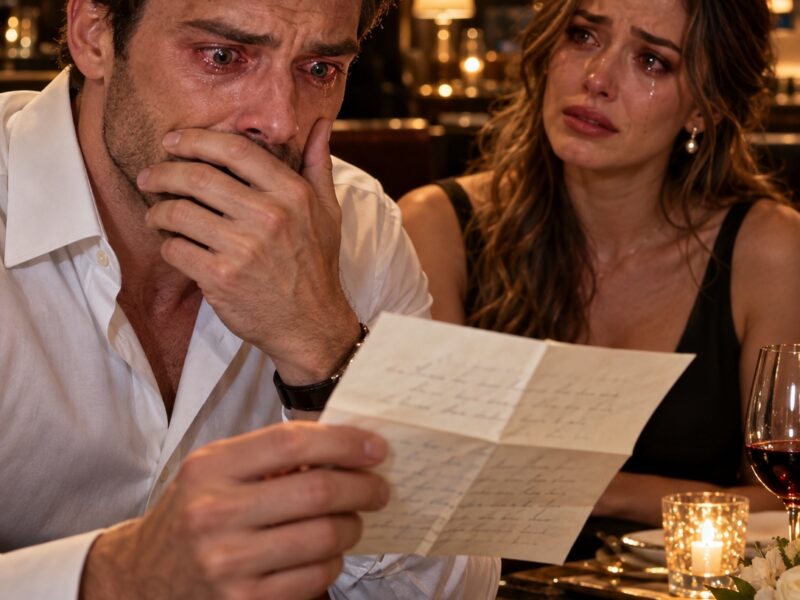
She Said I Owed Her One Date — Then I Learned She’d Been Carrying a Piece of Me Inside Her for Six Years
“You owe me one date.”
Emma Dwire said it at 6:03 on a Thursday evening, leaning against the gray fabric wall of my cubicle while most of the office emptied around us.
I laughed.
That was my first mistake.
Not because the line was funny.
Because women like Emma Dwire did not ask men like me on dates.
Emma was thirty, bright-eyed, quick-witted, impossible not to notice. She remembered receptionists’ birthdays, asked coworkers how their mothers were doing after surgery, and somehow made fluorescent office lighting seem less depressing simply by walking underneath it.
I was Cole Hendricks.
Thirty-five.
Divorced.
Insurance underwriter.
Owner of seven nearly identical blue dress shirts and a refrigerator containing mustard, beer, eggs, and enough sliced turkey to survive a minor apocalypse.
Emma looked at me without smiling.
“I’m serious.”
I stopped laughing.
“One date?”
“One.”
“For saving my job?”
“For what you owe me.”
There was something strange in the way she said it.
Not flirtatious.
Not playful.
Almost emotional.
I should have noticed.
I should have noticed a lot of things.
Instead, I leaned back in my chair and said, “Okay.”
Emma’s shoulders loosened.
“Okay?”
“Sure.”
“You’re not going to disappear Thursday?”
“I said okay.”
“Seven o’clock.”
“Fine.”
“I’ll text you the restaurant.”
She pushed away from my cubicle.
Then she stopped.
For half a second, she looked at me with an expression I couldn’t understand.
It wasn’t excitement.
It looked closer to relief.
The kind you see on someone who has finally reached the end of a very long road.
Then she smiled.
“Don’t be weird about it, Cole.”
She walked toward the elevators.
I watched her leave, shook my head, and went back to shutting down my computer.
I thought Emma Dwire had just asked me on a date because I owed her a favor.
I thought the strangest part of my week was that a beautiful woman wanted dinner with me.
I had no idea she’d spent nearly a year working up the courage to ask.
I had no idea she’d known who I was long before I knew who she was.
And I certainly didn’t know that somewhere beneath Emma’s skin, inside the machinery keeping her alive, was something that had once belonged to me.
She had been carrying it for six years.
Long before the coffee machine.
Long before the office.
Long before our first conversation.
Emma Dwire had a piece of me inside her.
And I was the only person in the room who didn’t know it.
My life before Emma wasn’t tragic.
Sometimes I think tragedy would’ve been easier.
Tragedy gives you something to point at.
A funeral.
A diagnosis.
A betrayal.
A single terrible night after which everyone understands why you’re different.
Nothing like that happened to me.
I simply became gray.
Three years earlier, my wife, Stephanie, and I had ended a six-year marriage without throwing a plate, exposing an affair, or screaming at each other in a driveway.
We just stopped reaching.
Stopped asking.
Stopped touching.
For nearly a year, we lived in the same house like two polite strangers trapped in an airport lounge.
“How was work?”
“Fine.”
“You want dinner?”
“Sure.”
“Going to bed?”
“In a minute.”
Then one Tuesday night, Steph stood in the kitchen holding a coffee mug and said, “Cole, I think we’re done.”
I remember looking at her.
Not shocked.
Not angry.
Mostly tired.
“Yeah,” I said.
She started crying.
I didn’t.
That bothered me more than the divorce.
We divided the furniture.
She took the good coffee maker.
I kept the house for four months before selling it because every room sounded too empty.
She moved to Indianapolis.
I rented a one-bedroom apartment in Columbus fifteen minutes from the office.
And life continued.
That was the problem.
It continued perfectly.
Every morning I woke at 6:20.
Coffee at 6:35.
Shower.
Blue shirt.
Gray or navy tie.
Twenty-two-minute commute if I left before 7:15.
Desk by 7:45.
I evaluated commercial insurance risk for a midsize company downtown.
Warehouses.
Restaurants.
Contractors.
Trucking fleets.
Factories.
People handed me businesses they had spent twenty years building, and I reduced catastrophe to columns.
Probability.
Exposure.
Loss history.
Premium.
Risk was comforting because numbers behaved.
If something could hurt you, you priced it.
If the risk was too high, you walked away.
I became excellent at walking away.
Lunch was usually turkey on wheat at my desk.
Home around six.
Television.
Sometimes a beer.
Sometimes two.
Sleep.
Repeat.
People assumed I was depressed.
I wasn’t.
Depression would’ve required me to feel strongly enough to know something was wrong.
I was functional.
Polite.
Employed.
Healthy.
Fine.
That word again.
Fine.
Everybody was fine.
Nobody was alive.
Then Emma Dwire joined the company.
She worked in marketing one floor below mine, and within a month everybody knew her.
Not because she tried to become the center of attention.
She didn’t.
She simply paid attention.
There is a difference.
If you mentioned your daughter had a spelling bee, Emma asked about it two weeks later.
If your father was getting a biopsy, she remembered the date.
She knew the security guard’s wife had started chemotherapy.
She knew which receptionist hated cinnamon.
She knew our CFO secretly drank gas-station coffee instead of the expensive stuff in the executive lounge.
Emma collected details about people and treated them like they mattered.
I noticed her.
Of course I did.
But noticing someone and believing they might notice you back are two very different things.
Then strange coincidences started happening.
Emma began using the coffee machine on my floor.
There was an identical machine downstairs.
Ours wasn’t even better.
One morning I found her standing beside it, staring at the display.
“This thing hates me,” she said.
“You have one downstairs.”
“Ours hates me more.”
“That seems statistically unlikely.”
She looked at me.
“You really talk like an insurance underwriter even before eight in the morning?”
“I don’t know how else to talk.”
“That is deeply concerning.”
I almost smiled.
Almost.
A few weeks later she appeared on a cross-department project involving customer retention.
Then she sat beside me during an all-hands meeting despite having half a dozen friends in the room.
Then I started finding her in the break room at exactly the time I heated lunch.
At first, I thought nothing of it.
Emma was friendly with everyone.
The idea that she was deliberately putting herself in my orbit would have required me to believe I was worth orbiting.
I didn’t.
Then came the Friday that changed everything.
At 4:27 p.m., I discovered I’d made the biggest mistake of my career.
One of our largest commercial clients operated a fleet of more than two hundred trucks across several states.
Their renewal required a manual review because of a complicated claims history.
I’d completed the review.
I’d approved the renewal.
I’d documented it.
But somewhere between my desk and our back-end processing system, the policy hadn’t bound correctly.
The coverage had technically lapsed.
For forty-eight hours.
Two hundred trucks were moving across American highways without the coverage everyone believed they had.
If one of those trucks had caused a major accident during that window, we could have been staring at millions in disputed exposure.
And there was my employee ID attached to the file.
I stared at the screen.
Read it again.
Then again.
My hands went cold.
There are mistakes you apologize for.
There are mistakes that become training examples.
And there are mistakes people remember when security escorts you to the elevator carrying a cardboard box.
This felt like the third kind.
My boss had already left.
Most of the department was gone.
I was still staring at the screen when a voice behind me said, “Cole?”
I turned.
Emma stood in the aisle holding her purse.
She took one look at me.
“What happened?”
“Nothing.”
“That’s not your nothing face.”
“I have a nothing face?”
“You have about four faces total. That’s the one where a building is on fire and you’re trying not to inconvenience anybody.”
Despite everything, I nearly laughed.
“Go home, Emma.”
Instead, she pulled the spare chair from the neighboring cubicle.
“What happened?”
Maybe it was the way she asked.
Not curious.
Not nosy.
Concerned.
I told her.
Her expression changed immediately.
“Show me.”
“Emma, you’re in marketing.”
“I spent two years in operations before marketing.”
I blinked.
“You did?”
“You know almost nothing about me, Cole.”
Fair.
She rolled closer.
“Show me the account.”
For the next six hours, Emma refused to leave.
She knew parts of our internal system I’d barely touched.
At 7:15 she found a grace-period provision tied to a processing condition.
At 8:30 she discovered that an automated flag should have triggered but hadn’t.
At 9:40 we ordered Chinese food and ate it out of cartons without tasting it.
At 10:15 she rebuilt the timeline.
At 10:43 she drafted a memo documenting the system failure, my timely review, and the administrative correction required to bind the renewal retroactively.
At 10:58 she leaned back.
“There.”
I stared at the screen.
The mistake hadn’t vanished.
But it was contained.
Defensible.
More importantly, it was accurate.
The system had failed too.
My career wasn’t over.
I exhaled for what felt like the first time in six hours.
“Emma…”
She rubbed her eyes.
“What?”
“I don’t know what to say.”
“Try thank you.”
“Thank you.”
“Excellent. We can work on emotional complexity later.”
I looked at the clock.
Eleven at night.
“You stayed six hours.”
“You would’ve done it alone.”
“I would’ve called my boss.”
“And then?”
“Probably thrown up.”
“See? My plan was better.”
I laughed.
Then I realized what she’d actually done.
This wasn’t her department.
Not her client.
Not her mistake.
She had nothing to gain from spending Friday night saving a divorced underwriter’s career.
I looked at her.
“Seriously. How do I thank you?”
“You already did.”
“No. I owe you.”
Something changed in her face.
Tiny.
But unmistakable.
She sat very still.
“What?”
“Anything,” I said. “Dinner. Lunch for a month. Tickets. Name it.”
Her eyes stayed on mine.
“You mean that?”
“Absolutely.”
A smile slowly appeared.
Not triumphant.
Nervous.
“One date.”
I laughed.
And that brings us back to the beginning.
She didn’t.
“I’m serious, Cole.”
“You want a date?”
“Yes.”
“With me?”
She raised an eyebrow.
“I’m starting to reconsider based purely on how difficult you’re making the concept.”
“Emma, come on.”
“What?”
“What do you actually want?”
“I just told you.”
“I’ll buy you lunch for a month.”
“No.”
“Concert tickets?”
“No.”
“I’ll wash your car.”
“Absolutely not.”
“A car?”
She laughed then.
“Cole.”
“What?”
“One date.”
There was something in her eyes that made me stop joking.
“You said name it,” she said. “I named it.”
Then she stood, pulled on her coat, and left.
I drove home convinced she’d change her mind.
She didn’t.
Monday morning, she found me beside the coffee machine.
“Thursday.”
I looked around.
“Thursday what?”
Her expression flattened.
“Oh, we’re doing this?”
“Doing what?”
“You’re pretending you forgot.”
“I didn’t forget.”
“Seven o’clock.”
“Emma…”
She set down her coffee.
“What?”
“You don’t have to do this.”
Her brow tightened.
“Do what?”
“Pay me back.”
“For what?”
“I don’t know. Maybe you feel bad for me.”
Emma stared at me.
“Why would I feel bad for you?”
“Exactly. Great. Then we’re done.”
I tried to leave.
She caught my sleeve.
“Cole.”
I stopped.
Her voice softened.
“Has it occurred to you even once that I’m not doing you a favor?”
I looked at her.
“That maybe I actually want to go?”
No.
It had not occurred to me.
Apparently my face answered for me.
Emma’s expression changed.
The annoyance disappeared.
Something sad replaced it.
“You really don’t see it,” she murmured.
“See what?”
She studied me for another second.
Then shook her head.
“Thursday. Seven. I’ll text you.”
She picked up her coffee and walked away.
Thursday at 5:32, I sat on the edge of my bed wearing dress pants and no shirt, staring at my phone.
I had already typed the message.
Something came up. Rain check?
My thumb hovered over Send.
Going meant hoping.
That was the part nobody tells you about getting hurt.
Pain isn’t always what ruins you.
Sometimes it’s the precautions you build afterward.
I had spent three years designing a life where almost nothing could disappoint me because I expected almost nothing.
Emma was dangerous precisely because I wanted to go.
I deleted the message.
Put on a shirt.
And drove downtown.
She’d chosen a small restaurant tucked between a bookstore and an old theater.
Nothing glamorous.
Red leather booths.
Dim pendant lights.
Good burgers.
Music low enough to talk over.
Emma was already there.
She smiled when she saw me.
“You came.”
Something about the relief in her voice bothered me.
“Was that in doubt?”
“Yes.”
I sat across from her.
“You don’t know me very well.”
She looked at me for a beat too long.
“You’d be surprised.”
Dinner was effortless.
That’s the word.
Effortless.
Emma asked questions and listened to the answers.
Not the way people listen while waiting to talk.
Actually listened.
She teased me about my job.
I teased her about stealing our coffee machine.
She told me about growing up outside Dayton with an older brother who once convinced her that swallowing watermelon seeds would make vines grow from her ears.
I told her about my father teaching me to change brake pads and then pretending not to notice when I installed one backward.
At some point, I laughed.
Really laughed.
The sound surprised me.
Emma stopped talking.
“What?”
“Nothing.”
“You’re staring.”
“I’ve never heard you laugh like that.”
“We’ve barely spoken.”
“I know.”
Again.
That strange weight beneath ordinary words.
Two hours disappeared.
Near the end, while we shared the last fries, I finally asked what had been bothering me.
“Can I ask you something?”
“Anything.”
“Why me?”
Her smile faded slightly.
“I knew that was coming.”
“I’m serious.”
“So am I.”
“Emma, you’re…” I gestured vaguely.
“Careful. This should be entertaining.”
“You know what I mean.”
“No, actually. Explain it.”
I sighed.
“You could date anybody.”
“That’s not true.”
“Half the men in the building would commit felonies for your phone number.”
“That’s concerning.”
“And I’m…”
“Cole.”
“A divorced insurance underwriter who eats the same sandwich four days a week.”
“Five.”
I stared.
“How do you know that?”
She reached for her drink.
“Observation.”
“You came upstairs for coffee even though you have coffee downstairs. You ended up on my project. You sat beside me at meetings. You stayed six hours fixing a problem that wasn’t yours. Then you asked for a date.”
Her fingers tightened around the glass.
“From where I’m sitting, those numbers don’t add up.”
She went quiet.
Very quiet.
For the first time all night, Emma looked afraid.
I watched her stare at the table.
Then at me.
Her eyes shone.
“Not tonight.”
My stomach tightened.
“What does that mean?”
“It means there is an answer.”
“That’s reassuring.”
She almost smiled.
“But it’s a lot.”
“Are you married?”
“No.”
“Moving away?”
“No.”
“Dying?”
Her face changed so quickly I almost missed it.
Then she said, “No.”
But something had passed behind her eyes.
“Emma?”
She reached across the table.
Her fingers rested over mine.
“Give me a few dates.”
“For what?”
“So when I tell you, whatever happens between us doesn’t become about that.”
“About what?”
“I can’t explain without explaining.”
“That sentence should be illegal.”
She laughed softly, but her eyes were wet.
“Just trust me.”
Every risk instinct I had told me not to.
Secrets were liabilities.
Unknown variables.
Unpriced exposure.
But her hand was warm over mine.
And for some reason I trusted her.
“Okay.”
“Okay?”
“A few dates.”
Her fingers tightened.
“Thank you.”
I didn’t understand why she sounded like I’d just given her something enormous.
For the next three weeks, Emma pulled me back into my own life.
There was no grand transformation.
No montage.
Just small things.
I started leaving work on time.
Food tasted different.
Music returned to my car.
I bought a shirt that wasn’t blue.
One of my coworkers stared at it for so long I finally asked what was wrong.
“Hendricks,” he said, “are you dating somebody?”
“Why?”
“You’re wearing green.”
Apparently that was evidence.
Emma texted me stupid things during meetings.
Photos of dogs in ridiculous sweaters.
A picture of a parking sign with such complicated restrictions she wrote, “Underwriter emergency. Please assess.”
She showed up at my apartment one Saturday morning wearing sneakers.
“Get dressed.”
“I am dressed.”
She looked at my sweatpants.
“I reject that definition.”
“Where are we going?”
“Somewhere.”
“That isn’t a location.”
“Exactly.”
Ninety minutes later we were driving through rural Ohio because Emma had read about a tiny bakery that supposedly made the best pie in the state.
When we arrived, the bakery was closed for a family event.
I stood in front of the handwritten sign.
“We drove ninety minutes.”
“Yes.”
“For nothing.”
Emma started laughing.
“What?”
“You.”
“How is this funny?”
“You look personally betrayed by pie.”
“We burned half a tank of gas.”
“So?”
“So the bakery is closed.”
She grabbed my hand.
“Come on.”
“Where?”
“No idea.”
We wandered down Main Street.
Found an antique store.
Bought two ridiculous postcards.
Eventually ended up at a gas station where Emma purchased powdered donuts and terrible coffee.
We ate on the tailgate of my truck beneath a sky so clear it looked painted.
Powdered sugar covered her jeans.
“This is stupid,” I said.
“Completely.”
“We drove ninety minutes for gas-station donuts.”
Emma looked toward the empty road.
“No.”
“No?”
“We drove ninety minutes to go somewhere we’d never been.”
“The pie was the stated objective.”
“The pie was never the point.”
I looked at her.
She smiled.
“Nobody remembers the pie, Cole.”
I remember that moment more clearly than almost anything.
The sun on her face.
Her sneaker tapping against my bumper.
A powdered-sugar fingerprint on her black jeans.
And something inside me starting.
Not healing.
Not yet.
Starting.
Like an engine that had been sitting through winter finally catching after three bad turns.
I kissed her that afternoon.
She froze for half a second.
Then kissed me back with a kind of tenderness that felt older than three weeks.
When we pulled apart, she touched my cheek.
“What?” I asked.
“Nothing.”
“That’s not your nothing face.”
She laughed.
“You stole that from me.”
“I learn quickly.”
Her eyes filled again with that strange sadness.
I wanted to ask.
I didn’t.
I’d promised.
But the secret was always there.
Sometimes Emma would stare at me as though she was looking at someone who had returned from the dead.
Sometimes she’d touch my hand and then go quiet.
Once, while I was cooking breakfast, I caught her standing in the kitchen doorway watching me.
“What?”
She shook her head.
“Nothing.”
“Emma.”
“I’m just…”
She stopped.
“Just what?”
“Glad you’re here.”
Three ordinary words.
But she said them like she’d waited years to use them.
My theories became increasingly ridiculous.
Maybe we’d met before.
Maybe she knew Steph.
Maybe I had unknowingly helped someone in her family.
Maybe she was sick.
That last possibility kept returning.
I hated it.
Then, on our fourth official date, she finally told me.
We were at her apartment.
Emma had attempted to make lasagna.
The smoke detector had opinions.
We ordered pizza.
By ten, we were sitting barefoot on her couch with the box open on the coffee table and an old movie playing quietly.
Emma stopped eating.
I knew immediately.
“It’s time,” she said.
My chest tightened.
“For the secret?”
She nodded.
“You sure?”
“No.”
That made me sit straighter.
She tucked one leg beneath herself.
“I need you to let me finish.”
“Okay.”
“Even if you figure it out halfway through.”
“Emma—”
“Promise.”
I put down my pizza.
“I promise.”
She inhaled.
“Six years ago, I was dying.”
Everything in the room changed.
The television kept flickering.
Traffic moved somewhere below us.
But the room itself went completely still.
“What?”
“I was twenty-four.”
She looked at her hands.
“I’d been out of college about a year. I thought my life was beginning.”
Her voice was calm.
Too calm.
“Then I started getting tired. Bruises everywhere. Fevers. I kept telling myself I was working too much.”
She swallowed.
“It was leukemia.”
I didn’t speak.
“Acute. Aggressive. By the time they diagnosed it, nobody was using reassuring words anymore.”
Her hands trembled.
“Chemo worked for a while. Then it didn’t work enough. They told me I needed a bone marrow transplant.”
I felt cold.
Not emotionally.
Physically.
A chill started at the back of my neck and moved down my spine.
Emma continued.
“My brother wasn’t a match. Neither parent. My cousins got tested. Nothing.”
She looked at me.
“When you’re sick like that, you learn how brutally simple life can become. All the things you thought mattered disappear. Career. Money. Dating. What people think of you.”
Her voice broke.
“My entire future came down to whether somewhere in the world there was a stranger whose tissue type matched mine closely enough to keep me alive.”
I stopped breathing.
There are moments when your body understands something before your mind permits it.
Mine already knew.
Emma wiped beneath one eye.
“There was a registry.”
I knew.
“Millions of people.”
I knew.
“People who’d swabbed their cheeks at college drives and blood centers and health fairs.”
No.
“And they searched.”
No.
“And searched.”
Emma’s tears fell now.
“And out of everyone they tested…”
She looked directly into my eyes.
“…there was one match.”
Six years earlier, I’d been twenty-nine.
Married to Steph.
Already losing her.
Already losing myself.
And one Tuesday afternoon, my phone had rung while I stood alone in our kitchen.
Unknown number.
I nearly ignored it.
A woman asked whether I remembered joining a bone marrow registry.
I didn’t.
Then she reminded me.
College.
Student union.
A registration booth.
I’d swabbed my cheek because a girl I had a crush on was volunteering there.
I wanted to talk to her.
That was the noble origin story.
Not courage.
Not selflessness.
Hormones.
Then eight years later, somebody called to say I might be the only compatible donor for a seriously ill patient.
Would I undergo more testing?
I said yes.
Weeks later, they confirmed it.
I was the match.
I remembered standing in that kitchen while Steph watched television in another room.
We had barely spoken all week.
The coordinator told me the patient was twenty-four.
No name.
No photograph.
No city.
Just twenty-four.
And sick.
Very sick.
“Are you willing to proceed?”
I remember gripping the counter.
For a year, my marriage had made me feel unnecessary.
Like furniture.
Like something you kept because moving it would be inconvenient.
And suddenly a stranger somewhere needed me.
Not wanted.
Needed.
I said yes.
Two weeks later, I drove to Cincinnati alone.
Steph offered to come.
At least I think she did.
I told her not to bother.
That was the stage our marriage had reached.
We were both experts at pretending rejection was convenience.
At the hospital, they put me in a gown.
A nurse asked whether I was nervous.
I lied.
They put me under.
When I woke, my hip felt like someone had hit it with a hammer.
A nurse brought me apple juice and graham crackers.
I remember laughing.
Twenty-nine years old.
Possibly the most important thing I’d ever done.
And my reward was a juice box.
Then I went home.
That was it.
I never learned the patient’s name.
Never knew whether the transplant worked.
Never knew whether the twenty-four-year-old stranger saw twenty-five.
I asked once.
Privacy rules.
Maybe someday, if both parties consented.
Then my marriage collapsed.
Life got louder.
Then quieter.
Eventually I stopped wondering.
Because wondering whether you’d saved someone and never being allowed to know can become its own small ache.
Now I looked at Emma.
Thirty years old.
Six years later.
My voice came out barely above a whisper.
“How old are you?”
She was crying.
“Cole…”
“How old are you?”
“Thirty.”
“Six years ago…”
“Twenty-four.”
My heart hammered.
“You needed a transplant.”
“Yes.”
“From the registry.”
“Yes.”
“One donor.”
She covered her mouth.
I stood.
Then sat again because my legs didn’t work.
“It was me.”
Emma nodded.
I stared at her.
“It was me?”
Her face crumpled.
“Yes.”
Something inside me broke open.
Not dramatically.
There was no music.
No cinematic revelation.
Just six years of unanswered questions suddenly sitting three feet away from me wearing my old college sweatshirt because she’d stolen it after our second date.
“You…”
I couldn’t finish.
Emma slid off the couch and knelt in front of me.
“You saved my life.”
I stared at her.
“Cole, you saved my life.”
I shook my head as though that could rearrange reality.
“I didn’t know.”
“I know.”
“I didn’t know if it worked.”
“It worked.”
“You lived.”
A sob escaped her.
“I lived.”
And that was the sentence that destroyed me.
You lived.
I covered my face.
For six years, somewhere in the back of my mind, that twenty-four-year-old had remained suspended in a hospital room.
Neither alive nor dead.
A question without an answer.
And now she was here.
Laughing at my shirts.
Stealing my coffee machine.
Ruining lasagna.
Dragging me ninety minutes for closed pie shops.
Alive.
Emma touched my knee.
“I’ve had six years, Cole.”
I looked at her.
“Six years I wasn’t supposed to have.”
I started crying.
I didn’t even realize it until she wiped my face.
“Every birthday. Every Christmas. Every stupid Tuesday when I complained about traffic. Every terrible date. Every sunrise I slept through. Every argument with my brother. Every job I hated. Every good thing.”
She pressed her hand against her chest.
“All of it exists because you answered a phone call.”
“How did you find me?”
She hesitated.
“The registry protects both sides at first.”
“I know.”
“After the waiting period, both people can consent to contact.”
“I never did.”
“You didn’t.”
“I would’ve remembered.”
“You didn’t consent for years.”
“Then how?”
Emma stood.
She crossed the room to a narrow cabinet beside her bookshelf.
Opened the top drawer.
For a moment she simply stood there.
Then she returned carrying a folded piece of paper.
Not white anymore.
Cream-colored with age.
The folds were soft.
The edges worn.
She held it like something fragile.
“Because you left me this.”
She placed it in my hands.
I unfolded it.
My handwriting.
I recognized it immediately.
Messier.
Younger.
Mine.
Memory came rushing back.
A nurse in Cincinnati had handed me a card before the procedure.
“Sometimes donors write something,” she’d said.
“To who?”
“The recipient.”
“I thought it’s anonymous.”
“It is. No identifying information. Just encouragement if you want.”
I’d stared at the blank card.
Then written without thinking.
Now, six years later, I read the words again.
To whoever you are—
I don’t know your name, and I guess I may never know it.
I’m twenty-nine, and I’m in the middle of a life that hasn’t turned out the way I thought it would.
I’ve spent too much of it being afraid to want things because wanting things gives them the power to hurt you.
So if this works, do me a favor.
Live big.
Do the things I’ve been too scared to do.
Want things.
Go places.
Love people even when there’s a chance they’ll leave.
Be less afraid than I’ve been.
Live big enough for both of us.
A stranger who’s rooting for you.
I read it twice.
Then a third time.
The man who had written those words felt like somebody I used to know.
Emma sat beside me.
“I read it every day.”
I looked at her.
“What?”
“During recovery.”
Her voice trembled.
“The transplant didn’t magically make everything better. There were complications. Infections. Days when I couldn’t eat. Days when standing up felt impossible.”
She touched the paper.
“My mom taped this beside my bed.”
I couldn’t speak.
“When I wanted to quit, I read it.”
She smiled through tears.
“Live big enough for both of us.”
The words sounded different in her voice.
“They were stupid.”
“No.”
“I was drugged.”
“You were scared.”
“I barely remember writing them.”
“I remember reading them.”
She looked at me.
“Every word.”
My throat tightened.
“You gave me marrow, Cole. But this…”
She tapped the letter.
“This gave me something else.”
“What?”
“A future I could picture.”
I looked away.
She continued softly.
“When the registry finally allowed contact, I had consented from the first day I was eligible.”
“And I hadn’t.”
“No.”
“Why didn’t they remind me?”
“They did.”
I thought about it.
Forms.
Surveys.
Mail forwarded after the divorce.
Emails I probably ignored.
Then I remembered.
Two years earlier.
A follow-up questionnaire.
A checkbox.
Would you consent to future contact with your recipient if requested?
I’d clicked yes.
Barely thinking about it.
Emma saw recognition on my face.
“You remember.”
“Yeah.”
“That’s when they gave me your name.”
“Two years ago?”
She nodded.
“Cole Hendricks. Columbus, Ohio.”
I stared at her.
“And you just… looked me up?”
“Immediately.”
“That isn’t terrifying at all.”
She laughed through her tears.
“I found your LinkedIn first.”
“Oh God.”
“You had the saddest LinkedIn picture I’ve ever seen.”
“Thank you.”
“You looked like you’d been sentenced to insurance.”
“That seems accurate.”
She smiled.
Then became serious.
“I’d imagined you for years.”
My stomach tightened.
“What do you mean?”
“I didn’t know your face. But I knew the person who wrote that letter.”
“Emma…”
“I need you to understand.”
She turned toward me.
“For years, you were this anonymous person who had done the biggest thing anyone had ever done for me.”
I looked down.
“I wasn’t trying to be heroic.”
“I know.”
“I signed up because I wanted to impress a girl.”
“I know that now.”
“I almost forgot the whole thing.”
“I know.”
She smiled faintly.
“That actually makes it better.”
“How?”
“Because you weren’t trying to become a story.”
Her smile disappeared.
“You just said yes.”
Silence stretched between us.
Then she said something I wasn’t prepared for.
“By the time I learned your name, I’d been in love with the idea of you for years.”
I looked at her sharply.
“The idea?”
“The man in the letter.”
There it was.
The thing she’d been afraid to tell me.
“I knew it was ridiculous,” she said. “I didn’t know you. I knew that.”
“So you found me.”
“Yes.”
“And then?”
“I watched from a distance.”
“How much distance?”
“LinkedIn-distance.”
I almost laughed.
“That’s a recognized measurement?”
“It is now.”
“What did you find?”
“Divorced. Insurance. Columbus. No criminal record.”
“You ran a criminal search?”
“Cole, I had your bone marrow. I felt entitled to Google you.”
That actually made me laugh.
Then she looked down.
“I wanted to write.”
“Why didn’t you?”
“Because what do you say?”
She looked back at me.
“Hi. You don’t know me. Six years ago you saved my life. Also, I’ve read your letter so many times I can recite it from memory and I’ve built an emotional relationship with a person who doesn’t know I exist.”
“Fair.”
“I wrote probably fifty versions.”
“What happened to them?”
“Deleted.”
“So you took a job at my company instead?”
She winced.
“When you say it like that, I sound unstable.”
“You changed jobs?”
“I was already looking.”
“Emma.”
“Yes. Fine. Your company moved to the top of the list.”
I stared.
“For me?”
“Yes.”
“A year ago?”
“Yes.”
“And the coffee machine?”
“Intentional.”
“The projects?”
“I volunteered.”
“The seat at the all-hands?”
“Extremely intentional.”
I laughed despite myself.
Emma covered her face.
“This sounded less insane in my head.”
“And the trucking policy?”
“That was actually an accident.”
“Finally.”
“But when I saw you sitting there looking like you were about to throw up…”
“You stayed.”
“I finally had a reason.”
“For what?”
“To matter to you before telling you why you mattered to me.”
That silenced me.
Emma took the old letter from my hands.
“You told me to live big enough for both of us.”
Her voice dropped.
“So I tried.”
She folded the paper carefully.
“I traveled. Changed careers. Fell in love with cities. Got my heart broken. Learned to scuba dive even though I’m terrified of deep water. Took my mom to Italy. Got a tattoo she still doesn’t know about.”
“Your mother definitely knows.”
“She suspects.”
Then Emma looked directly at me.
“But every once in a while, I wondered about the other half.”
“What other half?”
“You.”
Her eyes filled again.
“The person who told me to live.”
She touched my hand.
“When I finally found you, I expected someone fearless.”
I laughed bitterly.
“Bad luck.”
“No.”
She squeezed my fingers.
“I found someone who looked like he’d forgotten his own advice.”
That hurt because it was true.
“I didn’t come here just to thank you,” she whispered.
“Then why?”
She moved closer.
“I came to give the other half back.”
I frowned.
“You gave me six years, Cole.”
Her voice broke.
“I wanted to see if I could give you something too.”
For one beautiful, impossible second, I almost let myself believe it.
Then fear arrived.
Fear always knows exactly when to show up.
I pulled my hand away.
Emma went still.
I stood.
Walked toward the window.
“Cole?”
“I need a second.”
Her face changed.
I put both hands on the windowsill.
Cars moved below us.
Normal people living normal nights.
Behind me sat a woman who was alive because of something I’d done.
A woman who had spent years carrying an idealized version of me in her head.
A woman who said she loved me.
And suddenly every good moment we’d shared felt unstable.
“Cole?”
I turned.
“I need you to hear something.”
“Okay.”
“It’s ugly.”
Her shoulders tightened.
“But if I don’t say it now, it’ll poison everything later.”
“Say it.”
I looked at her.
“How do I know this is real?”
The color drained from her face.
“Cole—”
“Not you.”
I moved toward her.
“You’re real. You’re the realest thing that’s happened to me in years.”
“Then what are you asking?”
“How do I know I’m real to you?”
She stared.
“You didn’t meet me normally.”
“I know.”
“You spent years reading something I wrote on one of the strangest days of my life.”
“I know.”
“You built a person out of that letter.”
Emma’s eyes hardened.
“You think I don’t know that?”
“I think gratitude that big can look a lot like love.”
She flinched.
There.
I’d hurt her.
But I couldn’t stop.
“You’re alive because of me.”
“Yes.”
“How do you separate that from loving me?”
“Cole—”
“You said yourself you loved the idea before you even knew my face.”
“I said the idea.”
“And then you came looking for him.”
“For you.”
“For him.”
My voice cracked.
“The brave stranger.”
I pointed at the letter.
“The guy who writes things like live big enough for both of us.”
Emma stood.
“You are him.”
“No.”
I shook my head.
“I’m not.”
“Cole.”
“That guy existed for thirty seconds.”
“What?”
“I was scared. My marriage was dying. I felt useless. Some nurse handed me a card, and for thirty seconds I wrote something brave.”
I laughed, but there was nothing funny in it.
“Then I went home and spent six years doing the exact opposite.”
Emma stared at me.
“I’m not the man in that letter.”
“You wrote it.”
“That doesn’t mean I became him.”
I felt tears burn my eyes.
“What if you spent six years falling in love with somebody who doesn’t exist?”
She didn’t answer.
“What happens when you realize I’m just a divorced guy who eats turkey sandwiches and almost canceled our first date because hoping felt too risky?”
Her eyes filled.
“What if I’m just the disappointing body your hero came in?”
“Stop.”
“What if you can’t tell the difference between loving me and owing me your life?”
“Stop.”
“I can’t spend the rest of my life wondering whether you’d still choose me if my bone marrow hadn’t saved you.”
Silence.
Complete silence.
Emma looked down.
For a second I thought I’d destroyed everything.
Maybe I had.
Then she wiped her face.
When she looked at me again, the softness was gone.
Not love.
Softness.
What replaced it was something fierce.
“Sit down.”
I blinked.
“What?”
“Sit.”
“Emma—”
“You wanted the truth. You’re getting it.”
I sat.
She stood in front of me.
“I spent two years loving a letter.”
I said nothing.
“You’re right.”
That hurt worse than I expected.
“If I’d never met you, I probably would’ve loved the stranger who wrote it for the rest of my life.”
She crouched so we were eye level.
“But that wouldn’t have been love, Cole.”
I swallowed.
“It would’ve been mythology.”
Her voice steadied.
“A story a sick girl told herself about the stranger who saved her.”
She leaned closer.
“Then I met you.”
I couldn’t look away.
“And you know what I discovered?”
“What?”
“You’re nothing like the man in the letter.”
The words landed hard.
I actually flinched.
Emma saw it.
Then she whispered:
“You’re better.”
I stared at her.
“The man who wrote that card was brave for a moment.”
She touched my chest.
“The man I met is afraid constantly.”
“That’s supposed to help?”
“Listen.”
Her eyes flashed.
“You’re afraid of making mistakes, and you still take responsibility for them.”
She pointed toward the invisible office miles away.
“You could’ve hidden that trucking problem. You didn’t.”
“That was my job.”
“You were terrified of our first date.”
“I wasn’t terrified.”
“You sat in your apartment for twenty minutes composing a cancellation text.”
My mouth opened.
“How do you know that?”
“You told me you almost didn’t come.”
“Oh.”
“You were scared. You came anyway.”
She moved closer.
“You were scared to ask why I wanted you. You asked anyway.”
Her voice broke.
“You’re terrified right now that loving me will expose some version of you that isn’t enough.”
I looked away.
She caught my face gently and turned it back.
“And instead of disappearing, instead of ghosting me, instead of punishing me for making you vulnerable, you stood here and told me the ugliest thing in your head.”
Her thumbs rested against my cheeks.
“You keep calling yourself a coward because you think bravery means not being afraid.”
A tear slipped down her face.
“That’s not bravery.”
“What is?”
“Being scared and showing up.”
I stopped breathing.
“The letter was beautiful,” Emma said.
“But it isn’t why I love you.”
Her voice became softer.
“I love the man who notices when I’m cold and turns the heat up without asking.”
I closed my eyes.
“The man who pretends he hates spontaneous trips but keeps the stupid postcard we bought in his glove compartment.”
I looked at her.
“The man who calls his mother every Sunday even when they have nothing to talk about.”
She smiled through tears.
“The man who took thirty-seven minutes choosing soup for me when I had the flu because apparently soup requires underwriting.”
“That was a complicated decision.”
She laughed.
Then cried harder.
“I love the man who came back to life slowly enough that I got to watch it happen.”
That took whatever defenses I had left.
Emma pressed her forehead against mine.
“I was grateful to the donor before I knew you.”
Her voice was barely audible.
“I fell in love with Cole after I met him.”
I broke.
There isn’t a better word.
I wrapped my arms around her and held on.
Emma held me just as hard.
We cried.
Then laughed because we were crying.
Then cried again because we were laughing.
Six years earlier, I’d gone into a hospital believing I was saving a stranger.
I hadn’t understood that one day she would find me.
I hadn’t understood that saving someone could become a circle.
We stayed awake until almost four in the morning.
The pizza went cold.
Neither of us cared.
Emma told me the transplant hadn’t worked cleanly at first.
There were complications.
A second infusion.
Weeks when her doctors refused to promise anything.
Then remission.
One year.
Two.
Five.
Her first truly clear scan made her oncologist cry.
Her mother kept a calendar.
Every day Emma lived past the date doctors had once warned she might never reach received a tiny blue mark.
Thousands of marks now.
Thousands of ordinary days.
“You know what’s funny?” Emma said sometime after three.
“What?”
“People think surviving cancer makes every day profound.”
“Doesn’t it?”
“No.”
She smiled.
“Most days are still stupid.”
I laughed.
“Bills. Laundry. Bad meetings. Traffic.”
“Closed pie shops.”
“Exactly.”
She looked toward the dark window.
“But that’s the gift.”
“What is?”
“The ordinary stuff.”
I thought about my life before her.
How desperately I’d protected myself from disappointment.
How efficiently I’d removed uncertainty.
How I’d mistaken the absence of pain for peace.
Emma rested her head against my shoulder.
“Tell me about the day you donated.”
So I did.
I told her about Cincinnati.
About going alone.
About the juice box.
About waking up sore.
About returning home to a marriage so quiet I could hear the refrigerator humming from the bedroom.
Then I told her something I’d never admitted to anyone.
“When they called me…”
She lifted her head.
“What?”
“I was having a bad year.”
“I know.”
“No. I mean…”
I searched for the words.
“Steph and I weren’t really married anymore. Not emotionally.”
Emma stayed silent.
“I felt like nothing I did mattered.”
My throat tightened.
“Then this woman calls and says there’s a twenty-four-year-old somewhere who might die if I say no.”
Emma’s eyes filled.
“And?”
“And for the first time in a long time…”
I looked at her.
“…somebody needed me.”
Emma covered her mouth.
“I know that sounds selfish.”
“No.”
“I went because you needed the transplant. Obviously. But part of me…”
I struggled.
“Part of me needed to be needed.”
She took my hand.
“I drove to Cincinnati alone and kept telling myself it didn’t matter that nobody came with me.”
My voice shook.
“Because for one morning, I was the answer to somebody’s problem instead of the problem in somebody’s kitchen.”
Emma started crying.
Then she whispered, “You were.”
“What?”
“The answer.”
She squeezed my hand.
“My mother prayed every night for four months.”
I stared at her.
“She prayed for a match.”
Emma smiled wetly.
“And apparently the answer was a depressed insurance guy from Ohio who joined a registry to impress a girl.”
I laughed.
“So much for divine dignity.”
“God works through college crushes.”
I laughed hard enough that her neighbor banged on the wall.
Emma laughed too.
And sometime around four in the morning, the six-year question finally settled inside me.
It worked.
The transplant worked.
The girl lived.
She was right there.
And she loved me.
Not the donor.
Not the letter.
Me.
We didn’t get married six weeks later.
That’s what the movie version would do.
Real people are slower.
Especially people who have spent years being afraid.
Emma had to learn not to treat every ordinary disagreement like stolen time.
I had to learn not to retreat whenever happiness made me feel exposed.
Sometimes we failed.
Once, about six months in, we had a terrible fight because Emma wanted to book a last-minute trip to New Orleans and I said we should save the money.
She accused me of being afraid to live.
I accused her of using cancer as an excuse to never plan responsibly.
The second the words left my mouth, I wanted them back.
Emma went silent.
Then she walked out.
Old Cole would’ve let her.
Old Cole would’ve decided the relationship had become too dangerous.
Instead, I drove to her apartment.
She didn’t answer.
I sat outside her door for forty minutes.
Finally she opened it.
“You’re an asshole,” she said.
“I know.”
“That was cruel.”
“I know.”
“You don’t get to use the worst thing that happened to me against me.”
“I know.”
“Stop saying you know.”
“I don’t know what else to say.”
She stared at me.
“Try the truth.”
So I did.
“The truth is I’m terrified.”
Her anger shifted.
“Of what?”
“That you’re right.”
“About New Orleans?”
“About me.”
I looked at the floor.
“I’m scared I’ll spend my entire life managing risk until there’s nothing left worth protecting.”
Emma didn’t forgive me immediately.
She shouldn’t have.
But she let me inside.
We talked until midnight.
Two months later, we went to New Orleans.
We booked the flights six weeks in advance.
Compromise.
She called it my first reckless spreadsheet.
A year after that, I proposed.
Not at a restaurant.
Not on vacation.
Not beneath fireworks.
At the same gas station where we’d bought powdered donuts after the closed pie shop.
Emma stared at me as I knelt beside my truck.
“You cannot be serious.”
“I’ve never been more serious.”
“Cole.”
“What?”
“This is a gas station.”
“The pie was never the point.”
She covered her mouth.
Then started crying.
I held up the ring.
“Emma Dwire, six years before I met you, I told a stranger to live big because I didn’t know how to do it myself.”
Her shoulders shook.
“Then you found me and made me keep my own promise.”
I took a breath.
“I don’t know how many years we get.”
Her face crumpled.
“Nobody does.”
“But I want the ordinary ones.”
She stared at me.
“The laundry. The traffic. The bad dinners. The arguments about thermostats.”
“You keep it freezing.”
“Not relevant.”
She laughed through tears.
“I want Tuesdays.”
That stopped her.
I smiled.
“All of them.”
She knelt in front of me before I could finish.
“Yes.”
“I had more speech.”
“Too bad.”
“You interrupted my proposal.”
“I’m living big.”
Then she kissed me in a gas-station parking lot while an elderly man filling his pickup applauded.
We married the following spring.
Small ceremony.
Family.
Close friends.
A few coworkers who had watched Emma systematically invade my floor for a year without understanding why.
Her entire family knew who I was.
That was strange.
Her mother hugged me before I could introduce myself.
She held me so tightly I could barely breathe.
When she finally stepped back, tears were running down her face.
“You don’t know me,” she said.
“No.”
“I know.”
She touched my cheek.
“But I’ve thanked God for you by name for two years.”
I didn’t have an answer.
Her father shook my hand, then pulled me into a hug halfway through.
Her brother stood across the room staring at me.
Later, during the reception, he picked up the microphone for his toast.
He looked at Emma.
Then at me.
His mouth opened.
Nothing came out.
He tried again.
Finally he pointed at me.
“You’re the guy.”
Everyone laughed softly.
He wiped his face.
“That’s all I’ve got.”
Then he sat down.
Best wedding toast I’ve ever heard.
The old letter is framed in our hallway now.
Live big enough for both of us.
Below it hangs another frame.
Emma chose the picture.
She’s twenty-four in it.
Bald.
Thin.
Sitting upright in a hospital bed with an IV line visible beside her.
She’s holding my letter toward the camera.
And she’s smiling.
Not weakly.
Not bravely.
Defiantly.
Like death had made an appointment and she intended to stand it up.
The first time I saw the photograph, I had to sit down.
“That was two days after the transplant,” Emma told me.
“You looked happy.”
“I was high on medication.”
“That explains our relationship too.”
She elbowed me.
But I kept staring.
That photograph changed something in me.
Because I’d spent years thinking the donation was a moment.
A procedure.
A needle.
A week of soreness.
For Emma, it had been a doorway.
Everything on the other side existed because she’d lived long enough to reach it.
So we started doing something every October.
Emma calls the transplant anniversary her second birthday.
Instead of gifts, we go back to the Ohio State campus and help run a donor registry drive.
Folding tables.
Clipboards.
Cheek swabs.
Cheap candy.
The first year I hated it.
Not the cause.
The attention.
Emma told our story to students.
I stood beside her wishing I could disappear beneath the table.
Then a twenty-year-old woman came over after hearing us.
Her cousin had leukemia.
She signed up.
The next year, we went back.
And the year after that.
Emma talks.
I hand out swabs.
This arrangement suits our respective talents.
One October, a nineteen-year-old guy stood twenty feet away for nearly fifteen minutes.
He kept watching.
Finally Emma walked over.
“You have a question?”
He shoved his hands into his hoodie pockets.
“My mom has leukemia.”
Emma’s expression softened.
“I’m sorry.”
“She needs a donor.”
He looked toward the registration table.
“I want to sign up.”
“But?”
“What if I match?”
Emma waited.
“What if it hurts?”
He looked ashamed.
“What if I get scared and back out?”
I understood him immediately.
Before I could say anything, Emma pointed at me.
“See that guy?”
The kid looked.
“Yeah.”
“He’s afraid of everything.”
I stared at her.
“Emma.”
She ignored me.
“He almost canceled our first date because he was scared.”
“This seems unnecessary.”
“He works in insurance because apparently he needed a career where worrying professionally is considered useful.”
The kid smiled.
“But fourteen years ago,” Emma continued, “he signed up at a table exactly like this one.”
The kid looked at me.
“He forgot about it.”
“Completely,” I admitted.
“Years later, he got the call.”
Emma touched her chest.
“He was scared.”
I nodded.
“He did it anyway.”
The boy looked between us.
Emma smiled.
“And I’m standing here because he did.”
The kid was quiet.
Then he walked to the table.
He swabbed his cheek.
Signed the form.
Dropped the swab into the envelope.
Maybe he’ll never get called.
Most people don’t.
Maybe somewhere, someday, someone will desperately need exactly what he can give.
He doesn’t know.
That’s the strange thing about certain choices.
You don’t know which ones matter when you’re making them.
Sometimes the decision that changes two lives looks like nothing.
A folding table.
A cheek swab.
A checkbox.
A phone call you almost don’t answer.
A date you almost cancel.
A woman standing beside a coffee machine saying, Maybe I actually want to go.
I used to believe a meaningful life would feel meaningful while you were living it.
Now I don’t think that’s true.
Most important moments arrive disguised as inconvenience.
Emma’s life changed because twenty-two-year-old me wanted an excuse to flirt with a volunteer.
Mine changed because I made an insurance mistake at 4:27 on a Friday.
If that policy hadn’t lapsed, Emma might never have had an excuse to stay.
If she hadn’t stayed, I might never have said I owed her.
If I hadn’t said I owed her, she might never have asked for the date.
If I’d sent the cancellation text sitting half-dressed on my bed, I might still be eating turkey sandwiches alone.
Sometimes I think about that version of me.
The Cole who hit Send.
He wakes up.
Goes to work.
Emma eventually leaves the company.
Maybe she sends the letter.
Maybe she doesn’t.
Maybe I learn who she is.
Maybe I don’t.
Life continues.
Nothing obviously terrible happens.
And that is what frightens me.
Because I would’ve survived.
I would’ve been fine.
There are lives you can lose without dying.
I know because I almost lived one.
Emma saved me from that.
People sometimes react strangely when they hear our story.
They tell me I saved her life.
They’re right.
Biologically.
Technically.
Medically.
A piece of my body gave hers another chance.
But that isn’t the whole story.
Because when Emma found me, I was alive in every measurable sense.
Heart beating.
Blood pressure normal.
No malignancy.
No failing organs.
I went to work.
Paid taxes.
Answered emails.
Remembered to renew my car registration.
Nobody would’ve called me sick.
But there is a kind of dying that doesn’t show up on a scan.
It happens quietly.
You stop wanting things because wanting them creates risk.
You stop going places because home is predictable.
You stop loving deeply because losing shallowly hurts less.
You reduce your world until almost nothing can break your heart.
Then one morning you wake up and realize you’ve protected yourself from pain so successfully that you’ve also protected yourself from joy.
Your heart keeps beating.
That’s the cruel part.
Everything keeps functioning.
You can live that way for decades.
Emma couldn’t.
She’d already had death walk into her hospital room once.
She recognized it wearing different clothes.
She saw it in me before I did.
That’s why she kept appearing beside the coffee machine.
Why she volunteered for projects.
Why she sat next to me.
Why she stayed until eleven.
Why she demanded one date.
I thought Emma wanted to repay a debt.
She thought she owed me her life.
We were both wrong.
Love isn’t repayment.
It can’t be.
If someone saves you, you don’t owe them your heart.
If someone loves you, they don’t become responsible for keeping you whole.
Emma had to learn that too.
The healthiest thing she ever did for us was stop treating me like the man who saved her.
The healthiest thing I ever did was stop treating her like the woman I had to protect because I’d saved her once.
We’re just Cole and Emma now.
She leaves wet towels on the bed.
I load the dishwasher incorrectly according to a system she refuses to document.
She buys plane tickets before comparing enough prices.
I compare prices until flights become more expensive.
She sings badly while cooking.
I still eat turkey sandwiches.
Just not every day.
Sometimes we fight.
Sometimes we go to bed annoyed.
Sometimes there is no poetic resolution.
Then morning comes.
One of us makes coffee.
Someone apologizes.
Life continues.
Ordinary.
Beautifully, unbelievably ordinary.
A few weeks ago, I came home and found Emma standing beneath the framed letter in our hallway.
She was looking at the photograph of herself at twenty-four.
“What are you doing?” I asked.
“Thinking.”
“Dangerous.”
She smiled.
I stood beside her.
The girl in the photograph looked impossibly young.
“You miss her?” I asked.
Emma thought about it.
“No.”
“No?”
“I love her.”
She touched the edge of the frame.
“But I don’t want to be her again.”
I understood.
That girl had survived.
But survival isn’t supposed to become your permanent identity.
After a moment, Emma looked at the letter.
“You know what bothers me?”
“What?”
“You told me to live big enough for both of us.”
“I was dramatic at twenty-nine.”
“You were.”
“Thank you.”
“But you were wrong.”
I raised an eyebrow.
“About what?”
She turned toward me.
“One person can’t live for two.”
I looked at the frames.
The letter.
The hospital photograph.
Two strangers connected before either knew the other’s face.
“What should I have written?”
Emma smiled.
“Live your part.”
“That’s less poetic.”
“More accurate.”
She started walking toward the kitchen.
Then she turned.
“And maybe answer your phone.”
I laughed.
That night, after she went to sleep, I stood in the hallway alone.
I read the letter again.
I’ve read it hundreds of times now.
It no longer embarrasses me.
Mostly.
The handwriting belongs to a twenty-nine-year-old man who believed courage was something other people possessed.
He had no idea a dying woman would memorize his words.
No idea she’d survive.
No idea she’d spend years trying to find him.
No idea he’d need rescuing too.
I touched the glass.
For most of my life, I thought risk was the enemy.
It isn’t.
Risk is simply the price attached to anything that matters.
Love can end.
People can leave.
Bodies can fail.
Plans collapse.
Pie shops close.
Sometimes you drive ninety minutes and get nothing you expected.
Sometimes you get powdered donuts on a tailgate and remember the day for the rest of your life.
I saved Emma’s life before I knew her name.
Six years later, she walked into mine and returned the favor.
Not with marrow.
Not with medicine.
With one date.
One impossible, terrifying date I almost didn’t attend.
For years, I thought I had given Emma something she could never repay.
Then I understood there had never been a debt.
She didn’t owe me because she survived.
I didn’t owe her because she found me.
Love doesn’t keep accounts that way.
That was the underwriter in me talking.
Always calculating.
Always balancing.
Always asking who owed whom.
Emma taught me something numbers never could.
Some things are valuable precisely because they cannot be made even.
A stranger gives another stranger a piece of himself.
Years pass.
The stranger comes back.
She gives him a reason to want tomorrow again.
No ledger can balance that.
No premium can price it.
No risk model can explain it.
We just keep showing up.
Every October.
Every anniversary.
Every ridiculous trip.
Every argument.
Every Tuesday.
And sometimes, when Emma is asleep and the apartment is quiet, I stand beneath that old letter and think about the phone call I almost ignored fourteen years ago.
Then I think about the text I almost sent six years later.
Something came up. Rain check?
Two tiny decisions.
Answer.
Don’t cancel.
That’s all.
People expect the moments that change their lives to announce themselves.
They don’t.
Sometimes they sound like an unknown number ringing in a quiet kitchen.
Sometimes they look like a checkbox buried on a form.
Sometimes they lean against your cubicle at six o’clock on a Thursday and say:
“You owe me one date.”
I thought she was collecting a debt.
I had it backward.
Six years earlier, I had saved Emma Dwire from dying.
Then she spent six years finding me because somewhere along the way, without either of us realizing it, I had started dying too.
Mine was simply slower.
Quieter.
No hospital bed.
No chemotherapy.
No terrified family praying beside me.
Just a man waking every morning, going to work, eating his sandwich, and slowly forgetting that being alive was supposed to feel different from merely not being dead.
Emma knew the difference.
She’d fought too hard to learn it.
So she found me.
She stole my coffee machine.
She saved my job.
She demanded a date.
And eventually she made me understand the one thing the frightened twenty-nine-year-old man who wrote that letter had almost understood himself:
Courage was never about living without fear.
It was about deciding there was something on the other side of fear worth reaching for.
Fourteen years ago, that something was a dying stranger.
Six years later, it was a woman waiting in a restaurant booth.
Today, it’s the ordinary life we almost never got.
And every morning when I pass those two frames in the hallway, I see both sides of the same impossible story.
A twenty-four-year-old woman holding a stranger’s letter and fighting for another day.
A twenty-nine-year-old man writing words he didn’t yet know how to live by.
Neither knew the other’s name.
Neither knew what came next.
They just kept going.
Eventually, they found each other.
And maybe that’s all living big ever meant.









