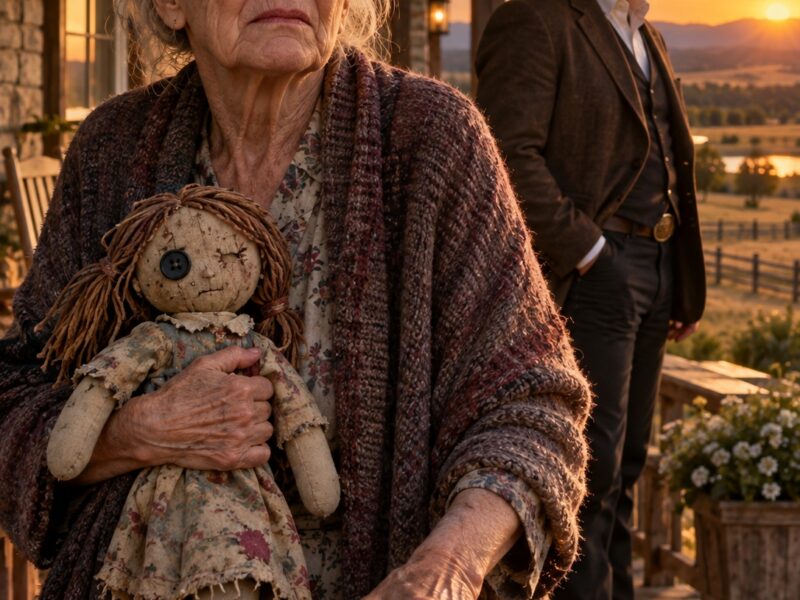
The Widow I Left Outside My Gate In The Rain Became The Daughter I Left Everything To
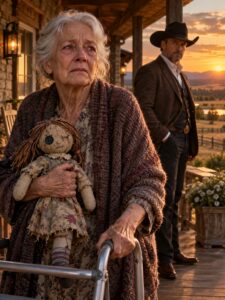
“You’ve got no one to look after you,” the stranger said from the other side of my gate. “And I’ve got nowhere to live with my children.”
For eighteen years, nobody had spoken to Eevee McGregor that way.
Nobody had dared.
At seventy-eight, Eevee had buried a son, a daughter, and a husband. She had survived a broken hip, eight years without leaving her property, and nearly two decades of mornings in which the first human voice she heard was usually her own.
She had become very good at surviving.
So good, in fact, that she had mistaken it for living.
Now a thin widow stood outside her fence with a baby in one arm, a six-year-old girl holding her other hand, a tired gray donkey behind them, and enough nerve to tell Eevee the one truth she had spent eighteen years refusing to say aloud.
She was alone.
Eevee’s fingers tightened around the aluminum frame of her walker.
“Who do you think you are?”
The woman didn’t flinch.
“No one.”
The answer irritated Eevee more than an argument would have.
The sun was sinking behind the ranges, turning the dirt track copper and the distant hills almost black. Eevee had spent so many years sitting on that veranda that she knew every sound the road could make.
Horses had rhythm.
Wagons had purpose.
Men walked as if they expected the earth to remain under their feet.
But the footsteps she had heard that afternoon had sounded different.
Short.
Dragging.
Exhausted.
The footsteps of someone who was no longer walking toward a destination.
Only away from the last place that had rejected her.
The woman introduced herself as Sarah O’Connell.
The girl was Mia.
The baby was Finn.
Sarah’s husband had died three months earlier after falling from a roof while working at Mr. Thorne’s station. The grace period after his death had expired. The shack where Sarah and her children had lived belonged to the station.
So Sarah had been told to leave.
She had packed everything that could fit on the donkey and walked since dawn.
“My children haven’t eaten properly since yesterday,” she said.
Eevee’s jaw hardened.
“That’s not my problem.”
“I know.”
There was no accusation in Sarah’s voice.
That made it worse.
Eevee looked at Mia.
The child’s bare feet were dirty. One boot was damaged beyond usefulness. Her fingernails were black from the road.
But she wasn’t crying.
Eevee knew something about children.
Children cried when they still believed crying might summon someone.
Children who had stopped believing that became very quiet.
“Go to town,” Eevee said. “There’s a church.”
“I came through town.”
“Then ask the priest.”
“I did.”
“And?”
“He gave us two slices of bread and told me God would provide.”
Sarah paused.
“God provided two slices of bread.”
Something almost moved in Eevee’s face.
Almost.
It might have been the ghost of a laugh.
She killed it.
“I’m not opening the gate.”
Sarah looked down at Mia.
The child looked back at her mother with the terrible faith children place in adults—the faith that their mother must know what comes next even when she has no idea.
“Then we’ll sleep here,” Sarah said. “Against the fence. We’ll leave at first light.”
“Do whatever you want.”
Eevee turned.
It took her almost a minute to cross the few yards between the veranda and her front door.
Walker.
Step.
Pain.
Walker.
Step.
Pain.
Behind her, she knew Sarah was watching.
For the first time in years, Eevee felt ashamed of how long it took her to move.
She entered the house, closed the door, slid the bolt into place, and stood in the dark kitchen listening to her breathing.
Outside, rope scraped against wood.
Sarah was unloading the donkey.
Eevee told herself she didn’t care.
That lie lasted until three in the morning.
The rain began softly.
Not a storm.
Something worse.
Cold, patient rain that worked through cloth, skin, and bone.
Eevee lay awake listening to it tap against the corrugated roof.
There’s a little girl outside.
She rolled toward the wall.
Not my problem.
There’s a baby outside.
She pulled the blanket higher.
Nobody opened a door for me.
That was true.
When Lachlan drowned at seventeen, neighbors had come for two weeks with food, prayers, and faces arranged into sympathy.
Then they stopped.
When Bonnie died of fever at twenty-four, fewer people came.
When Jack died eighteen years ago, almost no one came at all.
One neighbor helped with the coffin.
The priest rushed through the burial.
By four that afternoon, Eevee was back in the house alone.
She had been alone ever since.
Nobody had opened a door for her.
So why should she open one now?
Eevee stared into the darkness.
Then another voice answered from somewhere inside her.
Exactly.
For that reason.
She sat up.
Her hip protested immediately.
“Damn you,” she whispered, though she wasn’t sure whether she meant Sarah, the rain, God, or herself.
It took four minutes to reach the front door.
Four humiliating minutes.
She pulled the bolt.
Cold rain struck her face.
“Woman!”
Nothing.
“Woman!”
Movement appeared beside the fence.
Sarah rose from behind the mattress she had propped sideways to shield the children.
“Ma’am?”
Eevee could barely see her.
“Push the gate!”
Silence.
Then the gate creaked.
That was when Eevee understood something that would stay with her until she died.
The gate had never been locked.
Sarah could have entered at any moment.
She could have taken shelter in the shed.
She could have stolen food.
She could have pushed past a seventy-eight-year-old woman with a broken hip.
Instead, she had sat outside in the mud with her children because Eevee had told her no.
Sarah stepped onto the veranda soaked through, lips nearly purple.
The baby was dry.
Sarah was not.
“You kept him covered?”
“My shawl and the mattress.”
“And you?”
Sarah didn’t answer.
“Get inside.”
“I’ll wet your floor.”
Eevee stared at her.
“Mrs. O’Connell, I am seventy-eight years old, I have a broken hip and a devil of a temper. Get into my kitchen before I change my mind.”
That was how Sarah O’Connell entered Eevee McGregor’s house.
Not as family.
Not even as a friend.
As a wet stranger who had been told no twice.
The kitchen smelled of old timber, tea, and years without company.
Four chairs surrounded the table.
Four.
Always four.
For eighteen years, only one had been used.
Sarah lit the stove because Eevee could no longer bend far enough.
Mia stood near the fire, watching everything.
The table.
The pantry.
The four chairs.
The locked door at the back of the house.
Finally she looked at Eevee.
“How old are you?” Eevee asked.
“Six.”
“Do you know how to say more than two words at once?”
Mia considered this.
“Yes.”
“Then why don’t you?”
“Not with you yet.”
A sound escaped Eevee.
Dry.
Rusty.
Almost frightening.
She realized she had laughed.
Sarah looked startled.
Eevee looked even more startled.
She pointed toward the pantry.
“There’s damper in the blue cloth.”
Sarah immediately shook her head.
“You’ve already given us shelter.”
“I wasn’t asking permission.”
“We didn’t come to take from you.”
That strange anger returned to Eevee.
“Woman, you walked all day with two children and a donkey. You stood at my gate and had enough courage to tell me nobody looks after me. Now you’re frightened of a piece of bread?”
Sarah’s face changed.
“What I said at the gate, I said for them.”
She looked toward her children.
“For myself, I would have died on that road before begging. But for them, I knock on doors. For them, I swallow my pride. For them, I say things I shouldn’t say.”
Eevee became very still.
Forty-one years disappeared.
She remembered herself at another gate, asking for money after Lachlan had been buried, Bonnie was sick, and Jack had no work.
She remembered being refused.
She remembered saying thank you.
She remembered walking far enough away that nobody could hear her cry.
Eevee pushed herself upright.
She crossed to the pantry, each strike of the walker sounding through the kitchen.
Tack.
Tack.
Tack.
She took out bread, dry cheese, and what remained of a stew.
Then she put them on the table.
“Sit.”
Sarah hesitated.
“Sit before I throw it at you.”
They sat.
Mia ate too quickly at first.
Then slowly.
That was worse.
Children who had known hunger learned to make the last bite last.
Sarah ate half a piece of bread and stopped.
“I’m full.”
“You’re lying.”
“I’m used to it.”
Eevee put her cup down.
“Three people I loved died from this house,” she said. “My son. My daughter. My husband.”
Sarah said nothing.
“And I was left behind, which is sometimes the worst way to die.”
The fire cracked softly.
“Do you know what eighteen years taught me?”
Sarah shook her head.
“That enduring isn’t a virtue. Enduring is what you do when you have no choice.”
She pushed the plate toward Sarah.
“You still have a choice.”
Sarah ate.
At dawn, Eevee woke in her rocking chair.
Someone had put a blanket over her.
The kitchen had been swept.
The stove was cleaned.
Fresh water sat on the table.
Tea was waiting.
Still warm.
Then Eevee looked outside.
Sarah was loading the donkey.
They were leaving.
Exactly as promised.
Something cold opened inside Eevee’s stomach.
Fear.
She grabbed the walker.
By the time she reached the veranda, Sarah had tied the final bundle.
“Hey.”
Sarah turned.
Eevee opened her mouth.
Nothing came.
For eighteen years she had needed nobody.
Or at least she had trained herself to say that.
Now she discovered she had forgotten how to ask someone to stay.
“The well,” she finally said.
Sarah waited.
“It’s thirty paces from the house.”
“Yes.”
“It takes me twenty minutes.”
Sarah said nothing.
“The wood is in the shed. I haven’t been able to stack it properly in two years. The yard collapsed in the floods. There’s a cow somewhere in the back paddock that I can’t milk anymore.”
Still Sarah waited.
Eevee looked down.
“Three weeks ago I fell.”
Sarah’s face changed.
“I was on the ground for four hours.”
The words became harder.
“Not one person passed on that road.”
Sarah slowly untied the donkey.
“Ma’am—”
“Eevee.”
“What?”
“My name is Eevee. Stop calling me ma’am.”
Sarah crossed the yard.
She placed one hand over the old woman’s hand where it gripped the aluminum walker.
She did not promise forever.
She did not say thank you.
She simply stayed.
And that frightened Eevee more than watching her leave.
Because people who leave cannot be lost twice.
People who stay can.
Sarah attacked the property as if she had a personal argument with neglect.
She repaired the fallen yard with a crowbar, rope, nails, and stubbornness.
“Where do you get that strength?” Eevee asked.
“Spite.”
Four days later, the yard stood crooked but solid.
Sarah found the wandering cow.
That afternoon, a jug of warm milk appeared on Eevee’s kitchen table.
Eevee stared at it.
“I haven’t had fresh milk in two years.”
“Then drink.”
She did.
Slowly.
With both hands around the jug.
Her eyes became wet.
Sarah pretended not to notice.
The shed became Sarah’s home.
She swept out years of dust, patched leaks, removed rat nests, and laid the mattress in the warmest corner.
Every night, Eevee could see the small candle burning through the cracks.
Every night, she watched Sarah’s shadow move around the children.
And every night, when the candle went dark, Eevee remained at her window a little longer.
Then something changed.
She stopped checking the bolt twice.
She slept through the night.
There were people on her land.
The weeks found a rhythm.
Sarah rose before dawn.
Water.
Cow.
Stove.
Tea.
Bread.
By the time Eevee appeared, breakfast was waiting.
“The tea is weak.”
“I’ll make it stronger tomorrow.”
“The bread is burned.”
“I’ll turn it sooner.”
“Stop carrying Finn while you work. You’ll drop him.”
Sarah looked at her.
“Are you worried about Finn or me?”
“The floor. Flagstone is expensive.”
Sarah laughed.
Eevee pretended to be annoyed.
But Mia remained distant.
If Eevee entered the kitchen, Mia found a reason to leave.
If Eevee sat on the veranda, Mia played somewhere else.
On the eighth day, Eevee stopped her.
“Mia.”
The girl froze.
“Come here.”
Three steps.
No closer.
“Why are you afraid of me?”
“I’m not.”
“Then why do you keep running away?”
Mia clutched an egg in one hand.
For a long moment, she said nothing.
Then:
“Because you’re going to die.”
The veranda became silent.
“What?”
“My dad died.”
Mia’s voice was almost emotionless.
“My nan died too. And you’re older than my nan. And you walk with that.”
She pointed at the walker.
“So I know what happens.”
Eevee could not speak.
Mia’s chin trembled.
“I don’t want to love you and then have you die.”
The egg slipped from her fingers.
It broke against the stone.
Mia ran.
Eevee remained in the chair.
And for the first time in eighteen years, she cried.
Not gracefully.
Not quietly enough to preserve dignity.
She cried for Lachlan.
For Bonnie.
For Jack.
For herself.
But most of all, she cried because a six-year-old child had shown her what she had done.
Eevee had believed that dying alone meant she would hurt no one.
She had thought that was mercy.
Now she understood the uglier truth.
To make sure nobody grieved you, you first had to make sure nobody loved you.
That night Sarah found her sitting in darkness.
“Did something happen?”
“Your daughter told me I’m going to die.”
“Oh, God.”
“Don’t punish her.”
“I wasn’t—”
“She’s right.”
Sarah sat beside her.
“She lost her father,” Eevee continued. “She lost her grandmother. Now she thinks loving an old woman is just volunteering for another funeral.”
Sarah covered her face.
“She hasn’t cried since Jack died.”
Eevee turned.
Sarah meant her husband.
“Mia left her doll behind when we were forced out. Her father made it. A rag doll. One button eye. She didn’t say a word.”
“Why?”
“Because she knew I couldn’t carry one more thing.”
Eevee rocked slowly.
Then stopped.
“Go to the pantry.”
Sarah looked up.
“Under the tablecloths. There’s a key.”
Sarah found it.
Old iron.
Blackened with age.
Eevee held it in her palm.
“Eighteen years.”
She looked toward the locked door.
“I want to open it.”
Sarah started to rise.
“I’ll do it.”
“No.”
Eevee took her walker.
“I said I want to open it.”
She swallowed.
“But I want you behind me.”
The key resisted.
So did Eevee’s hand.
Sarah placed her hand over Eevee’s, and together they turned it.
The door opened.
Dust.
Old linen.
Wood.
Two brass beds.
A white dress with blue flowers.
A box of wooden toys.
Eevee picked up a carved rocking horse.
“Jack made this for Lachlan.”
Her thumb moved over its dusty back.
“He was nine.”
She smiled faintly.
“Then he grew older and became embarrassed by it.”
Her smile vanished.
“He drowned at seventeen.”
She looked at the dress.
“That was Bonnie’s.”
Silence.
“She died at twenty-four.”
Eevee’s fingers tightened around the toy.
“After Jack died, I shut the door.”
Sarah stood behind her without speaking.
“People think we close rooms because of grief,” Eevee whispered. “That isn’t true.”
She looked around.
“We close them because we’re afraid that if we open them, we’ll finally have to admit the people we love aren’t inside.”
Her knees shook.
Sarah touched her shoulder.
This time, Eevee allowed it.
“They’re in the cemetery,” Eevee said. “Three crosses. I haven’t visited in eight years.”
“I’ll take you.”
“How?”
“On the donkey.”
Eevee almost laughed.
“I’m heavy.”
Sarah squeezed her shoulder.
“I carried my husband from the roof after he fell. Eighty kilos and still alive enough to complain.”
Something inside Eevee cracked.
Not broke.
Cracked.
There was a difference.
Five days later, Eevee asked Sarah to buy white calico, thread, and one large black button.
For nearly a week she disappeared into her bedroom after lunch.
On Sunday, she called Mia.
“Child.”
Three cautious steps.
Eevee placed something on the table.
It was possibly the ugliest doll ever made.
Crooked stitches.
One arm longer than the other.
Brown yarn hair.
One large black button for an eye.
Mia stared.
“It had two eyes,” Eevee said defensively. “But your mother said the other one had one, and I didn’t want to get it wrong.”
Mia didn’t move.
“It’s badly made. My fingers don’t work properly. If you don’t like it—”
Eevee reached for the doll.
Mia threw herself forward.
Not at the doll.
At Eevee.
The child who had refused to love another person climbed into the old woman’s lap and screamed.
Years of grief came out of a six-year-old body.
Eevee froze.
Then her arms slowly remembered something they had once known.
She held the girl.
From the doorway, Sarah covered her mouth and walked outside before either of them could see her cry.
That October, they went to the cemetery.
Eevee rode the donkey like an irritated queen.
People stared.
One woman shouted that old Eevee McGregor was still alive.
“Still am,” Eevee called back.
At the cemetery, she refused Sarah’s arm for the final twenty paces.
It took eight minutes.
Nobody rushed her.
Lachlan McGregor.
Seventeen.
Bonnie McGregor.
Twenty-four.
Jack McGregor.
Sixty-three.
The grass had almost swallowed their crosses.
Eevee stood before them.
Then she said:
“Jack, I brought visitors.”
Her voice broke.
Sarah knelt and began pulling weeds.
Mia joined her.
Eevee watched a widow and a child clean the graves of people they had never met.
And a thought came to her.
If she had died a year earlier, nobody would have cleaned hers.
On the way home, she asked Sarah:
“How long are you staying?”
“As long as you let me.”
“That isn’t what I asked.”
Sarah looked back.
“I have nowhere else to go. If you tell me to leave tomorrow, I’ll leave. But I won’t go by choice.”
Eevee nodded.
“Good.”
That night, for the first time in eighteen years, all four chairs around the kitchen table were used.
Then Marcus Thorne came riding down the track.
Sarah recognized him before he reached the gate.
Her body remembered him before her mind had time to.
“Mia. Take Finn inside.”
Marcus was the man whose station Sarah had been forced to leave after her husband died.
He had given her three months.
Then nothing.
He came to see Eevee.
Or, more precisely, to see Eevee’s twenty acres.
He offered to buy the property and let Eevee remain in the house until her death.
Eevee listened.
Then asked:
“So you get the land now and the house when I die?”
“That sounds uglier when you say it like that.”
“Most ugly things do.”
Marcus smiled thinly.
“Who else will you leave it to?”
That question stayed in the kitchen.
He mentioned Brendan McGregor, Jack’s nephew.
A drunk.
An absent relative.
The nearest blood Eevee had left.
Then Eevee asked Marcus about Sarah.
“You threw her out after her husband died working for you.”
“I gave her three months.”
“She had two children.”
“The law required less.”
And suddenly Eevee remembered something.
Decades earlier, one of Jack’s farmhands had died.
Jack had given the widow two months and a sack of corn.
Eevee had said nothing.
For forty years, she had never thought of that woman again.
Now Sarah stood beside her stove.
The past had not returned to punish Eevee.
It had returned to ask whether she understood it yet.
“Get out,” Eevee said.
Marcus blinked.
“I beg your pardon?”
“Take your horse, your hat, and your offer. Get off my property.”
At the door, Marcus turned.
“One day you’ll fall, Mrs. McGregor.”
His eyes moved toward Sarah.
“And that woman will decide whether to help you up or take what she can.”
After he left, Eevee’s legs gave way.
Sarah caught her.
She knelt in front of the rocking chair and took Eevee’s hands.
“Listen to me.”
Eevee tried to look away.
“No. Look at me.”
She did.
“I came here because I needed shelter. That’s true.”
Sarah’s eyes filled.
“But I’m not here for a roof anymore.”
Eevee’s mouth trembled.
“I’m here because you made my daughter a one-eyed doll with hands that hurt. I’m here because she sleeps holding it every night. I’m here because you are the closest thing to a mother I have had since mine died.”
Eevee began to cry.
“If you fall, I’ll pick you up. If I’m not strong enough, I’ll stay on the ground beside you until I am.”
Sarah tightened her grip.
“And if Marcus Thorne offers me money, he can keep it.”
A broken laugh escaped Eevee.
“What if he offers you his whole station?”
“I’ll tell him where he can put that too.”
Eevee pulled her close.
But after Sarah went to bed, Marcus’s question remained.
Who are you going to leave it to?
Eevee thought about Brendan.
Four visits in eighteen years.
One funeral.
One request for money.
Two questions about her health.
She thought about Sarah.
Water every morning.
Tea.
Milk.
Clean graves.
A little girl with a one-eyed doll.
And Eevee realized that if she died tomorrow, Sarah would be homeless again.
So the next morning she said:
“Saddle the donkey.”
“Cemetery?”
“Solicitor.”
Mr. Davies nearly dropped his spectacles when Eevee entered his office.
“I thought you were dead.”
“Retired. Similar condition.”
She sat.
“I need a will.”
Sarah started to sit beside her.
Eevee pointed at the door.
“Out.”
Sarah went pale.
“What?”
“You heard me. Take the children and wait outside.”
Sarah obeyed.
For one hour and forty minutes, she sat in the street believing she might have lost the only home she had.
Inside, Eevee dictated her will.
The house.
The twenty acres.
The well.
The yard.
The livestock.
Even the rocking chair.
Everything to Sarah O’Connell, Mia, and Finn.
Mr. Davies lowered his pen.
“She isn’t related to you.”
“Correct.”
“You have known her three months.”
“Correct.”
“You understand how this will appear?”
“Yes.”
“A vulnerable elderly woman. A younger stranger entering her home. Then an inheritance.”
Eevee smiled.
“She doesn’t know.”
“What?”
“She has no idea what I’m doing.”
Eevee leaned forward.
“The night she arrived, my gate was open. She could have pushed it. She didn’t.”
Her voice sharpened.
“She slept in the mud with her children waiting for me to invite her in.”
Mr. Davies said nothing.
“That woman has never asked me for money, land, or promises. She brings me water. She takes me to my dead. Her daughter lets me hold her.”
Eevee tapped the desk.
“I am not paying her.”
The solicitor looked at her.
“Then what are you doing?”
“Correcting the paperwork.”
Eevee’s eyes filled.
“Family inherits.”
Mr. Davies warned her Brendan could challenge the will.
So Eevee obtained a medical certificate proving she was of sound mind.
And she wrote a letter.
In her own shaking hand.
She stayed awake until three in the morning fighting every sentence.
Six weeks later, Brendan arrived.
He called Sarah a squatter.
Then he sat at Eevee’s table, drank her tea, and suggested she transfer the property to him before someone took advantage of her.
Eevee listened politely.
Then asked:
“How many times have you visited me since Jack died?”
Brendan shifted.
“Four.”
He said nothing.
“You came to Jack’s funeral and left early. You came once for money. Twice to ask how my health was.”
She looked directly at him.
“Not once with milk.”
“Aunt—”
“Not once with wood.”
“I didn’t know you needed—”
“That is the point.”
Her voice became very quiet.
“To know, you have to come.”
Brendan’s face reddened.
“That woman is brainwashing you.”
Eevee looked toward Sarah.
“She washes my back.”
Brendan stared.
“Do you know what it is like to be seventy-eight and unable to wash your own back?”
He said nothing.
“It is humiliating.”
Eevee swallowed.
“And strangely beautiful.”
She moved closer.
“The person waiting for my property isn’t Sarah.”
Brendan’s face changed.
“It’s you.”
He stormed out.
That winter he returned three times.
The third time, drunk, he came at eleven at night and tried to force the door.
Sarah stood in the yard with the crowbar.
Then Eevee appeared in the doorway wearing her nightdress, white hair loose around her shoulders, kerosene lamp in one hand.
Brendan collapsed.
“I have nothing.”
He cried.
“No wife. No work. No land.”
Then:
“You have no one, Aunt.”
Eevee’s face softened.
“Do you know my children’s names?”
Brendan stared.
“Lachlan and Bonnie.”
She said the names gently.
“You didn’t attend Bonnie’s funeral.”
He lowered his head.
“I don’t hate you.”
That was somehow worse.
“But I won’t leave my house to someone who didn’t know the names of my dead.”
Then she told Sarah to make him tea.
“Let him sober up. Don’t let him fall into the creek.”
At dawn, Brendan left.
In January, Eevee began to fade.
Her heart was failing.
The doctor said six months.
Perhaps two years.
No recovery.
He also signed the certificate Eevee had requested.
A document stating that she possessed full mental capacity.
Sarah finally understood why.
“So nobody can say I tricked you.”
Eevee looked at her.
“That took you long enough.”
Sarah wanted to know what was in the sealed envelope.
Eevee refused.
“Things I can’t say to your face.”
“I can’t read.”
Eevee became quiet.
“Then I’ll find another way.”
Spring came.
Sarah cleared four acres.
She planted corn and beans.
Bought chickens.
Saved money from eggs and milk.
Bought another cow.
Eevee watched the property return to life while her own body slowly surrendered.
Mia turned seven.
Eevee baked her a cake.
It was burned outside and raw inside.
Mia ate two slices.
That night she asked Sarah:
“Old Eevee is my nan, isn’t she?”
“Not by blood.”
“Then by what?”
Sarah tucked the one-eyed doll beneath her arm.
“By what matters.”
In June, Eevee’s legs stopped working.
She tried to stand four times.
On the fourth attempt, she fell to her knees beside the bed.
For a long time she remained there.
Then Eevee McGregor said the sentence she had spent seventy-eight years avoiding.
“Help me.”
Sarah lifted her.
Eevee wept.
“I’m nothing now.”
Sarah held her face.
“Do you remember the night I came?”
Eevee looked away.
“You left us outside.”
“I remember.”
“And when it rained, you got up.”
Sarah squeezed her hands.
“You were hurting. It took you four minutes to reach the door. But you got up.”
She leaned closer.
“Anyone can rise when nothing hurts. You rose when it hurt.”
Eevee closed her eyes.
“You are the person who opened the door for me.”
“I nearly didn’t.”
“But you did.”
From then on, Sarah carried Eevee from bed to chair.
Mia combed her hair.
Finn climbed onto her lap and pulled her white braid.
Sometimes he called her “Ma.”
Eevee never corrected him.
Then Brendan challenged the will.
The town began whispering that Eevee was senile.
Eevee ordered Sarah to find a cart.
“Where are we going?”
“The courthouse.”
She wore her black shawl.
Mia put a flower in her braid.
Sarah carried her into town.
The magistrate came outside.
Eevee refused to enter.
“No. We do this here.”
People gathered.
And for seven minutes, Eevee spoke.
Her full name.
Her marriage.
Lachlan.
Bonnie.
Jack.
Eighteen years alone.
Four hours on the ground after falling.
The nephew who lived close enough to visit but didn’t.
Then Sarah.
The widow who slept outside an open gate because she had been told not to enter.
“I didn’t give my land to a stranger,” Eevee said.
She looked around the square.
“I left it to my family.”
Brendan stood across the street.
Hat in his hands.
He left without approaching.
On the ride home, Eevee watched the orange sky.
“I said their names today.”
“Whose?”
“My children.”
She whispered them.
“Lachlan.”
Then:
“Bonnie.”
Then:
“Jack.”
She had spent eighteen years refusing to say them.
Now the names no longer sounded like knives.
They sounded like people.
“I can die now.”
Sarah gripped her hand.
“Don’t.”
“I’m not saying it sadly.”
Eevee looked at her.
“I’m saying it because I finally don’t have to be afraid of it.”
Eevee died in October.
Wednesday.
6:20 in the morning.
The night before, she woke at two.
“Get in the bed.”
Sarah obeyed.
They lay facing each other.
“I’m going to tell you about the envelope.”
“Save your strength.”
“I’ve spent enough years saving things.”
Eevee breathed slowly.
“The will leaves everything to you and the children.”
Sarah covered her mouth.
“You suspected.”
“Yes.”
“And never asked.”
“No.”
Eevee smiled.
“That’s why.”
Then she told Sarah about the second page.
The letter.
She had memorized it because she was afraid her hand might fail before the words survived her.
It said that she had buried Lachlan at seventeen.
Bonnie at twenty-four.
Jack after that.
That she had spent eighteen years in a rocking chair.
That nobody brought her food.
Nobody drew her water.
Nobody came when she fell.
Then one rainy night, a widow appeared with two children and a donkey.
Eevee refused her shelter.
The widow slept outside anyway.
And at three in the morning, Eevee opened the door.
“That was the only truly good thing I ever did,” Eevee whispered.
Sarah shook her head through tears.
“Not the only one.”
“Let me finish.”
The letter said Sarah had never asked for money.
Had milked Eevee’s cow.
Cleaned her dead children’s graves.
Washed her body.
Carried her to town.
Let Mia comb her hair.
Let Finn call her Ma.
And then came the sentence Eevee wanted any judge, solicitor, relative, or stranger to understand.
“If someone says I was tricked, they are right.”
Sarah stared at her.
Eevee smiled faintly.
“I was tricked all my life into believing family was blood.”
Her breathing caught.
“Blood didn’t pick me up when I lay in the yard for four hours.”
Sarah began crying.
“Family is who picks you up.”
Eevee’s voice weakened.
“That is why the land goes to you. Not as payment. You cannot pay for this.”
Her fingers found Sarah’s.
“It is inheritance.”
She asked to be buried beside Lachlan, Bonnie, and Jack.
And she asked for only one sentence on her cross.
Not beloved mother.
Not faithful wife.
Not rest in peace.
Just:
Died accompanied.
Sarah pressed her forehead against Eevee’s shoulder.
“My mistake wasn’t living alone,” Eevee whispered. “My mistake was thinking loneliness made me strong.”
She paused.
“It made me hard.”
Sarah held her closer.
“What’s strong can bend. What’s hard breaks.”
Silence settled around them.
“I spent eighteen years refusing to bend.”
Eevee’s eyes closed.
“And then you came.”
“Thank you for opening the gate,” Sarah whispered.
Eevee’s lips barely moved.
“No, my girl.”
She took another shallow breath.
“Thank you for knocking.”
Those were the last words Eevee McGregor ever spoke.
At 6:20, Sarah felt her inhale.
There was no exhale.
Outside, sunrise touched the ranges.
Sarah did not scream.
She braided Eevee’s hair.
Placed a flower in it.
Opened the window.
Then she sat on the floor and cried.
Forty people came to the wake.
A woman who had spent eighteen years believing nobody would notice her death had so many people in her yard that extra chairs had to be brought.
Marcus Thorne came.
He stood before Sarah holding his hat.
“I was wrong.”
Sarah said nothing.
“About you.”
Still nothing.
“And about your husband.”
Marcus lowered his eyes.
“I gave you three months after he died working for me.”
His voice broke.
“I told myself I owed you nothing.”
He looked toward Eevee’s coffin.
“Then I watched you spend a year carrying a woman who owed you nothing.”
Sarah could have hated him.
Perhaps part of her always would.
Instead she stepped aside.
“There’s tea inside.”
Marcus entered.
He knelt beside Eevee.
Later, Brendan arrived sober.
The yard fell silent.
“I didn’t come to fight.”
He looked at Sarah.
“I want to ask you something.”
“What?”
“Her children.”
His hands tightened around his hat.
“What were their names?”
Sarah understood.
“Lachlan.”
Brendan closed his eyes.
“And Bonnie.”
He repeated both names under his breath.
Like prayer.
They buried Eevee beneath the ironbark tree beside her three dead.
Sarah carried one corner of the coffin.
Nobody told her women shouldn’t.
When dirt began falling, Finn stepped toward the grave.
He looked down.
“Ma.”
Sixty people cried.
Three weeks later, Sarah went to Mr. Davies.
“The Sorzel is secured.”
The solicitor removed a sealed envelope.
He read the will.
Then Eevee’s letter.
When he reached the line about family being the person who picks you up, he stopped and removed his spectacles.
Sarah listened.
Then asked him for a copy.
“In large letters.”
“Why?”
“I’m going to hang it in the kitchen.”
She hesitated.
“And learn to read from it.”
Eleven years passed.
The property changed.
Twenty acres cleared.
Corn.
Beans.
Cattle.
A repaired well.
Children who grew.
Doors that remained open.
Mia became a teacher.
Finn grew into a tall young man.
Sarah learned to read at thirty-five.
It took two years.
The first name she learned without help was:
Eevee.
The sentence that took longest was the one she already knew by heart.
Family is who picks you up.
Every Sunday they visited the cemetery.
Four graves beneath the tree.
On the fourth cross were the exact words Eevee requested:
Eevee McGregor, 78 years.
Died accompanied.
Brendan changed too.
Years after trying to take the property, he was found sleeping outside a church.
Sarah gave him work.
Not charity.
Work.
She told him if he came drunk once, he would be fired.
He never did.
He remained sober for nine years.
When he died, Sarah buried him near Eevee.
Finn asked why.
“He tried to take this place from you.”
Sarah looked toward Eevee’s grave.
“Your granny taught me that people need picking up.”
She brushed dirt from her hands.
“She never said only good people qualify.”
Years later, Finn asked what Eevee had really been like.
Sarah laughed.
“She was terrible.”
Finn smiled.
“She left you outside in the rain?”
“With you in my arms.”
“And you still loved her?”
Sarah looked through the kitchen window.
The gate stood beyond the yard.
Still simple.
Still unlocked.
“We loved her because she got up.”
Finn waited.
Sarah tapped the table the way Eevee once had.
“Anybody can open a door when getting up costs nothing.”
She looked at her son.
“The difficult thing is opening it when every step hurts.”
One Sunday afternoon, after the cemetery, Sarah returned alone to the veranda.
The rocking chair was there.
She had maintained it for eleven years.
Cleaned it.
Oiled it.
Kept it facing the road.
But she had never sat in it.
That afternoon, she did.
The wood creaked.
She rocked once.
And suddenly Sarah saw what Eevee had seen for eighteen years.
The fence.
The gate.
The dirt road stretching toward the valley.
Empty.
Long.
Endless.
For the first time, Sarah understood the full weight of eighteen years spent watching that road.
Waiting without admitting you were waiting.
Hoping nobody came because hoping someone would come hurt too much.
And then, one evening, someone had finally appeared.
A woman with no money.
No property.
No protection.
A donkey.
Two hungry children.
And one sentence.
You’ve got no one to look after you, and I’ve got nowhere to live with my children.
Sarah rocked again.
The sky turned the same burnt orange it had been the night she arrived.
“We saved each other, Eevee.”
Nobody answered.
But for once, silence did not feel empty.
Years later, when Mia became a teacher, people noticed something peculiar.
Whenever a new child appeared outside her classroom—a frightened child, a poor child, a child arriving halfway through the school year with dirty clothes and eyes that had already seen too much—Mia never called to them from her desk.
She stood.
Walked across the room.
Opened the classroom door herself.
Even when it was already open.
Then she stepped outside and said:
“Come in.”
And if the child hesitated, Mia always added the same thing.
“There’s a place for you here.”
Most people never understood why she did it.
Finn did.
Sarah did.
And beneath the ironbark tree, if stone could remember, perhaps Eevee McGregor did too.
Because an open gate is not always an invitation.
Sometimes someone has to cross the distance.
Sometimes someone has to endure the pain of standing.
Sometimes someone has to come outside and say the words another human being has been waiting their entire life to hear.
Come in.
There’s a place for you here.
And somewhere beneath a sandstone cross slowly gathering moss, an old woman who had once believed dying alone was the safest way to leave the world had received the only ending she ever truly wanted.
Not rich.
Not forgiven for everything.
Not victorious.
Simply—
accompanied.









