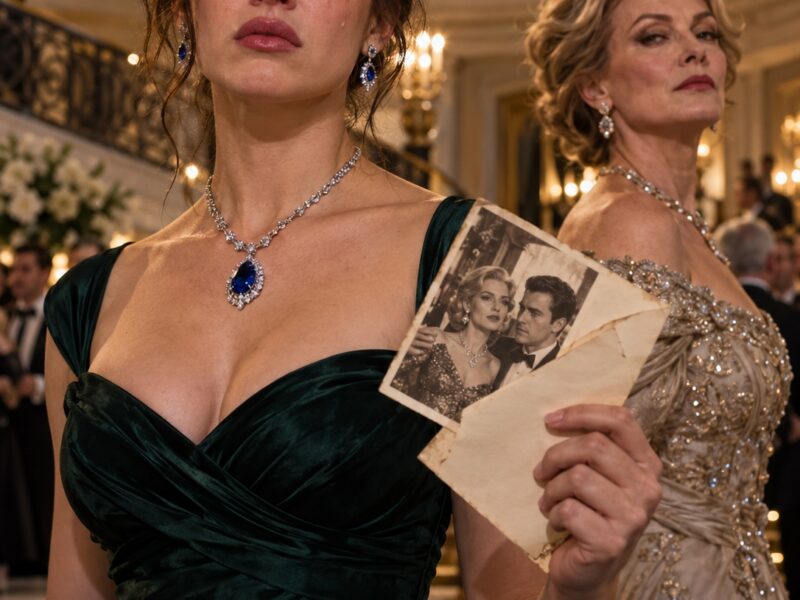
THEY LOCKED HER IN AN ASYLUM FOR TEN YEARS AND SENT HER TO MARRY A BILLIONAIRE WHOSE FOUR WIVES NEVER LASTED A MONTH—THEN HIS PARALYZED SON STOOD UP, AND A SECRET PHOTO EXPOSED WHY HER FAMILY HAD WANTED HER GONE ALL ALONG
The first thing my father said to me after my mother’s funeral was that I should have been buried with her.
I was sixteen.
Rain hammered the black umbrellas gathered outside St. Matthew’s Cemetery in upstate New York, turning the earth around my mother’s grave into thick brown mud. My shoes were soaked. My black dress clung to my knees. I still had dirt beneath my fingernails because, ten minutes earlier, I had dropped to the ground and tried to claw at the soil covering her coffin.
I knew it was irrational.
I knew she was dead.
But grief doesn’t care what you know.
“Mom,” I whispered. “Please.”
Two men in white uniforms took my arms.
I twisted around.
“Dad?”
Richard Gray stood beneath a large umbrella beside his new wife, Margaret.
Not his girlfriend.
Not his mistress.
His wife.
My mother had been dead for four days.
Margaret wore pearls to the funeral.
Her daughter Vivian stood beside her, sixteen years old like me, watching with the fascinated expression of someone witnessing an accident from the safe side of the road.
“Dad, what are they doing?”
Richard would not look at me.
Margaret did.
She smiled.
It was small enough that nobody else noticed.
I did.
“You need help, Eliza,” my father said.
“I need my mother.”
“You’ve become unstable.”
“My mother died four days ago!”
One of the men tightened his grip.
I screamed.
People turned.
That was when Margaret leaned close enough for only me to hear.
“Poor little Eliza.”
Her perfume smelled like gardenias.
I would hate that smell for the next ten years.
“Go get yourself treated,” she whispered. “Maybe you’ll come back normal.”
Then her eyes dropped toward my mother’s grave.
“Or maybe you’ll join her.”
I lunged.
That was all they needed.
My father signed the papers before sunset.
By midnight, I was behind locked doors.
And by morning, the Gray family had already begun telling people that grief had driven me insane.
They were wrong about one thing.
I didn’t die there.
Ten years later, when the steel gates opened and I walked out carrying one suitcase, three certificates hidden beneath its lining, and enough secrets to destroy the family that had put me there, I understood something I had been too young to understand at sixteen.
Some prisons bury you.
Others teach you exactly how to survive the people waiting outside.
My name was Eliza Gray.
And I was finally going home.
Devil’s Island Psychiatric Rehabilitation Center wasn’t actually on an island.
The name came from an old sanitarium that had once occupied the rocky peninsula overlooking Lake Champlain. By the time I arrived, the facility had been renovated, expanded and given a respectable clinical name.
The locals still called it Devil’s Island.
At sixteen, I thought that sounded appropriate.
During my first year, I fought everyone.
Doctors.
Nurses.
Orderlies.
My father.
Especially my father.
Every letter I wrote came back unopened.
Every request for an independent psychiatric evaluation disappeared.
Every time I insisted I was not mentally ill, someone wrote the word agitated in a file.
Eventually, I learned the first rule of institutions.
The loudest person rarely controls the room.
So I became quiet.
And I watched.
That was how I met Dr. Miriam Hale.
She had been a trauma surgeon before arthritis damaged her hands. After leaving surgery, she worked three days a week at the facility, mostly treating injuries among long-term patients.
She was sixty-three when she found me reading one of her medical journals.
“You understand any of that?” she asked.
I closed it.
“No.”
“Liar.”
That was the beginning.
There was also Samuel Ortega, the head of the kitchen, a former chef who had worked in Manhattan hotels before alcohol destroyed his career. He taught cooking classes as occupational therapy.
I mastered everything he showed me.
Knife work.
Stocks.
Sauces.
Bread.
The difference between feeding someone and making them want to eat.
“There are meals people eat because they’re hungry,” Samuel once told me, “and meals people eat because for ten minutes, the food makes them remember life might still be worth staying for.”
I never forgot that.
Dr. Hale taught me anatomy.
Samuel taught me food.
A retired physical therapist named Joseph Bell taught me rehabilitation techniques because he was bored and I asked too many questions.
And a Korean-American acupuncturist named Dr. Evelyn Park, who volunteered twice a month, taught me something even more valuable.
Precision.
“Confidence without discipline,” she told me, “is just another kind of stupidity.”
I carried those words with me.
For ten years, the Gray family believed they had hidden me away.
What they had actually done was give me nothing except time.
So I used every hour.
I studied.
I trained.
I learned.
And I waited.
Then, three months before my twenty-sixth birthday, an independent review of my commitment finally concluded what I had been saying since I was sixteen.
There had never been sufficient medical evidence to justify keeping me there.
My release came quietly.
No apology.
No newspaper.
No courtroom.
Just a folder, a signature and an administrator telling me I was free to leave.
Dr. Hale hugged me at the gate.
Samuel handed me an old leather recipe book.
Dr. Park touched two fingers to my wrist.
“Your pulse is racing.”
“I’m scared.”
“Good.”
I looked at her.
She smiled.
“Only fools feel nothing when they walk toward a war.”
The gates opened.
I stepped through.
A black sedan waited outside.
And standing beside it was my father.
Ten years older.
Hair grayer.
Face heavier.
But the same eyes.
Richard Gray looked at me for several seconds.
“Eliza.”
I stopped.
He opened his arms as though we were about to have some beautiful father-daughter reunion.
I looked at them.
Then at him.
“Don’t.”
His arms fell.
Margaret emerged from the other side of the car.
Vivian followed.
My stepsister had grown into exactly the woman I expected: elegant, expensive, and so accustomed to being admired that even her smile looked professionally maintained.
Margaret’s gardenia perfume reached me before she did.
For one second, I was sixteen again.
Then I remembered Dr. Hale’s voice.
The body remembers fear before the mind understands it.
So I breathed.
Margaret smiled.
“Eliza. Look at you.”
“You look disappointed.”
Her smile tightened.
“Why would I be?”
“Because I’m alive.”
Vivian gave a small laugh.
“Oh, she’s funny now.”
Richard cleared his throat.
“We didn’t come here to fight.”
“No?”
“No.”
“Then why did you come?”
My father exchanged a look with Margaret.
There it was.
Ten years had changed many things.
Not that.
They still communicated before lying.
Richard opened the rear door.
“Get in. We need to discuss your future.”
I almost laughed.
“My future?”
“Yes.”
“You took ten years of it.”
His jaw hardened.
“Eliza.”
I looked toward the road beyond him.
I could have walked away.
Maybe I should have.
But there was one reason I got into that car.
My mother.
More specifically, what she had left me.
Eleanor Gray came from old money. Not billionaire money, but enough that her estate included investments, property and a trust intended for me.
When she died, I was sixteen.
When I was committed, Richard became temporary custodian of the trust.
Temporary had somehow become ten years.
I sat across from them in the Gray mansion forty-eight hours later and realized they had redecorated everything.
My mother’s paintings were gone.
Her piano was gone.
Her photographs were gone.
Margaret had erased her so thoroughly that the house felt like a crime scene after professional cleaners had finished.
Richard poured himself bourbon.
“We have an arrangement for you.”
I leaned back.
“What arrangement?”
Vivian was examining her nails.
“You’re getting married.”
I looked at her.
Then I laughed.
Nobody else did.
Margaret folded her hands.
“To Cassius Blackwood.”
That stopped me.
Everyone in New York knew the name.
Cassius Blackwood.
Forty-one.
Widower.
Founder and CEO of Blackwood Capital.
Real estate. Logistics. Technology. Private equity.
Depending on which magazine you believed, his personal fortune was somewhere between six and nine billion dollars.
Depending on which gossip site you believed, he was also cursed.
His first wife—the mother of his sons—had died years earlier.
Afterward there had reportedly been four women connected to him through short-lived private marriages or marriage arrangements.
None lasted a month.
One disappeared from public life.
One reportedly suffered a breakdown.
Two marriages ended so abruptly that gossip columns still argued about what happened.
I looked at Vivian.
“Why aren’t you marrying him?”
Her eyes flicked upward.
There.
Fear.
Just for a second.
Margaret answered instead.
“Circumstances changed.”
“What circumstances?”
“Eliza—”
“He asked for Vivian, didn’t he?”
Silence.
I smiled.
“He did.”
Richard put down his glass.
“This is not a negotiation.”
“It became one the second you asked me.”
“We didn’t ask.”
I stood.
“Then Vivian can marry him.”
Vivian’s face drained.
Margaret shot to her feet.
“Sit down.”
“No.”
“Eliza.”
I walked toward the door.
“Wait.”
My father said it quietly.
I stopped.
“The trust.”
I turned.
He knew exactly which weapon to use.
“What about it?”
“You want your mother’s inheritance?”
“Every cent.”
“It remains under the estate structure until certain legal conditions are satisfied.”
“Conditions you’ve spent ten years manipulating.”
His face changed.
Only slightly.
But enough.
I knew then that I had been right to come.
I walked back to the table.
“Here are my conditions.”
Vivian laughed.
“You don’t get conditions.”
I ignored her.
“One: everything my mother left me is transferred back under my control.”
Richard’s fingers tightened around his glass.
“Two: after this arrangement, I am finished with the Gray family. No obligations. No public appearances. No pretending we love each other.”
Margaret stared.
“You ungrateful—”
“And three.”
My father’s eyes narrowed.
“You said two.”
“I changed my mind.”
I leaned toward him.
“I want every document connected to my mother’s estate.”
Silence.
That one frightened him.
Interesting.
Richard recovered quickly.
“The estate transfer happens after you become the recognized lady of Blackwood Manor.”
I studied him.
“Why?”
“Because Cassius’s people insisted the bride arrive with independent assets.”
That sounded plausible.
Too plausible.
“And if I refuse?”
“Then the trust remains tied up in court for years.”
Vivian smiled.
“Maybe another ten.”
I looked at her.
She stopped smiling.
I reached for the contract.
“I’ll marry him.”
Margaret blinked.
Richard looked relieved.
Vivian looked delighted.
They thought they had won.
They had no idea I had stopped playing their game years ago.
Blackwood Manor stood above the Hudson River like something built to outlive governments.
Gray stone.
Tall windows.
Iron gates.
Acres of winter-bare trees surrounding a house too large to feel welcoming.
The moment my car stopped beneath the entrance portico, a man in a charcoal suit opened the door.
“Miss Gray.”
“Eliza.”
He inclined his head.
“Thomas Reed. Mr. Blackwood’s chief of staff.”
“You look like you haven’t slept since 2009.”
His expression did not change.
“I sleep adequately.”
“So that’s a no.”
For the first time, his mouth almost moved.
He led me through the foyer.
Cassius Blackwood was waiting beside a fireplace.
Photographs made him look cold.
They were inaccurate.
Cold suggests absence.
Cassius was not absent.
He was controlled.
There was a difference.
He stood about six-foot-three, dressed in a dark suit without a tie, one hand in his pocket. His hair was black with the first traces of gray at the temples.
His gaze moved over me once.
Not flirtatiously.
Assessing.
“Eliza Gray.”
“Cassius Blackwood.”
“You understand why you’re here?”
“My family sold me to you because your original bride got scared.”
Thomas coughed.
Cassius stared at me.
Then, unexpectedly, the corner of his mouth moved.
“My children need stability.”
“So I’ve heard.”
“I don’t need romance.”
“Excellent. Neither do I.”
“I don’t need someone trying to become their mother overnight.”
“Children generally hate that.”
His eyes sharpened.
“You speak from experience?”
“No. Common sense.”
A housekeeper hurried into the room.
“Mr. Blackwood.”
Cassius turned.
“What?”
“Leo hasn’t eaten.”
His expression changed instantly.
Not much.
But enough.
Father replaced businessman.
“How long?”
“Since yesterday morning.”
“Call Dr. Emerson.”
“We did.”
“And?”
“He says there’s no medical obstruction. Leo simply refuses.”
Cassius rubbed his jaw.
“Get another chef.”
“Sir, we’ve changed kitchen teams four times this month.”
I glanced toward the hallway.
“How old is Leo?”
Cassius looked at me.
“Eight.”
“Let me try.”
“No.”
“You haven’t heard what I’m offering.”
“I heard enough.”
“I can make him eat.”
Thomas looked between us.
Cassius’s eyes became almost amused.
“You arrived twelve minutes ago.”
“Thirteen.”
“And you believe you can solve a problem four Michelin-trained chefs couldn’t?”
“No.”
That caught him.
“I believe I can feed an eight-year-old boy.”
“That’s what they believed too.”
I removed my coat.
“Give me one chance.”
Cassius studied me.
“If you fail?”
“I’ll stay out of anything involving your children unless you specifically ask.”
His expression turned serious.
“You’re very confident.”
“Confidence is knowing what you can do.”
“And arrogance?”
“Assuming nobody else can.”
For several seconds, neither of us moved.
Then Cassius nodded toward Thomas.
“Show her the kitchen.”
Leo Blackwood threw a rubber snake at my face six minutes after we met.
I caught it.
He froze.
I examined it.
“Western diamondback.”
His eyes widened.
“That’s not real.”
“I know.”
“How?”
“Real ones have better manners.”
He frowned.
“You’re weird.”
“I’ve been called worse.”
He was hiding inside a wardrobe in his bedroom, though technically he had left the door open two inches so he could observe me.
I sat on the floor outside.
“You’re wife number five.”
“Technically.”
“The others were stupid.”
“That’s unfortunate.”
“One screamed when I put spiders in her shoes.”
“Were they venomous?”
“They were plastic.”
“Then she overreacted.”
Leo opened the wardrobe another inch.
“Number three cried.”
“Maybe she was having a difficult day.”
“She said I was evil.”
I looked toward him.
“Are you?”
He considered this seriously.
“Sometimes.”
“Good.”
The door opened slightly more.
“Good?”
“If you’re an angel, I’ll be an angel.”
“And if I’m evil?”
“I’ll be worse.”
His eyes narrowed.
“You’re lying.”
“No.”
He pushed open the door.
A skinny little boy stared at me with Cassius’s dark eyes and the defensive posture of a child who had learned that adults rarely stayed.
There it was.
Not rebellion.
Fear.
Four women had entered this house after his mother.
Four had disappeared.
He wasn’t testing whether I could tolerate him.
He was testing how quickly I would leave.
“I’m not calling you Mom,” he said.
“Please don’t.”
That surprised him.
“You don’t want me to?”
“We met six minutes ago. That would be weird.”
He stared.
Then smiled despite himself.
Tiny.
But real.
“Come downstairs.”
“I’m not eating.”
“Fine.”
“I mean it.”
“So do I.”
In the kitchen, I made chicken broth from the stock Samuel had taught me, added handmade noodles, ginger, scallions and the smallest amount of sesame oil.
Leo watched from the doorway.
“I said I’m not eating.”
“I heard you.”
I poured one bowl.
Sat down.
And ate it myself.
His face changed.
“That was mine.”
“No, it wasn’t.”
“It’s my house.”
“My soup.”
“My kitchen.”
“Technically your father’s.”
“That means it’s mine.”
I lifted another spoonful.
Leo marched over.
“Give me that.”
“You’re not eating.”
“I changed my mind.”
“That sounds serious.”
He grabbed the bowl.
Five minutes later, it was empty.
The kitchen staff stared.
Thomas stared.
And from the doorway behind them, Cassius stared hardest of all.
Leo wiped his mouth.
“Don’t make a big deal about it.”
Cassius crossed his arms.
“I wouldn’t dream of it.”
Leo pointed at me.
“She tricked me.”
“I witnessed the crime.”
“She’s annoying.”
“So I’ve noticed.”
I stood.
Cassius looked at the empty bowl.
Then at me.
“You did it.”
“I made soup.”
“You made Leo eat.”
“No.”
I lowered my voice.
“Leo made Leo eat.”
Something passed through Cassius’s eyes.
Respect, perhaps.
Or curiosity.
It lasted only a moment.
Then shouting echoed from upstairs.
A crash followed.
Every servant in the kitchen went still.
Cassius was already moving.
“What happened?” I asked.
Thomas’s expression darkened.
“Victor.”
Victor Blackwood was seventeen.
And he hated hope.
I understood why almost immediately.
Two years earlier, a skiing accident had damaged his lower spine and left him with severely impaired movement in both legs. He had undergone surgery, rehabilitation, experimental treatments and months of physical therapy.
Nothing had restored functional walking.
By the time I entered his room, two specialists were standing against the wall while Victor pointed a pistol toward the floor.
“Get out.”
Cassius stopped in the doorway.
“Put the gun down.”
“I said get out.”
“Victor.”
“They’re done.”
One doctor tried to speak.
“Mr. Blackwood, if we can just—”
Victor raised the gun.
“Say one more word.”
The doctor shut his mouth.
Cassius stepped forward.
“Give it to me.”
Victor looked at his father.
Behind the anger was humiliation.
That was worse.
“I’m not doing another treatment.”
“We’ll find another team.”
“No.”
“Victor—”
“Two years!”
His voice broke.
That silenced everyone.
“Two years of people touching me, testing me, promising me things. Two years of Dad paying doctors to tell me maybe.”
His hand shook.
“Maybe next month. Maybe another surgery. Maybe another machine.”
He laughed bitterly.
“Maybe, maybe, maybe.”
I looked at his legs.
Then at the medical equipment.
Then at the reports on a nearby table.
“Maybe they’re treating the wrong problem.”
Everyone turned.
Cassius’s expression hardened immediately.
“Eliza.”
Victor looked me up and down.
“Who the hell are you?”
“Your father’s new wife.”
He laughed.
Actually laughed.
“Another one?”
“Apparently.”
“Get out.”
I picked up one of the reports.
Cassius snatched it from my hand.
“That is confidential.”
“You want your son to walk?”
His face went still.
“Do not play with me.”
“I’m not.”
I looked at Victor.
“I think I can help him.”
The room changed.
The doctors looked offended.
Victor looked murderous.
Cassius looked dangerous.
“You think?”
“I need to examine him and review the complete surgical history.”
One doctor scoffed.
“Who exactly are you?”
“Eliza Gray.”
“I mean your qualifications.”
Before I could answer, Cassius did.
“I had her investigated.”
His gaze remained on me.
“Ten years institutionalized. No conventional medical degree. No completed high-school record before commitment.”
Victor gave a humorless laugh.
“Fantastic.”
Cassius stepped closer.
“You expect me to hand my son to someone who spent ten years in a psychiatric facility?”
There it was.
The word my family had branded onto me.
Crazy.
Lunatic.
Broken.
I had spent ten years learning not to flinch.
“I expect you to ask what I did during those ten years.”
For the first time, he hesitated.
“I studied.”
“With whom?”
“People your investigator apparently didn’t bother asking about.”
One doctor stepped forward.
“This is absurd.”
I looked at him.
“How long have you treated Victor?”
“Twenty-two months.”
“And what have you achieved?”
His face reddened.
“That’s not how spinal rehabilitation—”
“Can he stand?”
Silence.
I looked at Cassius.
“Give me seven days.”
Victor stared at me.
“One week?”
“One week.”
“And if I’m not walking?”
I looked directly at him.
“Then you never have to see me again.”
Cassius spoke quietly.
“That won’t be the consequence.”
I turned.
He came closer.
“If you give my son false hope for entertainment, you will wish you had never entered this house.”
Any sane person would have been frightened.
I was.
But fear had stopped controlling my decisions years ago.
“Seven days,” I repeated.
Victor stared at me for a long time.
Then he put the pistol on the bedside table.
“One week.”
Cassius turned toward him.
“Victor.”
“No.”
The boy’s eyes stayed on mine.
“If she’s lying, I want to know.”
He looked down at his legs.
Then back at me.
“My birthday is next Friday.”
“I know.”
“If I’m not standing by then, you leave.”
“Agreed.”
Victor leaned back.
“And if you give me hope just so you can impress my father…”
His voice went quiet.
“I’ll hate you more than I hate the doctors.”
I nodded.
“That’s fair.”
I turned toward the door.
Cassius followed me into the hall.
The moment it closed, he caught my wrist.
Not violently.
Firmly.
“What are you doing?”
“Trying to help your son.”
“With what qualifications?”
“I’ll show you.”
“When?”
“When you stop assuming the Gray family told you the truth about me.”
His grip loosened.
I walked away.
Then stopped.
“One more thing.”
“What?”
“Throw Victor a birthday party.”
Cassius stared.
“He hasn’t celebrated since the accident.”
“Then it’s overdue.”
“Eliza—”
“Invite everyone.”
“Why?”
I looked back at the closed bedroom door.
“Because seven days from now, your son is going to need a reason to stand.”
The first three days were terrible.
Victor cursed at me.
Refused exercises.
Knocked a bowl from my hand.
Called me a fraud.
I kept coming back.
On the fourth morning, I placed an old skiing photograph beside him.
Victor looked away.
“Take it.”
“No.”
“Take it.”
He grabbed the picture.
It showed him at fifteen, standing at the top of a Colorado slope, goggles pushed onto his forehead.
“You think this motivates me?”
“No.”
“Then why show me?”
“Because you keep talking as if the boy in that picture died.”
His jaw tightened.
“He did.”
“No.”
“You don’t know anything about me.”
“I know what it’s like to have people decide who you are before you’re allowed to decide for yourself.”
That reached him.
He looked at me.
“You really spent ten years in an asylum?”
“Yes.”
“Were you crazy?”
“No.”
“You expect me to believe that?”
“I don’t care what you believe.”
He almost smiled.
Almost.
“Why did they put you there?”
“My mother died.”
“That’s not a reason.”
“I know.”
He waited.
I didn’t continue.
For once, Victor understood the value of silence.
On day five, he felt heat in his left calf.
On day six, his right foot moved nearly half an inch.
Cassius saw it.
He said nothing.
But that night, he came to my room.
It was the first time he had entered since the wedding arrangement began.
I was sitting by the window reading Victor’s scans.
He placed a folder on the desk.
“What is this?”
“The report my investigator should have found.”
I opened it.
Dr. Miriam Hale.
Joseph Bell.
Evelyn Park.
Training records.
Educational assessments.
Clinical observation notes.
Cassius had verified everything.
“You checked.”
“I check everything.”
“Eventually.”
His mouth tightened.
“You could have told me.”
“Would you have believed me?”
He didn’t answer.
I returned to the scans.
Cassius remained.
Finally he said, “Why are you helping him?”
I looked up.
“What kind of question is that?”
“You barely know us.”
“He’s seventeen.”
“That isn’t an answer.”
“It is to me.”
His eyes remained on mine.
Then he noticed something on the desk.
My mother’s photograph.
“You look like her.”
I closed the folder.
“You knew her?”
“No.”
But he had hesitated.
Tiny.
Barely visible.
Still, I caught it.
“What?”
“Nothing.”
“Cassius.”
He turned toward the door.
Then Victor screamed from upstairs.
We ran.
Victor was gripping the side of his bed.
His face was pale.
“What happened?” Cassius demanded.
Victor looked at me.
Then slowly, deliberately, he moved his right foot.
Not much.
But he moved it.
Cassius stopped breathing.
Victor’s eyes filled with tears.
“I felt it.”
I knelt beside him.
“Where?”
“My heel.”
I touched his calf.
“And this?”
“Yes.”
His voice cracked.
“Yes.”
Cassius turned away.
For the first time since I met him, I saw his control break.
He pressed a fist against his mouth.
Victor noticed.
“Dad.”
Cassius looked back.
The billionaire who terrified boardrooms crossed the room and knelt beside his son.
Neither said anything.
They didn’t need to.
I stepped quietly into the hallway.
Leo was sitting on the floor outside.
He looked up.
“Is Victor going to walk?”
“I hope so.”
“You said you could make him.”
“I said I could help.”
Leo considered that.
Then he reached for my hand.
It was the first time he touched me voluntarily.
“You better stay.”
I looked down.
“What?”
“When Victor walks.”
His fingers tightened around mine.
“You better not disappear like the others.”
That sentence followed me all night.
By Friday evening, more than two hundred people had arrived at Blackwood Manor.
Investors.
Politicians.
Doctors.
Society reporters.
Old-money families.
And, of course, the Grays.
Margaret entered wearing diamonds.
Richard looked pleased with himself.
Vivian looked like she had dressed for my funeral.
Perhaps she had.
She stopped beneath the chandelier.
“Where is Eliza?”
Margaret smiled.
“Maybe she ran.”
Richard checked his watch.
“Wouldn’t surprise me.”
Vivian glanced around the ballroom.
“I give her another hour before Cassius throws her out.”
Leo heard her.
He had been standing behind them.
“You’re ugly.”
Vivian spun.
“What?”
Leo looked perfectly serious.
“Not here.”
He pointed at her dress.
“Here.”
He tapped his chest.
Several guests nearby tried not to laugh.
Vivian flushed.
“You little—”
“Vivian.”
Cassius’s voice cut through the room.
She froze.
He stood at the top of the staircase.
And beside him was me.
The sapphire around my neck had belonged to Cassius’s first wife.
He had given it to me that afternoon.
“For tonight,” he said.
I had almost refused.
Then Leo told me his mother used to wear it at family birthdays.
So I accepted.
The ballroom went silent as we descended.
I saw my father’s face.
Margaret’s.
Vivian’s.
None of them had expected me to survive Blackwood Manor.
They certainly hadn’t expected Cassius Blackwood to offer me his arm.
At the bottom of the stairs, Vivian approached.
“You look expensive.”
I smiled.
“You look nervous.”
“I’m not.”
“You should work on your face, then.”
Cassius stepped toward the center of the room.
“Thank you for coming.”
Conversation stopped.
“Tonight is my son Victor’s eighteenth birthday.”
Applause.
Victor sat in his wheelchair near the front.
He looked pale.
But determined.
Cassius continued.
“Two years ago, my son was told he might never walk independently again.”
The room quieted.
“For two years, we pursued every option available.”
He looked toward me.
“Seven days ago, my wife made Victor a promise.”
Whispers exploded.
Margaret smiled.
Here it comes, I thought.
Cassius continued.
“She told him she believed she could help him stand.”
The whispers became louder.
Vivian laughed.
Actually laughed.
“Oh, my God.”
Everyone looked at her.
She put a hand to her mouth.
“I’m sorry. But surely nobody believes this.”
Margaret stepped forward.
“Mr. Blackwood, please forgive us.”
Cassius looked at her.
“For?”
“For Eliza.”
My father joined her.
“She has always been troubled.”
There it was.
The performance.
Practiced.
Polished.
Familiar.
“She was institutionalized for ten years,” Richard announced.
People turned toward me.
“She didn’t even finish high school. Whatever she told you about medical knowledge is fantasy.”
Vivian smiled at the crowd.
“My sister has always needed attention.”
I said nothing.
That irritated her more.
She came closer.
“You really thought you could fool these people?”
“Vivian.”
“What?”
“You talk more when you’re frightened.”
Her smile disappeared.
Margaret stepped between us.
“Eliza, enough.”
“No.”
My father’s voice cracked across the ballroom.
“Enough!”
He walked toward me.
“You have embarrassed this family long enough.”
I looked at him.
“Your family?”
“You should have stayed where we put you.”
The ballroom became absolutely silent.
Even Richard seemed to realize what he had said.
But pride kept him moving.
“Ten years ago, you were unstable. You’re unstable now.”
I could smell bourbon on his breath.
“You should have died with your mother.”
The slap came fast.
My head snapped sideways.
Someone gasped.
Cassius moved.
I lifted one hand.
“Don’t.”
He stopped.
I turned slowly back toward Richard.
My cheek burned.
I tasted blood.
My father’s face had gone pale.
Perhaps he expected me to cry.
Perhaps he expected the sixteen-year-old girl he had dragged from a cemetery.
She was gone.
I touched my lip.
Then looked at him.
“I’ll take that slap.”
“Eliza—”
“No.”
My voice was quiet.
“That was the last thing you will ever take from me.”
He stared.
“We’re even.”
Margaret whispered, “Don’t be ridiculous.”
I looked at Richard Gray.
“From this moment forward, you are no longer my father.”
Vivian rolled her eyes.
“Oh, stop acting dramatic.”
She walked closer.
“If Victor stands tonight, I’ll crawl out of this mansion on all fours.”
A few guests laughed nervously.
I turned toward her.
“Say it again.”
Her confidence returned.
“If you make Victor Blackwood walk, I’ll crawl out of here like a dog.”
“Everyone heard that?”
Nobody spoke.
Leo raised his hand.
“I did.”
A few people laughed.
Vivian glared at him.
I looked toward Victor.
He was watching me.
Fear in his eyes.
Not fear of failure.
Fear of hoping.
I walked to him.
“Ready?”
His hands tightened around the wheelchair.
“No.”
“Good.”
He looked confused.
I leaned closer.
“Neither am I.”
Then I smiled.
“Let’s do it anyway.”
The final treatment took twenty-three minutes.
To everyone else in the ballroom, it probably looked unimpressive.
No miracle machine.
No theatrical equipment.
Just controlled stimulation, targeted pressure, a carefully monitored protocol, and a young man sweating through his shirt while I watched every reaction.
Victor gritted his teeth.
“It hurts.”
“Where?”
“Left thigh.”
“Good.”
“How is pain good?”
“It means your body is talking.”
“I hate my body.”
“I know.”
“Can we stop?”
“Yes.”
He looked at me.
I waited.
He swallowed.
“No.”
That was the moment I knew.
Not that he would walk.
I had never been arrogant enough to guarantee that.
I knew he would try.
Really try.
Not for his father.
Not for the room.
For himself.
I completed the final stimulation.
Then I stood.
The ballroom had gone completely silent.
Cassius stood ten feet away.
His fists were clenched.
Richard looked smug.
Margaret whispered something to Vivian.
Vivian smiled.
I stepped in front of Victor.
“Look at me.”
He did.
“Put both feet flat.”
He adjusted them.
“Hands on the chair.”
His breathing quickened.
“Eliza.”
“I’m here.”
“What if I fall?”
“Then I catch you.”
“What if I can’t?”
“Then tomorrow we try again.”
Behind me, someone scoffed.
Victor heard.
His face changed.
I leaned closer.
“Forget them.”
“I can’t.”
“Yes, you can.”
I touched two fingers to his chest.
“Right now, there is only this.”
His heartbeat.
Then I pointed toward his legs.
“And this.”
He closed his eyes.
“Victor.”
He opened them.
“Stand.”
Nothing happened.
Five seconds.
Ten.
His arms shook.
Vivian smiled.
Fifteen.
Richard whispered, “I knew it.”
Cassius’s face went white.
Twenty seconds.
Victor grunted.
His shoulders rose.
The wheelchair creaked.
Then his body lifted.
One inch.
Two.
His knees trembled violently.
A woman gasped.
Victor froze.
He was halfway out of the chair.
“Eliza.”
“Keep going.”
“I can’t.”
“Yes.”
“I can’t!”
I lowered my voice.
“Victor Blackwood.”
His eyes locked onto mine.
“You already are.”
He looked down.
His expression changed.
He was standing.
Not straight.
Not securely.
But standing.
The room erupted.
Cassius moved forward.
Victor lifted one hand.
“Don’t.”
Cassius stopped.
Victor’s entire body trembled.
Tears ran down his face.
He laughed.
A broken, disbelieving sound.
“Dad.”
Cassius’s eyes were wet.
“I see you.”
Victor shifted one foot.
His knee almost buckled.
I caught his elbow.
“Slow.”
He breathed.
Then moved it again.
Half a step.
The room exploded into applause.
Victor took another.
Then another.
Three steps.
That was all.
His legs gave out.
Cassius caught him before he hit the floor.
Father and son collapsed together.
Cassius held him.
Victor laughed against his shoulder.
“I stood.”
Cassius closed his eyes.
“You stood.”
“I stood.”
Behind them, Vivian whispered:
“No.”
I turned.
Her face was white.
Richard looked as though someone had removed the floor beneath him.
Margaret simply stared at me.
For the first time in my life, she looked afraid.
I walked toward Vivian.
Leo appeared beside me.
He looked up at her.
Then toward the front door.
“I think you promised something.”
Vivian stared at him.
Nobody laughed this time.
Two hundred people were watching.
I stopped in front of her.
“You don’t have to crawl.”
Relief flashed across her face.
Then I added:
“I already know exactly what your promises are worth.”
Her relief vanished.
I turned away.
That should have been the end.
It wasn’t.
Because at that exact moment, Thomas Reed entered the ballroom carrying a sealed envelope.
His expression made Cassius stand.
“What happened?”
Thomas crossed the room.
“This was delivered for Mrs. Blackwood.”
He looked at me.
“By courier.”
I took it.
There was no return address.
Inside was a single photograph.
My mother.
She was standing outside Blackwood Manor.
Beside her was a much younger Cassius.
And written on the back, in my mother’s handwriting, were six words.
If anything happens to me, ask Cassius.
I stopped breathing.
Cassius saw the photograph.
His face changed.
Not confusion.
Recognition.
I looked at him.
“You said you didn’t know my mother.”
The ballroom noise faded around us.
Cassius stared at Eleanor Gray’s handwriting.
Then at me.
“Eliza.”
“You lied.”
His silence was my answer.
And suddenly Victor standing wasn’t the biggest miracle—or the biggest secret—in Blackwood Manor anymore.
I found Cassius in his study twenty minutes later.
The birthday celebration continued downstairs, though the atmosphere had changed. Victor had been taken upstairs for evaluation. Leo refused to leave his side.
The Gray family had disappeared.
Vivian had not crawled anywhere.
Predictable.
I closed the study door.
Cassius stood by the window.
The photograph lay on his desk.
“Talk.”
He turned.
“I knew Eleanor.”
“My mother.”
“Yes.”
“You looked me in the face and lied.”
“I withheld something.”
“That’s a rich man’s word for lying.”
His jaw tightened.
I walked closer.
“How did you know her?”
“She helped me.”
“With what?”
“My first company.”
I stopped.
Cassius looked toward the photograph.
“I was twenty-four. Brilliant enough to think I knew everything and poor enough that nobody important cared.”
“My mother invested?”
“Not exactly.”
“What does that mean?”
“She introduced me to the person who did.”
I stared.
“Why?”
“Because Eleanor had an irritating habit of recognizing potential in people everyone else dismissed.”
That sounded like her.
Pain moved unexpectedly through my chest.
“What happened?”
“We remained friends.”
“Until?”
“Until your father made it clear he didn’t like it.”
“Why?”
Cassius looked at me.
“Because your mother had begun asking questions about the Gray family finances.”
There it was.
The first crack.
“What questions?”
“She believed money was disappearing from accounts connected to your trust.”
My skin went cold.
“How much?”
“I don’t know.”
“You expect me to believe that?”
“I was building a company, Eliza. Your mother never gave me complete details.”
“But she was afraid.”
“Yes.”
“Of my father?”
Cassius hesitated.
“That was never proven.”
“Stop protecting him.”
“I’m not.”
“Then tell me everything.”
He walked to a locked cabinet.
From inside, he removed a thin file.
My mother’s name was written across it.
ELEANOR GRAY.
My hands started shaking.
“How long have you had that?”
“Ten years.”
I looked at him.
Ten years.
The same ten years I had been locked away.
“You knew.”
“No.”
“You knew something was wrong.”
“Yes.”
“And you did nothing.”
“That isn’t true.”
“I was sixteen!”
My voice cracked.
“I was sixteen years old, Cassius. They buried my mother and sent me to an institution four days later.”
“I know.”
“Then where were you?”
His face hardened with something that looked disturbingly like guilt.
“I tried.”
I laughed.
“You’re Cassius Blackwood.”
“I wasn’t then.”
“You had enough power to keep this file.”
“Not enough to get you out.”
“You could have visited.”
“I did.”
Silence.
“What?”
“Three times.”
I stared.
“They told me you refused visitors.”
“I was never told.”
“I know that now.”
The room seemed to tilt.
Cassius continued.
“After the third attempt, your father threatened a restraining order. My attorney advised me that without evidence of abuse or fraud, I had no legal standing.”
I sat down.
Not because I wanted to.
Because my legs stopped cooperating.
“All those years…”
“I thought you wanted nothing to do with anyone connected to your mother.”
“They told me nobody came.”
Cassius said nothing.
That hurt worse.
I opened the file.
Bank statements.
Letters.
Copies of transfers.
Notes in my mother’s handwriting.
One sentence had been underlined twice.
Richard says the money is temporary. Margaret knows.
My eyes blurred.
“How much?”
“Approximately three million dollars was moved before your mother died.”
I looked up.
“And afterward?”
“We don’t know.”
“We?”
“My forensic accountants.”
“You investigated my family?”
“When your father offered Vivian as my wife.”
Understanding hit me.
“You never wanted Vivian.”
“No.”
“Then why agree?”
“Because I recognized Richard Gray’s name.”
I stood.
“And you let them send me instead.”
Cassius met my gaze.
“I didn’t know you existed until they substituted you.”
“That makes everything so much better.”
“Eliza.”
“Did you marry me because of my mother?”
“No.”
“Why?”
His answer came too quickly.
“Because my sons needed someone.”
I laughed bitterly.
“Convenient.”
I headed toward the door.
“Eliza.”
I stopped.
“What?”
“Your mother’s death was ruled accidental.”
I turned slowly.
“But?”
Cassius’s eyes were cold.
“But Eleanor Gray didn’t believe she was going to live long enough to protect you.”
The room went silent.
Then my phone rang.
Unknown number.
I answered.
Nobody spoke.
“Hello?”
Breathing.
Then Margaret’s voice.
“Eliza.”
Every muscle in my body tightened.
“Where are you?”
She ignored the question.
“You should have left this alone.”
Cassius was watching me.
“What did you do to my mother?”
Margaret laughed softly.
Not nervously.
Sadly.
Almost.
“You still think this is about your mother?”
The line went dead.
Richard Gray was arrested three weeks later.
Not for murder.
Life rarely delivers justice in the neat package people want.
The evidence surrounding my mother’s death remained insufficient to support criminal charges.
But financial crimes were different.
Numbers remember.
Accounts remember.
Transfers remember.
And my mother had been far more careful than Richard realized.
Cassius’s forensic team uncovered years of unauthorized withdrawals, falsified trust documents and shell-company transfers involving assets from my mother’s estate.
Margaret had benefited.
Whether she had engineered them remained the subject of litigation.
Richard insisted everything had been legal.
His attorneys insisted everything had been misunderstood.
I stopped caring what they called it.
The court froze the remaining assets.
My mother’s trust was restored to my control.
Not all the money came back.
Some things, once stolen, remain stolen.
Time is one of them.
Vivian disappeared from New York society for several months.
She never crawled out of Blackwood Manor.
Leo complained about this regularly.
“A promise is a promise.”
“Let it go.”
“She called you crazy.”
“People have called me worse.”
“She called me a bastard.”
“You put a frog in her purse.”
“It was educational.”
I stared at him.
He smiled.
“Mom?”
The word slipped out.
Both of us froze.
Leo’s eyes widened.
He looked horrified.
“I didn’t mean—”
I hugged him.
He went stiff.
Then slowly wrapped his arms around me.
Neither of us mentioned it.
Victor’s recovery took months.
That mattered.
Because miracles make good stories, but recovery is work.
He did not walk perfectly after his birthday.
He did not wake the next morning cured.
There were braces.
Physical therapy.
Falls.
Anger.
Pain.
One afternoon he threw a cane across the rehabilitation room and told me he was finished.
I picked it up.
“You said that last week.”
“I meant it this time.”
“Great.”
I handed it back.
“Quit tomorrow.”
He stared at me.
“What?”
“Today’s session isn’t over.”
He called me several things that would have horrified polite society.
Then he finished.
Six months after his birthday, Victor walked across the garden without assistance.
Cassius and I watched from the terrace.
Neither of us applauded.
We had learned not to turn every step into a performance.
Victor reached the fountain.
Stopped.
Turned.
Then raised both middle fingers.
Cassius sighed.
“I blame you.”
“For what?”
“His personality.”
“He had that before me.”
Cassius almost smiled.
There was still distance between us.
Marriage had not magically become love because secrets were exposed.
Trust doesn’t work that way.
He had lied.
I had walls.
We both had children in the house who had already watched too many adults disappear.
So we went slowly.
Painfully slowly.
Some nights we talked until two in the morning.
Some nights we barely spoke.
He told me about his first wife.
I told him about the nights at Devil’s Island when I had believed I would never get out.
He apologized for investigating me without understanding me.
I apologized for putting hot sauce in his coffee.
“That was you?”
“No.”
“Eliza.”
“Prove it.”
The first time he kissed me, there were no fireworks.
No orchestra.
No ballroom.
I was standing barefoot in the kitchen at midnight eating cold noodles.
He walked in.
Looked at me.
And said, “You’re stealing Leo’s leftovers.”
“He stole mine yesterday.”
“He’s eight.”
“That’s old enough to understand consequences.”
Cassius laughed.
Not the restrained half-laugh I had heard before.
A real one.
I stared at him.
“What?”
“Nothing.”
“You’re staring.”
“I’ve never heard you laugh like that.”
He became quiet.
Then he walked closer.
“You’ve changed this house.”
I looked down at the noodles.
“I made soup.”
“You stayed.”
That landed differently.
I looked at him.
Cassius touched my cheek.
The same cheek my father had slapped months earlier.
“May I?”
It took me a second to understand.
Then I nodded.
He kissed me gently.
And for once, nothing terrible happened afterward.
A year after I left Devil’s Island, I returned.
Not as a patient.
As a visitor.
The gates looked smaller.
That surprised me.
Places that terrify children often do.
Dr. Hale was waiting outside.
She leaned on a cane now.
“You look expensive,” she said.
I laughed.
“That’s exactly what my stepsister said.”
“I hope you gave her an appropriately devastating response.”
“I tried.”
Samuel came out of the kitchen wiping his hands.
Dr. Park arrived twenty minutes later.
I had imagined this moment during thousands of nights.
I thought I would tell them everything.
Instead, I cried.
Samuel hugged me.
Dr. Hale pretended not to.
Dr. Park checked my pulse.
“Still racing.”
“I’m emotional.”
“You’re always emotional.”
“That’s insulting.”
“It’s diagnostic.”
We sat beneath an old maple tree.
I told them about Leo.
Victor.
Cassius.
The trust.
My father.
My mother’s file.
When I finished, Dr. Hale looked toward the main building.
“Do you hate this place?”
I considered the question.
“Yes.”
She nodded.
Then I added:
“And no.”
She looked at me.
“I hate what was done to me here.”
That distinction had taken me a year to understand.
“But I don’t hate the people who taught me how to survive it.”
Samuel looked away.
Dr. Hale smiled.
“You were always going to survive.”
“No.”
I shook my head.
“That’s the lie people tell afterward.”
She raised an eyebrow.
I looked at the building.
“There were nights I almost didn’t.”
Nobody spoke.
“I survived because people helped me. Because somebody taught me something when I needed it. Because somebody believed me when everyone outside had decided I was crazy.”
My voice trembled.
“That matters.”
Dr. Hale reached for my hand.
“Yes.”
“It matters more than pretending I was strong every second.”
She squeezed it.
I stayed until sunset.
When I walked toward the gate, I saw a black SUV waiting outside.
Cassius leaned against it.
Leo was in the back seat.
Victor stood beside the passenger door.
Stood.
No wheelchair.
No cane.
Just stood there impatiently checking his phone.
I stopped.
Ten years earlier, I had been dragged through those gates screaming for my father.
Now a family was waiting on the other side.
Not the family I was born into.
The one I had somehow found after everything else was taken.
Leo saw me.
He rolled down the window.
“Mom! Hurry up!”
I smiled.
Victor looked up.
Cassius opened the door for me.
Before getting in, I turned around one last time.
Devil’s Island stood behind the iron gates.
For years, I believed that place had stolen my life.
Maybe part of it had.
My sixteenth birthday.
My graduation.
My first apartment.
Ten Christmas mornings.
Ten summers.
My mother’s funeral was the last time I had been free until I was twenty-six.
Nothing could return those years.
Not money.
Not revenge.
Not Cassius.
Not justice.
Some wounds do not disappear when the villain loses.
They simply stop bleeding every day.
“Eliza?”
I turned.
Cassius was waiting.
I took his hand.
Then I noticed an envelope on the passenger seat.
My name was written across the front.
Not Eliza Gray.
Not Mrs. Blackwood.
Just:
Eliza.
I recognized the handwriting.
My heart stopped.
“Where did you get this?”
Cassius looked at Dr. Hale.
She had followed me to the gate.
Her eyes were wet.
“Your mother left it with me.”
I couldn’t breathe.
“What?”
“She came here once,” Dr. Hale said.
“When?”
“Three weeks before she died.”
The world became very quiet.
“She told me there was a chance you might someday be sent here.”
My fingers tightened around the envelope.
“She knew?”
“She was afraid.”
“Why didn’t you give this to me?”
“Because she gave me instructions.”
Dr. Hale’s voice broke.
“She said I could only give it to you after you were free and had built a life nobody could take away again.”
I looked down.
My mother had written my name.
My real name.
Not a diagnosis.
Not a case number.
Not an accusation.
Just Eliza.
My hands shook as I opened it.
Inside was one sheet of paper.
I read the first line.
Then I covered my mouth.
Cassius stepped closer but did not touch me.
He waited.
Exactly as he had learned to do.
My mother had written:
My beautiful Eliza, if you are reading this, then the worst thing I feared happened—and you survived it.
Tears blurred the page.
I kept reading.
There are people who will try to convince you that surviving them means becoming like them. Please don’t.
My knees weakened.
Victor quietly came closer.
Leo climbed out of the SUV.
Neither spoke.
If Richard takes the money, let him have it until you are strong enough to take it back.
I laughed through my tears.
That sounded like her.
If Margaret takes the house, remember that walls are not a home.
I pressed the paper against my chest.
Then I read the final lines.
And if they take my name out of every room, every photograph and every story, remember this: I existed.
I loved you.
You were never difficult to love.
Never let anyone make you earn what should have been given freely.
Mom.
For ten years, I had imagined revenge as the moment my father finally understood what he had done to me.
I imagined him begging.
I imagined Margaret losing everything.
I imagined Vivian humiliated.
I imagined standing over the ruins of their lives and feeling whole.
But standing outside the gates that afternoon, I understood the truth.
Revenge had never been the opposite of what they did to me.
Freedom was.
I folded the letter carefully.
Leo slipped his hand into mine.
Victor stood on my other side.
Cassius waited by the open car door.
I looked back at Devil’s Island one final time.
Then I looked forward.
“Ready?” Cassius asked.
Ten years ago, two men had forced me into a car while I screamed for someone to save me.
This time, nobody forced me.
Nobody decided where I would go.
Nobody signed my future away.
I smiled at him.
“Yes.”
I got into the car.
The gates disappeared behind us.
And for the first time since the day they buried my mother, I did not feel like the girl who had survived being abandoned.
I felt like the woman who had finally stopped waiting for the people who hurt her to admit that she had deserved better.
My father had given me one last gift without ever meaning to.
He had taught me that blood could make people relatives.
But it could not make them family.
Family was the eight-year-old boy who once threw a rubber snake at my face and now fell asleep against my shoulder.
Family was the teenager who had wanted to die rather than hope again and who now complained that his physical therapist wouldn’t clear him for skiing.
Family was the impossible man sitting beside me who had learned that love did not mean controlling every danger before it reached the people he cared about.
And family was the dead woman whose letter rested against my heart.
They had sent me away hoping I would disappear.
They had called me insane because it was easier than listening to me.
They had stolen my inheritance, my childhood and ten years of my life.
But they had made one mistake.
They left me alive long enough to learn who I was without them.
And once I knew that—
there was nothing left for them to take.









