They Mocked the Poor Pianist at a Billionaire’s Gala—Then Her Daughter Heard One Note and Whispered, “You Knew My Dad…”
The laughter started before Gideon Vale played a single note.
It rolled across the ballroom in careless little waves—first from a table near the champagne tower, then from two men beside the marble bar, then from a woman in a silver dress who lifted her hand to hide a smile she clearly wanted him to see.
Gideon heard all of it.
He heard the words, too.
“Did they hire him from the subway?”
“No. Subway musicians dress better.”
Another laugh.
Someone muttered, “That jacket has probably survived three presidents.”
Gideon lowered his battered leather music case beside the grand piano and said nothing.
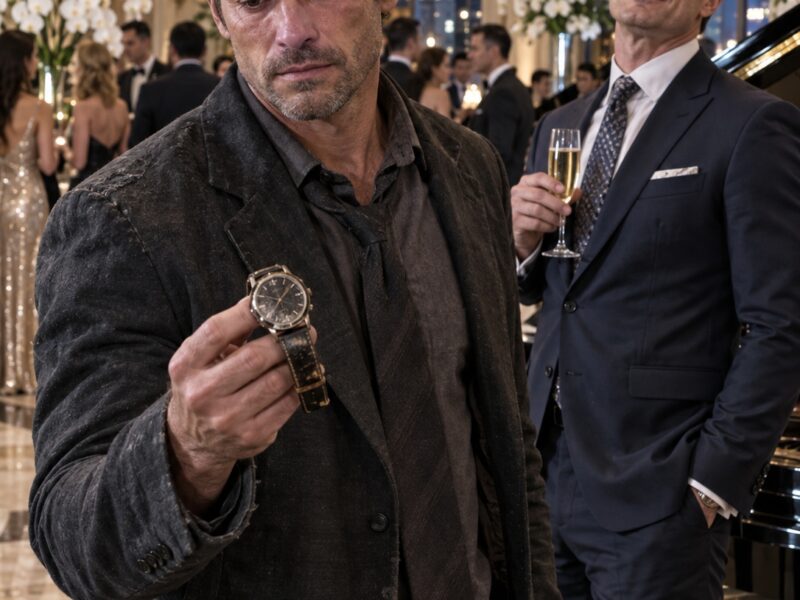
He was thirty-eight years old. His charcoal jacket was borrowed, one sleeve slightly shorter than the other. His black shoes had been polished so many times the leather had begun to crack around the toes. There was a pale scar running from behind his left ear down toward the collar of his shirt, and another hidden beneath the watch strapped around his wrist.
He looked like a man who did not belong beneath the chandeliers of the Lauron Grand Hotel.
That was what they saw.
What they did not see was a man who had once carried a bleeding teammate for nearly two miles while gunfire tore through the darkness behind him.
They did not see the father who woke every morning at 5:20 to pack a lunch for his nine-year-old son before repairing violins until noon, delivering groceries until five, then playing piano wherever someone would pay him enough to keep the electric bill from turning red.
They did not see the nights when Gideon sat alone at his kitchen table after Milo had gone to bed, staring at overdue invoices while the scars in his shoulder burned with old weather.
They saw cheap shoes.
They saw an old jacket.
And because the room was full of people accustomed to measuring human beings by watches, cars, surnames, and invitations, they thought they had measured Gideon correctly.
They were wrong.
But the person who would prove it wasn’t Gideon.
It was a nine-year-old girl in a yellow ribbon.
And before the afternoon was over, she would stand in front of nearly two hundred of the city’s wealthiest people, take Gideon by the hand, and ask a question that would turn the entire ballroom silent.
“Were you there when my daddy died?”
Gideon did not know that yet.
At that moment, he only knew he needed the job.
Three hours earlier, he had been standing in the tiny kitchen of the apartment he shared with Milo, trying to repair a button on the borrowed jacket with fishing line because he couldn’t find sewing thread.
Milo had been eating cereal at the counter.
“Dad.”
“Yeah?”
“You put the button on crooked.”
Gideon glanced down.
The button tilted sharply toward the floor.
He sighed. “It’s tactical.”
Milo narrowed his eyes. “Tactical crooked?”
“Very advanced technique.”
“Does the Navy know about it?”
Gideon froze for half a second.
Most people wouldn’t have noticed.
Milo always did.
Gideon smiled and pulled the line loose.
“The Navy knows nothing about fashion.”
“That explains your closet.”
Gideon laughed quietly.
Those moments mattered more than he knew how to explain.
There had been years of his life when laughter meant relief after danger. A joke told in darkness because nobody wanted to say they were afraid. A voice over a radio confirming another man was still alive.
Now laughter meant cereal at seven in the morning.
A crooked button.
A nine-year-old boy making fun of his father’s shirts.
Gideon preferred this version.
He threaded the line through the button again.
Milo pushed the cereal bowl away and studied him.
“Are rich people going to be there?”
“Probably.”
“How rich?”
Gideon thought about the address printed on the job sheet.
Lauron Grand Hotel.
Private ballroom.
Charity luncheon.
Guest list restricted.
He shrugged.
“Rich enough that they don’t check the price before ordering dessert.”
Milo’s eyes widened. “That’s crazy rich.”
“Apparently.”
“You should play the dinosaur song.”
“I am not playing the dinosaur song at a charity luncheon.”
“It has emotion.”
“It has roaring.”
“Exactly.”
Gideon shook his head, smiling.
On the refrigerator behind Milo was the invoice from St. Matthew’s Academy.
Tuition balance due.
Beside it was a notice from the orthodontist Gideon had not yet called back.
He hated private school prices, but Milo had earned partial financial aid, loved his teachers, and for the first time since they’d moved twice in one year, the boy had friends he didn’t expect to lose.
The ballroom job would cover almost three months of the remaining tuition.
That was why Gideon was wearing someone else’s jacket.
That was why he would smile if guests ignored him.
That was why he would keep playing if they laughed.
Pride did not pay school fees.
Milo slid off the stool.
“Come here.”
“What?”
“Your tie.”
“I can tie a tie.”
“No, you can’t.”
“I have tied things under significantly more pressure than this.”
“Your tie looks like a dead squirrel.”
Gideon looked into the reflection in the microwave door.
Milo was right.
He bent down.
“Fix it.”
Milo grinned.
The boy’s fingers were clumsy, and the knot ended up slightly off-center, but Gideon didn’t change it.
When he reached the door, Milo called after him.
“Dad?”
Gideon turned.
“You’re really good.”
“At what?”
“The piano.”
Gideon stared at him.
Milo shrugged, suddenly embarrassed.
“Just in case the rich people are stupid.”
Gideon smiled.
“Thanks, buddy.”
He closed the door behind him.
He had no idea how useful those words would become.
By twelve-thirty, the Lauron Grand’s ballroom looked like another world.
Sunlight poured through two-story windows overlooking the river, breaking against crystal chandeliers and polished silver.
White orchids covered the tables.
Champagne glasses stood in perfect rows.
Servers moved almost silently across thick ivory carpet.
A string quartet warmed up near the east wall while photographers positioned themselves beneath a backdrop bearing the name of the Lauron Family Foundation.
Gideon entered through the service corridor.
A coordinator named Bethany looked him up and down.
For one uncomfortable second, he thought she might send him away.
Then she checked the clipboard.
“Gideon Vale?”
“Yes.”
“You’re replacing Mr. Holloway?”
“He has the flu.”
“Right.”
Her eyes went to his jacket.
Then his shoes.
Then back to the clipboard.
“You understand this is a high-profile event?”
“I was told there would be a piano.”
“There is.”
“Then I understand the important part.”
Bethany blinked.
Gideon gave her a polite smile.
Something in her expression softened.
“The piano’s already tuned. You’ll start at one fifteen. Background selections during arrivals. Then again after the foundation presentation.”
“Got it.”
“Nothing overly dramatic.”
“I’ll save the cannon fire for dessert.”
She almost smiled.
“Please don’t.”
Gideon crossed the ballroom.
The piano was a nine-foot Steinway.
He ran one finger along the edge before sitting.
Beautiful instrument.
He pressed middle C.
Then E.
Then G.
Perfect.
He forgot the room for several seconds.
That was another thing people misunderstood about him.
They assumed music had been a hobby.
It wasn’t.
Music was where Gideon put everything he couldn’t say.
Fear.
Grief.
Names.
Faces.
Things a man could survive physically while some invisible part of him stayed behind.
There had been nights overseas when he played on keyboards with broken keys while exhausted men sat nearby cleaning rifles.
There had been hospitals where he played because silence was worse.
There had been funerals after he came home when he couldn’t bring himself to speak to the families, so he sat at a piano instead.
Music let him remember without explaining.
He opened the folder Bethany had provided.
That’s when the first laugh came.
Gideon ignored it.
Then another.
He ignored that too.
“Seriously,” one man said, loud enough to be heard. “That’s the entertainment?”
Gideon recognized him from the event brochure.
Russell Vane.
Real estate investor.
Major donor.
Photograph beside a quote about dignity and opportunity.
Gideon found that almost funny.
Russell stood with two other men, Brent Holloway and Charles Mercer, all three wearing suits that probably cost more than Gideon’s car.
Brent tilted his champagne glass toward the piano.
“Maybe he’s part of the foundation program.”
“For disadvantaged adults?” Russell asked.
They laughed.
Gideon’s jaw tightened.
He looked down at the keyboard.
Don’t give strangers control of your pulse.
An old lesson.
Harder to practice in a ballroom than under gunfire, apparently.
Across the room, someone else had noticed.
Saraphina Lauron stood near the windows speaking with the chairwoman of a children’s hospital when her attention shifted toward the laughter.
She was thirty-six, dressed in a cream suit with no visible logo and no need for one.
People recognized Saraphina without being told who she was.
Founder and chief executive of Lauron Global.
Hotels.
Logistics.
Commercial real estate.
Technology investments.
Financial magazines had called her brilliant, merciless, visionary, difficult, disciplined, and once—by a male columnist who later apologized—“beautiful enough to make ruthlessness charming.”
Saraphina had framed none of those articles.
She had learned years ago that admiration and resentment often arrived wearing the same expensive smile.
“Excuse me,” she said.
The hospital chairwoman followed her gaze.
“Problem?”
Saraphina watched Russell Vane laugh again.
“Maybe.”
Standing beside Saraphina was her daughter.
Eloan.
Nine years old.
Golden-brown hair.
Yellow ribbon.
Hands folded tightly in front of her.
Eloan hated large gatherings.
She hated cameras more.
Since the death of her father, crowded rooms seemed to make her fold inward, as though every stranger occupied too much air.
Saraphina had stopped forcing her to smile for photographs.
She had stopped telling people Eloan was “shy.”
Shyness was wanting to speak and being afraid.
Eloan’s silence was different.
Sometimes she simply disappeared somewhere behind her eyes.
It terrified Saraphina.
“Sweetheart?” she said.
Eloan didn’t answer.
She was staring across the ballroom.
At the pianist.
Saraphina looked too.
The man being mocked had not reacted.
He simply adjusted the bench and placed his hands on the keys.
Something about his stillness felt unusual.
Not submission.
Not embarrassment.
Restraint.
Like a door locked from the inside.
The first notes sounded.
The room changed.
Not dramatically.
Not immediately.
A conversation near the piano continued.
A waiter replaced an empty glass.
Someone laughed near the windows.
But Gideon’s music began spreading through those sounds, slipping between them rather than fighting them.
Warm.
Quiet.
Unhurried.
Saraphina stopped speaking.
Eloan lifted her head.
Gideon played a familiar jazz standard first.
Then another.
A soft arrangement of “Autumn Leaves.”
Then he began improvising.
He hadn’t planned it.
Three chords.
A descending line.
Something old surfaced beneath his fingers.
He hesitated.
Then continued.
Across the ballroom, Eloan’s face went white.
Saraphina saw it.
“Eloan?”
The girl took one step forward.
“Sweetheart?”
Another step.
Then she began walking.
“Eloan.”
Saraphina followed.
The child moved between tables as though someone were pulling an invisible thread attached to her chest.
Gideon didn’t see her until she reached the piano.
He looked up.
She stood beside him.
Small.
Silent.
Eyes shining.
He softened his playing.
“Hi.”
Eloan stared at his hands.
Gideon waited.
He knew better than to fill another person’s silence just because it made adults uncomfortable.
The girl touched the polished edge of the piano.
“Where did you learn that?”
Her voice was barely audible.
Gideon’s fingers continued moving.
“This?”
She nodded.
He looked at the keys.
“Long time ago.”
“From who?”
Gideon’s hand faltered.
Across the room, Saraphina stopped.
There were melodies Gideon remembered because they were beautiful.
And there were melodies he remembered because someone attached a face to them.
This one had a face.
A man sitting on an ammunition crate in terrible heat.
A wedding ring hanging on a chain beneath his shirt.
A folded photograph in his hand.
A laugh that always came too loudly.
Gideon changed one chord.
Eloan inhaled sharply.
“That’s wrong.”
He looked at her.
“What?”
She pointed toward the keys.
“My daddy did this.”
With one finger, she pressed a note.
Gideon stopped breathing.
The corrected note rang through the ballroom.
He knew that note.
He had forgotten it.
Not completely.
Somewhere beneath memory, he had known.
The melody was supposed to turn upward there.
Nathaniel always turned upward.
Gideon stared at the girl.
“What did you say?”
Eloan swallowed.
“My daddy played it.”
Saraphina reached them.
“Eloan.”
The child didn’t look away from Gideon.
“He called it our secret song.”
The ballroom suddenly felt too bright.
Gideon’s hands left the keyboard.
Saraphina looked from her daughter to him.
Her professional composure had disappeared.
“What were you playing?”
Gideon answered slowly.
“I don’t know what he called it.”
“Where did you learn it?”
He looked at her properly for the first time.
Saraphina Lauron.
Lauron.
The surname struck something loose inside him.
He looked at Eloan.
Golden-brown hair.
Brown eyes.
Nine years old.
Nathaniel’s photograph flashed into his mind.
A toddler on a man’s shoulders.
Yellow summer dress.
The same eyes.
Gideon’s throat tightened.
“What was your husband’s first name?”
Saraphina’s face changed.
“Nathaniel.”
Gideon stood so quickly the piano bench scraped the floor.
Nearby conversations stopped.
Saraphina stared at him.
Gideon whispered, “Nathaniel Lauron?”
“Yes.”
He took one step backward.
For seven years, Gideon had carried a promise he believed he had failed to keep.
And now the promise was standing in front of him wearing a yellow ribbon.
Saraphina’s voice dropped.
“You knew him.”
It wasn’t a question.
Gideon looked at Eloan.
The little girl was staring up at him.
He could hear Nathaniel laughing.
Not in the ballroom.
Years earlier.
Thousands of miles away.
“You see this kid?”
Nathaniel had held the photograph under Gideon’s nose.
Gideon had been exhausted and annoyed.
“Yes, Nate. I have seen the picture approximately nine hundred times.”
“Look again.”
“She still looks like a child.”
“She is the most intelligent child alive.”
“She’s two.”
“Exactly. Advanced.”
“You’re unbearable.”
“You’ll understand when you’re a father.”
Nathaniel had tucked the picture away.
Then the memory vanished.
Gideon returned to the ballroom.
Saraphina waited.
He didn’t know what to say.
Not here.
Not with two hundred strangers.
Not with Eloan listening.
Before he could decide, Russell Vane’s voice carried from behind them.
“Well, this is entertaining.”
Gideon’s shoulders tightened.
Russell approached with a smile designed to resemble charm.
“Mrs. Lauron, I hope the musician isn’t bothering your daughter.”
Saraphina looked at him.
“He isn’t.”
“Of course.”
Russell’s eyes moved to Gideon.
“I only ask because people sometimes become quite creative when they realize who they’re standing next to.”
Gideon understood immediately.
Saraphina did too.
“What exactly are you implying?” she asked.
Russell smiled.
“Nothing.”
“Then this should be a very short conversation.”
A few guests nearby went quiet.
Russell laughed awkwardly.
“I only mean it’s an extraordinary coincidence. A temporary pianist appears at your event, plays your late husband’s private song, then claims to know him.”
“I haven’t claimed anything,” Gideon said.
Russell turned.
“Not yet.”
Gideon looked at him.
“I don’t need anything from you.”
“Everyone needs something.”
“That might be the saddest thing anyone has said in this room.”
Russell’s smile disappeared.
A few people heard it.
Brent Holloway coughed into his hand.
Saraphina almost smiled.
Then Eloan reached for Gideon’s sleeve.
The small gesture silenced him completely.
“Did you know my dad?”
There it was.
The question Gideon had spent years avoiding in other forms.
Did you know him?
Were you there?
What happened?
Did he suffer?
Could you have saved him?
Why him?
Why you?
Gideon lowered himself until he was level with the child.
“Yes,” he said.
Eloan blinked.
“How?”
“We worked together.”
“What kind of work?”
Saraphina stepped closer.
Gideon looked at her.
She understood before he said anything.
Her eyes dropped to his left wrist.
The watch.
Old black casing.
Scratched bezel.
Faded insignia engraved on the back.
Nathaniel’s watch.
Saraphina covered her mouth.
Gideon saw recognition hit her like a physical blow.
“Where did you get that?”
The ballroom disappeared for him.
He was back in darkness.
Nathaniel bleeding.
Nathaniel laughing anyway.
Nathaniel pulling the watch off with fingers that wouldn’t stop shaking.
“Take this.”
“No.”
“Gideon.”
“You’re getting on the bird.”
“Take the damn watch.”
“Nate—”
“If I lose it, Sarah will kill me.”
Even dying, he had joked.
Gideon had taken it only to shut him up.
Nathaniel never asked for it back.
Gideon returned to the present.
“He gave it to me.”
Saraphina’s eyes filled with tears.
“No.”
Gideon said nothing.
She reached toward the watch, then stopped before touching it.
“There was a scratch.”
Her voice cracked.
“On the back.”
Gideon removed the watch.
Turned it over.
A deep diagonal mark crossed the metal.
Saraphina stared.
“He made that scratch the week after we got married.”
Eloan looked between them.
“How?”
Saraphina laughed through a sudden tear.
“He tried to fix the garbage disposal without turning off the power.”
Gideon blinked.
“Nathaniel?”
“He was terrible at repairing anything.”
Gideon stared at the watch.
“That explains several things.”
Saraphina laughed again, softer this time.
Then her expression collapsed.
Because memory had opened.
And memory never opened one door at a time.
Russell shifted behind them.
“So he has the watch.”
Saraphina turned slowly.
Russell should have stopped.
He didn’t.
“Surely that doesn’t prove—”
“Russell.”
Saraphina’s tone changed.
It became the voice used in boardrooms before people lost contracts.
He hesitated.
She held Gideon’s watch in her palm.
“I gave my husband this watch on our first anniversary.”
Russell’s face tightened.
“He wore it every day until the day he died.”
Silence.
“No newspaper photograph showed the engraving on the back. No magazine profile mentioned the scratch. No charity biography documented the private melody he wrote for our daughter.”
She took one step toward Russell.
“So choose your next words carefully.”
Russell glanced around.
Too many people were watching.
His embarrassment curdled into defensiveness.
“I only think emotional stories deserve verification.”
Gideon stood.
“So verify it.”
Saraphina looked at him.
He took the watch from her.
“If that’s what he needs.”
Russell crossed his arms.
Gideon felt something old inside him rise.
Not anger.
Something colder.
For years he had avoided talking about his service because public curiosity often turned the worst nights of a man’s life into entertainment.
People asked about firefights over cocktails.
They asked whether he had killed anyone before ordering dessert.
They wanted courage without fear, sacrifice without blood, grief without inconvenience.
He had learned silence was easier.
But now Eloan was beside him.
Nathaniel’s daughter.
And a stranger had just called her father’s final memories a convenient story.
Gideon looked at Russell.
“My full name is Gideon James Vale.”
Someone near the back lifted a phone.
“Don’t,” Gideon said.
The phone stopped.
“If you need proof, ask the retired colonel sitting two tables behind you.”
Heads turned.
An elderly man in a navy suit had already risen.
Gideon had noticed him twenty minutes earlier.
Colonel Samuel Avery, retired.
Gideon hadn’t spoken to him in eleven years.
Avery’s face had aged.
His posture hadn’t.
The colonel looked at Gideon across the ballroom.
Then at the watch.
Then at Saraphina.
“Ma’am.”
Saraphina stared at him.
“You know Mr. Vale?”
Avery gave a humorless laugh.
“Yes.”
Gideon looked away.
Avery walked closer.
“Though Mr. Vale has always been exceptionally talented at disappearing when someone tries to thank him.”
“I learned from you.”
“No. I loved attention.”
A few nervous laughs moved through the crowd.
Avery stopped in front of Saraphina.
“I served with your husband.”
Eloan’s grip tightened around Gideon’s hand.
Avery saw her.
His face softened instantly.
“You must be Eloan.”
She nodded.
The retired colonel swallowed.
“You have your father’s eyes.”
Saraphina looked like she might collapse.
Avery turned toward Russell.
“You wanted verification?”
Russell said nothing.
Avery pointed toward Gideon.
“That man pulled three wounded personnel from a burning transport under fire.”
Gideon’s jaw tightened.
“Sam.”
“He stayed behind during the evacuation because there wasn’t room for everyone.”
“Enough.”
“He was recommended for—”
“Sam.”
Avery stopped.
The entire ballroom watched Gideon.
He hated it.
Every second.
Gideon looked at Eloan.
She wasn’t impressed.
She wasn’t amazed.
She was confused.
None of those achievements meant anything to her.
Only one thing did.
“My dad,” she whispered.
Gideon’s chest tightened.
“Yes.”
“Were you there when he died?”
Saraphina inhaled sharply.
“Eloan.”
“No.”
The girl looked at her mother.
“I want to know.”
Saraphina’s face twisted.
For years she had tried to protect her daughter from the details.
Maybe from the truth.
Maybe from herself.
Gideon crouched again.
He could lie.
People told children gentle lies every day.
Your father wasn’t scared.
Your father didn’t hurt.
Your father never cried.
But Nathaniel had hated dishonest courage.
So Gideon chose carefully.
“I was with him near the end.”
Eloan’s lip trembled.
“Was he scared?”
Gideon looked down.
The real answer was yes.
Not fear for himself.
Fear of disappearing from his daughter’s memory.
Fear that absence would be interpreted as abandonment.
Fear that a child too young to understand death might eventually think her father had chosen not to come home.
Gideon looked into Eloan’s eyes.
“He was worried.”
“About what?”
“You.”
Eloan froze.
Saraphina covered her mouth.
Gideon continued.
“He carried your picture.”
“My picture?”
“Everywhere.”
“What picture?”
“You were sitting on his shoulders.”
Eloan looked at Saraphina.
Her mother went pale.
“There was a picture like that,” she whispered.
Gideon nodded.
“You had a blue popsicle stain on your dress.”
Saraphina’s knees nearly gave way.
Avery caught her elbow.
“Nobody knew that,” she whispered.
Gideon’s own voice grew rough.
“He showed it to everyone.”
A small laugh escaped him.
“Honestly, we got tired of seeing it.”
Eloan almost smiled.
“He talked about you constantly.”
“What did he say?”
Gideon stared at her.
Nathaniel’s voice returned again.
My kid can already count to twenty.
She bites people.
That’s not relevant.
Seems relevant.
She’s fearless.
She threw cereal at you.
Exactly. Tactical confidence.
Gideon’s smile faded.
“He said you were brave.”
Eloan’s eyes filled.
“He said you were stubborn.”
Saraphina laughed through tears.
“That part was true.”
“He said you loved strawberries but hated strawberry yogurt, and he couldn’t understand why.”
Eloan’s mouth fell open.
“I do.”
“He said you refused to sleep unless the closet door was exactly halfway open.”
Saraphina was openly crying now.
“And he said…”
Gideon stopped.
This was the sentence.
The one that had followed him home.
The one he had promised to deliver.
The one he never had.
Eloan waited.
“What?”
Gideon’s voice broke.
“He said if you ever thought he stopped loving you because he didn’t come home, somebody needed to tell you that wasn’t true.”
Eloan stared at him.
No one moved.
“He said the last place he went every night before sleeping was home.”
Her face crumpled.
“Even when he wasn’t there.”
Gideon swallowed.
“He closed his eyes and went home.”
Eloan stepped forward and wrapped her arms around his neck.
Gideon froze.
The room vanished.
He could smell shampoo.
Feel a child’s small hands gripping the back of his jacket.
Nathaniel’s daughter.
Seven years late.
The promise had finally arrived.
Gideon closed his eyes.
Then slowly hugged her back.
Saraphina turned away because there are kinds of grief too private even for tears.
Russell Vane left the ballroom.
No one stopped him.
When Eloan finally let go, Gideon returned to the piano.
He didn’t know what else to do.
His hands were shaking.
He sat.
Eloan climbed onto the bench beside him.
“Can you play it again?”
Gideon looked at Saraphina.
She nodded.
“Please.”
He placed his fingers on the keys.
The first note sounded.
Then the second.
At the third chord, Eloan corrected him again.
Gideon smiled.
“Bossy.”
“My dad did it like this.”
“Your dad was bossy too.”
“He was?”
“Terrible.”
Saraphina laughed softly.
“What else?”
Gideon began playing.
“What else was he?”
“Yes.”
Gideon considered.
“Loud.”
Avery coughed. “Very.”
“Bad at cards.”
“Horrendous,” Avery agreed.
“He cheated.”
“He called it strategic improvisation.”
Eloan giggled.
The sound hit Saraphina harder than the crying had.
She hadn’t heard that particular laugh in years.
Not the polite laugh Eloan sometimes produced for adults.
Not the tiny smile she gave teachers.
Her real laugh.
The one that arrived from somewhere unguarded.
Saraphina sat in the nearest chair.
Gideon continued playing.
The melody moved gently through the ballroom.
For once, no one spoke over it.
When he reached the middle, Eloan began humming.
Gideon’s hands slowed.
The humming became words.
Not many.
Just a tiny line.
A phrase Nathaniel had once invented because Eloan had been too young to remember complicated lyrics.
Gideon stopped playing.
Eloan looked at him.
“Why did you stop?”
“Do that again.”
She sang the line.
Gideon’s eyes closed.
Nathaniel had sung those words too.
Not often.
Badly.
Deliberately badly.
On a night when rain hammered a metal roof and nobody slept.
Gideon had been playing on a half-broken keyboard someone had shipped to the unit.
Nathaniel leaned against the wall.
“You know the words?”
“There are words?”
“There are now.”
He sang.
Gideon threw a glove at him.
“That’s terrible.”
“My daughter likes it.”
“Your daughter is two.”
“She’s a sophisticated critic.”
“She’s eaten crayons.”
“One crayon.”
“Three.”
“Allegedly.”
That was Nathaniel.
Alive.
Stupid.
Funny.
Human.
Not a photograph at a memorial.
Not a folded flag.
Not a line in an official report.
A father who sang badly because his little girl laughed.
Gideon opened his eyes.
He played the phrase again.
Eloan sang.
Saraphina bowed her head.
And at the table where Russell had been sitting, three untouched glasses of champagne reflected the chandelier above them.
The people who had laughed at Gideon’s jacket no longer looked amused.
But humiliation wasn’t what Gideon wanted from them.
He didn’t care if they felt ashamed for five minutes.
Five minutes of shame rarely changed anyone.
The music ended.
No one applauded.
Not immediately.
And Gideon was grateful.
The silence felt more respectful.
Then one person stood.
Colonel Avery.
He did not clap.
He simply placed his hand over his heart.
A woman beside him rose.
Then another guest.
And another.
Gideon saw what was happening.
“Please don’t.”
Avery ignored him.
More people stood.
Gideon shook his head.
“I mean it.”
Saraphina understood.
She remained seated.
Gradually, others did too.
The attention faded.
Gideon exhaled.
Eloan leaned toward him.
“You don’t like people clapping?”
“I like clapping.”
“You looked mad.”
“I don’t like being clapped at for things I wish hadn’t happened.”
Eloan thought about that.
“Because people got hurt?”
Gideon looked at her.
“Yes.”
She nodded as though that made perfect sense.
Children sometimes understood complexity faster than adults because they had not yet learned to decorate simple truths.
The luncheon eventually resumed.
It couldn’t stay suspended forever.
Speeches happened.
Donations were announced.
Cameras flashed.
Yet something had shifted.
People approached Gideon carefully now.
Too carefully.
The same guests who had ignored him before suddenly wanted to shake his hand.
He found that almost worse.
“Mr. Vale, incredible story.”
“Thank you for your service.”
“Extraordinary sacrifice.”
One man handed him a business card.
Another offered to “connect him with people.”
A woman asked if he ever spoke at leadership conferences.
Gideon stared at her.
“No.”
“You’d be incredibly inspirational.”
“No.”
She laughed, thinking he was joking.
He wasn’t.
Saraphina watched from across the room.
Every compliment made Gideon more uncomfortable.
Every mention of heroism caused another wall to rise behind his eyes.
She recognized avoidance.
She had become an expert at it herself.
After Nathaniel died, everyone had called her strong.
She had hated that word.
Strong meant people stopped asking if she needed help.
Strong meant crying privately because public grief made investors nervous.
Strong meant returning to work twelve days after the funeral because if she stayed home, every room contained Nathaniel.
Strong meant raising a child who asked increasingly difficult questions while pretending she herself knew how to survive the answers.
She had built Lauron Global into an empire partly because work was easier than mourning.
Numbers didn’t die.
Contracts didn’t disappear on missions.
Buildings stayed where you left them.
Then Gideon Vale walked into her ballroom wearing an old jacket and reopened the one door she had spent seven years barricading.
At four fifteen, the official luncheon ended.
Guests began leaving.
Gideon packed his music.
Bethany hurried toward him.
“Mr. Vale.”
“Yes?”
“The event coordinator approved overtime. Mrs. Lauron asked whether you could stay.”
Gideon looked toward the windows.
Saraphina and Eloan waited there.
He closed his case again.
“Sure.”
When the room had mostly emptied, Saraphina approached.
For the first time that afternoon, she looked uncertain.
“Would you sit with us?”
Gideon nodded.
They chose a small table away from the staff clearing plates.
Eloan sat between them.
For several seconds, no one spoke.
Saraphina looked at the watch on Gideon’s wrist.
“How long have you had it?”
“Since that night.”
“You never tried to contact me?”
The question came too quickly.
Too sharply.
Gideon flinched.
Saraphina immediately regretted it.
“I didn’t mean—”
“No. It’s fair.”
He looked toward the river.
“I tried.”
She stared.
“When?”
“About four months after I came home.”
“I never heard from you.”
“I know.”
“What happened?”
Gideon rubbed his thumb across the watchband.
“I called the number Nathaniel had written down.”
“My old office.”
“Probably. Someone told me you were unavailable.”
Saraphina’s expression hardened.
“Who?”
“I don’t remember.”
“Man or woman?”
“Woman.”
She closed her eyes.
Her assistant at the time had screened military calls after dozens of journalists and strangers began contacting them following Nathaniel’s death.
Gideon continued.
“I left my name.”
“I never got it.”
“I wrote a letter.”
Her eyes opened.
“You wrote to me?”
“Yes.”
“I never received it.”
“I sent it to Lauron Holdings.”
Saraphina stared down at the table.
The company processed thousands of pieces of mail every month.
Seven years ago, the corporate office had received condolence letters by the box.
Some had gone to archives.
Some to public relations.
Some to her private office.
Others…
God.
She looked at him.
“What did the letter say?”
“That I knew Nathaniel. That I had something of his. That he’d asked me to tell Eloan something.”
Saraphina’s throat tightened.
“And when I didn’t answer?”
Gideon’s face changed.
He looked older.
“Tried again once.”
“Then?”
He hesitated.
“Then my life got complicated.”
There was a door there.
Saraphina could see it.
She chose not to force it open.
Gideon continued.
“I told myself I’d try again when things settled down.”
“Did they?”
“No.”
Eloan had been listening silently.
“Why didn’t Daddy send us the watch?”
Gideon looked at her.
“He didn’t give it to me because he wanted me to keep it forever.”
“Then why?”
“He thought he was coming home.”
Saraphina inhaled.
That sentence was somehow worse.
“He gave it to me because it kept catching on his equipment. He joked that your mother would murder him if he damaged it.”
Eloan looked at Saraphina.
“Would you?”
“No.”
Gideon raised an eyebrow.
Saraphina admitted, “I might have yelled.”
“That’s what he predicted.”
A tiny smile passed between them.
Then Gideon’s expression became serious.
“When the evacuation happened… there wasn’t time.”
Saraphina looked at her daughter.
“Eloan, sweetheart, why don’t you see if there are any pastries left?”
Eloan frowned.
“Mom.”
“Please.”
“I already know Dad died.”
Saraphina froze.
“I know people think kids don’t understand things, but we do.”
Gideon looked down.
Eloan continued.
“You always stop talking when it gets important.”
Saraphina’s eyes filled.
“Because I don’t want to hurt you.”
“It already hurts.”
There are sentences children say that expose every weakness adults have spent years disguising.
That was one of them.
Eloan stood.
“I don’t need all the scary parts.”
She looked at Gideon.
“I just want the true parts.”
Gideon glanced at Saraphina.
She nodded reluctantly.
So he gave the child the truth in pieces she could carry.
“Your dad helped people get somewhere safe.”
Eloan listened.
“He got hurt.”
Her lower lip trembled.
“He was still talking.”
“About me?”
“Yes.”
“What did he say?”
Gideon’s throat tightened.
“He made me promise something.”
“What?”
“To make sure you heard your song again.”
Eloan stared at him.
“You promised?”
“Yes.”
“Then why did it take seven years?”
The question struck exactly where Gideon knew it would.
Saraphina leaned forward.
“Eloan—”
“No.”
Gideon stopped her.
“She deserves the answer.”
He looked at the girl.
“Because I failed.”
Eloan blinked.
Gideon forced himself not to look away.
“I tried to find you. Then when I couldn’t, I let my own problems become an excuse.”
“What problems?”
“Things I wasn’t good at fixing yet.”
“Like what?”
“Me.”
Saraphina looked at him.
Gideon continued.
“When people come home from dangerous places, sometimes their bodies come home faster than the rest of them.”
Eloan was silent.
“I didn’t know how to be normal.”
“Are you normal now?”
Gideon smiled faintly.
“No.”
She smiled too.
“Good.”
“Good?”
“Normal people in that ballroom were mean.”
Saraphina almost choked.
Gideon laughed.
“That’s a strong argument.”
Eloan looked at his watch.
“Did my daddy save you?”
The question startled him.
“Yes.”
Saraphina leaned forward.
Gideon didn’t elaborate.
“How?”
He stared at the scratched metal.
“More than once.”
“Then maybe the song took seven years because you had to be here today.”
Gideon looked at her.
The simplicity of it hurt.
Maybe children invented meaning because life gave them so little control.
Or maybe adults were too proud to admit that meaning sometimes arrived after the fact.
Eloan slid off the chair.
“I’m getting a pastry now.”
She walked toward the dessert table.
Saraphina watched until she was out of earshot.
Then she turned to Gideon.
“What aren’t you telling her?”
He knew exactly what she meant.
He leaned back.
“Nathaniel’s injury wasn’t random.”
Saraphina went still.
“He went back.”
Her face lost color.
“For whom?”
“Me.”
“No.”
Gideon’s jaw tightened.
“Our vehicle was hit. I got trapped. He had already reached cover.”
Saraphina shook her head.
“He came back.”
“No.”
“He came back.”
Tears rose instantly.
Saraphina stood so fast the chair moved backward.
She walked toward the window.
Gideon did not follow.
She needed distance.
He understood distance.
For seven years Saraphina had imagined Nathaniel’s death in a thousand different ways because the official language had been sterile.
Fatal injuries sustained during rescue operations.
Hostile environment.
Evacuation unsuccessful.
Words written to remove blood from tragedy.
Now the details had a shape.
Nathaniel had been safe.
Then someone he loved had not been.
So he went back.
Saraphina pressed one hand against the glass.
“Did he know?”
Gideon answered quietly.
“That it was bad?”
“Yes.”
“Yes.”
“Did he ask for me?”
“Yes.”
She began crying without making a sound.
“And Eloan?”
“Mostly Eloan.”
A broken laugh escaped her.
“Of course.”
Gideon looked down.
“He loved you.”
Saraphina closed her eyes.
“I know.”
“He was worried about you too.”
“What did he say?”
Gideon hesitated.
“Tell Sarah she was right.”
Saraphina turned.
“About what?”
“He didn’t specify.”
For one second she stared at him.
Then she laughed.
A real laugh through tears.
“That idiot.”
“What?”
“The morning before his final deployment, we argued.”
Gideon listened.
“He promised me after that assignment he was done.”
Gideon’s face changed.
“He told you that?”
“Yes.”
Saraphina wiped her eyes.
“I said I didn’t believe him. He said I was impossible. I said he was addicted to being needed by strangers.”
Gideon looked toward the floor.
Saraphina continued.
“He told me I was wrong.”
Her voice softened.
“I told him someday he would realize courage wasn’t always going back into danger. Sometimes courage was staying home.”
Gideon swallowed.
“Then I guess that’s what he meant.”
Saraphina stared through the window.
“He admitted I was right while dying.”
“Apparently.”
“He couldn’t manage that once during our marriage?”
Gideon smiled.
“Timing wasn’t his strength.”
They both laughed.
Eloan returned carrying three miniature chocolate cakes stacked on one plate.
“I brought one for everybody.”
Saraphina wiped her face quickly.
Her daughter noticed.
She pretended not to.
That evening Gideon left through the service entrance.
He preferred it that way.
He had been paid more than expected because Bethany quietly added the overtime.
The check was folded inside his pocket.
For the first time in weeks, Gideon knew exactly how he would cover Milo’s tuition.
That should have been enough.
Then he heard running footsteps behind him.
“Gideon!”
He turned.
Eloan was coming down the corridor.
Saraphina followed.
Eloan stopped in front of him.
“Will you come back?”
Gideon glanced at Saraphina.
“To the hotel?”
“No. To us.”
He didn’t know how to answer.
Eloan pulled something from her pocket.
A folded yellow napkin.
She handed it to him.
Inside, written in uneven pencil, were seven musical notes.
“I don’t want to forget again.”
Gideon looked at them.
“You won’t.”
“How do you know?”
“Because you remembered after seven years.”
Eloan considered that.
Then hugged him quickly.
Saraphina watched.
When the girl stepped back, Gideon folded the napkin carefully and put it inside his jacket.
“I’ll keep this.”
“Promise?”
He looked at her.
Promise.
The word had weight now.
“Yes.”
Milo was asleep on the couch when Gideon got home.
The television was still on.
A superhero movie played silently.
Their neighbor Mrs. Alvarez sat in the armchair reading.
She lowered the book.
“You’re late.”
“Sorry.”
“Don’t apologize. He’s easy.”
She nodded toward Milo.
“He ate two sandwiches.”
“That’s not easy. That’s expensive.”
Mrs. Alvarez smiled.
“How’d the fancy job go?”
Gideon looked at his son.
Then at the yellow napkin in his hand.
“Complicated.”
She studied him.
“You okay?”
“Yeah.”
It was a lie.
But not the dangerous kind.
Not yet.
After she left, Gideon carried Milo to bed.
The boy stirred.
“You play dinosaur song?”
“No.”
“Coward.”
Gideon smiled.
“Go to sleep.”
Milo opened one eye.
“Rich people stupid?”
Gideon thought about Russell.
Then Eloan.
Then Saraphina crying at the window.
“Some of them.”
Milo smiled sleepily.
“Knew it.”
At two twelve in the morning, Gideon was still awake.
The watch lay on the table.
So did the yellow napkin.
He opened a metal box he kept in the back of his bedroom closet.
Inside were the pieces of a life Milo had never seen.
Photographs.
Insignia.
Letters.
A folded flag patch.
Two medals he never displayed.
A card from Colonel Avery.
And at the bottom, sealed inside a plastic bag, a photograph.
Gideon removed it.
Nathaniel Lauron stood beside him beneath a brutal white sun.
Both younger.
Both exhausted.
Both grinning at something outside the frame.
On the back, Nathaniel had written:
If I don’t make it home, don’t let them remember me as brave.
Tell them I was annoying.
Gideon sat on the floor.
For the first time in years, he laughed at the photograph.
Then cried.
Not loudly.
Milo never woke.
Three days later, Saraphina called.
Gideon almost didn’t answer because he didn’t recognize the number.
“Hello?”
“Mr. Vale?”
He recognized her voice immediately.
“Mrs. Lauron.”
“Saraphina.”
“All right.”
There was a pause.
“I found your letter.”
Gideon stood completely still.
“What?”
“Your letter from seven years ago.”
He sat down.
“Where?”
“In our corporate archive.”
She sounded angry.
Not at him.
“At the time, any mail mentioning Nathaniel was routed through public relations because reporters were sending requests constantly. Someone marked yours personal but never forwarded it.”
Gideon closed his eyes.
“I see.”
“No. You don’t.”
Her voice cracked.
“You wrote three times.”
He said nothing.
“I found all three.”
Gideon stared at the kitchen wall.
Saraphina continued.
“You didn’t fail.”
He pressed his lips together.
“Mrs.—Saraphina.”
“You did not fail us.”
“I stopped trying.”
“After three letters and two phone calls.”
“How do you know about the calls?”
“I pulled the logs.”
Of course she had.
Billionaire grief apparently came with investigative resources.
“You tried.”
Gideon rubbed his forehead.
“Doesn’t change seven years.”
“No.”
She was quiet.
“But maybe it changes what you do with the next seven.”
He looked toward Milo’s backpack near the door.
“What are you asking?”
“Nothing yet.”
That answer made him nervous.
“Saraphina.”
“I’d like you to meet me tomorrow.”
“About what?”
“My husband’s foundation.”
“I don’t do speeches.”
“I know.”
“I don’t do charity galas.”
“I noticed.”
“I definitely don’t want to be a public symbol of anything.”
“I noticed that too.”
“Then what?”
She paused.
“Music.”
Gideon frowned.
Saraphina explained that Nathaniel’s family foundation had spent millions on scholarships, veterans’ services, and grief counseling.
But there was one thing the foundation had never done.
It had never built anything around the thing Nathaniel used to love privately.
Music.
Eloan had asked why.
Saraphina had no answer.
“So I started asking myself what a program might look like for children who have lost parents in military families.”
Gideon listened.
“Not therapy exactly. Not school exactly. Somewhere they can make noise without being told to explain why.”
His expression softened.
Saraphina continued.
“Music lessons. Instruments. Scholarships. Family programs.”
“And you want me to…?”
“Tell me when my expensive consultants design something stupid.”
Gideon laughed.
“That I can do.”
The first planning meeting lasted four hours.
Gideon hated almost every slide.
“This is terrible.”
The consultant looked offended.
Saraphina covered a smile.
Gideon pointed at a projected image of smiling children holding violins.
“Why does every kid look like they attend prep school?”
“Those are stock images.”
“Exactly.”
The consultant frowned.
Gideon continued.
“You say the program is for families who can’t afford music education, then your proposed center is twenty-three miles from the nearest bus route.”
Silence.
He pointed again.
“You’ve budgeted fourteen thousand dollars for a donor wall.”
The consultant shifted.
“Visibility is important.”
“Buy six keyboards.”
“Mr. Vale—”
“Buy twenty guitars.”
The consultant looked toward Saraphina for rescue.
She said, “He’s right.”
Gideon looked at another page.
“Eight thousand for engraved recognition plaques?”
Saraphina nodded.
“Cut it.”
The consultant looked horrified.
“But major donors often expect—”
Gideon leaned back.
“Then find better donors.”
Saraphina stared at him.
He caught her looking.
“What?”
“Nothing.”
“You’re smiling.”
“I’ve been trying to say that sentence for ten years.”
The first center opened five months later.
Not downtown.
Not in an expensive building.
In a renovated community center near three public schools and a veterans’ housing complex.
There were drums.
Keyboards.
Guitars.
Violins.
Soundproof practice rooms.
A wall where children could pin photographs of people they missed.
No donor wall.
Russell Vane offered a large contribution.
Saraphina declined it.
Gideon heard about that weeks later.
“You didn’t have to do that.”
“Yes, I did.”
“Money still helps kids.”
“Not every dollar deserves a plaque.”
Gideon looked at her.
“That sounds suspiciously like something I said.”
“You’re becoming a bad influence.”
Milo joined the program almost immediately.
Not because he needed free lessons.
Because he announced he intended to “supervise.”
Eloan rolled her eyes.
“You can’t supervise. You’re nine.”
“So are you.”
“I’ve been playing longer.”
“You press one key at a time.”
“That’s literally how piano works.”
They became inseparable.
Saraphina noticed it before Gideon did.
Milo made Eloan louder.
Eloan made Milo slower.
He rushed into everything.
She examined things before trusting them.
He talked enough for three children.
She spoke only when she had something worth saying.
Together, somehow, they balanced.
On Fridays Gideon taught beginner piano.
At first, he was terrible with groups.
“Mr. Vale,” one seven-year-old complained, “you said we’re supposed to count.”
“Yes.”
“You stopped counting.”
“I assumed you were continuing internally.”
“We’re seven.”
“Fair criticism.”
The children loved him.
Mostly because he never treated them like they were fragile.
When one boy became angry and slammed the piano lid after missing a section repeatedly, Gideon didn’t say, Calm down.
He sat beside him.
“You want to break it?”
The boy looked shocked.
“No.”
“Good. It’s expensive.”
The child laughed despite himself.
“Being angry doesn’t make you bad at music.”
“I suck.”
“You’re learning.”
“Same thing.”
“No.”
Gideon played three terrible notes deliberately.
“I can sound bad too.”
“You did that on purpose.”
“Prove it.”
The boy smiled.
From the doorway, Saraphina watched.
There were things money could build.
Rooms.
Programs.
Scholarships.
But money couldn’t manufacture the way Gideon seemed to understand children who were trying to carry feelings bigger than their vocabulary.
Maybe because he was still doing the same thing.
Their friendship developed quietly.
Neither named it.
Saraphina brought coffee.
Gideon fixed things around the center even though maintenance staff existed.
She complained that he refused to submit proper expense reports.
He complained that her coffee cost more than lunch.
“You’re a billionaire and you still pay nine dollars for burned milk?”
“It’s oat milk.”
“That makes it worse.”
“You drink coffee from a gas station.”
“It’s honest.”
“It’s hazardous.”
“Builds immunity.”
Sometimes she laughed before realizing she had.
Those moments frightened her.
Gideon noticed.
He never pushed.
That frightened her more.
One evening, almost nine months after the charity luncheon, a thunderstorm hit while they were closing the center.
Milo and Eloan had already been picked up by Mrs. Alvarez, who had somehow become everyone’s unofficial grandmother.
Saraphina stood by the entrance checking messages.
Gideon shut off the lights.
Thunder cracked.
Saraphina flinched.
Gideon noticed.
“You okay?”
“Yes.”
Another crack.
She gripped the phone too tightly.
“That’s not a yes.”
She looked at him.
“Nathaniel died during a storm.”
Gideon stopped.
“I know it doesn’t make sense.”
“It doesn’t have to.”
“For years I couldn’t sleep when it rained.”
Gideon leaned against the wall.
“For years I couldn’t sleep when it didn’t.”
She stared at him.
He hadn’t meant to say it.
But there it was.
“Why?”
“Quiet.”
He looked toward the darkened music room.
“Quiet made my brain fill things in.”
Saraphina put her phone away.
“Does it still?”
“Sometimes.”
“What do you do?”
“Check on Milo.”
“Even if he’s asleep?”
“Especially then.”
She nodded.
“I check on Eloan too.”
They stood together while rain struck the windows.
Two parents pretending their children needed checking when the truth was simpler.
Sometimes looking at someone sleeping peacefully was the fastest way to convince yourself the world had not ended again.
Saraphina looked at him.
“Gideon.”
“Yeah?”
“Why did you really stop looking for us?”
He had answered the question before.
Not fully.
He stared at the floor.
“Because Nathaniel died saving me.”
She said nothing.
“I came home and every time I looked at that watch, I thought about you.”
His voice became rough.
“You and Eloan had lost a husband and father. I was alive.”
“That’s not a crime.”
“Didn’t feel that way.”
“You think he would want you punished for surviving?”
“No.”
“Then why punish yourself?”
Gideon laughed bitterly.
“Because knowing something logically and believing it at three in the morning aren’t the same thing.”
Saraphina understood that too well.
He continued.
“I wrote to you because I promised him. When nobody answered…”
He stopped.
“What?”
“Part of me was relieved.”
Saraphina’s eyes narrowed.
“Relieved?”
“I didn’t have to look you in the face.”
There it was.
The ugliest truth.
Gideon forced himself to continue.
“I didn’t have to tell his wife that the last decision he made was going back for me.”
Saraphina stared at him.
“I didn’t have to wonder whether you’d hate me.”
“Gideon.”
“I hated me enough. I assumed you’d catch up.”
She slapped him.
The sound cracked through the empty hallway.
Gideon didn’t move.
Saraphina stared at her own hand.
Then at him.
Her eyes filled instantly.
“I am sorry.”
Gideon touched his cheek.
“No. I probably earned—”
“No.”
Her voice rose.
“Don’t you dare do that.”
He frowned.
“Don’t turn everything into punishment.”
She was crying now.
“Nathaniel made a choice.”
Gideon looked away.
“He chose to go back because that was who he was. It made him impossible. It made me furious. It made me love him.”
She stepped closer.
“But you don’t get to turn his love for you into a weapon against yourself.”
Gideon’s face tightened.
“He died.”
“Yes.”
“Because—”
“Because he decided your life was worth risking his.”
Gideon shook his head.
“And you spent seven years trying to prove him wrong.”
That sentence went through him cleanly.
Saraphina whispered, “How do you think that honors him?”
Gideon couldn’t answer.
For a long time, only rain spoke.
Then he sat down on the floor against the wall.
Saraphina sat beside him.
No elegance.
No billionaire executive.
No decorated veteran.
Just two tired people beneath fluorescent hallway lights.
Gideon stared ahead.
“I miss him.”
It was the first time he had said it aloud to her.
Saraphina’s shoulder touched his.
“So do I.”
A year after the luncheon, the center hosted its first recital.
Nothing about it looked impressive by Lauron Grand standards.
Metal folding chairs.
Paper stars taped to the walls.
Cupcakes from a grocery store.
One microphone that made a terrible humming noise.
Gideon loved it.
Twenty-seven children performed.
Some beautifully.
Some catastrophically.
One forgot half his song and bowed anyway.
Milo played a clumsy blues piece.
Eloan went last.
She sat at the piano.
Yellow ribbon in her hair again.
Saraphina took her seat in the second row.
Gideon stood near the side wall.
Eloan placed her hands on the keys.
Then stopped.
She looked at Gideon.
“Will you play with me?”
He froze.
“This is your recital.”
“I know.”
“You don’t need me.”
“I know.”
That answer changed everything.
She wasn’t asking because she was afraid.
She was asking because she wanted him there.
Gideon walked to the piano.
He sat beside her.
“What are we playing?”
Eloan gave him a look.
He knew.
Of course he knew.
Their song.
The first note sounded.
Then another.
Milo stood beside the curtain, smiling.
Saraphina closed her eyes.
For years, that melody had been a locked room.
She had avoided it because every note seemed to contain the shape of someone missing.
But grief had changed.
Not disappeared.
Changed.
That was the strange mercy no one explained when you first lost someone.
At first memory was a knife.
Later it became an ache.
Then, if you were lucky, memory became a place you could visit without bleeding every time.
Eloan reached the rising note.
The one Gideon had played incorrectly that first afternoon.
She corrected it automatically.
He looked at her and smiled.
After the recital, families filled the room.
Children ran between chairs.
Someone spilled punch.
Milo stole two cupcakes and denied it with frosting on his face.
Saraphina found Gideon standing alone near the piano.
“You did it again.”
“What?”
“Played the note wrong.”
He smiled.
“Habit.”
“I don’t believe you.”
“No?”
“You wanted her to correct you.”
Gideon shrugged.
“She likes being right.”
“She gets that from her father.”
“I assumed she got it from you.”
Saraphina looked offended.
Then smiled.
The room slowly emptied.
Sunset filled the windows.
Eloan and Milo sat at the piano trying to play the song together.
Milo kept rushing.
Eloan kept hitting his hand.
“Ow.”
“You’re too fast.”
“You’re too slow.”
“It’s supposed to be slow.”
“Dad?”
Gideon called back, “She’s right.”
“Traitor.”
Saraphina laughed.
Gideon looked at her.
Something had changed over the year.
Not some dramatic transformation.
He still wore old jackets.
Saraphina still answered emails at impossible hours.
He still woke from bad dreams.
She still hated thunderstorms.
Milo still left socks everywhere.
Eloan still became quiet in crowded rooms.
Healing had not turned them into different people.
It had simply made their lives large enough to contain more than what had hurt them.
Saraphina followed Gideon’s gaze toward the children.
“I used to think Nathaniel’s death was the end of every good thing connected to him.”
Gideon said nothing.
“I thought all I had left was what had already happened.”
She looked at Eloan.
“But he left things moving.”
“Like what?”
“The foundation.”
Gideon smiled.
“He’d hate our budget meetings.”
“Yes.”
“The song.”
“Yes.”
She looked at Gideon.
“You.”
He looked away.
Saraphina continued.
“Milo.”
He glanced at her.
“My daughter laughs again because your son doesn’t know how to stop talking.”
“That is his primary skill.”
“And you kept a promise you thought you’d broken.”
Gideon looked toward the piano.
“I was seven years late.”
“You were exactly as late as you were.”
He smiled.
“That’s a very expensive way of saying I was late.”
“I am a billionaire. I can afford extra words.”
He laughed.
The children began the song again.
Imperfectly.
Too fast in places.
Too slow in others.
Milo hit the wrong note.
Eloan groaned.
Gideon leaned against the wall.
Saraphina stood beside him.
And for a moment the past, present, grief, love, regret, and hope seemed to occupy the same room without fighting each other.
Months later, Gideon finally returned Nathaniel’s watch.
He had thought about it many times.
One Friday afternoon after the last class, he found Eloan sitting alone at the piano.
“Hold out your hand.”
She did.
He placed the watch in her palm.
Her eyes widened.
“No.”
“Yes.”
“But Dad gave it to you.”
“He gave it to me because he thought he’d get it back.”
Eloan touched the scratched casing.
“You should keep it.”
Gideon shook his head.
“I don’t need it anymore.”
She looked up.
“Why?”
He had spent years believing the watch connected him to Nathaniel.
It didn’t.
Nathaniel was in the melody.
In stories.
In Eloan’s stubborn expression.
In Gideon’s memory.
In a foundation full of children making terrible noise.
The dead did not live inside objects.
Objects only reminded the living where to look.
“Because it belongs with you.”
Eloan closed her fingers around it.
“Can I wear it?”
“Your wrist is approximately the size of a breadstick.”
She laughed.
“I’ll keep it safe.”
“I know.”
She looked at the watch again.
Then at him.
“Gideon?”
“Yeah?”
“Do you think my dad would like Milo?”
“No.”
Her eyes widened.
Gideon kept a straight face.
“He’d find him exhausting.”
Milo shouted from the hallway, “I HEARD THAT.”
Eloan burst out laughing.
Gideon smiled.
Then she asked the question he wasn’t expecting.
“Do you think my dad would like you now?”
The smile faded.
Gideon looked at the piano.
One year earlier, he might not have known how to answer.
Now he did.
“He’d probably complain.”
“About what?”
“My hair.”
“It’s messy.”
“Exactly.”
“He’d like you.”
Gideon’s throat tightened.
“You think?”
Eloan nodded.
“You kept playing.”
Such a simple sentence.
But it followed Gideon all evening.
You kept playing.
Not you saved everyone.
Not you were brave.
Not you survived.
You kept playing.
Maybe that was what life after grief really was.
Not winning.
Not forgetting.
Not becoming the person you had been before.
Just continuing the song when the melody changed unexpectedly beneath your hands.
That night, Saraphina stood in the doorway of the music room while Gideon sat at the piano.
The building was quiet.
Eloan and Milo had gone home with Mrs. Alvarez.
Only one lamp remained on.
Gideon played Nathaniel’s melody softly.
Saraphina walked inside.
“You’re playing the wrong note again.”
“I know.”
“Why?”
He smiled without looking at her.
“Someone always fixes it.”
She sat beside him.
For a while, neither spoke.
Outside, rain began tapping against the windows.
Saraphina heard it.
So did Gideon.
Once, rain would have sent both of them somewhere else.
Her to the phone call that ended a marriage.
Him to a night when a friend went back for him and never came home.
Now the rain was simply rain.
Not harmless.
Not meaningless.
Just rain.
Gideon played the melody through once.
Then again.
Saraphina placed one finger on the key Eloan always corrected.
When the moment came, she pressed it.
The note rose instead of falling.
Exactly the way Nathaniel had written it.
Gideon stopped.
Saraphina stared at the keys.
“He used to tell me that was the most important note.”
“Why?”
“Because the song sounds like it’s going down.”
She swallowed.
“And then it doesn’t.”
Gideon looked at her.
Saraphina smiled through tears.
“It goes up.”
He nodded.
Neither of them said anything after that.
There was nothing left that needed explaining.
In the hallway outside, Nathaniel’s old watch rested around Eloan’s wrist beneath the sleeve of an oversized sweatshirt.
In an apartment across town, Milo had fallen asleep with piano sheet music beside his bed.
On the wall of the community center were photographs of dozens of military families whose stories had found their way into music.
And somewhere inside Gideon, the promise he had carried like a wound for seven years had finally become something else.
Not forgiveness exactly.
Not closure.
Closure was a word people used when they wanted grief to behave like a door.
Grief was not a door.
It was a room you learned to furnish.
A road you learned to walk.
A song you learned to play even after someone else stopped playing beside you.
Gideon placed his hands on the keys once more.
Saraphina stayed beside him.
The rain continued.
And the melody began again.
For years, Gideon had believed surviving was the part he needed to apologize for.
For years, Saraphina had believed remembering meant refusing to move forward.
For years, Eloan had believed her father’s silence meant he had somehow become unreachable.
They had all been wrong.
Nathaniel had been gone.
But his love had kept moving.
Through a scratched watch.
Through a photograph carried into dangerous places.
Through a promise that arrived seven years late.
Through a tired single father wearing borrowed clothes in a ballroom where strangers laughed before hearing him play.
And through one little girl who remembered a single wrong note.
Sometimes the people who change our lives do not arrive looking important.
Sometimes they arrive with dusty shoes.
Sometimes they carry old scars beneath cheap jackets.
Sometimes they sit quietly at a piano while a room decides they are worth less than everyone else.
And sometimes, when the world finally stops laughing long enough to listen, one note is enough to reveal who they really are.
Gideon pressed the final key.
The sound lingered in the room.
Saraphina did not move.
Neither did he.
Outside, the rain softened.
And somewhere between the last note and the silence that followed it, Gideon realized he could remember Nathaniel without returning to the night he died.
He could remember the man who cheated at cards.
The father who carried the same photograph everywhere.
The terrible singer.
The hopeless handyman.
The friend who had once sat beneath a foreign sky and written a melody for a little girl waiting at home.
Gideon smiled.
This time, when the silence came, it did not frighten him.
Because silence no longer meant everyone was gone.
Sometimes silence was simply the place where the music rested before beginning again.









