THREE MONTHS BEFORE OUR WEDDING, MY FIANCÉ MOVED HIS MISTRESS INTO MY BEDROOM—BY 9:17 THE NEXT MORNING, I HAD A NEW HUSBAND

Three months before Celeste Arden was supposed to walk down an aisle toward Everett Shaw, she came home early and found another woman’s shoes beneath the bench in her foyer.
They were cream satin.
Half a size too large.
Too glossy for Boston rain, too carefully positioned to have been kicked off by accident, and unmistakably not hers.
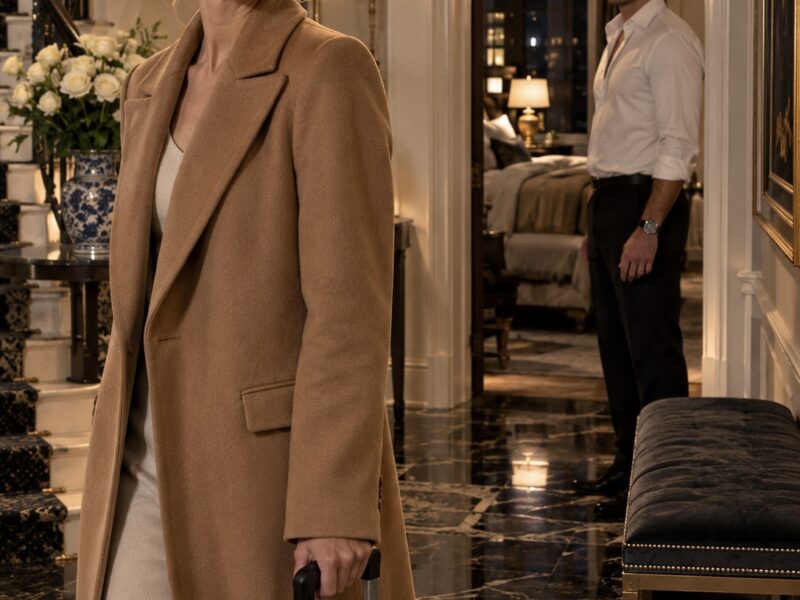
Celeste stood inside the Beacon Hill townhouse with one hand wrapped around the handle of her suitcase while rainwater slipped from the hem of her camel coat onto the black marble floor.
For several seconds, she simply stared at those shoes.
People liked to say they knew exactly how they would react to betrayal.
They imagined screaming.
Breaking glasses.
Dragging suitcases onto sidewalks.
Throwing diamond rings hard enough to crack mirrors.
Celeste did none of those things.
She noticed the shoes.
Then she noticed Martin.
The house manager had appeared at the end of the hall, but instead of greeting her with his usual easy smile, he had stopped so abruptly that the silver tray in his hands tilted.
“Miss Arden.”
His face changed.
“Celeste. You’re back early.”
That correction told her more than any confession could have.
For two years, Martin had called her Miss Arden with the warm formality reserved for the woman everyone assumed would become Mrs. Shaw.
Now he used her first name like a warning.
Celeste looked at him.
Martin looked toward the staircase.
And that was enough.
“I see,” she said.
His throat moved.
“Miss Arden, perhaps Mr. Shaw should—”
“No.”
Her voice was quiet.
Martin fell silent.
Questions were useful when facts were uncertain.
Celeste had built a career determining when facts were uncertain.
There was nothing uncertain about the fear on Martin’s face.
She began walking upstairs.
The wheels of her suitcase struck each wooden step with a rhythmic click.
Click.
Click.
Click.
The sound followed her through the narrow staircase like a countdown.
At the top, the hallway was dim except for a lamp near the master suite.
The bedroom door stood slightly open.
Then Celeste heard a woman laugh.
Not nervous laughter.
Not embarrassed laughter.
Comfortable laughter.
The kind of laugh a woman used when she believed the room belonged to her.
“Everett, what about this one?”
Celeste stopped.
A woman’s voice drifted through the crack.
“I chose ivory. It looks expensive without trying too hard.”
Everett laughed softly.
Celeste had not heard him laugh that way with her in months.
That was the first thing that hurt.
Not the shoes downstairs.
Not the feminine voice.
Not even the fact that another woman was standing inside the bedroom Celeste had spent six months designing before she and Everett moved into the townhouse.
It was Everett’s laugh.
Warm.
Unguarded.
Patient.
Celeste moved closer to the door.
Through the narrow opening, she saw Maribel Lane standing beside the bed in a silk slip.
A second nightgown was pressed against her body.
Her auburn hair fell over one shoulder in loose, deliberate waves.
An open suitcase sat on Celeste’s antique Persian rug, overflowing with lingerie, cosmetics, perfume bottles, skin care, and a pale pink robe.
Not an overnight bag.
Not an emergency.
A move.
Everett sat on the edge of the bed with the sleeves of his white shirt rolled to his elbows.
He was smiling at Maribel.
Celeste watched him for three seconds.
Four.
Five.
Then her eyes began recording details with the ruthless precision that had made her one of the most expensive crisis strategists in private equity.
The sheets were new.
Her cashmere throw had been removed from the armchair.
The photograph from their engagement dinner was gone from the nightstand.
Her jewelry tray from Venice now held Maribel’s gold earrings.
A bottle of perfume rested beside Celeste’s reading lamp.
Even her side of the bathroom counter had been cleared.
Everett had not merely cheated on her.
He had made space.
That distinction mattered.
An affair could be described as weakness.
This required planning.
Celeste turned around before either of them saw her.
She walked to the guest suite at the opposite end of the hallway, stepped inside, and locked the door.
Only then did she put down her suitcase.
Her hands were not shaking.
That frightened her more than shaking would have.
She removed her coat.
Sat at the desk.
Then slowly pulled the engagement ring from her finger.
Five carats.
Emerald cut.
Four hundred thousand dollars.
Everett had chosen it with the same instinct he used when acquiring real estate—large enough to be discussed, rare enough to signal status, photographed well from every angle.
Their proposal had been photographed too.
Of course it had.
Everett had arranged for a photographer to stand half-hidden behind the terrace at a private club in Manhattan.
The moment he knelt, cameras began clicking.
By morning, images had appeared in society pages.
By evening, wedding blogs were calling them “Boston’s modern old-money power couple.”
Celeste had laughed when she saw the phrase.
Everett had not.
He liked it.
He liked descriptions of their relationship that sounded like merger announcements.
Celeste placed the ring on the desk.
A pale indentation remained around her finger.
For some reason, that tiny mark felt more intimate than the diamond ever had.
She opened her laptop.
Outside the locked door, footsteps crossed the hallway.
Maribel laughed again.
Celeste stared at the screen.
She was thirty years old.
Raised between New York and London.
Educated at schools where daughters of powerful families learned three languages, table manners, and how to appear comfortable while older men discussed money around them.
Her mother had taught her to enter a room without demanding attention.
Her father had taught her never to sign anything she had not read twice.
Business school taught her something more valuable.
Attention was power.
Celeste had turned that power into a career.
Private equity firms hired her when acquisitions became dangerous.
Boards called when numbers did not match narratives.
She could read a debt schedule and tell who was lying.
She could sit through a three-hour presentation and remember the one executive who stopped taking notes when environmental liability was mentioned.
Everett had once admired that about her.
In the beginning, he would bring her documents at midnight.
“What am I missing?” he would ask.
Celeste would read twenty pages and tap a paragraph.
“This.”
He would stare.
“How did you see that?”
“You were looking for confirmation. I was looking for risk.”
He used to kiss her after that.
Somewhere along the way, admiration had become convenience.
Her intelligence remained useful.
He simply stopped wanting to acknowledge that it belonged to her.
Everett liked introducing Celeste at dinners as “the person who makes complicated things sound elegant.”
He never said she had saved one of his company’s acquisitions by identifying a hidden covenant violation twelve hours before closing.
He never mentioned that she had rewritten lender communications during the week his chief financial officer nearly triggered a default.
When she challenged him, he smiled.
“You know what I mean.”
She did.
He meant that her competence was attractive as long as it stayed decorative.
Celeste’s old business phone buzzed inside the desk drawer.
She froze.
Only three people had that number.
Her father.
Her attorney.
And Julian Vail.
She pulled out the phone.
One message.
The penthouse is ready. If you need it, the key is with the concierge.
Celeste stared at the screen.
Julian Vail had been her rival in graduate school.
Then her competitor.
Then, strangely, the person she trusted most in rooms where trust was considered a weakness.
He ran Vail Capital now, one of the few firms Everett genuinely feared.
Julian and Celeste had spent four years pretending their relationship was purely intellectual.
They argued about acquisitions.
Debt structures.
Ethics.
Once, at a conference in Chicago, they debated a hotel restructuring until two in the morning while everyone else got drunk in the lobby bar.
At two fifteen, Julian had walked her to the elevator.
He had looked at her for one second too long.
Then at the engagement ring Everett had given her three weeks earlier.
“Goodnight, Celeste.”
Nothing else.
He had never crossed the line.
Not once.
Now he had somehow learned enough to offer her a place to go.
Celeste typed:
I may need twenty-four hours.
The reply appeared almost immediately.
Take the whole building if you want.
Something inside her cracked.
Not enough to cry.
Enough to breathe.
A knock sounded at the door.
“Celeste?”
Everett.
She looked at the engagement ring.
Then at Julian’s message.
Then she closed the laptop.
“One second.”
She stood and opened the door.
Everett was leaning against the hallway wall.
Dark hair.
Blue eyes.
Expensive shirt unbuttoned at the throat.
The kind of face people forgave before they knew what he had done.
Behind him stood Maribel in a white robe.
Not Celeste’s robe.
That somehow made it worse.
Maribel had brought her own.
“You came back early,” Everett said.
“I did.”
“Why didn’t you call?”
Celeste looked past him toward Maribel.
“I didn’t realize appointments were required to enter my own home.”
Maribel’s expression shifted into something rehearsed.
“Celeste, I know this must look strange.”
Celeste looked directly at her.
“No.”
Maribel blinked.
“It looks extremely clear.”
Everett exhaled through his nose.
“Don’t do this.”
Celeste almost laughed.
“Do what?”
“Turn it into something dramatic.”
She stared at him.
For the first time that night, genuine disbelief moved through her.
He had installed his mistress in their bedroom, removed their photograph, changed the sheets, and was asking her not to be dramatic.
“Maribel is going through a difficult time,” Everett said. “She needed somewhere private for a few days.”
“In our bedroom?”
“You were away.”
“So the room was lonely?”
His jaw tightened.
Everett disliked sarcasm from women.
He considered it aggressive.
Unless he was the one being sarcastic.
Maribel touched his arm.
“I told him this might be uncomfortable.”
Celeste’s eyes moved to Maribel’s hand.
“But Everett said you’d understand. He said you’re very practical.”
Celeste nodded slowly.
“He’s right.”
Everett frowned.
That was not the answer he had prepared himself for.
“You’re not going to ask me what’s happening?”
“No.”
“Celeste.”
“I can see what’s happening.”
“Nothing happened.”
Maribel’s eyes flickered.
Celeste caught it.
There.
One lie too many.
She could have exposed it immediately.
Instead she smiled.
That unsettled Everett more.
“I have a project downtown,” she said. “I’ll stay closer to the office for a while.”
Everett straightened.
“What project?”
“A private one.”
“How long?”
“Until it’s finished.”
Maribel gave Celeste a sympathetic smile that almost deserved applause.
“Don’t worry about Everett. I’ll make sure everything here is taken care of.”
Celeste turned her head slowly.
“The house?”
Maribel hesitated.
“I just mean—”
Celeste looked down the hallway.
The antique runner she had restored.
The brass sconces she found in Paris.
The archway she had fought with the architect to preserve.
The room behind Everett where another woman’s suitcase lay open across Celeste’s rug.
“How generous,” Celeste said.
She stepped toward the staircase.
Everett reached for her wrist.
She moved before he could touch her.
“Celeste.”
She stopped.
Something crossed his face.
For two seconds, she thought he might finally say it.
Wait.
I’m sorry.
I made a terrible mistake.
Something human.
Anything.
Instead Everett looked toward the rain streaking the tall window at the end of the hall.
“Be careful on the road.”
Celeste stared at him.
Then nodded.
“I always am.”
She closed the guest room door behind her.
And at that exact moment, although Everett did not know it yet, their wedding ended.
At 2:03 that morning, Celeste packed two suitcases.
Not everything.
Only what mattered.
Clothes.
Three encrypted hard drives.
Her passport.
Legal documents.
The notebook containing four years of handwritten deal observations.
Her grandmother’s earrings.
The old business phone.
She placed the engagement ring on the desk.
Beside it, she left a single sheet of paper.
She considered writing something cruel.
She had earned cruelty.
Instead she wrote one sentence.
You may keep the room, but not the woman who paid attention in it.
Then she walked downstairs.
Martin stood in the dark foyer.
He looked at the suitcases.
Then at her bare left hand.
“Miss Arden.”
This time, he did not correct himself.
Celeste stopped.
“You knew?”
Martin closed his eyes briefly.
“Since yesterday.”
“And how long was she supposed to stay?”
He looked ashamed.
“I don’t know.”
“That means you do.”
His silence answered.
Celeste nodded.
“Take care of yourself, Martin.”
“Where will you go?”
She glanced once toward the staircase.
Above them, the house was silent.
“Somewhere I’m expected.”
She walked into the garage.
By the time Everett found her note six hours later, Celeste was not crying in a hotel.
She was sitting beside Julian Vail inside Boston City Hall.
Julian wore a charcoal suit without a tie.
His black hair was still slightly damp from the rain.
He looked as if he had slept even less than she had.
When Celeste entered, he stood immediately.
“You slept?”
“Four hours.”
“Enough?”
“For legal paperwork.”
His eyes moved to her left hand.
He said nothing.
That was Julian’s particular form of kindness.
He noticed without forcing people to explain what he had noticed.
“Your attorney reviewed everything?” she asked.
“Twice.”
“Mine?”
“Already spoke to him.”
Celeste narrowed her eyes.
“At what hour?”
“An hour civilized people don’t discuss.”
She almost smiled.
Julian reached into his coat.
“I brought something.”
“If it’s flowers, I’m leaving.”
“God, no.”
He handed her a small velvet box.
Celeste opened it.
Two platinum bands.
Simple.
No diamonds.
No performance.
Inside each ring was a single engraved letter.
C.
J.
She looked up.
“You brought rings.”
“I assumed you would refuse diamonds today.”
That sentence nearly undid her.
Not because it was romantic.
Because it was accurate.
She closed the box.
“Julian.”
“Yes.”
“This is not a rescue.”
“I know.”
“I am not marrying you because I need somewhere to live.”
“I know.”
“And if you ever move another woman into my bedroom—”
“I assume I lose more than the bedroom.”
“You lose the building.”
His mouth curved.
“Fair.”
Celeste studied him.
“You’re taking this very calmly.”
“No, I’m not.”
“You look calm.”
“I negotiate for a living.”
“So do I.”
“Then stop confusing performance with reality.”
For the first time since she saw those satin shoes, Celeste had no response.
The clerk appeared at the doorway.
“Celeste Arden? Julian Vail?”
Julian looked at her.
He did not reach for her hand.
He did not say Are you sure? in the dramatic tone of a man hoping to be reassured.
He simply waited.
Celeste stood.
“Let’s go.”
They married in a municipal room with beige walls, fluorescent lighting, and a judge who had performed enough impulsive weddings to distinguish panic from decision.
Celeste signed first.
Her handwriting was steady.
Julian signed beneath her.
The judge stamped the certificate.
The sound was absurdly final.
Whack.
9:17 a.m.
Married.
No quartet.
No orchids.
No photographer.
No seven-tier cake.
No Everett waiting at the end of an aisle while guests pretended fidelity could be proven by tailoring.
Just ink.
A stamp.
A legal fact.
Outside City Hall, rain washed the pavement silver.
Julian opened the car door.
“My attorney will notify Everett before noon.”
“About the marriage?”
“Among other things.”
Celeste paused.
“What other things?”
Julian looked at her.
“You’re very good at identifying risk in other people’s companies.”
Her expression changed.
“Southport.”
“Among several problems.”
A cold thread moved through her.
The Southport Waterfront Redevelopment was Everett’s pride.
A luxury retail and residential development his family company had purchased at a premium.
He talked about it constantly.
He used Celeste’s analysis in investor presentations.
He called her at midnight to review risk disclosures.
He bragged that the project would redefine the harbor.
Celeste had spent months warning him that his optimism was outrunning his diligence.
“You looked into Osborne Group.”
“I didn’t need to look very far.”
“Julian.”
“Everett moved another woman into your bedroom while using your work to keep his balance sheet upright.”
His voice remained calm.
“I am not sentimental enough to overlook stupidity when it is publicly financed.”
Her phone began ringing.
Everett.
Celeste watched it vibrate.
Once.
Twice.
Three times.
She answered on the fourth call.
“Good morning.”
“Where are you?”
No greeting.
Of course.
“Interesting opening.”
“Celeste, where are you?”
“Outside.”
“Did you take your ring off?”
“Yes.”
“What does that mean?”
“It was uncomfortable.”
“That ring cost four hundred thousand dollars.”
“Then give it to Maribel. Her shoes have already moved in.”
Something crashed on his end.
“Come home.”
“I am home.”
Silence.
Then, quieter:
“Where?”
Celeste looked at Julian.
Rain dotted the shoulders of his charcoal coat.
He stood beside her without touching her, completely unbothered by the storm.
“With my husband.”
Everett laughed once.
A hard, confused sound.
“Don’t play games with me.”
“I’m not.”
“Celeste.”
“I got married this morning.”
The silence that followed was so complete she could hear traffic behind him.
“To who?”
Julian leaned toward the phone.
“To me.”
Everett stopped breathing.
Then the line went dead.
Julian straightened.
Celeste stared at the blank screen.
“That was unnecessarily dramatic.”
“I disagree.”
For the first time in twenty-four hours, she laughed.
It lasted three seconds.
Then Everett called again.
And again.
And again.
Celeste turned off the phone.
What she did not know was that Everett’s panic had only begun.
For the next two days, he searched for her like a man trying to recover stolen property.
He called hotels.
Airlines.
Her assistant.
Her father.
Their wedding planner.
The jeweler.
The florist.
Her attorney.
His attorney.
He sent messages that changed by the hour.
We need to talk.
Then:
You can’t seriously be married.
Then:
This is insane.
Then:
You are humiliating both of us.
Then, finally:
Please answer me.
Celeste answered none of them.
She stayed in Julian’s Tribeca penthouse.
It was quieter than Everett’s townhouse.
Dark wood floors.
Floor-to-ceiling windows.
A kitchen that looked designed to be used rather than photographed.
When she arrived, the pantry already contained her preferred tea.
Her clothes arrived before noon.
Not random designer pieces purchased by an assistant.
Her size.
Her colors.
The brands she actually wore.
Celeste stood inside the closet staring at them.
“You did this?”
Julian leaned against the doorway.
“I delegated with unusually specific instructions.”
“You knew my sizes?”
“Your tailor’s assistant owes me a favor.”
“That sounds illegal.”
“It was expensive, not illegal.”
Her eyes narrowed.
“Julian.”
“Yes?”
“How long have you known what kind of tea I drink?”
He turned away.
“Long enough.”
Later, Celeste noticed a framed photograph on the dresser.
She picked it up.
A business school gala four years earlier.
She was holding champagne near a window.
Julian stood several feet behind her speaking to someone off camera.
Except he was not looking at the person.
He was looking at Celeste.
She heard Julian behind her.
“I forgot that was there.”
“No, you didn’t.”
“No.”
“You kept this for four years?”
He crossed the room and took off his watch.
“You were wearing green.”
“That is not an answer.”
“It is the answer you’re getting today.”
She looked down at the photograph.
There were some betrayals that made a person question everything they thought they knew.
There were also truths that had been quietly waiting for years, asking for nothing.
She put the picture down.
That afternoon, Julian’s chief analyst brought her a file.
OSBORNE GROUP — EXPOSURE MAP.
Celeste opened it.
Southport Waterfront Redevelopment.
Her eyes moved quickly.
Then stopped.
Soil instability.
Transit authority easements.
Pending municipal review.
Insurance concerns.
Debt maturity concentrated within nine months.
A geological survey delivered eleven weeks earlier.
Unopened.
Celeste stared at the date.
March 12.
Monday.
She remembered.
Everett’s office.
Seven urgent folders on his desk.
The geological survey had been third.
He had signed the first two.
Then Maribel called.
Celeste could hear the conversation again.
Everett, I feel dizzy.
His chair scraped back.
“What happened?”
I don’t know. I’m on Fifth Avenue. Maybe I haven’t eaten.
Everett had left at 1:47 p.m.
That evening, Maribel posted nine photographs.
In the fifth one, she stood smiling near Bethesda Fountain with a shopping bag in her hand.
Everett’s reflection appeared in the glass behind her.
Holding two more bags.
Celeste had noticed.
Of course she had.
At the time, she had filed the observation away because noticing something and being ready to understand it were two different things.
Now she understood everything.
Julian watched her from across the room.
“You remember.”
“Yes.”
“How much?”
“All of it.”
His expression hardened.
“That’s what I was afraid of.”
Three days after Celeste left Everett, an invitation arrived.
The Harrington Foundation Winter Gala.
Co-sponsor: Osborne Group.
Guests:
Everett Shaw.
Maribel Lane.
Celeste Vail.
Julian Vail.
Celeste held the invitation between two fingers.
“You arranged this.”
Julian continued reading.
“The gala occurs every year.”
“The guest list doesn’t.”
“No.”
“You arranged this.”
“Yes.”
“Why?”
He finally looked up.
“Because men like Everett understand private loss intellectually.”
Julian closed the report.
“They understand public loss emotionally.”
Celeste stared at him.
“And me?”
“You don’t have to attend.”
“You want him to see me.”
“I want you to decide whether you want to be seen.”
She thought about Everett saying, Be careful on the road.
She thought about Maribel standing in her robe, promising to look after her house.
“I want him to see.”
The night of the gala, Celeste wore black.
Not funeral black.
Not theatrical revenge black.
Something quieter.
A column gown with a low back.
Diamond cuffs.
Hair pinned away from her neck.
Julian stood behind her before they left, fastening a sapphire necklace.
His fingers never touched more skin than necessary.
The stone settled against her throat.
Deep blue.
Almost black.
“Too much?” Celeste asked.
“For anyone else.”
She met his eyes in the mirror.
“Was that flirting?”
“No.”
“You’re terrible at lying.”
“Yes.”
At the ballroom entrance, the cameras turned.
The whispers began before Celeste crossed the threshold.
“Celeste Arden.”
“No—Vail.”
“She married him?”
“She was engaged to Everett.”
“Three days ago.”
Across the room, Everett saw her.
His champagne glass tilted.
One drop landed on his cuff.
Maribel followed his stare.
She wore silver.
Too pale.
Too bridal.
The moment Maribel recognized Celeste’s wedding band, her face changed.
Celeste held Everett’s gaze.
Julian rested one hand at the small of her back.
Not pulling.
Not claiming.
Simply there.
Everett’s expression moved through confusion, rage, disbelief, and something more primitive.
Possession.
“Well,” Julian murmured, “that was quick.”
“He hates being the last person in a room to know anything.”
“Then tonight may be difficult for him.”
They sat at the front table.
Julian introduced Celeste as his wife without emphasis.
That was the elegance of it.
He did not perform victory.
The fact itself did enough damage.
Halfway through dinner, Everett approached.
“Celeste.”
Julian put down his glass.
“Mr. Shaw.”
“I need to speak with her.”
“You’re interrupting my wife’s dinner.”
Everett’s jaw tightened.
“This is between Celeste and me.”
Julian’s gaze did not change.
“There is no Celeste and you.”
Before Everett could answer, Maribel appeared beside him.
“Congratulations.”
Her smile was painfully bright.
“I didn’t realize you’d find a replacement so quickly.”
Celeste slowly placed her napkin beside her plate.
The people nearest them stopped pretending not to listen.
She stood.
“Replacement?”
Maribel lifted her chin.
“If the word fits.”
Celeste looked at her for a long moment.
Then smiled.
“Maribel, the slippers you wore in that bedroom were mine.”
Maribel’s smile faltered.
“The sheets under you were chosen by me. The vanity where you arranged your perfume was imported by me. The artwork, the lamps, the dinner plates downstairs, the tea in the kitchen, the rug beneath your suitcase—mine.”
“Celeste—”
“The house manager started calling me by my first name because he no longer knew how to address the woman whose home you had entered.”
Color rushed into Maribel’s cheeks.
Celeste stepped slightly closer.
“And even the man you’re holding onto is something I left behind.”
A sound moved through the nearby tables.
Not quite laughter.
Worse.
Recognition.
“You arrogant bitch,” Maribel whispered.
“Careful,” Julian said.
He did not raise his voice.
Maribel went silent.
Everett stared at Celeste.
“You married him to punish me.”
“No.”
“Yes, you did.”
“I left you to protect myself.”
Her eyes shifted briefly toward Julian.
“I married him because he understood the difference.”
Everett’s face hardened.
“You were engaged to me three days ago.”
“And you had another woman sleeping in my bedroom three days ago.”
“She needed a place to stay.”
“She brought lingerie, skin care, perfume, and enough confidence to tell me she would take care of my house.”
Everett lowered his voice.
“Five minutes.”
Celeste lifted an eyebrow.
“Excuse me?”
“Outside. Five minutes.”
Julian stood.
Celeste touched his sleeve.
“I can manage five minutes.”
The corridor outside the ballroom was empty except for marble columns and the distant sound of music.
The doors closed behind them.
Everett turned on her immediately.
“What the hell are you doing?”
“Attending a gala.”
“With him.”
“My husband.”
He flinched.
Celeste saw it.
Good.
“Do you understand what you’ve done?”
“Yes.”
“You made me look like a fool.”
“No, Everett.”
She leaned back against the marble wall.
“I stopped helping you look like a man worth marrying.”
His face went white with anger.
“I made one mistake.”
“You moved her in.”
“I was confused.”
“You replaced our sheets.”
“I panicked.”
“You submitted a revised wedding vendor form with her name on it.”
Everett froze.
The silence between them sharpened.
“What?”
Celeste watched the blood leave his face.
“How do you know about that?”
“Maribel posted a story from Vera Wang.”
Everett said nothing.
“You were visible in the mirror behind her holding a folder.”
His mouth opened.
Celeste continued.
“I called the planner after I canceled payment authorization. She confirmed the revision request.”
“You canceled what?”
“Everything tied to my accounts.”
“Celeste—”
“The florist. The venue deposit. The string quartet. The vintage champagne. The Paris honeymoon suite.”
His disbelief turned to rage.
“That wedding was ours.”
“No.”
Her voice softened.
“It stopped being ours when you tried to replace my name on the paperwork.”
For one second, Everett looked wounded rather than angry.
It almost made him recognizable.
“Come home.”
Celeste laughed quietly.
“Which home?”
“I’ll send Maribel away.”
“How generous.”
“I mean it.”
“So did I when I signed my marriage certificate.”
Everett stepped closer.
“You cannot possibly love him.”
“That isn’t your question.”
“What?”
“Your question is whether I can stop loving you.”
Celeste looked directly into his eyes.
“And you should be very careful asking questions when you’re afraid of the answer.”
His hand closed around her wrist.
Not hard enough to bruise.
Hard enough to reveal instinct.
Celeste looked down.
“Remove your hand.”
He didn’t.
“Everett.”
Julian’s voice came from the end of the corridor.
Everett released her.
Julian approached slowly.
His face was calm.
There was nothing safe in that calm.
“Touch my wife again,” he said, “and your company’s collapse will become the second worst thing that happens to you this month.”
Everett’s head snapped up.
“What did you say?”
Julian handed him a black folder.
“You should learn to read faster than you sign.”
Everett opened it.
Celeste watched his expression change.
VAIL CAPITAL — CONDITIONAL ACQUISITION PROPOSAL.
Southport Waterfront debt exposure.
New Jersey logistics controlling interest.
Offer price: sixty-two cents on the dollar.
Everett looked up.
“You’re trying to buy Southport.”
“No.”
Julian adjusted one cuff.
“I’m offering oxygen to a drowning company at a price appropriate to the time it has already spent underwater.”
“Go to hell.”
“Eventually.”
Julian glanced toward the ballroom.
“But not before your board meeting tomorrow.”
Everett turned to Celeste.
“You gave him this information.”
“You gave me information for two years.”
“That was confidential.”
“You handed me investor presentations and asked me to correct them. You sent lender memos to my personal email. You used my market analysis under your name.”
“You used confidential material against me.”
“No.”
Celeste held his gaze.
“I used my own work product and public filings.”
She paused.
“The confidential disaster is still sitting unopened in your office.”
Everett’s expression changed.
“What disaster?”
Julian stared at him.
Then something almost like disbelief crossed his face.
“You really don’t know.”
Everett looked from Julian to Celeste.
“Know what?”
The ballroom doors opened.
Peter Shaw stepped into the corridor.
Everett’s father.
Chairman of Osborne Group.
Same blue eyes.
Less vanity.
More survival.
Two board members followed him.
Peter held a report.
“Everett.”
The entire corridor seemed to cool.
“Dad.”
Peter lifted the document.
“Three months ago, the Metropolitan Transit Authority delivered a geological easement survey concerning Southport.”
Everett’s face drained.
“It indicates that the proposed transit hub intersects our foundation zone.”
Peter walked closer.
“Why did I learn this from Julian Vail’s acquisition packet?”
“I never received that.”
Celeste spoke.
“You did.”
Everyone looked at her.
She folded her hands in front of her.
“March twelfth. Monday.”
Everett stared.
“You had seven urgent folders in your signature tray. The survey was number three.”
His lips parted.
“You signed the first two.”
Celeste continued.
“At approximately 1:40, Maribel called.”
Behind them, the ballroom doors opened again.
Maribel had followed.
“She said she felt faint.”
Everett said nothing.
“You left the office at 1:47.”
Peter looked at his son.
Celeste’s voice remained steady.
“That evening, Maribel posted nine photographs. In photograph five, she was standing at Bethesda Fountain. Your reflection was visible in the window behind her.”
Maribel’s face went white.
“You were holding two shopping bags.”
Peter’s expression hardened.
“The remaining folders were moved to the credenza the next morning. That Friday, you asked me to review the updated investor deck.”
Celeste remembered the exact comment.
“I flagged the missing survey reference.”
Everett whispered, “No.”
“You marked the comment resolved without opening the attachment.”
The corridor fell silent.
Peter stared at him.
“Is that true?”
Everett’s mouth opened.
Nothing came out.
Maribel pressed one hand against her throat.
Peter lowered the report.
“The board meets at eight tomorrow morning.”
“Dad.”
“Be there sober, silent, and prepared to explain why your negligence may cost this company two hundred million dollars.”
Then Peter turned and walked away.
Everett stood perfectly still.
Celeste watched realization finally reach him.
Not remorse.
Fear.
Then, just as quickly, anger replaced it.
“You set this up.”
Celeste’s eyes narrowed.
“No.”
“You ruined me.”
“I remembered.”
“You gave Vail everything.”
“I noticed what you ignored.”
Julian stepped beside her.
“We’re leaving.”
“Celeste.”
Everett’s voice broke.
She stopped.
There it was.
The tone he should have used upstairs at the townhouse.
The first honest sound of fear.
Too late.
Celeste looked at him one final time.
“Goodnight, Everett.”
The next morning, Osborne Group’s board removed Everett as acting chief executive pending restructuring.
His father voted with the majority.
At noon, Vail Capital revised its offer downward.
At three, lenders requested emergency disclosures.
At five, Maribel’s social media disappeared.
At six, Everett returned to the Beacon Hill townhouse.
The cream satin shoes were still beneath the bench.
One had fallen sideways.
Martin stood near the staircase.
“Where is she?”
Martin hesitated.
“Ms. Lane is upstairs.”
“Packing?”
“Arguing with someone on the phone.”
Everett took the stairs two at a time.
Maribel stood in the bedroom beside her open suitcase.
Her face was red.
“No, I cannot post a statement,” she snapped into her phone. “Because then it looks like I knew something. I didn’t know about his stupid project.”
She saw Everett.
“I’ll call you back.”
She disconnected.
For several seconds, they stared at each other across the room Celeste had created.
The bed was unmade.
Perfume bottles crowded the vanity.
A champagne-colored slip lay across the chair.
Nothing looked glamorous anymore.
“You said she was overreacting,” Maribel said.
Everett laughed once.
“That is what you’re worried about?”
“My name is everywhere.”
“My company is bleeding.”
“Because you ignored a report.”
His eyes sharpened.
There it was.
The truth neither of them wanted.
“I ignored it because you called me.”
Maribel stared at him.
“Don’t you dare.”
“You said you were sick.”
“I said I felt faint.”
“You called me crying.”
“And you decided to leave your office.”
“You wanted me there.”
“You wanted to come.”
Everett stopped.
The words hit because they were true.
Maribel stepped closer.
“You liked it.”
“What?”
“You liked being needed.”
He stared at her.
“You always complained Celeste made you feel stupid because she knew more than you. You liked that I called when I couldn’t choose a dress or when I felt dizzy or when some photographer upset me.”
“Shut up.”
“You wanted someone helpless.”
“And you wanted money.”
The room went still.
Maribel’s eyes filled.
“Maybe I wanted the life you promised.”
“This is the life.”
She looked around.
At Celeste’s curtains.
Celeste’s books.
Celeste’s furniture.
The remains of Celeste’s taste surrounding two people who had mistaken access for ownership.
“No,” Maribel whispered.
Everett frowned.
“This is her life with your mess in it.”
He flinched as though she had slapped him.
Maribel began throwing bottles into her suitcase.
“Where are you going?”
“A hotel.”
“With what money?”
She froze.
The credit card Everett had given her was linked to a discretionary account now under board review.
Her modeling work had slowed.
Friends loved scandal until scandal needed a guest room.
Everett watched the calculation on her face.
“You really thought I’d pay for everything forever.”
Maribel turned around.
“You thought Celeste would too.”
Silence.
That landed deeper.
Maribel zipped the suitcase.
Her hands shook.
“You want to know the worst part?”
Everett said nothing.
“She didn’t fight me.”
He looked at her.
“She didn’t scream. She didn’t call me names. She didn’t try to drag me out.”
Maribel swallowed.
“She looked at me like I was furniture someone had placed in the wrong room.”
Then she left.
Twelve minutes later, the front door closed.
Everett remained in the bedroom.
Rain clicked against the windows.
On the nightstand sat Celeste’s engagement ring.
He had placed it inside its velvet box after finding her note.
As though putting the ring back where it belonged could put the woman back too.
He opened the box.
Five carats.
Perfect clarity.
Four hundred thousand dollars.
Completely useless.
He threw it.
The diamond struck the wall and disappeared into the carpet.
It did not make nearly enough noise.
Across the city, Celeste sat barefoot on Julian’s sofa wearing one of his white shirts.
A spreadsheet filled her laptop screen.
Julian stood near the window with his phone.
“Peter agreed to the meeting.”
“Of course.”
“Everett asked if you’ll speak to him.”
“No.”
“Maribel left.”
Celeste looked up.
“Already?”
“Apparently the house became unpleasant.”
“It was never hers.”
Julian’s mouth curved.
“Do you want it back?”
Celeste thought of the satin shoes.
The jewelry tray.
Everett smiling from the edge of their bed.
“No.”
“Good.”
She raised one eyebrow.
“Good?”
“I hated that house.”
“You visited twice.”
“Enough.”
They worked quietly for another hour.
Eventually, Julian placed a cup beside her.
Celeste looked down.
Caramel tea.
“How do you know?”
“You drank it after the Winslow deal collapsed.”
“That was three years ago.”
“You also said peppermint tea was for people pretending to be calm.”
Celeste stared at him.
“Why do you remember these things?”
Julian sat in the chair opposite her.
“Because you said them.”
“That isn’t normal.”
“No.”
She wrapped both hands around the mug.
The smallest kindnesses were strangely dangerous.
Grand gestures could be explained.
Flowers could be strategy.
Diamonds could be guilt.
Remembered details had nowhere to hide.
“Why did you wait?” she asked.
Julian knew immediately what she meant.
“For you?”
“Yes.”
He looked at her for a long time.
“Because you were engaged.”
Celeste laughed softly.
“That stopped you?”
“It should stop everyone.”
The simplicity of his answer hurt.
Everett had treated engagement like a contract that only limited Celeste.
Julian had treated it like a boundary.
“I don’t know what this marriage is yet,” she admitted.
“I know.”
“I may not be ready for it to become what everyone thinks it is.”
“I know.”
“I am definitely not ready to become a love story.”
Julian leaned back.
“Then don’t.”
Celeste looked at him.
“Be a person in my house.”
His voice was quiet.
“The rest can earn itself.”
And over the following weeks, it did.
Not dramatically.
That was the strange part.
Julian did not parade her through restaurants.
He did not call photographers.
He never demanded that she explain every silence.
When she woke at two in the morning and stood too long by the bedroom door because some part of her remembered satin shoes beneath a bench, Julian did not ask what was wrong.
He simply left the hallway light on.
A second desk appeared in the study.
Not beside his like an assistant’s station.
Across from the window where the morning light was best.
Her tea moved to the cabinet at eye level.
A drawer appeared in the bathroom.
No announcement.
No symbolism.
Just room.
Actual room.
One Tuesday, Celeste returned from a brutal lender negotiation and found Julian in the kitchen with flour on his sleeve.
She stopped.
“What happened?”
“I attempted pasta.”
“Attempted?”
“The verb is intentional.”
On the counter sat a bowl of dough that looked like wet cement.
Celeste stared.
Then she laughed.
Not a polite laugh.
Not a society laugh.
She laughed until she had to lean against the island.
Julian watched her.
Something changed in his expression.
Not triumph.
Relief.
“Worth it,” he said.
“You destroyed imported flour just to make me laugh?”
“I have funded worse investments.”
They ordered noodles.
Ate from paper cartons.
Julian asked about her meeting.
Not the way Everett used to ask, waiting for the details that affected him.
Julian remembered the names.
He asked why the mezzanine lender had changed position.
He understood when Celeste explained that the real problem was not leverage but ego.
Three hours passed.
While rinsing the containers, Celeste realized something.
She had not spent those three hours trying to interpret the man beside her.
She had not monitored his tone.
Had not adjusted herself.
Had not searched for danger behind kindness.
That was how safety began.
Not fireworks.
The absence of strategy in another person’s affection.
A week later, Celeste found a sealed envelope on her desk.
Inside was a revised postnuptial agreement.
Her premarital assets remained hers.
Her future earnings remained hers.
Joint purchases required written authorization from both parties.
No morality clauses.
No control disguised as protection.
No language designed to trap her.
A note was clipped to the front.
You should never have to trust me because paperwork leaves you no alternative.
Celeste read it three times.
Then she walked into the library.
Julian was reading quarterly reports.
“You are either the most romantic man alive or the least.”
He looked at the agreement.
“Both, ideally.”
“Most husbands would be offended by this.”
“Most men overestimate how much trust they deserve.”
She stood there.
Something inside her loosened.
Everett wanted trust as tribute.
Julian created conditions where trust could remain voluntary.
“Thank you,” she said.
Julian nodded like she had thanked him for passing the salt.
That was when Celeste finally understood the difference between rescue and respect.
Rescue made a woman indebted.
Respect left her free.
Two months later, they held a reception at Julian’s Hudson Valley estate.
Not a wedding.
Celeste refused to perform bridal innocence for strangers after everything that had happened.
The legal marriage already existed.
This was simply a gathering.
Family.
Friends.
Investors.
People who had watched the scandal spread through Boston and New York society.
Celeste wore ivory.
Not the dress chosen for Everett.
That gown had been canceled, boxed, and donated anonymously to a charity auction.
This dress was simple.
Silk.
Long sleeves.
Open back.
No veil.
On her wrist was a green jade bracelet Julian had bought at a Harrington auction after hearing Celeste mention her grandmother’s lost bracelet exactly once.
Julian’s mother found her in the library.
Beatrice Vail was silver-haired, elegant, and formidable in the way of women who had survived old money without allowing it to make them stupid.
She studied Celeste.
“You look like yourself.”
Celeste smiled.
“Is that approval?”
“Better.”
Beatrice adjusted one sleeve.
Then said casually, “Julian kept a photograph of you on his desk for four years.”
Celeste went still.
“The gala photograph?”
“Yes.”
“He told me he forgot about it.”
“My son lies poorly when embarrassed.”
Celeste laughed.
Beatrice’s expression softened.
“I once told him that if he admired you that much, he should say something.”
“What did he say?”
Beatrice looked across the hall.
Julian stood near the windows speaking to a guest.
“He said you belonged to yourself first and another man second.”
Celeste swallowed.
“And?”
“He said he had no interest in stealing what had not chosen him.”
Across the room, Julian seemed to realize what his mother was discussing.
His ears turned slightly red.
Celeste almost smiled.
Then the estate manager entered.
He approached Julian.
Whispered something.
Julian looked toward Celeste.
She knew before anyone spoke.
Everett had arrived.
He stood beyond the front gates wearing a wrinkled black suit.
Thinner.
Unshaven.
An envelope in one hand.
Security stopped him beside the fountain.
Celeste stepped outside.
Julian followed.
Not beside her.
Several paces behind.
Close enough to help.
Far enough to let the decision remain hers.
Everett’s eyes filled when he saw her.
“Celeste.”
“You weren’t invited.”
“I know.”
“Then why are you here?”
He held up the envelope.
“I bought it back.”
She did not reach for it.
“Bought what?”
“Southport. The debt. The stake. Everything.”
His voice shook.
“I sold Newport. Aspen. The boat. I raised capital from three private lenders. I paid Vail Capital three times the original offer spread to unwind the acquisition.”
For one terrible second, he almost looked proud.
“I fixed it.”
Celeste stared at him.
Behind her, music drifted from the house.
Laughter floated across the terrace.
Julian stood in the doorway with one hand inside his pocket.
Watching.
Not claiming.
Everett stepped closer.
“I fixed the company.”
Celeste’s expression softened.
“You think that was the problem?”
He stopped.
“I know I hurt you.”
“Yes.”
“I humiliated you.”
“Yes.”
“I was stupid.”
“Yes.”
“I lost everything.”
“No.”
Everett stared at her.
“You lost the things you thought proved you mattered.”
She looked at the envelope.
“That’s different.”
“I bought Southport back.”
“You still think this is a transaction.”
“That’s not what I mean.”
“You sold assets, raised money, repurchased debt, and came to my husband’s gate carrying proof of payment.”
Her voice grew quieter.
“Everett, you are standing here as though I am one more distressed asset you can recover at a premium.”
His face crumpled.
“I love you.”
The words reached Celeste.
And landed nowhere.
Once, those three words could rearrange her entire day.
Once, she would have taken them home, turned them over, searched for proof that they still meant something.
Now they were simply words from a man who understood value after loss.
Not love before damage.
“Do you know the difference between you and Julian?” she asked.
Everett looked toward the house.
Bitterness flickered.
“He has more money.”
“No.”
Everett looked back.
“When you found me in pain, you told me to be careful on the road.”
His face changed.
“When Julian found me leaving, he told me I already had somewhere to go.”
Celeste’s eyes burned.
“You gave me warnings after betrayal. He gave me respect before desire.”
The autumn wind moved the hem of her dress.
“That is the difference.”
Tears ran down Everett’s face.
Then, to Celeste’s surprise, he dropped to his knees on the gravel.
“Please.”
She stared at him.
“Give me one chance.”
His voice broke.
“One chance to prove I understand.”
Celeste looked at the man she had almost married.
She remembered his blue eyes beneath chandeliers.
The engagement photograph.
The townhouse.
The nights she had edited documents while he slept.
The way she translated negligence into pressure.
Disrespect into stress.
Distance into complexity.
She felt sadness.
Not longing.
Not weakness.
Sadness for the woman she might have become.
A woman who stayed.
A woman who kept correcting his mistakes until she disappeared inside them.
“Everett.”
He looked up.
“Not everyone who leaves is waiting to be followed.”
Then she turned.
She walked toward the house.
Julian met her halfway.
He did not ask if she was okay.
He knew the question was too small.
Instead, he held out his hand.
Celeste took it.
Behind them, security waited.
Everett eventually stood.
He had no other choice.
Inside, dinner resumed.
Later, Julian rose to speak.
Public emotion did not suit him.
Celeste saw his hand tighten around the stem of his glass.
“Celeste once told me the most dangerous mistake in business is confusing possession with value.”
The room quieted.
“People do it with companies. Assets. Reputation.”
His eyes found hers.
“And sometimes with love.”
Celeste felt her breath catch.
“They think that because something is near them, it belongs to them.”
Julian paused.
“Because someone is patient, she will always wait.”
No one moved.
“Because someone is loyal, she cannot leave.”
His expression softened.
“Celeste taught me something simpler.”
She looked at the jade bracelet on her wrist.
“Love is attention.”
Julian’s voice lowered.
“It is memory. It is restraint.”
His gaze remained on hers.
“It is knowing when to stand beside someone without blocking the door.”
Celeste looked down.
For years, people had praised her composure.
Her elegance.
Her ability to absorb insult without disrupting the room.
But composure was not consent.
Elegance was not surrender.
Silence was not permission.
A woman could leave without screaming and still rearrange every room behind her.
Long after the guests left, Celeste stood on the balcony overlooking the dark estate.
Julian stepped outside carrying two cups.
“No champagne?” she asked.
“You barely drank it.”
“You noticed.”
“I do that.”
She accepted the tea.
The road disappeared through the trees.
Somewhere beyond them, Everett was driving away.
Eventually he would go home.
He would walk into a bedroom that still contained traces of a life he had mistaken for furniture.
He would probably find Celeste’s ring again.
Perhaps one day he would understand.
Perhaps not.
It was no longer her responsibility.
“Do you regret it?” Celeste asked.
Julian leaned against the railing.
“Marrying you?”
“So quickly.”
“No.”
“You should at least pretend to think.”
“I did.”
“When?”
“For four years.”
She turned away, smiling.
The air was cold.
The tea warmed her hands.
Celeste thought of cream satin shoes.
A silk robe.
An empty frame.
A diamond ring left behind on a desk.
The hard stamp of a municipal seal.
Everett’s face in the ballroom.
Maribel surrounded by things she had mistaken for victory.
And Julian waiting—not because he lacked courage, but because he respected a line Everett had never even seen.
In another life, Celeste might have married Everett.
She could almost see that woman.
Standing beside him at fundraisers.
Correcting his investor materials after midnight.
Ignoring messages she should question.
Smiling when Maribel’s name appeared too frequently.
Telling herself:
He’s under pressure.
She’s only a friend.
He didn’t mean it.
Powerful men are complicated.
She might have spent years becoming smaller so Everett could continue believing he was large.
Instead, life had given her something brutal.
The truth early enough to escape.
No screaming at a bedroom door.
No begging.
No bargaining with a woman in silk.
No public fight over a man who had already made his choice.
Celeste simply left.
And Everett had misunderstood her silence until it was too late.
He thought silence meant heartbreak.
He thought calm meant weakness.
He thought she had walked out because she expected him to follow.
But a woman’s silence is not always grief.
Sometimes it is calculation.
Sometimes it is dignity.
Sometimes it is the moment she finally understands that explaining herself would only waste more of the life she is trying to save.
Julian touched his cup lightly against hers.
“What are you thinking?”
Celeste looked toward the dark road.
“The house.”
“The townhouse?”
She nodded.
“Do you miss it?”
“No.”
She smiled faintly.
“I was thinking about the first night.”
“The shoes?”
“Yes.”
“What about them?”
Celeste looked at him.
“For a few seconds, I thought seeing another woman’s shoes in my house meant I had lost everything.”
Julian waited.
“And now?”
She looked through the glass doors behind them.
At the quiet rooms.
At the desk waiting for her.
At a life that contained space instead of permission.
“Now I think they were the first honest thing Everett ever gave me.”
Julian said nothing.
He didn’t need to.
Celeste took another sip of tea.
There were betrayals that destroyed lives.
And there were betrayals that revealed them.
Everett had wanted another woman in Celeste’s bedroom because he believed Celeste would remain available everywhere else.
He believed loyalty meant permanence.
He believed patience meant dependence.
He believed the woman who repaired his mistakes would eventually repair this one too.
What he never understood was that Celeste’s greatest strength had never been her ability to endure damage.
It was her ability to recognize when an investment had stopped being recoverable.
She had spent her career telling executives not to throw good money after bad.
Not to mistake sunk cost for obligation.
Not to protect failing assets simply because they had once looked promising.
It had taken another woman’s satin shoes for Celeste to apply the same discipline to her own heart.
Below, somewhere near the trees, a security light went dark.
Celeste watched it disappear.
No regret followed.
No urge to look back.
She had spent years believing closure was something another person gave you through apology, confession, explanation, or regret.
Now she knew better.
Closure could be a ring on a desk.
A suitcase rolling downstairs at two in the morning.
A marriage certificate stamped beneath fluorescent lights.
A cup of tea remembered after three years.
A hand offered without being demanded.
Or sometimes closure was simply a door closing so quietly that the person on the other side did not realize what he had lost until the entire house went dark.
And Celeste never turned the lights back on for Everett again.









