A 3-Year-Old Found Her Mafia Boss Daddy—Now His Entire Gang Treats Her Like a Princess!
The day my daughter found her father, she was wearing one yellow rain boot.
That is the first thing I remember.
Not the black cars.
Not the four men positioned along Arthur Avenue pretending they were ordinary pedestrians.
Not even the man sitting beside my three-year-old daughter on a wet bench outside a café, holding half of one of her cookies like he had forgotten what to do with his hands.
I remember the boot.
One yellow rubber boot on Mia’s left foot.
A pink sock on the right.
Because when terror takes hold of you, your mind sometimes refuses to see the important thing and counts ridiculous details instead.
One boot.
One sock.
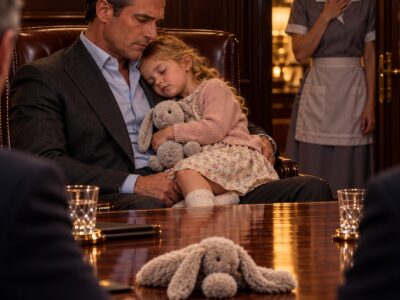
One stuffed rabbit with only one ear.
One child who had been sitting inside the bakery thirty seconds earlier and was suddenly across the street beside the most dangerous man I had ever loved.
“Mia!”
She turned.
Her face lit up.
“Mama!”
She waved the cookie at me.
The man beside her looked up.
Four years disappeared.
Alessandro Romano still had the same dark hair, though silver now touched his temples. His jaw had hardened. His face looked leaner than I remembered, less like the thirty-year-old man who had once waited outside the back door of his mother’s restaurant for me to finish closing and more like the man newspapers called the quiet king of New York’s old Italian syndicates.
But his eyes had not changed.
Gray-green.
Like old bottle glass held to light.
Exactly the same color as my daughter’s.
I stepped off the curb without checking traffic.
A horn screamed.
Someone shouted.
I barely heard either.
One of Alessandro’s men started toward me.
He was enormous, broad enough that his overcoat seemed tailored from a tent.
Alessandro raised two fingers.
The man stopped instantly.
Two fingers.
That was all.
Four grown men who looked capable of breaking doors simply froze.
I crossed the street.
Mia looked delighted.
“Mama, he was lonely.”
Alessandro’s hand tightened around the half-cookie.
“She climbed onto the bench beside me,” he said.
His voice was quieter than I remembered.
“She said I looked like I needed one.”
“Get up, sweetheart.”
Mia frowned.
“But I gave him the big half.”
“I can see.”
She slid off the bench.
I lifted her into my arms so quickly she squealed.
Her clothes smelled like sugar, rain, and the vanilla lotion I had rubbed onto her cheeks that morning.
I pressed my face against her hair.
Thirty seconds.
That was how long I had looked away.
Mrs. Pellegrino had been arguing over whether her anisette cookies needed a second ribbon around the box. I turned toward the register.
When I turned back, Mia was gone.
The other yellow boot lay beneath the window table.
Her crayons were still scattered beside her coloring book.
I had run into the October rain without a coat.
Now I held her so tightly she complained.
“Mama.”
“I know.”
“You’re squishing Biscotti.”
The one-eared rabbit was trapped between us.
I loosened my arms.
Then I looked at Alessandro.
He was staring at Mia.
Not casually.
Not like a stranger noticing a child.
He was studying her.
Her curls.
Her nose.
Her eyes.
The little crease near her left eyebrow.
His gaze finally reached me.
“Elena.”
My name sounded wrong in his mouth.
Too familiar.
Too painful.
“We’re leaving.”
He stood.
He was taller than memory had allowed him to remain.
“Elena.”
“Please.”
His eyes dropped to Mia again.
“How old is she?”
My heart stopped.
“Three.”
Mia answered before I could.
“I’m three and a half.”
Alessandro went very still.
“When is your birthday?”
“March ninth,” Mia announced proudly.
I closed my eyes.
Of course.
Children existed to destroy carefully maintained lies with cheerful accuracy.
When I looked again, the color had disappeared from Alessandro’s face.
He was calculating.
I saw it.
April.
May.
June.
The last night we had spent together had been in June, four years earlier.
Mia was born nine months later.
He did not accuse me.
That would have been easier.
He looked at my daughter as though somebody had just told him a room in a burned house was still standing.
“What’s her full name?”
“Alessandro.”
“I asked one question.”
“No.”
Mia leaned back in my arms.
“Mia Bianca Bennett.”
The street seemed to go quiet.
Bianca.
My mother’s name.
Alessandro swallowed.
“Mia.”
She smiled at him.
Then, apparently deciding he looked sad again, she held out Biscotti.
“This is my bunny.”
Alessandro stared at the battered gray rabbit.
“He only has one ear,” Mia explained, “because he is brave.”
Alessandro accepted the rabbit in both hands.
I had once watched this man interrupt a fight between four drunk dockworkers simply by entering the room.
Now he held a stuffed rabbit like it was made of spun glass.
“Very brave,” he said.
Mia nodded.
“He fights monsters.”
“I could use someone like that.”
“You can borrow him.”
“No.”
I said it too sharply.
Mia looked at me.
Alessandro returned Biscotti immediately.
“I’m sorry.”
That stopped me.
Alessandro Romano did not apologize easily.
Not when I knew him.
Perhaps he had changed.
Or perhaps I had forgotten the parts of him that did.
“I’m taking her home.”
He nodded.
No threat.
No demand.
No line of black cars closing around us.
That confused me more than anger would have.
“It’s raining,” he said.
“I noticed.”
“Enzo can drive you.”
“No.”
His eyes met mine.
“You ran into traffic carrying no coat.”
“I can take the subway.”
“With a wet three-year-old?”
“I have managed without you for four years.”
The sentence landed.
His expression barely moved.
But his hand closed once at his side.
“I know.”
The enormous man stepped forward.
Enzo.
I remembered him.
Younger then.
He had once worked the kitchen door at Alessandro’s mother’s restaurant and pretended not to notice when Alessandro kissed me behind the dumpsters.
Now his neck really was nearly as wide as my waist.
He opened the rear door of a gray sedan.
Not one of the black SUVs.
I noticed that.
Someone had considered how it would look to put a frightened woman and child into one of those cars.
“Please,” Alessandro said.
Just that.
Mia sneezed.
I surrendered.
Enzo drove us to the Bronx.
Halfway there, Mia announced, “You are very big.”
Enzo checked the mirror.
“Yes, miss.”
“Are you scary?”
He considered the question seriously.
“To some people.”
“Not me.”
“No, miss.”
She dug inside her tiny purse and produced a glittery gold star sticker.
“For being not scary.”
Enzo accepted it.
“Thank you.”
He wore it on his coat collar for the entire drive.
Our apartment was on the third floor of a building where the radiator hissed like an angry cat and the landlord fixed things through promises.
Enzo carried Mia’s bakery box upstairs.
Nothing else.
At the door he said, “Boss asked me to give you this.”
I stiffened.
He held out a business card.
Only a phone number.
No name.
“No money?”
Enzo looked almost offended.
“He said you would throw it in the street.”
“He remembers.”
A tiny smile appeared.
“He remembers a lot.”
He left.
That night, I lay beside Mia listening to her breathe.
I had spent four years imagining what would happen if Alessandro found us.
Every version involved control.
Cars.
Lawyers.
Men outside my apartment.
A custody case I could not afford.
Threats disguised as reasonable arrangements.
Instead, nothing happened.
Until eight the next morning.
Someone knocked.
I looked through the peephole.
Alessandro stood in the hallway wearing a gray sweater and dark trousers.
No suit.
No guards visible.
Enzo stood several feet behind him holding a paper grocery bag.
I opened the door halfway.
“No.”
“I haven’t asked anything.”
“You’re here.”
“Yes.”
“That is already something.”
Fair.
Alessandro looked tired.
“I want one hour.”
“For what?”
“To meet her.”
“You met her.”
“To meet her knowing who she might be.”
The honesty hurt.
I tightened my hand around the door.
“And then?”
“If you want me gone, I leave.”
“You expect me to believe that?”
“No.”
He glanced down.
“But I hope eventually you will.”
Mia appeared behind me.
“Cookie man!”
Alessandro closed his eyes briefly.
Apparently his new identity had been established.
She pushed the door open.
I nearly caught it.
“Sweetheart—”
“You came back.”
“I did.”
“Did you bring Biscotti?”
“You have Biscotti.”
She looked at the rabbit in her own hand.
“Oh.”
Enzo turned his cough into something suspiciously like laughter.
I let them in.
The paper bag contained bread, bananas, apples, three kinds of cheese, yogurt, milk, and a box of star-shaped cookies.
“I didn’t know what she eats,” Alessandro said.
“She eats food.”
“I gathered.”
“Why three cheeses?”
“I panicked.”
I stared.
He looked almost embarrassed.
It was so unlike the Alessandro I had prepared myself to fight that I had no defense against it.
Mia dragged him toward the worn rug beside the sofa.
“Blocks.”
Alessandro looked at me.
I folded my arms.
“You asked for an hour.”
He sat.
Cross-legged.
Awkwardly.
A man feared from the docks to Atlantic City obeying a three-year-old who told him the large blocks belonged on the bottom.
“No, Alessandro.”
She knew his name because I had said it yesterday.
He looked at her.
“Too long?”
“What?”
“Would you prefer Alex?”
Mia frowned.
“No.”
“All right.”
“Alessandro sounds fancy.”
“Thank you.”
She handed him a red block.
“Roof.”
He placed it.
Wrong.
She sighed with astonishing patience.
“That’s not where roofs go.”
“I have people who build houses.”
“I can see why.”
I turned away because I nearly laughed.
The tower collapsed five minutes later.
Alessandro flinched.
Mia laughed so hard she fell backward.
Something happened to his face.
Not a smile.
Almost pain.
As if joy itself had become unfamiliar enough to hurt.
Mia noticed.
“Why you not smile?”
“I do.”
“No.”
“I smiled yesterday.”
“When?”
“I don’t remember.”
“Then it doesn’t count.”
She climbed into his lap.
My entire body tightened.
Alessandro froze too.
Mia put both hands against his cheeks.
Then pushed the corners of his mouth upward.
“There.”
Enzo, standing near the kitchen door, abruptly turned toward the ceiling.
His huge hand wiped beneath one eye.
He coughed.
I saw the gold star sticker still on his collar.
That afternoon, my building’s boiler was replaced.
The entire boiler.
Not repaired.
Replaced.
When I returned from the bakery, three workers were carrying the old unit through the basement entrance.
Our landlord stood beside them looking stunned.
“What happened?”
He spread both hands.
“Anonymous donor.”
“There are no anonymous donors for boilers.”
“Apparently there is one now.”
I walked upstairs.
Our apartment was warm.
Not overheated.
Warm.
Mia sat on the rug in a sweater she no longer needed.
I called Alessandro.
He answered immediately.
“What did you do?”
A pause.
“Hello to you too.”
“The boiler.”
“It was broken.”
“For two years.”
“That seemed excessive.”
“You cannot fix my building every time you notice something.”
“I fixed one boiler.”
“You bought a commercial system.”
“The old one was unsafe.”
“How do you know?”
“I had it inspected.”
I went silent.
“You had my building inspected?”
“The basement.”
“That is not better.”
Another pause.
“Elena.”
“What?”
“Yesterday you wrapped your coat around Mia inside the apartment.”
I looked at my daughter.
She was coloring.
“I noticed.”
His voice softened.
“I didn’t like it.”
That should have angered me.
Instead it frightened me.
Because he had noticed.
Because for years I had convinced myself Alessandro’s world was made only of large things.
Money.
Territory.
Threats.
Power.
I had forgotten he once noticed when I changed shampoo.
Forgot that he remembered my coffee order after hearing it once.
Forgot why I had loved him.
“You don’t get to repair my life,” I said.
“I know.”
“Do you?”
“I’m trying.”
That evening I saw the gray car.
Across the street.
Engine off.
A man sat behind the wheel.
He wasn’t on his phone.
Wasn’t drinking coffee.
Wasn’t watching pedestrians.
He was looking without appearing to look.
At our building.
I closed the curtain.
Then called Alessandro.
He went silent when I described the car.
“Lock the door.”
My stomach tightened.
“Why?”
“Do it.”
“Alessandro.”
“Please.”
I locked it.
“Enzo is coming.”
“He was here this morning.”
“He isn’t there now.”
“How do you know?”
“Because I told him not to crowd you.”
Four minutes later someone pounded on the downstairs entrance.
Enzo’s voice came through the intercom.
“Elena.”
I buzzed him in.
He arrived breathing hard.
The car was gone.
Enzo checked the stairwell.
The fire escape.
The mailboxes.
Then crouched beside our door.
“Was this here?”
An envelope had been pushed beneath it.
No stamp.
No name.
Inside was a photograph.
Mia.
Two weeks earlier.
Red coat.
Central Park.
Feeding pigeons.
Taken from far away.
I gripped the edge of the kitchen counter.
The date was written on the back.
Fourteen days before she had ever approached Alessandro.
Someone already knew who she was.
Alessandro arrived ten minutes later.
He came without a coat.
His hair was wet.
He looked at the photograph once.
Then again.
“Someone knew before I did.”
I sat with him inside his car because I would not discuss it around Mia.
Enzo stayed upstairs.
Rain tapped the windshield.
For the first time since Arthur Avenue, Alessandro looked less like the man newspapers photographed and more like the person I remembered.
Older.
Tired.
Human.
“Tell me why you left.”
I stared through the windshield.
“You know.”
“No.”
“You didn’t choose me.”
His head turned.
“I never got the chance.”
For four years I had rehearsed this argument.
Now I couldn’t find the words.
So I gave him the truth.
“I worked for your mother.”
“I remember.”
“I didn’t know what your family was at first.”
A faint smile.
“You thought my mother owned an unusually successful restaurant.”
“She did.”
“She also collected money from three men every Thursday.”
“I thought they were suppliers.”
“You were innocent.”
“I was twenty-three.”
“You were innocent.”
I looked at him.
“We fell in love.”
His expression changed.
“Yes.”
“When I realized I was pregnant, I was going to tell you.”
Alessandro’s fingers tightened on the steering wheel.
“What stopped you?”
“Your uncle.”
Everything inside him went still.
“Carmine?”
“He came to see me.”
“When?”
“The morning after I took the test.”
Alessandro stared.
“How did he know?”
“I assumed you told him.”
“I didn’t know.”
“He knew.”
That mattered.
I continued.
“He bought me coffee.”
Carmine Vitale had been warm.
That was what made it easy.
White hair.
Gentle eyes.
The kind of man who called waitresses miss and left cash tips.
He told me Alessandro was about to marry Francesca Greco.
Dante Greco’s daughter.
A peace arrangement between families.
He said it had been negotiated for months.
“That never existed,” Alessandro said.
“I know now.”
“What else?”
“He said if I told you about the baby, you would feel responsible.”
“I was responsible.”
“He said you would refuse the marriage.”
“There was no marriage.”
“I know.”
My voice broke.
“He said Dante Greco would see me as the reason peace failed.”
Alessandro stared ahead.
“He said if I loved you, I should disappear before you had to choose.”
I looked at him.
“He gave me money.”
“How much?”
“Twenty thousand.”
“You took it?”
“Yes.”
His jaw tightened.
“I used it for rent and prenatal care.”
“I’m not judging you.”
“You asked.”
“I know.”
“He gave me a train ticket.”
“Where?”
“Buffalo.”
“Carmine told me you took money from one of Greco’s men.”
My stomach turned.
“He showed me a transfer record.”
“Fake.”
“Yes.”
“He said you left because you discovered who I really was.”
“I already knew.”
Alessandro shut his eyes.
“I searched for eleven months.”
I looked at him.
“What?”
“Eleven months, Elena.”
His voice was nearly gone.
“Pennsylvania. Massachusetts. Ohio. Florida because Carmine said you had family there.”
“I don’t.”
“I know that now.”
His forehead lowered toward the steering wheel.
“He sat at my table every night and told me to stop.”
The rain continued.
“I believed him.”
“He raised you.”
“After my father died.”
Alessandro’s voice broke slightly.
“He was there before most people.”
We sat quietly.
Then I looked at the photograph of Mia.
“This is what matters.”
“Yes.”
“Someone has been watching her.”
“Yes.”
“What do we do?”
Alessandro answered slowly.
“I can keep my distance.”
I stared.
“What?”
“I could protect you from outside.”
He swallowed.
“You keep the apartment. Your job. Your life. You never come near my house.”
His eyes met mine.
“Or you come closer.”
“Closer to what?”
“To me.”
Fear moved through me.
“You said someone watching her could be connected to your family.”
“Yes.”
“And you want me to bring her into your house?”
“I can protect that house.”
“You didn’t even know she existed.”
The words hurt him.
I hated myself for using them.
But they were true.
“I know.”
Alessandro looked down.
“If I put men around this building, whoever is watching you knows immediately that she matters.”
He looked back at the photograph.
“If I keep you close, I can control the perimeter.”
“And make her more valuable as a target.”
“Yes.”
At least he did not lie.
“What do you want?”
Alessandro’s eyes filled.
“I want my daughter.”
He corrected himself instantly.
“No.”
His voice lowered.
“I want the chance to know her.”
I waited.
“Only if you allow it.”
That was not the Alessandro I had feared finding us.
“What if I say no?”
He looked out through the windshield.
“I protect you from far away.”
“And never see her?”
His face tightened.
“If that keeps her safe.”
That answer decided it.
Not because I trusted his world.
Because I believed him.
“I’ll come.”
He turned.
“But if I think she is in danger—”
“You leave.”
“No argument?”
“I’ll argue about everything else.”
I almost smiled.
“Mia gets the final word on you.”
“Fair.”
His mansion sat above the Hudson north of the city.
I expected stone.
Steel.
Guards.
All of that existed.
I did not expect the pink bedroom.
It had appeared in three days.
Soft rose walls.
A canopy bed.
Picture books.
Dolls.
A rocking horse.
A dollhouse enormous enough to require zoning approval.
Mia stood in the doorway.
“Mine?”
Tommy Bruno—one of Alessandro’s lieutenants, thin and permanently attached to two phones—looked nervous.
“We all helped.”
“You?”
He pointed at the dollhouse.
“I built that.”
Mia opened the door.
One side immediately fell off.
Tommy frowned.
“Swedish instructions.”
Enzo carried in two boxes.
Old Salvatore Bellini, the family cook, emerged holding a pot.
“She needs food.”
“It is ten at night,” I said.
“A child wakes hungry.”
“I ate cookies,” Mia announced.
Sal looked appalled.
“Cookies are not food.”
“They are shaped like stars.”
“Stars are not food either.”
Mia considered.
“Some stars are suns.”
Sal stared.
Then looked at Alessandro.
“She is yours.”
Alessandro smiled.
The men spoiled her immediately.
It became embarrassing.
Enzo bought light-up sneakers.
Tommy ordered a miniature electric car.
Sal made pastina every time Mia sneezed.
Marcus Leone—who had once been arrested in three states and acquitted in all of them—spent forty minutes searching Manhattan for purple sidewalk chalk because Mia announced blue was “too serious.”
But I also noticed something else.
They watched her.
Constantly.
Not suspiciously.
Protectively.
A man always stood at the end of whatever corridor she occupied.
Doors were checked twice.
Cars arrived early.
Those glittering sneakers Enzo bought contained GPS trackers.
He did not tell me at first.
I found out later.
I should have been angry.
Instead I remembered the photograph beneath my apartment door.
I let Mia wear them.
Carmine came to dinner two nights later.
Alessandro had warned me.
“I need to see his face.”
I hated the idea.
So did he.
But Carmine had been beside Alessandro for twenty-six years.
If he had betrayed us, Alessandro needed something more than memory.
Carmine arrived at seven.
Silver-gray suit.
Warm smile.
He embraced Alessandro.
“My boy.”
Alessandro hugged him back.
I watched how hard that was.
Then Carmine saw Mia.
His face changed.
Only slightly.
She hid behind my skirt.
Carmine crouched.
“And this must be Mia Bianca.”
Nobody moved.
I felt Alessandro looking at me.
He had told Carmine her first name.
Not her middle name.
Bianca existed on one document.
Her birth certificate.
A county hospital record no one outside my small circle had ever seen.
Mia peered around my leg.
“How do you know Bianca?”
Carmine smiled smoothly.
“Your father told me.”
I looked at Alessandro.
He did not blink.
Dinner continued.
Carmine spoke about ordinary things.
Markets.
Weather.
A restaurant renovation in Queens.
Every sentence sounded normal.
That made it worse.
After he left, Alessandro stood in the hallway outside Mia’s bedroom.
“Maybe he saw paperwork.”
“Where?”
“I don’t know.”
“You want it to be innocent.”
“Yes.”
The honesty hurt.
He leaned against the wall.
“When I was ten, my father was shot outside St. Michael’s after a christening.”
I knew pieces of the story.
Not this.
“Carmine pulled me out of the crowd.”
Alessandro looked toward the closed bedroom door.
“He covered my eyes.”
His voice softened.
“He kept saying, ‘Don’t look. I’ve got you.’”
He swallowed.
“He taught me how to drive. How to knot a tie. How to read a room.”
I touched his arm.
“If he did this—”
“The man who saved me took four years from my daughter.”
He closed his eyes.
“I don’t know how both things can be true.”
“They can.”
He looked at me.
“People are allowed to be more than the worst thing they do.”
“And if the worst thing is this?”
“Then loving what he once was doesn’t mean trusting what he became.”
Alessandro studied me.
“You always did make everything sound simple.”
“It isn’t simple.”
“No.”
I looked toward Mia’s room.
“You don’t have to decide what he deserves tonight.”
“What do I decide?”
“Whether he is safe.”
That he understood.
Alessandro set a test.
Simple.
Cruel in its clarity.
On Wednesday morning, he told Carmine that Saturday I would take Mia to an orchard in the Hudson Valley with only two guards.
He told no one else that version.
Enzo, Tommy, and I knew the truth.
We would remain inside the mansion.
Every available security team would watch the roads leading toward the orchard.
Saturday arrived gray and cold.
I spent the morning in the kitchen helping Sal roll dough.
Mia sat on the counter wearing her flashing sneakers and throwing flour at Enzo.
Enzo tolerated three attacks.
On the fourth he picked up the flour bag.
Mia screamed.
“No!”
The giant man grinned.
“Consequences, princess.”
He tapped one flour-covered finger against her nose.
She gasped.
“Enzo!”
Tommy entered at 11:53.
His face told us everything.
Alessandro appeared behind him.
“What?”
Tommy lowered the phone.
“Dark van entered the orchard at eleven eleven.”
My stomach dropped.
“Who?”
“Driver waited forty minutes.”
“And?”
“Left. We followed.”
Alessandro stared.
Tommy continued.
“Two miles north, Enzo’s team stopped him.”
Enzo stopped smiling.
“Greco?”
Tommy nodded.
“Known associate.”
He held up the phone.
“There was a message from an unlisted number.”
Alessandro took it.
SATURDAY. ORCHARD. SMALL GUARD.
Signed:
C
He read it once.
Then placed his watch on the kitchen table.
That gesture became familiar to me over the years.
Alessandro removed his watch when he needed his hands steady.
“Stay with her.”
He looked at Enzo.
Then walked toward the study.
I followed.
“Alessandro.”
He stopped.
“I need to come.”
“No.”
“He used me.”
“Elena—”
“I am not hiding downstairs while two men discuss what happened to my child.”
His jaw tightened.
Then he nodded.
Carmine was already in the study.
That told us he had been expecting the confrontation.
He stood near the windows holding a small glass of anisette.
Rain had begun.
“You found something,” he said.
Alessandro placed the phone on the desk.
Carmine read the message.
Then sighed.
No denial.
That devastated Alessandro more than excuses might have.
“How long?”
Carmine set down his glass.
“Before she was born.”
Alessandro’s face became empty.
“You knew.”
“Yes.”
“You knew Elena was pregnant.”
“Yes.”
“You sent her away.”
“Yes.”
“Why?”
Carmine turned toward me.
“I was trying to save everyone.”
“Do not look at her.”
Alessandro’s voice changed.
Carmine looked back.
“Dante Greco was offering peace.”
“There was no marriage agreement.”
“Not yet.”
“You invented it.”
“I accelerated reality.”
“You lied to the woman I loved.”
“Yes.”
“You lied to me.”
“Yes.”
“Why?”
Carmine’s face finally cracked.
“Because you were becoming soft.”
Alessandro stared.
“You had stopped thinking like your father.”
“My father is dead.”
“He built everything you have.”
“He also died on church steps.”
Carmine’s jaw tightened.
“Exactly.”
Alessandro stepped closer.
“You believed loving Elena made me weak.”
“I believed having a child outside an alliance gave every rival in New York something to put a knife against.”
“So you decided for me.”
“I protected you.”
“No.”
Alessandro’s voice became quiet.
“You controlled me.”
Carmine’s eyes filled.
“I raised you.”
“You carried me away from my father’s blood.”
“Yes.”
“You told me you had me.”
“I did.”
“All this time, you were keeping me from her.”
His voice finally broke.
Carmine wiped his face.
“I never wanted the child hurt.”
“You had her mother disappear.”
“I gave Elena money.”
“You gave me grief.”
“I thought eventually you would marry strategically.”
“I never married.”
“I know.”
“You watched me search.”
Carmine said nothing.
Alessandro stared.
“Eleven months.”
“I know.”
“You sat beside me.”
“I know.”
“Did you enjoy it?”
Carmine recoiled.
“No.”
“Then how?”
“Because every morning I told myself you were alive.”
Tears filled Carmine’s eyes.
“That Elena was alive.”
He looked at me.
“That the baby was alive.”
“That was enough.”
“No.”
Alessandro shook his head.
“It was enough for you.”
The wall clock ticked.
I noticed Carmine glance at it.
Once.
Then again.
Something inside me went cold.
He was not only confessing.
He was waiting.
“What time is it?” I asked.
Both men looked at me.
Carmine’s expression changed.
Just slightly.
I knew.
“Alessandro.”
He turned.
“He’s stalling.”
Carmine closed his eyes.
The clock read 11:52.
“I’m sorry,” Carmine whispered.
Alessandro lunged toward him.
Then I heard a scream upstairs.
My own voice.
Except I was standing in the study.
It was Sal.
Calling Mia.
Everything broke.
Alessandro ran.
I followed.
Mia’s bedroom door was open.
The window beside the rocking horse stood wide.
Rain blew across the pink curtains.
Biscotti lay face down on the carpet.
One ear.
No Mia.
Salvatore sat against the hallway wall.
Blood ran from a cut near his hairline.
“I’m sorry.”
He tried to stand.
Enzo pushed him gently back.
“Who?”
“Piero.”
Carmine’s driver.
Sal was crying.
“He said Carmine sent him with a message.”
My chest closed.
“I went to the pantry.”
He looked at me.
“When I came back, he hit me.”
Alessandro picked up Biscotti.
For one second, every piece of him collapsed inward.
Then his phone rang.
Unknown number.
He answered.
Speaker.
“Alessandro.”
Dante Greco’s voice.
Calm.
Amused.
“My congratulations.”
Alessandro’s eyes closed.
“You touch her—”
“I’m not an animal.”
Dante laughed softly.
“Your daughter is charming.”
I pressed both hands to my mouth.
“She asked whether I know any songs.”
Alessandro’s fingers tightened around the rabbit.
“Let me speak to her.”
“Tomorrow.”
“No.”
“Dawn. Old Red Hook pier.”
“What do you want?”
“Everything.”
Dante sounded bored.
“Dock deeds. Voting rights. Your seat on the commission.”
Alessandro said nothing.
“You come alone.”
“Let me hear her.”
“If I see one Romano man, she does not go home.”
“Dante.”
“Come unarmed.”
A pause.
“And kneel.”
The line went dead.
No one moved.
Then Alessandro sat on the edge of Mia’s bed.
Biscotti against his chest.
The man people called Don Romano looked suddenly like someone had removed every layer protecting him.
I sat beside him.
“Alessandro.”
“Everything I have is paper.”
He looked at the rabbit.
“She isn’t.”
He lifted his eyes.
“I’ll give him all of it.”
At midnight, thirty men stood in the mansion foyer.
Hard men.
Men I had spent years fearing without meeting.
Men with scars, expensive watches, and expressions trained not to betray emotion.
Alessandro stood on the stairs.
“No one follows me.”
Nobody reacted.
“If Greco sees one of you near that pier, Mia dies.”
Enzo’s jaw tightened.
“No one follows.”
Tommy stared at the floor.
“Say you understand.”
One by one:
“Yes, boss.”
Enzo said it last.
He sounded furious.
Alessandro left at five thirty.
Alone.
At five forty-five, Tommy found me in the kitchen.
He carried a tablet.
A blue dot glowed on a map.
Brooklyn.
“What is that?”
Tommy swallowed.
“The sneakers.”
I stared.
“Extra features.”
A faint smile appeared.
“Enzo put trackers in both heels.”
I nearly laughed.
Instead I cried.
“You disobeyed Alessandro.”
Tommy shrugged.
“He said not to follow him.”
The blue dot stopped.
“Didn’t say anything about visiting a princess.”
Red Hook at dawn looked like the end of the world.
Gray water.
Cold rain.
Rusting cranes.
Alessandro walked onto the pier alone.
Dante Greco waited at the far end with twelve men.
Mia stood beside him wrapped in an oversized black coat.
Her left shoe blinked every few seconds.
Alessandro saw her.
Everything else disappeared.
“Mia.”
She looked up.
“Cookie man!”
Dante laughed.
“So touching.”
Alessandro placed the documents on a steel drum.
“Everything is signed.”
Dante checked.
“Commission resignation?”
“Yes.”
“Dock transfer?”
“Yes.”
“Shipping proxies?”
“Yes.”
Dante smiled.
“Good.”
“Let her go.”
“Not yet.”
Alessandro’s face hardened.
“You have what you wanted.”
“I want one more thing.”
Dante gestured downward.
“Kneel.”
His men laughed.
Alessandro looked at Mia.
Then lowered himself onto the wet boards.
No hesitation.
Mia frowned.
“Papa?”
The word crossed the pier.
Alessandro’s face broke.
Mia had never called him that.
Not once.
She pulled away from the man beside her.
“Papa, get up.”
Tears ran down Alessandro’s face.
“You’ll get your pants dirty.”
Someone laughed.
Not Greco.
From behind a shipping container.
Enzo stepped into the open.
No weapon visible.
Gold star sticker still stuck to his collar, faded and curling.
Dante’s men raised guns.
Alessandro turned.
“No!”
Enzo lifted both hands.
“We were told not to follow the boss.”
Another Romano man appeared.
Then another.
Tommy.
Marcus.
Sal with a bandage across his forehead.
Ten.
Twenty.
More than thirty.
All walking slowly.
Hands empty.
Enzo stopped.
“Nobody said we couldn’t visit the princess.”
Dante’s men looked at one another.
He shouted, “Hold your positions.”
Some did.
Some did not.
Alessandro remained on his knees.
“Enzo, go back.”
“No.”
“That is an order.”
“With respect, boss, your daughter outranks you now.”
Mia smiled.
“Enzo!”
He waved.
“Morning, princess.”
Then another car arrived.
Carmine stepped out.
White hair wet from rain.
No umbrella.
He walked alone.
Alessandro stared.
“What are you doing?”
Carmine stopped beside Dante.
“Finishing it.”
Dante looked irritated.
“You were told to stay away.”
“I was told many things.”
Carmine took out his phone.
“I recorded our conversation.”
Dante’s expression changed.
“What conversation?”
“The one where you told me Piero had the girl.”
Carmine looked toward Alessandro.
“The one where you instructed me to keep Alessandro in the study until the abduction was complete.”
Dante’s eyes narrowed.
Carmine continued.
“Copies went to every family on the commission.”
The pier went silent.
“You broke the one rule even men like us understand.”
He looked at Mia.
“Children are not bargaining chips.”
Dante grabbed Mia’s arm.
Alessandro started forward.
Three guns lifted.
“Stop.”
Carmine stepped between them.
“Dante.”
Greco looked at him.
“You already won the docks.”
Carmine’s voice shook.
“Do not turn victory into exile.”
Dante laughed.
“You think these men decide whether I exist?”
“They decide whether anyone answers your call.”
Carmine looked at his guards.
“Ask them.”
Dante turned.
His men avoided his eyes.
One lowered his weapon.
Then another.
Then a third.
Dante’s face changed.
That was when his power ended.
Not when he signed papers.
Not when the commission heard Carmine’s recording.
When men he paid decided a three-year-old was not worth killing for him.
Dante released Mia.
Carmine lifted her gently.
She let him because she was three and he looked like someone’s grandfather.
He carried her across the pier.
Alessandro stood.
Carmine stopped in front of him.
For one terrible second, the two men stared at each other.
Then Carmine placed Mia in her father’s arms.
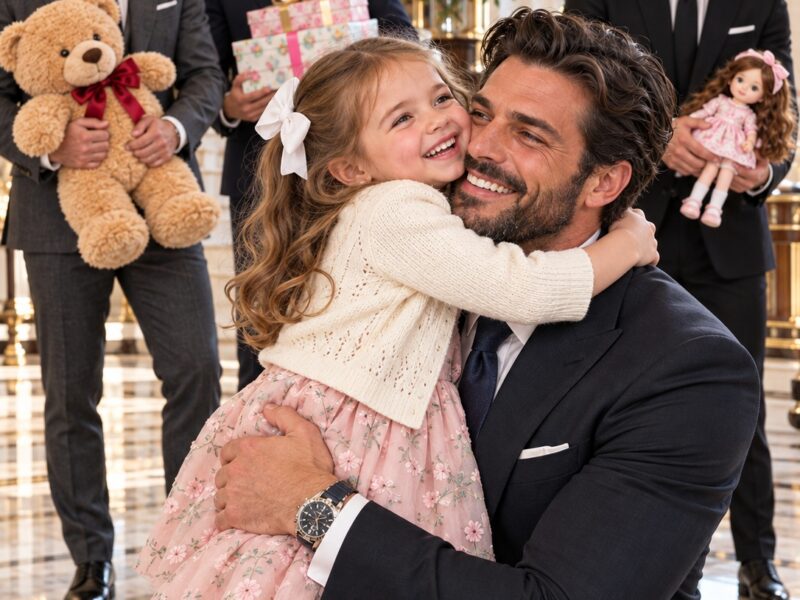
She wrapped her arms around Alessandro’s neck.
“Papa.”
Alessandro closed his eyes.
He buried his face in her hair.
Carmine stepped back.
“I’m sorry.”
Alessandro looked at him.
There was enough pain in his face to fill the river.
“Not today.”
Carmine nodded.
“I understand.”
Sirens began in the distance.
Tommy had called law enforcement anonymously once Mia was secure.
Dante Greco left before they arrived.
His reputation did not survive the morning.
Within weeks, the five families stopped answering him.
His lenders moved.
His political protection evaporated.
A year later, he was gone from New York.
Some said Florida.
Others said Europe.
I never cared.
The docks, legally, belonged to him by Alessandro’s signature.
Alessandro refused to contest it.
Honor mattered to men like him even when honoring a promise cost millions.
Many people thought that was foolish.
Alessandro disagreed.
“The docks almost cost me my daughter.”
He sold what remained of the old criminal network.
Not overnight.
Real life does not transform elegantly.
There were companies with employees.
Union contracts.
Warehouses.
Drivers.
Restaurants.
Some operations could be closed.
Others had to be rebuilt.
It took years.
Accountants became more important than soldiers.
Lawyers replaced fixers.
Shipping manifests became boring.
Alessandro came to enjoy boring.
“We had no emergencies this quarter,” Tommy announced one afternoon.
Alessandro smiled.
“Beautiful.”
Enzo looked offended.
“I miss emergencies.”
“No, you don’t.”
“I miss meaningful employment.”
Mia climbed into his lap.
“You can work for me.”
Enzo immediately straightened.
“Yes, princess.”
“Tea party.”
His face fell.
“Hard labor.”
Carmine did not go to prison.
Alessandro did not kill him.
That surprised everyone.
Including Carmine.
Instead, Alessandro sent him to Sicily.
A family house in his mother’s village.
Enough money to live.
No access to Romano business.
No return.
The night before he left, Carmine came to the mansion.
He carried a wooden box.
Alessandro met him in the study.
I stayed nearby.
Not because Alessandro needed protection.
Because he had asked me to.
Carmine opened the box.
Seventeen letters.
All addressed to me.
All written by Alessandro during the year he searched.
“I intercepted them.”
Alessandro went pale.
“I couldn’t burn them.”
Carmine looked ashamed.
“I tried.”
Alessandro picked one up.
His handwriting.
Four years old.
“Why keep them?”
“I told myself one day I might fix what I did.”
“Did you?”
“No.”
Carmine looked at him.
“But maybe you did.”
Alessandro stared.
Carmine’s eyes filled.
“I was wrong.”
“That sentence does not give us four years back.”
“I know.”
“It doesn’t give Mia her first steps with me.”
“I know.”
“It doesn’t give Elena the pregnancy she went through alone.”
“I know.”
Alessandro’s voice cracked.
“You said you had me.”
Carmine covered his face.
“I thought I did.”
“No.”
Alessandro shook his head.
“You had a version of me you wanted to preserve.”
Carmine lowered his hands.
“That isn’t the same thing.”
“No.”
They stood quietly.
Then Alessandro stepped forward.
For one second I thought he might strike him.
Instead he embraced him.
Carmine began crying.
Alessandro did not.
When they separated, Alessandro said, “Do not come back.”
Carmine nodded.
“I understand.”
“And if Mia wants to write to you someday, that is her choice.”
Carmine’s face crumpled.
“Thank you.”
“Do not thank me.”
Alessandro’s expression hardened.
“Thank her if she does.”
Carmine left the next morning.
I read the letters over winter.
One at a time.
Never in front of Alessandro.
Some were angry.
Some desperate.
One consisted of only six sentences because, he later admitted, he had not slept in three days.
One described the bakery where we met.
Another apologized for something I had forgotten.
A third simply said:
If you left because you were afraid of me, I hope wherever you are feels safe.
I cried so hard I could not continue that night.
The letters did not erase what happened.
They gave me back information.
That mattered.
Alessandro and I did not immediately become a family.
People love that version.
The dramatic reunion.
The rescued child.
The parents realizing they never stopped loving each other.
Reality was slower.
I did not move into his bedroom.
For the first year, Mia and I had rooms in the west wing.
Alessandro asked before entering.
He asked before taking Mia anywhere.
He never used money as an argument.
When he wanted to buy her something ridiculous, he ran it by me.
Mostly.
The pony was an exception.
I walked into the garden one Saturday and found a small chestnut pony wearing a pink ribbon.
“Absolutely not.”
Mia gasped.
“His name is Pancake!”
“No.”
Alessandro looked toward Enzo.
Enzo looked toward Tommy.
Tommy pretended to answer a phone that had not rung.
I folded my arms.
“Who bought a horse?”
Mia pointed.
“Papa.”
Alessandro sighed.
“I underestimated the consultation requirement.”
“You bought livestock.”
“He is technically a pony.”
“Do not become precise now.”
Mia hugged my leg.
“Pancake loves me.”
“Pancake met you thirty seconds ago.”
“He knows.”
I stared at Alessandro.
He looked almost nervous.
That was satisfying.
The pony stayed.
But Alessandro cleaned the stable himself for two weeks.
My condition.
Mia treated him exactly as she treated everyone.
No fear.
No reverence.
No awareness that grown men stepped aside when he walked through restaurants.
When she was four, she entered his study during a meeting.
Eight men sat around the table.
Alessandro stopped speaking.
“Mia?”
She carried a plastic tea set.
“Meeting.”
“I am in one.”
“Yes.”
She placed a tiny pink cup in front of him.
“Now you have two.”
No one laughed.
Until Alessandro picked up the cup.
“Continue,” he told Tommy.
Tommy stared.
“With what?”
“The port contract.”
“While drinking imaginary tea?”
Alessandro looked at Mia.
“What is it?”
“Strawberry.”
He turned back.
“Apparently strawberry.”
Tommy gave up.
Within months, the men began treating Mia like royalty.
Not because Alessandro ordered them.
Because children have a way of exposing which adults still possess functioning hearts.
Enzo wore paper crowns.
Tommy allowed her to decorate one phone with rhinestone stickers.
Sal made separate pasta because Mia decided parsley looked “suspicious.”
Marcus learned every Disney princess despite claiming he had never watched a cartoon.
A man named Frankie Russo, who had once broken another man’s nose in a parking lot dispute, spent an entire Sunday repairing Biscotti’s missing ear.
Mia watched closely.
“Don’t make it too perfect.”
Frankie frowned.
“Why not?”
“He is brave because he is broken.”
Frankie stopped sewing.
Then nodded.
“Good point.”
The replacement ear was deliberately crooked.
Alessandro learned fatherhood through humiliation.
Hair was his greatest enemy.
Mia had curls.
I could braid them in five minutes.
Alessandro believed confidence could replace skill.
One morning he announced he would do her hair.
Thirty minutes later, Mia appeared downstairs with something resembling a fishing net attached to her head.
I stared.
Alessandro stood behind her.
“It is a braid.”
“No.”
“There are woven sections.”
“That does not make it a braid.”
Mia touched her hair.
“I look fancy.”
Alessandro smiled.
I sighed.
“You look beautiful.”
He practiced.
At first on string.
Then on yarn.
Then on a mannequin head Tommy ordered online and hid in the security office because, according to Enzo, “The boss having a fake woman’s head on his desk creates questions.”
By Mia’s fifth birthday, Alessandro could produce one acceptable braid.
He considered this one of his greatest achievements.
The newspapers noticed his changes.
They called him softer.
The old families called him distracted.
One columnist referred to him as “domesticated.”
Alessandro read that word at breakfast.
He looked offended.
I sipped coffee.
“Well?”
“I object.”
“To what?”
“Domesticated.”
“You own three aprons now.”
“For cooking.”
“You make pancakes shaped like rabbits.”
“Mia requested them.”
“You attend parent-teacher meetings.”
“That is parenting.”
“You have glitter on your cuff.”
He looked.
Gold glitter sparkled against black wool.
His face darkened.
“Mia.”
She looked up from cereal.
“What?”
“You glittered me.”
“I improved you.”
I laughed.
Alessandro eventually did what he had promised at Red Hook.
He rebuilt the family businesses.
Not perfectly.
Not saintly.
There were still old contracts he could not unwind without hurting people.
Still federal scrutiny.
Still men from his past who disliked the new rules.
But violence stopped being a management tool.
The protection businesses disappeared.
The restaurants became restaurants.
The freight company published its books.
The old men complained.
Young employees stayed.
And slowly, the mansion stopped feeling like a fortress.
The guards remained.
But fewer.
Weapons became less visible.
The front gate opened for school buses.
Mia invited classmates for birthdays.
The first time seven children ran through the great hall screaming, Enzo looked physically unwell.
“So loud.”
I smiled.
“You fear kindergarteners?”
“One has a whistle.”
Fair.
Alessandro and I found each other again slowly.
One evening, almost two years after Arthur Avenue, I was reading on the terrace.
He brought tea.
Set it beside me.
Started to leave.
“Stay.”
He stopped.
“You sure?”
“Yes.”
He sat.
We watched the sun disappear behind the Hudson.
No dramatic confession.
No swelling music.
I simply placed my hand beside his.
He looked down.
Then at me.
“I still love you.”
I knew.
“I know.”
“That wasn’t pressure.”
“I know that too.”
“I can wait.”
“You already have.”
He smiled.
I moved closer.
That was how we began again.
Not because history demanded it.
Because we chose.
Mia was six when we finally married.
Small ceremony.
Garden.
No reporters.
No old syndicate bosses.
Enzo cried before I reached the aisle.
Tommy filmed him.
“Delete that.”
“Cloud backup.”
“You’re dead.”
“Language,” Mia called.
Enzo immediately apologized.
Alessandro waited beneath white roses.
When I reached him, he whispered, “Are you sure?”
“Yes.”
He exhaled.
“Good.”
“Were you worried?”
“Terrified.”
“You hide it well.”
“I have training.”
Mia stood between us during the vows.
She insisted.
At one point she became bored and sat on Alessandro’s shoe.
He continued promising me his life while dragging one foot slightly because our daughter refused to move.
It was perfect.
Years later, people still told the story of the little girl who found the mafia boss.
They usually got details wrong.
Some said Alessandro recognized Mia immediately.
He did not.
Some said he kidnapped us from Arthur Avenue.
He sent us home.
Some said his men stormed Red Hook with machine guns.
They came with empty hands.
Some said Carmine was murdered for betrayal.
He died in Sicily years later, an old man living with the consequences of believing love gave him the right to choose other people’s lives.
Mia wrote to him three times.
Her decision.
The last letter arrived two weeks before he died.
He kept it beside his bed.
I know because the priest mailed it back afterward.
Mia is eight now.
She has both yellow boots.
I still count them.
I probably always will.
Last Sunday, thirty-two people came for lunch at the house.
Former captains.
Drivers.
Accountants.
Two teachers from Mia’s school.
Sal’s grandchildren.
Even one federal prosecutor Alessandro once hated and later discovered made excellent tiramisu.
The long dining table had been set beautifully.
Nobody used it.
Mia had arranged a tea party in the salon.
Tiny plastic cups.
Child-size chairs.
A blanket on the floor.
Enzo sat wearing a paper crown.
His knees reached his chest.
Tommy was allowed only one phone because Mia declared two “rude.”
Marcus poured imaginary tea.
Sal refused to pretend his cup contained tea because, according to him, “If I am forced into humiliation, at least call it espresso.”
At the head of the gathering sat Mia.
Pink dress.
Sparkling shoes.
Biscotti tucked beside her.
The restored ear still crooked.
Alessandro sat on a cushion on the floor.
He was braiding her hair.
Badly.
Less badly than before.
Mia waited patiently.
When he finished, she touched the braid.
Then looked at him.
“Papa.”
“Yes?”
“You’re smiling.”
Alessandro looked surprised.
“Am I?”
“You do it all the time now.”
He looked across the room at me.
I smiled.
Mia nodded, satisfied with her diagnosis.
Then she handed him a wooden spoon.
“You’re king of soup.”
Alessandro accepted.
“An honor.”
“No.”
She frowned.
“I’m the princess.”
“Of course.”
“You’re just Papa.”
Something in his face softened.
“Yes.”
He kissed the top of her head.
“Just Papa.”
That night, I tucked Mia into bed.
Biscotti beneath one arm.
Both yellow boots still on because she had decided shoes were necessary protection against dreams.
“One,” I whispered.
“Two.”
Mia opened one eye.
“You’re counting again.”
“Yes.”
“I’m not three anymore.”
“I know.”
“You don’t have to worry so much.”
I smiled.
“That is something children say because they have not met mothers.”
She considered.
“Papa worries too.”
“Yes.”
“He checks my window.”
“I know.”
“He thinks I don’t know.”
“He is not subtle.”
She smiled.
Then grew serious.
“Mama?”
“Yes?”
“Why did you leave him?”
The question surprised me.
We had told her pieces.
Age-appropriate pieces.
“Because I was scared.”
“Of Papa?”
“Of his world.”
She thought.
“Were you wrong?”
“No.”
I sat beside her.
“And yes.”
“That doesn’t make sense.”
“It will.”
I touched her hair.
“I was right to protect you.”
She nodded.
“But I was wrong about some things your father would have chosen if he had known the truth.”
“Like me?”
“Yes.”
She looked at Biscotti.
“Did Papa love me before he knew me?”
I thought carefully.
“He loved the idea that you might be his the moment he realized it.”
Mia frowned.
“That sounds weird.”
“It is.”
“Does he love me now?”
I laughed softly.
“More than his own good sense.”
She seemed pleased.
“Good.”
Her eyes closed.
Before I left, she whispered, “Mama?”
“Yes?”
“I’m glad I found him.”
My throat tightened.
“So am I.”
I turned off the lamp.
In the doorway I watched her breathe.
The same way I had in the Bronx.
Only everything else was different.
A larger room.
Warm radiator.
Security outside.
A father down the hallway arguing with Tommy about a school fundraiser.
A house full of people who had once built their lives around fear and now knew the lunch schedule of an eight-year-old girl.
People sometimes ask what changed Alessandro Romano.
They expect an answer about betrayal.
Carmine.
Dante Greco.
The docks.
Losing millions.
None of those things changed him as much as one small moment on Arthur Avenue.
A little girl with one rain boot sat beside him.
She offered half a cookie.
She told him her rabbit was brave because he was broken.
She looked into eyes exactly like hers and decided, without knowing anything about blood or history, that he appeared lonely.
That was all.
The most feared man in the city had spent years believing power meant making sure nobody could take anything from him.
Then a three-year-old found him and gave him something he had never known how to ask for.
A second chance.
And once she did, an entire family of hard men followed her lead.
They stopped treating kindness like weakness.
They learned to speak more quietly around sleeping children.
They bought light-up sneakers.
They wore paper crowns.
They learned that loyalty was not proved by hurting whoever frightened you.
Sometimes loyalty meant installing a boiler without asking for thanks.
Sometimes it meant disobeying your boss because his daughter needed a tracker in her shoes.
Sometimes it meant giving up docks, money, and reputation because none of it was worth one frightened child.
And sometimes it looked ridiculous.
Like Enzo Romano—six foot five, two hundred eighty pounds, feared across three boroughs—sitting on a pink chair with a plastic teacup balanced between two enormous fingers because Princess Mia had ordered him to drink.
He always did.
They all did.
Not because Alessandro commanded them.
Because Mia had somehow become the one person in the house nobody wanted to disappoint.
Including me.
Including her father.
Especially her father.
And if you asked Alessandro what happened to the empire everyone once feared, he would probably tell you it still exists.
Only differently.
It owns restaurants.
Warehouses.
A shipping company.
Several apartment buildings.
A bakery where Mia is banned from operating the frosting machine without adult supervision.
The men still call Alessandro “Boss.”
Old habits.
But every Sunday, somewhere around noon, a small voice cuts through whatever serious conversation they are pretending to have.
“Tea party!”
And the boss looks at his men.
The men look at one another.
Then the entire feared Romano organization gets down on the carpet.
Because some kingdoms are built through fear.
Others are built through trust.
And the strongest one Alessandro Romano ever belonged to was ruled by a little girl with two yellow boots, a crooked-eared rabbit, and the absolute certainty that her papa would always come when she called.