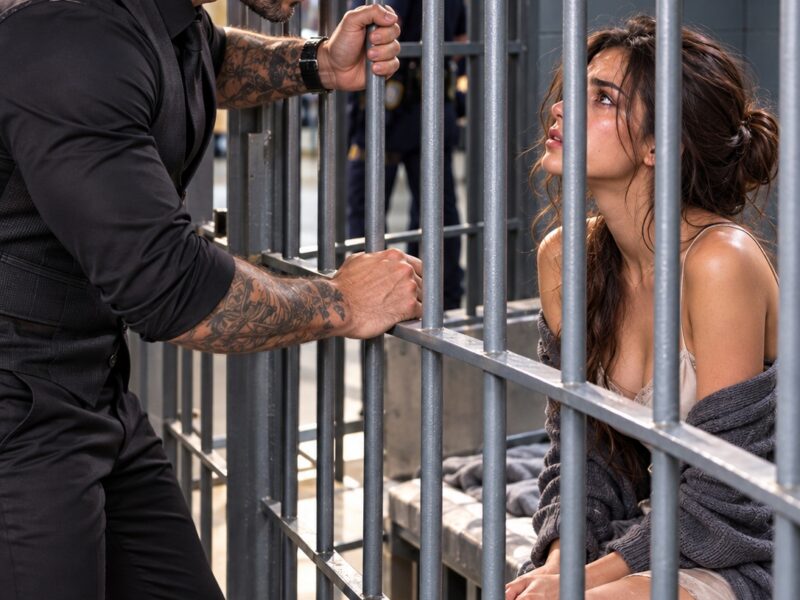
At 3 A.M., the Mafia Boss Got a Call From the Precinct—His Unshakable Secretary Was in Jail, and She Refused to Ask for Anyone but Him
Roman Kinsley expected blood, betrayal, or a seized shipment when his phone vibrated at 3:04 A.M.; he did not expect a desk sergeant asking whether he knew Narelli Flores.
His secretary had spent three years surviving his dangerous world with immaculate schedules and colder nerves than most of his men, yet now she was sitting in a holding cell with bruised hands and no lawyer.
She had used her only call on Roman—and when he learned whom she had struck, he realized the arrest was not the emergency but the warning.
Three in the morning was an hour reserved for ghosts, drunks, and bad news.
When Roman Kinsley’s phone vibrated against the mahogany nightstand, he expected a warehouse alarm, a federal seizure notice, or one of his port managers telling him somebody had made a very expensive mistake. He did not expect the tired voice of a desk sergeant from the Twelfth Precinct.
“Mr. Kinsley?”
Roman opened his eyes.
“Yes.”
“We have a Narelli Flores here.”
Sleep disappeared.
Roman sat up so quickly the linen sheet slid to his waist. Thirty floors below, Manhattan glowed through the bedroom glass, wet streets throwing back neon from a recent drizzle.
“Say that again.”
The sergeant sounded bored enough to be honest.
“Narelli Flores. Twenty-nine. West Village address. She was brought in after an altercation at a diner downtown.”
Roman stared into the dark.
Narelli did not have altercations.
Narelli color-coded his meetings, corrected executives twice her age without raising her voice, and once rescheduled a hostile acquisition around his dentist appointment because she considered preventable pain “an inefficient use of Thursday.”
“She gets one phone call,” the sergeant continued. “Didn’t ask for an attorney. Gave us this number. Are you coming, or should I tell her she’s staying until morning?”
“I’m coming.”
Roman swung his legs to the floor.
“What is she charged with?”
“No formal charge yet.”
“What happened?”
“Guy at the diner says she hit him.”
Roman stopped halfway toward his closet.
“With what?”
“A coffee mug.”
For the first time in years, Roman Kinsley had no immediate response.
The sergeant added, “The other guy left in an ambulance.”
Roman looked down at the city.
“Name.”
“Sir?”
“The man.”
Paper shifted over the line.
“Mickey Wallace.”
Roman’s expression changed.
Mickey Wallace worked collections for people connected to the Moretti organization. He was the kind of man who believed fear was more efficient than paperwork and usually surrounded himself with two larger men so he never had to test the theory alone.
Roman’s voice dropped.
“Is Ms. Flores injured?”
“Bruised. Doesn’t appear serious. She declined the hospital.”
“Of course she did.”
“You her employer?”
“Yes.”
“Relationship?”
Roman stared at the question hanging in the darkness.
“Employer.”
“All right.”
The sergeant hesitated.
“She specifically said not to call anyone from your legal department.”
That was worse.
Roman stood completely still.
“Did she say why?”
“No.”
“What exactly did she say?”
Another pause.
“That if we called the company lawyers before you arrived, somebody would know she was here.”
Roman’s hand tightened around the phone.
“Do not make another call regarding her.”
“Mr. Kinsley—”
“I am not asking you to obstruct anything. I am telling you she has counsel available and I am arranging it now.”
The distinction mattered.
It was one of many Roman had learned to make after twenty years living in rooms where every careless sentence eventually became somebody’s exhibit.
He ended the call and dialed Daniel Hart, his personal attorney.
Daniel answered on the third ring.
“This better be an indictment.”
“Narelli is in custody.”
Silence.
Then:
“What?”
“Twelfth Precinct. Altercation. Mickey Wallace.”
Daniel became instantly awake.
“I’ll call criminal counsel.”
“Independent.”
“Not anyone from Kinsley Holdings.”
That earned another silence.
“Roman, what aren’t you telling me?”
“I don’t know yet.”
He hung up.
Ten minutes later he was downstairs in dark jeans, boots, and a black cashmere sweater. He had left the tailored suits behind because a suit at three-thirty in the morning made everything look premeditated.
Calvin waited with the SUV.
The city moved past the tinted windows in wet black and silver.
Roman did not call his security chief.
Did not call Donovan Pierce, who managed the waterfront crews.
Did not call anybody who normally would have known where he was going.
Narelli had deliberately asked for him and deliberately kept the company lawyers out.
That meant one of two things.
She had lost her mind.
Or she had discovered something inside his own house.
Roman had known her for three years.
She had never once lost her mind.
That left only the second possibility.
The Twelfth Precinct smelled of industrial cleaner, old coffee, and exhaustion. Fluorescent lights flattened everyone beneath them, from the desk officers to the college kid sleeping with his forehead against a vending machine.
Roman stepped to the desk.
The sergeant looked up, recognized the name on the ID Roman placed before him, and became more careful.
“Mr. Kinsley.”
“Ms. Flores.”
“Counsel called.”
“I know.”
“No charges at the moment. Guy she hit had an outstanding warrant, and witnesses are backing her self-defense claim. Detectives still want statements.”
“She’ll give one with counsel.”
“Fine.”
The sergeant turned a page.
“Your secretary has an interesting night life.”
Roman looked at him.
The man decided humor had not improved the room.
“She’s in holding three.”
Roman followed an officer down the corridor.
He saw Narelli before she saw him.
She sat on a metal bench with her back straight.
Charcoal wool coat torn at one shoulder.
Navy dress beneath it.
Stocking ripped at the knee.
Her wire-frame glasses were missing.
Her hands rested together in her lap.
The knuckles were bruised.
One had been wrapped in temporary gauze.
She stared at the cinder-block wall with the same expression she used when waiting for a late conference call.
Roman stopped outside the cell.
“Narelli.”
Her head turned.
Without the glasses, her green eyes looked younger.
Everything else looked harder.
She exhaled.
“You came.”
“You called.”
For the first time that night, something in her face almost broke.
Then the professional mask returned.
“Thank you.”
Roman’s gaze moved over her coat.
Her cheek.
Her hands.
“Are you hurt?”
“Nothing significant.”
“That was not my question.”
Narelli looked down.
“My cheek hurts.”
“My shoulder will hurt tomorrow.”
“My hand probably needs X-rays.”
“Anything else?”
“No.”
“Is that your blood?”
She looked at her knuckles.
“Mostly not.”
Roman closed his eyes for one second.
Then opened them.
“What were you doing with Mickey Wallace?”
The cell door unlocked before she could answer.
Daniel’s associate, Rachel Moreno, appeared with an officer. Rachel was a former public defender with a reputation for treating wealthy clients exactly as impatiently as poor ones.
“No questions until we are outside,” she said.
Roman stepped back.
Narelli stood.
She swayed so slightly nobody else noticed.
Roman did.
His hands moved toward her, then stopped before contact.
“Can you walk?”
Narelli adjusted the torn shoulder of her coat.
“Mr. Kinsley, I remain capable of locomotion.”
Rachel stared at her.
“You hit a debt collector with a coffee mug and you’re correcting vocabulary?”
“It is three in the morning.”
“Fair.”
The officer returned Narelli’s belongings in a clear property bag.
Phone.
Wallet.
One shoe clip.
A broken glasses case.
And a folded diner receipt with something written on the back.
Narelli saw it.
Her face changed.
Not much.
Enough.
Roman noticed.
She took the property bag.
Rachel said, “No charges tonight. Detectives will follow up. The injured man’s own warrant complicates his enthusiasm for making a complaint.”
“What warrant?” Roman asked.
Rachel looked at him.
“Outside.”
Rain had stopped.
Cold air met them on the precinct steps.
Narelli shivered.
Roman removed his coat without asking and draped it over her shoulders. It swallowed her completely.
She started to object.
He said, “You can file the complaint with human resources tomorrow.”
That got the smallest exhausted smile.
Calvin opened the SUV.
Rachel stayed behind to speak with detectives and arranged Narelli’s formal interview for later that afternoon.
Roman and Narelli climbed into the back.
Privacy glass rose.
City lights moved across her face.
Roman handed her water from the console.
She drank.
Then he said, “The receipt.”
Narelli looked toward him.
“What?”
“You reacted when the officer gave it back.”
She stared at the bottle.
Roman waited.
Silence had always been more useful than interrogation with her.
Eventually she reached into property bag and unfolded the receipt.
The back contained four numbers and three initials.
Roman recognized one immediately.
DP.
Donovan Pierce.
His waterfront operations chief.
Roman’s expression did not move.
Inside him, something dropped.
“Where did you get this?”
“Mickey’s table.”
“You stole it?”
“It was under his hand after he grabbed me.”
“Narelli.”
“I did not take it intentionally.”
“You kept it intentionally.”
“Yes.”
Roman leaned back.
“Start at the beginning.”
She looked at him.
“You have a ten o’clock meeting tomorrow with Local 418 and the port insurers.”
“I know my schedule.”
“You changed the venue Monday.”
“To Halpern’s Diner.”
“Yes.”
Roman frowned.
“How do you know where this is going?”
“Because Tommy Vega called the office at six fifteen yesterday.”
Tommy was twenty-two.
One of the younger logistics runners who checked vendor access before Roman’s legitimate port meetings. Smart kid. Bad family finances. Roman had promoted him from dock clerk because Tommy remembered license plates after seeing them once.
“What did he want?”
“He asked for me.”
“Why?”
“I helped his mother complete her health-insurance appeal last month.”
Roman stared.
“You did?”
“She had a denied claim.”
“I know what an insurance appeal is.”
“Then why ask?”
“Because you’re my executive secretary.”
“People contain multitudes.”
He almost told her this was not time.
Then stopped.
“What did Tommy say?”
Narelli wrapped both hands around water bottle.
“He owes money.”
“How much?”
“Forty-three thousand.”
“To Wallace?”
“Yes.”
Roman’s jaw tightened.
“Gambling?”
“His brother’s rehab bills at first.”
“Then gambling.”
“He tried to win back what he borrowed.”
“Of course.”
Narelli continued.
“Wallace discovered Tommy handles advance logistics for your meetings.”
Roman’s body went completely still.
“He told Tommy to leave the diner’s rear service door unsecured tomorrow.”
“What for?”
“He didn’t say.”
“He did not need to.”
Roman pictured the diner.
Narrow rear corridor.
Kitchen exit.
No controlled lobby.
One exterior camera that had been broken for weeks.
A perfect place to walk people inside without being seen.
“Why didn’t Tommy call security?”
“He thought Donovan would treat him as compromised.”
Roman looked at receipt again.
DP.
“You believe that?”
“I believed Tommy believed it.”
“Not same thing.”
“No.”
“What did you do?”
Narelli turned her face toward window.
Roman already disliked answer.
“Narelli.”
“I withdrew two hundred thousand dollars from the emergency discretionary account.”
He stared.
“You did what?”
“I brought it to Wallace.”
“To buy Tommy’s debt.”
“You went alone.”
“Yes.”
“At two in the morning.”
“Yes.”
“To negotiate with a man who threatened one of our employees’ families.”
“Yes.”
Roman breathed once through his nose.
Very slowly.
“What possible part of that sounded intelligent?”
“The part where nobody died.”
“You were arrested.”
“Nobody died.”
“He assaulted you.”
“Nobody died.”
“You could have.”
Her eyes snapped toward him.
That silenced both.
Roman leaned closer.
“Why didn’t you call me?”
Narelli’s voice lowered.
“Because if I called you first, you would have done what Roman Kinsley always does when fear enters the room.”
“What is that?”
“Turn it into control.”
He looked at her.
She continued before courage left.
“You would have pulled Tommy from the docks.”
“You would have assumed he was compromised.”
“You would have sent men after Wallace.”
“Then Moretti would answer.”
“And tomorrow’s attempted ambush becomes a war before you know who ordered it.”
Roman said, “Someone threatened my life.”
“Yes.”
“And you decided to solve it personally.”
“I decided to buy time.”
“With my money.”
“Yes.”
“You could have been killed.”
Narelli’s voice cracked.
“I didn’t want you to be.”
The sentence fell between them.
Neither moved.
Narelli looked horrified at herself.
Roman felt something dangerously close to tenderness move through anger.
He said softly:
“What happened in diner?”
“Wallace took money.”
“Then laughed.”
“He said Tommy would still leave the door open.”
“He said if Tommy refused, his mother would regret it.”
Narelli’s hand tightened around bottle.
“Then he said I was coming with him.”
Roman’s gaze shifted to torn shoulder.
“He grabbed you.”
“Yes.”
“And?”
“There was a coffee mug.”
Roman stared.
“You used it.”
“He was much larger than I am.”
“That is generally true of walls too. I don’t recommend fighting those.”
“Roman.”
First name.
First time.
His anger paused.
She continued.
“I panicked.”
“I hit him.”
“He let go.”
“He came toward me again.”
“I hit him again.”
“The mug broke.”
“Police came in less than a minute later.”
Roman looked at her bruised hands.
“Two hundred thousand?”
“Evidence.”
She sighed.
“I will make an accounting adjustment.”
Despite everything, Roman laughed.
Harsh.
Disbelieving.
Narelli frowned.
“I fail to see humor.”
“You are sitting in my car at three-thirty in the morning, bruised, after preventing what may have been an attack on me, and you’re worried about expense coding.”
“The books don’t cease existing because I had a difficult evening.”
Roman shook his head.
Then reached toward her hands.
Stopped.
“May I?”
Narelli looked at him.
Then nodded.
He took her left hand carefully.
The temporary gauze was already loosening.
“X-ray first.”
“I can go tomorrow.”
“You’re going now.”
“Roman—”
“That one is not negotiation.”
She almost argued.
Then leaned back, exhausted.
“Fine.”
Calvin changed route to a private urgent-care facility Daniel trusted.
No secret doctor.
No basement clinic.
A real licensed orthopedic urgent-care center with three tired nurses and terrible vending-machine coffee.
Narelli had no fracture.
Deep bruising.
Two cuts requiring adhesive closure.
Shoulder strain.
Concussion screening normal.
At five fifteen, Roman sat beside her in a nearly empty examination room while a nurse handed discharge papers.
Narelli read every page.
Roman watched.
“You know they are going to let you leave even if you don’t proofread the instructions.”
“There is a typo.”
“Of course there is.”
She pointed.
“‘Take ibuprofen with foot.’”
Roman looked.
“Food.”
“Exactly.”
The nurse came back.
Narelli politely mentioned it.
The nurse laughed.
“You’re the first person who’s caught that.”
Roman thought:
Of course she was.
He took her home.
Her apartment in West Village was narrow and neat.
Bookshelves.
Plants.
A black cat named Cicero who stared at Roman like he had been warned.
Narelli unlocked the door.
Roman stopped outside.
“You aren’t coming to office today.”
“I have three calls.”
“No.”
“Local 418—”
“Daniel can cover.”
“Daniel thinks Excel is a financial instrument.”
Roman almost smiled.
“You will sleep.”
She looked at him.
“And you?”
“I have questions.”
“About Donovan.”
“Yes.”
Narelli leaned against doorway.
The bruising under her eye looked darker in apartment light.
“Do not confront him yet.”
Roman stared.
“That is bold.”
“It is necessary.”
“Why?”
“Because if Donovan is involved, the diner was not merely Moretti setting an ambush.”
“It could be someone inside giving them your schedule.”
“And if we alert Donovan, we lose chance to prove it.”
Roman said nothing.
She was right.
He hated that.
“Sleep,” he said.
“You investigate.”
“Yes.”
“No executions before lunch.”
“Narelli.”
“I’m serious.”
“So am I.”
She looked at him.
Roman understood.
This was not a joke.
She had stepped into danger to prevent escalation.
If he responded blindly, everything she risked became meaningless.
“Fine.”
“No one gets hurt because of receipt until we know what it means.”
Her shoulders loosened.
“Thank you.”
Roman stepped back.
Cicero appeared between her ankles.
Roman looked down.
“Your cat hates me.”
“He has excellent instincts.”
“Good night, Narelli.”
“It’s five-thirty in the morning.”
“Good morning, then.”
She closed door.
Roman stood in hallway an extra second.
Then walked away.
At seven, he was in Daniel Hart’s office.
Not penthouse.
Not syndicate club.
A law office with beige carpet, bad art, and enough privilege to make conversations safer.
Daniel had called two people.
Maya Patel, forensic accountant.
Elena Torres, former federal investigator now doing corporate security compliance.
Roman put photocopy of receipt on table.
Maya looked at numbers.
“These appear like invoice references.”
Roman nodded.
“DP.”
“Could be Donovan Pierce.”
“Could be Dock Permit.”
“Could be Dairy Princess.”
Roman gave her a look.
Maya shrugged.
“You hired me for skepticism.”
Elena examined receipt.
“What diner?”
“Southside, Fourth and Elm.”
“Cameras?”
“Probably.”
“Police may have collected.”
“Rachel can request preservation.”
Daniel said:
“Good.”
Roman leaned back.
“Tommy Vega?”
Elena answered.
“Calvin picked him and his mother up before dawn at your instruction. They’re at a hotel in New Jersey under their own names. No fake documents.”
Roman nodded.
“Interview Tommy with counsel present.”
“Voluntary.”
“Yes.”
Maya looked at Roman.
“You seem very committed to everyone using lawyers today.”
“Narelli is contagious.”
Daniel smiled.
“That would be first healthy thing you caught from her.”
By noon, the first new secret surfaced.
Tommy’s account was consistent.
Wallace had known exact location and time of Roman’s union meeting before the venue change had been circulated to external attendees.
Only six people had access.
Roman.
Narelli.
Daniel.
Donovan.
Security chief Elias Grant.
And Roman’s operations CFO, Martin Shaw.
Narelli’s account had logged no external access.
Daniel’s logs clean.
Roman’s obviously.
The other three required review.
Then Maya discovered something else.
The four numbers on receipt matched internal freight-loss claim numbers.
Claims Donovan had personally approved over previous six months.
Three stolen trucks.
One damaged warehouse shipment.
Total insurance payouts:
$1.8 million.
All involved subcontractors tied to companies controlled by Donovan’s brother-in-law.
Roman sat completely still.
Daniel said:
“That is not proof of Moretti connection.”
“No.”
“But it is enough to audit Donovan.”
Roman looked at clock.
Twelve seventeen.
Narelli’s request had survived lunch.
Nobody was hurt.
Roman hated how much satisfaction that gave him.
At two-thirty, his phone rang.
Narelli.
“You should be sleeping.”
“I did.”
“For how long?”
“Enough.”
“That is not unit of time.”
“Three hours.”
Roman closed eyes.
“Narelli.”
“Did numbers match?”
He looked at Daniel.
“How did you know?”
“Because Wallace wrote them next to Donovan’s initials.”
“People do not write random claim numbers while extorting dock runners.”
Roman leaned back.
“Maya found $1.8 million in suspicious payouts.”
Silence.
Then:
“I need my laptop.”
“No.”
“I can access claim history faster than Maya because I built reconciliation templates.”
Roman looked through conference-room glass.
“Narelli.”
“If Donovan is leaking schedule, he may also be using losses to move money.”
“You are on medical leave until tomorrow.”
“I was arrested at two in morning.”
“Technically it is already tomorrow.”
Roman rubbed forehead.
Daniel was smiling.
Roman pointed at him as if this were somehow Daniel’s fault.
“One hour.”
Narelli said:
“Two.”
“One.”
“Ninety minutes.”
“You negotiate everything?”
“Yes.”
“Fine.”
Narelli arrived wearing dark trousers, cream sweater, glasses replaced with an old backup pair, and bruising she had covered badly with concealer.
Roman saw her.
Anger returned.
Not at her.
At everything that had put marks on her face.
She saw the anger and said:
“Do not become dramatic.”
“I am not dramatic.”
Daniel coughed.
Maya looked down to hide smile.
Narelli sat.
Opened laptop.
Within forty minutes she found the pattern.
Donovan’s crew reported freight damage.
Insurance reimbursed shell vendors.
Vendors paid consulting fees to a company called Alder Bridge Logistics.
Alder Bridge had no employees.
Its registered manager was cousin of a Moretti-connected bookmaker.
Roman looked at chain.
“Donovan is selling us.”
Narelli shook head.
“Maybe.”
“You just showed payments.”
“I showed a path.”
“Intent still matters.”
Roman looked at her.
“Do you ever allow satisfaction?”
“When facts are complete.”
Elena entered.
“Diner footage preserved.”
They watched.
2:03 a.m.
Narelli walks in carrying plain tote.
Wallace already booth.
2:10, envelope exchanged.
2:14, Wallace takes phone call.
Camera catches him turning screen briefly.
Elena froze frame.
Caller ID visible partially.
“D.”
Roman leaned closer.
Could be Donovan.
Could be anyone.
At 2:18, Wallace reaches across.
Narelli recoils.
He grabs her forearm.
She uses mug.
Everything afterward matches statement.
Second man at counter leaves during chaos.
Elena enhanced separate angle.
Man was Donovan’s driver.
Roman’s blood went cold.
The first major reversal arrived before sunset.
The Moretti family had not initiated plot.
Donovan had.
He was manufacturing an attack and blaming rival family, likely to force Roman into war while profiting from diverted shipments and insurance fraud.
Roman looked at Narelli.
“You prevented me from starting a war over a lie.”
She did not look pleased.
“Maybe.”
“Narelli.”
“We still don’t know whether Moretti knew.”
Roman exhaled.
“You are exhausting.”
“I have been told.”
“By whom?”
“You.”
“That tracks.”
They decided not to confront Donovan.
Not yet.
Instead Elena installed independent monitoring on company systems with lawful board authorization for legitimate businesses and segregated review of criminal exposure through counsel.
Roman had inherited Kinsley organization from his father at twenty-eight.
For years, he had managed two overlapping worlds.
Legal ports, warehouses, construction.
And a shadow network of gambling, influence, cash businesses, and favors he rarely described directly even to himself.
Narelli had been hired for legitimate holding company.
Or so he thought.
That belief lasted until six the next morning.
Roman woke on sofa in Daniel’s office after ninety minutes of accidental sleep.
Narelli stood by window drinking tea.
Maya had left.
Daniel was showering upstairs.
Roman sat.
“You’re still here.”
“So are you.”
“Different rules.”
“No.”
He looked at her.
“Careful.”
She pushed glasses up.
“Roman, I need to tell you something before Maya finishes transaction tracing.”
That tone.
He stood.
“What?”
Narelli set tea down.
“When I started working for you, I noticed discrepancies.”
“In legitimate books?”
“Yes.”
“Which?”
“Intercompany management fees.”
“Cash-heavy subsidiaries paying unusually high consulting costs.”
“Round-dollar transfers.”
Roman’s expression closed.
“You knew what they were.”
“I suspected.”
“How long?”
“Third month.”
His voice cooled.
“And you stayed.”
“Yes.”
“Why?”
“I needed job.”
That simple answer cut through drama.
Narelli continued.
“My father died with medical debt.”
“My mother lives with my sister.”
“I had student loans.”
“You paid well.”
“I told myself I only managed calendar.”
“Then CFO sent me spreadsheet he expected me to format.”
“I saw shell companies.”
Roman stared.
“What did you do?”
“Nothing illegal.”
He waited.
“I created a private reconciliation file.”
“I tracked transactions.”
“You kept evidence.”
“Yes.”
“Of me.”
“Yes.”
Something dangerous moved between them.
Not threat.
Trust breaking.
Roman said:
“Where?”
“Encrypted drive in safe-deposit box.”
“If something happened to me, instructions go to Daniel.”
Roman looked toward closed door.
“Daniel knows?”
“Not contents.”
“Only that package exists.”
He laughed once without humor.
“My secretary built dead-man file on me.”
“I built insurance policy.”
“Against me.”
“Against anyone.”
Roman stepped closer.
Narelli did not retreat.
“Why are you telling me now?”
“Because Donovan is moving money through same structures.”
“And if Maya finds it, you will know I already knew.”
Roman’s jaw tightened.
“You could have gone to FBI.”
“Yes.”
“Why didn’t you?”
Narelli looked at him for long time.
“Because the first year I worked for you, you paid the hospital bill for Calvin’s daughter without letting Calvin know.”
Roman’s expression changed.
“You covered Rosa Medina’s pension when warehouse closed.”
“You forced an executive to reinstate three dockworkers after he falsified performance reviews.”
“You do illegal things.”
“Yes.”
“You also spend enormous energy convincing yourself your illegal world protects people your legal world fails.”
“That is not moral defense.”
“No.”
“It is why I did not know what to do with you.”
Roman stared.
Narelli’s voice softened.
“I still don’t.”
That was the midpoint change beginning long before either recognized it.
She had never been innocent civilian dragged into his world.
She had seen parts of it.
Recorded them.
Stayed anyway.
Not because she adored danger.
Because people were harder than categories.
Roman sat.
For once, his control did not tell him what to do.
“Give Daniel the drive.”
Narelli blinked.
“What?”
“Today.”
“All of it.”
“Roman—”
“You kept it because you needed option.”
“Use it.”
Her eyes narrowed.
“You’re not asking me to destroy it?”
“No.”
“Why?”
“Because if I ask, you’ll say no.”
“That is true.”
He almost smiled.
“And because Donovan exploited secrecy.”
“If I punish you for documenting me, I prove his system works.”
Narelli looked at him differently.
“That was almost emotionally intelligent.”
“Do not spread it around.”
At nine, Daniel received encrypted drive.
By noon, Maya identified enough irregularities to make Roman’s own exposure undeniable.
Not merely Donovan.
Roman himself had approved some structures years earlier.
Cash businesses.
Undisclosed beneficial interests.
Tax problems.
Daniel shut conference-room door.
“If this goes where I think, you need personal criminal counsel.”
Roman nodded.
Narelli went still.
Daniel looked at her.
“And you need one too if you touched any transactions.”
“I did not authorize.”
“Formatting?”
“Yes.”
“Knowledge?”
“Yes.”
“We get counsel.”
Roman said:
“I pay.”
Narelli shook head.
“No.”
“Narelli.”
“If you pay my lawyer, independence becomes questionable.”
Daniel nodded reluctantly.
“She’s right.”
Roman hated both.
Narelli hired an attorney through professional referral.
Her name was Priya Sen.
Priya’s first words to Roman during joint privilege session:
“You do not speak directly to my client about potential criminal exposure unless I am present.”
Roman looked at Narelli.
She looked pleased.
“You hired someone worse than you.”
“That was criterion.”
Over next week, Donovan believed everything normal.
Roman held meetings.
Narelli returned to office with bruises fading.
Donovan made one joke about her “night out.”
Roman nearly ended strategy there.
Narelli touched his sleeve under table.
Barely.
Stop.
He did.
After meeting she said:
“That was impressive.”
“What?”
“Restraint.”
“I hated it.”
“That is why it counts.”
Their relationship shifted through moments like that.
Not declarations.
Not rescue.
Choice under pressure.
The first genuinely intimate scene happened two nights later.
Roman found Narelli in copy room at eleven.
Office empty.
She stood barefoot because one shoe had blistered heel.
Printer jammed.
She had hair down.
Roman leaned doorway.
“You employ forty people capable of fixing that.”
“They all left.”
“Wise.”
She tugged paper.
“Don’t.”
“Why?”
“You’ll tear sensor.”
“I know printers.”
“You own printers.”
“Different.”
He stepped beside her.
Their shoulders touched.
Narelli moved half inch away.
Not rejection.
Habit.
Roman opened panel.
Removed paper.
Printer restarted.
Narelli stared.
“I am disturbed.”
“I contain multitudes.”
She laughed.
Small.
Real.
Roman realized he wanted to hear it again.
Instead he said:
“Your ride is downstairs.”
“I can take subway.”
“No.”
“That was not request?”
“It was.”
“Poorly phrased.”
He corrected.
“Would you allow Calvin to take you home?”
Narelli looked at him.
“Yes.”
That tiny permission meant more than obedience ever had.
Second intimate scene came on Sunday.
Roman visited her apartment because Daniel required both to sign preservation affidavits and courier had failed.
Narelli opened door in jeans, oversized sweater, glasses sliding down nose.
Cicero sat on bookshelf.
Roman entered.
No security inside.
Her apartment smelled like rosemary and old paper.
“Coffee?”
“Yes.”
“You hate my coffee.”
“I hate all coffee not made by professionals.”
“Then suffer.”
He did.
They signed affidavits at small kitchen table.
Afterward Roman noticed biography open beside her.
“Eleanor Roosevelt?”
“Yes.”
“Why?”
“She was complicated.”
“That your type?”
Narelli looked at him over glasses.
“Apparently.”
He smiled.
Then she asked:
“Why didn’t you marry?”
Roman’s expression changed.
“Personal.”
“That was question.”
He looked at rain outside.
“My mother stayed with my father because leaving would have been dangerous.”
“He called loyalty.”
“I called captivity.”
“So I promised I would never build household where someone couldn’t leave.”
Narelli was quiet.
“Yet you run organization people cannot always leave.”
“Yes.”
“That contradiction bothers you?”
“More recently.”
“Why recently?”
Roman looked at her.
She understood.
Neither named it.
Cicero jumped onto table.
Roman recoiled.
Narelli laughed so hard she had to cover mouth.
Roman pointed.
“That animal is hostile.”
“He has excellent instincts.”
“Everyone keeps saying that.”
Third intimate scene came after they met Tommy and his mother.
Not a safe house.
A modest hotel suite under temporary police coordination because Tommy had agreed to cooperate with investigation into Wallace and financial extortion.
Tommy looked twenty-two going on sixteen.
His mother, Elena Vega, held a folder of medical bills.
When Roman entered, Tommy stood too quickly.
“Mr. Kinsley.”
“Sit.”
“I’m sorry.”
Roman looked at him.
“For what?”
“For letting Wallace get to me.”
“You borrowed money?”
“Yes.”
“You gambled?”
“Yes.”
“You planned leave door open?”
Tommy’s eyes filled.
“I thought about it.”
“My mom—”
Roman raised hand.
“Thinking is not doing.”
Tommy looked shocked.
Roman continued.
“You called for help.”
“Narelli almost got hurt because of me.”
Narelli said:
“I got hurt because Wallace grabbed me.”
“Do not steal responsibility from him.”
Tommy looked at her.
Roman saw it.
She always returned guilt to correct owner.
After meeting, in hotel hallway, Roman said:
“You would have made good lawyer.”
“I like sleep.”
“Fair.”
They waited elevator.
Roman’s hand brushed hers.
Neither moved.
Then Narelli deliberately hooked little finger around his.
Nothing more.
Elevator opened.
She let go.
Roman felt absence all way down.
The next secret arrived from Priya.
Donovan’s fraud extended beyond insurance.
He had been quietly buying debt from Roman’s younger employees through Wallace, using that leverage to recruit informants.
At least six workers compromised.
Not rival infiltration.
Internal network.
Donovan’s motive became clearer.
He believed Roman had become too cautious.
Too corporate.
Too dependent on lawyers and compliance officers.
Donovan wanted conflict with Moretti because war would justify old structure, expand territory, and make men like him indispensable.
He was not trying to overthrow Roman outright.
He was trying to manufacture the version of Roman he preferred.
That angered Roman more than betrayal.
Someone had been editing his identity.
Narelli said:
“He thinks violence is job security.”
Roman looked at spreadsheets.
“And he thinks I’ll perform it on command.”
“Will you?”
Roman looked at her.
“No.”
That was a choice.
Rather than confront Donovan privately, Daniel coordinated with law enforcement through formal proffer on fraud and extortion evidence.
Roman hated this.
Every instinct said handle inside.
Narelli sat across from him in office.
“If you disappear Donovan, his people assume war.”
“If police arrest him on documented fraud, his people assume Donovan was sloppy.”
“Which is less destabilizing?”
Roman rubbed face.
“I miss simpler crimes.”
“You never had simpler crimes.”
“You had fewer spreadsheets.”
“Fair.”
The arrest happened at nine Monday morning.
Not dramatic.
Donovan arrived for executive meeting.
Two federal agents and a state investigator waited with counsel.
Warrant covered wire fraud, extortion conspiracy, insurance fraud, and witness intimidation.
Donovan looked at Roman.
Understanding came slowly.
“You brought police into this house.”
Roman answered:
“You brought Wallace into it first.”
Donovan’s face twisted.
“This isn’t how your father ran things.”
“My father is dead.”
“So is everything he built if you keep this up.”
Roman stood.
“No.”
“Some of it should be.”
Agents led Donovan out.
No handcuff theatrics in lobby; they used private elevator.
Narelli watched through conference-room glass.
Roman looked at her.
“You okay?”
“Yes.”
“Liar.”
“Moderately.”
“That counts.”
Donovan’s arrest triggered retaliation of different kind.
Not gunfire.
Leaks.
Anonymous tips to press about Kinsley Holdings shell companies.
Regulators opened inquiries.
Banks requested enhanced due diligence.
A legitimate shipping partner paused contract.
Roman’s empire did not burn.
It tightened.
Money froze in places.
Phone calls went unanswered.
Men who once laughed at his jokes suddenly needed counsel present.
This was more realistic than war.
And in many ways worse.
Roman could not intimidate a compliance department into pretending suspicious transfers were fine.
Narelli worked beside Maya and attorneys through nights separating legitimate operations from criminal exposure.
She did not reroute illegal shipments.
She did something more difficult.
She stopped them.
One Friday at two in morning, she placed twelve-page memo on Roman’s desk.
He read first line.
Recommendation: immediate suspension of all cash-settlement activity lacking documented lawful business purpose.
Roman looked at her.
“That closes three revenue streams.”
“Yes.”
“Fifteen million annually.”
“Approximately.”
“You say that like paper clips.”
“Your alternatives are worse.”
He read.
“Exit unlicensed gaming interests.”
“Yes.”
“Terminate two consultants.”
“Yes.”
“Disclose beneficial ownership where required.”
“Yes.”
“Do you enjoy destroying my childhood?”
Narelli sat.
“I enjoy sleep.”
“If we do this, half old guard says I’m weak.”
“Maybe weakness is needing crime because you cannot imagine legitimate profit.”
Roman stared.
“That sounded rehearsed.”
“It was.”
“For how long?”
“Three years.”
He laughed.
Then signed first authorization.
Not because she told him.
Because evidence told him his old structure had become vulnerability.
Their romance stayed unspoken.
That mattered.
Power imbalance was real.
Narelli remained employee.
One night Roman said:
“I want to ask you dinner.”
She looked up from laptop.
“That sounds ominous.”
“Not work.”
“That makes it more ominous.”
“You can say no.”
“I know.”
He waited.
Narelli closed laptop.
“I will say no while I report directly to you.”
It hurt.
But it was right.
Roman nodded.
“Okay.”
Her eyes softened.
“Ask me again someday when that isn’t true.”
That promise was not romance.
It was boundary.
Roman respected it.
Then low point arrived.
Regulators traced one of oldest shell companies to Narelli’s credentials.
She had not created it.
But her login had been used for ledger reconciliations.
Federal investigators subpoenaed her.
Her counsel advised she might face exposure if prosecutors believed she knowingly helped conceal beneficial ownership.
Narelli sat in Roman’s office after meeting, pale.
“I may lose everything.”
“No.”
“Roman.”
“My career.”
“My apartment if legal fees—”
“I can cover—”
“No.”
She stood.
“This is exactly why I did not want you paying lawyer.”
“I am not letting you drown because of my company.”
“It is not your decision.”
He stopped.
That sentence.
Her central demand.
Choice.
Roman sat back.
“What do you want?”
Narelli looked exhausted.
“I want access to every file I touched.”
“Full.”
“Yes.”
“I want independent forensic review.”
“Yes.”
“I want written statement from you about scope of my duties, whether it helps or hurts you.”
Roman paused.
She noticed.
“That is test.”
“Yes.”
“What if truth hurts me?”
“Then truth hurts.”
She swallowed.
“Good.”
He signed authorization.
Forensic review found midpoint secret within secret.
Someone had used Narelli’s credentials remotely on nights she was verifiably elsewhere.
MFA logs had been disabled through admin account controlled by Martin Shaw, CFO.
Roman felt betrayal bloom again.
Martin had been with him nine years.
Quiet.
Educated.
Not old guard like Donovan.
If Donovan represented violence, Martin represented respectability.
The two had been partners.
Donovan created crises.
Martin laundered profits through corporate reporting and pinned activity on lower staff.
Narelli’s credentials were perfect shield.
A meticulous secretary with access.
Roman said:
“He was setting you up.”
Narelli stared at screen.
“For years.”
“Why?”
Maya answered:
“If regulators ever came, she is a clean explanation.”
“Overzealous employee.”
“Back-office fraud.”
“Boss can claim ignorance.”
Roman’s face hardened.
“They thought I’d sacrifice her.”
Nobody answered.
Because maybe old Roman would have.
That realization hurt most.
Martin disappeared before agents reached his home.
Not mysteriously.
He boarded commercial flight to Canada hours before warrant.
Border alert stopped him during connection.
He was detained on financial warrant.
No chase.
No drama.
Just boarding pass and handcuffs in airport interview room.
Narelli was cleared of intentional involvement after forensic evidence and cooperation.
Not immediately.
Weeks.
During those weeks, school? She works secretary. Her life collapses emotionally. She is placed on paid administrative leave from Kinsley Holdings to preserve independence.
Roman and Narelli stopped seeing each other daily.
That was harder than either admitted.
He sent no gifts.
No surveillance.
One text every few days:
How are you?
Sometimes she answered:
Fine.
Sometimes:
Bad.
He did not fix.
Then one night she called.
1:12 a.m.
Roman answered before second ring.
“I can’t sleep.”
He sat up.
“Do you want me to come?”
Long pause.
“Yes.”
He drove himself.
No Calvin.
Narelli opened door in pajamas and cardigan.
Cicero stared.
Roman sat on sofa.
Narelli curled opposite end.
No touching.
She said:
“I keep replaying diner.”
“Mug?”
“No.”
“Before.”
“When I decided not to call you.”
“I thought I was protecting everyone.”
“Maybe I was protecting myself from trusting you.”
Roman looked at her.
“That would have been reasonable.”
“I don’t like reasonable.”
“That is new.”
She smiled weakly.
Then:
“I was afraid you would become your father.”
Roman said:
“So was I.”
Silence.
Narelli moved closer.
Rested head on his shoulder.
Roman did not turn it into more.
They sat until three.
The same hour that had begun everything.
This time no precinct call.
Just two people awake because fear had not finished leaving.
That was the emotional low point beginning to lift.
The main climax came not from street fight but from a board and prosecutor meeting three months after arrest.
Kinsley Holdings faced deferred-prosecution negotiation over corporate misconduct.
Roman’s lawyers argued he could preserve company if he disclosed systems, accepted monitorship, paid penalties, and divested unlawful interests.
Old advisers urged resistance.
“Take it to trial.”
“Government case messy.”
“Donovan and Martin did most.”
Roman sat at conference table.
Narelli no longer his secretary.
She had resigned two weeks earlier.
Not fired.
Not pushed.
She said:
“I cannot testify independently while drawing salary from you.”
Roman hated letter.
Accepted it.
Now she sat with Priya on opposite side as cooperating witness.
Equal distance.
No subordinate.
Prosecutor asked Roman:
“Did you know your organization used shell companies to conceal beneficial ownership?”
“Yes.”
His attorneys shifted.
“Did you personally approve all transfers identified?”
“No.”
“Did you approve some structures knowing purpose was concealment?”
Roman looked through glass at city.
Then at Narelli.
“Yes.”
That answer changed everything.
No scapegoat.
No secretary thrown under bus.
No dead father blamed.
Negotiations became real.
Roman agreed to divest illegal interests, pay corporate penalties and back taxes, accept independent monitor, and plead to financial conspiracy count related to certain operations.
Sentencing exposure.
Real.
Narelli looked at him afterward in courthouse corridor.
“You didn’t have to admit that broadly.”
“Yes.”
“You could have limited.”
“Daniel said same.”
“Why didn’t you?”
Roman looked at her.
“Because three years ago you started documenting me.”
“You gave me option to become man who deserved cleaner ledger.”
“I took too long.”
Narelli’s eyes filled.
“You’re going to prison.”
“Probably.”
“That wasn’t objective.”
“No.”
She laughed through tears.
Then hit his shoulder lightly with folder.
Roman smiled.
Sentencing six months later.
Roman received twenty months in federal custody after cooperation, restitution, and corporate restructuring.
Not freedom because he had money.
Not decades because story needed punishment.
Something proportionate to charged financial offense within fictional context.
Kinsley Holdings continued under independent CEO and compliance monitor.
Elias Grant stayed security director for legitimate operations.
Calvin started executive transport company.
Tommy entered union apprenticeship program after completing gambling counseling and repayment plan.
His mother’s medical debt negotiated through nonprofit advocate, not Roman’s hidden cash.
Donovan pleaded guilty to fraud and extortion.
Martin cooperated and received sentence later.
Mickey Wallace faced separate assault and extortion charges after diner witnesses and outstanding cases.
No revenge killing.
No war.
Roman’s old world ended through testimony, audits, contracts, and choices that were less cinematic than violence and much harder to undo.
Before Roman reported, he met Narelli at same Southside diner.
The owner had replaced broken mug.
Narelli noticed.
“Different pattern.”
Roman looked.
“You remember mug pattern?”
“Blue stripe.”
“This has green.”
“You are terrifying.”
“So I’ve heard.”
They sat booth where Wallace grabbed her.
No guards inside.
Roman ordered coffee.
Narelli tea.
He said:
“I still owe you two hundred thousand.”
“No.”
“It was company money.”
“Recovered through evidence release and restitution process.”
Roman blinked.
“You already handled it.”
“Of course.”
He laughed.
Then quiet.
“When I come back, will you have dinner with me?”
Narelli looked at him.
“No employment relationship.”
“No reporting line.”
“No company.”
“No leverage.”
“Just dinner.”
Roman waited.
She smiled.
“Yes.”
That was their first promise of romance.
Not love.
Not forever.
Dinner.
Roman reported next morning.
Narelli did not wait outside prison.
She lived.
That mattered.
She took job at forensic-risk firm working with Maya Patel.
Her specialty became internal controls and executive fraud prevention.
She earned less first year.
Slept more.
Cicero remained judgmental.
She visited Roman monthly at first.
Then every six weeks because distance and work.
They wrote.
Roman’s letters were terrible.
Short.
Narelli edited one in red pen and mailed it back.
Comma splice. Also emotionally evasive. Revise.
He sent revised version.
She laughed alone in kitchen.
Months passed.
Roman read more.
Business ethics.
Labor history.
A biography Narelli mailed him.
He underlined too aggressively.
When he returned after seventeen months with credits, Daniel met him first.
Then Calvin.
Then Roman asked:
“Where is she?”
Daniel smiled.
“Working.”
Of course.
Roman did not surprise her at office.
He called.
“Narelli.”
Silence.
Then:
“Roman.”
“I’m out.”
“I know.”
“Dinner?”
She breathed.
“Tonight?”
“If you want.”
“Seven.”
“Where?”
She named small Italian restaurant in Greenwich Village.
Not Kinsley property.
Not private room.
Public.
Roman arrived early.
Narelli arrived at seven-oh-two wearing dark green dress and no glasses because she had switched to contacts.
Roman stood.
“You’re late.”
“Two minutes.”
“I almost called precinct.”
She laughed.
Then they sat.
First date was awkward.
Beautifully.
They talked about work.
Books.
Prison food.
Her sister.
His mother.
Not crime until dessert.
Roman said:
“I don’t know who I am without old structure.”
Narelli put fork down.
“Good.”
He frowned.
“You could pretend sympathy.”
“No.”
“Identity built on control needed demolition.”
“What do I build?”
“That’s your job.”
He looked at her.
“You’re very bad at romance.”
“I was secretary three years.”
“Same skill set.”
“Fair.”
He walked her home.
At apartment door:
“May I kiss you?”
Narelli studied him.
“For first date?”
“It has been approximately four years.”
“Employment doesn’t count.”
“Cruel.”
“Yes.”
Then she kissed him.
Gentle.
Not panic-room adrenaline.
Not gratitude.
Not fear.
Choice.
Roman rested hand at her waist only after she moved closer.
When they separated, Cicero yowled from behind door.
Roman sighed.
“Still hates me.”
“He respects consistency.”
“So do I.”
They dated for a year.
Slowly.
Roman worked as consultant on lawful port logistics after restrictions allowed, with no management role in former criminal structures because those structures were gone or under enforcement.
He hated ordinary bureaucracy.
Narelli loved watching him suffer through vendor portals.
At Thanksgiving with her sister, Roman washed dishes.
Badly.
Narelli redid half when he wasn’t looking.
He noticed.
Said nothing.
Second year, they moved into same apartment.
Not penthouse.
A townhouse rental in Brooklyn Heights chosen together.
Narelli insisted lease had both names.
Roman said:
“Obviously.”
She looked at him.
“Old you would not have said obviously.”
“No.”
They kept separate accounts plus joint household.
Her idea.
His immediate agreement.
No marriage proposal yet.
No need.
Their love was not proof money solved anything.
It was proof behavior could change under consequence.
Three years after 3 A.M. call, Roman woke to phone vibrating.
3:04 A.M.
He sat up instantly.
Beside him, Narelli groaned into pillow.
“If that is Daniel, tell him I quit three years ago.”
Roman looked at screen.
Tommy.
He answered.
“Everything okay?”
Tommy’s voice excited.
“My wife’s in labor.”
Roman stared.
“What do you want me to do?”
“You’re emergency backup for dog.”
Roman looked toward Narelli.
She had opened one eye.
“Dog?”
Roman repeated.
Tommy said:
“You agreed.”
“I did not remember agreeing.”
“Narelli put it in calendar.”
Roman closed eyes.
Of course.
Forty minutes later they stood outside Tommy’s apartment holding leash attached to enormous golden retriever.
Narelli wore Roman’s coat over pajamas.
Roman looked at dog.
Dog looked at him.
Narelli smiled.
“Three A.M. suits you.”
“I disagree.”
They walked the dog through silent neighborhood.
No police lights.
No holding cell.
No secret ledger.
Just wet pavement and a confused retriever.
Roman reached for her hand.
She gave it.
At corner, Narelli said:
“Do you ever think about that night?”
“Every time you order coffee.”
“I saved your life with mug.”
“You assaulted man with mug.”
“Self-defense.”
“Semantics.”
“Law.”
He smiled.
“You called only me.”
Narelli looked ahead.
“I knew you’d come.”
Roman tightened fingers around hers.
“That is still the most terrifying thing anyone has ever trusted me with.”
She turned.
“Good.”
“Why good?”
“Means you understand it.”
They continued walking.
The city around them was mostly asleep.
Three years earlier Roman believed power meant being the person everyone called because they feared what happened if they didn’t.
Narelli taught him different version.
Being called because someone believed you would show up.
No threat.
No debt.
No ownership.
Just trust.
At 3:04 in the morning, his phone had once brought him the worst kind of news.
Now it had brought them a dog.
Roman looked down at Narelli.
She pushed glasses—sleep glasses tonight—up nose.
“What?”
“Nothing.”
“You’re staring.”
“I’m appreciating efficient scheduling.”
“Liar.”
He smiled.
She smiled back.
And for once, three in the morning belonged to neither ghosts nor bad news.









