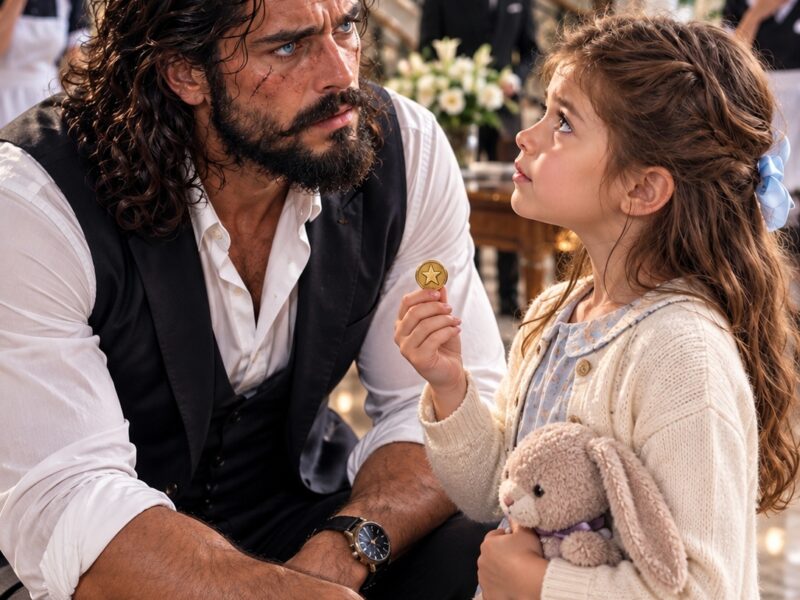
If I Win, I Can Ask for Anything, Right? The Housekeeper’s Little Girl Challenged the Mafia Boss—and Chose the One Thing Money Couldn’t Buy
The six-year-old housekeeper’s daughter sat on a marble floor with a checkerboard made from a cereal box and challenged the most feared man in the house to play.
He promised that if she ever beat him, she could ask for anything—and everyone around him expected the child to choose money, toys, or some impossible luxury.
Instead, when she finally won, she whispered one request that made his hand shake and reopened a room he had kept locked for eleven years.
The Game on the Marble Floor
Alina Vargo knew her daughter had broken the rules before she saw her.
She heard the shoes.
Quick little taps against marble.
Uneven.
Trying to be quiet and failing.
“Nora?”
No answer.
Alina set down the silver polishing cloth and listened.
The Marchetti house did not tolerate unexplained sounds.
It was a three-story limestone mansion in Brookline with more cameras than family photographs, a staff entrance that locked automatically after nine, and an east wing nobody was supposed to enter.
Mrs. Ruiz, the head housekeeper, had explained the rules on Alina’s first morning.
“Do not go into the east wing.”
“Do not answer the phones.”
“Do not ask about the cars.”
“Do not ask about the men standing beside the cars.”
“Clean what is assigned.”
“Leave when your shift ends.”
Mrs. Ruiz had been sixty, tall, elegant, and utterly serious.
Alina had asked the obvious question.
“What happens if somebody breaks the rules?”
Mrs. Ruiz had looked at her.
“You won’t.”
The lack of an answer made the rules feel stronger.
Alina needed the job badly enough not to test them.
Her husband, Tomas, had died two years earlier.
A traffic collision on a wet Massachusetts highway.
That was what the report said.
That was what police said.
That was what the insurance company said.
The accident took Tomas and almost everything they had saved.
Alina moved with Nora into a two-bedroom apartment above a laundromat.
The rent rose.
Her health insurance deductible did not.
The Marchetti position paid nearly twice what the agency usually offered.
A driver took staff home after late shifts.
There was a monthly performance bonus.
Alina should have asked why a housekeeping job needed secrecy clauses.
Instead, she signed.
That Thursday in February, Nora’s elementary school closed early after a pipe burst above the cafeteria.
The neighbor who normally watched her had influenza.
Alina called three people.
Nobody could take Nora.
Mrs. Ruiz listened.
Then looked down the corridor.
“The kitchen.”
Alina nodded.
“Thank you.”
Mrs. Ruiz raised a finger.
“Not beyond the kitchen.”
“I understand.”
“And Mr. Marchetti is not to know.”
That frightened Alina more than everything else.
Nora promised to be invisible.
She was six.
She had never been invisible in her life.
By five-thirty, Alina was polishing mirrors in the main hall when she realized the kitchen had gone quiet.
Too quiet.
She checked the pantry.
Empty.
Staff room.
Empty.
Mudroom.
Empty.
Then she heard:
Click.
Pause.
Click.
She followed the sound.
Nora sat cross-legged on the marble floor near the grand staircase.
In front of her lay a homemade checkerboard drawn on the back of a cereal box.
Red squares.
Black squares.
Crooked lines.
Bottle caps served as pieces.
Half red plastic.
Half blue.
Nora was playing both sides.
“Nora.”
Alina whispered.
The girl did not look up.
“I’m losing.”
“To who?”
“Myself.”
“That is not the problem.”
Nora moved another cap.
“I think I’m cheating.”
“Nora.”
Alina crossed the floor.
“Get up.”
“You said I could play.”
“In the kitchen.”
“There wasn’t enough floor.”
“There was an entire floor.”
Nora looked at her as if Alina were being unreasonable.
Then the front doors opened.
The house changed.
That was the only way Alina could describe it.
Two men entered first.
Dark suits.
Wet coats.
Eyes moving over the room before their bodies relaxed.
Then Dante Marchetti stepped inside.
Rain darkened the shoulders of his charcoal overcoat.
Alina had seen him only from distances.
Crossing corridors.
Entering cars.
Standing in the garden with a phone to his ear.
Forty-two.
Tall.
Black hair beginning to gray at the temples.
A face that rarely needed emotion because other people supplied enough nervousness for everyone.
Men called him Mr. Marchetti.
Older associates called him Dante only when he invited it.
Newspaper articles called him a shipping executive, real-estate investor, and philanthropist.
Federal prosecutors had called him other things without ever proving enough to keep the names attached.
Alina grabbed for Nora’s hand.
Too late.
Dante had already seen her.
His gaze moved from the child to the cereal box.
Then to Alina.
“Who is this?”
His voice was quiet.
A man near the door started answering.
Dante raised one finger.
The man stopped.
Alina’s mouth went dry.
“I’m sorry, Mr. Marchetti.”
“She’s my daughter.”
“Her school closed.”
“She was supposed to stay in the kitchen.”
“This will never happen again.”
He did not look at Alina.
He looked at the board.
“Who’s winning?”
Nora considered.
“Me.”
Then:
“But also me.”
“So it’s a tie.”
One of the security men, Marco Leone, made a sound that might have been a cough.
Dante’s mouth moved.
Almost a smile.
He handed his wet coat to Marco.
Then, to Alina’s horror, Dante Marchetti lowered himself onto the marble floor.
His suit probably cost more than her monthly rent.
He sat opposite Nora.
“Show me the rules.”
Nora brightened.
“The blue caps are yours.”
“Why?”
“Because I already like red.”
“Unfair start.”
“You’re rich.”
Dante looked at her.
“What does that have to do with blue?”
“I don’t know.”
Marco turned his face away.
Nora explained kings.
Jumps.
The rule that nobody was allowed to be sad after losing.
Dante listened.
Actually listened.
The phone in his pocket buzzed.
He ignored it.
They played.
Nora was reckless.
Dante was not.
Within seven minutes, he trapped four pieces.
Nora frowned.
“You’re good.”
“I’ve had practice.”
“With bottle caps?”
“No.”
He moved.
“Different boards.”
Nora stared.
Alina wished desperately that her daughter knew when not to ask questions.
She did not.
“Are those boards scary?”
Silence.
Dante looked at Nora.
“Sometimes.”
Nora accepted that.
Then made a terrible move.
Dante captured two more caps.
“That’s cheating.”
“It isn’t.”
“You knew I’d do that.”
“Yes.”
“That’s rude.”
Marco coughed again.
This time Dante looked at him.
“Do you need water?”
“No, boss.”
Nora narrowed her eyes at the board.
Dante’s phone buzzed again.
He glanced.
Did not answer.
Then he said:
“Come back tomorrow.”
Alina spoke immediately.
“Mr. Marchetti, that’s not necessary.”
Dante ignored her.
Nora’s eyes widened.
“Why?”
“We’ll use a real board.”
“And if I win?”
Dante looked at the child.
Something unreadable moved behind his face.
“If you win, you can ask me for anything.”
Nora sat straighter.
“Anything?”
“Anything.”
A man near the stairs laughed softly.
The laugh of someone uncertain whether laughter was permitted.
Dante did not smile.
He rose.
Took his coat from Marco.
Walked toward the east corridor.
Every man in the hall watched him go.
That was when Alina noticed Victor Rossi standing on the upper landing.
Fifty-eight.
Silver hair.
Dark suit.
Dante’s oldest adviser.
People called him the right hand.
Victor held a phone.
Not at his ear.
Pointed downward.
At Nora.
The screen flashed.
Photograph.
Victor lowered the phone.
Smiled at Alina.
Then disappeared upstairs.
Alina’s skin went cold.
She took Nora’s hand.
“We’re leaving.”
“But tomorrow—”
“No.”
“He said—”
“I know what he said.”
“You said people should keep promises.”
Alina stopped.
Of all the lessons to return at the wrong moment.
“Nora.”
Her daughter looked up.
“If I win, I can ask for anything, right?”
Alina stared at the east corridor where Dante had vanished.
Something about the question felt too large for a six-year-old.
“Yes.”
she said reluctantly.
“That is what he said.”
Nora smiled.
Alina did not.
Because upstairs, Victor Rossi had taken a photograph.
And men like Victor did not photograph children because they were cute.
The Promise He Shouldn’t Have Made
At seven the following evening, Mrs. Ruiz appeared in the kitchen doorway.
“The library.”
Alina stopped drying a platter.
“What?”
“Both of you.”
Nora nearly dropped her apple.
“He remembered.”
Mrs. Ruiz’s expression did not change.
“Mr. Marchetti remembers everything.”
That was not comforting.
The library was warmer than the rest of the house.
Dark wood shelves.
Brass lamps.
Fireplace burning low.
On a table near the windows sat a checkerboard made of polished walnut.
The red pieces had faded with age.
Dante stood with his back to them.
No tie.
White shirt.
Sleeves buttoned.
“You came.”
Nora said.
Dante turned.
“I live here.”
“That helps.”
Alina almost apologized.
Dante gestured toward the board.
Nora climbed onto a chair.
They played.
Dante did not let her win.
Alina noticed immediately.
Nora lost the first night in fourteen minutes.
She stared at the board afterward.
Jaw tight.
No tears.
Because nobody was allowed to be sad when losing.
On the second night, she survived twenty-two minutes.
Third night, she took three of his pieces.
Dante sat back.
“Interesting.”
Nora glared.
“Don’t sound surprised.”
Marco, standing near the door, looked toward the ceiling to hide a smile.
By the fourth night, staff members found reasons to pass the library.
Mrs. Ruiz carried towels.
Rosa the cook brought tea nobody requested.
Marco stood at the door.
Even drivers slowed when crossing the hall.
Something strange was happening.
Dante Marchetti was keeping a promise to a six-year-old.
Alina saw other things too.
The kitchen stopped using peanut oil.
Nora had a severe peanut allergy.
Alina had mentioned it only in her employment paperwork.
One afternoon she found an index card taped inside the cabinet.
NO PEANUTS.
Sharp slanted handwriting.
Not Rosa’s.
The cold servants’ corridor gained a space heater after Nora coughed once.
A driver began appearing at Nora’s school on days Alina worked late.
That crossed a line.
Alina confronted Mrs. Ruiz.
“I never gave anyone permission to collect my daughter.”
“The school has you listed as authorizing transportation.”
“I did not authorize Marchetti transportation.”
Mrs. Ruiz looked uncomfortable.
“I’ll tell him.”
“Tell him today.”
Mrs. Ruiz nodded.
That evening, Dante approached Alina before the game.
“The driver stops.”
“Thank you.”
“I intended convenience.”
“I know.”
“That doesn’t make it permission.”
He looked at her.
“No.”
“It doesn’t.”
Alina was surprised.
Men like Dante were supposed to turn every boundary into a challenge.
He did not.
“Anything involving Nora goes through me.”
“Understood.”
Then:
“Her allergy information came from your personnel file.”
Alina stiffened.
“You read employees’ medical forms?”
“I had household safety requirements reviewed.”
“That sounds like a sentence lawyers write after someone gets angry.”
Dante’s mouth almost moved.
“Probably.”
“You could have asked.”
“Yes.”
A pause.
“I should have.”
That was the first time Alina heard him apologize.
Not beautifully.
Not dramatically.
Accurately.
It unsettled her more than arrogance.
On the fifth night, Nora arrived carrying the battered music box Tomas had given her for her fourth birthday.
Pink enamel chipped at one corner.
Tiny ballerina inside.
Dante looked at it.
“Does that help you play?”
“No.”
“It helps me think.”
“How?”
“Daddy gave it to me.”
Alina looked away.
Dante’s expression changed.
He knew Tomas was dead.
Of course he did.
Employment file.
Everything in this house seemed to pass through invisible hands.
Victor Rossi entered midway through the game.
He leaned against the bookshelf.
“Serious tournament?”
Nora looked up.
“You took my picture.”
Victor smiled.
“Did I?”
“Yes.”
“Why?”
“Because you were playing with the boss.”
“You didn’t ask.”
Victor’s smile thinned.
“Aren’t you observant?”
Nora shrugged.
“My mom says noticing stuff keeps you from getting lost.”
Victor looked at Alina.
Something about his eyes made her uncomfortable.
Then:
“Your father was good at noticing things too.”
Alina froze.
“What?”
Victor turned toward the child.
“Tomas.”
He worked with numbers, didn’t he?”
Alina’s voice became cold.
“I never told you my husband’s name.”
Victor smiled.
“It’s in your file.”
Then he left.
Alina stared after him.
Dante had not been in the room.
That mattered.
On the ride home, Nora held the music box against her stomach.
Half asleep.
“Mom?”
“Yes?”
“Daddy’s number book is still inside.”
Alina glanced over.
“What number book?”
“The little black one.”
“He put it under the velvet.”
“What?”
Nora yawned.
“He said it was boring grown-up stuff.”
“When?”
“Before heaven.”
Alina’s heart changed rhythm.
“Tomas put something inside your music box?”
“Mhm.”
“Why didn’t you tell me?”
“You didn’t ask.”
Children.
Alina looked at the chipped pink box.
She nearly opened it in the car.
Did not.
She had spent two years training herself not to turn grief into conspiracy.
The police report was clear.
Tomas died in a collision.
Truck lost control on wet pavement.
No evidence of intent.
No reason to suspect anything else.
Yet Victor knew Tomas.
Dante had access to Alina’s records.
And Nora said a hidden notebook sat inside the music box.
Alina carried it upstairs when they reached home.
Set it on the kitchen table.
Then did nothing.
Fear is sometimes less dramatic than courage.
Sometimes it is simply choosing not to lift a piece of velvet because you suspect your life will divide into before and after.
The next morning, Alina opened it.
The velvet lining did not lift.
She felt foolish.
Relieved.
Then Nora entered.
“No.”
“You push here.”
A tiny brass pin beneath the hinge.
Click.
False bottom.
Small black notebook.
Alina sat down.
Tomas’s handwriting.
Numbers.
Dates.
Initials.
Company names.
Payments.
She understood none of it.
Except one entry.
MARCHETTI HOLDINGS
Then several dates after Tomas supposedly stopped doing accounting work six months before his death.
Alina closed the book.
Her hands shook.
Nora asked:
“Is Daddy in trouble?”
“No.”
Alina pulled her close.
“Daddy was careful.”
She looked at the notebook.
And for the first time in two years, wondered what exactly he had been careful about.
The Room No One Entered
Alina did not take the notebook to Dante.
Not yet.
Trust built too slowly to spend on a mystery.
She photographed every page.
Emailed copies to an account Tomas had never known.
Placed the original back beneath the velvet.
Then went to work.
Nora’s game continued.
On Friday, the library was unusually full.
Marco.
Mrs. Ruiz.
Two senior men Alina had seen only during meetings.
Victor stood near the bookshelves.
Dante sat across from Nora.
Game five.
Nora played differently.
She sacrificed one piece.
Then another.
Dante relaxed.
Alina watched his shoulders.
Nora’s tongue appeared between her teeth.
She moved a king to the edge.
Dante captured.
Then she moved another.
And suddenly two of Dante’s kings were trapped.
Marco stepped forward as if the board itself required security.
Nora looked at Dante.
“That’s it.”
He studied the board.
Long time.
Then leaned back.
“You win.”
Nobody spoke.
Nora’s face lit.
“You said anything.”
Dante looked at her.
“I remember.”
“Anything?”
“Yes.”
“Ask.”
Alina prepared for catastrophe.
Pony.
Trip.
Unlimited candy.
A castle.
Nora stood on the chair.
Leaned over.
Cupped both hands around Dante’s ear.
Whispered.
Alina could not hear.
But she saw Dante’s face.
Color drained.
His right hand settled flat on the table.
Then started shaking.
Marco noticed.
Victor noticed.
Everyone noticed.
Nora sat back.
Dante did not move.
“I expected a horse.”
he said quietly.
“I don’t like horses that much.”
“What did you ask?”
Alina said.
Nora looked at her.
Then Dante.
“Can I say?”
Dante’s jaw tightened.
Then he nodded.
Nora said:
“I asked if I could sit with him in the little girl’s room.”
The library froze.
Alina felt her stomach drop.
“Nora.”
“The one at the end of the hall.”
“Nora, you were told never to go there.”
“I didn’t.”
Nora spoke quickly.
“I was looking for the bathroom.”
“The door was open a little.”
“I saw a star lamp.”
“And a yellow blanket.”
“And Mr. Dante was sitting on the floor.”
She looked at him.
“You looked like me when I miss Daddy.”
Dante closed his eyes.
Victor’s expression hardened.
Marco looked toward the window.
Mrs. Ruiz’s eyes filled.
Alina suddenly understood that everybody except her knew.
Dante stood.
“Out.”
Marco hesitated.
“Boss.”
“Everyone.”
Victor did not move.
Dante looked at him.
“Victor.”
Something passed between them.
Victor smiled faintly.
Then left.
The door closed.
Only Alina.
Nora.
Dante.
The checkerboard.
Rain against windows.
Nora asked:
“Is it a yes?”
Dante looked at her.
“Her name was Sophia.”
His voice sounded unfamiliar.
“My daughter.”
“She was six.”
Alina stopped breathing.
Dante stared at the board.
“Eleven years ago.”
“She wanted to come to my office.”
“There was an aquarium in the lobby.”
“She liked a yellow fish.”
“I had a meeting.”
“I told her next time.”
His fingers closed around one red checker piece.
“A car was sent to take her home.”
“Someone who wanted to hurt me targeted the vehicle.”
He paused.
“The person responsible believed I would be inside.”
Alina felt cold.
“Sophia was.”
Nora slid down from her chair.
No fear.
She walked toward him.
“You keep her room?”
“Yes.”
“Why?”
Dante looked toward the east wall.
“I don’t know.”
Nora answered:
“Because you miss her.”
The simplicity nearly destroyed him.
He nodded.
“Probably.”
“You shouldn’t be sad alone.”
Dante’s face tightened.
“People are often sad alone.”
“That doesn’t mean they should be.”
Alina almost interrupted.
Did not.
Nora held out her hand.
“Come on.”
Dante Marchetti stared at the six-year-old.
Then took her hand.
The east corridor felt colder.
No staff.
No voices.
At the end stood a narrow door with a brass handle.
Dante placed his hand on it.
Stopped.
Nora waited.
He opened.
The room was small.
Child’s bed.
Yellow quilt.
Shelves of picture books.
A white desk.
Crescent moon lamp punched with tiny star shapes.
Dust lay thin across surfaces but not thick enough to suggest neglect.
Dante had cleaned it.
Personally, maybe.
Nora entered only after looking at him.
Permission.
Then sat on the floor.
Dante lowered himself beside her.
A stuffed rabbit sat on the shelf.
Nora picked it up.
Carefully.
“My daddy got me a music box.”
Dante looked at her.
“I know.”
Alina stiffened.
“How?”
Dante turned.
There.
Too late.
He knew more than her employment file should contain.
Nora continued.
“When I miss Daddy, I listen.”
“Do you have something Sophia liked?”
Dante looked toward a wooden music player near the bed.
“Yes.”
“Play it.”
He did.
Soft piano.
Children’s song.
Nora leaned against his arm.
“We don’t have to talk.”
“It’s okay to be sad here.”
Dante bowed his head.
One tear.
He did not wipe it.
Alina stood in the doorway.
Something inside her shifted.
Not trust.
Something more dangerous.
Understanding.
Later, Nora slept in the guest room Mrs. Ruiz quietly prepared.
Alina found Dante in the library.
He stood at the windows.
Alina closed the door.
“How do you know about Nora’s music box?”
He did not turn.
“Alina.”
“No.”
“You knew her allergy.”
“You knew her school.”
“Victor knew Tomas.”
“Now you know what Tomas gave our daughter.”
She crossed her arms.
“I’m done being the least informed person in a house where everyone has read my life.”
Dante turned.
“Sit.”
“I’ll stand.”
A pause.
Then:
“Your husband worked for me.”
Alina stopped breathing.
“Tomas?”
“Six years.”
“Accountant.”
“He managed private books.”
“What kind of private books?”
Dante looked away.
“The kind that do not appear in annual reports.”
Alina felt anger rise.
“Tomas told me he worked for an import company.”
“He did.”
“One I controlled.”
“Why lie?”
“To protect you.”
She laughed sharply.
“Do not use that word.”
Dante looked back.
“He believed distance protected you.”
“That does not make the lie good.”
“No.”
“Did you cause his death?”
“No.”
Too quick.
Alina stepped closer.
“Did your business?”
Dante’s face changed.
“I don’t know.”
That frightened her more.
He continued.
“The night before Tomas died, he came here.”
“He was afraid.”
“He said someone close to me was stealing money and selling route information.”
“He had proof.”
Alina whispered:
“What did you do?”
Dante looked down.
“I told him we’d speak Monday.”
“Why?”
“I was leaving town.”
“I thought he was overreacting.”
“I thought everything could wait.”
Alina’s hand moved before she thought.
She slapped him.
Hard.
Dante did not lift an arm.
Did not call anyone.
Alina’s palm burned.
“You let me thank you.”
Dante’s face was turned slightly from the impact.
“For what?”
“The rent.”
He went still.
“The space heater.”
“The driver.”
“The job.”
“You arranged all of it.”
Dante looked back.
“Yes.”
“Why?”
“Because I failed Tomas.”
Alina’s voice broke.
“So you bought groceries for his widow?”
“I paid debts I thought belonged partly to me.”
“You could have told me.”
“Yes.”
“You chose not to.”
“Yes.”
“I am so tired of men protecting me with information they keep from me.”
Dante absorbed that.
Then:
“You’re right.”
Alina stared.
No defense.
That almost made it worse.
Dante walked to the desk.
“Victor photographed Nora.”
“I know.”
“He should not have.”
“You’re afraid of him?”
Dante’s eyes sharpened.
“No.”
“You’re lying.”
Silence.
Then:
“I’m afraid of what I don’t know about him.”
That was different.
Alina remembered the music box.
“My daughter said Tomas hid a number book.”
Dante stopped.
“What?”
Alina did not trust him enough to bring the original.
But she had photographs.
She pulled out her phone.
Opened the hidden album.
Placed it on the desk.
Dante began reading.
Slowly.
Page one.
Page two.
Three.
His breathing changed.
Marco entered without knocking after Dante texted.
Dante turned the phone.
“FL.”
Marco frowned.
“Fabri & Lang?”
“Attorneys for Carrara.”
Alina looked between them.
“Who are they?”
Dante said:
“People my family fought eleven years ago.”
Sophia.
The date.
Dante scrolled.
Payment.
Company controlled by Victor.
Nine days before Sophia’s death.
Notation in Tomas’s handwriting:
ROUTE INFORMATION
Dante went completely still.
Alina whispered:
“No.”
He kept scrolling.
Another note.
Vehicle schedule.
Another payment.
The date Sophia died.
Marco sat down.
“Boss.”
Dante looked at nothing.
“Victor told me to send Sophia’s car by the regular route.”
“He said the back road had construction.”
Marco’s face drained.
Dante continued.
“He held me at her funeral.”
“Two hours.”
“Every year he sends white flowers.”
Alina thought of Victor smiling on the staircase.
The photograph.
Tomas’s name.
A man who knew too much.
Dante looked at her.
“Where is the notebook?”
“Safe.”
“You brought pictures only.”
“Yes.”
For the first time that night, something like respect moved across his face.
“Good.”
Alina’s anger stayed.
“Do not congratulate me.”
“I’m not.”
“What happens now?”
Dante looked at Marco.
Then at the phone.
Then toward the hallway where Nora slept.
“We find out whether the man who raised half this organization killed my daughter and your husband.”
Alina said:
“No.”
Dante stared.
“No?”
“We find out together.”
“This is not safe.”
“I buried Tomas because powerful men decided what I was allowed to know.”
“You do not get to do the same.”
Dante’s jaw tightened.
“You have a daughter.”
“So did you.”
The words hit him.
Alina regretted them immediately.
Not because they were false.
Because they were cruel.
Dante looked away.
Then:
“You’re right.”
Again.
Alina realized that might be his most dangerous quality now.
He was beginning to listen.
The Black Notebook
They moved Nora to a different bedroom.
No secret confinement.
No melodrama.
Just practical precautions.
Marco changed exterior staffing.
Mrs. Ruiz locked staff access.
Alina called the neighbor herself and told her only that Nora would stay overnight.
Truth where possible.
No unnecessary panic.
Then Alina retrieved the notebook.
She refused to give Dante the original.
“You get copies.”
Dante stared.
“Tomas wrote it for me.”
“No.”
“He wrote ‘give this to D’ on the loose page.”
“That doesn’t mean you own it.”
Alina held the notebook.
“It belongs to the truth.”
Marco looked away to hide approval.
Dante nodded.
“Fine.”
They photographed each page.
Uploaded encrypted copies to an attorney Alina selected independently after a late-night referral from a legal-aid organization.
Dante paid nothing.
He offered.
Alina refused.
“Anything you pay for becomes something people can claim you controlled.”
Dante accepted.
Her attorney, Rachel Kim, listened by secure call.
Former federal prosecutor.
Now white-collar defense and whistleblower representation.
Rachel said:
“If these records implicate organized criminal activity, I cannot protect you from every consequence.”
Alina answered:
“I don’t need protection from truth.”
Dante looked at her.
Rachel continued:
“Do not destroy anything.”
Dante almost laughed.
“That is exactly what everyone keeps telling me.”
“Good.”
“Listen.”
The notebook contained years of payments.
Some legitimate.
Some not.
Shell companies.
Consulting firms.
Offshore transfers.
Victor’s initials appeared beside dozens.
Dante’s appeared too.
Alina pointed.
“You.”
“Yes.”
“What is this?”
“Construction contract.”
“This?”
“Cash reserve.”
“This?”
Dante went quiet.
“Illegal.”
No euphemism.
Alina stared.
“You expect me to trust you while telling me you committed crimes?”
“No.”
“I expect you to know what is true.”
That mattered.
The first major reversal came at 2:13 a.m.
Tomas’s notebook did not show Victor stealing from Dante.
It showed Victor redistributing money through rival-controlled firms.
At first glance: betrayal.
But deeper:
Payments protected families of former crew members.
Hospital bills.
Legal fees.
Housing.
School tuition.
Victor had built a shadow welfare system inside the organization.
Some theft had helped people.
Dante said:
“He thought I wasn’t doing enough.”
Marco said:
“Sometimes he was right.”
Alina looked at them.
“So maybe Victor is stealing for families.”
Dante shook his head.
“That doesn’t explain route information.”
“Or Tomas.”
Another layer.
One payment to Fabri & Lang nine days before Sophia’s death.
Another four days after.
Notation:
CLEANUP
Alina’s stomach turned.
Then a different notation:
V.R. REFUSED / CARRARA INSISTING
Marco leaned closer.
“What?”
Dante reread.
Victor refused?
The story changed again.
Perhaps Victor had not sold Sophia’s route.
Perhaps he had paid rivals.
Perhaps someone used his account.
Alina said:
“Tomas wrote initials carefully?”
“Yes.”
Dante answered.
“Obsessively.”
“Then ‘V.R. refused’ means Victor refused something.”
Silence.
Alina flipped pages.
Found a second set of initials:
DM
Dante.
“Those are you.”
“Yes.”
Beside one payment:
DM APPROVED RELOCATION
Dante frowned.
“I never approved that.”
“Then either Tomas was wrong—”
“He wasn’t.”
“Or someone used your authorization.”
Marco whispered:
“Your signature.”
Dante looked at him.
Victor had controlled document routing for twenty years.
The secret might not be simple betrayal.
It might be identity theft inside a mafia empire.
That was almost absurd.
Almost.
Dante said:
“We need records from East Harbor.”
Marco hesitated.
“Victor controls access.”
Alina looked at Dante.
“Then asking him tells him we know.”
“Yes.”
“What can you access without him?”
Dante smiled faintly.
“More than he thinks.”
They searched.
Old digital archives.
Warehouse invoices.
Insurance records.
Vehicle logs.
Dante’s organization was secretive but not magically paperless.
Criminal enterprises still paid mechanics.
Bought fuel.
Filed insurance claims.
Rented storage.
People left trails because life required invoices.
At 3:40, Alina found the clue.
Not Dante.
Her.
A maintenance invoice for Sophia’s car.
Date:
Two days before the explosion.
Rear sensor repair.
Authorized by:
M. LEONE
Everyone looked at Marco.
He went pale.
“No.”
Dante stood.
Marco lifted both hands.
“I did not authorize that.”
Alina studied the form.
Signature.
Typed ID.
Marco’s employee number.
Same pattern.
Someone used other people’s credentials.
Victor had access.
So did several office staff.
Then Alina saw the service location.
Rossi Automotive Holdings.
Victor’s cousin owned it.
That was a clue.
Not proof.
At four, Nora appeared in the doorway.
Pajamas.
Stuffed rabbit from Sophia’s room tucked beneath one arm.
Dante stood immediately.
“What are you doing awake?”
“You’re loud when you whisper.”
Marco almost smiled.
Nora walked to the desk.
Saw Tomas’s notebook.
“Daddy’s boring book.”
Alina knelt.
“Sweetheart.”
“Did it help?”
“Yes.”
Nora looked at Dante.
“Are you sad again?”
He crouched.
“Probably.”
“For long?”
“I don’t know.”
She held out Sophia’s rabbit.
“You can keep this.”
Dante looked at it.
“That was Sophia’s.”
“I know.”
“Then why do you have it?”
“I borrowed it.”
“You can’t borrow things without asking.”
Nora looked at him.
“You said anything.”
Dante stared.
She had him.
Alina nearly laughed for the first time all night.
Nora said:
“I’m giving it back now.”
Dante took the rabbit.
His hands shook less than before.
“Thank you.”
Nora leaned close.
“Are you going to be sad alone?”
Dante looked toward Alina.
Then Marco.
“No.”
“Good.”
She returned to bed.
Dante watched her go.
Then looked at the notebook.
“I’m done protecting this organization from what it is.”
Marco’s face hardened.
“What does that mean?”
“It means no more internal solution.”
“Boss.”
“We take this outside.”
Marco went still.
“Federal?”
“Yes.”
“You go down too.”
“Yes.”
Alina watched Dante.
There it was.
Choice.
Not redemption yet.
Cost.
Marco said:
“You’ll lose everything.”
Dante answered:
“Some things should be lost.”
Then the power cut.
Darkness.
A second later, backup lights came on.
Security monitor flashed.
Front gate camera.
Six black vehicles.
Men.
And Victor Rossi standing in the rain.
Sunrise at the Gate
Victor’s voice came through the intercom.
Warm.
Almost affectionate.
“Dante.”
Nobody answered.
“I know you found Tomas’s notebook.”
Alina’s blood turned cold.
Victor continued.
“A six-year-old tells everyone everything.”
“Nora told her teacher about Daddy’s number book Monday.”
Alina closed her eyes.
Children tell stories.
Teachers hear.
Someone listened.
Victor’s voice:
“Bring it outside before sunrise.”
“No drama.”
“No police.”
“No outsiders.”
Dante pressed the talk button.
“What do you want?”
“What I’ve always wanted.”
“To keep this family alive.”
Dante looked at Alina.
Victor continued:
“The notebook goes away.”
“You keep your position.”
“Your house.”
“Your companies.”
“The widow and child walk out untouched.”
Dante’s expression hardened.
“You expect me to believe you care about them?”
Victor’s voice changed.
“You still think this is simple.”
“I kept you alive for thirty years.”
“I covered your father’s debts.”
“I paid men who would have killed half this house.”
“I moved families.”
“I bought peace.”
“Yes.”
“I did things you never wanted to know.”
Dante whispered:
“Sophia.”
Silence.
Then Victor:
“I tried to stop it.”
Everyone froze.
Dante pressed the button.
“What?”
“Carrara wanted you dead.”
“They bought a mechanic.”
“I found out too late.”
“I paid Fabri & Lang to negotiate.”
“They demanded your shipping route.”
“I refused.”
“They hit the car anyway.”
Dante’s face emptied.
Victor continued.
“I told you to send Sophia by the regular route because Carrara believed you used the back road.”
“I thought regular was safer.”
“I was wrong.”
Dante gripped the desk.
“So why the cleanup payment?”
“To get the mechanic’s family out.”
“He had children.”
“He panicked after Sophia died.”
“I moved them before Carrara cleaned up its own witness.”
Alina stared.
Victor might have lied.
But the notebook supported parts.
Dante asked:
“Tomas?”
Another silence.
Victor’s voice lower.
“That was different.”
Alina stepped toward the intercom.
Dante stopped her with a look.
Not command.
Warning.
Victor said:
“Tomas discovered what I was doing.”
“He thought I was stealing.”
“He was partly right.”
“I used money without permission.”
“I also knew things about the Carrara arrangement that would have destroyed this family.”
“He threatened to tell you.”
Dante whispered:
“And?”
“I met him on the road.”
Alina stopped breathing.
“I tried to convince him to wait.”
“He refused.”
“What happened?”
Victor sounded tired.
Not proud.
Not theatrical.
“He left.”
“The truck that hit him belonged to a company tied to Carrara.”
“I did not order it.”
Alina’s knees weakened.
Victor continued:
“But I knew they were watching him.”
“I knew he was exposed.”
“And I let him drive away because if he reached you, everything I had hidden would come out.”
Silence.
Alina understood.
Victor may not have killed Tomas directly.
He had allowed danger to reach him to protect his own system.
Motive.
Control.
Not cartoon evil.
A man who believed he alone knew how to hold an empire together.
Dante spoke.
“You let him die.”
Victor snapped:
“I kept hundreds alive!”
His warmth vanished.
“There it is.”
“Do you think your father built this by asking permission?”
“I moved widows.”
“I paid schools.”
“I hid witnesses.”
“I kept men from retaliating against families.”
“I did what you were too proud to admit needed doing.”
Dante answered:
“And Tomas?”
“One man.”
Alina moved.
Grabbed the intercom.
“One husband.”
Dante let her.
Victor went silent.
Alina continued:
“One father.”
“One man who came home every night and taught his daughter checkers with bottle caps.”
“You keep counting people like entries in a ledger.”
“That is why you never understood Tomas.”
Victor’s voice became cold.
“You should not be part of this conversation.”
“That sentence is why I’m staying.”
Alina released the button.
Dante looked at her.
Something shifted between them.
Equal footing.
Not rescue.
Victor called again privately.
Dante answered in the library.
Alina insisted on hearing.
Victor offered two choices.
Burn the notebook.
Continue.
Or give it to prosecutors.
Destroy everything.
Dante explained afterward:
“It implicates me.”
“Shell companies.”
“Collections.”
“Bribery.”
“Tax fraud.”
“Conspiracy.”
Alina asked:
“Did you do those things?”
“Yes.”
“Then why are we discussing whether you answer for them?”
Dante looked at her.
Marco inhaled sharply.
Alina continued.
“You want me to tell you Sophia would forgive you?”
“I didn’t ask.”
“You want Nora to keep visiting that room so you can feel like you changed?”
“No.”
“Then stop making this about whether you deserve comfort.”
Dante’s face tightened.
“What should I make it about?”
“Tomas.”
“Sophia.”
“The families Victor says he protected.”
“The people your system hurt.”
“And the people who will be hurt if you destroy it carelessly.”
Dante stared.
There.
The difficult answer.
Not burn everything.
Not preserve everything.
Accountability with transition.
Alina said:
“If families depend on legitimate wages, protect their wages lawfully.”
“If they need lawyers, give them independent lawyers.”
“If they are witnesses, connect them to people who can actually protect them.”
“But stop using secrecy as the only thing holding their lives together.”
Marco said quietly:
“She’s right.”
Dante looked at him.
Marco did not flinch.
The old hierarchy cracked.
At four, Dante called Rachel Kim.
Then Assistant U.S. Attorney Helen Warren.
The third call went to a respected criminal-defense attorney.
Not to escape.
To negotiate lawful surrender and protection for innocent dependents.
Dante photographed every page.
Rachel received copies.
Warren received selected evidence sufficient to secure emergency warrants.
The original stayed with Alina.
That mattered.
Dante wanted it.
She refused.
At sunrise, he walked into the courtyard empty-handed.
Victor stood near the cars.
Men behind him.
Wet stones.
Rain easing.
Victor smiled.
“Smart.”
Dante said:
“I don’t have it.”
Victor’s smile disappeared.
“Where?”
“Outside this house.”
Victor looked toward the windows.
Dante continued.
“Your men deserve to hear what Tomas wrote.”
“Don’t.”
Dante did.
Payment dates.
Carrara counsel.
Vehicle route.
Cleanup.
Tomas’s notes.
Victor’s refusal.
Then Tomas’s later notation:
V.R. KNEW CARRARA WATCHING. LET T. LEAVE.
Victor shouted:
“He didn’t know what I was managing!”
Dante looked at the men.
“Maybe.”
“But now we all do.”
One man stepped away from Victor.
Then another.
Not because Dante commanded.
Because the secret had changed loyalty.
Victor pointed at Dante.
“You think they choose you?”
Dante shook his head.
“They should choose themselves.”
Sirens rose in the distance.
Victor’s face changed.
“You called federal agents.”
“I called people neither of us controls.”
“You coward.”
“No.”
Dante said.
“I’ve been a coward for eleven years.”
“Today is expensive.”
Victor moved toward a car.
Marco stepped into the courtyard.
Not blocking.
Simply present.
Victor stopped.
Agents entered through the gate.
State police.
Federal investigators.
No gunfight.
No heroic last stand.
Commands.
Hands visible.
People detained.
Victor stared at Dante.
“You’ll go with me.”
Dante held out his hands.
“I know.”
Then he turned toward the upstairs window.
Nora stood beside Alina.
Dante saw her.
Nora ran.
Alina caught her shoulder.
“Wait.”
Nora looked up.
“He promised.”
Alina’s heart broke.
“What?”
“If I win.”
“Anything.”
She looked toward Dante.
“He didn’t say when it stops.”
Alina let go.
Nora ran downstairs.
Quick uneven shoes.
Same sound as the first day.
She burst through the front doorway before officers moved Dante.
“Mr. Dante!”
He turned.
Nora stopped several feet away.
Breathing hard.
“You’re leaving.”
“For a while.”
“How long?”
“I don’t know.”
“You’re supposed to say the truth.”
“That is the truth.”
She looked at his wrists.
“Are they mad at you?”
“Some.”
“Did you do bad things?”
“Yes.”
Nora absorbed it.
“And good?”
“Yes.”
“Which one wins?”
Dante looked at her.
For a man who had lived by winning, the question was almost cruel.
“Both count.”
Nora nodded.
Then:
“Can I ask one more thing?”
Dante’s mouth moved.
“You already won.”
“I know.”
“What?”
“Don’t lock Sophia’s room again.”
Dante closed his eyes.
When he opened them:
“I won’t.”
Agents took him.
Alina stood in the rain with Nora’s hand in hers.
Victor in another vehicle.
Dante in another.
Marco remained.
Mrs. Ruiz stood at the front door.
The enormous house looked suddenly ordinary.
Stone.
Windows.
Rooms.
No myth.
Just consequences.
What Was Left When the House Was Gone
The next year was not easy.
It was honest.
That was different.
Victor Rossi was charged with obstruction, fraud, conspiracy, and multiple financial crimes.
Prosecutors ultimately concluded there was insufficient evidence that Victor directly ordered Tomas’s death or Sophia’s killing.
That mattered.
Alina refused the simpler story.
Victor had not been the mastermind of every tragedy.
He had been something more believable.
A man who knew danger existed, manipulated information, protected his system, and allowed other people to absorb consequences.
His silence helped kill Tomas.
His secrecy helped bury truth about Sophia.
He was convicted on what could be proved.
Not what grief wanted.
Dante pleaded guilty.
Financial crimes.
Conspiracy.
Obstruction tied to years of illegal operations.
Cooperation reduced sentencing substantially.
He did not receive eighteen months because that would have made the story too easy.
He received four years.
Real time.
Some concurrent.
Some supervised release after.
The Marchetti mansion was sold.
Legitimate businesses moved into independent management.
Several were dissolved.
Assets connected to crimes were forfeited.
A court-supervised restitution fund compensated documented victims.
Separate funds supported families who had depended on legitimate jobs disrupted by the investigation.
Not hush money.
Documented support.
Independent administration.
Alina insisted Tomas’s name not be used to brand it.
“No charity named after my husband to make powerful men feel noble.”
Rachel Kim agreed.
Dante accepted.
Nora visited him.
Not every week.
Every other month.
Alina chose frequency with a child therapist.
No obligation.
No “he needs you.”
That mattered.
The first visit, Dante looked smaller.
Gray shirt.
Plastic chair.
No men around him.
Nora put the old cereal-box checkerboard on the table.
The guard inspected bottle caps.
Allowed them.
Dante stared.
“You kept it.”
“Of course.”
They played.
Nora won.
Honestly.
Dante said:
“You’re getting dangerous.”
Nora smiled.
“You’re getting slow.”
Alina sat nearby.
Watched.
Something between her and Dante existed.
Not romance yet.
Grief.
Respect.
History.
The strange intimacy of two people whose dead loved ones had been connected by a truth neither chose.
Months later, Dante asked:
“Do you hate me?”
Alina considered.
“No.”
“Should you?”
“That is not useful.”
“Do you forgive me?”
“No.”
Dante nodded.
“Fair.”
Alina continued.
“I understand you better.”
“That is not forgiveness.”
“I know.”
“But it might be harder.”
He looked at her.
She was right.
Hatred simplified.
Understanding required holding contradiction.
Dante had harmed people.
Helped people.
Protected families.
Enabled crime.
Loved Sophia.
Ignored Tomas.
Changed too late.
Changed anyway.
All counted.
Nora changed too.
She stopped asking whether Dante could buy things.
Instead:
“Can you help with fractions?”
He was terrible.
Alina laughed for ten minutes.
Dante looked offended.
“I manage complex financial structures.”
“You managed them illegally.”
“That is not relevant to fractions.”
“It feels relevant.”
He smiled.
That was intimacy scene one.
Ordinary humiliation.
Months later, Alina brought coffee to a visit.
Vending-machine coffee.
Dante drank it.
“It’s terrible.”
“You owned restaurants.”
“I know what coffee should be.”
“You are in prison.”
“Thank you for the reminder.”
She smiled.
He looked at her too long.
Neither said anything.
Intimacy scene two.
Not love.
Recognition.
When Dante’s former wife, Sophia’s mother Elena Marchetti, contacted Alina, things became harder.
Elena had left Dante after Sophia’s death.
She lived in California.
She learned Nora had entered Sophia’s room.
She was furious.
“That room should have been destroyed.”
Alina said:
“That wasn’t my decision.”
“My daughter’s things are not therapy tools for another child.”
“That is fair.”
Elena’s anger faltered.
She expected defense.
Alina offered none.
“Dante should have asked you before giving Nora anything.”
“Yes.”
“He didn’t.”
“No.”
“I’m sorry.”
Elena breathed.
Then:
“Does the room still exist?”
“No.”
“House sold.”
“Mrs. Ruiz packed everything.”
“Where?”
“Storage.”
“Can I have it?”
“It should be yours to decide.”
Alina arranged through lawyers.
No Dante control.
Elena received most of Sophia’s belongings.
She sent one box back.
Yellow quilt.
Star lamp.
Stuffed rabbit.
A note:
Nora can keep these if she wants. Sophia would have liked someone to use the lamp.
Alina cried.
Not because it magically healed grief.
Because consent arrived where it had been missing before.
Nora placed the lamp beside Tomas’s music box.
Two children.
Two fathers.
Two histories.
No replacement.
When Dante heard, he looked relieved.
Then ashamed of being relieved.
Growth sometimes looked like noticing when another person’s choice mattered more than your feelings.
Four years passed.
Nora became ten.
Alina became operations manager for a property-services company started by several former Marchetti household staff.
Mrs. Ruiz retired and immediately began supervising everyone unofficially.
Marco cooperated with investigators, received probation for lesser offenses, and later worked licensed private security.
Victor served his sentence.
He wrote Dante once.
Dante did not answer for six months.
Then wrote:
You saved my life when I was young. You also damaged many others. Both are true. I will not erase either one.
No reconciliation.
No dramatic curse.
Truth.
Dante was released on a rainy morning in March.
Alina almost did not go.
Nora insisted.
“You don’t have to.”
Alina said.
“I know.”
“Then why?”
Nora looked at her.
“Because I want to.”
That was enough.
They waited across the street.
Dante walked out carrying a paper bag.
Thinner.
More gray.
No suit.
No car waiting.
He stopped when he saw them.
Nora ran.
Quick uneven shoes.
Not trying to be quiet.
Dante dropped the bag.
Caught her.
Nearly fell.
Alina stayed where she was.
Dante’s face pressed into Nora’s hair.
He cried.
No shame.
When he finally looked up, Alina walked over.
“Hi.”
Dante laughed softly.
“That’s all?”
“You expected trumpets?”
“I hoped for decent coffee.”
“You haven’t changed enough.”
He smiled.
They did not move into a mansion.
There was no mansion.
Dante rented an apartment first.
Worked under strict compliance restrictions with a legitimate logistics firm willing to employ him because his expertise remained valuable.
Supervised release.
Financial monitoring.
No magical return to power.
Nora visited.
Alina sometimes stayed.
Sometimes left.
Dante cooked.
Badly.
Nora taught him pancakes.
“Flip when bubbles come.”
“I know.”
“You burned three.”
“I am adjusting.”
Alina leaned against the counter.
“Some empires fall harder than pancakes.”
Dante looked at her.
“You’ve been saving that.”
“For years.”
Intimacy scene three.
Laughter.
Choice.
Months later, Dante and Alina kissed.
Not because Nora asked.
Not because grief joined them.
After dinner.
Balcony.
Small apartment.
Rain below.
Dante said:
“If this is obligation—”
Alina kissed him to stop the sentence.
Then pulled away.
“Do not ruin it by talking.”
He nodded.
They did not marry.
Not then.
Maybe never.
That was not failure.
Their relationship grew without forcing a label large enough to satisfy strangers.
Nora had something else she wanted.
On the anniversary of the first game, she brought the cereal-box board to Dante’s apartment.
Bottle caps.
Same ones.
Red.
Blue.
Alina sat on the couch.
Dante sat at the kitchen table.
Nora arranged pieces.
“I’m going to win.”
“You usually do.”
She narrowed her eyes.
“You’re supposed to be confident.”
“I spent four years learning humility.”
“That sounds boring.”
“It was.”
They played.
Dante won the first game.
Nora demanded another.
Second game lasted twenty minutes.
Nora trapped his king.
Then another.
Dante studied the board.
No escape.
She leaned back.
“I win.”
He smiled.
“Yes.”
Nora folded her hands.
“Remember the rule?”
Dante’s expression softened.
“If you win, you can ask me for anything.”
“Right?”
“Yes.”
She looked at Alina.
Then back.
The room became quiet.
Years earlier, everyone would have expected a pony.
A toy.
Money.
Now Dante knew better.
“Ask.”
Nora thought.
Then:
“Come to my school thing Thursday.”
Dante blinked.
“That’s it?”
“You said anything.”
“I did.”
“It’s at two.”
He looked at the calendar on the refrigerator.
Nothing.
“I’ll be there.”
Nora pointed.
“No.”
Dante stopped.
“What?”
“Mom says don’t promise before checking.”
Alina smiled.
Dante stood.
Opened his phone.
Checked work.
Called his supervisor.
Asked.
Waited.
Then returned.
“I can be there.”
Nora nodded.
“Okay.”
Thursday, he arrived at 1:43.
Sat in a folding chair in a public-school gym.
No special seat.
No security.
No suit.
Nora’s class presented science projects.
Her project was about decision systems.
Red light.
Yellow light.
Green light.
She had built it from cardboard.
At the bottom she wrote:
GOOD DECISIONS NEED TRUE INFORMATION.
Alina looked at Dante.
He saw.
Of course he saw.
Afterward, Nora ran over.
“You came.”
Dante said:
“I said I would after checking.”
“That’s better.”
He looked at Alina.
She nodded.
It was.
Years after the original cereal-box game, the most important thing Dante Marchetti had learned was that “anything” was a dangerous promise.
Nobody could give anything.
Not safely.
Not honestly.
Not forever.
But people could give what they had actually checked.
Time.
Truth.
Presence.
Responsibility.
One rainy evening, Nora came home from school with the old music box tucked under her arm.
Tomas’s notebook was gone.
Evidence archived.
Case closed.
Only velvet remained under the false bottom.
She set the checkerboard on the kitchen table.
Dante was washing dishes.
Alina was reading emails.
Nothing dramatic.
Nora said:
“Game?”
Dante dried his hands.
“Always.”
They sat.
Bottle caps clicked across cardboard.
Rain tapped the windows.
Nora moved first.
Dante studied the board.
Alina looked at the two of them.
The first time she heard that sound, she had been terrified her daughter had broken the rules.
Now the sound meant home.
Halfway through, Nora looked up.
“If I win, can I ask for anything?”
Dante did not hesitate.
His hands remained steady.
“You can ask.”
Nora frowned.
“That’s not what you used to say.”
“I know.”
“What changed?”
Dante looked at Alina.
Then at the star lamp glowing beside Tomas’s music box.
Then at Nora.
“I learned the answer matters more than the promise.”
Nora considered.
Then smiled.
“Fine.”
She moved one red bottle cap.
“King me.”
Dante laughed.
And the game went on.









