My Husband Removed Me From His Gala Guest List and Seated His Ex Beside Him—So I Packed During His Speech and Took Back Everything He Built on Me
My name was gone from the seating chart.
Not misspelled.
Not moved to another table.
Gone.
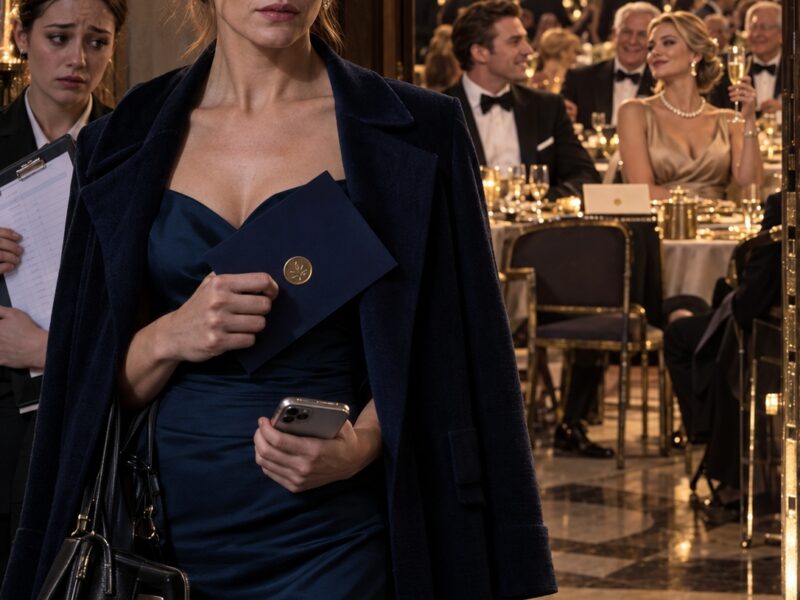
I stood beneath the brass chandelier in the lobby of Lexington’s Ashford Country Club with a dark blue invitation in one hand and watched a young event coordinator drag her finger down the printed list for a third time.
“I’m sorry, Mrs. Talbot.”
Her cheeks were turning pink.
“There’s no Mara Talbot.”
I looked at her.
“My husband is tonight’s honoree.”
“I know.”
“He has a wife.”
The poor girl looked as though she would have preferred a fire alarm.
“Yes, ma’am.”
“And you’re telling me his wife isn’t invited.”
“I’m only working from the final guest list we received from Belmont Infrastructure.”
Behind her, through the open ballroom doors, a string quartet was finishing a sound check.
Waiters moved between tables with trays of champagne.
A ten-foot banner near the stage carried Graham’s photograph above the words:
BELMONT INFRASTRUCTURE LEADERSHIP MEDAL — GRAHAM TALBOT
My husband.
Twenty years together.
Eighteen married.
Our daughter was away at college.
And apparently I no longer qualified for the room.
“Who submitted the list?”
I asked.
The coordinator glanced toward a clipboard.
“Mr. Graham Talbot’s office.”
Of course.
I should have been shocked.
I wasn’t.
That was the first thing that frightened me.
The second happened when I looked through the ballroom doors.
Table One sat directly below the stage.
Executive families.
Board members.
Belmont’s chief operating officer.
My in-laws.
And beside the empty chair where I had assumed I would sit was Camille Rhodes.
Graham’s college girlfriend.
Camel-colored dress.
Pearls.
Perfect hair.
One hand resting comfortably on my mother-in-law’s wrist while Vivian Talbot leaned toward her, laughing.
Camille had my seat.
Not symbolically.
Literally.
The ivory place card beside her read:
CAMILLE RHODES — STRATEGIC ACQUISITIONS
The card on the other side read:
GRAHAM TALBOT — SENIOR PROJECT DIRECTOR
My father-in-law, Howard, noticed me first.
His smile disappeared.
Vivian followed his gaze.
For one second, something like panic moved across her face.
Then she turned deliberately back toward Camille.
That told me everything I needed.
This was not an administrative mistake.
They knew.
I reached into my bag and took out my phone.
Graham had sent a message forty-three minutes earlier.
Running around. See you inside. Proud night for us.
For us.
I typed:
I’m in the lobby. My name isn’t on the list.
The little gray dots appeared.
Stopped.
Appeared again.
Then disappeared.
Five minutes.
No answer.
The coordinator shifted nervously.
“Mrs. Talbot, I can get the event manager.”
“No.”
“Are you sure?”
“Yes.”
The quartet began the first movement of something polished and expensive.
A bell sounded inside the ballroom.
Guests started taking their seats.
My husband was about to be celebrated for becoming the kind of man he had once sworn he never wanted to become.
I looked at Camille one more time.
She lifted her champagne.
Vivian touched her shoulder.
Howard whispered something to Graham’s division president.
No one came toward me.
Then my phone buzzed.
Graham.
This is a corporate event, Mara. The table changed last minute. Please don’t make tonight about this. We’ll talk at home.
I read it twice.
Not:
I’m coming out.
Not:
They made a mistake.
Not even:
I’m sorry.
Please don’t make tonight about this.
Something in me went quiet.
The event coordinator said:
“Mrs. Talbot?”
I gave her the invitation.
“You can keep that.”
Then I turned around.
I did not enter the ballroom.
I did not confront Camille.
I did not call Vivian a hypocrite in front of three hundred people.
I walked through the country club’s front doors and into the cold Kentucky evening while a brass fanfare began behind me.
Graham’s introduction.
My truck was parked between a silver Bentley and a Range Rover.
The irony made me smile.
My ten-year-old Ford F-250 still carried two feed samples, a pair of muddy boots and enough hay dust to offend everyone at Table One.
I climbed in.
My phone rang.
Graham.
I watched his name.
Let it ring.
Then drove home.
By the time Graham stepped onto that ballroom stage to accept the award his company believed represented his rise, I was emptying eighteen years of marriage into two canvas bags.
I started with documents.
Passport.
Birth certificate.
Business records.
My father’s original property deeds.
The operating agreement for Whitmore Equine Nutrition.
The trust documents connected to the first eighty-two acres.
My professional licenses.
Then clothes.
Jeans.
Boots.
Work shirts.
Three sweaters.
The navy dress I wore to Elise’s high-school graduation.
Not the gowns Graham bought for corporate dinners.
Those stayed.
So did the silver shoes Vivian once told me were “surprisingly elegant for someone who spends her life around barns.”
I packed quickly.
Not dramatically.
That mattered.
I was not leaving because of one seating chart.
The seating chart had simply stopped me from pretending everything before it was unrelated.
For nineteen years, my business had paid for more of Graham Talbot’s life than anyone at Ashford Country Club would ever know.
I bought the land before I met him.
Not all of it.
The first parcel.
Seventy-four rough acres outside Lexington with broken fencing, a collapsing tobacco barn and soil my father called “beautiful if you’re willing to suffer.”
I was twenty-two.
He had died the previous spring and left me enough life-insurance money to make one reckless decision.
I bought dirt.
Then built.
At first, Whitmore Equine Nutrition was barely a company.
Three boarding stalls.
Feed consultations.
Specialty hay mixes.
A used delivery trailer.
I learned equine nutrition because I loved horses, but I learned business because love did not cover payroll.
I studied rotational grazing.
Soil amendments.
Forage analysis.
Storage moisture.
Seasonal purchasing.
By thirty, I had direct contracts with farms in three states.
By thirty-five, we were supplying high-performance feed programs to thoroughbred trainers throughout Kentucky.
Nobody inherited that for me.
I made mistakes expensive enough to remember forever.
I also survived them.
Graham met me when I was twenty-three.
He was twenty-five.
Structural engineer.
Smart.
Funny.
Always slightly rumpled.
He worked from an office above a plumbing company and drove an old Honda with one door that only opened from the inside.
The first time he came to the farm, his polished shoes disappeared into red Kentucky clay.
I laughed.
He took them off and finished the property tour in socks.
That was the man I married.
Or maybe that was simply the man he had been before ambition learned how easily charm opened doors.
We married two years later.
Elise came the year after that.
For a long time, we were good.
Not glamorous.
Good.
There is a difference.
Graham built his engineering consultancy while I built Whitmore.
When jobs were lean, my farm covered our health insurance.
When one of his early clients defaulted and left him forty-eight thousand dollars short on payroll, I extended a line against my acreage.
When he needed bonding for his first large municipal contract, my unencumbered land became the collateral that gave the bank confidence.
He hated accepting help.
At least then.
He would sit at our kitchen table after Elise went to bed and say:
“One day I’m going to pay every dollar back.”
I would kiss him.
“We’re married.”
“That doesn’t mean your work becomes mine.”
Funny.
How sentences age.
The business grew.
His too.
Graham merged his firm into Belmont Infrastructure when he was forty-one.
Belmont developed public buildings, arenas, resort properties and massive commercial sites across the Midwest.
Graham became regional project director.
Then senior project director.
Company car.
Country-club membership.
Board dinners.
Magazine profiles.
The old Honda became a Mercedes.
His suits changed.
Then his vocabulary.
Networking.
Optics.
Positioning.
Executive presence.
He stopped saying our farm.
Started saying Mara’s operation.
The first time I noticed, we were at dinner with his parents.
Howard Talbot asked Graham about a new stadium contract.
Vivian turned toward me.
“And how are the horses?”
The tone people use when asking a child about a hamster.
“They’re profitable.”
Vivian smiled.
“How wonderful.”
I looked at Graham.
He looked down at his wine.
He had once defended me before anyone finished the insult.
That night, he simply let it pass.
That was how it began.
Not with Camille.
With silence.
Camille Rhodes arrived ten months before the gala.
I knew who she was before Graham told me.
Everyone in Lexington knew the Rhodes family.
Old money.
Real estate.
Breeding farms they paid other people to run.
Camille had dated Graham during college.
Vivian had adored her.
Their relationship ended because Graham wanted to start a career in Cincinnati and Camille wanted to remain inside Lexington society.
At least that was the story Graham told me.
Then Belmont began evaluating a private polo resort in Woodford County.
Camille worked in land acquisition.
Suddenly she and Graham had reasons to meet.
Professional reasons.
Very polished reasons.
The first few months, I ignored it.
That is not entirely true.
I noticed.
I chose not to turn noticing into accusation.
There is a difference.
Graham began coming home later.
Private dinners.
Investor tastings.
Site meetings.
Weekend planning sessions.
His phone went face down.
Then it got a second password.
He moved work files into our home study and installed a lock on the cabinet.
When I teased him:
“Are you hiding nuclear codes?”
He smiled without looking up.
“NDAs.”
Then he kissed my forehead.
A habit that had become substitute intimacy.
One night in August, I walked onto the back porch while he was speaking quietly on the phone.
He stopped immediately.
“Who was that?”
“Belmont.”
“It’s eleven-thirty.”
“California investors.”
“We’re in Kentucky.”
He sighed.
“Mara.”
That sigh.
The one that turned my reasonable question into provincial ignorance.
“This project has international capital.”
“Okay.”
“You don’t understand how these relationships work.”
I remember looking at him.
Not angry.
Just surprised.
“I understand relationships.”
He softened.
“I didn’t mean it like that.”
But he had.
A month later, Elise called me from the University of Kentucky.
“Mom.”
“What?”
“Is Dad okay?”
My stomach tightened.
“Why?”
“He’s weird.”
Nineteen years old.
Pre-veterinary track.
Observant like me.
Too observant sometimes.
“He barely calls.”
“He’s busy.”
“He called yesterday.”
“And?”
“He spent fifteen minutes talking about Belmont’s gala and then told me Grandma thought I shouldn’t come.”
I stopped walking.
I had been crossing the feed warehouse with a clipboard.
“What?”
“She said the executive tables have limited family seating.”
“Did your father say that?”
“He said it might be better because I have exams.”
Elise laughed bitterly.
“I’m nineteen, Mom. I can tell when people don’t want me somewhere.”
My chest hurt.
“I’ll talk to him.”
“No.”
Her voice hardened.
“Don’t make him pretend for me.”
That sentence stayed.
“Are you okay?”
I asked.
“Are you?”
Children ask dangerous questions when they become adults.
“I’m fine.”
“Mom.”
“I’m handling some things.”
She was quiet.
Then:
“Grandma mentioned Camille.”
Of course.
“What did she say?”
“That Camille understands how important Dad’s career is.”
I closed my eyes.
“Exact words?”
“Pretty much.”
“Elise—”
“I know what you built.”
Her voice shook.
“I watched you work through drought years and ice storms. Dad did too. If he’s suddenly embarrassed by that because people wear nicer shoes at Belmont, that’s his problem.”
I leaned against a pallet.
My daughter had articulated in twenty seconds what I had avoided naming for nearly a year.
“Elise.”
“I love Dad.”
“I know.”
“But I don’t like who he’s becoming.”
Neither did I.
I just had not admitted it.
Three days before the gala, our chief financial officer asked to meet at six in the morning.
Nathan Cole had worked with my father before working with me.
Sixty-one.
Gray beard.
Ugly ties.
A mind that could find a missing twelve dollars inside a million-dollar reconciliation.
When Nathan said:
“Close the door,”
I did not argue.
He placed three wire confirmations on his desk.
Total:
$386,000.
Transferred during the previous twelve days.
From Whitmore Equine Nutrition’s operating credit reserve.
Beneficiary:
Rhodes Strategic Land LLC.
I looked up.
Nathan did not speak.
“Camille.”
“Yes.”
“What is this?”
“That’s what I wanted to ask you.”
Three invoices.
Environmental consulting.
Topographic survey.
Preliminary zoning work.
All allegedly connected to parcels beside our western pasture.
I stared.
“No one surveyed our land.”
“I know.”
“No one requested zoning work.”
“I know.”
“Who authorized them?”
Nathan pointed.
Graham Talbot.
My husband remained a secondary signer.
Had been for fifteen years.
A leftover from the days when we genuinely functioned as one financial household.
His authority was supposed to exist for emergencies.
Payroll if I was hospitalized.
Insurance if I traveled.
Nothing more.
“Could these be Belmont expenses accidentally routed through us?”
Nathan’s face told me how badly he wanted that to be true.
“No.”
“How sure?”
“Completely.”
He opened the Kentucky corporate registry.
Rhodes Strategic Land LLC had been formed twenty-seven days earlier.
Managing member:
Camille Rhodes.
Address:
A law office downtown.
“What did the money buy?”
“Land options.”
My stomach dropped.
“Where?”
Nathan brought up a county map.
Three parcels.
All bordering my farm.
The polo-resort project.
Graham had used my operating credit to help Camille secure speculative land positions that would rise dramatically in value if Belmont chose the site.
Conflict of interest.
Misappropriation.
Possibly fraud.
And breathtaking stupidity.
“Does Belmont know?”
“Doubt it.”
I sat.
For a long moment, I heard only the building waking outside.
Forklift.
Metal door.
Someone laughing near the loading dock.
Normal business.
Meanwhile the man I had been married to for eighteen years had quietly placed our company at risk.
“Maybe he planned to repay it.”
Nathan did not answer.
I looked at him.
“Say it.”
“That doesn’t matter.”
He was right.
Intent to repay is the favorite bedtime story of people taking money that is not theirs.
“Can we trace the authorization?”
“Already did.”
His computer.
Our home IP.
His credentials.
Two-factor confirmation routed through the secondary signer token.
Not accidental.
Not forged by Camille.
Graham had done it.
“Does he know you found it?”
“No.”
“Keep it that way.”
Nathan nodded.
I spent the next six hours doing the thing betrayal rarely expects.
Accounting.
No confrontation.
No screaming phone call.
No dramatic drive to Belmont.
We preserved logs.
Copied invoices.
Certified bank records.
Pulled historical signer permissions.
I called our bank’s fraud-risk department.
Graham’s authority was suspended pending review by noon.
The credit line was locked against further non-payroll draws.
Then I called Elena Walsh.
Commercial litigator.
Family-law attorney.
Friend of Nathan’s.
Fifty-eight and so calm she made angry men nervous.
She reviewed everything in silence.
Finally:
“You have two problems.”
“Only two?”
“Business fraud.”
She tapped the papers.
“And marriage.”
“Yes.”
“Which do you want handled first?”
I looked at her.
“Business.”
That surprised her.
“Why?”
“Because one hundred and twelve employees do not care whether my husband loves me.”
Elena nodded.
“Good answer.”
The second problem waited.
It had already waited months.
Two days later came Elise’s call about the gala.
Then the guest list.
Then Table One.
Then Camille in my chair.
Standing in our bedroom that night while Graham accepted applause across town, I understood something important.
The gala had not broken the marriage.
It had simply provided a visual.
For months Graham had been removing me from his new life one small decision at a time.
The guest list was merely the first time he put it in writing.
I zipped the second duffel.
Then walked downstairs.
Our kitchen island was marble because Graham liked marble.
I preferred butcher block.
He won that argument during the renovation.
Funny what becomes symbolic after enough years.
I placed my wedding ring on the island.
Not the engagement ring.
I had stopped wearing that during farm work years earlier.
Just the plain gold band.
Beside it, I laid one page.
Three wire transfers.
Highlighted.
No letter.
No accusation.
No explanation.
Numbers are insultingly clear.
Then I drove to the farm.
Whitmore’s original manager apartment sat above Barn Three.
Small.
Two bedrooms.
Old pine floors.
A shower that took four minutes to heat.
Nathan used it for visiting consultants.
That night, it became home.
I slept badly.
At 1:12 a.m., Graham called.
Seven times.
Text messages followed.
Where are you?
What is this bank statement?
Mara answer me.
Then:
You embarrassed me tonight.
I stared at that one.
Not:
I’m sorry.
Not:
Come home.
Not:
We need to talk about what I did.
You embarrassed me.
I turned the phone off.
At 6:45 the next morning, I woke to pounding downstairs.
Nathan called from the office.
“Your husband is here.”
“I know.”
“How?”
“He is attempting to remove the door from its hinges.”
“Want security?”
“No.”
I pulled on jeans.
Barn coat.
Boots.
No makeup.
No jewelry.
Exactly the woman Vivian had spent years pretending was insufficient.
I went down.
Graham stood outside.
Tuxedo shirt wrinkled.
No jacket.
Bow tie hanging loose.
He looked terrible.
I opened the door but did not invite him in.
“What the hell did you do?”
Good morning.
“Which thing?”
He stared.
“The bank froze the line.”
“Yes.”
“Belmont got a collateral-impairment notice at five this morning.”
“That sounds appropriate.”
“Mara.”
His face twisted.
“This is not funny.”
“I’m not laughing.”
“The Woodford project has been suspended.”
“Then Belmont’s controls work.”
He stepped closer.
“What did you tell them?”
“Nothing.”
“Bullshit.”
“The bank notified them.”
“Why?”
I held out a folder.
He stared.
“What’s that?”
“Your transactions.”
His color changed.
Only slightly.
Enough.
“There is an explanation.”
“Good.”
I handed him the folder.
“I’ve wanted one.”
He scanned.
First wire.
Second.
Third.
“What did Nathan tell you?”
“Facts.”
“That old bastard has hated me for years.”
“Nathan approved the emergency line you used to build your first engineering firm.”
Graham looked up.
“That isn’t relevant.”
“It seemed relevant when you needed money.”
His jaw tightened.
“The Rhodes company is part of the project.”
“No.”
“Mara—”
“No.”
I pointed to the filing.
“Camille owns it personally.”
“She’s our acquisition consultant.”
“Belmont hired her company?”
Silence.
“Show me the contract.”
He looked away.
There it was.
“I was going to explain.”
“When?”
“It’s complicated.”
“No.”
I remained still.
“It is embarrassingly simple.”
Graham lowered his voice.
“The land was undervalued.”
“So you took my business capital.”
“It was short-term.”
“You took it.”
“I’m authorized.”
“For emergency company operations.”
“The resort will increase every acre around here.”
“My employees cannot be paid in future land appreciation.”
“I was going to return it.”
“From what?”
He stopped.
“Elaborate.”
“The option assignments.”
“To whom?”
“Investors.”
“Which investors?”
His silence grew.
I understood.
“You were going to flip the land.”
“That makes it sound cheap.”
I almost laughed.
“You used my credit to buy options through your ex-girlfriend’s company so the two of you could privately profit from a project you manage for Belmont.”
“We were going to disclose it.”
“When?”
“After zoning.”
“That’s not disclosure. That’s getting caught after the money is irreversible.”
His face hardened.
“You don’t understand development.”
There it was again.
“I understand unauthorized transfers.”
“Mara, stop turning this into some criminal fantasy.”
“Then why did you hide it?”
He had no answer.
His phone buzzed.
He glanced.
I saw the name.
Camille.
He turned the screen away.
Small movement.
Marriage-sized meaning.
“Answer it.”
“What?”
“Answer Camille.”
“This isn’t about Camille.”
“She’s on the transfers.”
“She’s a consultant.”
“She was in my seat last night.”
Graham rubbed his forehead.
“Jesus Christ.”
“No, just me.”
“You weren’t supposed to come.”
The sentence escaped.
We both heard it.
The farm seemed to become very quiet.
I looked at him.
“What?”
His face changed.
“Mara—”
“You removed me.”
“Belmont wanted a polished executive table.”
For a second I honestly thought I had misunderstood.
“A polished executive table.”
“You know what I mean.”
“I want to hear you explain it.”
“Camille was there in a professional capacity.”
“And your parents?”
“Family.”
I almost smiled.
“And your wife?”
“You hate those events.”
“I attended fourteen years of them.”
“You complain.”
“I complain to you in the car.”
He looked away.
“I knew you’d be uncomfortable.”
“So you protected me?”
“That’s not what I said.”
“You removed our daughter too.”
His face tightened.
“She has exams.”
“Vivian told her college students would dilute the table.”
“Mom shouldn’t have said that.”
“But you agreed.”
He stepped forward.
“Mara, I was receiving the biggest professional honor of my life.”
“No.”
My voice remained quiet.
“You were receiving the biggest professional honor of the life I helped finance.”
His face went rigid.
“That is beneath you.”
“Is it inaccurate?”
“You always do this.”
“Do what?”
“Make everything financial.”
I stared at him.
“You transferred three hundred eighty-six thousand dollars out of my company.”
He stopped.
Then:
“Our company.”
“No.”
I had never corrected him this sharply before.
“Whitmore Equine Nutrition existed before you.”
His face changed.
“We are married.”
“Not for much longer.”
He actually laughed.
Nervous.
Disbelieving.
“Mara.”
“Elena filed for legal separation at eight this morning.”
The laugh disappeared.
“What?”
“You heard me.”
“You filed because of one gala?”
“No.”
I nodded toward the folder.
“I filed because my husband used my business as his private bank, lied about it, removed our daughter and me from a ceremony honoring a career built partly on that business, and then placed the woman receiving the money beside him at the family table.”
Graham stared.
“You think I’m sleeping with Camille.”
I had not said that.
Interesting.
“Are you?”
“No.”
Too quick.
He looked offended.
“Of course not.”
I watched him.
There had been a time when that answer would have been enough.
Not anymore.
“Then produce the communications.”
His eyes narrowed.
“What?”
“Between you and Camille regarding Rhodes Strategic Land.”
“That is confidential Belmont material.”
“No. You used Whitmore funds.”
“You don’t have the right to demand my work messages.”
I almost smiled.
“But you had the right to take my working capital.”
He hated that.
“You’re blowing up our marriage over money.”
“No.”
I looked at him.
“You blew it up because you thought my work was ordinary enough to steal from and my presence was ordinary enough to erase.”
His face moved.
That landed.
Then his phone rang again.
Camille.
Graham silenced it.
“I love you.”
The words arrived like a card pulled too late from a deck.
I believed he believed them.
That was the sad part.
“I know.”
He stepped closer.
“Then let’s go home.”
“No.”
“We can fix this.”
“You mean I can reopen the credit line.”
“No.”
“Call Belmont.”
“No.”
“Withdraw the fraud notice.”
“No.”
“Mara.”
His desperation sharpened.
“If this line stays frozen, the Woodford project collapses.”
“That isn’t my project.”
“My career is attached to it.”
“That was your decision.”
His expression changed.
Anger.
Finally.
“You vindictive—”
He stopped.
Not because he did not feel it.
Because some part of him remembered who I was.
I waited.
“Finish.”
He looked at me.
Then away.
“I sacrificed for you too.”
“Yes.”
That surprised him.
I continued.
“You drove Elise to school when I had deliveries.”
“You worked nights when Whitmore had two bad seasons.”
“You built the first storage shed with Dad.”
His face softened.
“All true.”
I nodded.
“That is why this hurts.”
Silence.
“But past loyalty is not a lifetime license to betray someone.”
Graham looked suddenly tired.
Older.
For one brief second, I saw the man in muddy socks.
Then his phone buzzed again and he glanced down.
Habit.
Choice.
The moment passed.
“I need you to call the bank.”
“No.”
“Mara.”
“My attorney will communicate with yours.”
“I don’t have an attorney.”
“You will.”
I stepped backward.
“You should go.”
He looked at the farm behind me.
At trucks moving.
Employees arriving.
A life he had treated as provincial.
Then he said the ugliest thing he could have said because he was frightened.
“You really think you can just hide out here shoveling hay while I lose everything?”
I stared.
“This is the everything.”
His face changed.
I closed the door.
For the next two weeks, Graham discovered exactly how much of his professional confidence had rested on things he considered beneath him.
Not because I attacked him.
Because I stopped supporting him.
First Heritage completed the fraud review.
Belmont suspended Graham from the Woodford project pending internal investigation.
Not fired.
Suspended.
Important difference.
Camille’s consulting company was placed under review.
The land options were frozen.
No arrests.
No dramatic police raid.
Real financial misconduct does not usually arrive with sirens.
It arrives through letters with boring subject lines.
NOTICE OF COVENANT REVIEW.
TEMPORARY SUSPENSION OF DRAW AUTHORITY.
REQUEST FOR DOCUMENT PRESERVATION.
Nathan loved boring subject lines.
“They terrify guilty people.”
He was right.
Graham hired an attorney.
Then another.
His first explanation was misunderstanding.
His second was spousal consent.
His third was that the transfers were legitimate predevelopment investments made for our mutual benefit.
That argument died when Elena produced our operating agreement.
Whitmore Equine Nutrition was legally mine.
Graham possessed limited signer authority.
Not equity.
Not investment discretion.
Then Belmont’s compliance team discovered something I had not known.
Camille had been attempting to assemble a private investor group to purchase land around the resort before Belmont publicly announced the preferred site.
Insider information.
Not necessarily securities-law insider trading.
Still serious.
Ethically catastrophic.
Graham had access to confidential site-selection information.
Camille had access through him.
My money funded their speculative position.
Elena called me from her office.
“There’s more.”
I closed my eyes.
“Of course there is.”
“One transfer originated from a line secured by Parcel Seven.”
My chest tightened.
Parcel Seven was where Whitmore’s climate-controlled forage warehouse stood.
“What?”
“Graham added that parcel to a collateral schedule eight months ago.”
“I didn’t approve that.”
“I know.”
“Signature?”
“Yours.”
I stood.
“No.”
“Electronic.”
“I never signed.”
“Can you prove where you were?”
“What date?”
She told me.
I remembered immediately.
Louisville.
Equine nutrition conference.
Keynote panel.
Two hundred attendees.
Hotel records.
Photographs.
I had not signed anything from home at 10:32 that night.
Forgery.
The word changed the case.
It changed me too.
Stealing under ambiguous permission hurts.
Using my identity erased ambiguity.
I drove to Elena’s office.
We sat with a forensic technology specialist.
Device metadata showed the signature originated from our home study.
Graham’s laptop.
Elena looked at me.
“Mara.”
I stared at the screen.
“I want to believe he did not know.”
She did not answer.
“That sounds pathetic.”
“It sounds married.”
That nearly made me cry.
Instead:
“Find out.”
The forensic review took five days.
The authorization packet originated from Graham’s account.
The signature certificate was accessed using a saved copy of my digital credential.
But the audit trail showed another login.
Camille.
Her IP.
Her office.
Not Graham’s.
For twelve hours, hope came back.
Maybe Camille forged it.
Maybe Graham had not known.
Then investigators recovered messages.
Not romantic.
Worse in another way.
Graham:
Mara will never approve Parcel 7. She treats the land like family.
Camille:
Then don’t ask her. Use the existing authority and we clean it up after the option closes.
Graham:
If this blows back, I’m the one sleeping next to her.
Camille:
You’ll manage her. You always do.
Two hours later:
Send me the credential package.
Graham:
Deleting this thread after.
He knew.
I sat in Elena’s conference room and read those lines twice.
Then once more.
“You okay?”
“No.”
“Good answer.”
I looked through the window.
Lexington traffic moved below.
“Was there an affair?”
Elena studied me.
“Does it matter?”
“I don’t know.”
“It may matter emotionally.”
“Yes.”
“Legally, we have enough.”
I nodded.
But marriage is not litigation.
Some questions remain personal long after they stop being necessary.
Camille answered the affair question for me.
She came to the farm.
Late afternoon.
No appointment.
No designer drama.
She parked a white Range Rover beside the office and got out wearing jeans, riding boots and a cashmere coat.
She looked tired.
Not victorious.
Nathan found me in the feed lab.
“She’s here.”
“Who?”
“Rhodes.”
My stomach tightened.
“Want me to tell her to leave?”
I thought.
“No.”
We met outside.
Neutral ground.
Camille stopped ten feet away.
“I won’t stay long.”
“Good.”
She accepted that.
“Mara, I owe you an explanation.”
“No.”
She blinked.
“You owe investigators an explanation.”
“I’m cooperating.”
“Then we agree.”
She looked toward the barns.
“I never understood this place.”
“Most people don’t.”
“Graham talked about it like it was holding him back.”
Of course.
“What did he tell you about us?”
Camille hesitated.
“That you were basically separated.”
I laughed.
“When?”
“About eight months ago.”
“Eight months ago we went to Charleston for our anniversary.”
Her face changed.
“I didn’t know.”
“Were you sleeping with him?”
Silence.
Then:
“Twice.”
There it was.
No melodrama.
No slap.
No storm.
Two adults standing beside a feed warehouse.
“When?”
“June.”
The Charleston trip had been May.
“How long had you been discussing land before that?”
“Months.”
“Why the affair?”
Camille looked down.
“Because I wanted him.”
At least honest.
“And he wanted the life I represented.”
That answer hurt more because it fit.
“Prestige.”
“Access.”
“Your parents-in-law loved me.”
“My in-laws.”
“Yes.”
Camille swallowed.
“I let myself believe you were already emotionally gone.”
“Because he said so?”
“Because I wanted it to be true.”
I looked at her.
She continued.
“The gala seat wasn’t my idea.”
“Did you know?”
“Yes.”
“Did that bother you?”
She closed her eyes.
“Yes.”
“But you sat there.”
“Yes.”
That was enough.
No absolution.
No cruelty.
Just record.
“What do you want from me?”
Camille asked.
“Nothing.”
“I can testify about the credential package.”
“You should.”
“Against Graham.”
“Yes.”
Her face tightened.
“I loved him.”
That surprised me.
“Maybe.”
She looked at me.
“You don’t believe me?”
“I believe you felt something.”
I shrugged.
“I just don’t think love is proven by helping someone steal from his wife.”
Camille absorbed it.
Then:
“You’re right.”
That was all.
She left.
The affair did not destroy me.
The forgery did.
Not because it was financially larger.
Because Graham had taken the part of me I was proudest of—my competence—and treated it like an obstacle to work around.
That was the deeper betrayal.
He knew I would say no.
So he removed my ability to say it.
A month after the gala, Elise came home.
Not because I asked.
She arrived Friday afternoon carrying laundry and anger.
She hugged me in the farm office.
Then held on.
“Dad says you’re destroying him.”
I stepped back.
“What do you think?”
“I think he wants me to pick a side.”
“I won’t ask you to.”
“He keeps saying that too.”
“What?”
“That he won’t ask me to pick.”
She rolled her eyes.
“Then he explains for forty minutes why you’re overreacting.”
That sounded like Graham.
Elise looked around.
“Can I see the documents?”
“You don’t need to.”
“I want to.”
I hesitated.
Then remembered what secrecy had cost.
“Some.”
Not litigation strategy.
Not private affair details.
Enough.
Transfers.
Messages.
Forged credential.
Elise read quietly.
Then pushed the folder away.
“He used your signature.”
“Yes.”
Her face changed.
“That’s worse than Camille.”
“I think so.”
“Does Dad?”
“No.”
Elise laughed without humor.
“He thinks cheating is the dramatic thing.”
“Yes.”
“Because he understands sex.”
I stared.
She continued.
“He doesn’t understand control.”
Nineteen.
My daughter.
Again saying what adults avoided.
She stayed the weekend.
Saturday morning she helped me move mineral supplements into the new storage building.
At noon, she said:
“I used to be embarrassed by this.”
I stopped.
“The farm?”
“When I was thirteen.”
Fair.
“You dropped me at school in that old red truck.”
“That truck was immortal.”
“It smelled like molasses feed.”
“It smelled like money.”
She laughed.
“I know now.”
Then she became serious.
“Dad started acting like this place was small.”
I looked across the fields.
One hundred eighty-six acres.
Forty employees on site.
Distribution contracts across three states.
“People call whatever they no longer respect small.”
Elise nodded.
“I don’t want to be like that.”
“You won’t.”
“How do you know?”
“Because you’re worried about it.”
She smiled.
The divorce moved slowly.
That saved us from becoming a revenge fantasy.
Nothing collapsed overnight.
Belmont conducted a four-month investigation.
Graham remained suspended.
Camille resigned before they could terminate her contract.
First Heritage pursued restitution.
The county prosecutor reviewed the forged credential.
Graham eventually admitted authorizing the use.
His attorney negotiated.
No prison.
Probation.
Restitution.
Professional discipline.
Belmont terminated him for cause.
His engineering license was suspended for eighteen months because his conduct involved financial dishonesty connected to a development project.
He lost the job.
Not his entire life.
Reality is usually less theatrical than revenge and more difficult to live with.
My in-laws blamed me.
At first.
Vivian called.
I let Elena handle most communication.
Then one evening she appeared at my office.
She looked smaller without a country-club dining room around her.
“Mara.”
“Vivian.”
“I want five minutes.”
“You have three.”
Her lips tightened.
Old instinct.
Then softened.
“Fair.”
She sat.
“I was wrong.”
That was not what I expected.
“About?”
“You.”
I waited.
“That sounds broad.”
She looked down at her gloves.
“I thought Graham’s success meant he had outgrown certain things.”
“Such as?”
“The farm.”
“Me.”
Her face flushed.
“Yes.”
“And Elise?”
“No.”
“Then why was she removed too?”
Vivian’s eyes filled.
“Because Camille said the executive table needed to feel cohesive.”
I almost laughed.
“And you agreed.”
“Yes.”
“Why?”
“Because I wanted that room to look like what I thought Graham deserved.”
There it was.
Not evil.
Vanity.
Sometimes vanity is enough.
Vivian continued.
“I thought you would understand.”
“Meaning tolerate.”
“Yes.”
“And when did you learn about Camille?”
She went still.
“The affair?”
“Yes.”
“After the gala.”
I watched.
“Did you know she and Graham were emotionally involved?”
Vivian looked away.
“I suspected.”
“And still seated her beside him.”
“Yes.”
“Did you know about the money?”
“No.”
I believed that.
She began crying quietly.
“I raised him to care too much about appearances.”
“That isn’t entirely yours.”
“No.”
“Mothers don’t get to claim all the credit for grown men’s decisions.”
She looked at me.
“That sounds kinder than I deserve.”
“It isn’t kindness.”
I folded my hands.
“I’m tired of explaining men through women.”
Vivian absorbed that.
“Will you ever forgive him?”
“I don’t know.”
“Come back?”
“No.”
Immediate.
Clean.
Her face broke.
I was surprised by my own certainty.
“I loved your son.”
“I know.”
“I may always love some version of him.”
Vivian cried harder.
“But I am not returning to a marriage where I had to discover whether my signature belonged to me.”
She nodded.
That was the end.
Howard never apologized directly.
He sent a letter.
Three pages.
Mostly about family reputation.
I read one.
Then gave it to Elena.
Some people grow slowly.
Some not at all.
Our divorce settlement took seven months.
Graham gave up any claim to Whitmore.
Legally, he had little.
Emotionally, he believed he had more because marriage had blurred ownership for years.
I did not take his retirement.
Did not demand his remaining assets beyond what statutes required.
I did insist on full restitution to the business.
Every unauthorized dollar.
Some recovered from the frozen land options.
Some from Camille’s company.
Some from Graham’s brokerage account.
The money came back in stages.
Not because I wanted punishment.
Because employees should not finance someone else’s fantasy.
The day the decree was signed, Graham asked to speak privately.
Elena looked at me.
“My choice?”
“Yes.”
“Ten minutes.”
We sat in a courthouse conference room.
Graham looked different.
Cheaper suit.
No arrogance.
That did not automatically make him better.
Loss can imitate humility.
“I’m sorry.”
I waited.
“I know I’ve said it before.”
“You have.”
“I mean it differently now.”
“How?”
He looked at his hands.
“I thought because we were married, there was no real line between what was yours and mine.”
“That is not what you thought.”
He looked up.
I continued.
“You never transferred Belmont money into Whitmore without permission.”
Silence.
“You understood boundaries.”
He swallowed.
“You just thought mine were negotiable.”
That landed.
“Yes.”
“Say it.”
Graham closed his eyes.
“I thought yours were negotiable.”
I nodded.
He looked exhausted.
“I don’t know when I became that man.”
“I do.”
His eyes lifted.
“When?”
“When being admired started mattering more than being known.”
He flinched.
I continued.
“You did not wake up one morning cruel.”
“No.”
“You made a hundred small choices.”
Camille.
The lock on the study.
Vivian’s insults.
Elise’s exclusion.
The transfers.
The gala.
Each alone survivable.
Together a person.
Graham whispered:
“Was there a moment I could have fixed it?”
The old Mara might have comforted him.
Not now.
“There were hundreds.”
His face tightened.
“Do you hate me?”
“No.”
That surprised him.
“Why not?”
“Because hate would keep you employed in my life.”
He looked down.
“I’m not doing that anymore.”
The ten minutes ended.
I stood.
Graham said:
“Mara.”
I stopped.
“I really did love you.”
I looked at him.
“I know.”
That was the tragedy.
Love can exist beside entitlement.
Beside cowardice.
Beside betrayal.
Love alone does not make a relationship safe.
“I loved you too.”
His eyes filled.
Then I left.
The first year afterward was not triumphant.
It was quiet.
That was harder.
My house above Barn Three became permanent for six months.
Then I renovated an old farmhouse on Whitmore’s north property.
Smaller than the suburban home.
Mine.
Elise helped choose paint.
Nathan insisted the kitchen needed “adult cabinet hardware.”
I ignored him.
Whitmore grew.
Partly because I could focus again.
Partly because the Woodford polo resort collapsed and several trainers who had planned to relocate invested instead in existing Kentucky operations.
I signed a major nutrition contract with two Derby barns.
Built a new hydrotherapy feed-recovery program.
Hired a research veterinarian.
Not because betrayal magically created success.
Because the business had already been strong.
I stopped draining attention into a marriage that required constant interpretation.
One year after the gala, Elise was accepted early into the University of Kentucky College of Veterinary Medicine.
She ran into my office holding the letter.
“Mom.”
I knew before she spoke.
We both cried.
Nathan pretended he had allergies.
Later, Elise said:
“I want to work here someday.”
I looked at her.
“No.”
She blinked.
“What?”
“I want you to work anywhere you want.”
“I do want here.”
“After you know what else exists.”
She smiled.
“Deal.”
That mattered.
I did not want Whitmore to become another family obligation disguised as love.
The following spring, I met Andrew Keller.
Not at a gala.
Thank God.
He owned a breeding farm two counties over and wanted a forage-management contract.
Forty-six.
Divorced.
One daughter.
Wore muddy boots into the meeting and apologized.
I liked him immediately for apologizing about the correct thing.
We worked together for six months before dinner happened.
Not planned romantically.
A contract meeting ran late.
We ate barbecue.
He asked about Graham once.
Only once.
“What happened?”
“My marriage ended.”
Andrew waited.
I did not offer more.
He nodded.
“Okay.”
That was astonishingly attractive.
No curiosity as entitlement.
No demand for trauma as intimacy.
Weeks later he asked me to dinner properly.
I said no.
He smiled.
“Fair.”
No sulking.
No persuasion.
Three months later, I asked him.
He laughed.
“I thought you’d never get there.”
“Dangerous response.”
“I retract it.”
We dated slowly.
Elise liked him.
Nathan distrusted him on principle.
“Your judgment was compromised once.”
“That’s rude.”
“I’m old.”
Not an excuse.
But Nathan liked Andrew eventually too.
Two years after the divorce, Graham emailed.
Not begging.
That was new.
Subject:
No Reply Needed
I nearly deleted it.
Then read.
Mara, I spent a long time believing you destroyed my career because that version let me remain the victim of the story. You didn’t. You removed the support I had mistaken for something I was entitled to. The rest happened because of choices I made.
I stopped.
Then continued.
I also owe Elise an apology separate from the one I owe you. Removing her from the gala because she did not fit the image I wanted is one of the things I am most ashamed of.
Good.
Not enough.
Good.
Then:
I hope Whitmore is doing well. I no longer believe I deserve to know more than that.
I did not reply.
Not punishment.
Completion.
Elise maintained a relationship with her father.
Complicated.
Careful.
Hers.
I never used her as messenger.
Never asked what they discussed.
One Christmas she came home from seeing him and said:
“He works for a small engineering firm now.”
I nodded.
“Good.”
“He drives a Honda.”
That made me laugh.
“What?”
“Nothing.”
“Mom.”
“He drove a Honda when I met him.”
Elise became quiet.
“Do you miss that Dad?”
Sometimes.
“Yes.”
“Me too.”
We sat together.
Grief does not always mean wanting something back.
Sometimes it is simply respect for what existed before people changed.
Years passed.
Vivian sent birthday cards.
Howard died at seventy-eight after a stroke.
I attended the funeral.
People were surprised.
Graham was too.
He approached outside the church.
“Thank you.”
“He was Elise’s grandfather.”
“Yes.”
That was all.
Camille eventually pleaded to a civil settlement over the land-option misconduct.
No prison.
Her professional reputation suffered.
She rebuilt elsewhere.
I heard through industry gossip she moved to Nashville and worked for a smaller firm.
I wished her nothing.
Not harm.
Not success.
Nothing.
Indifference took longer than anger.
It was more peaceful.
Five years after that night at Ashford Country Club, Belmont held another gala.
Different honoree.
Whitmore Equine Nutrition received an invitation because we had become a preferred supplier to several Belmont-associated equestrian developments under new compliance rules.
The envelope sat on my desk.
Dark navy.
Almost identical.
Nathan noticed.
“You going?”
“No.”
Then I thought.
Actually.
“Yes.”
He raised an eyebrow.
“Why?”
“Because I want dinner.”
He laughed.
Andrew came with me.
Not as armor.
As my date.
Elise joined us because she was home from veterinary rotations.
At the lobby, a coordinator checked the seating chart.
“Dr. Talbot?”
Elise smiled.
“Whitmore.”
She had changed her surname legally two years earlier.
Not because she hated Graham.
Because she wanted the name attached to the land and business she planned to join someday.
The coordinator found us.
“Table Three.”
Good.
Not Table One.
No symbolism required.
We sat with veterinarians, trainers and agricultural researchers.
People I liked.
During dinner, an older Belmont executive approached.
“Mara Whitmore.”
“Yes.”
He extended a hand.
“I’ve wanted to meet you.”
“Why?”
“We’ve used your drought-resilience program on three projects.”
We talked soil.
Not husbands.
Not scandal.
Not gala history.
Later, walking toward the terrace, I passed Table One.
For a fraction of a second I remembered Camille’s place card.
Vivian laughing.
My name gone.
Then the memory passed.
Andrew noticed me pause.
“You okay?”
“Yes.”
“Want to leave?”
I looked around.
“No.”
That surprised me.
“I’m actually having a good time.”
He smiled.
“Miracles.”
We stayed.
That was the moment I understood the country club had never humiliated me.
Graham had.
I had simply allowed the building to inherit the memory.
Now it was only a building again.
At fifty-one, I sold a minority stake in Whitmore Equine Nutrition to an employee trust.
Nathan called it the first sensible thing I had ever done.
I reminded him I had paid his salary for thirty years.
Elise joined after completing veterinary training.
Not immediately.
She spent two years in Colorado working equine sports medicine.
Then returned.
Her choice.
The employee trust meant when I eventually retired, Whitmore would not become a throne someone inherited.
It would become something shared by the people who built it.
Andrew and I never married.
People found that strange.
We did not.
He kept his farm.
I kept mine.
We spent four nights a week together and three apart.
He proposed once as a joke while repairing a fence.
I told him to finish the post.
He did.
That was romance enough.
On the tenth anniversary of the gala, Elise found the old bank statement.
The one I had left under my wedding ring.
It was inside a folder in my home office.
She held it up.
“You kept this?”
“I forgot it existed.”
The transfers were still highlighted red.
Graham’s old signature.
Rhodes Strategic Land.
A whole marriage condensed into three lines of money.
“Do you want it?”
I asked.
Elise frowned.
“Why would I?”
“I don’t know.”
She looked toward the fireplace.
“Burn it?”
I thought.
Then shook my head.
“Shred it.”
She laughed.
“Less cinematic.”
“More secure.”
We fed it through the shredder.
Long white strips.
Then fragments.
Gone.
Not history.
Paper.
That distinction mattered.
Later that night, Elise asked:
“What did it feel like when you saw your name missing from the guest list?”
I thought for a long time.
“Embarrassing.”
“Were you angry?”
“Not at first.”
“What then?”
“Clear.”
She waited.
“I had spent months trying to decide whether every little thing meant what I feared it meant.”
The late nights.
Camille.
The phone.
The money.
The family comments.
“The seating chart was the first thing that required no interpretation.”
Elise nodded.
“Dad chose.”
“Yes.”
“And then you chose.”
I looked at her.
“Yes.”
That was it.
Not revenge.
Choice.
People often told the story differently after it circulated through Lexington business circles.
They said Graham Talbot excluded his farm-wife from a prestigious gala for his wealthy ex, so the humiliated wife left during the ceremony and destroyed his career.
Clean.
Satisfying.
Wrong.
I did not destroy Graham’s career.
I stopped securing it.
I did not bankrupt him.
I stopped guaranteeing obligations he had begun using against me.
I did not turn Belmont against him.
I preserved evidence and let their compliance department decide what conduct they were willing to employ.
I did not send Camille to ruin.
I told the truth about money that belonged to my company.
The consequences belonged to the people who made the choices.
That mattered because women like me are often told we are cruel the moment we stop absorbing somebody else’s consequences.
We become vindictive when we withdraw money.
Cold when we hire lawyers.
Unforgiving when apologies do not restore access.
Difficult when the boundary appears after years without one.
I had spent nearly two decades believing marriage meant there should be no hard lines between two people.
I know better now.
Love without boundaries does not become deeper love.
Sometimes it becomes permission.
The last time I saw Graham alone was fifteen years after the gala.
Elise had just gotten engaged.
She planned a tiny wedding.
Forty people.
On Whitmore property.
Graham came for a planning dinner because she wanted both parents there.
He arrived early.
Andrew was still at his farm.
Elise was at the clinic.
For ten minutes, Graham and I sat on the porch alone.
He had aged.
So had I.
That was comforting somehow.
He looked across the pasture.
“You expanded.”
“Yes.”
“Looks good.”
“Thank you.”
Silence.
Then he smiled faintly.
“Remember the first barn?”
“I remember you dropping a hammer on your foot.”
“I fractured a toe.”
“You claimed near death.”
He laughed.
So did I.
For a moment, the past became gentle.
Then Graham said:
“I’m glad she’s getting married here.”
“Me too.”
“She told me there’s no head table.”
I looked at him.
“She hates seating politics.”
He smiled sadly.
“Understandable.”
We both knew.
He continued:
“I think about that night sometimes.”
“So do I.”
“What would have happened if I came into the lobby?”
I considered.
If Graham had walked out.
Apologized.
Taken my hand.
Removed Camille.
Confronted his parents.
Would I have gone inside?
Maybe.
Then I would still have found the money.
The forgery.
The affair.
The outcome might only have taken longer.
“I don’t know.”
He nodded.
“I used to think one choice ended us.”
“The gala?”
“Yes.”
I looked at him.
“It didn’t.”
“I know.”
He stared across the pasture.
“It was hundreds.”
“Yes.”
Another silence.
Then:
“I’m sorry for all of them.”
I believed him.
And it changed nothing.
That was not cruelty.
That was reality.
“I know.”
Graham smiled.
“You always say that.”
“So do you.”
Elise’s truck appeared on the drive.
Moment over.
Before he stood, Graham asked:
“Are you happy?”
I looked at the land.
At the barn lights coming on.
At the office building beyond the trees.
At the life that had outgrown one man’s opinion of it.
“Yes.”
He nodded.
“Good.”
I believed he meant it.
That was enough.
Elise married the following spring.
No country club.
No executive table.
Long farmhouse tables beneath white lights.
Veterinarians.
Farm workers.
Friends.
Family.
Graham sat beside his sister.
Vivian’s chair remained empty; she had died the previous winter.
Andrew sat beside Nathan, who at eighty-one still believed retirement was a conspiracy.
I sat wherever Elise put me.
She did not use a formal seating chart.
Of course.
Before walking toward the ceremony, she found me inside the farmhouse.
“Mom.”
“What?”
“You okay?”
I laughed.
“You’re the bride.”
“I know.”
“Why are you checking me?”
“Because I know you.”
Fair.
I fixed one loose strand of her hair.
“I’m good.”
“Real good?”
“Real good.”
She looked at me.
Then:
“I learned something from you.”
Dangerous sentence from a daughter on her wedding day.
“What?”
“That leaving isn’t always giving up.”
My throat tightened.
“No.”
“Sometimes it’s refusing to participate.”
I hugged her.
Then she went outside.
No father giving her away.
No mother either.
Elise walked herself.
Both Graham and I stood when she entered.
So did everyone else.
The evening after her wedding, I walked alone across Whitmore’s original pasture.
The first seventy-four acres.
The tobacco barn was long gone.
New fencing.
Better soil.
Same rolling Kentucky light.
I thought about the woman I had been at forty-one.
Standing in a country-club lobby.
Dark invitation in her hand.
Looking through doors at a table where her place had been given away.
She thought that moment meant she had become disposable.
She was wrong.
A guest list cannot determine worth.
Neither can a husband.
Neither can wealthy parents.
Neither can a corporate title.
But I did not learn that because everything worked out afterward.
I learned it in the parking lot.
Before the lawyers.
Before the audits.
Before the restitution.
Before Whitmore expanded.
I learned it when I realized I did not have to enter a room simply because my husband wanted me excluded gracefully.
So I left.
While Graham delivered a speech about leadership, I packed.
While his family toasted appearances, I protected the business built by my own hands.
While Camille sat in my chair, I stopped financing the table.
Years later, people still sometimes asked whether I regretted disappearing during his ceremony instead of confronting him publicly.
No.
Because the strongest thing I did that night was not humiliate Graham.
It was refuse to humiliate myself for one more minute just to protect his evening.
I did not throw champagne.
I did not interrupt the speech.
I did not demand that anyone choose me.
I went home.
Packed what was mine.
Put the truth on the kitchen counter.
And left before the applause ended.
The marriage took months to dissolve.
The financial mess took longer.
The grief lasted longer still.
But my decision happened in less than five minutes.
My name was missing.
Camille’s was there.
My husband told me not to make a scene.
So I didn’t.
I made an exit.









