My Husband Vanished to New York and Sent His Family to Claim My House—Then One Deed, One Bank Account, and His Own Messages Exposed Everything
My husband disappeared on a Sunday night.
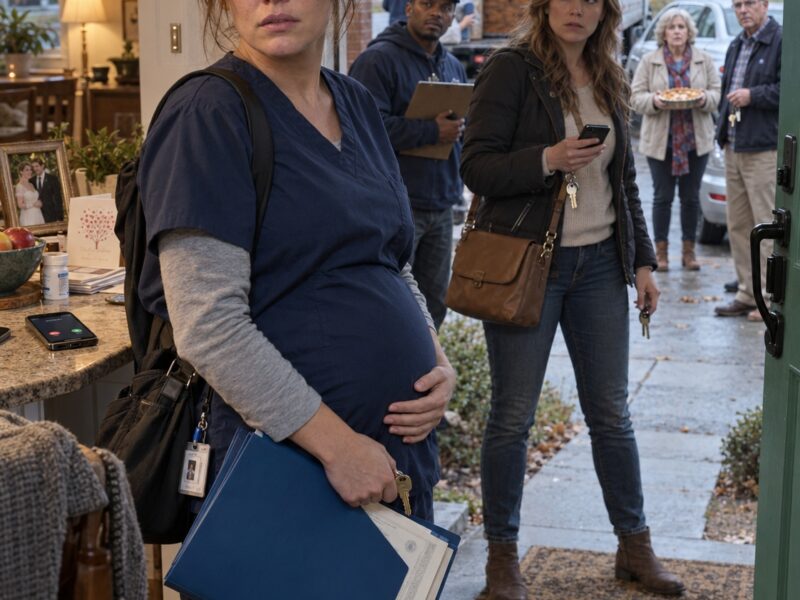
By Monday morning, his sister was standing inside my house with a key I had never given her, three movers behind her, and the confidence of someone arriving to collect property she believed already belonged to her family.
I was twenty-six weeks pregnant and still wearing yesterday’s navy hospital scrubs.
“Caleb isn’t coming back,” Brooke Bennett told me.
She said it loudly enough for the movers on the porch to hear.
Then she looked past me into my living room and added, “This house stays with the Bennetts.”
I stared at her.
The baby shifted low against my ribs.
Brooke mistook my silence for fear.
“You can keep making this difficult if you want, Nora. But Caleb said the marriage is done. My parents are moving in today.”
I set my work bag on the kitchen chair.
“Moving into what?”
She gave a short laugh.
“The house.”
“Whose house?”
“Ours.”
She sounded annoyed that I needed clarification.
“The Bennett house.”
That was when I knew whatever my husband had done was bigger than leaving.
On the kitchen counter behind me stood the anniversary card Caleb had given me two days earlier.
Five years.
He had written:
Whatever happens next, this will always be home.
I had cried when I read it.
Pregnancy had turned me into a person capable of crying over detergent commercials and dogs reunited with soldiers.
Now I walked past the card, opened the narrow drawer beside my mother’s wooden recipe box, and took out a blue folder.
Brooke watched me.
“What’s that?”
“The reason the movers aren’t unloading.”
I opened it.
The first document was the deed.
A modest brick bungalow in Clintonville, on the north side of Columbus.
Purchased September 18, 2018.
Owner:
Nora Elaine Parker.
One name.
Mine.
Brooke barely looked at it.
“Caleb said you’d do this.”
That sentence hurt more than the insult.
Not because she doubted me.
Because he had prepared her for the truth.
“He said what?”
“That you’d wave old paperwork around.”
She folded her arms.
“He said you bought the house before you married, but everything changed after he moved in.”
“Did he explain what changed?”
“The mortgage.”
“Utilities.”
“Renovations.”
“Marriage.”
I stared at her.
“Marriage doesn’t automatically put his name on my deed.”
Brooke rolled her eyes.
“You’re really going to do this?”
Outside, metal rattled.
The rear door of the moving truck rose.
I looked through the front window.
The truck was not empty.
It contained furniture.
An old maple dining set I recognized from every Bennett Thanksgiving.
A tan leather recliner belonging to Caleb’s father.
A cedar chest.
Two mattresses.
Stacks of boxes.
The top one was marked in black marker:
KITCHEN — MARILYN
My mother-in-law.
I turned slowly.
“You didn’t come to move me out.”
Brooke’s face shifted.
Not much.
Enough.
“You came to move them in.”
A mover climbed the porch steps with a clipboard.
His name tag said Andre.
“Ma’am?”
“Yes?”
“Order says delivery to lower-level apartment.”
“There is no lower-level apartment.”
He glanced at Brooke.
Brooke immediately reached for her phone.
I walked to the table and took out my wallet.
I showed Andre my license.
Same address.
Then the property-tax app.
My name.
Then the utility account, which had been open under my name since 2018.
“I own this house.”
Andre looked back toward the truck.
“This delivery was authorized by Mr. Bennett.”
“He doesn’t own the property.”
Brooke said sharply, “He lives here.”
“Not today.”
That was the first time I said it out loud.
Not today.
Maybe not again.
Andre took two steps backward.
“I’m calling dispatch.”
Brooke started arguing.
He raised one hand.
“Ma’am, I’m not unloading furniture into a residence when the record owner is standing here telling me no.”
Brooke looked at me.
“Do you understand what you’re doing to my parents?”
“I didn’t sell their house.”
That stopped her.
Only for a second.
Then she turned away and called Caleb.
He answered on the first ring.
My husband.
The man whose phone had gone directly to voicemail every time I called from two in the morning onward.
Brooke walked toward the doorway.
“She’s doing exactly what you said.”
Pause.
“No, the movers won’t unload.”
Pause.
“She’s showing them the deed.”
Another pause.
Her shoulders tightened.
“I know.”
Then:
“Mom and Dad will be here by ten.”
I stood in my own kitchen and listened to my husband manage me through his sister from six hundred miles away.
At 9:46, Andre returned.
“We’re holding the load at the warehouse until ownership and delivery authorization are sorted out.”
“Thank you.”
Brooke exploded.
“They sold their house!”
Andre looked uncomfortable.
“That’s not something I can solve.”
Neither could I.
Not yet.
A silver Buick arrived at 10:08.
Marilyn Bennett came up the walkway holding an apple pie.
That detail almost broke me.
Pie.
Like she was coming for Sunday dinner.
Richard, my father-in-law, remained in the driver’s seat for nearly a minute before getting out.
He moved slowly now.
Seventy-one.
Retired electrical contractor.
Bad left hip.
He had spent forty-three years working with enough electricity to understand that invisible mistakes can kill people.
Marilyn hugged me before I could stop her.
“Thank you, sweetheart.”
I became rigid.
She pulled back.
“For what?”
“For letting us come home.”
The word hit differently from her.
Not cruelly.
Hopefully.
Brooke stood behind her with both arms folded.
Marilyn smiled.
“Caleb said you chose the gray tile for our bathroom.”
My stomach dropped.
“What bathroom?”
Her smile remained for one second.
Then vanished.
Richard came onto the porch.
He removed his key ring from his coat pocket.
There was an empty metal loop.
“We gave the keys to the buyers at nine.”
I looked at him.
“Buyers?”
“Our place in Grove City.”
“You sold it?”
Thirty-seven years.
Same ranch house.
The place where Caleb lost his first tooth.
The backyard where Brooke had her wedding reception.
The garage Richard built himself.
Marilyn’s expression changed from confusion to something colder.
“We sold it for this.”
She looked toward my house.
“We paid for the downstairs.”
I took a chair.
Pregnancy had taught me there is no dignity in fainting when furniture exists.
“Sit down,” I said.
Nobody did.
So I sat anyway.
“Tell me exactly what Caleb told you.”
Marilyn put the pie on the counter.
“At Christmas, he asked us to move in.”
I looked at Brooke.
She looked away.
Marilyn continued.
“He said the baby changed things.”
“That we shouldn’t be across town as we got older.”
“He said he’d finish the basement into a suite.”
“Bedroom.”
“Full bathroom.”
“Small kitchen.”
“Separate entrance eventually.”
Richard spoke for the first time.
“He showed me an estimate.”
“How much?”
“One hundred twenty-four thousand.”
Marilyn added:
“And we were putting sixty-six thousand toward the mortgage.”
I felt the baby move.
Slow.
Hard.
“How much did you give him?”
Marilyn looked at me as if I already knew.
“One hundred ninety thousand dollars.”
The room went quiet.
“When?”
“Last Monday.”
One week.
I looked at Brooke.
“You knew?”
She shook her head.
“Not the amount.”
Richard sat down now.
“He said once we paid down the mortgage, the house could never leave the family.”
There it was.
The sentence Brooke had walked in carrying.
Not hers.
His.
I asked:
“Where did you send the money?”
“An account Caleb gave us.”
“Joint account?”
“No.”
Richard frowned.
“He said it was a renovation account.”
I stood carefully.
“Come downstairs.”
The basement smelled faintly of detergent and concrete.
Concrete floor.
Laundry area.
Old storage shelves.
A dehumidifier.
Plastic Christmas bins.
One workbench Caleb barely used.
No bedroom.
No bathroom.
No kitchenette.
No framed walls.
No plumbing rough-in.
No gray tile.
Marilyn stopped halfway down the steps.
“Where is it?”
Nobody answered.
Richard went to the breaker panel.
Opened it.
Looked.
Then turned.
“A bathroom down here would need new circuits.”
He crouched beside the panel.
“Nobody’s touched this.”
“Caleb had a contractor here in December.”
Richard looked at me.
“For what?”
“He said foundation moisture.”
I remembered the truck logo.
Summit Basement & Bath.
Finishing.
Not waterproofing.
I went upstairs for the blue folder.
Brought it back.
Richard read the deed again.
Then again.
He handed it to Marilyn.
She touched my name with one finger.
“Nora.”
“Yes.”
“Caleb’s never been on this?”
“No.”
“Never?”
“Never.”
She looked around the unfinished basement.
Then whispered:
“Where is our money?”
The contractor’s estimate was still on her phone.
We called.
A man named Joel Summit answered.
Richard put him on speaker.
He remembered Caleb.
“Yeah, I walked the basement in December.”
“Did he hire you?”
“No, sir.”
“Deposit?”
“No.”
“Permit application?”
“No.”
“Anything?”
“I gave him a written estimate.”
“He said he’d talk to his wife and call.”
“He never did.”
My eyes closed.
Talk to his wife.
He had never mentioned a suite.
Richard thanked Joel.
Ended the call.
Then tried Caleb.
Voicemail.
Again.
Voicemail.
Brooke stood near the bottom stair.
Her face had gone pale.
“He answered me this morning.”
Everyone looked at her.
“What?”
Marilyn said.
“He answered when I called from the truck.”
Richard stared at his daughter.
“He won’t answer his father?”
Brooke swallowed.
“No.”
Something changed in the family at that moment.
Not loyalty.
Not yet.
Certainty.
We went upstairs.
Brooke sat at my kitchen table.
For the first time that day, she looked less like an invader than a woman discovering the map she had been given was false.
“He told me you wanted out.”
I said nothing.
“He said you were planning to move to your sister’s place in Cleveland before the baby came.”
“My sister lives in Cleveland.”
“That part is true.”
“I never planned to move there.”
Brooke rubbed her forehead.
“He said the marriage had been bad for months.”
“That you were keeping the baby but didn’t want him involved.”
“That he accepted a new job in New York.”
“That he needed me to get Mom and Dad settled because he didn’t want them caught between you two.”
Marilyn stared at her.
“He told us Nora was happy about the suite.”
Two stories.
One family.
Nobody had compared them because Caleb had made sure each version fit the person receiving it.
I asked Brooke:
“When is he coming back?”
She looked down.
“He bought a one-way ticket.”
My hand tightened around the chair.
“You drove him?”
“To the airport.”
“What luggage?”
“One suitcase.”
“That’s it?”
“Yes.”
“He said the rest didn’t matter.”
Marilyn sat down hard.
The apple pie was still on the counter.
Nobody ate it.
By late afternoon, Richard and Marilyn went to Brooke’s apartment in Reynoldsburg.
Two bedrooms.
Brooke had two children.
Now four adults and two children would share it.
The movers put thirty-seven years of their furniture into storage.
After the house finally became quiet, I locked the front door.
Then I sat at my laptop and opened every account Caleb and I shared.
The first one was our savings account.
Nickname:
BABY FUND.
We had opened it eighteen months earlier when we started trying.
The last time I checked, it held just over twenty-three thousand dollars.
Now:
$603.14
I stared.
Then downloaded the transactions.
October.
Transfers.
November.
More transfers.
Two thousand.
Four thousand.
Three thousand five hundred.
One thousand eight hundred.
Each went to the same external account.
A credit union I did not recognize.
Last four digits:
4427.
I opened our joint checking.
Something strange appeared after November.
Caleb’s regular payroll deposits had stopped.
I had never noticed.
His contributions toward mortgage expenses, utilities, groceries, and insurance continued.
But beginning in December, they arrived as personal transfers.
From account 4427.
He had been taking money from our baby savings and returning part of it as his monthly share of household expenses.
I pressed both hands flat against the kitchen table.
The baby kicked.
I whispered:
“I know.”
I don’t know whether I meant I knew she was there or I knew something terrible had been happening while I planned her nursery.
Then I opened the joint credit card.
One charge stood out.
CMH → LGA
One adult.
One way.
Purchased the morning after Richard and Marilyn’s $190,000 wire.
Four days before Caleb gave me the anniversary card.
Whatever happens next, this will always be home.
He had already purchased his exit.
I called a locksmith.
Forty-two minutes later, the front and back locks were changed.
I reset the garage code myself.
Two new keys lay on my kitchen counter.
One went on my ring.
The other went into the blue folder.
Then I called my sister.
Leah answered:
“You sound strange.”
“Did Caleb tell you I was moving to Cleveland?”
Silence.
“What?”
“Answer first.”
“No.”
“Nora, what happened?”
I told her.
Fast.
The movers.
Parents.
House.
Money.
New York.
Leah did not interrupt.
When I finished, she said:
“Okay.”
That was it.
“Okay?”
“Yes.”
“First, you’re not alone.”
“Second, photograph everything.”
“Third, call a lawyer before you move a dollar.”
I smiled despite myself.
“You always wanted to be the bossy sister.”
“I was born first for a reason.”
“You were born eight minutes first.”
“Leadership margin.”
I cried then.
Quietly.
Leah stayed on the phone until I stopped.
That night, Caleb sent a message to the Bennett family group chat.
I was not in that group.
Never had been.
Richard later read it to me.
Nora is lying. She agreed at Christmas. She’s panicking because of the baby and changing her mind. She told Mom they were always welcome. Don’t let her turn this into a money issue.
Underneath, he attached a screenshot.
A text I sent Marilyn on December 26.
Of course. You’re always welcome here.
He cropped out Marilyn’s previous message.
Thank you for Christmas dinner. We always feel so welcome in your home.
He converted hospitality into consent.
At 11:37, my phone began ringing.
Aunt Susan.
Uncle Mark.
Brooke.
Marilyn.
Brooke again.
Fourteen calls in thirty-six minutes.
I let them go to voicemail.
One said:
“A wife doesn’t lock her husband’s parents out.”
Another:
“You’re punishing elderly people because you’re mad at Caleb.”
Brooke asked:
“What game are you playing?”
Marilyn mostly cried.
Richard called at 12:09.
Third call.
I answered.
He did not yell.
“Nora?”
“Yes.”
“He says you agreed.”
“Did you read the screenshot?”
“Yes.”
“I was answering your wife’s text thanking me for Christmas.”
Silence.
“She didn’t ask about moving.”
“No.”
More silence.
Behind him, a television played softly.
One of Brooke’s children coughed.
Richard said:
“He called me in November.”
I sat up.
“About what?”
“Our house value.”
“Before Christmas?”
“Yes.”
“Out of nowhere.”
He exhaled.
“I thought he was worried about us getting older.”
After we hung up, I wrote the date down.
November.
Something had started before the contractor.
Before Christmas.
Before the parents’ plan.
The next morning, a coworker from the hospital sent me a screenshot.
Brooke had posted online.
No names.
Didn’t need them.
Some people will make elderly parents sleep on a living-room floor and call it “boundaries.” Family means nothing anymore.
Dozens of reactions.
People I knew.
People who had eaten at my house.
I closed the app.
There are situations where explanation becomes fuel.
At eleven, Caleb’s aunt Susan arrived holding baked ziti under foil.
“I’m not here to fight.”
Nobody says that unless fighting is at least an option.
She told me marriage was difficult.
Pregnancy amplified emotions.
Caleb was under pressure.
Richard and Marilyn should not become collateral damage.
Then she said:
“And you’ve been moving money out of the baby account too.”
I looked at her.
“What?”
“Caleb showed us.”
She opened a screenshot.
Joint savings.
My name at the top.
Transfer history.
The recipient line cropped away.
He had taken evidence of his withdrawals, removed the destination, and presented it as proof I was moving money.
I felt something inside me settle.
Not break.
Settle.
“Did he tell you where it went?”
Susan frowned.
“He said nursery expenses.”
“Then ask him for receipts.”
She held my gaze.
I could see the first crack.
Small.
I did not push.
“Take the casserole.”
“I’m not hungry.”
She left it on the porch rail and drove away.
That afternoon, I went to Brooke’s apartment.
Official reason:
Returning Marilyn’s pie plate.
Real reason:
I needed to see them.
The apartment smelled like frozen pizza and too many people.
Richard was asleep upright on the couch.
Marilyn sat on an air mattress in the living room.
Every time she shifted, air hissed out.
One of Brooke’s children had given up his bedroom so his grandparents could have drawers.
Brooke followed me into the kitchen.
Shut the door.
“Don’t.”
“I haven’t said anything.”
“Just don’t.”
She pressed both palms against the counter.
“I have two kids.”
“Two bedrooms.”
“Where was I supposed to put them?”
“Caleb said you had an entire floor.”
I looked at her.
Really looked.
Dark circles.
Bus-dispatch company polo.
Bills under a magnet.
Fear.
She had been cruel to me.
That remained true.
She had also believed her brother because believing him solved an immediate problem.
Human beings can be both harmed and harmful in the same week.
Marilyn caught my hand when I crossed the living room.
“Did you really say we could come?”
I sat beside her.
“I said you were welcome at Christmas.”
Her eyes filled.
“That’s all?”
“That’s all.”
I returned to my car.
The base for the infant seat was already installed in the back.
Caleb had installed it in January.
He knelt in the snow.
Complained about the manual.
Kissed my stomach afterward.
The memory did not fit the man hiding in New York.
That was the hardest part.
Bad people are easy.
People who love you and still decide to use you are much harder.
I sat there nearly twenty minutes.
Then called Leah.
“Tell me not to do something.”
“What are you about to do?”
“Let Richard and Marilyn use my guest room temporarily.”
Leah was silent.
“Nora.”
“I know.”
“You do not owe them.”
“I know.”
“They came to take your house.”
“I know.”
“They raised him.”
“I know.”
“Then why?”
I looked at the apartment building.
“Because I own my house.”
“That answer makes no sense.”
“It does to me.”
I took a breath.
“Caleb told everybody what happens in my house.”
“I’m done letting him.”
“If I let them stay, it will be because I chose it.”
“If I don’t, same reason.”
Leah sighed.
“You’ve always been impossible.”
“Eight minutes younger.”
“Clearly defective batch.”
I went back upstairs.
“Two weeks,” I told them.
Nobody spoke.
“Guest room.”
“Three rules.”
Brooke immediately crossed her arms.
“You don’t live there.”
Her mouth opened.
Closed.
“Rule one: nobody gets a key except Richard and Marilyn.”
“Rule two: nobody enters when I’m working unless I know about it.”
“Rule three: I see every text and email Caleb sent about the house or the money.”
Richard studied me.
“Why are you doing this?”
“I’m not doing it for Caleb.”
That was the only answer I had.
They moved into my guest room Wednesday morning.
Two suitcases.
One medication bag.
Thirty-seven years of everything else remained in storage.
That evening, Marilyn sat across from me at the kitchen table.
Placed her phone down.
“Everything.”
I scrolled backward.
Gray tile photographs.
Contractor estimate.
Mortgage language.
House sale.
Wire details.
Christmas.
Then November 21.
Mom, I’ve been thinking about something that could solve a lot for all of us. Don’t tell Dad yet. Can I come over Sunday?
Eight days after what?
I did not know yet.
Thursday morning, I called Caleb’s bank branch.
I asked for assistant manager Denise Foster.
We had met at holiday events.
“Nora?”
“Hi, Denise.”
“I need Caleb to call me.”
Silence.
Then:
“Nora.”
Her voice changed.
“Caleb doesn’t work here anymore.”
The kitchen seemed to tilt.
“What?”
“There was a restructuring.”
“When?”
“November.”
“Date.”
“I’m sorry.”
“Denise.”
“November thirteenth.”
The day before the grocery-store tulips.
I remembered Caleb arriving home smiling.
Flowers.
No occasion.
Apparently there had been one.
He had lost his job that afternoon.
For four months afterward, he woke every weekday.
Put on a suit.
Knotted a tie.
Filled a travel mug.
Left the house.
He told me about regional meetings that did not exist.
Client lunches.
Performance targets.
Quarter-end pressure.
I would come home after pharmacy shifts and meet him at the door.
“Have a good day.”
“You too.”
Where did he go?
Libraries.
Coffee shops.
Parking lots.
I never found out completely.
Eventually I stopped needing to.
The money mattered more.
Without salary, how had he continued contributing?
Account 4427.
I opened our tax files.
Caleb always prepared the returns.
I signed.
Trusted.
The prior year showed twelve thousand dollars in options losses.
I had never noticed.
The current brokerage statement was worse.
Realized losses:
$41,870.
Open positions.
Margin interest.
Transfers from account 4427.
The pattern began before his layoff.
He had been trading while employed.
Then accelerated when income disappeared.
I called Leah.
Then a family-law attorney.
Then, because I was suddenly furious with my own ignorance, I called an accountant.
That evening I laid documents across the kitchen table.
Richard.
Marilyn.
Me.
No speeches.
Just pages.
November 13 — job loss.
November 21 — first message about parents moving.
December 4 — contractor estimate.
December 16 — something I had not yet discovered.
March 8 — parents’ house closes.
March 9 — $190,000 wire.
March 10 — one-way ticket.
March 15 — Caleb leaves.
Richard read everything twice.
Marilyn kept shaking her head.
“He knows money.”
“He was a banker.”
“Not anymore.”
She looked at me.
“How much did he lose?”
“I don’t know.”
Richard stared at the dates.
“Find out if our money is still there.”
“I can’t access his account.”
“Brooke can reach him.”
Nobody wanted to say why that mattered.
After they went to bed, I searched our small shared office.
Not because I wanted his secrets.
Because secrets were already spending everyone’s money.
The top drawer held pens.
Second drawer: insurance.
Under the insurance folder was a credit-union envelope.
IMPORTANT NOTICE
Maple Grove Credit Union.
Account relationship.
Loan application.
I opened the letter.
Caleb had applied for a home-equity line.
Property:
My address.
Application denied.
Reason:
Applicant is not an owner of record.
Date:
December 16.
Nine days before Christmas.
He knew.
Not vaguely.
Not legally confused.
A financial institution had told a former bank manager in writing:
The house is not yours.
Nine days later, he stood at Christmas dinner telling his parents they could turn my basement into their retirement home.
I carried the letter downstairs.
Richard sat on the basement steps holding a flashlight.
He still visited the basement every day.
I think some part of him kept expecting walls to appear if he looked long enough.
He read the letter.
Folded it carefully.
Then said:
“He tried your house first.”
I sat one step above him.
“And when your house wouldn’t give him money…”
“He came for ours.”
He did not cry.
That made it worse.
The next evening, Brooke knocked.
Knocked.
No key.
Her eyes were red.
“Can I come in?”
“You can.”
She sat at the kitchen table.
Placed her phone down.
A transfer.
March 11.
$20,000
Sender:
G. Bennett.
Account ending:
Memo:
Bonus. Love you.
Brooke’s mouth trembled.
“He told me the New York company paid him a signing bonus.”
“How much is left?”
“Of what?”
“The twenty.”
She looked ashamed.
“About eleven.”
“What happened to the rest?”
“Rent.”
“My car.”
“I was behind.”
I nodded.
No judgment.
Not because it didn’t matter.
Because enough people had already weaponized shame.
Brooke scrolled.
Another message.
Sent from her passenger seat while she drove Caleb to the airport.
Don’t let Mom talk to Nora alone. She’ll cave in a week. She always does. I just need my house back.
Then:
If Nora wants the baby, fine. I’m done fighting about everything.
Brooke stared at the screen.
“I said that to you.”
“What?”
“Keep the baby.”
“On your porch.”
“I thought I was angry for my family.”
She pressed her fingers against her eyes.
“They were his words.”
I looked at her.
“So was ‘the house stays in the family.’”
She nodded.
“I borrowed his cruelty.”
That sentence stayed with me.
A week later, a New York number called.
“Is this Nora?”
“Yes.”
“This is Evan Price.”
Caleb’s college roommate.
Groomsman at our wedding.
Lives in Queens.
“Nora, I don’t know if I should be calling.”
“Then something is wrong.”
He exhaled.
“Caleb’s been sleeping on my couch.”
“How long?”
“Since he got here.”
“Job?”
“I introduced him to a guy.”
“One meeting.”
“No offer.”
“What does he do all day?”
Silence.
Then:
“He trades.”
My stomach tightened.
“Stocks?”
“Options.”
“Mostly at night.”
“There’s a sound from his laptop every time something fills.”
“I hear it at three in the morning.”
Evan paused.
“Yesterday he asked me for five grand.”
I wrote everything on the back of an envelope.
“Why?”
“He says he can fix it.”
“With five thousand?”
“He says he needs his mom to send ‘the rest.’”
Marilyn was standing in the hallway.
She heard.
Her face went white.
“The rest is seventy thousand.”
She said it quietly.
Richard looked up.
“It’s all we have left.”
Marilyn’s phone rang.
CALEB
First call to her in nine days.
She answered in the guest room.
Closed the door.
Twenty minutes later, she returned.
Placed the phone on the table.
A new text.
Mom, I found a place in New Jersey for all of us. I just need the rest for the deposit. Give me two weeks. Don’t tell Nora. She’s turning you against me.
Marilyn read it twice.
Then looked at me.
“Twenty years ago, I would have sent the money before he finished asking.”
“What changed?”
She looked toward the unfinished basement door.
“Everything.”
She did not send it.
That was the first choice I watched a Bennett make during that entire disaster that Caleb had not prewritten for them.
Six days later, he called me.
I pressed record before answering.
Ohio allows one-party recording.
My attorney had confirmed it.
“Nora.”
Soft voice.
The one he used when I had migraines.
“Hi.”
“I know you’re angry.”
I said nothing.
“I made mistakes.”
“Okay.”
“I’m trying to fix them.”
Silence.
“My parents need you.”
No answer.
“You’re the only person who can keep everyone calm.”
There it was.
My assigned job.
Calm.
Absorb.
Smooth.
Then his voice changed.
“Evan says you talked.”
“Yes.”
“So here’s what I need.”
I almost laughed.
“You let Mom and Dad stay.”
“You don’t tell them about the trading.”
“If you do, I tell them you knew about the renovation money and changed your mind.”
“They’ll believe me.”
“They always do.”
Still I said nothing.
“Nora?”
“Yes?”
“You’ve always been good at staying quiet.”
I looked at the blue folder on the table.
“I’m not quiet anymore.”
His breathing changed.
“What does that mean?”
“It means I’m busy.”
Then I hung up.
Saved the recording in three places.
After Easter, Marilyn asked for one thing.
“I want him home.”
I looked at her.
“Not back.”
“Home.”
“I want him to tell the truth at a table where he can’t hang up.”
She explained.
The remaining seventy thousand was in a certificate of deposit.
Matured in May.
She would tell Caleb she might help after it matured.
Only if he came to Ohio.
Memorial Day dinner.
His uncle David’s house.
Whole family.
I said no at first.
“I’m not setting a trap.”
“It’s not a trap.”
Marilyn’s eyes were exhausted.
“I am giving my son one final opportunity to tell his own truth.”
“And if he does?”
“I listen.”
“And if he doesn’t?”
She looked at the blue folder.
“So do you.”
I agreed under one condition.
“If he tells the truth, I do not open the folder.”
Marilyn nodded.
That same week, I met attorney Rebecca Shaw.
Fifty-three.
Reading glasses on a silver chain.
Yellow legal pad.
She read everything.
House deed.
Savings transfers.
Tax records.
HELOC rejection.
Recording.
“Ohio law is going to treat this house primarily as your separate property because you acquired it before marriage.”
“Caleb may raise arguments regarding marital contributions to principal reduction or improvements.”
“How much?”
“We calculate.”
She tapped the bank statements.
“But your bigger issue is dissipation.”
“Joint funds.”
“Possible misrepresentation.”
“Trading losses.”
“The $190,000 belongs to his parents, not you.”
“But the route matters.”
I nodded.
“Do I move money?”
“No.”
“Do not retaliate.”
“Preserve.”
“Document.”
“Separate new income going forward under advice.”
“And stop having substantive conversations with your husband outside counsel if he’s threatening to rewrite events.”
I told her about Memorial Day.
She leaned back.
“Are you going for closure?”
“No.”
“Good.”
“Closure makes people do foolish things.”
“Why are you going?”
“Because his parents deserve to hear him without a phone between them.”
Rebecca wrote something.
“You are not responsible for giving his family peace.”
“I know.”
“Make sure you keep knowing.”
I filed for divorce May 5.
Richard and Marilyn moved into a small first-floor apartment in a senior community two weeks later.
I helped them find it.
Not because I owed them.
Because I wanted my house back to normal before the baby came.
When the movers delivered their belongings, Richard signed.
Not Caleb.
That mattered to him.
Marilyn left the maple rocking chair at my house temporarily.
“Could the baby use it?”
She asked.
I thought.
Then shook my head.
“Keep it at your place.”
Her face fell.
“I’ll bring her to visit.”
“You will?”
“Yes.”
It was the first promise I made to a Bennett that spring that did not feel stolen from me.
Memorial Day Sunday arrived hot.
I was thirty-five weeks pregnant.
I wore a navy maternity dress.
Flat shoes.
Blue folder in my bag.
Uncle David’s house in Grove City was full.
Pulled pork.
Deviled eggs.
Flag-print tablecloth.
Children screaming outside.
Eleven adults.
One empty chair.
Caleb entered at 5:22.
Thinner.
Hair too long.
Face sharper.
He hugged his mother.
Then saw me.
Stopped.
“Mom.”
Marilyn said:
“Sit down.”
“I asked you for one thing.”
“Sit.”
He did.
Then I watched something I had once loved happen.
Caleb read the room.
Instantly.
Who believed him?
Who was uncertain?
Who could be persuaded?
He placed two fingers on the tablecloth.
Tap.
Tap.
The old habit.
“Okay.”
“I know how this looks.”
I almost smiled.
A liar’s opening line should not be allowed to sound that reasonable.
He explained.
The renovation had been delayed by permits.
He switched contractors.
The money was safe.
New York was temporary.
He had been trying to build a better financial future.
I panicked.
I locked him out.
I turned his parents against him.
Tap.
Tap.
“Every dollar is accounted for.”
Nobody interrupted.
“I just needed time.”
Richard reached into his jacket.
Pulled out Joel Summit’s estimate.
“First contractor?”
Caleb glanced.
“Yeah.”
David called Joel.
Speaker.
No deposit.
No work.
No permit.
Caleb recovered.
“I hired a cash guy.”
Richard said:
“Cash guys still need electrical permits for a legal bathroom.”
“I checked the city.”
“Nothing.”
Caleb’s jaw tightened.
Then he turned toward me.
“Ask Nora about the baby fund.”
Everybody looked at me.
He continued.
“She moved money for the nursery.”
“There.”
Lie number three.
I opened my bag.
Not the folder yet.
“The baby fund went to account 4427.”
Caleb’s face changed.
I continued.
“So did your parents’ money.”
Richard placed the HELOC rejection on the table.
Aunt Susan put on her glasses.
Read.
Applicant is not an owner of record.
Richard looked at his son.
“You knew before Christmas.”
Caleb waved one hand.
“Paperwork error.”
“You were a bank manager.”
Richard’s voice remained quiet.
“You know exactly what owner of record means.”
Brooke stood.
Her hands shook.
She placed printed messages on the table.
$20,000 transfer.
Bonus. Love you.
Then the airport text.
She’ll cave in a week.
I just want my house back.
Brooke’s voice cracked.
“I went into her house.”
“Used your key.”
“Told your pregnant wife she was never one of us.”
“I did that because you told me she was throwing us away.”
Caleb stared at her.
“Brooke—”
“No.”
She shook her head.
“I’m done borrowing your sentences.”
Marilyn reached into her purse.
Placed a white bank envelope in front of Caleb.
His eyes went to it.
Hope.
He thought it was seventy thousand dollars.
He opened it.
Inside:
A copy of my deed.
One page.
One owner.
Marilyn said:
“This is the house you sold us.”
“Read the name.”
Nobody breathed.
Children laughed outside.
Slow cooker clicked.
Caleb stopped tapping.
Then he looked at me.
“You could have let them stay.”
There.
The room changed.
He stood.
“You had a basement.”
“You had space.”
“I just needed time.”
No one said anything.
Because he had finally confessed to the central lie without understanding he was confessing.
There was never a finished suite.
Never a real project account.
Never a mortgage contribution.
Richard asked:
“Where is our money?”
Caleb put both hands on the table.
“Most of it’s gone.”
Marilyn made a sound I hope I never hear again.
Not crying.
Something lower.
Richard stayed still.
“How much?”
“I have about ten left.”
“Ten thousand?”
Caleb nodded.
“What happened?”
“Trading.”
“I could have recovered it.”
“I was close twice.”
David stood.
“Close to what?”
“Getting even.”
There is no phrase more dangerous around gambling than getting even.
Caleb sank back into the chair.
“I lost my job.”
Marilyn stared.
“When?”
“November.”
Her face collapsed.
“The flowers.”
Caleb looked confused.
“What?”
“Nora said you brought flowers.”
I watched recognition move through him.
He looked ashamed.
“I didn’t know how to tell anyone.”
“So you asked us for our house?”
“I thought I could trade back what I lost.”
“Then repay everything.”
Richard’s hands stayed folded.
“And if you lost that?”
Caleb said nothing.
“What did you tell yourself?”
Finally:
“That the next trade would fix the last one.”
Nobody moved.
David returned from the kitchen with a yellow legal pad.
He wrote.
Debt acknowledgment.
Amount.
Initial repayment.
Signature.
Witness.
“This isn’t legal magic.”
David said.
“But you’re writing down what you owe your parents.”
Caleb signed.
Then transferred everything remaining in account 4427.
$9,843.
Richard held out his hand.
After a long silence, Caleb placed his truck keys into it.
“We sell it.”
Richard said.
“Start there.”
Caleb looked at me.
“Nora.”
I stood carefully.
My back hurt.
The baby was kicking as if she wanted out of the room too.
“My attorney will contact yours.”
“Please.”
“I need to talk to you.”
“No.”
“About the baby.”
“Through counsel.”
His face broke.
For a second, I saw the man who cried when the pregnancy test turned positive.
That man had been real.
So was this one.
Two realities can occupy the same person.
That does not mean you have to keep living with both.
Brooke followed me to the driveway.
Opened my car door.
We stood silently.
Then she said:
“When I said ‘our house,’ I thought I was protecting my family.”
I looked at her.
“You were.”
She frowned.
“You just had the wrong person in the middle.”
Her eyes filled.
She closed my door gently.
Caleb was served two days later.
At Uncle David’s house.
In the basement.
The irony was obvious enough that nobody needed to comment.
David’s basement actually had a bathroom.
And permits.
Caleb went to his first Gamblers Anonymous meeting that Thursday.
Richard drove him.
Waited in the parking lot.
I learned because David called me.
“I’m not asking you to do anything.”
“I know.”
“I just wanted to tell you I was wrong.”
“About?”
“You.”
That was enough.
Through Rebecca, Caleb sent me a handwritten letter.
Two pages.
He apologized.
Not perfectly.
But honestly enough that I kept it.
One sentence stayed with me:
Every lie was supposed to be the last lie—the one that bought me enough time to fix the lie before it.
That explained him.
It did not excuse him.
He asked to be at our daughter’s birth.
I said no.
Not as punishment.
Because I wanted the delivery room to contain only people whose presence lowered my stress.
Caleb had treatment to begin.
Recovery to prove.
Parenthood did not require being in the room where she entered the world.
It required years afterward.
Our daughter, Lucy, arrived June 17 at 3:12 in the morning.
Seven pounds.
Four ounces.
A furious cry.
Dark hair.
Leah was beside me.
Marilyn waited at home.
Richard texted once.
Thinking of you. No need to respond.
Caleb received notice through Rebecca after delivery.
He sent no flowers.
No long message.
Just:
I’m glad she’s safe. Please tell Nora I’m grateful.
That was growth.
Tiny.
But real.
He met Lucy six weeks later.
Supervised.
Neutral family center.
He sat across from me.
Hands shaking.
When the worker placed Lucy in his arms, he cried.
I did not comfort him.
Not because I hated him.
Because that moment belonged to him and the consequences he had created.
“Hi.”
He whispered.
“I’m your dad.”
Lucy slept.
He looked at me.
“She looks like you.”
“Babies look like potatoes.”
He laughed through tears.
“That sounds like you.”
I almost smiled.
Then remembered we were not rebuilding a marriage.
We were learning a new map.
The divorce took nine months.
No television courtroom scenes.
Valuations.
Account tracing.
Financial disclosures.
Treatment records relevant to parenting stability.
House valuation.
Separate-property documentation.
Marital principal contributions.
Dissipation arguments.
The judge did not award Caleb my house.
He received credit for a portion of documented marital contributions after offsets were considered.
The amount was far smaller than what his family had imagined he “owned.”
The losses from joint savings mattered.
So did his concealed trading.
So did the fact that his parents’ $190,000 had never become part of the property.
That debt remained between Caleb and his parents.
Brooke repaid the unspent portion of her twenty thousand immediately.
For the rest, she signed her own repayment agreement.
Marilyn initially refused.
Brooke insisted.
“I took money that came from your house.”
“I didn’t know.”
“I still took it.”
That was how their family began changing.
Not through one dramatic apology.
Through people accepting pieces that actually belonged to them.
Caleb sold his truck.
Took contract work.
Then found a compliance position at a regional credit union.
Lower salary.
No management title.
He continued GA.
Later individual therapy.
He repaid his parents slowly.
Not heroically.
Five hundred dollars.
Seven hundred.
Some months less.
Richard kept a notebook.
Not to punish.
Because after a season built on hidden numbers, visible numbers mattered.
Marilyn and I became something difficult to name.
Not mother and daughter.
Not former in-laws.
Lucy’s grandmother and mother.
Sometimes enough.
She never entered my house without knocking again.
The first time she visited after the birth, she stood on the porch holding the old rocking chair.
“I know you told me to keep it.”
“I did.”
“I want it here.”
“Why?”
“Because this is Lucy’s home.”
Not ours.
Not the Bennetts’.
Lucy’s.
I let her bring it in.
We put it in the nursery.
No ownership speech.
No symbolism.
Just a chair.
Brooke took longer.
She apologized once.
Then again six months later.
The second apology was better.
“I thought you were the outsider.”
She said.
“I think I needed you to be.”
“Why?”
“Because if you belonged, then I had to admit my brother could be wrong.”
“That was hard for me.”
I nodded.
“Family loyalty can make people stupid.”
“Yes.”
She smiled sadly.
“I was extremely loyal.”
“You were extremely stupid.”
She laughed.
So did I.
Trust returned in inches.
Never in a speech.
Caleb’s relationship with Lucy developed under the parenting plan.
At first, supervised visits.
Then daytime visits.
Later weekends.
He became reliable.
That surprised some people.
It did not surprise me as much.
The man I married had been capable of care.
His collapse came from shame, gambling, control, and the belief that one more lie could preserve the image he was terrified to lose.
Treatment did not make him innocent.
It made him more capable of being a father.
That distinction protected me from romanticizing recovery.
Two years later, Caleb asked if we could talk after dropping Lucy off.
Front porch.
Green door behind me.
He stayed on the steps.
“I paid Mom and Dad the last of what I owed them.”
“Richard told me.”
“Of course he did.”
I smiled.
Caleb looked at the yard.
“I used to think the worst thing I did was take their money.”
“It was bad.”
“I know.”
“But it wasn’t the worst.”
I waited.
“The worst was deciding everybody would absorb the consequences until I fixed myself.”
I said nothing.
“You.”
“Mom and Dad.”
“Brooke.”
“Even Lucy before she was born.”
“I kept assigning everyone a part in a rescue plan they didn’t know existed.”
That was accurate.
“I thought if I won enough back, none of the lying would matter.”
“And when you couldn’t?”
“I made bigger lies.”
We stood quietly.
Then he said:
“I used to be angry that you changed the locks.”
I looked at him.
“I know.”
“Now I think that was the first honest boundary anybody gave me.”
“GA has made you annoyingly reflective.”
He smiled.
“Therapy helped.”
“I’m glad.”
He looked at the green door.
“I really thought of this as my house.”
“You did.”
“Why didn’t you correct me more?”
The question could have sounded accusatory.
It didn’t.
I thought.
“Because for years, calling it ours felt more important than reminding you it was mine.”
“And then?”
“You started treating ‘ours’ like it meant ‘yours.’”
He nodded.
“That’s fair.”
“No.”
I smiled faintly.
“It’s accurate.”
He laughed.
Then left.
No longing.
No secret question.
Just two people standing near the remains of something that once mattered.
That was closure enough for me.
My mother’s green front door needed repainting the summer Lucy turned three.
She sat on the porch in a plastic sun hat while I sanded the chipped paint.
“Mine.”
She said, pointing at the house.
I stopped.
“What’s yours?”
“House.”
I laughed.
“No.”
Her face crumpled.
“Not mine?”
“You live here.”
“Yes.”
“I own it.”
She stared as if I had introduced advanced tax law.
Then I pointed at her small red wagon.
“Whose wagon?”
“Mine.”
“Whose shoes?”
“Mine.”
“Whose house?”
She thought.
“Mommy’s.”
“Who lives here?”
“Lucy.”
“Exactly.”
That became one of my favorite memories.
Not because ownership mattered more than family.
Because distinction did not threaten belonging.
That was what Caleb’s family had never understood.
Something can belong legally to one person and still become a loving home for many people.
Love does not require pretending ownership is unclear.
Generosity does not require surrender.
Boundaries do not mean rejection.
Lucy grew.
So did the green maple near the sidewalk.
Richard and Marilyn remained in their senior apartment and eventually admitted they preferred it.
No stairs.
Neighbors.
Community room.
Someone organized poker on Thursdays.
Richard refused to call it poker because they played for pennies.
Marilyn joined a walking group.
She kept the furniture they almost moved into my basement.
The old recliner looked better beside their apartment window anyway.
One afternoon, years later, Marilyn and I sat together while Lucy colored at the table.
She said:
“Do you remember the pie?”
“What pie?”
She stared.
“The day we came to move in.”
I laughed.
“Oh.”
“That pie.”
“I made it myself.”
“You left it on my counter.”
“Did anyone eat it?”
“No.”
She looked offended.
“I was being financially defrauded, Marilyn.”
“You could still eat pie.”
We both laughed.
Then she became serious.
“I still think about how certain I was.”
“About the house?”
“About everything.”
“Caleb told us one thing.”
“Paige believed another.”
“You knew nothing.”
“And nobody asked one another because we trusted him.”
She looked toward Lucy.
“We called that loyalty.”
I said:
“Trust without questions is convenient for liars.”
Marilyn winced.
“True.”
A few months later, Richard died peacefully after a short illness.
Caleb was there.
Brooke.
Marilyn.
Lucy and I visited the day before.
Richard had become thin.
Still had those enormous hands.
He asked me to lean closer.
“That door.”
“What?”
“Your mother’s thing.”
I had told him the story years before.
Buy yourself a door you can lock.
His voice was weak.
“Keep it locked when you need to.”
I swallowed.
“I will.”
“And open it when you want.”
That part was his.
I kissed his forehead.
“I will.”
After the funeral, Caleb did not unravel.
That mattered.
He went to meetings.
Asked for support.
Did not trade.
Did not hide bills.
Grief did not become permission.
Recovery is sometimes most visible when an old crisis returns and the old behavior does not.
Years passed.
I refinanced the house once.
My name remained the only name on the deed.
I built savings again.
Not a baby fund.
A future fund.
Lucy eventually learned the blue folder existed.
At eight, she caught me sorting insurance papers.
“What is that?”
“Important house documents.”
“Can I see?”
“Some.”
I showed her the first page.
“My name.”
“Yes.”
“You own the house.”
“Yes.”
“Dad doesn’t?”
“No.”
She thought.
“Did he ever?”
“No.”
“Then why did Grandma say he thought he did?”
Children collect family history whether adults plan to teach it or not.
I closed the folder.
“Your dad and I were married.”
“Sometimes people start saying ‘ours’ so often they forget what the paperwork actually says.”
“Was he lying?”
There are questions where protecting a child means refusing both cruelty and fiction.
“Sometimes.”
“Was he bad?”
“No.”
“He made some bad choices.”
“Really bad?”
“Yes.”
“Did you hate him?”
“No.”
She frowned.
“That seems complicated.”
“It was.”
She nodded.
Then asked:
“Can I have cereal?”
That is children’s gift.
They accept complicated truths and then become hungry.
When Lucy was eleven, Caleb remarried.
A woman named Melissa.
Elementary-school librarian.
Divorced.
One son.
I liked her.
Not instantly.
But enough.
Before they married, Caleb asked me something I never expected.
“Do you think I should have a prenup?”
I laughed.
He looked offended.
“I’m serious.”
“I know.”
“That’s why I’m laughing.”
He smiled reluctantly.
“What?”
“Because ten years ago you told your family my premarital house was basically yours because you lived there.”
“And now?”
“Now you’re asking whether clear ownership protects both people.”
He rubbed his face.
“I deserved that.”
“Probably.”
Then I answered.
“Talk to your own lawyer.”
“Have Melissa talk to hers.”
“Tell the truth about assets and debts.”
“Then decide together.”
Caleb nodded.
“Thank you.”
“You’re welcome.”
He paused.
“I wish I had been that person with you.”
I looked at him.
“So do I.”
Nothing romantic in it.
Just grief for the version of life we never got.
That truth no longer hurt enough to hide.
On the tenth anniversary of buying the house, I repainted the front door.
Same green.
Different shade.
Lucy helped.
Paint on her cheek.
Paint on the sidewalk.
Paint somehow on the dog we did not own until that year.
Leah came from Cleveland and criticized everything.
“You missed a spot.”
“You’ve been here three minutes.”
“Leadership margin.”
“Still eight minutes.”
“Still leadership.”
We sat on the porch afterward drinking lemonade.
The blue folder remained in its drawer.
Thicker now.
Deed.
Divorce judgment.
Refinance.
Caleb’s letter.
A copy of the promissory note he finished paying.
Richard’s last Christmas card.
Not because the folder contained pain.
Because it contained records.
There is comfort in accurate records after living through a season where every person seemed to have a different version of reality.
One afternoon, Lucy asked why I never sold the house.
I looked around.
The sunroom.
Old hardwood.
The basement, which remained unfinished for years because spite is a terrible renovation budget.
Eventually I turned one corner into a laundry and craft room.
With permits.
Richard would have approved.
“Because I like it here.”
“That’s all?”
“Mostly.”
I smiled.
“Your grandmother—my mother—once told me to buy myself a door I could lock.”
“Why?”
“Because she wanted me to have somewhere that belonged to me.”
Lucy looked at the green door.
“Did Dad try to take it?”
“He tried to make other people believe he had a right he didn’t have.”
“Why?”
“Because he was scared.”
“Scared people do weird things.”
“Yes.”
“Does that make it okay?”
“No.”
She nodded.
I loved that she understood the difference before many adults do.
Cause is not permission.
Pain is not authority.
Love is not title.
Family is not ownership.
When people tell the story now, they usually start with Caleb disappearing to New York.
That makes sense.
It is dramatic.
Pregnant wife.
Blocked number.
Sister with movers.
Parents who sold their home.
A husband gambling in Queens.
A deed with one name.
But that was not where my marriage actually failed.
It failed in smaller places.
Every morning Caleb put on a suit after losing his job.
Every transfer from our daughter’s savings.
Every time he told one family member a story designed to prevent them from speaking to another.
Every time he believed my tendency to calm conflict meant I would always carry the cost of his fear.
He did not wake up one morning and become a monster.
He became afraid.
Then ashamed.
Then secretive.
Then entitled to other people’s sacrifice because he had convinced himself the next success would repay everything.
Understanding that saved me from spending the rest of my life wondering how I had married someone capable of it.
I married someone capable of love.
He was also capable of deception.
Both were true.
I was capable of patience.
I was also capable of boundaries.
Both were true.
The day Brooke walked into my house, she thought the deed was a technicality.
For years, I had thought something similar.
I believed being married made ownership less important.
Being generous made boundaries less important.
Being family made questions less necessary.
I was wrong.
Clear boundaries are not the opposite of love.
Sometimes they are the only reason love can survive after trust fails.
Caleb eventually became a good father to Lucy.
Not because the court ordered him to.
Because, slowly, he learned the difference between providing an image and providing stability.
He attended conferences.
School plays.
Dentist appointments.
He paid support on time.
When he could not do something, he said so before the deadline.
Tiny things.
Boring things.
The architecture of trust is mostly boring.
That was what our marriage had lacked at the end.
One October morning, I stood in my kitchen while Lucy packed for a weekend at Caleb’s.
She was thirteen.
Too tall.
Too sarcastic.
My mother would have adored her.
Her backpack sat on the chair.
She opened the drawer beside the recipe box searching for tape.
Found the blue folder.
“Oh.”
She closed it immediately.
“Sorry.”
“It’s fine.”
She looked at the drawer.
“Is that the folder?”
“Yes.”
“The famous folder.”
“Who made it famous?”
“Grandma Marilyn.”
Of course.
“What does she say?”
“That everybody thought they owned your house until you opened one folder and destroyed Dad.”
I nearly choked.
“That is not what happened.”
“I figured.”
“Your father destroyed plenty of things himself.”
“He also rebuilt some.”
Lucy nodded.
“That sounds more like him.”
Then she grabbed her backpack.
At the front door, she stopped.
“Mom?”
“Yes?”
“If Dad had told the truth before Grandma and Grandpa sold their house, would you have stayed married?”
I had never considered that exact question.
“Maybe.”
She looked surprised.
“The gambling too?”
“Maybe we could have worked through treatment.”
“The job loss.”
“The money he had already lost.”
“If he had come to me before he started building lies around everybody.”
“But he didn’t.”
“No.”
She opened the door.
“So the problem wasn’t losing.”
I looked at her.
“No.”
“It was making everybody else pay for hiding it.”
My thirteen-year-old understood in one sentence what had taken an entire spring for a room full of adults to see.
“Yes.”
She nodded.
“Okay.”
Then:
“Dad’s outside.”
I walked to the porch.
Caleb waited at the curb.
Older.
Steadier.
Melissa in the passenger seat.
He waved.
I waved back.
No ache.
No fantasy.
No need to win.
Lucy ran down the path.
The green door stood open behind me.
For one moment I remembered another Monday morning.
Hospital scrubs.
Pregnant.
Exhausted.
Brooke with a stolen spare key.
Movers on the porch.
“Caleb isn’t coming back.”
“This house stays in the family.”
She had been wrong about almost everything.
Except the last sentence.
The house did stay in the family.
Just not the family Caleb thought he owned.
It stayed with the woman who bought it before anyone called it theirs.
It sheltered her daughter.
It welcomed grandparents once they learned how to knock.
It became a place where truth was allowed to be inconvenient.
Where love did not require pretending paperwork said something it did not.
Where generosity could be offered without being taken.
My mother had told me to buy a door I could lock.
For years, I thought her advice was about safety.
Eventually I understood the second half she never lived long enough to tell me.
A door matters because you decide when it opens.
That morning long ago, Caleb’s family came believing they had come to claim a house.
What they actually found was a boundary.
And once I stopped apologizing for having one, everything built on the assumption that I would eventually surrender began to collapse.
The house was never the most valuable thing I kept.
The most valuable thing was the right to decide who entered it—and who no longer got to call my silence consent.









