My Mother Put My Sister’s Cheating Ex on the $14,000 Cruise I Paid For—Then Told Me I Had No Say Because I Wasn’t Married
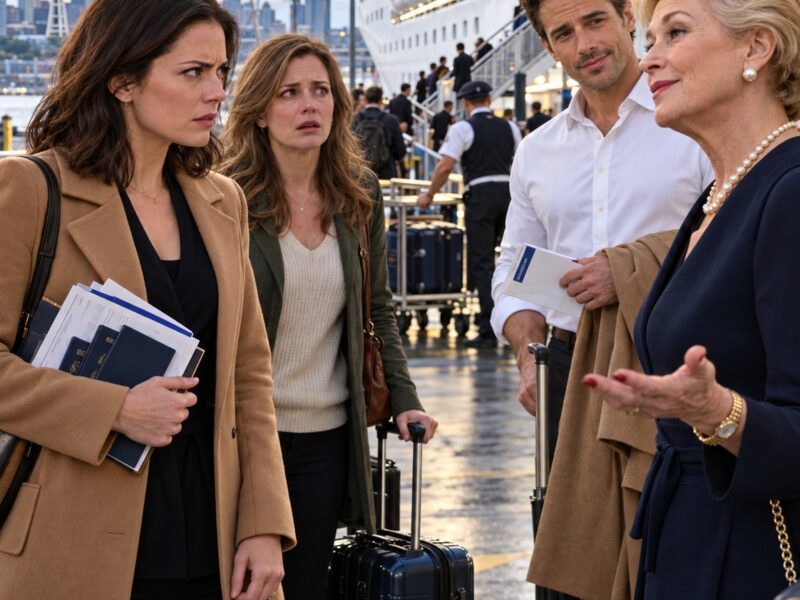
My mother waited until the Seattle pier to tell us she had secretly put my sister’s cheating ex-husband in the suite I had paid fourteen thousand dollars for.
Then she leaned close enough for only me to hear and said, “You don’t get a say. You’re not even married.”
What she didn’t know was that I had spent years working cruise embarkation—and the booking carried exactly one name she could not override.
My mother waited until the porters had already taken our suitcases before she told Clare.
We were standing beneath the shadow of a white cruise ship at Pier 91 in Seattle, where the air smelled like diesel, salt, coffee, and the peculiar panic of two thousand people trying to prove they belonged on the same floating city.
Mom wore a navy dress I had never seen before.
Pearl earrings.
Fresh manicure.
The sort of outfit she chose when she expected to be photographed.
“There’s one more surprise,” she said.
Clare had been watching a porter wheel Dad’s old binoculars away inside her suitcase.
She looked back.
“What surprise?”
Mom smiled.
“I invited Grant.”
For two seconds, Clare didn’t react.
Then a black SUV idling along the pickup lane opened.
Grant Wickham stepped out.
Pressed white shirt.
No tie.
Tan coat folded over one arm.
In his other hand was a white envelope the size of cruise documents.
My sister’s hand slid from her carry-on handle.
The color left her face.
Grant stopped several feet away.
“Clare.”
She said nothing.
Mom stepped between them as if she were unveiling flowers.
“He paid his own fare. Dana handled everything.”
“Mom.”
Clare’s voice cracked on the word.
Grant lifted both hands slightly.
“No pressure.”
My stomach turned.
People who say no pressure before you have objected are almost always applying pressure.
“I just want a week,” he continued. “Somewhere neutral. We don’t have lawyers in the room. We don’t have everybody telling us what to think.”
Clare stared at him.
Nine months earlier, she had found him in their bed with a woman from his office.
A week after that, he told her it had been one mistake.
A month after that, she learned it had lasted nearly a year.
Four months ago, their divorce became final.
Now he stood beside the ship I had booked to give my sister seven days where nobody would ask her whether she was going back.
I looked at my mother.
“He’s not on my reservation.”
Her smile vanished.
“Tessa.”
“No.”
“Don’t start.”
“I paid for this.”
“And Grant paid his portion.”
“That isn’t how cruise manifests work.”
Mom leaned closer.
Her voice dropped.
“You’re making this about control again.”
I stared.
Then she said it.
“You don’t get a say.”
I almost laughed because I genuinely thought I had misunderstood her.
“What?”
“You’re not even married.”
Clare flinched.
Grant looked away.
Something inside me became extremely still.
My mother kept going.
“Clare had a marriage. She has history with him. A real family. You and Owen can play house however long you like, but don’t lecture me about what a marriage deserves.”
Around us, baggage carts rattled.
A child cried because he had dropped a stuffed whale.
A porter called someone’s cabin number.
The ship would sail in three hours.
I looked at the envelope in Grant’s hand.
Boarding documents.
Then I smiled.
Mom frowned.
“What?”
“Nobody gets added at the pier.”
Grant’s expression shifted.
My mother’s did not.
I had worked five years in cruise guest services before Dad got sick.
Five Alaska seasons.
Three Caribbean.
Thousands of embarkations.
Nobody simply appeared on sailing morning with a suitcase because somebody’s mother thought reconciliation would be romantic.
The manifest closed ahead of departure.
Documents were generated ahead of departure.
Security data was transmitted ahead of departure.
If Grant had boarding papers, someone had added him days or weeks ago.
Which meant my mother had not made a reckless decision this morning.
She had made a plan.
And my booking was the thing she had used to hide it.
I looked at Clare.
She was still pale.
“Hold your passport.”
“What?”
“Your passport and your boarding pass. Don’t hand either to Mom or Grant.”
“Tessa—”
“I’ll be back.”
Mom caught my elbow.
“Don’t embarrass us.”
I looked down at her hand.
Then at her.
“Mom, you brought Clare’s cheating ex-husband to a cruise terminal without telling her.”
Her fingers released me.
“I’m not the person who brought embarrassment to the pier.”
I turned toward the terminal.
And for the first time that morning, I walked into a room I understood.
Four months earlier, I had been sitting in the parking garage beneath the King County Courthouse when Clare came out carrying the remains of nine years of marriage in a cardboard banker’s box.
The box lid did not fit.
Her wedding album was turned face down.
Three manila folders had Grant’s attorney’s logo across the tabs.
She climbed into my passenger seat and set everything on her knees.
“That’s it.”
I handed her coffee.
It had been hot when I bought it ninety minutes earlier.
Now it was cold.
She drank it anyway.
“Nine years,” she said.
Then looked at the dashboard clock.
“Forty-three minutes.”
I didn’t ask whether she was okay.
People ask that when they want the answer to be yes.
I started the car.
My phone connected automatically.
That was my mistake.
Mom’s call came through the speakers.
“Did you sign?”
No hello.
Clare shut her eyes.
“Yes, Mom.”
“And the Mercer Island house?”
“It was Grant’s before we married.”
“So you just walked away from it?”
“It wasn’t mine.”
Mom made the small disappointed sound she used when grocery stores were out of her preferred coffee.
“Eleanor will be devastated.”
Eleanor.
Grant’s mother.
As if Clare’s divorce required approval from the woman who once told her a good wife did not need her own paycheck.
“Mom.”
“Men make mistakes.”
I reached over and ended the call.
My hand shook slightly afterward.
I had never hung up on my mother.
Clare stared out at the concrete wall of the garage.
“She’s not wrong that I have nothing.”
I looked at her.
“You have a room at my place.”
“That’s not what I mean.”
“You have me.”
“That is somehow less reassuring when you say it like a threat.”
I smiled.
She almost did.
Then she said:
“Dad always said he’d take us to Alaska.”
That sentence changed everything.
Our father, Howard Marlow, talked about Alaska for twenty years.
Whales.
Glacier Bay.
Inside Passage.
He owned a pair of heavy binoculars with a cracked leather strap that he swore were “good enough to count a whale’s eyelashes.”
Every spring he said maybe next year.
Then cancer arrived before next year did.
I drove Clare home with the cruise already forming in my head.
That Sunday, I sat at the kitchen table in the Ballard townhouse I shared with Owen.
My laptop open.
Cruise line website.
Seven nights.
Seattle.
Juneau.
Skagway.
Glacier Bay.
Victoria.
Back to Seattle.
Two-bedroom suite.
Three guests.
Fourteen thousand dollars after port fees.
Owen sat across from me holding a mug of tea.
He worked as an electrician and had the maddening habit of asking one question instead of giving one opinion.
“That’s our down-payment test.”
“I know.”
We had been saving six years.
Not desperately.
Steadily.
Maybe house someday.
Maybe never.
We weren’t engaged.
We didn’t talk about weddings much.
That fact bothered my mother more than it bothered either of us.
“It’s seven days,” I said.
Owen looked at the total.
“Fourteen thousand dollars.”
“For Clare to breathe.”
He looked at me.
Then nodded.
“Whose name goes on it?”
Mine.
The answer came automatically.
I had not worked ships in eleven years.
The instinct remained.
“The primary guest should be whoever pays.”
“That sounds like a rule.”
“It is.”
The room listens to the name on the booking.
That was something we used to tell new agents.
Families arrive with drama.
Couples arrive fighting.
Parents arrive trying to rearrange adult children.
But systems are simple.
Who paid?
Who booked?
Who is primary?
Everything else is noise until the person with authority speaks.
I called Dana Rollins, a friend of Mom’s from church who worked as a travel adviser from a converted bedroom in Bellevue.
“Tessa, sweetheart.”
Her voice always sounded mildly surprised by life.
“Your mother said Alaska!”
“She invited herself.”
“She said your father promised all three of you.”
He had.
That line softened me.
My girls.
That was how Mom phrased it.
She knew exactly which words could open me.
“I’m paying,” I said. “My name needs to be primary.”
“Of course.”
“Only I authorize changes.”
“Absolutely.”
“Clare and Mom are guests two and three.”
“Perfect.”
Dana mentioned Mom wanted documents sent directly to her.
I didn’t care.
Mom was sixty-five.
She could print her own boarding pass.
The charge hit my card.
$14,061.42.
I printed the receipt.
Put it beneath a salmon magnet on the refrigerator.
Clare moved into our spare room the week her divorce became final.
At first, she slept constantly.
Then she stopped sleeping at all.
I would come downstairs at three in the morning and find kitchen cabinets reorganized.
Oven racks soaking.
Bathroom grout white enough to blind people.
My spice jars alphabetized.
Owen once told her gently:
“You don’t have to earn your room.”
“I know.”
Then she reorganized the hall closet.
I recognized the behavior because I had my own version.
I paid.
I paid when Mom was upset.
I paid when family events became tense.
I paid for food.
Repairs.
Trips.
The invisible admission fee to remain in a family that could make me feel optional with one sentence.
Clare cleaned.
Same lesson.
Different currency.
Be useful enough and maybe nobody asks why you’re there.
One morning I found her at the kitchen table wearing my old college sweatshirt.
Her laptop screen showed an application to substitute teach in Shoreline.
Another tab held paperwork to reinstate her expired teaching certificate.
“You’re doing it.”
She looked embarrassed.
“Maybe.”
“Hit submit.”
“I haven’t worked in eight years.”
“You were a teacher for six before that.”
“Grant didn’t like—”
She stopped.
I waited.
“Eleanor used to say Wickham wives didn’t work.”
“Eleanor can grade third-grade spelling tests for you then.”
Clare smiled.
Then closed another browser tab.
Sloan Parker’s Instagram.
The woman Grant had been sleeping with.
“Mom called last night.”
“What did she want?”
“She said Grant’s family could make all this go away if I just talk to him.”
“Make what go away?”
Silence.
“Clare, you found him in your bed with somebody else.”
“I know.”
“Divorce didn’t happen because you misunderstood a text.”
“I know.”
“She doesn’t get to turn his cheating into your failure to negotiate.”
Clare rubbed both hands over her face.
“I’m tired.”
So I finally told her what the cruise was for.
Not celebration.
Not divorce revenge.
Not healing, because I hate when people turn healing into another assignment.
“Seven days.”
She looked at me.
“Seven days where nobody calls you Grant’s wife or Grant’s ex-wife.”
Her eyes filled.
“Nobody asks what you’re doing next.”
“Tess.”
“Water. Mountains. Whales. Dad’s binoculars.”
She looked toward the living room, where Owen stood in the doorway pretending not to listen.
“What did it cost?”
“A deal.”
Owen looked away.
Traitor.
Clare hit submit on her teaching application.
It was the first thing she finished in months.
My relationship with Mom had always been harder to describe than Clare’s.
Clare was the daughter who followed the script.
Good grades.
College.
Teaching.
Marriage at twenty-eight.
Wealthy husband.
Mercer Island house.
Holiday cards.
I was the daughter who left.
At twenty-two, I took a guest-services job on a cruise ship.
Mom introduced it as “seasonal work.”
When I became senior guest-services supervisor, she still said I worked on boats.
At Clare’s wedding, she seated Owen and me at table fourteen beside people we did not know.
“There wasn’t room.”
Then during her toast:
“Finally, one of my girls married well.”
People laughed.
I laughed too.
Across the garden, Clare found my eyes.
Sorry.
Later, I found her behind the catering tent eating cake alone.
Wedding dress spread across an overturned crate.
One fork.
We split the slice.
She asked if I would come home more now that she was settled.
I changed my flight.
Stayed two extra weeks.
Paid the change fee.
That may have been the first time I literally bought extra time inside my family.
Four years later, Mom called during an Alaska season.
Dad had cancer.
I broke my contract.
Came home.
For two years, I took the night shifts.
Dad’s medication.
Hospice.
Food.
Laundry.
Lifting him without hurting his ribs.
Clare came when she could.
Grant was “busy.”
Near the end, Dad reached beneath his pillow.
Binoculars.
Cracked strap.
“For Alaska.”
I cried.
“You go.”
“You’re coming.”
“No.”
“Dad.”
“Take your sister.”
Then he smiled.
“Your mother gets seasick.”
Those binoculars went into my closet after he died.
At the funeral, Mom held Grant’s hand in front of the family.
“I don’t know what we would’ve done without you.”
Grant had paid the final six-thousand-dollar hospice bill.
Quietly.
Generously.
I was grateful.
Nobody mentioned the night shifts.
I did not expect them to.
That was part of the problem.
After Dad died, I didn’t return to ships.
Mom needed me nearby.
Or said she did.
I took a front-desk job at a boutique hotel.
Then assistant manager.
Then operations manager.
When I told Mom about the promotion:
“Good. A real job.”
The same year, I started paying for things.
Thanksgiving.
Mom’s dishwasher.
Roof patch.
Prescription copays.
Every time she went cold, money warmed her.
It took me years to notice the pattern.
Then Clare’s marriage broke.
Last October, she called me from outside her own house.
“He’s with her.”
“Who?”
“Sloan.”
“Where are you?”
“Driveway.”
“Stay there.”
I booked a hotel near Bellevue.
Drove across the bridge.
Put Clare in my car with one bag.
Mom called the next morning.
“Did you have to make it a whole production?”
That sentence finally gave shape to something.
In Mom’s world, betrayal could be inconvenient.
But resisting betrayal was embarrassing.
By spring, Clare had lived with us six months.
Mom was still pushing reconciliation.
Then Aunt Ruth gave me information I did not know what to do with.
Ruth was Mom’s younger sister.
Retired nurse.
Incapable of pretending.
At her birthday barbecue, she poured iced tea and said:
“Your mother had lunch with Eleanor Wickham last week.”
“Again?”
Ruth stopped.
“Again?”
I realized she thought I knew.
“She still calls Grant her son-in-law.”
I said nothing.
Ruth’s eyes sharpened.
“And I’ll tell you another thing.”
“What?”
“Her property taxes are paid.”
“What does that mean?”
“Last winter she told half the family she couldn’t afford them.”
I looked toward Clare.
Across the yard, she was helping a cousin’s child build a hamburger with too much ketchup.
“Who paid?”
Ruth shrugged.
“I’m not saying.”
“You’re absolutely saying.”
“I’m reporting.”
That night, I searched King County property records.
Mom’s taxes.
Paid in full the previous November.
$9,417.
In February, Mom had called me crying.
“I’m going to lose this house.”
I sent fifteen hundred dollars the same night.
The taxes had already been paid.
I drove to Bellevue the next morning.
Mom was washing a clean coffee cup.
“Who paid your taxes?”
She did not turn.
“A friend.”
“Which friend?”
“Tessa.”
“Which friend?”
She put the cup down.
“Someone in this family has to keep doors open.”
I felt my stomach drop.
“Grant?”
She turned.
“You wouldn’t understand.”
“Try me.”
“You’ve never had a husband’s family to think about.”
“He cheated on Clare.”
“And Clare threw away a good life over it.”
I stared.
“She threw away—”
“Don’t twist my words.”
“You just said them.”
Mom crossed her arms.
“I’m not going to stand here while both my girls end up with nothing.”
Her eyes moved across the kitchen.
Dad’s binoculars were sitting on her counter because I had brought them to show Clare the week before and forgotten them.
“You think I have nothing.”
“That’s not what I said.”
“You always say it without saying it.”
“Tessa.”
I left.
In the car, I sat ten minutes before driving.
When I got home, Clare was practicing online cruise check-in.
I told her Mom had been seeing Eleanor.
Calling Grant her son-in-law.
I did not tell her about the taxes.
Not yet.
Clare listened.
Then said:
“I know.”
“What?”
“I’ve always known Mom liked him more than she liked me being happy.”
That was one of the saddest sentences I had ever heard.
Then:
“Please don’t blow up the trip.”
“I won’t.”
“I just want one week where nobody asks me to go back.”
“I promise.”
Something changed in me after that.
For most of my life, I wanted Mom to finally understand me.
Now I wanted something simpler.
Protect the trip.
Seven clean days.
I thought silence would do that.
Silence is not protection.
It is only empty space.
Mom proved that on July fourth.
Family barbecue.
Flag napkins.
Owen at grill.
Cousins.
Potato salad.
Mom set down a bowl and announced:
“Grant called.”
Clare froze.
“He’s sorry. Sloan is gone. He wants one conversation.”
“No.”
The yard went quiet.
Mom blinked.
Clare’s voice shook, but she repeated:
“No.”
Mom looked at me.
“This is you.”
“What?”
“You’ve convinced her she’s some kind of victim.”
“She found him in bed with another woman.”
Mom’s face hardened.
“And you’d know so much about marriage.”
Ruth spoke from across the table.
“Diane.”
Just her name.
Flat.
Mom stopped.
Then Owen brought chicken.
Mom smiled at him.
“Thank you, Owen. Put it at the roommate end.”
Nobody laughed.
Owen set the platter down.
Went back to the grill.
Later, I found him washing tongs.
“You okay?”
“Yes.”
“No.”
He looked at me.
“I don’t need your mother to call me anything.”
“I know.”
“But I need you to notice when she’s trying to make you earn the right to be her daughter.”
That sentence stayed.
On the drive home, Clare sat in the back beside leftover potato salad.
“She’s going to keep doing this.”
“Yes.”
“Until I go back?”
“Or until she runs out of ways to ask.”
Clare stared out the window.
“I keep thinking if I hold still long enough, she’ll stop.”
I had been holding still thirty-four years.
“Three weeks,” I said.
“What?”
“Then water.”
She smiled.
“Seven days.”
“Seven days.”
A week before sailing, Mom called.
“I need the master bedroom in the suite.”
“Fine.”
“My knees.”
“I said fine.”
“And send me the booking number.”
“Why?”
“I’ll check myself in.”
I gave it.
Then she asked:
“The card you used.”
“No.”
“What?”
“You don’t need my card for check-in.”
“They might ask.”
“They won’t.”
Silence.
“You’ve gotten hard.”
“I’ve gotten tired.”
After we hung up, I opened the notebook I kept for hotel incidents.
I wrote:
Mom — booking number given. Card — no.
Owen watched.
“You documenting your mother?”
“Habit.”
“Good habit.”
Later that night Mom texted:
THANK YOU FOR THE ROOM. I’M TRYING, TESSA.
I read it three times.
Wanted it to be true.
That matters.
I didn’t want a villain for a mother.
I wanted my mother.
That’s why the next thing hurt so much.
A cousin texted me a screenshot from a family group chat I had apparently been removed from.
Mom:
Tessa pays for things so she can control people.
I read it in the hotel parking garage.
Opened the cruise cancellation page.
Typed a message to Dana:
Cancel it.
Deleted.
Typed again.
Deleted.
At home, I showed Owen.
He read it.
Handed phone back.
“You paid.”
“I know.”
“Then be the name on the booking.”
“That’s a hotel line.”
“It’s your line.”
From the spare room:
“Are we still going?”
I looked toward Clare.
“Yes.”
Then I prepared like sailing morning.
Printed confirmation.
My name: primary guest.
My card: payer.
Original receipt.
Dana’s printout with my handwritten instruction:
ANY CHANGE THROUGH ME.
Date.
Booking number.
Day-of-sailing guest-services number.
Terminal number.
A folder clipped like an embarkation packet.
Then I cleaned Dad’s binoculars.
Put them into Clare’s suitcase.
She touched the cracked strap.
Said nothing.
On July eighteenth, Dana left a voicemail.
“All four of you are set.”
I played it again.
Four.
Again.
Four.
I called.
Out of office.
Texted:
Did you mean three?
No answer.
I logged into the cruise portal.
The booking was travel-agent controlled.
I could see suite occupancy.
Not names.
Four.
I thought of calling Mom.
Did not.
Because she would say Dana misspoke.
And I would want to believe her.
I didn’t tell Clare.
That was my mistake.
I told myself I was protecting her.
The day before sailing, I picked up Mom’s suitcase.
Two luggage tags.
Her name.
And tucked beneath the handle:
A third blank tag.
I touched it.
Mom pulled the suitcase away.
“Spare.”
Then:
“Put my onboard account on your card.”
“No.”
“It’s easier.”
“No.”
She looked at me.
“You’ve gotten very difficult.”
“Good.”
At the door, she hugged me.
Long.
Real.
Into my hair:
“Tomorrow will fix a lot.”
I drove away thinking she meant Clare’s grief.
She meant Clare’s marriage.
Saturday morning, Owen helped load the car.
“Name on the booking.”
“Name on the booking.”
Clare smiled.
“Is this some hotel joke?”
“Something like that.”
She talked the entire drive to Seattle.
Whales.
Orcas.
Glacier Bay.
Binoculars.
For the first time since the divorce, she talked about days that had not happened yet.
I let her.
At the pier, I saw the black SUV before she did.
Mom standing beside it.
New dress.
White smile.
I had eight seconds to warn Clare.
I didn’t.
Not because I wanted to hurt her.
Because I had spent decades translating Mom into a kinder language.
This time, Clare needed to hear the original.
Mom kissed her.
“I invited Grant.”
SUV opened.
There he was.
The title of my family’s favorite mistake.
Seven days.
No pressure.
Just talk.
My mother’s “you’re not married” still hung between us when I walked inside the terminal.
I bypassed general check-in.
Went to suite services.
A young woman in navy scanned passports.
I waited.
“Hi. Is your embarkation supervisor available?”
She looked at me differently.
Passengers do not ask that question.
“Is there a problem?”
“Primary guest. Unauthorized addition. Sailing today.”
Radio.
Supervisor arrived.
Marisol Reyes.
Forties.
Hair pulled back.
Walking speed of a woman who had been awake since four.
She logged in.
Read.
Then looked at me.
“Four guests.”
“When was guest four added?”
“July third.”
My stomach turned.
Three weeks.
“Through agency.”
“Yes.”
“Who authorized?”
“I have an agency note.”
“Read it.”
She hesitated.
“Primary guest approves additional traveler.”
“No.”
I opened my folder.
Original three-guest confirmation.
Receipt.
My card.
Dana’s printout.
My note.
Any change through me.
Dated.
Marisol looked longer.
“Who is guest four?”
“Grant Wickham.”
“Relation?”
“My sister’s ex-husband.”
Her eyebrows moved.
“Guest three?”
“Diane Marlow.”
“Your mother?”
“Yes.”
There it was.
Worst word.
Best word.
Hardest word.
Marisol lowered her voice.
“What exactly do you want?”
I had rehearsed only half of it.
“Remove guest four.”
Easy.
Then I thought about Mom lying.
Taxes.
Group chat.
Blank luggage tag.
Grant’s envelope.
Clare’s face on the pier.
And the sentence:
You don’t get a say.
I looked at the screen.
“Remove guest three too.”
Marisol did not react.
“I need you to understand something.”
“I do.”
“Day-of-sailing cancellation is fully forfeited.”
“How much?”
“Guest three fare is approximately thirty-one hundred.”
“I know.”
“Guest four?”
“If he paid through agency, that’s separate.”
“Fine.”
She called cruise-line guest services.
Used exact language.
Primary guest present with identification.
Unauthorized addition disputed.
Primary requests guests three and four marked not sailing.
Fare forfeiture acknowledged.
Then she handed me a screen.
Two confirmations.
I signed.
Marisol keyed her radio.
“Baggage, Reyes. Pull tags Marlow D and Wickham G before load.”
A voice responded.
“Copy.”
I felt my knees weaken.
She looked at me.
“You’ve done this job.”
“Five years.”
“It shows.”
Then:
“Go get your sister.”
Outside, a porter was already rolling two suitcases away from the ship.
Mom saw them.
“What is he doing?”
He set them on the curb.
Grant stepped forward.
I stood in front of Mom.
“I removed two guests.”
She stared.
Then:
“I am your mother.”
“You were guest three.”
The words came out calmer than I felt.
“You leave your mother on a dock?”
“I didn’t bring Grant.”
“He came for Clare.”
“He came because you put him on my booking.”
“Tessa.”
“What will people say?”
“Whatever you tell them.”
She stopped.
Because she had already told them.
Grant handled it differently.
Calmer.
He always looked most reasonable when somebody else was losing something.
“Name a number.”
“What?”
“Fourteen?”
He held up his phone.
“I wire you fourteen thousand right now. You put us back. You keep everything I spend onboard.”
“The booking isn’t for sale.”
He looked at Clare.
Switched lanes.
“Clare.”
She hugged herself.
“One week.”
“No pressure.”
She said nothing.
Mom stepped beside him.
“For me.”
Clare closed her eyes.
“Do this for me.”
I wanted to answer for her.
I didn’t.
That may have been the most important thing I did that day.
I gave her space.
Clare looked at Mom.
Then Grant.
Then the terminal.
Her suitcase was already aboard.
She reached into her jacket.
Took out her boarding pass.
Held it in both hands.
“I’m going with Tessa.”
No speech.
No accusation.
Just a decision.
Grant put his phone away.
A terminal employee approached.
“Guests without valid boarding documents need to clear the loading lane.”
Grant nodded.
He knew closed doors.
He got into the SUV.
Mom stepped toward him.
“I’ll call you, Diane.”
He drove away.
Did not offer her a ride.
Did not look back.
Mom stood beside her monogrammed suitcase while hundreds of families moved around her.
“Tessa.”
I turned.
“Clare.”
My sister did not.
“Tessa.”
I looked at Mom one second longer.
Sixty-five.
Alone.
I knew exactly what would happen if I stayed.
I would fix it.
That was my job.
Fixing.
I turned away.
Inside the terminal, Clare stopped.
“She’s standing there.”
“I know.”
“Are we horrible?”
I thought about it.
“Whose names are on the booking?”
She laughed and cried at once.
“Tess.”
“I’m serious.”
She wiped her face.
“Ours.”
We scanned passports.
“Welcome aboard.”
Like ordinary passengers.
Halfway up the gangway, my phone buzzed.
Mom.
I stopped.
Clare moved aside so people could pass.
“Pick up if you need to.”
She did not tell me what to do.
Another difference.
I answered.
Mom was not crying.
“Put me back on.”
I closed my eyes.
“Tessa.”
“No.”
“We’ll deal with Grant later.”
“No.”
“I am your mother.”
“Yes.”
“You do not do this to family.”
Underneath her words, I heard the earlier sentence.
You don’t get a say.
You’re not married.
I said slowly:
“You can call Clare when you’re ready to apologize to Clare.”
Silence.
“Not through me.”
“Tessa.”
“And I’m done paying for a seat at your table.”
I ended the call.
Powered off my phone.
Zipped it into my jacket.
For the next three days, we would have no normal signal at sea.
That was not an accident.
That was a choice.
The suite had two bedrooms.
Master with balcony.
Smaller room.
Mom had demanded the master because of her knees.
Clare stood in its doorway.
“You take it.”
“No.”
“You paid.”
“You just got divorced.”
“That does not affect mattress hierarchy.”
We argued for five minutes.
It was the best argument of the year.
Clare won.
The first day was awkward.
We walked the promenade deck.
Ate too much lunch.
Did not discuss Mom.
Clare checked her phone twice before remembering it was offline.
That evening we watched Seattle shrink until the city became lights.
She stood at the rail.
“I feel guilty.”
“I know.”
“She’s still Mom.”
“I know.”
“What if we were cruel?”
“Then we can answer for what we did.”
“What does that mean?”
“It means guilt isn’t proof.”
Clare looked at me.
“You sound like Owen.”
“That’s offensive.”
She laughed.
Real laugh.
The next morning, we sailed through gray water with forest on both sides.
Clare slept until nine.
Nine.
For months, three a.m. had owned her.
At lunch, she opened the ship’s app.
There was a message from guest services.
Dana wanted to speak when we had signal.
Clare looked at me.
“Dana knew?”
“She added him.”
“You knew?”
“Not confirmed.”
“When?”
“Voicemail said four.”
Her face changed.
“You didn’t tell me.”
“I wanted the trip clean.”
“That’s Mom logic.”
It landed hard.
I set down my fork.
“You’re right.”
Clare looked surprised.
“I’m sorry.”
“You thought you were protecting me.”
“Yes.”
“So did she.”
The difference hurt because it was smaller than I wanted it to be.
“What should I have done?”
“Told me.”
I nodded.
“You’re right.”
That was a new rule.
Protection does not require secrets.
In Juneau, I turned my phone on.
Thirty-one messages.
Aunt Ruth:
Your mother says you threw her off the ship. I told her that wasn’t how ships work.
I laughed.
Dana:
Three long paragraphs.
She apologized.
Mom had told her I knew.
Grant paid the difference directly.
Dana had added him.
She would refund her commission.
I replied:
Thank you for telling me the truth now.
Two cousins.
One called me cold.
Another asked:
Is it true Grant paid Aunt Diane’s taxes?
I did not answer.
I had my folder.
Receipts.
Screenshots.
Voicemail.
I could have sent everything to the family chat.
Proved my version.
Six months earlier, I would have.
Instead, I turned the phone over.
I had stopped buying seats.
Evidence could become currency too.
I wasn’t paying.
Owen had texted:
Worth it?
I looked across the café.
Clare was reading a tide chart and mispronouncing nautical terms.
I wrote:
Ask after Glacier Bay.
Then phone off.
The cruise did not heal Clare.
It did something better.
It interrupted her.
She stopped waking at three because there was no house to remember.
No driveway.
No bed Grant shared with somebody else.
No mother calling.
She attended a trivia game.
Lost badly.
Bought a ridiculous knit hat in Skagway.
Took photographs of mountains that looked almost identical.
On the fourth night, she asked:
“Do you think Mom loves me?”
I did not answer quickly.
“Yes.”
“That wasn’t convincing.”
“I think she loves a version of you that makes her feel like she succeeded.”
Clare stared at the water.
“That’s worse.”
“Probably.”
“What about you?”
“What about me?”
“What version does she love?”
I considered.
“The useful one.”
Clare nodded.
“Yeah.”
We sat quietly.
Then:
“What version does Owen love?”
I smiled.
“The annoying one, apparently.”
“Good.”
She leaned her head against my shoulder.
“Do you want to marry him?”
“I don’t know.”
“Do you want to leave?”
“No.”
“Then why does Mom care?”
“Because titles are easy.”
“And people aren’t.”
“Exactly.”
On the fifth morning, the ship entered Glacier Bay.
Six-thirty.
Fog.
Quiet.
I carried two coffees up to the bow deck.
Clare was already there.
Dad’s binoculars around her neck.
She had been awake at six because she did not want to miss something.
That difference almost made me cry.
Fog lifted.
Ice appeared.
Blue.
White.
Then two humpbacks surfaced off port side.
One.
Second.
A slow roll.
Clare made a sound I had not heard since we were children.
People beside us laughed.
The kind kind.
She watched until the whales disappeared.
Then handed me the binoculars.
“Your turn.”
“Dad said take your sister.”
“He did.”
“He didn’t say she monopolizes the binoculars.”
“Exactly.”
I looked through.
Empty water.
Sometimes that’s what hope is.
Watching water after the whale disappears because maybe it comes back.
When I lowered them, Clare said:
“Mom is never going to say she was wrong.”
“No.”
“I think I can live with that.”
I set the coffee on the rail.
“I’m learning.”
We stood until the fog burned away.
My phone remained off.
That was how I knew something fundamental had changed.
Not whales.
Not mountains.
Not Grant staying behind.
The not-checking.
The ship returned to Seattle a week after we left.
Mom did not meet us.
Owen did.
He stood outside baggage claim holding a cardboard sign:
MARRIED ENOUGH TO DRIVE YOU HOME.
I laughed so hard a stranger looked over.
“You made a sign?”
“Your mother has a strong brand.”
Clare hugged him.
In the car:
“How bad?”
He looked in the mirror.
“Your family group chat is now three separate family group chats.”
“Progress.”
“Aunt Ruth is in all three.”
“Of course.”
“Your mom told people you canceled her because she wanted reconciliation.”
“That is technically true.”
“She left out the unauthorized booking part.”
“Also technically predictable.”
Clare looked out the window.
“Did Grant call?”
“Twice.”
Her shoulders tightened.
“What did you say?”
“That I don’t speak for Clare.”
She looked at Owen.
“Thank you.”
Mom’s first letter came two weeks later.
Not apology.
Explanation.
Grant had paid the property taxes because he considered her family.
Eleanor still considered Clare family.
Grant was humiliated at the terminal.
Dana misunderstood.
Tessa overreacted.
Mom’s knees hurt.
She had looked forward to Alaska.
The booking removal cost her money.
Not one sentence acknowledged Clare had been ambushed.
Clare folded the letter.
Put it in a drawer.
No response.
Mom called me.
I didn’t answer.
That felt strange.
The next morning, I called her back.
“What?”
She sounded offended I had not picked up instantly.
“I was working.”
“You always used to answer.”
“I used to do lots of things.”
Silence.
“So this is punishment?”
“No.”
“You ruined a family trip.”
“I protected the trip I booked.”
“You keep saying booked like that makes you queen.”
“It made me primary guest.”
“Tessa.”
“I’m not arguing about the cruise.”
“Then why call?”
“To say this clearly.”
I looked at the hotel office door.
Closed.
“I will not carry messages between you and Clare.”
“That’s ridiculous.”
“If you want to speak to her, call her.”
“She doesn’t answer.”
“Then she doesn’t answer.”
“You’re keeping her from me.”
“No.”
“She lives with you.”
“Yes.”
“You paid for her vacation.”
“Yes.”
“You control everything.”
There it was.
The accusation from the group chat.
I almost defended myself.
Then remembered.
“You may believe that.”
“What does that mean?”
“It means I’m not going to spend twenty minutes proving I don’t.”
She hung up.
Clare started substitute teaching in September.
First day, she stood in our kitchen wearing navy pants and a cardigan.
“I look like a substitute.”
“You are a substitute.”
“That’s not helpful.”
She took a coffee.
Forgot it.
Came back.
Then stood with one hand on the door.
“What if I can’t do it anymore?”
“What if you can?”
“I hate when you do that.”
“Go teach children fractions.”
She did.
Three weeks became a long-term assignment.
Then a one-year third-grade contract.
Her first paycheck arrived on a Friday.
She stared at the deposit.
“Mine.”
“Yes.”
“I forgot how that feels.”
I didn’t say anything.
Sometimes witnessing is enough.
Owen and I restarted the house fund.
From near zero.
One evening he opened a spreadsheet.
“We can rebuild it.”
“I know.”
“Do you regret the cruise?”
“No.”
“That was fast.”
“I regret parts.”
“Which?”
“Keeping the fourth guest thing from Clare.”
“Fair.”
“Taking Mom off?”
Pause.
“No.”
Owen nodded.
“Fair.”
We did not get engaged.
Mom continued to consider this evidence of immaturity.
I continued not to care enough.
In October, Aunt Ruth came to dinner.
She brought pie.
Clare graded spelling tests.
Owen washed dishes.
Ruth looked around.
“You know, Diane tells people Clare lives here because you won’t let her reconcile.”
Clare did not look up.
“Does she?”
“Yes.”
“Interesting.”
Ruth waited.
“That’s it?”
Clare circled a misspelled word.
“I’m tired of defending decisions I already made.”
Ruth smiled.
“Good.”
Then she looked at me.
“Your mother told me you cost her thirty-one hundred dollars.”
“I did.”
“That’s a lot.”
“Yes.”
“Worth it?”
I looked at Clare.
She was now writing NICE TRY beside a child’s spelling of because.
“Yes.”
Ruth ate pie.
No lecture.
Mom’s second letter came in November.
Handwritten.
Addressed to Clare.
Not me.
That mattered.
Clare opened it at the kitchen table.
Read silently.
Then handed it over.
I looked.
Near the end:
I should not have done it that way.
Not:
I was wrong.
Not:
I betrayed your trust.
But closer than before.
Clare read it again.
“What are you going to do?” I asked.
“I don’t know.”
“That’s allowed.”
She folded the letter.
Placed it in the drawer beside Dad’s binoculars.
Then pulled something from her tote.
A check.
Four hundred dollars.
Made to me.
“What is this?”
“First of thirty-five.”
“No.”
“Yes.”
“Clare.”
“Half the suite.”
“You don’t owe—”
I stopped.
That sentence.
You don’t owe me.
I had used it all my life to make sure nobody ever had to acknowledge receiving from me.
Clare looked at me.
“I want to.”
“Why?”
“Because being able to contribute is different from being charged.”
I stared at the check.
Then took it.
“Thank you.”
Her eyes filled.
“Was that physically painful?”
“Extremely.”
Owen walked in.
“What?”
“Nothing.”
“Tessa accepted money.”
He dropped his keys dramatically.
“Call the news.”
Clare laughed.
I put the check beneath the salmon magnet beside the original fourteen-thousand-dollar cruise receipt.
Two pieces of paper.
One large.
One small.
For months I had thought that receipt represented everything I had finally stopped paying for.
Mom’s approval.
Family peace.
A seat.
It didn’t.
It represented one trip.
One decision.
One boundary.
The harder change happened afterward.
Learning not to fix every silence.
Learning not to pay whenever someone went cold.
Learning that “family” was not a word that transferred authority over your life.
Mom and Clare eventually spoke.
Not because I arranged it.
Not because Grant asked.
Not because Eleanor called.
Mom phoned on a Sunday afternoon.
Clare answered.
They spoke twenty-two minutes.
I stayed upstairs.
When Clare came into the kitchen afterward, her face looked tired but not destroyed.
“How’d it go?”
“She apologized.”
I turned.
“Actually?”
“Sort of.”
“What did she say?”
“That she shouldn’t have brought him.”
“That’s significant.”
“She also said she was trying to save my marriage.”
“Of course.”
Clare smiled faintly.
“I told her my marriage ended when Grant cheated, not when I refused to forgive him.”
“What did she say?”
“Nothing.”
“Mom?”
“Exactly.”
We laughed.
Clare sat.
“She asked if she can come for Thanksgiving.”
I waited.
“What did you say?”
“I said ask Tessa.”
I stared.
She grinned.
“Kidding.”
“Not funny.”
“I told her yes.”
My chest tightened.
“With conditions.”
“Good.”
“No Grant.”
“Obviously.”
“No Eleanor.”
“Thank God.”
“No marriage lectures.”
“Ambitious.”
“And she brings pie.”
“That’s your line?”
“She makes good pie.”
Thanksgiving was awkward.
Which meant it was real.
Mom arrived with pumpkin pie.
Owen carved turkey.
Nobody called him roommate.
At one point she almost said:
“If you two ever decide to—”
Then stopped.
“More potatoes?”
Progress.
Not transformation.
After dinner, Mom stood beneath the salmon magnet.
She saw the cruise receipt.
Then Clare’s check clipped over it.
“What’s that?”
“Nothing.”
Clare answered.
“Payment.”
Mom looked at me.
“For the cruise?”
“Yes.”
“Why?”
Clare said:
“Because I wanted to.”
Mom opened her mouth.
Closed it.
For once, she did not decide what someone else’s choice meant.
That night after everyone left, I stood alone in the kitchen.
The receipt still under the magnet.
Clare’s check still clipped to it.
Owen came behind me.
“What are you looking at?”
“The booking.”
He smiled.
“The sacred booking.”
“You know what I realized?”
“What?”
“I thought the whole thing was about being the name at the top.”
“Wasn’t it?”
“Partly.”
He waited.
“The important part was finally understanding that being the payer didn’t mean I had to pay forever.”
Owen kissed my hair.
“That sounded expensive.”
“It was fourteen thousand dollars.”
He laughed.
I left the receipt there.
Not because I wanted to remember what the cruise cost.
Because I wanted to remember what it bought us.
Seven days.
A whale.
A sister who slept.
A mother standing on a pier because consequences finally reached her before I did.
And one moment when someone told me I had no say in the thing I had built, funded, and protected.
She was wrong.
The room listened to the name on the booking.
And for once, so did I.









