My Parents Flew to Paris for 68 Days While I Was Bedridden—Then I Found Out What They Hid Before Locking Me in My Own House
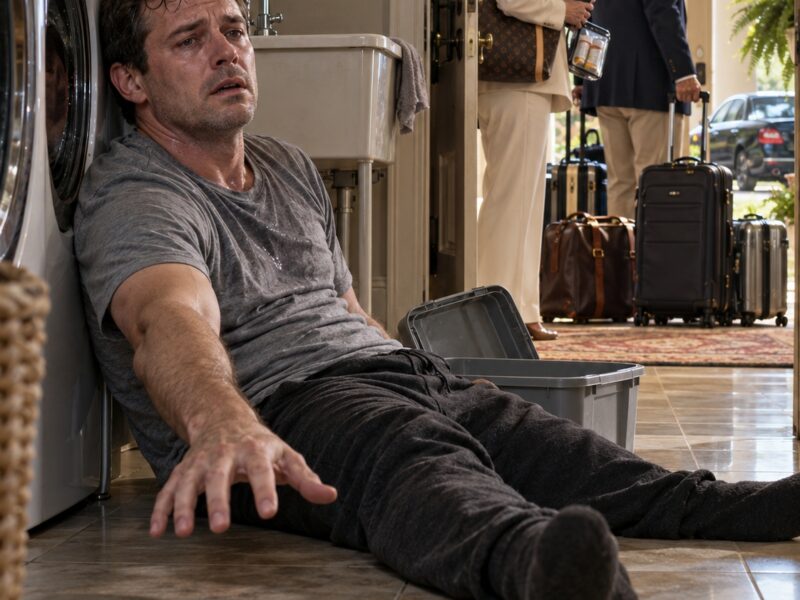
I was lying on the concrete floor of my own laundry room when I heard my stepfather’s car leave the driveway.
My legs had stopped obeying me.
Four minutes later, I realized my medication was gone too.
That was when I understood my family had not simply left for Paris without me.
They had made sure I could not follow.
The deadbolt on the laundry-room door had slid into place from the outside.
The little window unit above the utility sink had gone silent fifteen minutes earlier, though at the time I thought the motor had finally given out. Louisiana in June does not need long to turn a closed room into something physical. Heat gathered beneath my shirt and behind my knees, thick and wet, as though the air itself had hands.
I dragged myself toward the utility sink.
My legs trailed uselessly behind me.
I twisted the faucet.
Nothing.
Not even a thin stream.
The pipe gave one dry cough.
Then silence.
I remember sitting there with one arm over the edge of the sink and thinking, with a kind of clarity panic sometimes gives you, that somebody had shut off the water deliberately.
Then I heard the sedan.
Tires across gravel.
Engine rising.
Fading.
Gone.
I rested my forehead against the cabinet.
“Mom?”
The word came out weak.
Ridiculous.
She was already gone.
Three hours earlier, my mother had stood beside my bed in a cream travel jacket and told me I was being selfish.
Her name was Caroline Mercer Hale.
She was sixty-one years old, still beautiful in the disciplined way of women who had learned early that being noticed could feel like security. Her blond hair was cut precisely at the jaw. Her nails were pale pink. She smelled faintly of gardenia and the expensive moisturizer she charged to one of my cards every eight weeks.
She had spent twenty minutes packing scarves for Paris.
She had spent less than two minutes discussing whether I would survive the week.
“You’re catastrophizing again, Ethan.”
“I need the injection before seven.”
“You always need something before we leave.”
I had stared at her.
“What does that mean?”
She sighed.
The sigh hurt more than the sentence.
“Your episodes get worse whenever something important is happening for someone else.”
“Mom.”
“Mason is graduating.”
“My medication is in the refrigerator.”
“You have Kevin.”
“Kevin isn’t staying here.”
That made her pause.
Only half a second.
But I saw it.
“What did you do?”
“I didn’t do anything.”
“Caroline.”
My stepfather appeared behind her.
Douglas Hale was sixty-four, soft around the middle, silver at the temples, and possessed of the relaxed authority of a man who had spent most of his life entering rooms already certain his opinion would be treated as useful.
“Ethan, don’t turn this into drama.”
“I can’t stand.”
“You stood yesterday.”
“That isn’t how neurological disease works.”
Douglas looked at Caroline as though I had become a malfunctioning appliance they were both too polite to mention.
“We’ll be gone eight weeks.”
“Sixty-eight days,” Caroline corrected.
She smiled.
“Mason planned everything.”
Mason Hale was Douglas’s son.
Thirty-three.
Two years younger than me.
Golden boy by family decree.
He had been in Paris for what he described as an international MBA residency, though I had paid enough of his tuition to know the program included considerably less Europe than his social media suggested.
He had called that afternoon.
On speaker.
Loud enough for me to hear from my bedroom.
“Mom, you guys need to get here tonight. We have dinner at Le Céleste tomorrow, and they’ll charge the whole reservation if we miss it.”
Caroline had laughed.
“We’re practically in the car.”
“Tell Ethan thanks for raising the card limit, by the way. The old one died buying the suit.”
Nobody had asked how I was.
Not once.
I had been bedridden for three days.
My neurologist had adjusted my medication after a flare severe enough to leave my left leg almost useless and my right unreliable.
There was an amber vial in the kitchen refrigerator.
One injection.
Precise timing.
Missing it was not like forgetting an antibiotic.
My diagnosis was a rare autoimmune demyelinating disorder affecting the spinal cord. On bad days, inflammation interrupted signals between brain and body badly enough that my legs weakened, muscles spasmed, my temperature climbed, and things that should have been automatic became negotiations.
My neurologist, Dr. Priya Shah, had once looked me straight in the eye and said:
“This medication is not forgiving.”
I remembered the exact cadence.
“Late can mean a flare. Missed can mean hospitalization.”
Caroline knew that.
Douglas knew that.
Kevin Doyle, the home health aide I paid to help when symptoms became severe, knew it better than either of them.
Yet when I asked for the vial, Caroline said:
“You’re going to sleep.”
“No.”
“Yes.”
She picked my phone off the nightstand.
I stared.
“Put that down.”
“You need rest.”
“That’s mine.”
“You’ll get it back when you stop trying to manipulate everybody.”
For several seconds, I genuinely did not understand the sentence.
Then Kevin appeared behind Douglas.
Twenty-nine.
Tall, thin, nervous in the shoulders.
He would not look at me.
Caroline said:
“Kevin, move him to the back room.”
My skin went cold.
“What?”
“The laundry room has tile.”
Douglas added:
“If he gets sick, easier cleanup.”
I still hear that sentence sometimes.
Not because it was the cruelest.
Because he said it casually.
Kevin looked at me.
“Mr. Mercer—”
“Don’t.”
He swallowed.
Caroline said:
“Take the medication out of the refrigerator too.”
Kevin looked at her.
“Mrs. Hale, his schedule—”
“He isn’t taking anything while we’re gone without supervision.”
“He needs—”
“I pay you.”
I said:
“No, you don’t.”
Everyone looked at me.
“I pay him.”
Caroline’s mouth tightened.
Then she smiled.
Small.
Cold.
“I’m not letting a sick man run this household from a mattress.”
That was the first moment I understood the problem had become larger than Paris.
She had been waiting to say that.
Maybe for months.
Maybe years.
Kevin approached the bed.
His hands shook.
“I’m sorry.”
“Then don’t do it.”
He stopped.
For one second, I thought he might.
Caroline said:
“Kevin.”
He closed his eyes.
Then helped lift me.
He was gentle.
That somehow made it worse.
He carried most of my weight down the hall while my feet dragged against the hardwood.
At the laundry room he lowered me beside the washing machine.
There was a folded towel beneath my shoulder.
A plastic cushion behind my back.
Someone had prepared the room.
That detail would matter later.
At the time, I only stared at the cushion.
“Mom.”
She stood in the doorway.
“We’ll call when we land.”
“No, you won’t.”
Her face hardened.
“You’ll thank me once you’ve calmed down.”
“Give me the vial.”
“You don’t need it.”
“You know I do.”
“Your doctors have filled your head with worst-case scenarios.”
I almost laughed.
“You came to three appointments.”
“I know my own son.”
“No.”
My voice broke.
“You knew the version who could pay for everything without asking for anything back.”
Something changed in her face.
Not shame.
Offense.
Douglas stepped in.
“That’s enough.”
Caroline looked at Kevin.
“Shut the water off to this wing.”
I stared.
She continued.
“And flip the breaker.”
Kevin went pale.
“Why?”
“Because I don’t want him trying to run appliances or fill something and flood the place.”
“Caroline.”
She ignored me.
“Put the medication in the outside trash.”
Kevin looked at me.
I will remember that look until I die.
A person standing at the edge of a moral cliff while still pretending he is deciding whether to step off.
He stepped.
The door closed.
The deadbolt slid.
Then the house emptied.
Now I was alone.
No phone.
No water.
No medication.
No air-conditioning.
My legs useless.
And my family headed to Louis Armstrong Airport to begin sixty-eight days in Paris funded almost entirely by me.
I wish I could say the betrayal shocked me because they had once been good to me.
The truth is less convenient.
They had trained me for it slowly.
My biological father, Thomas Mercer, died when I was ten.
Heart attack at his accounting office.
Tuesday morning.
He was forty-three.
I remember him mostly in fragments.
The smell of printer toner on his shirts.
His key turning in the lock at 6:10 every evening.
The way he balanced his checkbook at the kitchen table as though arithmetic were a form of respect.
Once, when I was eight, he let me sit in his office chair.
He told me:
“Two things matter, Ethan.”
“Who shows up when helping you is inconvenient.”
“And whether the numbers still tell the truth when you wish they wouldn’t.”
I thought he was talking about accounting.
He was.
Mostly.
Caroline remarried eighteen months after he died.
Douglas came with Mason.
Mason was bright.
Athletic.
Easy.
I was still grieving in the ugly inward way children sometimes grieve when adults have already become impatient with sadness.
Mason laughed loudly.
I read alone.
My mother liked laughing.
She began attending Mason’s games.
Then missing my school events.
At twelve, my birthday party became a celebration of Mason learning to bowl because he was upset my score was higher.
At eighteen, my college acceptance dinner got postponed for his playoff game.
At twenty-two, I crossed a university stage while Caroline and Douglas sat at a regional soccer tournament because Mason “needed them.”
One person came for me.
My father’s older brother.
Jack Mercer.
Jack was a contractor.
Built houses.
Raised his voice rarely.
Used blunt words.
Never pretended to enjoy Douglas.
He sat alone near the back of the auditorium with a tie he clearly hated around his neck.
When I found him afterward, he handed me a folded card.
Inside:
Your dad would have been unbearable today. Proud enough to embarrass you.
I went into a bathroom and cried.
Then I told everyone I had allergies.
My twenties went better.
Work made sense.
Work rewarded accuracy.
I cofounded a medical revenue software company called Lantern Claims with Elena Park, a former hospital billing analyst who could identify a broken workflow faster than most people identify an insult.
We built the first version in my apartment.
For eighteen months, my dining table held three monitors, stale coffee, financial projections, and enough takeout containers to violate municipal law.
At one point, we were two payroll cycles from failure.
One major client found a defect in our claims-matching engine.
For four days Elena and I slept in shifts and rebuilt the entire thing rather than patching something we no longer trusted.
On the third night, I called Caroline.
Not for money.
Not advice.
Just because I was thirty and frightened and still occasionally wanted a mother.
“The company might fold.”
“You’ll figure it out.”
She sounded distracted.
Then:
“Did you remember Mason’s apartment deposit?”
That was the last time I called her during a crisis.
Lantern survived.
Then grew.
At thirty-one, we sold it to a healthcare technology group.
My share was enough that money stopped being something I thought about before buying groceries.
It also made me stupid.
Not professionally.
Emotionally.
I bought a large ranch house outside Baton Rouge.
Cash.
Six bedrooms.
Pool.
Detached workshop.
Wide back lawn.
Only my name on the deed.
Caroline called three months later crying.
Douglas had made several bad property investments.
One strip center half empty.
A land development stalled.
Mortgage pressure.
Mason’s tuition.
“We just need somewhere to breathe.”
I moved them in.
Rent-free.
I added Caroline and Douglas as authorized card users.
I paid Mason’s tuition.
Caroline took the primary bedroom after mentioning that she and Douglas “needed space.”
I moved into the smaller suite.
Happy to.
Almost proud.
I told myself generosity would eventually produce closeness.
If love was a debt, I thought maybe I could finally overpay.
Four years later, I was being dragged across that same house’s floor.
The illness began quietly.
Pins and needles in my left foot.
Weak grip.
Fatigue.
Then one morning my legs folded beneath me while I stood beside the kitchen table.
It took nine months and three specialists to get the diagnosis.
By then, I used a cane some days.
A wheelchair occasionally.
On the worst weeks I needed help bathing.
My family changed faster than my body did.
Douglas moved into my office.
“To help.”
Caroline started intercepting business mail.
“To reduce stress.”
Mason referred to the house as “our place” while continuing to use my cards.
Caroline redirected Kevin to errands.
Picking up her dry cleaning.
Driving Douglas to appointments.
Collecting packages.
I was paying a home health aide to help everyone except me.
I objected once.
Caroline looked wounded.
“He’s already here, Ethan. Why are you being territorial?”
Territorial.
About the caretaker hired for my medical needs.
That word stayed with me.
There were smaller moments.
A friend of Mason’s named Trevor visited.
I sat at the kitchen island with a blanket around my shoulders because fever had started again.
Trevor looked at me.
Then said:
“Kind of depressing watching the rich guy fall apart.”
Caroline was standing beside him.
She smiled.
“More ice?”
She was asking Trevor.
Not me.
Another afternoon, I heard Trevor tell Mason by the pool:
“My dad would’ve put him in assisted living already.”
Mason laughed.
“He’d never go.”
Trevor answered:
“Then don’t ask.”
I heard every word.
I said nothing.
That silence embarrasses me now.
But endurance can become addictive when you have spent a lifetime believing the prize at the end will finally be belonging.
I still thought if I remained easy enough, generous enough, undemanding enough, my mother might remember how to love me.
Then came Paris.
And the laundry room.
The first muscle spasm started maybe forty minutes after the car left.
Left calf.
Then thigh.
Then right.
I pressed my teeth into my sleeve and counted until it passed.
Another came.
Harder.
Sweat soaked my shirt.
I dragged myself across the floor.
The emergency supply bins sat along the opposite wall.
Hurricane season.
Water.
Batteries.
Radio.
Flashlights.
I reached the first.
The lid had swollen in humidity.
My knuckles tore opening it.
Empty.
Second bin.
Batteries.
Dead radio.
Third.
No water.
Not used.
Removed.
I sat there staring into an empty plastic container.
That was when the last version of denial finally died.
They had planned this.
Maybe not my death.
I still do not know if Caroline believed I would actually die.
Sometimes the difference between wanting an outcome and being willing to accept it is morally meaningless.
Beneath old charging cables, my fingers found a prepaid flip phone.
I had bought it years earlier during Lantern’s startup phase for sensitive vendor calls.
I had forgotten it existed.
Two battery bars.
One old stored number.
I dialed from memory.
Jack answered on the second ring.
“Ethan?”
My throat closed.
“Uncle Jack.”
Silence.
Then his voice changed.
“Where are you?”
“Laundry room.”
“What?”
“Locked.”
“Who locked you?”
“My mother.”
His breathing stopped.
“Can you move?”
“Not really.”
“Medication?”
“Gone.”
“Water?”
“Off.”
Another silence.
Different.
The silence of a man setting anger aside because fear has become more urgent.
“I’m getting my keys.”
“Jack—”
“Stay on this phone.”
“I’m forty minutes away.”
“Talk to me.”
“What about?”
“Anything.”
My voice was becoming thick.
“Dad.”
“Okay.”
“Tell me something about Dad.”
Jack did.
He told me Thomas once fell through a half-finished porch because he refused to wait for concrete to set.
He told me my father cheated at cards badly enough that everyone always knew.
He told me Thomas hated peaches.
I had never known that.
“Keep talking,” Jack said every few minutes.
“I am.”
“No.”
“You’re fading.”
I remember the sound before I remember his face.
A circular saw.
Metal grinding.
Wood tearing.
Someone shouting outside the door.
Then Jack:
“Move back!”
I laughed weakly.
“I’d love to.”
The saw bit again.
The strike plate gave.
The door crashed inward.
Light hit the room.
Jack stood there in work boots and a gray T-shirt, saw still in one hand.
Behind him:
Two paramedics.
A deputy.
Another man carrying medical equipment.
Jack looked at me.
His face changed.
I had never seen him afraid before.
“Jesus Christ.”
The paramedics moved.
Temperature.
Pulse.
IV.
Questions.
Medication history.
The emergency physician who met us at the hospital later told me another hour could have moved me into organ injury.
Maybe less.
My temperature was dangerously high.
Severe dehydration.
Neurological flare.
Withdrawal from medication.
I spent four days inpatient.
Jack sat beside me the first night.
At three in the morning he asked:
“Want me to call the police?”
“No.”
He stared.
“Ethan.”
“Not yet.”
“You almost died.”
“I know.”
“She locked you in a room.”
“I know.”
“She took your medicine.”
“I know.”
Jack stood.
Walked to the window.
Turned back.
“What exactly are we waiting for?”
“Proof.”
His jaw tightened.
“Of what?”
“That she meant what she did.”
“You need more?”
“Yes.”
He almost shouted.
Then stopped.
My father had once told me numbers remain honest when feelings do not.
My mother had spent decades surviving conflict by changing the emotional frame.
She cried.
Explained.
Revised.
Made motives softer after consequences arrived.
If police confronted her immediately, I knew the story.
Kevin misunderstood.
She thought I had medication.
Douglas assumed someone checked.
They were already boarding.
My illness was unpredictable.
Family misunderstanding.
Tragic mistake.
I did not want a tragic mistake.
I wanted the record.
The next morning I called Rebecca Sloan.
Rebecca had represented Lantern during the sale.
Forty.
Corporate litigator.
Five foot two.
Soft voice.
The sort of attorney who could make “please clarify” sound like a search warrant.
She came to the hospital that afternoon.
Listened.
Never interrupted.
When I finished:
“Your goal?”
“Keep them away from me.”
“Only that?”
“No.”
She waited.
“I want every day.”
“What does that mean?”
“They planned sixty-eight days.”
“I want them to have sixty-eight.”
Rebecca stared.
Then understood.
“You want to build the case while they think nothing has changed.”
“Yes.”
“That is emotionally attractive.”
“I know.”
“Legally, maybe useful.”
“Maybe?”
“If you interfere too much, it looks retaliatory.”
“I’m okay with some retaliation.”
“I’m your lawyer.”
“I know.”
“I’m required to hate sentences like that.”
“I know.”
She almost smiled.
Then pulled out a legal pad.
“Fine.”
“Three tracks.”
“Medical evidence.”
“Financial evidence.”
“Direct evidence tying instructions to your mother.”
“Do not contact them.”
“Do not post.”
“Do not threaten.”
“Do not transfer anything until I tell you.”
“And Kevin?”
“We find him.”
The hospital record was stronger than either of us expected.
Dr. Shah documented my medication schedule.
The emergency physician documented dehydration and risk.
Nurses documented my physical condition.
The deputy photographed the broken lock and dry sink.
Jack photographed the missing water supplies.
Then Paris helped us.
Forty-eight hours after I reached the hospital, Jack found Caroline’s social-media post.
She stood in an airport lounge.
Champagne.
Douglas beside her.
Mason between them.
All three smiling.
Caption:
Day 2 of our 68 glorious days together. Exactly what this family needed.
I read it five times.
Then handed the phone back.
Jack whispered:
“Your father would’ve put Douglas through a wall.”
I looked at him.
“Probably.”
“Sorry.”
“No.”
“Keep saying things like that.”
He looked surprised.
I smiled weakly.
“It helps.”
Rebecca’s investigator started pulling card records.
Hotel.
Flights.
Designer store.
Private river cruise.
Michelin restaurants.
All paid by me.
The timestamps created a grotesque parallel calendar.
Day 3: Caroline bought a handbag.
Day 3: I underwent neurological imaging because my flare had worsened.
Day 6: Douglas charged €1,900 at a wine shop.
Day 6: physical therapy evaluated whether I could safely stand.
Day 9: Mason upgraded a hotel suite.
Day 9: I vomited after medication adjustment and Jack held a plastic basin because no one else was there.
They posted constantly.
Paris at night.
Versailles.
Normandy.
Champagne.
Family.
Celebration.
Freedom.
Then we found Kevin.
He was working at a hardware store outside Gonzales.
Rebecca’s investigator, Denise Harper, approached him.
Kevin asked for a lawyer before she finished describing the potential charges.
Smartest thing he had done in months.
Then he cooperated.
He brought his phone.
Texts from Caroline.
Not vague.
Not accidental.
Use back laundry because street can’t see in.
Take all medication. Outside trash.
Turn water off before leaving.
Breaker too. He’ll try something dramatic otherwise.
Do not go back until I tell you.
Rebecca called me.
I sat on Jack’s back porch during the conversation.
Cicadas loud in the trees.
“You were right.”
I closed my eyes.
“About?”
“It wasn’t negligence.”
I knew.
Hearing someone else say it was different.
“She wrote it?”
“Yes.”
“All of it?”
“Yes.”
“And Kevin?”
“Signed affidavit.”
“Why?”
“He says he needed the job.”
I laughed.
Not because it was funny.
Rebecca continued.
“He believed she would come back if you became seriously ill.”
“She didn’t.”
“No.”
“Does that excuse him?”
“No.”
“Does it help?”
“Probably.”
I thought.
“Give him cooperation if prosecutors agree.”
Rebecca paused.
“You sure?”
“He told the truth.”
“He also carried me into that room.”
“I know.”
“Both can be true.”
Rebecca was quiet.
Then:
“Yes.”
That became important later.
So did day 17.
My mother emailed.
Not me.
My accountant.
Subject:
Household Expenses While Ethan Recovers.
She requested an increase in the monthly transfer.
Paris was “more expensive than expected.”
My accountant forwarded it to Rebecca.
Rebecca called.
“Can I say no?”
I thought.
Then smiled.
“No.”
“What?”
“Approve it.”
Silence.
“Ethan.”
“Let them spend.”
“This is deeply unhealthy.”
“It’s evidence.”
“It is also vengeance.”
“Yes.”
“At least you’re self-aware.”
“Approve it.”
She did.
The money bought more proof.
By week four, I could stand with a walker.
My physical therapist, Jordan Alvarez, came three mornings a week.
Blunt.
Patient.
Unimpressed by self-pity.
“You’re afraid of your legs.”
“I’m practical.”
“No.”
“You’re afraid.”
“Fine.”
“Good.”
“What’s good?”
“You can work with something once you name it.”
That sentence sounded irritatingly like Rebecca.
I told Jordan about the sixty-eight-day plan.
She adjusted a resistance band.
“Does waiting help the case?”
“Yes.”
“Does it help you?”
“I don’t know.”
“Then figure that part out too.”
Some nights, I wanted to call Caroline.
Not to forgive.
To hear her voice.
That admission humiliated me more than needing help to walk.
Jack understood.
He never said:
“How can you still love her?”
He only said:
“Missing somebody isn’t the same as reopening the door.”
Good distinction.
Around day thirty-five, I nearly ended the plan.
Bad flare.
Fever.
Shaking.
Jordan sat beside me until medication worked.
“I should just call them.”
“Why?”
“I want it over.”
“Then end it.”
I looked at her.
She shrugged.
“It’s your plan.”
“You expected to talk me out of it?”
“No.”
“Why not?”
“Because if you need me to keep you angry, you’re not ready to confront them anyway.”
I laughed.
She continued.
“One question.”
“What?”
“If you had locked your mother in that room without medicine, would she have given you thirty-five extra days before doing anything about it?”
I looked away.
Jordan adjusted the machine.
We finished therapy.
I did not call Paris.
Day forty-two, Rebecca began the financial wall.
New trust.
New accounts.
New passwords.
Household cards remained active temporarily.
My assets did not.
Automatic transfers scheduled to stop on day sixty-five.
Douglas’s access to business records disappeared.
Caroline’s authorization over nothing legally meaningful was revoked.
The house deed remained where it had always been.
My name.
Only mine.
Then came Mason.
His graduation story had begun cracking.
His university contacted the payment address.
Outstanding tuition.
Academic requirements incomplete.
He had not officially graduated.
The photographs he posted outside the ceremony building had been taken before security restricted access.
He had dressed in regalia.
Posed.
Celebrated.
But he had not received a degree.
I had paid four years toward an education he had not finished while he told everyone he had.
Rebecca advised me not to cancel the final tuition installment.
“Let him finish.”
“No.”
“Ethan.”
“He has not called me once.”
“That’s emotional.”
“Yes.”
“A judge may see retaliation.”
“I’ll live with it.”
She sighed.
“I hate when clients understand my objection and proceed anyway.”
“I learned from you.”
“That is not the lesson.”
I canceled it.
Academic standing suspended.
Degree path frozen.
Mason did not know yet.
He was in Paris telling people he was an MBA.
Day fifty-one, Caroline posted:
Family is everything when the world gets hard.
Jack printed it.
Put it on my refrigerator.
I stared.
“Why?”
“Motivation.”
“That’s insane.”
“You laughed.”
I had.
A real laugh.
First in months.
Day fifty-nine, I walked from my bedroom to the kitchen without a walker.
Jack pretended not to notice until I reached the island.
Then:
“Again.”
“What?”
“Do it again.”
“I’m tired.”
“Tomorrow.”
He turned away.
His eyes were wet.
Day sixty-three, the prosecutor’s office received Rebecca’s preliminary packet.
They did not file yet.
Medical records.
Kevin’s affidavit.
Text messages.
Property records.
Financial records.
Photos.
Emergency response.
Enough.
The assistant district attorney told Rebecca:
“If these records authenticate, this is not a misunderstanding.”
Good.
Day sixty-seven, I barely slept.
At four in the morning, I went to the laundry room.
First time since the rescue.
Rebecca had told us to preserve it.
Broken deadbolt.
Empty emergency bins.
Dark marks on concrete where my hands bled.
I sat in a chair just outside the doorway.
Did not enter.
Jack found me there.
“You okay?”
“No.”
“Good.”
I looked at him.
He leaned against the hall.
“Means you’re not pretending.”
We sat until sunrise.
Day sixty-eight.
Caroline’s airport car arrived at 10:14 a.m.
I watched from the kitchen security monitor.
Three people.
Nine suitcases.
Duty-free bags.
Tanned skin.
Douglas wore a linen jacket.
Mason wore sunglasses that cost $700.
Caroline looked rested.
She entered her old code.
Red light.
Again.
Red.
Douglas tried.
Red.
Mason tried his birthday.
Red.
Caroline knocked.
Then pounded.
“Kevin!”
No answer.
She called his old number.
Disconnected.
I stood.
Jack looked over.
“You want me there?”
“Yes.”
“Beside or behind?”
The question nearly broke me.
“Beside.”
We walked to the door.
My legs worked.
Not perfectly.
Enough.
I opened it.
My mother stared.
For the first time in my life, Caroline Mercer Hale looked at me without having a prepared emotion ready.
Her face went pale.
Then blank.
“Ethan.”
“Hi, Mom.”
She looked at my legs.
“You’re walking.”
“Yes.”
Douglas recovered first.
“What the hell is going on with the locks?”
“My house.”
Caroline blinked.
“Excuse me?”
“My locks.”
“My house.”
She laughed.
Wrong response.
“Ethan, honey, you’re upset.”
“I almost died.”
Her smile disappeared.
“We were told you were resting.”
“By whom?”
Silence.
“You took my phone.”
Caroline glanced toward Douglas.
“Mason, take the luggage around back.”
“No.”
Everyone looked at me.
“Nobody enters.”
Her face hardened.
“You cannot lock your own mother out.”
“I can lock anyone out of property I own.”
Douglas stepped forward.
“Let’s not make this ugly.”
Jack moved beside me.
Douglas stopped.
Jack said:
“Ugly happened sixty-eight days ago.”
Caroline looked at him.
“You.”
“Yes.”
“You broke into our house.”
Jack actually smiled.
“His house.”
“I rescued him from a locked room.”
Her face changed.
So small most people would miss it.
Fear.
Then she switched strategy.
“Oh my God.”
She covered her mouth.
“You were really sick?”
I stared.
Jack whispered:
“Wow.”
Caroline began crying.
Fast.
Convincing.
“Ethan, I had no idea.”
I almost admired the speed.
“We thought Kevin was checking on you.”
“Kevin says otherwise.”
She froze.
I took a folder from the table near the door.
“Want to hear what he says?”
“Ethan—”
I opened it.
Read.
Use back laundry because street can’t see in.
Caroline’s mouth opened.
I continued.
Take all medication. Outside trash.
Douglas’s face changed.
He had not known I had those.
Turn water off before leaving. Breaker too.
Mason removed his sunglasses.
I looked at my mother.
“Your words.”
She whispered:
“That was taken out of context.”
Jack laughed once.
Hard.
I continued.
Do not go back until I tell you.
Silence.
“That context help?”
Caroline’s tears stopped.
Just stopped.
“You were unstable.”
“I was sick.”
“You were impossible.”
“I was bedridden.”
“You controlled everything.”
I looked around.
“The house?”
“The cards?”
“The tuition?”
“The trip?”
“Yes.”
Her voice rose.
“Everything was always yours.”
There.
The grievance.
Not that I had denied them.
That ownership had remained mine despite their use.
Douglas stepped in.
“Caroline, stop.”
She turned on him.
“No.”
“I gave up years for him.”
I stared.
“What years?”
“After your father died.”
“You remarried eighteen months later.”
“You were difficult.”
“I was ten.”
“That doesn’t mean you weren’t difficult.”
Even Mason looked away.
Something in me went very quiet.
For years I had imagined a confrontation where I shouted.
Instead I felt tired.
Deeply.
Cleanly.
“Okay.”
Caroline blinked.
“What?”
“Okay.”
I lifted another document.
“The deed.”
She stared.
I had laminated it.
Petty.
Worth it.
“Only my name.”
Douglas said:
“We can pay rent.”
“No.”
“Let’s be reasonable.”
“No.”
“You cannot throw us onto the street.”
“You left me without water.”
His jaw tightened.
“That was Caroline’s instruction.”
Caroline turned.
“What?”
Douglas realized too late.
There.
First crack.
He continued badly.
“I’m saying I didn’t make the decision.”
“You turned off the breaker,” she snapped.
Mason looked between them.
“You both knew?”
Nobody answered.
He turned to me.
“This is insane.”
“Yes.”
“No, you.”
I looked at him.
“You’re doing all this because Mom went to my graduation?”
“You didn’t graduate.”
His face emptied.
“What?”
I handed him the university letter.
He read.
Then again.
“This is fake.”
“No.”
“I walked.”
“You posed.”
“I have photos.”
“Yes.”
“You were outside a building.”
His hands began to shake.
“You canceled my payment.”
“Yes.”
“You had no right.”
I almost smiled.
“My money.”
“Your degree.”
He stepped toward me.
Fast.
Jack stepped faster.
One hand against Mason’s chest.
Not violent.
Immovable.
“Back.”
Mason’s face twisted.
“You ruined my life.”
I looked at him.
“No.”
“I stopped funding it.”
“That’s different.”
He lunged again.
Jack put him on the driveway.
One controlled shove.
Mason sat there stunned.
Jack’s voice stayed flat.
“Touch him again and the next conversation happens with police.”
Mason looked at me from the ground.
“This isn’t fair.”
For one second, I felt something close to pity.
He meant it.
That was the tragedy.
Nobody had ever taught him that another person’s money belonged to the person who earned it.
“Correct.”
His expression shifted.
I continued.
“None of this was fair to me either.”
“I spent years pretending that made it acceptable.”
“I’m finished.”
Douglas began negotiating.
Rent.
Repayment plan.
Temporary access.
Hotel for a week.
I said no.
Caroline began screaming.
“After everything I did for you.”
Her voice broke across the driveway.
Neighbors appeared.
One man across the street lifted a phone.
She did not care.
“I gave you a family.”
That was the sentence.
The one that finally removed the last hook.
Not because it was cruel.
Because she believed it.
I looked at her.
“You moved into my house.”
“You used my cards.”
“You let your husband take my office.”
“You let his son mock me while I paid his tuition.”
“You removed medicine my doctors told you I needed.”
“You locked me where nobody could see me.”
“You got on a plane.”
“And you’re standing here telling me you gave me a family.”
Her face collapsed.
Not shame.
Rage.
“You ungrateful little—”
A police cruiser pulled into the driveway.
Rebecca’s timing.
Officer Grant Ellis stepped out.
Reviewed the deed.
Kevin’s affidavit.
Protective-order petition.
Preliminary prosecutor contact.
He read quietly while Caroline kept trying to interrupt.
Finally he looked up.
“Ma’am.”
She stopped.
“This deed shows sole ownership by Ethan Mercer.”
“He’s my son.”
“That has no bearing on ownership.”
“This is a family dispute.”
Officer Ellis looked at the affidavit again.
“Family dispute stopped being the useful phrase when somebody shut off a disabled man’s water and removed prescribed medication.”
Silence.
He continued.
“You have been formally notified you do not have permission to enter.”
“You can collect essential belongings later under supervision.”
“For now, leave.”
Caroline stared.
“You’re taking his side?”
The officer’s expression did not change.
“I’m taking the paperwork’s side.”
My father would have liked that.
They left.
Not gracefully.
Douglas and Caroline argued beside the rental car.
Mason kicked a suitcase.
A duty-free perfume bag tore open.
A bottle shattered.
They drove away with the trunk half closed.
I watched until the car disappeared.
Jack stood beside me.
“You okay?”
“No.”
“Good.”
I looked at him.
“You keep saying that.”
“Because you spent thirty years calling hurt okay.”
I laughed once.
Then cried.
Not dramatically.
No collapse.
Just tears.
Jack put one hand on my shoulder.
Stayed.
That was all.
The civil case moved first.
Rebecca preferred it that way.
The evidence was brutal.
Kevin testified.
The doctor testified.
Dr. Shah testified about the medication protocol.
Card records demonstrated Caroline and Douglas spending my money while I was hospitalized from the deprivation they caused.
The defense argued they believed I was exaggerating.
Rebecca asked Caroline:
“If you believed he was exaggerating, why did you choose the only room without a street-facing window?”
Caroline had no answer.
“Why remove the water?”
“To protect the property.”
“From a man who could not stand?”
Silence.
“Why throw the medication outside?”
“I didn’t personally—”
“Why instruct Mr. Doyle to?”
Caroline’s attorney objected.
Overruled.
She tried:
“I was under stress.”
Rebecca nodded.
“Paris can be stressful.”
Even the judge looked down.
The court granted a permanent protective order.
Civil damages.
Medical expenses.
Attorney’s fees.
Repayment of unauthorized expenditures.
Punitive damages.
The criminal case followed.
Charges related to abuse of a disabled adult, unlawful confinement, endangerment and financial misconduct.
Douglas received lesser treatment because evidence showed Caroline directed much of the plan.
That did not absolve him.
He had participated.
Kevin cooperated fully.
His agreement held.
Mason was not charged over what happened in the laundry room because there was no proof he had known the details before they happened.
He lost access to everything I funded.
That consequence seemed to wound him more personally than any courtroom.
Caroline tried to contact me twice before sentencing.
I did not answer.
The third contact came through her attorney.
A letter.
I read three lines.
I am your mother.
I made one terrible mistake.
Families forgive.
I stopped.
Rebecca asked:
“Want me to keep it?”
“No.”
“Destroy it?”
“No.”
I folded it.
“File it.”
“Why?”
“Evidence.”
She smiled.
“Your father really was an accountant.”
Caroline received prison time.
Not decades.
Real years.
Douglas received a shorter sentence and probation afterward.
Their assets were exhausted by judgments, legal fees and debts they had hidden from each other.
Mason moved to Dallas.
I heard through someone else that he eventually finished a different degree while working.
I was glad.
That surprised me.
I did not want him destroyed.
I wanted him responsible for himself.
There is a difference.
Recovery took longer.
The physical part improved first.
By six months, I walked normally most days.
Flare-ups became manageable.
Medication became ritual.
Never missed.
Never delegated.
My body remained imperfect.
So did I.
The harder recovery was learning that receiving help did not automatically create debt.
Jack came over twice a week.
Sometimes he fixed things.
Sometimes he drank coffee.
Once he sat for three hours and said fewer than twenty sentences.
That became one of my favorite afternoons.
Elena Park flew down after hearing the real story.
She entered the kitchen.
Looked at me.
Then said:
“I always thought the worst thing your family did was convince you their attention was something you had to purchase.”
I stared.
She opened the refrigerator.
“You have beer?”
“No.”
“Then you’re still making bad choices.”
I laughed.
She stayed four days.
Before leaving:
“Whatever you build next, I’m in.”
“I’m not building another company.”
“Good.”
“What then?”
“You’ll figure it out.”
Unlike Caroline, when Elena said that, she did not follow it by asking for money.
The laundry room remained untouched for months.
Broken lock.
Concrete.
Bins.
Then one morning I walked in.
Stood in the center.
No panic.
Not exactly.
Enough air.
I called Jack.
“Can you tear this out?”
“How much?”
“All of it.”
“What goes there?”
I looked toward the back wall.
“Windows.”
He laughed.
“Now you’re speaking my language.”
We turned it into a greenhouse.
Floor-to-ceiling glass along the exterior wall.
Water line.
Bright tile.
Shelves.
Orchids.
Ferns.
Plants I had no idea how to keep alive.
Jordan chose the first orchid.
“Difficult variety.”
“Why?”
“You need something that requires care without manipulation.”
“That sounds like therapy.”
“It is.”
“I pay you for legs.”
“You get personality free.”
The greenhouse became my favorite room.
The place designed to hide me became the brightest room in the house.
That symbolism was embarrassingly obvious.
I accepted it anyway.
Rebecca and I started a legal fund the following year.
Jack joined.
Elena donated.
We called it the Mercer Door Project.
I resisted the name.
Jack won.
The fund helped disabled adults facing financial exploitation, caregiver coercion and family-controlled assets.
The first month brought twelve cases.
A retired teacher whose daughter redirected pension deposits.
A man whose brother used power of attorney to sell furniture while he was hospitalized.
A woman recovering from spinal surgery whose son had changed her locks.
Every story sounded different.
Every story contained the same sentence somewhere underneath.
But they’re family.
I stopped hearing that phrase as a reason.
It became a question.
What had they done with the privilege?
Years passed.
Jack became project manager on one of my developments.
He agreed under one condition.
“No more calls about locked laundry rooms.”
“Reasonable.”
“Three a.m. roof leak, fine.”
“Okay.”
“Locked laundry room, I quit.”
“Understood.”
He still came to the greenhouse.
Claimed he was checking drainage.
We both knew better.
Caroline sent letters after prison.
I did not answer most.
One came five years later.
Different.
No request.
No defense.
Only:
I spent years believing everything you gave me proved I deserved it. When you became sick, I hated the reminder that the life I was living depended on the child I had already failed. I punished you for making me feel ashamed. There is no version of that sentence that makes what I did smaller.
I read it twice.
Then put it away.
I did not reconcile with her.
Understanding is not access.
But the letter mattered.
Not enough to reopen the door.
Enough to let me stop standing behind it.
Mason wrote once.
Short.
He apologized for Paris.
Not the laundry room.
He still claimed he had not known.
I believed him.
He apologized for the money.
For the jokes.
For never asking how I was.
He said working for the first time without family money had been humiliating.
Then useful.
I wrote back:
Keep the useful part.
Nothing else.
Douglas never wrote.
That was fine.
Kevin emailed after completing additional training and returning to elder care.
He said:
I understand now that “I was following instructions” was the sentence I used because “I was afraid to lose my job” sounded too small next to what I did.
I answered:
Use your voice earlier next time.
I hope he did.
Ten years after Paris, Jack and I sat in the greenhouse during a thunderstorm.
Rain hit the glass hard.
Orchids moved slightly in the air from the ceiling fans.
He was seventy-two then.
Still working more than he claimed.
He said:
“You know what your dad would hate?”
“What?”
“That you turned a laundry room into a greenhouse.”
I looked at him.
“Why?”
“He’d say the humidity is terrible for the framing.”
I laughed.
Jack smiled.
Then:
“He’d be proud.”
I looked away.
At forty-five, apparently I still had a twelve-year-old somewhere inside waiting to hear that sentence.
“Thanks.”
Jack nodded.
No speech.
Good.
The house became mine again gradually.
Not legally.
It had always been mine legally.
Emotionally.
I moved back into the primary bedroom only after Caroline’s things were gone.
Not because it was larger.
Because I realized I had once surrendered it in the hope that making myself smaller would make someone love me more comfortably.
I stopped doing that.
The old office became Jack’s unofficial desk whenever he visited.
The pool Mason treated like a resort became the place I did water therapy.
The kitchen became loud when Elena visited.
Rebecca sometimes came for dinner.
Jordan brought her wife.
People arrived who never asked what card they could use.
The first Thanksgiving we held there after the trial, I looked around the table.
Jack.
Elena.
Rebecca.
Jordan.
A few friends.
No one related to me except one man.
I remembered my father.
People who show up when helping is inconvenient.
Numbers that tell the truth.
He had been right.
Family had simply taken me too long to audit.
On the fifteenth anniversary of the laundry room, the Mercer Door Project opened a second office.
We held the launch in the greenhouse.
Rebecca objected.
“Too symbolic.”
Jack said:
“That’s why it works.”
He won again.
During the event, a young man approached me.
Twenty-six maybe.
Cane.
Nervous.
He told me his parents controlled his disability payments.
He wanted out.
“But they’ll hate me.”
I understood.
Not his exact life.
The sentence.
I said:
“They might.”
He looked shocked.
Most people had probably promised reassurance.
I continued.
“The goal isn’t making them approve of your boundary.”
“The goal is making sure your life still exists on the other side of it.”
His eyes filled.
I handed him Rebecca’s team number.
“Call tomorrow.”
He nodded.
Then:
“Did you ever forgive yours?”
I thought.
“I stopped needing punishment to feel whole.”
“Is that forgiveness?”
“I don’t know.”
“Did you let them back?”
“No.”
He nodded slowly.
That seemed to help.
Maybe because people confuse forgiveness with access so often they forget one can exist without the other.
I walked him to the door.
Outside, Louisiana evening pressed warm against the glass.
No locked room.
No dry faucet.
No missing medicine.
I watched him leave.
Then returned to the greenhouse.
There is one orchid near the back I have kept for fourteen years.
Difficult.
Temperamental.
Blooms twice a year.
Jack jokes it survives out of spite.
Maybe.
I think it survives because somebody keeps showing up.
Water.
Light.
Attention.
Not extravagance.
Consistency.
That turned out to be the thing I spent most of my life mistaking for love.
Not expensive trips.
Not bedrooms surrendered.
Not tuition.
Not cards.
Not houses.
Showing up.
The day my mother left for Paris, she believed I would eventually thank her for taking control.
I never did.
What I became thankful for was the opposite.
A forgotten phone.
An uncle who answered on the second ring.
A doctor who wrote everything down.
A lawyer who preferred proof to outrage.
A therapist who made me stand when I was afraid of my own legs.
Friends who never asked me to buy my place at their table.
Sixty-eight days once represented everything my family believed they could take from me.
My money.
My house.
My health.
My voice.
I let them have those sixty-eight days.
Then I took back every day after.
And the last thing I ever learned from my mother was something my father had tried to teach me before I was old enough to understand it:
You can keep giving to people long after generosity has stopped being love.
Eventually, the honest numbers tell you what it has become.
When they do, believe them.









