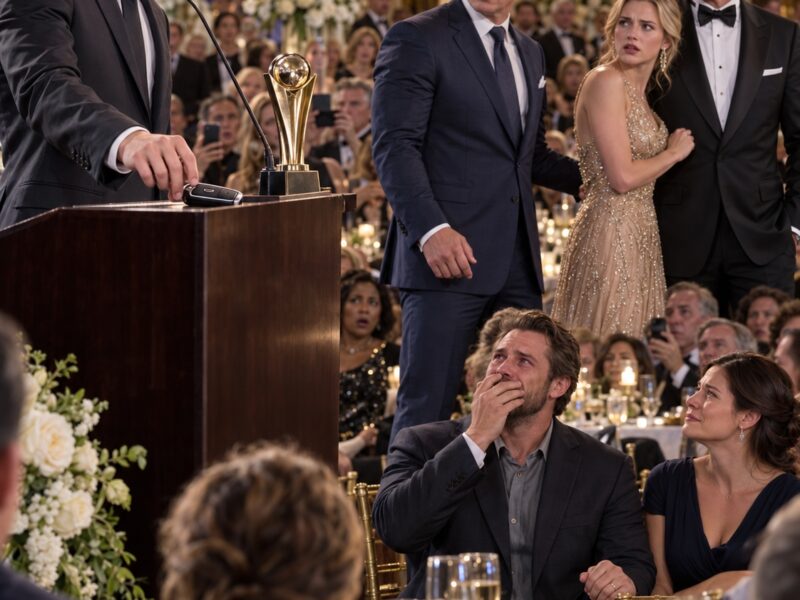
My Parents Made Me Raise My Brother’s Secret Baby to Protect His Future—Sixteen Years Later, His Ferrari “Gift” Turned a Packed Awards Ballroom Against Him
At two fourteen in the morning, my mother put a six-day-old baby into my arms and told me I had until sunrise to decide whether my brother’s future mattered more than mine.
Sixteen years later, that same brother tossed Ferrari keys at the boy in front of five hundred people and called himself his father.
He had no idea the kid had spent eleven months preparing an answer.
My name is Ethan Walker.
I am thirty-eight years old now, and I build things for a living.
Not metaphorically.
Cabinetry. Staircases. Dining tables made from slabs of walnut heavy enough that three men complain when we move them. The kind of work where measurements matter, joints matter, patience matters, and the smallest lie you tell yourself during construction eventually becomes a crack someone else has to repair.
I learned that principle from wood before I learned it from family.
My younger brother, Grant, learned something different.
He learned presentation.
By fourteen he understood that adults were often willing to confuse confidence with character if you gave them enough of the first.
My parents loved that about him.
Dad called it leadership.
Mom called it promise.
Nobody called it what it became.
The night that changed my life started with a phone call from my father.
“Come to the house.”
I was half asleep.
“What happened?”
“Just come.”
My father, Richard Walker, never said “just come” unless he had already decided the conversation and merely needed the correct people physically present.
I was twenty-two.
I worked under a custom carpenter named Samuel Price, earning barely enough to pay rent on a one-bedroom apartment outside Philadelphia and trying to save for a wedding with my fiancée, Hannah.
My brother Grant was twenty.
He had just been admitted to a prestigious graduate program in Washington and had spent the previous two summers interning in offices where people wore flag pins and spoke as though microphones might be hidden in the walls.
My parents had framed his acceptance letter.
Literally.
It hung in the hallway beside family photographs.
Nobody had ever framed anything of mine except a woodworking certificate my grandfather mounted himself because he knew Mom never would.
I drove to my parents’ Main Line house wearing jeans and an old sweatshirt.
The foyer smelled like lilies.
It always smelled like lilies because my mother had fresh ones delivered every Wednesday.
At two fourteen in the morning, the chandelier was blazing.
Dad stood near the staircase.
Mom sat in the white armchair she usually refused to let anyone use.
And there was a bundle in her arms.
At first I thought blanket.
Then it moved.
A tiny hand appeared.
I stopped.
My father said, “Grant got a girl pregnant.”
That was how he began.
Not hello.
Not sit down.
Not there is something you should know.
Grant got a girl pregnant.
Mom looked straight ahead.
The baby made a small noise.
My mouth went dry.
“Where is Grant?”
“Asleep,” Mom said.
I stared at her.
“Asleep?”
“He has orientation soon.”
“What does that have to do with anything?”
Dad stepped in.
“The mother is seventeen. Her family has signed the necessary documents. She does not intend to raise the child.”
I looked at the baby.
Then at my parents.
“Grant does.”
Silence.
That told me everything before either of them answered.
“Where is he?”
Dad’s jaw tightened.
“Ethan.”
“Where is he?”
“At his apartment.”
“And he knows his son is here?”
“Yes.”
“Then why am I here?”
Mom finally looked at me.
“The county placement officer arrives at nine.”
I stared.
“What?”
“If no relative assumes emergency custody tonight, the child enters foster placement.”
The baby’s fist opened and closed against the blanket.
Mom continued in the same tone she used when discussing charity luncheons.
“The mother relinquished custody this afternoon.”
“And Grant?”
Dad exhaled.
“Grant is not in a position to become a single father.”
I laughed once.
It came out ugly.
“He is literally the father.”
“Biology is not the only consideration.”
“No, apparently career planning is.”
Dad’s face hardened.
“Watch yourself.”
I stepped toward Mom.
“Give me the baby.”
She hesitated.
Just for a second.
Then handed him over.
He weighed almost nothing.
That surprised me.
Something capable of destroying every plan in the room should have weighed more.
His face was red.
His eyes were closed.
One cheek had a faint scratch.
I looked at his tiny mouth and felt something inside me rearrange without asking permission.
“What’s his name?”
Mom glanced at Dad.
That frightened me.
“He hasn’t been named formally.”
I looked up.
“Six days?”
“The mother used a temporary name at the hospital.”
“What?”
“Baby Boy Castell.”
I stared.
“Jesus.”
“Ethan.”
“No. Don’t Ethan me.”
The baby stirred.
I lowered my voice immediately.
That tiny adjustment probably mattered more than I understood.
Dad folded his arms.
“We are trying to manage a difficult situation.”
“Manage.”
“Yes.”
“Your grandson is six days old.”
“I’m aware.”
“No, you’re aware of the paperwork.”
Mom stood.
“Grant has a future.”
I looked at her.
There it was.
The sentence behind every sentence.
“And I don’t?”
Her face changed.
“Of course you do.”
“But mine is cheaper.”
“That isn’t what I said.”
“You didn’t need to.”
I walked toward the window.
Rain had started.
The glass reflected all four of us.
Dad in his robe.
Mom perfectly arranged.
Me with grease still beneath my fingernails from Samuel’s shop.
And the baby nobody wanted attached to the right name.
“What are you asking me to do?”
Mom came closer.
“You’ve always wanted children.”
“With Hannah.”
“You’ll still have children with Hannah.”
“You want me to take Grant’s son.”
“We want you to keep him from entering the system.”
“For how long?”
Silence again.
I turned.
“For how long?”
Dad answered.
“Permanently, if necessary.”
Something in my chest went cold.
Grant would leave.
I would stay.
And everyone in that house understood that before they called me.
“You already decided.”
“We explored options.”
“You decided.”
Dad’s tone hardened.
“You are being emotional.”
I stared.
“A newborn is sitting in our foyer because his father doesn’t want inconvenience attached to his résumé, and I’m emotional.”
“Grant made one mistake.”
The baby moved against my chest.
I looked down.
“He’s not the mistake.”
Nobody answered.
I remember that silence better than almost anything.
Because sometimes a family reveals itself not in what it says, but in what it refuses to correct.
Dad finally said, “You have six hours.”
“Or?”
“The county takes him.”
I looked at the baby.
His hand had found the edge of my sweatshirt.
Tiny fingers closed around the fabric.
Not intentionally.
Babies that age do not make symbolic gestures.
But adults do.
And in that moment, every adult in that foyer had made one.
My parents had chosen Grant’s reputation.
Grant had chosen absence.
I had not chosen anything yet.
That was the only decision still open.
I looked at Mom.
“Get me his hospital papers.”
“Ethan—”
“Now.”
Dad studied me.
“You’re taking him?”
“I’m taking him out of this house.”
Mom’s shoulders dropped in relief.
That relief made me angrier than any argument could have.
“You understand this is serious.”
I laughed.
“No.”
I looked at all of them.
“I don’t think any of you understand that.”
I drove home at three in the morning with a baby strapped into a borrowed infant seat my parents’ lawyer had somehow already obtained.
That detail stayed with me.
They had a car seat.
They had forms.
They had a lawyer on standby.
They had prepared for me to say yes before I knew there was a question.
I stopped at a twenty-four-hour pharmacy.
Formula.
Bottles.
Diapers.
A clerk with purple glasses helped me choose things I had never heard of.
“Your first?” she asked.
I looked at the sleeping baby.
“Yes.”
That was the first time I called him mine.
I named him Noah in the parking lot.
No family connection.
No old-money meaning.
No attempt to honor anyone.
Just Noah.
A name that belonged to him before anybody else could attach a story.
He slept that first night in a dresser drawer.
I removed the clothes, lined it with towels, and set it beside my mattress.
I sat on the floor with my back against the bed watching his chest rise.
At six in the morning, I called Samuel.
He answered sounding furious until he heard my voice.
“What happened?”
“I have a baby.”
Long silence.
“Say that again.”
“My brother had a baby.”
Another silence.
“I have the baby.”
“You steal it?”
“No.”
“Good. That would complicate payroll.”
I laughed despite myself.
Then I cried.
I hadn’t planned to.
Samuel let me.
Finally he said, “Bring the kid to the shop when you can.”
“I might have to quit.”
“No.”
“Sam—”
“You know how to work.”
“I don’t have childcare.”
“Then we figure it out.”
“It isn’t your problem.”
“Neither were you when I hired you.”
That shut me up.
Samuel said, “Get some sleep.”
“I can’t.”
“Then pretend.”
He hung up.
Hannah arrived at nine.
She stood in my doorway holding coffee.
Then she saw the drawer.
“What is that?”
I told her.
Not all at once.
She sat on the edge of my bed while I explained.
She did not interrupt.
That was one of the reasons I loved her.
When I finished, she walked to the drawer and looked down.
Noah slept.
“He’s beautiful.”
“Yeah.”
She looked at me.
“What are you going to do?”
“I already signed temporary custody.”
Her face changed.
“Temporary?”
“Emergency. We have a court date.”
“We?”
I heard it.
The word.
Not anger.
Fear.
“Hannah.”
“You made this decision last night?”
“I had six hours.”
“You had me.”
“I know.”
“Did you call?”
I looked away.
She laughed once.
“You didn’t.”
“I didn’t know what to say.”
“How about ‘My parents want me to raise my brother’s child and this might change every plan we have’?”
“You were asleep.”
“That cannot possibly be your answer.”
“It isn’t.”
She stood.
“I need time.”
“I know.”
“No.”
Her eyes filled.
“You keep saying you know.”
I stopped.
She looked at Noah.
“I’m not angry at him.”
“I know.”
“Stop saying that.”
“Sorry.”
She wiped her face.
“We had a life.”
“We still can.”
“With a newborn?”
I did not answer.
Hannah nodded.
“That’s what I thought.”
She stayed eleven days.
She helped with bottles.
She held Noah while I showered.
She bought a bassinet.
She tried.
That mattered.
Then one night she sat across from me at the kitchen table.
Her engagement ring lay between us.
“I can’t.”
I already knew.
She cried.
“So do I.”
“No, I mean I can’t become his mother because your brother chose not to be his father.”
“I’m not asking you to.”
“You will eventually.”
“I wouldn’t.”
“You already changed our entire life without me.”
That hurt because it was true.
Hannah looked toward the bedroom.
“I’m twenty-four.”
“So am I.”
“I know.”
Her voice softened.
“And I think that’s why I can’t hate you.”
I looked at her.
“If this were our baby, I would stay.”
“I know.”
“If we had chosen this together, I would stay.”
My throat tightened.
“But we didn’t.”
She slid the ring toward me.
“I’m not strong enough to build my whole life around fixing what your family refused to carry.”
I wanted to argue.
Instead I asked:
“Do you think I should give him back?”
Her eyes filled.
“No.”
That answer broke me.
She continued.
“I think you’re doing the right thing.”
“Then why—”
“Because the right thing can still cost something.”
We both cried.
Quietly.
She left.
Three weeks later I sold the ring.
It paid for formula, legal fees, and a secondhand crib.
That felt like the most honest purpose that diamond ever served.
My parents’ promised help lasted exactly twelve days.
Then Dad called.
“We need to discuss expenses.”
I was rocking Noah with my shoulder while making a bottle.
“What expenses?”
“Your requests.”
“I sent you one invoice from the attorney you hired.”
“You need to start treating this as your responsibility.”
I stopped moving.
“You called me.”
“Correct.”
“You told me the county would take him.”
“Yes.”
“You told me the family needed someone.”
“And you agreed.”
There it was.
The transformation.
A crisis became my choice quickly enough that the people who created it no longer owed anything.
“What does Grant pay?”
Silence.
“Dad.”
“He’s in school.”
“So?”
“He does not have income.”
“He has a trust account.”
“That money is protected.”
I laughed.
“From his son?”
Dad became cold.
“Don’t make this ugly.”
I looked at Noah.
“Too late.”
I stopped asking.
Sold my truck.
Sold tools.
Took weekend repair jobs.
Samuel cleared a corner of the shop for a playpen.
He never treated Noah like an interruption.
Sometimes he stopped sanding just to make faces at him.
“Kid has judgmental eyes,” he said once.
“He’s six months old.”
“Exactly. Pure instincts.”
Noah grew up around cedar, sawdust, radio baseball, secondhand furniture, and adults who showed up because there was work to be done.
My parents visited twice during his first year.
Grant visited zero times.
Not one call.
Not one birthday card.
Not one photograph request.
At three, Noah started calling me Dad.
It happened in a grocery store.
He pointed at cereal.
“Dad, this one.”
That was it.
No ceremony.
No legal declaration.
I stood there holding pancake mix while my entire life quietly received a name.
The adoption became final seven months later.
Grant did not contest it.
My parents attended court because their lawyer recommended it.
When the judge asked whether Grant had been notified, Dad answered for him.
“Yes, Your Honor.”
The judge looked over the documents.
“No contact?”
“None.”
I watched Mom.
She stared at the floor.
The judge turned to me.
“Mr. Walker, you understand adoption is permanent.”
“Yes.”
“Biological circumstances do not later override it.”
“I understand.”
“You are becoming this child’s legal father in every respect.”
I looked at Noah.
He was chewing the corner of a board book.
“Yes.”
The judge smiled.
“I believe you already are.”
For years, that was our life.
Not easy.
Not tragic.
A life.
Samuel became Grandpa Sam without anybody officially deciding it.
My neighbor Melissa Ortiz became the emergency contact who could calm Noah’s fevers better than I could.
Her daughter, Grace, was three months younger than Noah and spent so much time in our apartment that I kept spare pajamas for her.
Melissa worked dispatch for the fire department.
I worked days.
We traded childcare.
No scorekeeping.
No invoices.
No speeches about sacrifice.
Just:
“I have them Tuesday.”
“You take Thursday.”
“Grace needs poster board.”
“Noah left his math book.”
That became family before I understood it had.
When Noah was nine, Samuel helped me open my own shop.
Walker & Grain.
Three employees.
Then six.
Architect referrals.
Custom residential work.
A hotel commission.
By the time Noah was twelve, the business was quietly profitable.
Not rich in the way my parents understood rich.
Stable.
Mine.
I deliberately kept my family away from it.
Mom occasionally asked what I was doing.
“Carpentry.”
That was all she deserved.
Grant, meanwhile, became exactly what they protected.
Graduate school.
Policy fellowship.
Government relations.
Then tech.
Then executive strategy.
Magazine profiles.
Conference panels.
Photographs with governors.
At family gatherings I was no longer invited to, my parents apparently discussed his career like quarterly earnings.
Noah was rarely mentioned.
One Christmas my aunt Diane called.
Your mother says he’s doing well.”
“He is.”
“She says he’s very smart.”
“He is.”
“She says Grant always tested well too.”
I almost laughed.
There it was.
Even Noah’s intelligence needed to be absorbed back into the family brand.
“He gets it from himself,” I said.
Diane paused.
Then laughed.
“I always liked you.”
“That makes one Walker.”
“Two.”
She meant Noah.
I forgave her immediately.
I told Noah the truth in layers.
At five:
“You were born to another mommy and daddy who couldn’t take care of you, so I became your dad.”
At eight:
“Your biological father is my brother.”
At eleven:
“He chose not to raise you.”
At thirteen, he asked:
“Did he choose you to do it?”
I told him no.
Then he asked:
“Did Grandma and Grandpa?”
That was harder.
“Yes.”
He sat quietly.
Then:
“Why?”
I did not protect them.
“Because they believed his future mattered more.”
Noah looked at me.
“And yours?”
I swallowed.
“They probably told themselves mine could absorb it.”
He nodded.
No tears.
No explosion.
That worried me more.
Then:
“I want the papers.”
“What papers?”
“All of them.”
“Noah—”
“You said you’d tell me when I was old enough.”
I had.
He was right.
The custody documents lived in a fireproof safe.
Relinquishment.
Emergency order.
Adoption.
Letters.
Notes from the original attorney.
One statement from Noah’s biological mother, Lily Carter.
She had been seventeen.
I had met her once for nine minutes in a hospital hallway.
She looked terrified.
Her mother stood behind her.
Lily said only one thing directly to me.
“Tell him I wasn’t ready.”
I remember her forcing herself to meet my eyes.
“Not that I didn’t want him.”
I promised.
I kept that promise.
Noah read every page.
Forty-two minutes.
He went back twice.
When he finished, he squared the papers.
Then said:
“Blood makes relatives.”
I waited.
“Showing up makes family.”
He slid the folder back.
“Can we finish the desk?”
We had been building one together.
“Yes.”
We went to the shop.
I thought the conversation was over.
It wasn’t.
It was beginning.
After thirteen, Noah changed.
Quietly.
He began reading.
Contracts.
Family law.
Adoption law.
Privacy statutes.
At fourteen, I found a book about evidence authentication on his nightstand.
“What are you planning?”
He looked up.
“Nothing.”
“No fourteen-year-old reads metadata law for nothing.”
He smiled.
“I like knowing what people can actually prove.”
“Why?”
“Because adults say things confidently that aren’t true.”
I could not argue.
Two years later, Aunt Diane accidentally added Noah to a family group chat.
That was the mistake that destroyed everything my parents and brother had spent sixteen years arranging.
Noah did not announce himself.
He read.
Months of messages.
Maybe years.
Family plans.
Weddings.
Investments.
Dad complaining about taxes.
Mom complaining about neighbors.
Grant sending airport lounge photos.
Ordinary things.
Then his name.
Noah later told me that was the hardest part.
Not cruelty.
Casualness.
He expected hatred to feel dramatic.
Instead, his life appeared between dinner reservations and golf schedules.
Grant was engaged.
His fiancée, Caroline Sterling, was the daughter of billionaire venture investor Martin Sterling.
Her father cared deeply about one thing.
Family.
Not appearance.
Actual family.
He had grown up poor with an absent father and built his fortune around the belief that commitment revealed character better than résumés.
Grant knew that.
He also knew Martin had begun asking questions.
Why didn’t Grant talk about his son?
Why had he never mentioned Noah early in the relationship?
That created a problem.
Grant’s solution was Noah.
One message said:
Martin keeps asking why I don’t talk about the kid. Might need to lean into the dad thing before the wedding. Could actually help me.
Noah screenshot it.
Another from Mom:
Once people see you reconnect publicly, the past becomes a youthful mistake instead of abandonment.
Another from Dad:
Ethan may resist. Start with money. Everyone has a number.
Mom replied:
He’ll fold once he sees something substantial. He’s always been sentimental about that boy.
That boy.
Noah read every word.
Then he found worse.
They had discovered Noah was about to receive a national academic award for mathematics.
Grant wrote:
Perfect stage. Martin will be there. If I can get Noah to call me Dad publicly, problem solved.
My father replied:
Make the gesture visible. Car maybe. Something memorable.
Grant:
Ferrari? He’s sixteen. Nobody says no to that.
Mom:
Ethan will hate it. Ignore him. This is bigger than his feelings.
Noah came to me on a Sunday.
He set his phone on the kitchen table.
“They’re planning to buy me.”
I read.
Every message.
My hands started shaking.
Noah remained calm.
“They think the award ceremony is about them.”
I stared at him.
“What do you want to do?”
“I don’t want them to know we know.”
“Noah.”
“If they know, they’ll change the plan.”
“What plan?”
He looked at me.
“Theirs.”
Then:
“And mine.”
That was the moment I understood something.
I had raised a child who had learned from every betrayal in this family without becoming cruel.
But he had also become strategic.
That scared me.
“What are you planning?”
He showed me another message.
Grant had contacted him privately.
Hey. I know this is strange. I’m your biological father. I’ve wanted to reach out for years but things were complicated. I’d like a chance. I have a car for you. A 2024 Ferrari Roma. College fund too. Whatever school you want. I’d love to attend your award ceremony. Maybe, if you’re comfortable, you could introduce me as your dad. No pressure. I just want to start somewhere.
Noah looked at me.
“He wrote no pressure.”
“Yes.”
“After planning pressure for eleven months.”
“Yes.”
“He needs a sentence.”
“What?”
“He needs me to say, ‘This is my dad.’”
Noah’s face stayed calm.
“The Ferrari is what he thinks the sentence costs.”
I looked at him.
“I don’t want you taking it.”
“I don’t either.”
“Then say no.”
“If I say no, they change plans.”
“Noah.”
He leaned forward.
“Dad.”
He rarely called me that when he wanted me to listen carefully.
“He wants a stage.”
“Yes.”
“He thinks he controls what happens on it.”
My stomach tightened.
“I think we should let him.”
“No.”
“Listen.”
“Noah—”
“Please.”
I stopped.
He continued.
“If I refuse, he gets to tell people you kept me away.”
“That’s not true.”
“I know.”
“He signed papers.”
“I know.”
“We have everything.”
“Exactly.”
I stared.
“No.”
He smiled slightly.
“You don’t even know the plan.”
“I know your face.”
He almost laughed.
Then he became serious.
“I’m not going to humiliate him for fun.”
“Good.”
“I’m going to tell the truth.”
“Publicly.”
“He made it public.”
That landed.
“He chose my award ceremony because he needs an audience.”
Noah pointed to the messages.
“I’m just not giving him the audience reaction he purchased.”
For the next month, we prepared.
Not revenge.
Evidence.
I called Mr. Leonard Shaw, the retired family lawyer who had handled the adoption.
He was eighty-three.
Still had copies.
Certified.
He looked at Noah across his desk.
“I wondered whether somebody would come eventually.”
“Why did you keep them?”
Mr. Shaw looked tired.
“Because your grandmother told me the night you were born that the goal was to remove you from anything that might follow Grant politically.”
Noah’s jaw tightened.
“Those exact words?”
“Not exact.”
Shaw opened a file.
“These are.”
A handwritten note from Mom.
Need permanent transfer before morning. Grant cannot appear as custodial parent in future records beyond biological necessity. Ethan will likely agree if framed as preventing foster placement.
My stomach turned.
Noah read it twice.
Shaw watched.
“I am sorry.”
“For what?”
“For doing my job without asking whether my job was decent.”
Noah looked at him.
“You helped Dad get custody.”
“Yes.”
“You made it permanent.”
“Yes.”
“Then at least one useful thing came out of it.”
The old man’s eyes filled.
We left with certified copies.
Noah backed up screenshots.
Metadata.
Dates.
He made a timeline.
I asked once:
“Why are you so calm?”
He answered:
“I’m not.”
That stopped me.
He continued.
“I’m just not giving them the part they expect.”
“What part?”
“My reaction.”
I remembered my father.
My mother.
Grant.
All people who had spent a lifetime using other people’s reactions to manage rooms.
Noah said:
“If I’m angry now, they prepare for anger.”
He tapped the folder.
“If I’m quiet, they prepare for the version of me they invented.”
I almost laughed.
“Samuel taught you patience.”
“No.”
Noah looked at me.
“You did.”
That hurt in the best way.
The award ceremony took place at the Philadelphia Grand Hotel.
Five hundred guests.
Educators.
Donors.
Investors.
University representatives.
Families.
Martin Sterling attended because his foundation sponsored one of the mathematics scholarships.
Caroline came with him.
Grant came with her.
My parents arrived too.
They had obtained VIP invitations through a donation to the school’s enrichment fund.
Of course they had.
Noah knew they would.
We had already informed the event director, Katherine Mills.
She looked horrified.
“I can revoke their passes.”
Noah shook his head.
“No.”
I looked at him.
“You sure?”
“Yes.”
He looked toward the ballroom doors.
“They worked hard to get seats.”
That sentence made Katherine blink.
Noah smiled faintly.
“They should see the show.”
I did not laugh.
Katherine did.
A little.
Then stopped.
Grant arrived forty minutes into the ceremony.
Tailored navy suit.
Caroline beside him.
Martin Sterling behind them.
My mother straightened when she saw him.
The expression on her face was exactly the same one she wore when Grant won awards as a kid.
Investment confirmed.
Grant spotted us.
He smiled.
Then walked over.
Noah stood.
Grant opened his arms.
Noah did not move.
The hug died halfway.
Grant recovered.
“Look at you.”
Noah smiled politely.
“Hi, Grant.”
Grant’s face twitched.
Not Dad.
Not Father.
Grant.
He pulled something from his jacket.
Keys.
Red-and-black Ferrari fob.
Then he actually tossed them.
Underhand.
They hit Noah in the chest.
Noah caught them on the rebound.
Grant laughed loudly.
“Figured it was time somebody upgraded your transportation.”
Several nearby tables turned.
He wanted that.
“2024 Roma.”
Noah looked at the keys.
Grant leaned closer.
“Your dad takes care of you.”
My hands went cold.
Noah looked up.
Grant turned to me.
“No offense, Ethan.”
Then came the smile from our childhood.
The one that meant a knife was about to arrive wrapped in politeness.
“You did what you could.”
I said nothing.
He continued.
“But I think Noah deserves to have his real father in his life.”
Ranata—Melissa and I had eventually married by then—slid her hand into mine.
I stayed seated.
Grant lowered his voice theatrically.
“Let’s not make tonight awkward.”
Noah looked at him.
“It won’t be.”
Grant smiled.
“Good.”
The host called Noah’s name.
National Young Scholar Award for Mathematics and Applied Statistics.
The ballroom applauded.
Noah placed the Ferrari keys in his pocket.
Then walked to the stage.
My heart hammered.
He accepted the plaque.
Shook hands.
Thanked his teachers.
Thanked Samuel, who sat two rows behind us wiping his eyes while pretending allergies had suddenly attacked.
Then Noah remained at the microphone.
The host stepped back.
Noah said:
“I’d like one more minute.”
The room settled.
My mother smiled.
Grant leaned toward Caroline.
This was the moment he had purchased.
Noah looked across the ballroom.
Then began.
“Sixteen years ago, a baby was born to two people who were not prepared to raise him.”
Grant’s smile vanished.
Nobody else understood yet.
Noah continued.
“The baby’s biological father was twenty years old.”
The room became quieter.
“He was preparing to leave for graduate school.”
Grant stopped breathing.
“My grandparents believed having an infant connected to him would damage his future.”
Mom’s face went white.
Dad stared at the stage.
“So six days after that baby was born, my grandparents called their older son to their house at two in the morning.”
People began turning.
Toward me.
My chest tightened.
“He was twenty-two.”
Noah’s voice remained perfectly steady.
“He was engaged.”
I looked at Ranata.
She squeezed my hand.
“He had almost no money.”
Noah continued.
“And my grandparents told him that if he did not take the baby before morning, the county would place him in foster care.”
My father stood halfway.
Then sat again.
Martin Sterling was no longer watching Noah.
He was watching Grant.
Noah continued.
“My uncle took the baby.”
Silence.
“He sold his truck.”
My throat closed.
“He sold tools he had spent years saving for.”
Samuel looked down.
“He lost his engagement.”
I closed my eyes.
“He spent months in family court securing permanent custody.”
Noah paused.
“He never once asked the biological father to pay him back.”
Now Grant moved.
“Noah.”
The word carried.
Noah looked at him.
Then back at the audience.
“That baby was me.”
The room changed.
Not loudly.
But completely.
“My uncle is Ethan Walker.”
Noah pointed.
“He is sitting right there.”
People looked.
I wanted to disappear.
And stand taller.
Both.
“He is not my uncle.”
Noah’s voice cracked for the first time.
Then stabilized.
“He is my father.”
My eyes filled.
“He taught me to ride a bike.”
A few people laughed softly.
“He stayed awake when I had pneumonia.”
I covered my mouth.
“He packed lunches badly.”
More laughter.
“He showed up to every school conference even when the teacher had nothing interesting to say.”
The laughter became warmer.
“And he never once treated me like his brother’s mistake.”
Nobody moved.
Noah reached into his pocket.
He held up the Ferrari key.
“My biological father is also here.”
Grant’s face had become gray.
“He gave me these tonight.”
Noah looked at them.
“A Ferrari.”
A ripple moved through the room.
“He also offered me a college fund.”
Grant started toward the stage.
Event staff subtly moved.
Martin Sterling touched Grant’s arm.
Grant stopped.
Noah continued.
“That sounds generous.”
He paused.
“It would be generous if it were a gift.”
The room sharpened.
“It isn’t.”
Grant whispered something to Caroline.
She stepped away from him.
Noah said:
“Eleven months ago, my biological father wrote to my grandparents.”
I saw Dad close his eyes.
Noah took a sheet of paper from inside his jacket.
“He wrote: ‘Martin keeps asking why I don’t talk about my kid. I think I need to lean into the dad thing before the wedding. Might actually be useful for once.’”
Someone gasped.
Caroline looked at Grant.
“Noah—”
Grant’s voice was louder now.
Noah did not stop.
“My grandparents discussed how to convince the man who raised me to cooperate.”
Dad stood.
“This is private.”
Noah looked at him.
“For sixteen years it was.”
Silence.
Dad sat.
Noah continued.
“My grandfather wrote: ‘Start with money. Everyone has a number.’”
I felt Ranata’s nails press into my palm.
“My grandmother replied: ‘Ethan will fold. He’s always been sentimental about that boy.’”
My mother covered her mouth.
Noah looked directly at her.
“That boy.”
The words landed like glass.
Then he continued.
“When they learned about tonight’s award ceremony, my biological father wrote one more message.”
Grant moved again.
Martin Sterling blocked him this time.
Not dramatically.
Just one hand.
Enough.
Noah read:
“‘Perfect stage. Martin will be there. If Noah calls me Dad publicly, problem solved.’”
Caroline’s face collapsed.
Noah lowered the paper.
“I was offered a Ferrari and college money in exchange for one sentence.”
Nobody breathed.
“That sentence was supposed to be: ‘This is my dad.’”
Noah looked at Grant.
Grant’s mouth opened.
Nothing came.
Noah’s voice softened.
“I agreed to come tonight because I decided he should get the sentence he paid for.”
My heart stopped.
Noah looked out at the room.
Then pointed toward me.
“This is my dad.”
I broke.
Not neatly.
Tears came before I could stop them.
Ranata leaned into me.
Samuel looked openly devastated.
Noah continued.
“His name is Ethan Walker.”
Applause started somewhere.
He raised one hand.
The room quieted.
“I’m not finished.”
Of course he wasn’t.
Fifteen years old.
Terrifying.
He looked at Grant.
“My biological father has never sent me a birthday card.”
Grant stared.
“He has never called me on Christmas.”
“Noah, things were complicated.”
The microphone caught Grant’s words from below the stage.
Noah looked at him.
“No.”
The room froze.
“They were convenient.”
Grant went still.
Noah continued.
“You signed away your responsibility when I was six days old.”
His voice remained calm.
“You never challenged the adoption.”
“Noah—”
“You never asked for visitation.”
Grant’s face hardened.
“You don’t know what your grandparents—”
“I have the documents.”
He lifted a folder.
“Certified.”
My father went pale.
“Not screenshots.”
Noah looked toward him.
“Documents.”
The room was absolutely silent now.
“The attorney who drafted them is sitting beside my family.”
Mr. Shaw lifted one hand slightly.
Every eye found him.
Noah continued.
“I also have the original notes showing my grandparents wanted me transferred permanently before morning because they were worried my existence might appear in background checks connected to Grant.”
Mom shook her head.
“That is not what—”
Mr. Shaw stood.
“It is.”
One sentence.
Eighty-three years old.
Quiet.
Devastating.
Mom sat back.
Noah looked toward Martin Sterling.
“Mr. Sterling.”
Martin’s expression changed.
“You don’t know me.”
“No.”
“I’m sorry you had to find any of this out tonight.”
Martin nodded slowly.
Noah continued.
“But I understand my biological father has told your family that he fought to remain in my life.”
Caroline turned toward Grant.
Grant whispered:
“Caroline, please.”
Noah said:
“That is false.”
Martin’s face hardened.
“He told us your mother kept you from him.”
The room reacted.
Noah blinked.
For the first time, he looked genuinely surprised.
Then:
“My biological mother relinquished her rights.”
He looked at Martin.
“Ethan adopted me.”
Martin turned toward Grant.
“You told me you lost a custody fight.”
Grant whispered:
“I can explain.”
Martin’s voice stayed low.
“I imagine that sentence has been doing a lot of work for you.”
Grant’s face collapsed.
Noah looked down at the Ferrari key.
Then placed it gently on the podium.
Not thrown.
Not slammed.
That gentleness made it brutal.
“I don’t want the car.”
Grant stared.
“I don’t want the college fund.”
“You’re sixteen.”
Grant’s composure broke.
“You have no idea what that money could do for you.”
Noah looked at him.
“It could buy me a Ferrari.”
A few people laughed nervously.
“But it cannot buy you sixteen years.”
Nobody laughed.
Noah continued.
“And it cannot rent my mouth for ten seconds.”
Grant flinched.
Noah stepped back from the microphone.
Then stopped.
“One more thing.”
I almost laughed through tears.
Of course.
He looked at the audience.
“I’m not telling this story because my biological father abandoned me and therefore deserves public humiliation.”
The room listened.
“I’m telling it because people with money spent sixteen years deciding they could control what version of my life everyone else was allowed to hear.”
His voice changed.
More personal.
“I read the family messages.”
Mom looked down.
“They discussed me like an asset.”
Noah swallowed.
“They discussed the man who raised me like a vendor.”
My father closed his eyes.
“They planned to pay him first and hurt his business second if he refused.”
Several phones rose.
The event had a no-recording policy.
Nobody cared anymore.
Noah continued.
“I spent months deciding whether exposing that made me cruel.”
My chest tightened.
“I decided silence would be crueler.”
He looked at me.
“Because my dad spent sixteen years paying the price for a decision everyone else benefited from.”
I shook my head.
He ignored me.
“And nobody ever thanked him.”
I cried harder.
Noah smiled.
“So I will.”
He looked directly at me.
“Dad.”
“Yes?”
My voice barely worked.
“Thank you for taking me home.”
The room broke.
Applause rose.
Not instant.
Not theatrical.
One person first.
Then ten.
Then almost everyone.
I sat there unable to stand.
Noah picked up his award.
Left the Ferrari key behind.
And walked toward me.
Grant stepped into his path.
“Noah.”
Noah stopped.
Caroline stared.
Grant’s face had lost every polished expression I had known since childhood.
For once, he looked twenty.
Not thirty-six.
Not successful.
Just the scared kid my parents had trained to believe consequences were things other people absorbed.
“I was young.”
Noah looked at him.
“So was Dad.”
Grant flinched.
“I was scared.”
“So was Dad.”
“I had no idea what to do.”
Noah’s voice remained quiet.
“Neither did Dad.”
Grant’s eyes filled.
Noah continued.
“The difference is he stayed long enough to learn.”
Grant had nothing.
Noah stepped around him.
Then he came to me.
I stood.
He hugged me.
That was the first time the room disappeared.
Not forever.
Just long enough.
Long enough for me to remember a dresser drawer lined with towels.
A six-day-old baby gripping my sweatshirt.
A truck sold for court fees.
A ring turned into formula.
Samuel clearing space in his shop.
The first time Noah said Dad in a cereal aisle.
Every ordinary day nobody applauded.
I held him.
“Are you okay?”
He whispered:
“No.”
That mattered.
He was not invulnerable.
He was a kid.
A brilliant one.
A prepared one.
Still a kid.
“We can leave.”
He nodded.
Behind us, Martin Sterling approached Grant.
I heard only pieces.
“You told me…”
“…custody battle…”
“…mother blocked you…”
Grant tried.
“Sir—”
Martin cut him off.
“I sat across from you four times.”
Caroline was crying.
Grant reached for her.
She stepped back.
Martin said:
“I built my business on due diligence.”
His voice was quiet.
“That was apparently my failure here.”
Grant shook his head.
“Martin, please.”
Martin looked at him.
“No.”
One word.
The same word nobody had told Grant enough when he was young.
“No.”
Then he turned to Caroline.
“Come.”
She hesitated.
Looked at Grant.
Then removed her engagement ring.
Not dramatically.
She placed it in his hand.
“I need to know which version of you I was engaged to.”
Grant whispered:
“Caroline.”
She walked away.
My parents remained seated.
Mom looked like someone had turned the lights on inside a room she believed nobody else could see.
Dad’s expression was worse.
Not grief.
Calculation.
He was already measuring consequences.
That hurt in a familiar way.
Some people face truth and feel shame.
My father faced truth and checked market impact.
Noah noticed too.
He looked at me.
“Can we go?”
“Yes.”
We left.
The Ferrari stayed.
By morning, someone had posted the video.
By noon, it had half a million views.
By evening, more than two million.
I hated that.
Noah hated it more.
At school Monday, students stared.
Some congratulated him.
Some wanted details.
A few asked stupid questions.
His old teacher, Dr. Melissa Grant, found him between classes.
“You don’t owe anyone another version.”
Noah looked at her.
She continued.
“You already said what you wanted to say.”
He nodded.
That helped more than anything adults said online.
Grant’s company placed him on leave within ten days.
Not because he abandoned a child.
Corporations rarely develop morals on schedule.
Because internal leadership reviewed the messages and discovered the same pattern Noah had exposed.
Grant treated facts as adjustable when a favorable narrative produced better outcomes.
Deals.
Personnel.
Forecasts.
The public scandal triggered scrutiny.
The scrutiny found behavior.
That cost him.
Caroline ended the engagement.
Martin Sterling issued no dramatic statement.
He did not need one.
His fund simply removed Grant from every advisory project connected to Sterling capital.
My mother resigned from two charity boards.
One ran scholarships for foster youth.
The irony nearly made me sick.
Dad lost several clients.
Nobody publicly said why.
People with money rarely say why.
They simply move the money.
Grant called Noah twice.
Blocked.
Then emailed me.
The apology was three pages.
Only one paragraph contained the word sorry.
Every other paragraph explained context.
His age.
Our parents.
Pressure.
Fear.
Graduate school.
Career.
He wrote:
I assumed you were handling everything because you never told me otherwise.
I showed Noah.
He read it.
Then said:
“That’s not an apology.”
“What is it?”
“A closing argument.”
He handed my phone back.
We went for burgers.
Two months later, Caroline emailed Noah.
She wrote:
I believed Grant when he told me he had spent years trying to reconnect. I believed him when he said your mother’s family kept you away. I’m sorry I never asked why every version made him the victim.
Noah replied:
You didn’t owe me an investigation. He owed you the truth.
That was it.
I was proud of him.
Then I worried I was proud of how well my son processed betrayal.
There is something deeply unfair about admiring a child for skills pain forced him to learn.
Noah did not feel victorious.
The night after the ceremony, he sat on the edge of his bed.
Suit jacket on the floor.
Tie loosened.
I sat beside him.
He asked:
“Do you think he’ll call again?”
“Probably.”
“What do I do?”
“Whatever you want.”
“What if I never answer?”
“Then you never answer.”
“What if someday I do?”
“Then you answer.”
He stared at the wall.
“I thought I’d feel better.”
I waited.
“I don’t.”
His voice broke.
“I feel…empty.”
I put my arm around him.
He leaned into me.
“I spent months preparing because I knew he was using me.”
I nodded.
“And part of me…”
He stopped.
“It’s okay.”
He cried.
Quietly.
“Part of me kept hoping he’d surprise me.”
There it was.
The truth beneath the strategy.
“I thought maybe when he actually talked to me, he’d forget about Martin Sterling.”
My throat tightened.
“Maybe he’d ask what music I like.”
Noah laughed through tears.
“Something stupid.”
“Not stupid.”
“Favorite movie.”
“Important.”
“Whether I hate chemistry.”
“You do.”
“I hate chemistry.”
“I know.”
He cried harder.
“I wanted him to want to know me.”
I held him.
“Of course.”
“That feels pathetic.”
“No.”
“It does.”
“Noah.”
He looked at me.
“Hope is not pathetic.”
He wiped his face.
“Even when you know better?”
“Especially then.”
He leaned against my shoulder.
I said:
“You didn’t expose him because you stopped wanting a father.”
He looked at me.
“You exposed him because he was pretending to be one.”
That landed.
We stayed there for a long time.
No speeches.
No lessons.
Parenting often looks less like saying the right thing than simply refusing to leave before the wrong feeling passes.
Grant wrote again almost a year later.
Handwritten.
No lawyer tone.
No publicist vocabulary.
One page.
Noah,
I have rewritten this letter enough times that every version sounded like another attempt to manage your reaction. So I’m going to stop doing that.
I abandoned you.
Noah stopped reading.
Looked at me.
Then continued.
Ethan raised you because I did not. Our parents protected me because I let them. My age explains fear. It does not excuse sixteen years of silence.
The Ferrari was not a gift. You were right. It was a transaction.
I am sorry.
I do not expect an answer.
If you ever decide you want thirty minutes with me, I will come wherever you choose. No audience. No gifts. No conditions.
Grant.
Noah read it twice.
Then placed it on the table.
“What do you think?”
I shook my head.
“Not my decision.”
“I know.”
Weeks passed.
Then Noah said:
“I want to meet him.”
I kept my face neutral.
“Okay.”
“You’re not mad?”
“No.”
“I don’t want him to be my dad.”
“I know.”
“I just don’t want to be thirty wondering what he would have said if I’d opened the door once when nobody was watching.”
That sentence told me he was ready.
They met at a coffee shop.
Public.
No family.
No cameras.
Grant drove a rental.
No Ferrari.
Thirty minutes became ninety.
Noah came home quiet.
“How was it?”
He took off his coat.
“He apologized.”
“Actually?”
“Yes.”
“No explanations?”
“One.”
My stomach tightened.
Noah smiled faintly.
“He said he was sorry for spending sixteen years believing explanations were apologies.”
I exhaled.
“That’s something.”
“Yeah.”
“Do you want to see him again?”
“I don’t know.”
“Okay.”
He looked at me.
“Dad?”
“Yeah?”
“You’re not worried?”
“About what?”
“That he’ll replace you.”
I stared at him.
Then laughed.
Not because the question was funny.
Because after sixteen years, Noah still occasionally underestimated what we had built.
I walked over.
Put both hands on his shoulders.
“No.”
“Really?”
“Noah, the relationship between you and Grant does not subtract from ours.”
He looked down.
“If you forgive him someday, I am still your father.”
He nodded.
“If you never forgive him, I am still your father.”
Another nod.
“If you build something with him, I’m still your father.”
His eyes filled.
“And if you never speak to him again…”
I smiled.
“Still here.”
He hugged me.
“Okay.”
Grant and Noah have spoken seven times since.
I know because Noah tells me.
Not everything.
Enough.
They are not father and son.
Maybe never will be.
They are two people connected by blood and a very large absence.
Sometimes that is all a relationship can honestly become.
My parents are different.
Mom sent one card.
We did what we believed was necessary. Someday we hope you understand.
I read it twice.
Then threw it away.
Dad called once.
He said:
“I thought protecting Grant protected the family.”
I answered:
“You protected the version of the family you could show people.”
Silence.
Then:
“Yes.”
It was the closest thing to honesty he had ever given me.
“I don’t know what to do with that now,” he said.
“For once, Dad, I don’t think I’m responsible for giving you something to do.”
He went quiet.
“I suppose that’s fair.”
We have not spoken since.
Aunt Diane moved out of my mother’s orbit.
That surprised everyone.
She came to dinner at our house the following Thanksgiving.
Not my parents.
Not Grant.
Just Diane.
Samuel.
Melissa.
Grace.
Noah.
People who had spent years quietly becoming family without blood needing to announce itself.
Halfway through dinner, Samuel raised his glass.
“I hate speeches.”
Everybody laughed.
He continued:
“So I’ll keep this short.”
He looked at me.
“I hired Ethan because he measured twice.”
Then at Noah.
“I kept Ethan because he stayed when the work got hard.”
His eyes moved around the table.
“And apparently that’s the whole family business now.”
Noah laughed.
“Terrible speech.”
Samuel pointed.
“See? Ungrateful.”
It was perfect.
Melissa and I married the following spring.
Backyard.
Forty people.
No chandeliers.
No photographers.
No billionaire investors.
No family reputation to manage.
Grace stood beside Noah.
They had grown up like siblings.
At the reception, Noah asked for the microphone.
I immediately panicked.
He saw my face.
“This one’s nice.”
Everyone laughed.
He stood.
“I spent a long time thinking family was something assigned to you.”
His voice remained calm.
“Then I found out mine had been negotiated before I could hold my own head up.”
The yard went quiet.
“I thought that meant family was fake.”
He looked at me.
“Then Dad made me understand something else.”
My throat tightened.
“Family isn’t what you’re given.”
He looked at Melissa and Grace.
“It’s what people keep building after the original plan fails.”
Melissa cried immediately.
Noah smiled.
“Dad built ours out of a dresser drawer, secondhand formula, sawdust, legal bills, and terrible sandwiches.”
Everyone laughed.
“Melissa and Grace added themselves one school pickup at a time.”
Grace wiped her eyes.
“Samuel contributed unsolicited opinions about joinery.”
“Accurate,” Samuel said.
Noah continued.
“I just wanted to say I noticed.”
That was all.
He sat.
Nobody recovered quickly.
A year after the Ferrari ceremony, Noah is seventeen.
He still works Saturdays in my shop.
Not because he needs money.
His academic scholarship covers most of what comes next.
He says he wants law school.
Family law.
“Why?”
We were sanding a white-oak rail.
He looked at me.
“Because somebody should be in those rooms who understands that paperwork decides what childhood looks like.”
I handed him finer sandpaper.
“You know lawyers don’t build furniture.”
“Most don’t.”
“Don’t start.”
He smiled.
Samuel sat in the corner pretending not to listen.
Noah continued:
“I want to be the lawyer who tells the twenty-two-year-old in the foyer what his parents aren’t telling him.”
I stopped sanding.
“What?”
“That he has options.”
My throat tightened.
“That the mother has options.”
He kept working.
“That biological fathers don’t get to disappear for sixteen years and then claim parental authority because a Ferrari photograph would look good.”
I laughed.
“Specific practice area.”
“Growing field.”
He grinned.
Sometimes I still think about that first night.
The lilies.
The chandelier.
My mother holding a newborn like something scheduled for transfer.
Dad telling me I had six hours.
What I remember most now is not anger.
It is Noah’s hand.
Working itself free of the hospital blanket.
Finding my sweatshirt.
Holding on without knowing what holding on meant.
People love to tell stories backward after the ending works.
They say:
You saved him.
You were meant to be his father.
Everything happens for a reason.
I hate all of that.
Nothing about a frightened teenager giving birth without support happened for my benefit.
Nothing about Grant abandoning his son was destiny.
Nothing about my parents choosing reputation over responsibility was some cosmic plan designed to deliver me fatherhood.
Those were failures.
Real ones.
Choices.
What matters is what happened after.
Someone stayed.
Then another person stayed.
Then another.
Samuel.
Melissa.
Grace.
Teachers.
Friends.
Lawyers who kept copies.
A kid who learned enough about truth to refuse being bought.
That is family to me now.
Not perfection.
Not blood.
Accumulated evidence.
Sixteen years of showing up.
The Ferrari was eventually returned to the dealership.
Grant had leased it.
Of course he had.
That made Noah laugh harder than almost anything else about the entire disaster.
“He didn’t even own the bribe?”
“No.”
“Unbelievable.”
“He prepaid twelve months.”
“That somehow makes it worse.”
“Yes.”
Noah still has the key fob.
Not because he wanted it.
The dealership did not care about the extra promotional duplicate Grant had handed him onstage.
Noah keeps it in the top drawer of the desk we built together when he was thirteen.
Beside the first certified copy of his adoption order.
I asked him once why.
He thought about it.
Then:
“One proves what something costs.”
He touched the Ferrari key.
“The other proves what something is worth.”
I did not ask him which was which.
I knew.
Sometimes he brings friends to the shop.
They know the story now.
Everybody does.
But inside those walls, nobody treats him like the kid from the viral video.
He sweeps.
He sands.
He measures wrong occasionally.
I make him redo it.
“You humiliated a grown man in front of five hundred people,” I told him last Saturday. “You can redo a bad dovetail.”
He stared.
“That logic is abusive.”
“Measure twice.”
“I did.”
“Apparently badly.”
Samuel laughed from the corner.
Noah redid it.
Perfectly.
When he finished, he ran his thumb along the joint.
“You know something?”
“What?”
“I’m glad you didn’t destroy them.”
I knew who he meant.
Grant.
My parents.
“I didn’t.”
“You could have.”
“Maybe.”
He looked at me.
“You had everything.”
I set down the chisel.
“Evidence isn’t a weapon unless you use it like one.”
Noah nodded.
“What did we use it as?”
I thought.
“A light.”
He smiled slightly.
“That’s annoyingly poetic.”
“I’m getting old.”
“You’re forty.”
“Ancient.”
He kept sanding.
Outside, afternoon light moved through the high shop windows.
Sawdust floated.
Ordinary.
Beautiful.
I looked at the dresser drawer in the corner.
I kept it.
The one Noah slept in the first night.
I refinished the outside years ago.
Never fixed the joints.
They are ugly.
My twenty-two-year-old hands had cut them exhausted and terrified with borrowed tools.
Noah once asked:
“Why don’t you redo those?”
“Because they held.”
That answer still feels complete.
Families are like that.
Some begin badly.
Improvised.
Uneven.
Built by people who have no idea what they are doing.
The question is not whether the first joints are beautiful.
It is whether the people building them keep returning when something loosens.
Whether they repair what needs repair.
Whether they stop pretending appearance matters more than strength.
My parents spent their lives polishing surfaces.
Grant learned from them.
For a long time, I thought the only answer was to become the opposite.
Ignore appearances entirely.
But Noah taught me something better.
Truth needs presentation too.
Not manipulation.
Timing.
Documentation.
The courage to say it clearly in the room where the lie has the most to lose.
At fifteen, he stood under chandeliers with a Ferrari key beside his award and told five hundred people the simplest thing our family had spent sixteen years complicating.
Blood did not make Grant his father.
Money could not make Grant his father.
A public gesture could not make Grant his father.
Showing up might have.
Grant simply hadn’t.
I had.
That was the whole case.
Everything else was paperwork.
Noah walked toward the tool rack.
“Dad.”
“Yeah?”
“Where’s the half-inch chisel?”
“Second drawer.”
“It’s not there.”
“Samuel?”
From the corner:
“Don’t involve me.”
Noah looked at me.
“Family.”
I laughed.
“Apparently.”
He found it under a rag.
Then returned to the bench.
I watched him work.
Seventeen now.
Taller than me by an inch.
Steady hands.
His own future arriving.
Not the one my parents would have chosen.
Not the one Grant could buy.
His.
That may be the thing I am proudest of.
Not that I raised someone brilliant.
Not the award.
Not the speech.
Not the viral video.
That when all the noise finally ended, Noah still understood the most valuable thing anyone can inherit is ownership of his own life.
My parents tried to make him disappear so Grant could have a future.
Grant tried to bring him back when Noah became useful to another future.
Both mistakes came from the same belief.
That Noah’s life was something other people could position.
Move.
Hide.
Display.
Trade.
They were wrong.
He was never a problem to solve.
Never a secret to bury.
Never an asset to display beside a Ferrari.
He was a person.
The night I understood that, he weighed less than seven pounds.
Sixteen years later, under ballroom lights, he finally made everyone else understand it too.
And the funny thing is, the line I remember most is not anything Noah said into the microphone.
It came afterward.
When the room was exploding behind us and Grant’s perfect future was collapsing in real time, Noah walked toward me, face pale, hands shaking, and whispered:
“Can we go home?”
Home.
Not the ballroom.
Not the Ferrari.
Not the Sterling money.
Not the Walker name my parents had protected like an investment.
Home.
The shop.
Melissa.
Grace.
Samuel showing up uninvited with food.
A refrigerator covered in school papers.
The dresser drawer nobody had thrown away.
Me.
I put my arm around him.
“Yes.”
And we left.
That is the part I keep.
Because sometimes the cleanest answer to people who spend years deciding what you are worth is not destroying them.
It is building something they cannot buy their way into—
then knowing exactly where home is when their stage finally collapses.









