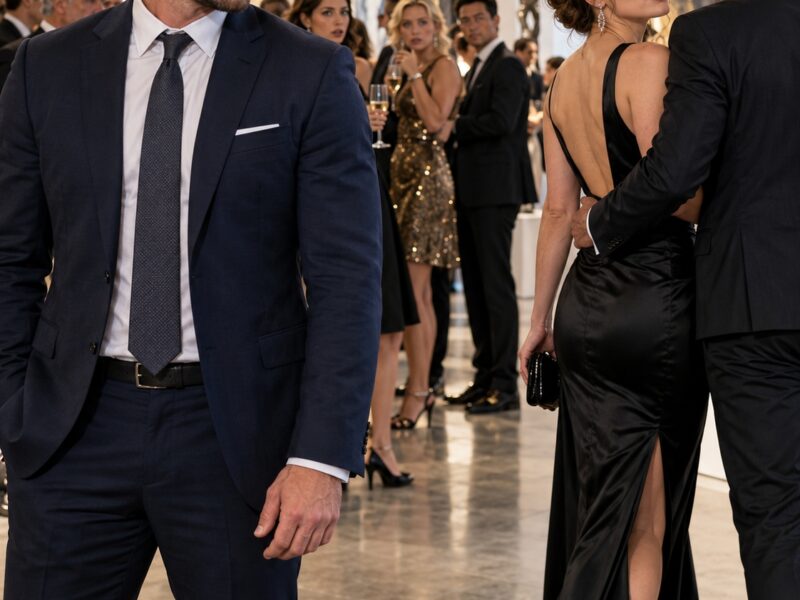
My Wife Humiliated Me at Her Gallery Opening and Left With Another Man—A Year Later, She Came Back After Learning What I Had Built Without Her
My wife walked out of our gallery opening with another man’s hand at her waist after telling me, in front of fifty strangers, that I needed to “know my place.”
I didn’t argue, beg, or give her the scene everyone in that room was waiting for—I set down my champagne, walked out, and ended our marriage before sunrise.
What Miranda never knew was that losing her would lead me to the truth about my past, a company I never imagined building, and the one favor she would someday come begging me to grant.
There is a particular kind of silence that follows public humiliation.
It is not empty. It has weight.
It was the silence that filled the Hartwell Gallery in downtown Atlanta the night my wife looked at me over the rim of her champagne glass and said, “Daniel, for once in your life, know your place.”
Fifty people heard her.
Maybe more.
A string quartet was playing somewhere behind me. Waiters moved through the crowd with silver trays. Abstract paintings hung beneath perfect white lights with little cards explaining emotions I could not find anywhere on the canvas. The whole room smelled like expensive perfume, cold champagne, and people who had spent enough money learning how to look relaxed that nobody actually seemed comfortable.
Miranda stood five feet away.
My wife of seven years.
Thirty-six years old, elegant in a black silk dress she had spent three weeks choosing, dark hair pinned up with the deliberate looseness that took a stylist an hour to achieve.
Vince Caldwell’s hand rested against the small of her back.
Not accidentally.
Not briefly.
Comfortably.
I watched Miranda lean toward him while he whispered something in her ear. She laughed, touching his forearm in the same instinctive way she used to touch mine before every gesture between us became something she rationed.
I told myself to stay calm.
I had spent years learning to do that.
My name is Daniel Wright. I was thirty-eight that night, a former Marine who had completed three deployments before a helicopter crash and a dozen smaller injuries ended the version of my career I thought I would have forever. I worked heavy-equipment maintenance around the Georgia ports, mostly troubleshooting hydraulic systems and machinery other technicians preferred not to touch.
I was good at it.
That fact had stopped meaning much inside my marriage.
Around Miranda’s colleagues, I was “Daniel, who works at the port.”
Never Sergeant Wright.
Never the man who had led Marines through situations I still woke remembering.
Never the mechanic who could hear a failing pump bearing before diagnostic equipment registered it.
Just Daniel.
Rough hands.
Old truck.
Wrong vocabulary.
Wrong suit.
Wrong room.
I had come because Miranda told me the opening mattered.
Three hours earlier, she had kissed my cheek in our Buckhead bathroom and said, “Please don’t disappear into a corner tonight.”
I had smiled.
“I’ll try to embarrass you minimally.”
She had not laughed.
Now I understood why.
I crossed the gallery toward her.
Vince saw me first.
He was forty, maybe forty-one, with carefully silvering hair, Italian tailoring, and the confidence of a man accustomed to being welcomed into rooms because people believed he could make them richer.
His hand stayed on Miranda.
“Daniel.”
Miranda’s smile vanished.
“I thought we could head out soon,” I said. “Maybe get something to eat. That Thai place you used to like on Peachtree.”
The conversation around her stopped.
She glanced toward the people nearest us.
Then back at me.
“I’m in the middle of something.”
“I can see that.”
Her eyes sharpened.
I should have stopped.
Instead I said quietly, “We’ve been here three hours, Miranda. You haven’t spoken to me since we came in.”
Her face changed.
Not into anger.
Decision.
That was worse.
“Do you know what your problem is?”
The question was loud enough for the people around us to hear.
I felt the first shift in the room.
“Miranda.”
“No. You wanted my attention. You have it.”
Vince stepped back half an inch.
Not away from her.
Just enough to watch.
“You follow me through these events like I’m supposed to entertain you because you don’t know anyone,” Miranda said. “You show up at my office with lunch. You text asking when I’m coming home. You stand beside me at functions looking miserable, and then somehow I’m responsible for making you feel included.”
My chest tightened.
“I thought that was called being married.”
A woman nearby looked down at her glass.
Miranda laughed once.
“You want the truth? You make me look like I settled.”
That landed.
She knew it did.
My suit was clean.
Navy.
Tailored years earlier before my shoulders got broader from shop work.
My dress shoes were polished but old.
My hands had small cuts from machinery despite scrubbing them twice before coming.
Miranda looked at those hands.
“You walk into rooms like this and everyone knows immediately you don’t belong here.”
Vince’s mouth curved.
Someone behind me whispered, “Jesus.”
Miranda continued.
“Going forward, I decide when we spend time together. Stop calling me while I’m working. Stop coming by my office. Stop following me around events because you’re uncomfortable.”
Then she leaned closer.
“Know your place, Daniel.”
Silence.
That was the moment.
Not the hand on her back.
Not Vince.
Not even the insult.
It was the certainty in her face that she believed I would absorb it.
Apologize.
Go home.
Wait for her.
I looked around the gallery.
Every person was waiting for something.
A veteran losing control.
A jealous husband shouting.
Maybe Vince getting shoved.
A phone was already angled toward us.
I took one breath.
Then another.
Set my champagne on the nearest tray.
Miranda’s expression flickered.
“You’re right,” I said.
She blinked.
“I have been chasing something.”
I looked directly at her.
“And I just realized I don’t want to catch it anymore.”
Then I walked away.
I heard Miranda call my name once.
I did not turn around.
Outside, the October air felt colder than I expected.
I walked three blocks to my truck while the city moved around me as if my marriage had not just ended between two canvases and a champagne tower.
By the time I reached the driver’s seat, I already knew one thing with absolute clarity.
I was never going back to being the man who waited for her permission to matter.
The drive to our house took thirty-seven minutes.
I remember because the dashboard clock seemed unusually bright.
I passed restaurants where couples sat at sidewalk tables, a grocery store closing for the night, a gas station where a teenager was cleaning windshield buckets. Ordinary life looked almost offensive in its ability to continue.
Our house stood on a curved street in Buckhead behind trimmed hedges and uplighting Miranda insisted made the stonework “read better from the road.”
She had chosen the neighborhood.
The architect.
The kitchen fixtures.
The furniture.
Even the paint color in the small room I once wanted for tools.
“We’re not turning a million-dollar house into a garage annex,” she had said.
So my tools stayed in Savannah.
The workshop there had started as an investment I made five years earlier with money saved during deployments and later port work. A converted warehouse near the river, cheap because its roof leaked and half the electrical system belonged in a museum.
Miranda hated it.
Which was part of why I loved it.
I walked inside the Buckhead house at 11:26 p.m.
No lights.
No message from Miranda.
I took off my jacket and laid it across a chair.
Then I started collecting documents.
Not because I was calm.
Because movement was easier than feeling.
Bank statements.
Mortgage records.
Tax returns.
Insurance policies.
Our prenuptial agreement.
Miranda had insisted on that before marriage because her career was beginning to accelerate and she said her financial future needed “clarity.”
At the time I signed without resentment.
My finances were simple.
Military savings.
Workshop ownership.
A modest investment account.
She had her compensation structure and future partnership interests.
The agreement kept premarital assets separate and defined what happened to major property accumulated during marriage.
For the first time, I was grateful she had cared so much about paperwork.
At 1:40 a.m., I emailed a family-law attorney a friend from the service had used.
I did not drain accounts.
Did not lock Miranda out.
Did not move money.
I copied records and preserved what existed.
Then I packed.
Two duffel bags.
Clothes.
Military records.
Bronze Star citation.
Photographs.
My father’s toolbox.
Or the toolbox of the man I believed then was my father.
James Wright had taught me to rebuild a carburetor before I was old enough to drive. He died when I was sixteen. My mother, Mary, died four years later after trying to keep our small Georgia farm alive by herself.
The toolbox had dents in the corners.
A rusted latch.
Worth almost nothing.
It was the first thing I packed.
At 3:12 a.m., Miranda finally texted.
Are you seriously doing this?
Then:
Vince drove me home because you abandoned me.
A minute later:
You humiliated me.
I stared at the screen.
Not anger.
Almost disbelief.
Then I turned the phone facedown.
At 4:05, I removed my wedding ring.
That hurt more than I expected.
Seven years reduced to a circle of gold sitting in my palm.
There had been good years.
That was important to admit.
Miranda had once sat through hours of military reunions listening to names she did not know.
She had helped me through nightmares.
She had driven me to physical therapy when scar tissue in my shoulder seized so badly I could barely turn my head.
People become dishonest about the past when relationships end.
I did not want to do that.
She had loved me once.
Or believed she did.
I had loved her.
That did not make what existed now less real.
I placed the ring on the coffee table.
Beside it, I left a short note.
You told me to know my place. I finally do. It isn’t here. My attorney will contact you.
At sunrise, I walked out.
Not dramatically.
No slammed door.
No final look.
My truck started on the first try.
I drove south.
Savannah was four hours away, but I took nearly five.
Stopped once for coffee.
Once near Macon because exhaustion blurred the road.
The anger came in waves.
Then grief.
Then memories I had ignored.
Miranda correcting how I told stories around her coworkers.
Miranda asking me not to mention Afghanistan at dinners because “people don’t know how to respond.”
Miranda replacing clothes I liked with things she said fit her professional life.
Me accepting it all because marriage required compromise.
Compromise had become disappearance so gradually I did not notice.
The Savannah workshop looked almost beautiful when I arrived.
Corrugated metal.
Roll-up doors.
Oil stains.
Old crane parts outside.
Salt in the air.
No polished marble.
No one ranking my shoes.
Jack Patterson was already inside.
Sixty-three.
Marine diesel mechanic for forty years.
He looked at my duffel bags.
“Bad night?”
“Marriage ended.”
He stared.
“That bad.”
“Yeah.”
“You sleeping here?”
“For now.”
He pointed toward the cot in the back room.
“Water heater’s still terrible.”
“I remember.”
Jack nodded.
Then handed me a wrench.
“Hydraulic pump on bay three is screaming.”
That was his version of compassion.
It saved me.
The divorce took five months.
Longer than I wanted.
Shorter than it could have.
Miranda’s first attorney sent an aggressive letter claiming abandonment.
My attorney, Tessa Grant, explained that leaving the marital residence after clear separation did not automatically forfeit property rights.
We documented everything.
The prenup held.
The Buckhead house had mixed contributions, but my down payment records and mortgage payments mattered.
Eventually Miranda chose to keep the house and refinance.
I received an agreed share.
My workshop remained mine.
No hidden revenge.
No dramatic financial destruction.
Just two people dividing a life with lawyers charging by the hour.
Miranda called repeatedly during the first weeks.
Her messages shifted.
Angry.
Then pleading.
Then contemptuous.
Then nostalgic.
One evening she drove to Savannah.
I was closing bay two when headlights appeared.
Her Mercedes stopped outside.
She got out wearing a beige coat and heels completely unsuitable for the gravel.
“Daniel.”
I kept the distance between us.
“What are you doing here?”
“You won’t answer.”
“We have attorneys.”
“I’m not talking to an attorney about my husband.”
“Ex-husband soon.”
She flinched.
Good.
I hated that I noticed.
“I made a mistake.”
Miranda said.
“At the gallery?”
“Yes.”
“Only there?”
Silence.
That was the answer.
She looked around the workshop.
“You’re really living here?”
“For now.”
“This place?”
“Yes.”
Her eyes filled.
“Come home.”
“No.”
“Daniel.”
“No.”
She stepped closer.
“Vince means nothing.”
“Then you destroyed your marriage for nothing.”
That stopped her.
I regretted the cruelty almost immediately.
But the sentence was true.
She wiped under one eye.
“You’re punishing me.”
“No.”
I said.
“I’m stopping.”
“Stopping what?”
“Trying to convince you that I deserve basic respect.”
She looked at me as if I had changed languages.
Maybe I had.
I opened the door for her.
“You should go.”
She did.
Two weeks later, she signed the settlement framework.
Our divorce finalized in February.
The judge asked if reconciliation remained possible.
“No.”
I said.
Miranda said nothing for several seconds.
Then:
“No.”
Outside the courthouse, she walked away without looking back.
I watched only long enough to make sure I felt something.
I did.
Sadness.
That was all.
Then I went back to work.
The workshop grew.
Not because heartbreak magically makes men successful.
Most heartbreak does not.
I grew because I finally had time and attention that had previously gone into managing a marriage already dying.
I worked.
Took classes at Savannah Technical College and later a mechanical engineering certificate program at Georgia Southern’s continuing education division.
Not glamorous.
Night courses.
Online modules.
Professors younger than me.
I asked too many questions.
Stayed late.
Learned the mathematics underneath systems I had spent years understanding by instinct.
Jack called me “Professor” whenever he wanted to annoy me.
A younger mechanic named Marcus Bell began shadowing me.
Twenty-three.
Smart.
Impatient.
His father had owned a small garage that closed after bankruptcy.
Marcus knew engines.
He did not yet know patience.
One night he replaced an entire valve assembly because a crane boom kept drifting.
The problem turned out to be a six-dollar contaminated seal.
I held up the damaged part.
“You diagnosed the symptom.”
He frowned.
“I replaced the system.”
“Exactly.”
“That’s bad?”
“It’s expensive.”
He looked embarrassed.
I tossed him the seal.
“Everybody wants a dramatic failure.”
“Most failures start small.”
That lesson became true beyond machinery.
The workshop won a contract repairing yard equipment for a regional port operator.
Then another.
We hired two people.
Then four.
I stopped sleeping on the cot and rented a small apartment near Thunderbolt.
One bedroom.
Old floors.
A balcony barely large enough for one chair.
I loved it.
Six months after the divorce, I realized I had gone an entire week without thinking about Miranda.
That frightened me.
Then relieved me.
Three months later came Hurricane Elaine.
The storm was supposed to turn north.
It did not.
I was returning from Charleston with specialized bearings when emergency alerts began screaming across my phone.
Rain thickened.
Wind pushed the F-150 across lanes.
I should have stopped sooner.
I know that.
People sometimes tell stories afterward as if surviving makes the bad decision wise.
It does not.
Driving in that weather was stupid.
I was looking for a safe exit when a silver sedan ahead hydroplaned.
The rear swung.
The car hit the guardrail.
Went over.
My body reacted before thought.
I pulled as far off the roadway as possible.
Called 911.
Told dispatch the mile marker.
Then went down the embankment.
The car had stopped against pine trees.
Driver trapped.
Woman.
Late sixties.
Unconscious.
The smell of gasoline terrified me, although later investigators determined there was no active fuel leak.
The driver door was crushed.
I tried the rear passenger side.
Opened enough.
I did not yank her out immediately.
That is another thing stories get wrong.
Moving an unconscious crash victim can worsen spinal injuries.
I stayed on the phone with dispatch.
Checked breathing.
Controlled bleeding from a scalp wound.
Waited until fire rescue reached us.
When paramedics arrived, I helped because they instructed me to.
At the hospital, I should have left.
I did not.
Maybe because old training made walking away from a casualty feel impossible.
Maybe loneliness.
Maybe chance.
A physician came out two hours later.
“She’s stable.”
I nodded.
“That’s good.”
“You brought her in?”
“I called.”
“They brought her in.”
He smiled tiredly.
“Fair correction.”
He asked whether I was family.
“No.”
“Then I can’t discuss details.”
“I understand.”
I stood.
Then a nurse approached.
“Mr. Wright?”
“Yes?”
“The patient woke briefly.”
“She asked about the man from the road.”
I frowned.
“Why?”
“She wants to thank you.”
I hesitated.
Then followed.
The woman looked pale beneath hospital lights.
Silver hair.
Bandage near her temple.
Eyes sharper than I expected.
“You stayed.”
she said.
“For a while.”
“Why?”
“I don’t know.”
She smiled faintly.
“Good answer.”
Her name was Sarah Whitmore.
That was what she told me.
The surname caught.
“Whitmore?”
“Yes.”
“My mother’s maiden name was Wright.”
I said.
“Close enough to be confusing.”
Sarah stared.
Not dramatic.
Just still.
“What did you say your name was?”
“Daniel Wright.”
Her hand tightened on the blanket.
“How old are you?”
“Thirty-eight.”
“Birthday?”
I almost laughed.
“Why?”
“Please.”
Something in her face made me answer.
“June eighteenth.”
Sarah’s color changed.
“Where were you born?”
“Georgia.”
“Where?”
“Near Tifton.”
She pressed the call button.
The nurse entered.
Sarah said:
“I need my son called.”
Then looked at me.
“No.”
She corrected herself.
“I need my attorney called first.”
That was strange.
Stranger still came the next morning.
A hospital social worker and Sarah’s attorney requested to speak with me.
Not because the hospital had secretly run DNA testing without consent.
They had not.
That would have made no legal or ethical sense.
Sarah had told them why she was alarmed.
Thirty-seven years earlier, her eight-month-old son had disappeared from outside an Atlanta supermarket.
His birth name:
Daniel Richard Whitmore.
Date of birth:
June 18.
A small scar on the left thigh from infant surgery.
I had that scar.
I always believed it came from an accident I was too young to remember.
Sarah did not ask me to believe her.
She asked if I would consent to genetic testing.
I almost walked out.
Then I thought of James and Mary Wright.
My parents.
The people who raised me.
I felt defensive on their behalf before anyone accused them of anything.
“I need time.”
I said.
Sarah nodded.
“Take it.”
That mattered.
No pressure.
No emotional claim.
That night I called Tessa Grant, my divorce lawyer, because she was the only attorney I trusted personally.
She referred me to another lawyer who handled family identity and inheritance matters.
He told me:
“Do not sign anything.”
“Do not accept money.”
“Use an accredited lab.”
“Preserve your autonomy.”
I did.
Cheek swab.
Independent testing.
Two laboratories after the first result.
Both the same.
Sarah Whitmore was my biological mother.
The answer did not feel like discovery.
It felt like demolition.
My parents had never told me I was adopted.
Because I was not legally adopted.
James and Mary Wright had raised me under records later shown to be fraudulent.
Police records from 1988 documented an infant abduction.
A woman matching Mary’s description had been seen near the parking lot.
Mary had lost a baby to sudden infant death six weeks earlier.
She and James moved within months.
The original investigation never connected them.
I sat in my apartment reading documents until sunrise.
Anger arrived.
Then grief.
Then a worse question.
Had James known?
Investigators could not prove how much.
He was dead.
Mary was dead.
No trial.
No confrontation.
Only records.
Sarah refused to speak badly about them.
That surprised me.
“They took you from me.”
she said.
“But they also raised you.”
“I am allowed to hate the first part without pretending the second part didn’t contain love.”
I looked at her.
“Do you hate them?”
“Yes.”
She answered.
“And I am grateful you were not mistreated.”
“Both are possible.”
That became the foundation of our relationship.
Contradiction without erasure.
Sarah had spent thirty-eight years searching.
Her husband Richard died twelve years earlier.
They built Whitmore Freight from two trucks into a regional logistics firm.
Sarah could have thrown money at me.
She did not.
She asked what I wanted.
“I don’t know.”
I said.
“That’s reasonable.”
“I don’t want a job because I’m your son.”
“Good.”
“I don’t want inheritance conversations.”
“Also good.”
“Then what do you want?”
Sarah smiled.
“Breakfast.”
So we started with breakfast.
Diner near the hospital.
Coffee.
Eggs.
Awkward silence.
She told me Richard hated tomatoes.
I told her I hated tomatoes.
She cried.
Quietly.
I hated that.
Not because she cried.
Because it made me feel like evidence.
I said:
“Please don’t turn every thing I do into proof I belong to you.”
Sarah stopped.
Then nodded.
“You’re right.”
That was our first real conflict.
And why I trusted her more afterward.
She could be corrected.
Months passed.
We learned each other.
Slowly.
She visited the workshop.
Wore shoes she ruined immediately.
Jack liked her because she asked how things worked and actually listened.
Marcus did not know who she was at first.
He spent twenty minutes explaining a hydraulic manifold badly.
Sarah waited until he finished.
Then asked two questions that exposed every gap.
Marcus stared.
“Who are you?”
“My mother.”
I said.
Sarah looked at me.
It was the first time I called her that.
Neither of us mentioned it.
Not then.
Business came later.
Sarah needed help modernizing Whitmore Freight’s maintenance infrastructure.
I had been designing predictive maintenance systems using vibration sensors, pressure data, and machine-learning software developed with a local engineer named Priya Shah.
Not fantasy robotics.
Practical tools.
Systems that detected failure patterns in port machinery before breakdown.
Sarah tested the prototype at one terminal.
Downtime fell.
Repair cost fell.
She proposed forming a joint company.
I refused initially.
“Because you don’t like the deal?”
“Because I don’t know if I’m saying yes to business or to being your son.”
Sarah absorbed that.
“What would make the difference clear?”
“Independent valuation.”
“Independent lawyers.”
“My control stays mine.”
“Fine.”
We negotiated like strangers.
Best thing we could have done.
Whitmore Freight invested for forty-five percent.
I retained fifty-five through my company.
Board with independent seats.
No unilateral family control.
No gift.
No rescue.
Capital exchanged for equity and technology rights.
We called it Wright Industrial Systems.
I kept Wright.
That surprised Sarah.
“Why not Whitmore?”
“Because James and Mary raised me.”
She stared at me.
Then nodded.
“You’re allowed to keep what was real.”
That was when I knew she loved me in a way that would not require erasing someone else.
The company grew.
Slow enough to remain believable.
Fast enough to frighten me.
Two major port operators licensed our predictive maintenance platform.
We expanded manufacturing.
Hired machinists.
Engineers.
Veterans transitioning from military maintenance roles.
Marcus became production supervisor after two years of proving he deserved it.
Jack refused management.
“I’m too old for meetings.”
he said.
He accepted a larger paycheck anyway.
We built a facility outside Savannah.
Concrete floors.
Natural light.
Training classrooms.
Tool rooms organized the way I wished shops had been organized when I was twenty.
I still wore work boots.
Still spent time on the floor.
But I learned another skill:
Delegation.
Not abandonment.
The difference mattered.
I nearly destroyed myself in the first year trying to inspect everything personally.
Priya cornered me one night at nine.
“You hired competent people.”
“Yes.”
“Then why are you doing their jobs?”
“Standards.”
“No.”
She said.
“Fear.”
That irritated me.
So it was probably true.
“You don’t trust success to stay unless you hold it physically.”
she said.
“That isn’t leadership.”
I thought of Miranda.
Then the Marines.
Then Sarah.
Then James.
Different people.
Same lesson appearing again.
I started learning to let other people carry weight without assuming they would drop it.
Meanwhile, I heard almost nothing about Miranda.
That was intentional.
Tessa handled final property details.
Mutual friends stopped trying to update me after I asked twice.
I knew Miranda and Vince were together.
That was all.
Until Harrison Blake called.
One of the men from the gallery.
I almost did not answer.
“Daniel.”
“What?”
“You might want to know something.”
“Probably not.”
“It’s about Miranda.”
“No.”
“Financial crimes.”
That changed the conversation.
Not because I wanted revenge.
Because we had once shared accounts, taxes, and legal obligations.
“What happened?”
Harrison lowered his voice as if anyone cared.
Vince had created a private investment vehicle.
High returns.
Exclusive clients.
Miranda brought investors from her firm.
Then client funds became involved.
Unauthorized transfers.
Falsified documentation.
A liquidity crisis revealed everything.
“Is she accused?”
“Yes.”
“Of being involved?”
“Yes.”
“Not just dating him?”
“No.”
I called Tessa.
She confirmed our divorce settlement had closed long before the transactions now under review.
My exposure appeared minimal, but she referred me to a white-collar attorney for independent confirmation.
I did that.
Then returned to work.
Weeks later, Miranda called.
Unknown number.
I answered because I expected a supplier.
“Daniel.”
I froze.
Her voice had changed.
Smaller.
“Miranda.”
“Don’t hang up.”
“I’m listening.”
“I need help.”
Silence.
Not satisfaction.
Not joy.
Just the strange exhaustion of hearing a voice that once controlled the temperature of your home.
“What kind?”
“Legal.”
“I’m not a lawyer.”
“You know people now.”
That sentence told me she had been following my life.
“You’re connected.”
she continued.
“Your company.”
“Sarah.”
“The port boards.”
“I need someone who can make people understand I didn’t start this.”
I looked through my office window.
Marcus was arguing with Priya over a test fixture.
Normal work.
Honest disagreement.
No audience.
“Did you sign the transfers?”
I asked.
A pause.
“It’s complicated.”
“That usually means yes.”
“Vince told me they were temporary bridge allocations.”
“Did you sign?”
“Yes.”
“Did clients authorize it?”
Another pause.
“No.”
My stomach tightened.
“Then you need a criminal defense lawyer.”
“I have one.”
“What do you want from me?”
“I need money.”
There it was.
“I’ve lost access to accounts.”
“The house is under foreclosure.”
“My firm fired me.”
“Daniel, I could go to prison.”
She cried.
Not elegantly.
Not strategically.
Maybe both.
I did not know.
“You always fixed things.”
she said.
“You fixed the furnace.”
“My car.”
“My mother’s roof.”
“Everything.”
“Please fix this.”
I sat down.
For a moment, the old reflex returned.
Help.
Protect.
Solve.
Then another memory.
Know your place.
Not because I wanted revenge.
Because I understood the role she was offering.
Same role.
New emergency.
“I can give you the name of a reputable attorney.”
“I told you I have one.”
“Then listen to them.”
“I need money.”
“No.”
Silence.
“Daniel.”
“No.”
“You have millions now.”
“That has nothing to do with this.”
“We were married seven years.”
“Yes.”
“You owe me some humanity.”
“I’m speaking to you calmly.”
“That is humanity.”
Her voice hardened.
Old Miranda.
Fast.
“You would still be turning wrenches on docks if I hadn’t pushed you to become more.”
I almost laughed.
There she was.
“You hated what I did.”
“I wanted you to grow.”
“No.”
“You wanted me to become someone you could display.”
“That’s different.”
She breathed sharply.
“You’re enjoying this.”
“No.”
I said.
“I wish I were.”
“That would be simpler.”
“What does that mean?”
“It means I remember loving you.”
The line went quiet.
“And because I remember that, I am going to say something you probably won’t like.”
“What?”
“Stop trying to escape the consequences.”
“Tell your attorney the truth.”
“Every document.”
“Every instruction Vince gave you.”
“Every decision you made yourself.”
“If he lied, prove where he lied.”
“If you participated, admit where you participated.”
“That’s the only help I can give.”
She laughed bitterly.
“Easy for you to say.”
“No.”
“It isn’t.”
I thought of Sarah.
The DNA report.
My parents.
All the truths I had spent two years learning not to simplify.
“It’s just the only thing left when everything built on performance collapses.”
Miranda whispered:
“I’m scared.”
That nearly broke me.
Not enough to change the answer.
“I know.”
“Please.”
“I can’t save you from this.”
“What if I apologize?”
I closed my eyes.
“That isn’t what apologies are for.”
She started crying again.
I let the silence stay.
Then said:
“I’m sorry you’re in this.”
“I mean that.”
“But I’m not paying your legal bills.”
“I’m not contacting prosecutors.”
“I’m not using my company.”
“And I’m not getting back together with you.”
She went quiet.
“I didn’t ask that.”
“You were going to.”
No answer.
“Goodbye, Miranda.”
I ended the call.
My hands shook afterward.
That annoyed me.
Sarah found me fifteen minutes later.
She had come for a board review and saw my face.
“What happened?”
“Miranda.”
Sarah knew enough.
“She needs help?”
“Yes.”
“You said no.”
“Yes.”
“Do you regret it?”
I thought.
“I hate that she’s afraid.”
“That isn’t regret.”
“No.”
Sarah sat.
“When Richard died, I spent five years paying for problems people created because I thought rescuing them proved I was loyal.”
“What happened?”
“They learned I would pay.”
“That was all.”
She leaned back.
“Compassion is not the same as taking responsibility for another adult’s choices.”
I nodded.
“I know.”
“Knowing is annoying.”
Sarah said.
“Practice is worse.”
The federal investigation expanded.
Vince disappeared for six weeks.
Then was arrested in Vermont attempting to leave the country using false identification.
He cooperated.
Miranda’s lawyers argued she had been manipulated.
Evidence showed both things could be true.
Vince targeted her ambition.
Flattered her.
Made extraordinary returns seem normal.
Encouraged secrecy.
Miranda also signed documents she knew misrepresented client authorization.
Emails showed her discussing how to delay compliance reviews.
She was not innocent.
She was not the mastermind either.
That distinction mattered.
She eventually pleaded guilty to conspiracy and securities fraud charges.
Not a cinematic twelve-year punishment.
Federal sentencing considered loss, cooperation, prior record, role, acceptance of responsibility.
She received forty-six months.
Vince received significantly more after prosecutors documented broader conduct across multiple victims.
I attended the sentencing.
I told myself I would not.
Then went.
Maybe closure is simply curiosity wearing better clothes.
Miranda looked smaller.
Not because jail clothing strips people of dignity.
Because the room contained no social hierarchy she could manipulate with appearance.
No Vince.
No gallery crowd.
No promotion.
Only a judge reading choices.
Before sentencing, Miranda spoke.
“I spent years believing success would make me secure.”
Her voice shook.
“When I got close to people who seemed more successful, I became ashamed of anything that reminded me where I came from.”
She looked toward the gallery.
Our eyes met.
“I treated my husband as one of those reminders.”
My chest tightened.
“I told myself he was holding me back.”
“He wasn’t.”
“I was afraid that if people saw how ordinary my life really was, they would stop believing I belonged in theirs.”
She looked down.
“That fear did not make me commit crimes.”
“I did that.”
“It does explain why I became willing to ignore things I knew were wrong.”
The judge thanked her.
Then imposed sentence.
Miranda cried.
I did not feel vindicated.
I felt tired.
Outside the courthouse, reporters waited.
I used another exit.
Sarah joined me later at the Savannah waterfront.
By then she knew how to find me when I needed distance.
“Finished?”
she asked.
“Yes.”
“How do you feel?”
I considered.
“Like a room finally emptied.”
She stood beside me.
The Savannah River moved past.
Cargo ships in the distance.
Containers stacked like colored blocks.
Sarah reached into her coat.
“I have something.”
Small velvet box.
I gave her a look.
“If that’s another legal document, I’m leaving.”
She smiled.
“Open it.”
Inside:
A pocket watch.
Old.
Heavy.
Engraved with the Whitmore family crest.
“Richard bought it while I was pregnant.”
she said.
“He was convinced we were having a boy.”
“He wanted to give it to you when you turned eighteen.”
I held it.
Not because of value.
Because an object had waited almost four decades for a person who did not know it existed.
“He would have liked you.”
Sarah said.
“You don’t know that.”
“I do.”
“You argue.”
“You work too much.”
“You distrust praise.”
“You hate tomatoes.”
She smiled.
“Unfortunately, you would have gotten along.”
I laughed.
Then cried.
That surprised both of us.
Sarah did not touch me immediately.
Another thing she had learned.
I reached first.
She hugged me.
A mother I had known three years.
A son she had lost for thirty-eight.
No amount of biology could restore childhood.
No amount of love could repair time.
So we stopped asking it to.
We built what could exist now.
Wright Industrial opened a veteran apprenticeship program.
Not charity branding.
Paid technical training.
Certifications.
Counseling partnerships.
Housing referrals.
I insisted on one rule:
No military experience described as “soft skills.”
Leadership.
Logistics.
Maintenance.
Crisis management.
Planning.
Those were skills.
We hired men and women who had spent years being told their service did not translate.
I knew that humiliation.
Different room.
Same language.
Marcus ran the training floor.
Priya directed engineering.
Jack came in two days a week despite retiring four times.
Sarah sat on the board.
I remained CEO reluctantly.
One afternoon a reporter asked:
“What was the moment your life changed?”
He expected the hurricane.
The DNA discovery.
Maybe the company.
I surprised myself.
“The gallery.”
“Why?”
“My ex-wife humiliated you?”
“That wasn’t the change.”
“That was the event.”
“The change was leaving.”
He looked confused.
I explained:
“People love stories where someone gets rejected and becomes successful to prove the other person wrong.”
“I hate those stories.”
“Why?”
“Because then you’re still building your life around the person who rejected you.”
I looked through the glass wall toward the shop.
“I didn’t build this to make Miranda regret anything.”
“I built it because after she was gone, I finally had enough quiet to hear what I wanted.”
Years later, that remained true.
My success did not prove Miranda had been wrong about my value.
Her cruelty never had the authority to determine my value in the first place.
That realization took longer than the company.
Longer than divorce.
Longer than finding Sarah.
Sometimes growth is embarrassingly slow.
Three years after Miranda’s sentencing, I received a letter.
Federal facility address.
I almost threw it away.
Then opened it.
Daniel,
I have rewritten this six times.
The first versions explained too much.
You were right about explanations becoming excuses.
I am sorry for what I did at the gallery.
I am sorry for what I did for years before the gallery.
You tried to love me while I was measuring both of us against people who did not love either of us.
I used the private things you told me as tools to embarrass you.
That was cruel.
I also blamed you when my life collapsed because blaming you was easier than admitting I had made choices I knew were wrong.
You do not owe me forgiveness.
I’m not asking for money.
I’m not asking you to visit.
I heard about your veterans program.
I’m glad you built something good.
I hope someday I build something honest too.
Miranda.
I read it twice.
No sudden absolution.
No tears.
No desire to write a romance back into the ruins.
But I believed that version more than any apology she had made before.
Why?
Because she asked for nothing.
I wrote three sentences.
Miranda,
I received your letter.
I hope you continue taking responsibility for your life and build something honest when you are able.
I wish you well.
Daniel.
Then I mailed it.
Sarah asked:
“Forgiveness?”
“I don’t know.”
“Does it need a label?”
“No.”
“Good.”
Life became quieter.
At forty-four, I bought a small house outside Savannah.
Not mansion.
Workshop out back.
Two acres.
Oak trees.
A porch.
Sarah complained the kitchen was too small.
I told her she had a house.
She said mothers were contractually permitted to criticize kitchens.
I told her I would request independent review.
She approved of that joke.
I dated occasionally.
Nothing serious for years.
I had become cautious.
Maybe too cautious.
Priya said I treated relationships like engineering systems.
“Failure analysis before installation.”
she called it.
She was not entirely wrong.
Eventually I met Claire Monroe.
Physical therapist.
Divorced.
Forty.
No interest in my money.
Initially no idea Sarah Whitmore was my mother.
She treated one of our employees after shoulder surgery.
We met at a fundraiser for the veteran program.
She asked what I did.
“I fix things.”
“What kind?”
“Mechanical.”
“That sounds intentionally vague.”
“It is.”
She laughed.
We went for coffee.
Then dinner.
Then months.
Claire had boundaries.
Good ones.
She also disliked being managed.
Better.
The first time I tried to solve a conflict by buying airline tickets for a weekend away, she handed me the confirmation email.
“Cancel these.”
“Why?”
“Because I said I’m upset.”
“You heard vacation.”
“I thought—”
“I know what you thought.”
She looked at me.
“Talk to me instead.”
So we did.
Terrible experience.
Very useful.
Our relationship grew through ordinary things.
Grocery shopping.
Her helping Sarah after knee surgery.
Me learning not to diagnose the dishwasher while Claire was telling me about work.
Claire learning that waking me by touching my shoulder from behind remained a bad idea after combat.
No fantasy cure.
No perfect partnership.
Practice.
When we eventually married, it was four years after we met.
Small ceremony.
Sarah cried loudly.
Jack slept through part of it.
Marcus gave a speech too long by fifteen minutes.
Claire wore blue.
I wore a dark suit I chose myself.
That mattered to me more than it should have.
One evening years later, Claire and I attended an opening at a small Savannah gallery.
I almost said no when she suggested it.
She noticed.
“Bad association?”
“Very.”
“We can go somewhere else.”
I looked at the invitation.
Local veterans.
Art therapy program.
Fundraiser.
“No.”
I said.
“Let’s go.”
The gallery was nothing like Hartwell.
Brick walls.
Cheap wine.
Paintings by veterans and military families.
One showed a man sitting at a kitchen table under fluorescent light, hands wrapped around coffee.
I stood in front of it longer than expected.
Claire joined me.
“What do you see?”
“A man tired of pretending he’s okay.”
She looked.
“I see someone still sitting there.”
“That too.”
Across the room, a young veteran recognized me from the apprenticeship program.
He approached nervously.
“Mr. Wright?”
“Daniel.”
He smiled.
“I start Monday.”
“Good.”
“Honestly, I almost didn’t apply.”
“Why?”
“I didn’t think aircraft maintenance counted for industrial work.”
I laughed.
“Who told you that?”
“Everybody.”
“Everybody is wrong sometimes.”
He looked relieved.
We talked.
Five minutes.
No grand speech.
When he left, Claire slipped her hand into mine.
I looked around the room.
People drinking cheap wine.
Laughing.
Talking about paintings.
Nobody ranking me.
Or if they were, I no longer cared.
I thought of the Hartwell Gallery.
Miranda’s hand on Vince.
Her voice.
Know your place.
For years, that sentence had represented humiliation.
Now I heard something different.
A question.
Where was my place?
Not in Buckhead.
Not beside Miranda.
Not inside Sarah’s fortune.
Not inside anyone else’s idea of success.
My place was not a room somebody allowed me to enter.
It was the life I built by choosing what I would carry and what I would put down.
Claire squeezed my hand.
“Ready?”
“For what?”
“Food.”
“You’ve been here forty minutes and complained about the cheese twice.”
“I have standards.”
“Thai?”
She smiled.
“Peachtree place?”
I laughed.
“That’s in Atlanta.”
“I know.”
“We are four hours away.”
She shrugged.
“Then somewhere closer.”
We left the gallery together.
No dramatic exit.
No room falling silent.
Nobody watching.
Outside, Savannah’s night air smelled like river water and rain.
My truck was parked around the corner.
Newer now.
Still a Ford.
Claire climbed in.
I started the engine.
For a second, before pulling away, I looked back through the gallery windows.
Years earlier, I had walked out of another gallery believing I had lost everything.
I had lost a marriage.
That was true.
I had also lost the version of myself that believed love required shrinking.
That loss saved me.
Miranda once told me to know my place.
It took me years to understand she was right about one thing.
I needed to find it.
So I did.









