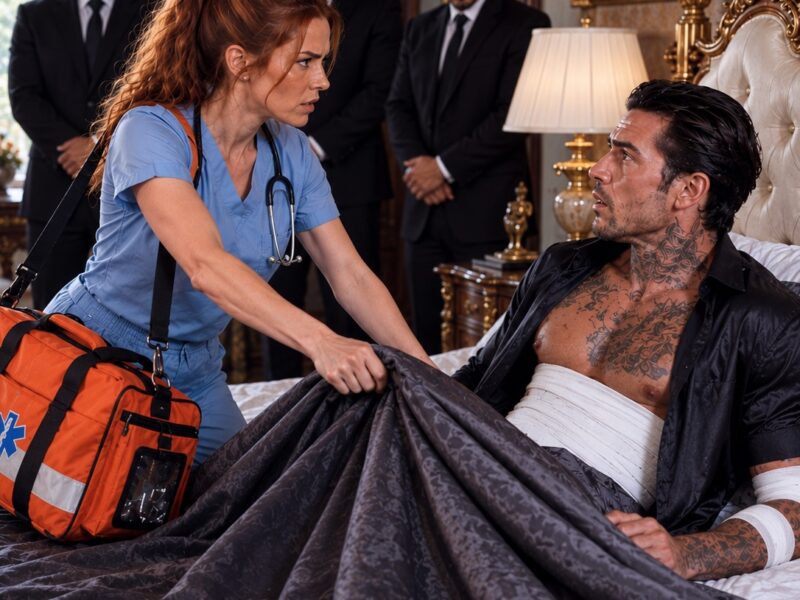
No Nurse Lasted a Week with the Ruthless Mafia Boss — Until the Poor Nurse Broke the Rules
Six registered nurses had quit Liam Mercer’s private recovery detail in thirty-seven days.
The seventh lasted nineteen hours.
At 6:12 on a rain-dark Monday morning, Clara Bennett sat in the back of a black town car headed north out of Chicago and decided that nineteen hours sounded luxurious.
She needed seven days.
Seven days would pay the apartment arrears, the insurance deductible, and the temporary housing deposit in Boston if Tommy’s appeal went through.
Fourteen days could change everything.
The car smelled of leather and old coffee. Clara rested both hands on the knees of her faded navy scrubs and watched the city flatten into wet highway, then subdivisions, then long stretches of trees.
Her phone was already gone.
A man named Leo Martinez had collected it before she entered the car.
“House rule,” he had said.
“No personal electronics.”
Clara had almost walked away.
Then she remembered Tommy asleep beneath a heated blanket at Lakeshore Children’s, his twelve-year-old face made too sharp by six months of treatment.
She handed Leo the phone.
Tommy’s leukemia had returned in August.
B-cell acute lymphoblastic leukemia.
The first treatment had bought nineteen months.
The relapse took less than a week to erase the family’s belief that remission was a permanent word.
His doctors wanted him evaluated for CAR-T therapy at a specialty program in Boston because his disease had stopped responding the way they needed.
Insurance had not denied the treatment outright.
Insurance had done something more exhausting.
It had questioned the out-of-network program, requested another review, then another, while Tommy’s doctors argued that time mattered.
Even if the appeal succeeded, Clara still needed money.
Travel.
Housing.
Missed work.
Past bills.
Medication not fully covered.
The ordinary costs of caring for a sick child that never appeared in dramatic hospital commercials.
Their mother had died seven years earlier.
Their father had disappeared emotionally long before that and physically soon after.
Which left Clara.
Twenty-nine.
Registered nurse.
County trauma unit on nights.
One broken-down Honda.
One younger brother who still apologized every time he vomited because he thought treatment was making her life harder.
Then the call came.
Private nursing.
Residential.
Ten thousand dollars per week.
Seven-day commitment.
Potential renewal.
Cash was not handed under tables. Leo had been very clear about that.
Payroll.
Taxes.
Contract.
The employer merely valued privacy enough to make the number absurd.
Clara had asked who the patient was.
Leo had said:
“You can say no before I tell you.”
“Why?”
“Because once you know the name, I need a confidentiality agreement.”
Clara signed.
Then he said:
“Liam Mercer.”
She knew the name.
Everybody who worked trauma in Chicago eventually learned which surnames made police officers speak carefully.
Mercer Holdings owned warehouses, trucking companies, several restaurants, and enough pieces of the waterfront to make newspapers use phrases like alleged organized-crime ties.
Liam himself had never been convicted of a violent offense.
That did not mean Clara believed he ran a charity.
“What happened to him?”
“Vehicle attack.”
“How bad?”
“Right tibial plateau fracture with external fixation. Multiple abdominal injuries repaired surgically. Two broken ribs. Pulmonary contusion. Soft-tissue infection at one abdominal incision.”
“How long since surgery?”
“Five weeks.”
“Why is he still bedridden?”
Leo had looked at her for a moment.
“Because he refuses half the things doctors tell him to do.”
Clara signed the second page.
Now iron gates opened ahead of the town car.
Beyond them stood a limestone estate large enough to have its own weather.
The car stopped.
Leo waited on the front steps.
He was forty-something, broad through the shoulders, with an old scar along his chin and the exhausted eyes of a man who had not slept properly since his boss got hurt.
Clara stepped out carrying one duffel.
Leo looked at her shoes.
The sole of her right sneaker was held together by two strips of white medical tape.
He said nothing.
Good.
“Dr. Shah is still the attending physician,” Leo said as they entered. “You follow her orders. Any change, you call her. You do not improvise because this is a private house.”
“I don’t improvise because I like my license.”
“Good.”
The foyer was all marble, oak, and money so quiet it had stopped needing to show off.
Two men in suits stood near the staircase.
Clara noticed the shapes beneath their jackets.
Leo noticed her noticing.
“Security.”
“Obviously.”
“You don’t ask what they’re securing.”
“I wasn’t planning to.”
He started upstairs.
“Your predecessor left four hours ago.”
“How long?”
“Two days.”
“Why?”
Leo kept walking.
“She cried.”
“That usually has a cause.”
“Mr. Mercer threw a urinal at the wall.”
Clara stopped on the third step.
“A full one?”
Leo glanced back.
“Does it matter?”
“Professionally? Yes.”
His mouth moved.
Maybe a smile.
“He missed.”
“Comforting.”
They continued.
“The nurse before her lasted one shift.”
“What did he throw at that one?”
“Nothing.”
“Progress.”
“He told her he’d have her credentialing investigated until no hospital in Illinois hired her again.”
“Could he?”
Leo looked at Clara.
“That’s not the point.”
“It is to nurses.”
They reached the west hallway.
Leo stopped outside heavy double doors.
His voice changed.
“He is in pain all the time.”
Clara waited.
“He was walking twelve miles a day before the attack. Working sixteen-hour days. Now two people have to help him transfer to a chair.”
“That would make most people angry.”
“With Liam, anger comes with infrastructure.”
Clara almost smiled.
Leo did not.
“He will insult you. Refuse treatment. Refuse physical therapy. If he threatens you, call me.”
“You just said he threatens everybody.”
“I said if it becomes real.”
“How do I tell?”
“You will.”
That answer was not reassuring.
Leo put one hand on the door handle.
“One rule matters more than the others.”
“Which?”
“Curtains stay closed.”
Clara looked at the heavy drapes visible through the crack.
“All day?”
“Yes.”
“Why?”
“He wants darkness.”
“Medical reason?”
“No.”
“Then it’s a preference.”
Leo gave her a warning look.
“To him, the distinction may not matter.”
“To me it does.”
“Bennett.”
“I heard you.”
“You keep the curtains shut.”
Clara adjusted her duffel.
“For ten thousand a week, I can tolerate decorative darkness.”
Leo opened the doors.
The smell reached her first.
Antiseptic.
Sweat.
Old air.
Something faintly sweet under it.
Infection.
The room was nearly black.
Medical monitors gave off weak green and blue light. An oxygen concentrator whispered near the wall, though the nasal cannula itself lay unused on the bedside table.
Leo spoke into the darkness.
“Liam. New nurse.”
A voice came from the bed.
Low.
Damaged.
Still unmistakably accustomed to obedience.
“Send her home.”
Leo looked at Clara.
Clara looked at Leo.
Leo stepped backward.
“Good luck.”
He closed the door.
Clara stood alone.
“You heard me,” Liam said.
“Yes.”
“Then leave.”
“No.”
Silence.
Clara put her duffel beside the wall.
“That was not a negotiation.”
“Neither was my employment contract.”
She found the bedside lamp.
Turned it on.
Liam Mercer’s eyes opened.
Pale blue.
Furious.
He was forty, though injury had temporarily added years.
Dark hair had grown too long near his temples. Bruising still marked his jaw. His right leg was held inside an external fixator, metal pins anchored into bone above and below the damaged knee.
A clean dressing covered most of his abdomen.
One lower corner showed a rusty stain.
Clara moved closer.
“Who changed that dressing?”
Liam stared.
“This morning?”
Still nothing.
She looked at the bedside chart.
Vital signs.
Medication times.
Drainage notes.
Incomplete documentation from the previous night.
Clara’s irritation moved away from Liam.
“What time did the last nurse leave?”
“She abandoned me in a moment of profound grief.”
“Did she change the dressing first?”
“No.”
Clara pulled gloves from the cart.
“Then I am.”
His expression hardened.
“Get out.”
“You’re warm.”
“You’ve known me thirty seconds.”
“Your skin is flushed, you’re sweating in a room cold enough to store deli meat, and this dressing smells wrong.”
“You’re charming.”
“I work nights.”
She washed her hands.
Behind her, glass shattered.
Clara stopped.
A tumbler had hit the wall two feet to her left.
Water ran down the wallpaper.
She looked at it.
Then at Liam.
His breathing had accelerated from the effort.
A darker red mark slowly appeared beneath his dressing.
Clara took the dustpan from a utility cabinet.
Swept up the glass.
Said nothing.
Liam watched.
She disposed of the pieces.
Put on new gloves.
Then approached again.
“If you throw the pitcher, you’re going to tear something.”
“I’ll throw you.”
“That requires standing.”
His eyes went cold.
Clara reached for the adhesive edge.
His hand caught her wrist.
Hard.
For a sick man, he had frightening grip strength.
“Don’t.”
Clara looked at his fingers.
“You’re pressing directly over my radial nerve.”
He tightened.
“Let go.”
“I said don’t touch me.”
“And I’m telling you this incision is hot, draining, and overdue for assessment.”
She met his eyes.
“If I ignore it because you’re unpleasant, I’m committing malpractice.”
No response.
Clara continued.
“I need you alive through Friday.”
That made him blink.
“So I get paid.”
A beat.
Then, slowly, Liam released her.
Clara pulled back the dressing.
Redness extended farther than the chart photograph from twelve hours earlier.
She took his temperature.
102.1.
“Congratulations.”
“What?”
“You’re getting your first wish.”
“Which is?”
“I’m calling someone else.”
She contacted Dr. Priya Shah on the house medical line, described the wound, sent a secure photo, obtained orders for cultures and revised treatment, then waited while a mobile clinical service sent a nurse practitioner to collect specimens.
Liam watched all of it.
“You didn’t start antibiotics.”
“Not without orders.”
“The last one did.”
“Maybe that’s why she’s the last one.”
He almost smiled.
Almost.
By midnight, his fever had dropped half a degree.
Clara settled into an armchair with a paperback.
“Turn off the lamp.”
“When I finish the chapter.”
“Bennett.”
“Mercer.”
“You work for me.”
“I work for the home-health company your lawyer retained.”
“I own that company.”
Clara lowered the book.
“Of course you do.”
She resumed reading.
Liam stared at the ceiling.
For the first time in five weeks, a nurse remained in his room after midnight.
On day two, he refused breakfast.
Clara removed it.
At lunch, he refused again.
She removed that too.
At three, Leo entered.
“He hasn’t eaten.”
“I noticed.”
“Aren’t you going to make him?”
Clara looked up from charting.
“How?”
Leo glanced toward Liam.
Then back.
“I don’t know. You’re the nurse.”
“Unless you want me to feed him intravenously without medical necessity, he’s allowed to make bad choices.”
Liam’s eyes opened.
“You hear that, Leo?”
Clara continued.
“But if he keeps refusing, I document it, call Dr. Shah, and she decides whether the consequences delay surgery and rehabilitation.”
Liam’s expression soured.
“Manipulative.”
“Documentation usually feels manipulative to people accustomed to undocumented authority.”
Leo coughed.
Definitely hiding a laugh.
Liam ate half his dinner.
On day three, Clara started formal mobility exercises with the physical therapist.
Liam hated the therapist.
The therapist hated Liam.
Clara found the relationship productive.
Afterward, Liam lay gray-faced against the pillows while Clara checked his pulse.
“Pain, one to ten?”
Silence.
“Mr. Mercer.”
He looked at the wall.
Clara took the ordered pain medication from the locked cabinet.
Then put it back.
His eyes snapped toward her.
“What are you doing?”
“You declined assessment.”
“I didn’t decline anything.”
“I asked a question.”
“You know I’m in pain.”
“I know your heart rate is elevated. I know your face is sweating. I need your report too.”
“Give me the medication.”
“Pain score.”
His jaw tightened.
“Eight.”
Clara reached for the medication.
“See? Communication.”
“I hate you.”
“I’ll chart that separately.”
She administered the prescribed dose.
Five minutes later his shoulders lowered.
His voice became quieter.
“You need the money.”
Clara checked the IV.
“Everyone needs money.”
“No.”
His eyes were heavy.
“You need it more than you fear this house.”
Her hand stopped.
Liam continued.
“That’s why you didn’t move when I threw the glass.”
“You missed.”
“I don’t miss.”
“You were febrile.”
He studied her.
“Who is it?”
Clara looked at him.
“Who is what?”
“The reason.”
“There isn’t one.”
“You’re bad at lying.”
“You’re medicated.”
“You taped your shoe.”
She looked down.
White tape.
Damn.
“Get some sleep.”
“What’s his name?”
Clara stared.
Liam’s eyes had closed.
“Who?”
“The person you’re trying to save.”
Her chest tightened.
She said nothing.
A minute passed.
Then Liam murmured:
“My name is Liam.”
Clara looked at him.
His breathing had evened out.
She turned off the lamp.
“Sleep, Liam.”
He did.
The first rule Clara actually broke happened on day five.
At 5:48 in the morning, she woke to the sound of metal knocking against metal.
Once.
Twice.
Then a strangled breath.
She was out of the cot before fully awake.
Liam was delirious.
The fever had surged.
His sheets twisted around him, his left leg kicking while his hands clawed at the external fixator on the right.
“Liam.”
He did not hear.
“Liam, stop.”
He grabbed one of the rods.
Clara caught his wrist.
He fought.
Not consciously.
His eyes were open but seeing someplace else.
“Get down!”
The shout tore from him.
“Car—”
His forearm struck Clara’s shoulder.
Pain shot down her arm.
She came back immediately.
“Leo!”
She hit the emergency call button, then secured Liam’s wrists away from the fixator without putting weight across his abdomen.
“Liam.”
He bucked against her.
“You’re home.”
“No—”
“You’re in your bedroom.”
His breathing became ragged.
“Look at me.”
He did not.
Clara leaned closer.
“Liam Mercer. Look at me.”
His eyes finally found hers.
Wild.
Then confused.
Then present.
The fight drained from his body so suddenly Clara nearly fell forward.
She released him at once.
Leo came through the door with Dr. Shah’s overnight nurse behind him.
“What happened?”
“Fever spike and delirium. He grabbed the fixator.”
Clara moved aside.
The medical team took over.
Cultures.
Fluids.
Orders.
Assessment.
No torn pins.
No new fracture.
By seven, Liam’s temperature had started down.
The others left.
Clara remained.
Her shoulder hurt.
Her scrubs were damp.
Her hair had fallen loose.
And the room smelled like sickness trapped inside velvet.
She looked at the curtains.
Then at Liam.
His eyes were closed.
Leo’s warning returned.
Do not touch the blinds.
Clara walked to the windows.
Grabbed the cords.
Pulled.
The curtains opened with a long metallic scrape.
Morning exploded into the room.
Liam threw an arm over his eyes.
“What the hell?”
Sunlight washed across the floor.
Across the medical equipment.
Across the man who had kept himself in darkness for five weeks.
Clara opened one window several inches.
Cold October air moved inside.
“Close them.”
“No.”
His arm dropped.
“You have exactly three seconds.”
“You have a fever, disrupted sleep, zero sense of day and night, and a room that smells like somebody sealed a hospital inside a coffin.”
“Close them.”
“I’m breaking the rule.”
“Bennett.”
“You need normal light during waking hours. You need the room aired according to infection-control instructions Dr. Shah already approved.”
“You were told—”
“If you want them closed, get up and close them yourself.”
Liam stared.
Murderous.
Clara took his temperature.
“You have no idea who you’re dealing with.”
She placed the thermometer under his tongue.
“You’re a man with a broken leg and a 101-degree fever.”
His eyes narrowed.
“Keep your mouth closed until it beeps.”
The device beeped.
Clara checked it.
“101.3.”
The doors flew open.
Leo stopped.
Two guards stopped behind him.
All three stared at the windows.
Sunlight.
Open curtains.
Liam Mercer fully visible.
Leo slowly looked at Clara.
“I heard shouting.”
“Good hearing.”
Leo looked toward Liam.
“Boss?”
Clara folded her arms.
She had already calculated four days of prorated pay.
Enough to catch up the rent.
Not enough for Boston.
Still better than nothing.
Leo asked:
“You want me to have her removed?”
Liam stared at Clara.
Clara stared back.
He looked at the open window.
“Close the window.”
Leo nodded.
Then Liam added:
“Leave the curtains.”
Leo froze.
“What?”
“The draft is annoying.”
Liam’s face hardened.
“Leave the curtains open.”
Leo looked at Clara as if she had just made gravity optional.
“Yes, boss.”
He closed the window.
Left.
The door clicked shut.
Clara picked up her clipboard.
Liam turned his face toward the light.
“Don’t flatter yourself.”
“I wasn’t.”
“Training nurse number eight would be tedious.”
“Seven.”
“What?”
“I’m seven.”
“That cannot be right.”
“It is.”
“Feels like more.”
“Your personality creates time distortion.”
His mouth twitched.
Clara saw it.
Pretended she didn’t.
That afternoon, Liam completed every repetition the physical therapist prescribed.
He cursed during all of them.
But he finished.
The curtains stayed open.
By Friday midnight, Clara had earned ten thousand dollars.
Leo brought the pay statement and envelope of after-tax cash advances Liam’s company had legally arranged under the contract.
Clara checked every number.
Leo looked amused.
“You think we’ll short you?”
“I think employers make payroll errors.”
“This house terrifies federal contractors.”
“Federal contractors make payroll errors too.”
He left.
Clara looked at the money.
For a moment she allowed herself to imagine Boston.
Then asked:
“I need the house phone.”
Leo’s face closed.
“Personal calls weren’t included.”
“I know.”
“No.”
“Two minutes.”
“Bennett.”
“You dial. Speaker on. You stand beside me.”
Leo stared.
“Please.”
That word did what defiance had not.
He walked her downstairs.
Dialed Lakeshore Children’s.
A nurse answered.
“Pediatric oncology.”
“Sarah? It’s Clara.”
“Clara?”
Relief.
Then concern.
“We’ve been trying to reach you.”
Clara’s stomach dropped.
“What happened?”
Leo looked away.
Sarah hesitated.
That pause terrified Clara more than any gun downstairs.
“Tommy developed neutropenic fever Wednesday night.”
Clara gripped the edge of the kitchen island.
“He’s in ICU?”
“Yes.”
“Cultures?”
“Still pending.”
“Pressors?”
“No.”
“Respiratory support?”
“Minimal. He’s stable now.”
Clara closed her eyes.
Stable was not good.
Stable was a ledge.
“Is he awake?”
“Sleeping.”
Clara looked at the cash in her pocket.
Ten thousand dollars.
Suddenly ridiculous.
“Tell him I called.”
“I will.”
“Tell him I’m working.”
“Yes.”
“Tell him…”
Her voice failed.
Clara swallowed until it returned.
“Tell him I love him.”
Sarah’s voice softened.
“I will.”
The call ended.
Clara handed Leo the phone.
“Thank you.”
He nodded.
No questions.
She climbed the stairs.
Entered Liam’s room.
Closed the doors.
Then sat on the floor with her back against them because her legs had stopped being useful.
She pressed the heels of both hands against her eyes.
No crying.
Not yet.
Crying made her nose block up.
Made her head ache.
She needed to work.
“Who’s Tommy?”
Clara’s hands dropped.
Liam was awake.
He was lying in the dark half of the bed, curtains still open enough for moonlight from the lake.
“You were asleep.”
“No.”
“You listened?”
“You were not exactly speaking in code.”
She stood.
“Forget it.”
“Pediatric oncology.”
Her face hardened.
“Liam.”
“Your son?”
“My brother.”
He went quiet.
“How old?”
“Twelve.”
That silenced him.
Clara turned toward the medical cart.
“Go to sleep.”
“What does he have?”
“That is not your concern.”
“No.”
His voice changed.
Not command.
“Probably not.”
Clara looked over.
Liam studied her taped shoe.
The worn scrubs.
The envelope in her pocket.
Everything clicked visibly behind his eyes.
“That’s why you’re here.”
Clara’s jaw tightened.
“Get some sleep.”
He did not press.
The next morning, he did something far more unsettling.
He cooperated.
No argument over breakfast.
No refusal of physical therapy.
No insulting the respiratory therapist.
When Clara asked his pain score, he said:
“Six.”
She stared.
“What?”
“Did I pronounce it wrong?”
“Checking for neurological changes.”
He almost smiled.
By the middle of the second week, the house changed.
More men came.
They wore expensive suits and carried folders instead of medical bags.
Clara noticed voices in the hall.
Arguments stopped whenever she appeared.
Liam began taking calls from bed.
Not personal calls.
Orders.
Shipping schedules.
Union problems.
Warehouses.
People requesting decisions from a man who still required assistance to stand.
Clara disliked what happened to his heart rate every time business entered the room.
One Wednesday afternoon, the doors opened without permission.
A silver-haired man in a camel coat walked in.
Leo followed.
Angry.
“Dominic, I told you he’s not seeing anyone.”
Dominic Vale barely glanced at him.
“I’m not anyone.”
He was in his late fifties.
Polished.
Handsome in the practiced way of a man accustomed to expensive mirrors and people laughing before he finished jokes.
He stood at the end of Liam’s bed.
“My God.”
Liam closed the folder on his lap.
“You always know how to lift a room.”
“You look terrible.”
“You look old.”
Dominic smiled.
Then got to the point.
“Western freight is unstable.”
“No.”
Dominic’s expression tightened.
“I haven’t asked yet.”
“You were going to ask for temporary authority.”
A pause.
“Yes.”
“No.”
“Liam.”
“No.”
“You cannot walk.”
“I can sign.”
“The captains are nervous.”
“Then tell them to develop character.”
Dominic looked at the fixator.
Then the monitor.
Clara watched his eyes catalogue weakness.
“Three weeks.”
Dominic spread his hands.
“I handle western operations for three weeks.”
“No.”
“Why?”
“Because every temporary transfer of power in history has been requested by a man who thinks temporary is a flexible word.”
Dominic laughed.
Then noticed Clara.
“Who’s this?”
“My nurse.”
Dominic looked at her scrubs.
“Thought she was housekeeping.”
Clara continued adjusting Liam’s IV pump.
“Easy mistake if your eyes are decorative.”
Leo looked toward the ceiling.
Dominic stared.
Then smiled.
“Well.”
He stepped closer.
“Coffee, sweetheart.”
“No.”
“Excuse me?”
“Your heart rate isn’t on my chart, so I don’t care whether you’re thirsty.”
Liam’s monitor had climbed from eighty-six to one hundred four.
Clara moved between Dominic and the bed.
“Visit is over.”
Dominic blinked.
“You’re joking.”
“Mr. Mercer’s blood pressure rises when you talk.”
Liam muttered, “Mine too.”
Clara continued.
“He had major abdominal surgery, infection, fractures, and an external fixator. He needs rest.”
Dominic took a step closer.
“I’m talking business.”
“Talk downstairs.”
“Move.”
“No.”
The room went quiet.
Dominic’s smile disappeared.
His hand landed on Clara’s shoulder.
Not a punch.
A shove.
Casual.
The kind of contact delivered by someone certain the other person had no power to object.
Clara stumbled sideways into the medical cart.
Metal rattled.
A glass vial hit the floor and broke.
Everything after happened quickly.
Leo caught Dominic’s wrist.
Two guards moved.
Liam did not reach for a gun.
He did something colder.
“Dominic.”
One word.
Dominic stopped.
Liam’s face had changed.
The sick patient vanished.
“Take your hand off my nurse.”
Leo released him only when Dominic stepped back.
Dominic adjusted his coat.
“It was a misunderstanding.”
“No.”
Liam’s voice remained quiet.
“It was an instruction you believed did not apply to you.”
Dominic’s face hardened.
“You’re going to create a war over a nurse?”
Clara looked at Liam.
Important question.
His answer mattered.
“No.”
Liam leaned back carefully.
“I’m going to revoke your estate access because you ignored a medical boundary and put your hands on an employee.”
Dominic laughed.
“You think paperwork scares me?”
“No.”
“Then—”
“It creates a record.”
The words changed the air.
Liam looked at Leo.
“Remove his access credentials from every Mercer property.”
Dominic’s face went still.
“Liam.”
“Temporary.”
Liam’s mouth curved.
“Since you like the word.”
Leo opened the door.
Dominic did not move.
“You’re making a mistake.”
Liam looked at him.
“Then I’ll own it.”
Dominic left.
The doors closed.
Clara looked down.
Her hand was bleeding from a small piece of broken glass.
Liam saw.
“Are you hurt?”
“It’s a scratch.”
“Sit.”
She stared.
“Excuse me?”
“You’re bleeding.”
“And you’re tachycardic.”
“I asked—”
“I know what you asked.”
She grabbed gauze.
Wrapped her finger.
Then looked at his monitor.
“One hundred twelve.”
“I’m fine.”
“You’re not.”
“I am.”
“You twisted when Leo moved.”
Liam went still.
Clara pulled the blanket back.
Fresh red had appeared along the lower abdominal dressing.
“Congratulations.”
“What now?”
“You reopened part of the incision.”
His jaw tightened.
“I did not.”
“Would you like to argue with the blood?”
She called Dr. Shah.
Two superficial sutures had pulled.
Nothing catastrophic.
Clara cleaned and prepared the area while waiting for the physician to arrive.
Liam watched her.
“You didn’t flinch.”
“What?”
“When Dominic pushed you.”
Clara shrugged.
“I grew up on the South Side.”
“That explains nothing.”
“It explains why a rich man in a camel coat isn’t my first experience with an idiot.”
His mouth twitched.
Then:
“Tommy.”
Clara’s hands stopped.
“No.”
“How bad?”
“None of your business.”
“I heard ICU.”
“Yes.”
“What does he need?”
She returned to work.
“Liam.”
“What?”
“You don’t solve this.”
Silence.
Clara continued.
“You are my patient.”
“I can make a phone call.”
“That is exactly the problem.”
“What problem?”
“You are accustomed to every problem becoming smaller when your wallet enters the room.”
He stared.
“Tommy is not a logistics problem.”
“I didn’t say he was.”
“He’s also not leverage.”
Liam’s face hardened.
“I would never—”
“You read people for leverage.”
The sentence struck.
He did not deny it.
Clara finished securing the dressing.
“He has relapsed B-cell ALL.”
Liam said nothing.
“They’re trying to get him into a CAR-T program in Boston.”
“Insurance?”
“Appeal.”
“Timeline?”
“Short.”
“And you need money.”
“Yes.”
“How much?”
“Enough.”
Liam looked at the ceiling.
Then back.
“I won’t touch it.”
“Good.”
“But you should know my company has a medical-assistance benefit.”
Clara laughed once.
“For nurses you hire for two weeks?”
“For employees.”
“I’m a contractor.”
“Then you don’t qualify.”
“Excellent.”
“That wasn’t the point.”
“What was?”
“There are ways to help people that do not create personal debt.”
Clara met his eyes.
“Then learn one.”
He did.
Three days later, Leo handed Clara a business card.
MIRIAM COLE — PATIENT ADVOCACY / MERCER FAMILY FOUNDATION
Clara stared.
“No.”
“She’s independent.”
“No.”
“She doesn’t report to Liam.”
“She has his name on the card.”
“The foundation predates him.”
“Still no.”
Leo sighed.
“She helps families appeal insurance denials.”
“I have an appeal.”
“Does your appeal have a former oncology social worker who knows every expedited-review form in three states?”
Clara looked at the card.
“That sounded rehearsed.”
“I practiced.”
She took it.
“Liam paying?”
“For the advocate’s salary generally. Not your case.”
“Anything else?”
“No.”
“If I find out—”
“You’ll murder him with a thermometer.”
“Exactly.”
Miriam called the hospital.
Then the insurer.
Then Boston.
She did not buy Tommy a place.
She did something Clara had not had enough time or sleep to do.
She found the correct expedited medical-necessity pathway.
Within seventy-two hours, Boston accepted the transfer for evaluation.
The insurer agreed to temporary out-of-network coverage while the appeal finished.
A leukemia nonprofit covered short-term housing.
Clara still needed money.
But not half a million dollars.
Not a miracle.
A system finally used correctly.
When she told Liam, he looked almost disappointed.
“That’s it?”
“That’s it.”
“I thought you’d say thank you.”
“I said it to Miriam.”
“I arranged Miriam.”
“She did the work.”
Liam stared.
Then laughed.
Clara realized she had never heard him laugh.
Not really.
The sound softened his entire face.
She disliked noticing.
Tommy was transferred the following week.
Clara got one supervised video call from the house office.
He looked small beneath a knit cap.
“Wow,” Tommy said.
“What?”
“Your job has fancy walls.”
Clara turned the phone so he could not see the armed guard outside the office.
“It’s hideous.”
“You sound tired.”
“You sound twelve.”
“I am twelve.”
“Suspicious.”
He smiled.
Then coughed.
Clara’s heart twisted.
“You scared?”
Tommy looked away.
“Yes.”
She swallowed.
“Me too.”
He looked back.
That mattered.
Neither lied.
“They said I might lose all my hair again.”
“Then I’ll shave mine.”
“No.”
“Why?”
“You have a weird head.”
Clara laughed.
Outside the office, Liam stopped walking.
He was using crutches now.
He heard the laugh.
Did not enter.
That mattered too.
By week three, Liam could cross the bedroom alone with crutches.
He hated every second.
Clara made him do it anyway.
“You’re enjoying this.”
“Immensely.”
“You smile when I suffer.”
“That is clinical encouragement.”
“Sadism.”
“Bill me.”
The curtains remained open every morning.
At night, Liam sometimes asked Clara to leave one lamp on.
Neither discussed that.
Then evidence from the original attack changed everything.
Leo entered during afternoon therapy carrying a sealed folder.
He looked at Clara.
“Business.”
Clara set down the resistance band.
“Then I’m leaving.”
Liam said, “Stay.”
She looked at him.
“This is not my business.”
“It may become your safety.”
That stopped her.
Leo closed the door.
“We finally got the parking-garage access logs.”
The attack on Liam had happened in a private garage after a dinner.
The blast itself destroyed cameras near his vehicle.
But entry data survived on a separate server.
Leo placed one page on the table.
“A service credential opened the west gate twenty-seven minutes before the attack.”
Liam read.
His face became still.
“Owner?”
“Vale Maritime Security.”
Dominic.
Clara felt the room change.
Liam said, “Could be cloned.”
“Yes.”
“Could be legitimate maintenance.”
“No service order.”
“Employee?”
“Credential assigned to Dominic’s operations office.”
Liam looked at Leo.
“Enough for police?”
“Enough to give them.”
That answer surprised Clara.
Liam noticed.
“What?”
“I expected another method.”
“There are other methods.”
“Not reassuring.”
“I didn’t say we’re using them.”
Leo placed down a second page.
“State investigators have it already.”
Clara looked at Liam.
He had made that choice without her.
Good.
Leo continued.
“Dominic asked again this morning for temporary control of western freight.”
Liam’s jaw hardened.
“He knew I revoked him.”
“Yes.”
“And?”
“He says partners are meeting tomorrow.”
“To replace me?”
“Possibly.”
Clara said, “You’re not going.”
Both men looked at her.
She pointed to Liam’s leg.
“You can walk thirty feet with crutches.”
“I can sit in a meeting.”
“You fatigue after fifteen minutes.”
“It won’t take fifteen.”
“No.”
Liam stared.
Leo very carefully said nothing.
Clara folded her arms.
“You hired me to keep you alive.”
“I hired you to provide nursing care.”
“Excellent. My nursing assessment is that attending a power struggle while recovering from major trauma is medically stupid.”
Liam looked at Leo.
“Leave.”
Leo left immediately.
Coward.
Liam waited until the door closed.
“Do you understand what happens if I don’t appear?”
“No.”
“Then don’t tell me not to go.”
Clara’s anger rose.
“You know what happens if your abdominal repair fails?”
He said nothing.
“If your leg gets infected?”
Nothing.
“If you fall?”
“Clara.”
“No.”
She stepped closer.
“I spent three weeks teaching you that pain is information and weakness is not treason.”
His eyes hardened.
“This is different.”
“Because men are watching?”
“Yes.”
There.
Truth.
Clara lowered her voice.
“So let them.”
“You don’t understand my world.”
“I understand your body.”
“I built everything I have by never looking weak.”
“And someone nearly killed you anyway.”
The sentence landed hard.
Liam stared.
Clara regretted it.
Not enough to take it back.
“You think appearing strong saved you?”
His face went cold.
“Get out.”
Clara nodded.
“Fine.”
She left.
The first time in three weeks.
She slept in the guest room.
At 2:11 in the morning, someone knocked.
Leo.
“He canceled the meeting.”
Clara said nothing.
“He’s joining by secure video.”
“Good.”
Leo looked amused.
“You won.”
“No.”
“What would you call it?”
“Medical compliance.”
She shut the door.
The next afternoon, the partners met without Liam physically present.
Dominic joined from another location.
The state police arrested one of his security contractors that evening.
The contractor had been connected to the garage credential.
Dominic vanished before investigators could question him.
That was the first truly frightening thing.
Not a threat.
Absence.
Liam increased estate security.
Clara demanded details affecting her.
“For the first two weeks you told me not to ask questions.”
“I was wrong.”
“Write that down.”
“Don’t push it.”
“Is there a credible threat to the house?”
“Yes.”
“Then I leave.”
Liam went still.
“My contract does not include siege medicine.”
“You leave, you may become exposed on the road.”
“You don’t get to turn danger into captivity.”
His jaw tightened.
“I can relocate you.”
“Where?”
“Hotel under private security.”
“My choice?”
“Yes.”
“Tommy?”
“Boston security if you request it.”
“No.”
“Then no.”
Clara packed.
Liam watched from the chair near the window.
He could finally sit there for an hour.
Sunlight across his shoulders.
“You’re really leaving.”
“Until your internal civil war stops threatening the nursing staff.”
“I don’t want you out there.”
“That sentence is dangerously close to the old version of you.”
“What old version?”
“The one who thought locked curtains solved problems.”
Liam looked toward the windows.
Clara zipped her bag.
Then Leo came in.
“Dominic called.”
Liam’s face changed.
“What?”
Leo handed him the phone.
Speaker.
Dominic’s voice.
Calm.
“Liam.”
“Where are you?”
“Somewhere disappointing.”
“Police want you.”
“They want everyone eventually.”
“What do you want?”
“Western control.”
“No.”
“You’re still doing that?”
“Yes.”
Dominic laughed.
“Look around.”
Liam did not.
Dominic continued.
“Your captains are tired. Your investors are nervous. Your own body betrayed you.”
“My body didn’t plant a device under my car.”
Silence.
Clara stopped packing.
Dominic said:
“You have no proof I did.”
“No.”
“Good.”
“I have enough to wait.”
Dominic’s voice cooled.
“You were never patient.”
“Near-death experience.”
A pause.
Then:
“Send the nurse away.”
Clara’s skin chilled.
Liam’s face became stone.
“Why?”
“She complicates you.”
“Explain.”
“You cancelled yesterday because she told you to.”
Liam looked at Clara.
Dominic continued.
“Men notice when a king starts asking permission.”
Liam answered:
“I’m not a king.”
“Then what are you?”
The room was silent.
Liam said:
“A man who finally noticed you needed me injured.”
Dominic ended the call.
Leo whispered:
“He knows she’s here.”
Clara looked at Liam.
“So do a hundred household employees.”
“Not all of them know you matter.”
Clara’s voice sharpened.
“I don’t.”
Liam looked at her.
“That’s not true anymore.”
Neither moved.
The honesty frightened both of them.
Clara resumed packing.
“I’m still leaving.”
Liam nodded.
“Leo takes you.”
“Hotel I choose.”
“Yes.”
“No tracking Tommy.”
“Yes.”
“No security outside his room unless I ask.”
“Yes.”
She looked at him.
“You’re learning.”
“I hate it.”
“That’s how learning feels.”
Clara spent two nights at a downtown hotel.
Liam’s medical care transferred temporarily to an older male nurse named Terrence Cole.
Terrence lasted.
Mostly because Liam had changed.
Clara told herself that made her replaceable.
The thought should have relieved her.
It didn’t.
On the second morning, Tommy called.
“Are you coming to Boston?”
“As soon as I can.”
“They’re starting collection next week.”
Clara sat upright.
“For the CAR-T?”
“Yeah.”
His voice tried to be casual.
Clara covered her mouth.
The insurer had approved the treatment.
Not because Liam bought it.
Because Miriam and Tommy’s oncology team forced the right review into the right hands.
Clara cried.
Tommy said:
“Gross.”
“What?”
“You’re crying.”
“I’m hanging up.”
“You love me.”
“Debatable.”
After the call, Clara stared at her hotel window.
Curtains open.
Morning traffic below.
She thought of Liam in his room.
Then hated herself for it.
Her contract still had three days.
She called Leo.
“How is he?”
“Annoying.”
“Medical status.”
“Also annoying.”
“Leo.”
“Terrence says stable. Pain six. Ate breakfast.”
“Physical therapy?”
“Did it.”
Clara smiled despite herself.
Then a siren sounded outside.
Ordinary city siren.
Her body still tensed.
“Any word on Dominic?”
“No.”
That answer was wrong.
Clara heard it.
“What aren’t you saying?”
Leo went silent.
“Leo.”
“We found a tracker on one of the estate vehicles.”
Her pulse rose.
“Which vehicle?”
“The one used to move medical supplies.”
“Did it come to my hotel?”
“No.”
“Are you sure?”
“Yes.”
“Police?”
“Notified.”
Clara stood.
“I’m coming back.”
“No.”
“That wasn’t a request.”
“Liam specifically said—”
“Liam is not my legal guardian.”
“Bennett.”
“I need my clinical notes and medication records if the agency reassigns me.”
“We can send them.”
“I also left my good stethoscope.”
“You own one good thing?”
“Go to hell.”
Leo laughed.
Then became serious.
“Wait an hour.”
“Why?”
“Police are at the estate now.”
Clara stopped.
“What happened?”
A crash sounded through the phone.
Not gunfire.
Glass.
Then Leo swore.
The line cut.
Clara called back.
Nothing.
She called 911.
Gave the address.
Then stood in the hotel room with both hands shaking.
Every instinct screamed to go.
Every part of her nursing training said stay away from an active dangerous scene.
She stayed.
It felt like cowardice.
It was not.
Forty-eight minutes later, Leo called.
“House secure.”
Clara sat down.
“Liam?”
“Alive.”
“What happened?”
“Dominic’s crew tried entering through the service gate. Estate security held them outside long enough for police to arrive.”
“Shots?”
“Yes.”
Her eyes closed.
“Liam?”
“He tried going downstairs.”
“Of course he did.”
“Terrence stopped him.”
“Is Terrence alive?”
“Yes.”
“I like Terrence.”
“Everybody does.”
“Can I come?”
A pause.
“Yes.”
Clara reached the estate at noon.
Police vehicles covered the drive.
Not Mercer men pretending to be police.
Actual state investigators.
Crime-scene tape near the service entrance.
Clara walked through only after being cleared.
Liam sat in the upstairs room.
Curtains open.
Crutches beside him.
Terrence stood at the foot of the bed.
“He’s yours.”
Clara blinked.
“You’re leaving?”
“My wife has endured four nights of me sleeping in a house with armed guards.”
“Fair.”
Terrence looked at Liam.
“He’s a terrible patient.”
“I know.”
“Improving.”
“I know.”
Terrence left.
Clara put down her bag.
Liam said:
“You should have stayed at the hotel.”
“I did until police said the scene was secure.”
“Good.”
She stared.
“What?”
“I expected argument.”
“I’m trying.”
“That’s unnerving.”
She checked his pulse.
His abdominal scar.
His leg.
No new injury.
“You tried to go downstairs.”
“Rumor.”
“Terrence documented it.”
“Traitor.”
Clara sat.
“What happens now?”
Liam looked out the window.
“Dominic was arrested.”
Clara exhaled.
“Alive?”
“Yes.”
“Charges?”
“Conspiracy related to the original attack. Attempted armed trespass. More will come.”
“And you?”
“What about me?”
“Your world.”
He looked at her.
“Still exists.”
“That wasn’t what I asked.”
“I know.”
Clara waited.
Liam rubbed one hand over his face.
“For twenty years, I told myself there were lines.”
“What lines?”
“Businesses we touched. People we didn’t.”
“Did everybody follow them?”
“No.”
“Did you?”
“Not always.”
Truth again.
Harder now.
Liam continued.
“Dominic’s attack gave investigators a door into things they were already looking at.”
“And?”
“My attorney says I have choices.”
“Which?”
“Fight everything.”
“Or?”
“Cooperate on Dominic and restructure what’s left.”
“Restructure.”
“You hate euphemisms.”
“Yes.”
“Shut down the criminal pieces.”
Clara looked at him.
“And face whatever belongs to you?”
His eyes met hers.
“That’s the part my lawyer dislikes.”
“What do you dislike?”
Liam thought.
“Not knowing what I am afterward.”
Clara looked at the sunlight on the floor.
“Maybe that’s the first useful thing that’s happened to you.”
He laughed once.
“Cruel.”
“Clinical.”
Three weeks later, Clara’s contract ended.
Liam walked her to the foyer using one cane.
No fixator.
No guards hovering close.
His gait was uneven.
His recovery would continue for months.
At the front door, Leo handed Clara her phone.
Same cracked screen.
Forty-seven missed notifications.
Life waiting.
Clara looked at Liam.
“You’re supposed to keep doing therapy.”
“Yes.”
“Dr. Shah wants the compression sleeve.”
“I hate it.”
“I know.”
“Terrence is coming tomorrow.”
“I know.”
“He likes me.”
“Everyone likes Terrence.”
“I find that suspicious.”
Clara smiled.
Then silence.
Liam reached into his jacket.
Clara’s expression hardened.
“If that’s money, I’m throwing it into your fountain.”
“It’s not.”
He handed her an envelope.
Inside was a letter.
From Miriam’s foundation.
A permanent patient-advocacy position had opened at twice Clara’s hospital base salary.
Regular hours.
Benefits.
No residential patient.
No Liam.
Clara looked up.
“You arranged this.”
“I mentioned you were competent.”
“To a foundation carrying your family name.”
“Yes.”
“That is arranging.”
“Miriam interviews you herself.”
“And if I say no?”
“You go back to County.”
“And you?”
“I limp around here insulting Terrence.”
She looked at the letter.
“You don’t get to solve me.”
“I know.”
A pause.
“I thought you might like a job where desperation isn’t part of the hiring process.”
Clara’s throat tightened.
“That was almost thoughtful.”
“Don’t tell Leo.”
She folded the letter.
Put it in her bag.
Then reached the door.
“Clara.”
She turned.
Liam stood beneath the chandelier.
Not in shadow anymore.
“What?”
“I want to ask you something.”
“That sounds dangerous.”
“Dinner.”
She stared.
“No.”
His face did not change much.
But something behind it did.
“Okay.”
Clara almost smiled.
“You gave up quickly.”
“You said no.”
“Yes.”
He waited.
“That was the correct response.”
Understanding arrived.
Slowly.
“When?”
“What?”
“When would it not be no?”
Clara looked at him.
“When I’m not your nurse.”
“You aren’t.”
“When you’re not paying my salary indirectly through another organization.”
“I don’t control Miriam’s hiring.”
“You control the foundation board.”
He sighed.
“Fair.”
“And when I know what happens with your case.”
“That could take months.”
“Yes.”
Liam nodded.
No persuasion.
No gift.
No promise.
“Then months.”
Clara left.
Tommy received CAR-T therapy in Boston that winter.
It was not miraculous.
First came lymphodepleting chemotherapy.
Then infusion.
Then fever.
Then a frightening two-day period when the care team monitored him for cytokine release syndrome.
Clara slept in a chair beside him and learned exactly how useless professional nursing knowledge could feel when the child in the bed was yours.
But Tommy recovered.
Slowly.
His marrow testing showed no detectable leukemia.
His doctor used the word remission carefully.
Clara used it carefully too.
They moved back to Chicago in March.
Clara accepted the patient-advocacy job only after Miriam showed her the reporting structure twice and Clara confirmed Liam could not fire her.
Her first week was less cinematic than her work at the estate.
She spent six hours helping a woman appeal a denial for a specialized feeding product.
Another afternoon arranging transportation for a father whose daughter needed chemotherapy forty miles from home.
No gunfire.
No impossible boss.
Clara loved it.
Liam’s legal case moved slower.
He cooperated regarding Dominic.
Turned over records.
Sold two companies linked to illegal operations through court-supervised agreements.
His legitimate logistics businesses remained.
Federal prosecutors charged him with financial offenses connected to older conduct.
No murder charges.
No magical erasure of history because he had become nicer to one nurse.
He accepted a plea requiring financial penalties, supervised compliance, and a period of home confinement followed by probation.
Newspapers called it too lenient.
Others called the cooperation unprecedented.
Clara did not write editorials.
Six months after she left the estate, Liam came to the foundation office.
He had an appointment.
With Miriam.
Not Clara.
She saw him through the glass.
Dark suit.
Cane gone.
Slight limp.
Same impossible stillness.
Her heart did something unprofessional.
She disliked it.
He noticed her.
Did not approach.
Good.
Twenty minutes later, Miriam appeared at Clara’s desk.
“There’s a man in my office pretending he needed a quarterly foundation report delivered in person.”
Clara kept typing.
“Sounds inefficient.”
“He has a driver.”
“Even worse.”
“He asked whether you were seeing anyone.”
Clara stopped.
“Miriam.”
“I told him it was none of his business.”
“Thank you.”
“Then I told him you take lunch at twelve-thirty.”
Clara stared.
“You’re fired.”
“I run the department.”
“Temporary setback.”
At 12:32, Clara walked outside.
Liam waited near a bench.
No car beside him.
No Leo.
No audience.
“Hello.”
“Hi.”
He looked different.
Not softer exactly.
Less surrounded.
“How’s Tommy?”
“Back in school.”
“Good.”
“He failed math.”
“Excellent.”
Clara laughed.
“What?”
“Normal problem.”
She understood.
“Yes.”
Liam looked at her.
“My case is resolved.”
“I read.”
“Of course you did.”
“You cooperated.”
“Yes.”
“You also admitted fraud.”
“Yes.”
“No excuses?”
“I have explanations.”
“That isn’t what I asked.”
“No excuses.”
The answer mattered.
Liam put both hands in his coat pockets.
“I no longer sit on the foundation board.”
Clara raised an eyebrow.
“That convenient?”
“Deliberate.”
“Why?”
“Conflict of interest.”
“With what?”
“You.”
She looked away.
Traffic moved along the street.
Ordinary.
Liam said:
“Dinner?”
Clara turned back.
“No.”
He blinked.
Then nodded.
“Okay.”
She smiled.
“Friday.”
His brow furrowed.
“What?”
“I can’t tonight.”
For the first time since she met him, Liam Mercer looked genuinely confused.
Clara enjoyed it.
“Friday?”
“Yes.”
“Seven?”
“Six-thirty.”
“Restaurant?”
“Public.”
“My choice?”
“No.”
“Of course not.”
She named a small Italian place near Lincoln Square.
“No private room.”
“Fine.”
“No buying the restaurant.”
“I wasn’t—”
“Liam.”
“Fine.”
“No security at the next table.”
“Across the street?”
She stared.
“Negotiable.”
Friday dinner became another dinner.
Then coffee.
Then three weeks when neither called because Clara told him he had slipped into giving orders again.
He apologized.
Not theatrically.
Changed behavior.
That mattered more.
Tommy met him six months later.
Clara delayed the introduction intentionally.
Liam accepted that.
Tommy looked him over at a Cubs game.
“You’re the scary patient.”
Liam looked at Clara.
“She told you?”
“Everything funny.”
“There was nothing funny.”
“You threw a glass.”
Liam sighed.
“She tells that story incorrectly.”
“You threw it?”
“Yes.”
“Then seems accurate.”
Clara bought popcorn.
Ignored them.
By the following autumn, the Mercer estate no longer had blackout curtains in the recovery room.
The room itself became a library again.
The medical equipment disappeared.
So did most of the armed men.
Leo stayed.
Mostly because he had discovered he enjoyed running legitimate corporate security when nobody asked him to hide felonies.
One Sunday, Clara visited.
Not as a nurse.
That distinction remained important.
Rain moved over the lake.
Liam stood near the same window where she had once ripped open the curtains.
“You remember day five?”
“I remember every profanity.”
“You were unbearable.”
“You were worse.”
“I was sick.”
“You were still worse.”
He smiled.
Clara noticed the curtains had been replaced.
Lighter fabric.
Cream.
“New?”
“Yes.”
“What happened to the velvet?”
“Burned.”
She turned.
“You burned them?”
“Leo did.”
“Why?”
“He hated them.”
“Leo?”
“He said they represented a hostile period in his employment.”
Clara laughed.
Then saw something on the desk.
Her old paperback.
Dog-eared.
The one she had read during those first nights.
“You stole my book.”
“You left it.”
“For six months?”
“I forgot.”
She picked it up.
Inside the cover was an old hospital parking receipt.
Tommy’s name written on the back in Clara’s handwriting.
She remembered scribbling his medication schedule there.
Liam watched her.
“He okay?”
“Yes.”
“Really?”
“Really.”
Clara closed the book.
“I used to think you were the scariest thing in that house.”
“I’m wounded.”
“You were.”
“What changed?”
She looked at the window.
“The first morning.”
“When you violated explicit instructions?”
“When I opened the curtains.”
“You nearly got fired.”
“No.”
“What?”
“You had six nurses quit.”
She smiled.
“You couldn’t afford to fire me.”
Liam laughed.
“Maybe.”
“Definitely.”
He became quieter.
“You know what I thought?”
“What?”
“That you were insane.”
“Reasonable.”
“Then I realized you weren’t fearless.”
Clara looked at him.
“You were afraid of Tommy dying.”
“Yes.”
“And that was bigger than me.”
“Yes.”
The answer did not offend him now.
He nodded.
“Good.”
“Good?”
“I needed to meet something bigger than me.”
Clara stared at him for a moment.
Then walked toward the window.
She pulled the curtains fully open.
Gray afternoon light filled the room.
No fever.
No medical monitors.
No broken man ordering everyone away.
Liam came to stand beside her.
He did not touch her until she reached for his hand first.
That mattered.
Outside, rain silvered the lake.
Inside, Clara thought of seven nurses.
The glass against the wall.
The fever.
The morning light.
The boy in Boston who had been the reason she stayed when every sensible instinct told her to run.
People later told the story incorrectly.
They said Clara Bennett had been brave enough to tame a ruthless man.
She hated that version.
Liam had never been an animal.
And she had never been his cure.
He had been injured, arrogant, frightened by helplessness, and accustomed to using power where ordinary communication would have worked better.
She had been broke, exhausted, desperate, and willing to accept a dangerous job because someone she loved needed her.
Neither saved the other.
Clara kept Liam alive because she was a nurse.
Doctors repaired his body.
Investigators and lawyers handled Dominic.
Liam made his own decisions about the life he had built.
Miriam helped Clara navigate a system she had been too tired to fight alone.
Tommy survived because medicine worked and because an entire medical team kept showing up when nobody could promise the ending.
What changed between Clara and Liam happened more quietly.
He learned that care without consent became control.
She learned that accepting help did not automatically create ownership.
And both learned that sometimes the rule protecting a person yesterday became the thing suffocating them today.
Clara looked at the pale curtains.
“You know, Leo made that rule sound sacred.”
“Which?”
“Never open them.”
Liam looked almost embarrassed.
“After the attack, I couldn’t stand seeing outside.”
“Why?”
“The car exploded in daylight.”
Clara turned.
He had never told her that.
“Every time sunlight hit the room, I remembered the garage.”
She understood.
Not preference.
Trauma.
“And nobody knew?”
“Leo knew enough.”
“So every nurse obeyed.”
“Yes.”
“And the room got darker.”
“Yes.”
Clara squeezed his hand.
“You could have told me.”
“I barely told myself.”
That answer was enough.
He looked out across the water.
“You still broke the rule.”
“Yes.”
“You’d do it again?”
Clara smiled.
“In a heartbeat.”
Liam nodded toward the open curtains.
“Good.”
This time, neither of them closed them.









