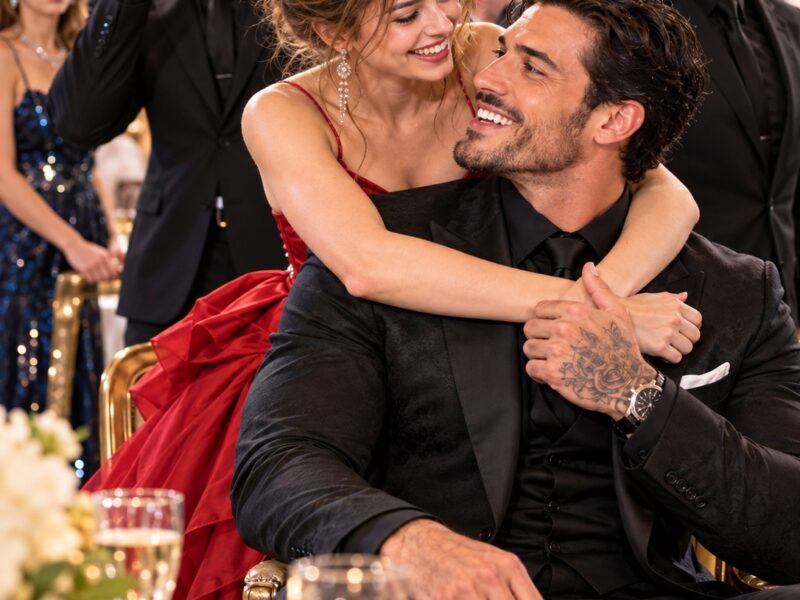
She Mistook the Mafia Boss for Her Brother and Hugged Him—He Laughed, “You’re Braver Than My Men.” But When She Spotted a Tiny Mistake in a $9 Million Document, Everything Changed
The first time I wrapped my arms around Alessandro Vitali, three of his bodyguards reached beneath their jackets.
I had mistaken the most feared man in New York for my younger brother.
Instead of getting angry, Alessandro turned, studied my face, and laughed. “You’re braver than my men.”
Twenty minutes later, I discovered who he was. Three days after that, I noticed something wrong with a nine-million-dollar scholarship transfer bearing his signature—and the man who had smiled at my mistake was suddenly asking who else knew what I’d found.
I was thirty-four years old when I learned that a single embarrassing hug could change the direction of your life.
It happened on a Thursday evening in October, beneath the crystal chandeliers of the Grand Meridian Hotel in Manhattan.
Two hundred guests had gathered to celebrate the Vitali Foundation’s annual scholarship awards. There were doctors, attorneys, university administrators, philanthropists, and people whose names appeared so often on buildings that I had stopped being impressed by them.
I wasn’t one of those people.
I worked at Bell Paper, a stationery and specialty printing shop on the Upper West Side, where I spent most days cutting paper, checking proofs, sorting invoices, and explaining to customers why cream and ivory were technically different colors.
My navy dress was four years old.
My heels came from a department store clearance rack.
And the little gold earrings I wore had belonged to my mother.
But that night, none of it mattered.
My younger brother, Michael, was receiving an academic achievement award that included funding toward his medical education.
He was twenty-six, brilliant, chronically disorganized, and the reason I’d worked twelve-hour days for much of my twenties.
Our parents died within eighteen months of each other when Michael was fourteen.
Dad’s heart attack came first.
Mom’s cancer followed.
By the time I was twenty-three, I had become Michael’s older sister, emergency contact, household manager, and the person who remembered when his school needed a permission slip signed.
I had postponed finishing college.
I had taken extra shifts.
I had learned which grocery stores marked down produce after seven.
And I’d made myself one promise.
Michael would have choices.
That evening, those choices had brought him to a ballroom filled with people who had spent more on their watches than I earned in a year.
Unfortunately, I couldn’t find him.
I’d texted twice.
I’d called once.
His last message read:
Near the entrance. Black suit. Hair slicked back. Don’t embarrass me.
I glanced toward the marble doorway.
There he was.
At least, I thought it was him.
A tall man stood with his back to me, wearing a perfectly tailored black suit. His shoulders were broad, his dark hair combed neatly back.
Exactly as Michael had described.
I hurried through the crowd.
And without thinking, I wrapped both arms around his waist from behind.
“I’m so proud of you, Mikey!”
The man went completely still.
So did the room around us.
I felt his body stiffen beneath my arms.
Then I noticed three men moving toward us from different directions.
Their faces were serious.
Their hands were disappearing beneath their jackets.
One woman nearby stopped with a champagne flute halfway to her mouth.
The man I was hugging turned his head.
Very slowly.
And I realized my mistake.
Those weren’t Michael’s eyes.
They were darker.
Older.
And considerably less forgiving.
I released him as though his suit had caught fire.
“Oh my God.”
Nobody spoke.
“I’m so sorry,” I said. “I thought you were my brother.”
The stranger looked at me.
Then at the men approaching.
“Marco.”
The largest bodyguard stopped.
“Sir?”
“It’s all right.”
The other men hesitated.
Then stepped back.
The stranger looked at me again.
For one awful second, I thought he was going to have me removed from the event.
Instead, the corner of his mouth moved.
Then he laughed.
Not politely.
Not the controlled laugh wealthy people use when they want everyone to know they’re being charming.
A real laugh.
Deep enough to make his shoulders move.
“You’re braver than my men.”
I stared at him.
“I wasn’t trying to be brave.”
His smile widened.
“Clearly.”
“I was trying to hug my brother.”
“An important distinction.”
I pressed one hand against my burning face.
“Please tell me I haven’t ruined your evening.”
He studied me for a moment.
“Actually, you may have improved it.”
That was when somebody shouted my name.
“Natalie!”
I turned.
Michael came hurrying through the crowd, waving his program.
He wore a black suit.
His hair was slicked back.
He looked almost exactly like the stranger I’d just hugged.
I closed my eyes.
“Of course.”
The stranger followed my gaze.
“There’s your brother?”
“Unfortunately.”
He laughed again.
Michael reached us.
“Where have you been? I’ve been looking everywhere.”
I looked at him.
Then at the stranger.
Then back at Michael.
“You told me you were standing by the entrance.”
“I was. I went to get water.”
I gestured helplessly.
“Well, someone else was standing there when I arrived.”
Michael looked toward the man beside me.
His expression changed.
He stopped smiling.
“Oh.”
The stranger inclined his head.
“Congratulations on your award.”
Michael swallowed.
“Thank you, Mr. Vitali.”
I turned slowly.
“Mr. Who?”
The stranger extended his hand.
“Alessandro Vitali.”
I shook it.
His hand was warm.
His grip was firm without being painful.
Then he smiled.
“And you are?”
“Natalie Collins.”
“It’s a pleasure, Natalie.”
I looked toward Michael.
My brother appeared to be deciding whether the floor was deep enough to disappear into.
Alessandro released my hand.
“Enjoy the evening.”
Then he walked away, his security team falling into place around him.
I turned toward Michael.
“Why are you looking at me like that?”
He stared.
“Natalie.”
“What?”
“You just hugged Alessandro Vitali.”
“Yes. We’ve established that.”
“The Alessandro Vitali.”
I glanced toward the crowd.
“Does he have another one?”
Michael looked as though he might faint.
“He funds half the scholarships in this room.”
“Oh.”
“He owns shipping companies, real estate, restaurants—”
“Good for him.”
“And people say he’s connected to some very dangerous organizations.”
I looked across the ballroom.
Alessandro stood beside the stage, surrounded by businessmen who seemed desperate to hold his attention.
His expression had returned to something almost unreadable.
Then his eyes found mine.
For a moment, he smiled.
I looked away.
“Well,” I told Michael, “he handled an accidental hug better than you would have.”
My brother rubbed his forehead.
“Natalie, please don’t speak to him again.”
I looked at the program in his hand.
“Then hurry up and win your award before I embarrass you some more.”
Michael groaned.
But when his name was announced twenty minutes later, I stood and applauded so loudly that several people turned around.
I didn’t care.
My little brother walked onto that stage with the confidence of a man who had no idea how many sacrifices had been made to get him there.
And for the first time in years, I felt that maybe everything I’d given up had been worth it.
Across the ballroom, Alessandro Vitali watched me.
I didn’t notice.
But somebody else did.
Richard Vale, the foundation’s executive director, stood near the stage holding a leather portfolio.
He recognized me from Bell Paper.
His department had recently commissioned official donation certificates through our shop.
And when he saw Alessandro smiling in my direction, Richard’s face lost its color.
I wouldn’t understand why until three days later.
Bell Paper occupied a narrow storefront on West Seventy-Ninth Street.
The display window held wedding invitations, handwritten greeting cards, expensive notebooks, and small boxes of stationery that people bought when they wanted to feel more organized than they actually were.
The store smelled of paper dust, ink, and the cinnamon coffee Mrs. Bell brewed every morning.
Dorothy Bell was sixty-eight, had owned the business for thirty-seven years, and believed there was no such thing as too many shelves.
She had hired me when I was twenty-four.
I’d been exhausted, grieving, and desperate for work that offered predictable hours.
She taught me how to operate the old letterpress machine in the back.
How to recognize different paper stocks by touch.
How to spot a misaligned plate before hundreds of invitations were ruined.
And how to tell wealthy customers no without sounding as though you were afraid of losing their business.
“Natalie,” she said that Monday morning, “you have a visitor.”
I looked up from a stack of wedding envelopes.
“Who?”
She held out a black envelope.
The paper was heavy.
The lettering had been pressed into the surface with genuine gold foil.
At the top was the Vitali Foundation’s crest.
My stomach tightened.
“Please tell me this isn’t what I think it is.”
Mrs. Bell smiled.
“They’re holding a private donor dinner on Thursday. Their office requested somebody who understands specialty printing to inspect the final presentation materials.”
“Why?”
“Apparently they want an experienced person to verify the finished certificates.”
I turned the invitation over.
“Nobody usually invites me to dinner for checking paper.”
“No,” Mrs. Bell said. “They normally make you stay late and complain about the invoice.”
I laughed.
Then noticed something.
Beneath the printed crest was a small embossed white lily.
I ran my thumb over it.
Twelve petals.
Deep central relief.
Our shop had produced that exact design for the foundation the previous spring.
It was a difficult embossing plate.
The outer petals were so fine that inferior paper often tore when we pressed too hard.
“Did we make these invitations?” I asked.
“No. Different printer.”
I examined the lily again.
“Interesting.”
Mrs. Bell looked over my shoulder.
“What?”
“Nothing. The impression is lighter than ours.”
She shrugged.
“Perhaps they used a different machine.”
“Probably.”
I placed the invitation on the counter.
Mrs. Bell watched me.
“So?”
“So what?”
“Are you going?”
I hesitated.
“Mrs. Bell, I accidentally attacked the man who runs that foundation.”
“With a hug.”
“Still embarrassing.”
“He sent the invitation to the shop, Natalie. Not a marriage proposal.”
I laughed.
She pointed toward the back room.
“Finish those envelopes. Then find something decent to wear.”
I nearly didn’t go.
Thursday was cold and rainy.
My apartment’s radiator had started making a knocking noise, and Michael called at six to complain that his scholarship paperwork contained a confusing reimbursement provision.
I spent fifteen minutes explaining something he should have understood better than I did.
Then I put on my navy dress, brushed my hair, and caught the subway downtown.
The dinner was being held at the Vitali family’s old residence overlooking the Hudson.
The house wasn’t merely large.
It seemed designed to make visitors aware of how much money other people possessed.
Marble floors.
Tall windows.
Original paintings.
A staircase wide enough for four people to walk side by side.
Waiters carried champagne through rooms filled with guests whose conversations involved university endowments and international property investments.
I felt out of place immediately.
Then I saw Alessandro.
He stood near the fireplace wearing a dark suit without a tie.
When he noticed me, his expression changed.
Not dramatically.
Just enough that I could tell he was pleased.
“You came.”
I looked around.
“You invited the shop.”
“I was hoping they’d send you.”
“That’s suspiciously specific.”
His mouth curved.
“Is it?”
I studied him.
“Do you invite many stationery consultants to private dinners?”
“No.”
“Then I suppose I should feel special.”
“Perhaps.”
His eyes moved over my dress.
“You look beautiful.”
Warmth climbed my neck.
I wasn’t prepared for the compliment.
“Thank you.”
He smiled.
“Was that too direct?”
“A little.”
“Would you prefer I pretend not to notice?”
I tried not to laugh.
“That might be worse.”
For a moment, the noise of the room seemed farther away.
Then a man approached carrying a leather folder.
“Mr. Vitali.”
Alessandro turned.
“Richard.”
I recognized him.
Richard Vale.
He’d visited Bell Paper twice during the previous year, always impeccably dressed, always impatient with production schedules.
His hair was silver at the temples.
He wore expensive glasses and spoke in the smooth, careful voice of someone accustomed to having other people agree with him.
“The certificates are ready for review,” he said.
Alessandro looked at me.
“That’s why we asked you here.”
I accepted the folder.
“Of course.”
Richard’s eyes narrowed slightly.
“I believe our legal department has already approved the documents.”
“Wonderful,” I said. “Then I’ll only be looking at the physical production.”
His smile returned.
“Exactly.”
I opened the folder.
Inside were several certificates authorizing scholarship-related transfers and donor allocations.
The top document concerned a nine-million-dollar transfer into a newly created investment account intended to hold scholarship funds.
I wasn’t a lawyer.
I wasn’t an accountant.
But I knew paper.
And something was wrong.
I noticed it before I’d finished reading the first page.
The embossed lily at the bottom looked almost correct.
Almost.
I tilted the document toward the chandelier.
The outer relief had eleven petals.
Our master design had twelve.
I looked at the next certificate.
Eleven again.
Then I examined the foundation seal.
The metallic impression was slightly flatter than it should have been.
“Who printed these?” I asked.
Richard answered immediately.
“An approved outside vendor.”
“Which vendor?”
“That’s confidential.”
I looked up.
“Why?”
Richard’s smile tightened.
“Miss Collins, we’re not conducting a procurement audit.”
“No.”
I held up the certificate.
“But you’ve asked me to inspect the printing.”
Alessandro watched us.
“What have you found?”
I hesitated.
“Something doesn’t match the official stationery.”
Richard laughed softly.
“That happens when production methods change.”
“Sometimes.”
I placed two pages beside each other.
“But these have different printing characteristics from the documents your foundation approved through Bell Paper.”
Alessandro stepped closer.
“Explain.”
I pointed to the embossed flower.
“Our official plate has twelve petals. This one has eleven.”
Richard folded his arms.
“A minor artistic variation.”
“It could be. But the signature area also looks unusual.”
I leaned closer.
The printed signature had a faint rectangular edge surrounding it.
That sometimes happened when a signature image had been transferred from a scanned document without the background being removed correctly.
The rest of the certificate had been printed through a different process.
I looked at the account information.
Then at the seal.
Then back at Richard.
“I wouldn’t sign or distribute these until the foundation verifies the source files and authorizations.”
Richard’s expression hardened.
“Miss Collins, you are here to discuss paper quality.”
“Yes.”
“And you’ve done that.”
I turned toward Alessandro.
“I can’t tell you whether the financial information is correct. But I can tell you these documents don’t match the approved production specifications.”
For several seconds, nobody spoke.
Then Alessandro closed the folder.
“Thank you.”
Richard looked relieved.
Until Alessandro continued.
“The transfer is on hold pending independent verification.”
Richard’s smile disappeared.
“Alessandro, that could delay the entire investment schedule.”
“Then it will be delayed.”
“We’ve already informed the recipient institution.”
“Inform them again.”
Richard stepped closer.
“This is an unnecessary complication.”
Alessandro looked at him.
His voice became very quiet.
“If everything is correct, verification will resolve it.”
Richard stared.
Then nodded stiffly.
“Of course.”
He took the folder.
But Alessandro placed one hand on it.
“Leave the originals.”
Richard hesitated.
Then released it.
I watched him walk away.
Only when he disappeared through the doorway did I realize my hands were shaking.
Alessandro looked at me.
“You’re frightened.”
I laughed nervously.
“I think I may have just accused your foundation of using counterfeit documents.”
“You pointed out inconsistencies.”
“Mr. Vitali—”
“Alessandro.”
I swallowed.
“Alessandro, that’s not usually how my evenings go.”
He smiled faintly.
“Mine either.”
Then his expression changed.
“Did anyone else notice the differences?”
“Not that I know of.”
“Did you tell Richard anything beyond what we discussed?”
“No.”
He nodded.
“Good.”
I looked toward the doorway where Richard had disappeared.
For the first time, I understood that the problem might not be a careless printer.
And Alessandro was beginning to suspect the same thing.
I left the mansion shortly after ten.
Alessandro offered to arrange a car.
I declined.
He didn’t insist.
I took a taxi because the rain had grown heavier, and I didn’t want to walk six blocks in uncomfortable heels.
At eleven-forty, I reached my apartment building.
The hallway smelled of old carpet and somebody cooking garlic downstairs.
I climbed the stairs to the third floor.
Then stopped.
My apartment door was slightly open.
I stared at it.
I knew I’d locked it.
I always locked it.
Twice, usually.
For several seconds, I stood motionless.
Then I backed away.
I didn’t go inside.
I called 911 from the stairwell.
The dispatcher asked whether I could see anyone in the apartment.
“No.”
“Are you somewhere safe?”
“I’m outside the unit.”
She instructed me to move to a secure location and wait for officers.
I went downstairs to the lobby.
The building superintendent let me sit in his office.
Twenty minutes later, two police officers arrived.
They checked the apartment.
Nobody was inside.
But someone had searched it.
Drawers stood open.
Papers covered the floor.
The little wooden box containing my mother’s photographs had been emptied.
Nothing obvious seemed stolen.
My laptop was still there.
My jewelry was untouched.
The small amount of cash I kept in a kitchen drawer remained.
But on the kitchen table stood a single white lily.
I stared at it.
My stomach turned.
One of the officers photographed the flower.
The other asked whether anyone had reason to threaten me.
I thought about Richard Vale.
The foundation documents.
The eleven-petaled lily.
I told them everything.
They took a report and advised me to preserve any messages or calls connected to the incident.
I was standing in the hallway when my phone rang.
Unknown number.
I hesitated.
Then answered.
“Hello?”
A man’s voice spoke.
“Miss Collins.”
I went still.
“Who is this?”
“You’re very observant.”
My heart began pounding.
The voice continued.
“Sometimes it’s better not to notice everything.”
Then the call ended.
I stared at the screen.
For a moment, I couldn’t move.
Then I called Alessandro Vitali.
He answered on the second ring.
“Natalie?”
I nearly cried at the sound of my name.
“Someone broke into my apartment.”
His voice changed immediately.
“Are you safe?”
“Yes. The police are here.”
“Are you hurt?”
“No.”
“Good.”
A pause.
“Tell the officers about the call. Don’t delete anything.”
“I already did.”
“Good.”
I heard him speak briefly to someone nearby.
Then he returned.
“Would you like me to come?”
I closed my eyes.
There was something about being asked that made the tears arrive.
“Yes.”
“I’ll be there.”
Alessandro arrived twenty-five minutes later.
Not with a convoy of black SUVs.
Just one car.
Marco, his head of security, drove.
Alessandro stepped into the lobby wearing a dark overcoat.
When he saw me, he stopped.
For a moment, his expression changed.
Then he approached.
“Are you all right?”
I nodded.
He looked at my face.
“You’ve been crying.”
“I noticed.”
He almost smiled.
Then he looked toward the police officers.
“Have they finished?”
“Almost.”
He didn’t interfere.
He spoke briefly with them after I introduced him, then waited while they completed their report.
When the officers left, I sat on the lobby bench.
My hands were still shaking.
Alessandro crouched in front of me.
“Would you like to stay somewhere else tonight?”
I looked at him.
“I don’t want to be a problem.”
His expression shifted.
“Natalie.”
I looked down.
He continued.
“Somebody broke into your home after you identified irregularities in foundation documents. You’re not creating a problem by needing somewhere safe to sleep.”
I swallowed.
He offered several options.
A hotel.
A guest suite at a property managed by his company.
Or transportation to Michael’s apartment, if that was what I preferred.
I thought about my brother.
He had an early clinical placement the next morning.
I didn’t want to frighten him in the middle of the night.
But I needed to tell him.
“I want to call Michael first.”
“Of course.”
I did.
He answered sleepily.
Then became fully awake when I explained what had happened.
“Natalie, are you kidding?”
“No.”
“I’m coming.”
“You don’t need to—”
“Yes, I do.”
I smiled through tears.
For once, my little brother was the one insisting on helping me.
Alessandro remained a few feet away, giving us privacy.
When I ended the call, he looked toward the stairs.
“Do you have anything you need from your apartment?”
“Just a few clothes.”
He nodded.
“I can wait while you collect them.”
I looked at him.
“You’re really not used to waiting, are you?”
His mouth curved.
“I’m practicing.”
Michael arrived at midnight.
He hugged me so tightly I could barely breathe.
Then he looked at Alessandro.
“Thank you for coming.”
Alessandro nodded.
“Your sister handled the situation well.”
Michael looked at me.
“You called the police?”
“Yes.”
“You didn’t go inside?”
“No.”
He exhaled.
“Good.”
I felt absurdly proud.
My brother, the boy I’d once reminded to wear clean socks, was looking after me.
We decided I would stay at Michael’s apartment for the night.
Alessandro agreed.
Before leaving, he handed me a card with the contact information for the foundation’s outside counsel.
“They’ll need your account of what happened with the certificates,” he explained. “You should have independent advice before agreeing to any formal interview.”
I stared at him.
“Do you think this is connected?”
“I think the timing is concerning.”
“That’s a very careful answer.”
“Yes.”
He met my eyes.
“I don’t want to tell you something I can’t prove.”
I nodded.
That answer mattered.
I’d grown up around people who promised everything would be fine when they had no idea whether it would.
Alessandro was powerful enough to make grand promises.
Instead, he admitted uncertainty.
Before he left, he looked at me.
“Natalie?”
“Yes?”
“Thank you for saying something about the documents.”
I laughed weakly.
“Even after tonight?”
“Especially after tonight.”
Then he walked away.
Michael watched the car disappear.
He turned toward me.
“Okay.”
“What?”
“Now I really need to know what happened when you hugged him.”
Despite everything, I laughed.
The foundation investigation began the following morning.
An independent accounting firm was retained to review the disputed transfer instructions, the document production history, and the accounts that would have received the money.
The nine-million-dollar transaction remained frozen.
Richard Vale was placed on administrative leave pending review.
The foundation’s board was notified.
Outside counsel preserved records and began interviewing employees.
I gave a statement about the printing irregularities.
I explained the eleven-petaled lily.
The signature artifact.
The different printing methods.
I didn’t claim to know who had prepared the documents.
I didn’t claim the financial transfer was fraudulent.
I only described what I’d seen.
The investigators seemed relieved.
People who investigate complicated cases don’t need dramatic conclusions.
They need facts they can verify.
Over the next week, I learned that Richard had been authorizing unusual scholarship-related payments for nearly three years.
Some had been described as investment management fees.
Others as consulting services.
Several recipient companies had no clear connection to educational programs.
The accounting firm also discovered that the proposed nine-million-dollar transfer would have directed funds to an account controlled through a company outside the foundation’s normal investment structure.
That was when the word fraud began appearing in conversations.
And when I realized I’d helped stop something much larger than a printing mistake.
Alessandro visited Bell Paper on Tuesday afternoon.
The bell above the door rang.
I looked up from the letterpress.
There he stood.
Dark suit.
Perfectly polished shoes.
Expression serious enough to make Mrs. Bell remove her glasses.
“Mr. Vitali.”
“Mrs. Bell.”
She looked at me.
Then back at him.
“Can I help you?”
“I’d like to speak with Natalie.”
I wiped ink from my fingers.
“About the documents?”
“Partly.”
Mrs. Bell raised one eyebrow.
I knew that expression.
It meant she was going to ask me seventeen questions later.
I stepped toward the counter.
“What else?”
Alessandro looked around the shop.
At the shelves.
The stacks of paper.
The handwritten labels.
The little display of fountain pens near the window.
“It’s quieter than I expected.”
I stared.
“There’s construction outside.”
“I didn’t mean the street.”
For a moment, neither of us spoke.
Then Mrs. Bell cleared her throat.
“Natalie, the wedding envelopes still need sorting.”
I turned.
“I know.”
She smiled sweetly.
“Perhaps your visitor can help.”
Alessandro looked at her.
I waited.
Then I picked up a stack of envelopes and handed it to him.
“Alphabetical order.”
He stared.
“Excuse me?”
“By customer surname. A through Z.”
He looked down at the envelopes.
Then back at me.
“You’re serious.”
“Very.”
He considered the situation.
Then removed his jacket.
Mrs. Bell made a small noise behind the counter.
Alessandro rolled up his sleeves.
“Where do I begin?”
I showed him.
For twenty minutes, a man with a reputation for frightening half the city sorted stationery beside me.
He asked questions.
I answered.
He made two mistakes.
I corrected him.
He accepted both corrections.
And when I laughed at the sight of him trying to pronounce a complicated hyphenated surname, he smiled as though he’d accomplished something important.
Later, Mrs. Bell told me she hadn’t seen a man look that pleased about alphabetizing envelopes in all her years of business.
The visits continued.
Not every day.
Not even every week.
But often enough that I began recognizing the sound of his footsteps.
Sometimes he came with a legitimate foundation question.
Sometimes he needed a recommendation for specialty paper.
Once, he asked whether Bell Paper could produce handwritten thank-you cards for scholarship donors.
I told him yes.
Then gave him the regular price list.
He looked amused.
“You don’t offer discounts for large orders?”
“Of course.”
“How much?”
“That depends on the quantity.”
“And if I ask nicely?”
I smiled.
“Then I might explain the pricing twice.”
He laughed.
I liked making him laugh.
That realization worried me.
I knew who he was.
Or at least, I knew his reputation.
Alessandro Vitali wasn’t simply a wealthy philanthropist.
His family’s businesses had long been associated with criminal investigations, waterfront disputes, and allegations of intimidation.
He had never been convicted of the offenses people whispered about.
But that didn’t mean the whispers came from nowhere.
I had spent too many years protecting Michael to begin confusing charm with character.
So I kept my distance.
Mostly.
Then one afternoon, David Morgan came into the shop carrying flowers.
David had been Michael’s roommate during college.
He was now a pediatric resident at a Manhattan hospital.
He’d brought the flowers to thank me for helping him prepare documents for an important fellowship interview.
“Natalie!”
He hugged me.
I laughed.
“You didn’t have to bring these.”
“You saved me from submitting a résumé with three different fonts.”
“An unforgivable crime.”
He smiled.
We talked for a few minutes.
Then he left.
When I turned around, Alessandro was staring at the door.
I folded my arms.
“Something wrong?”
“No.”
“You’re glaring at the sidewalk.”
“I’m thinking.”
“About what?”
He hesitated.
Then asked, “Does he come here often?”
I raised an eyebrow.
“Are you jealous?”
“No.”
I smiled.
“That was very fast.”
His mouth tightened.
Then he looked away.
For a moment, I thought I’d embarrassed him.
But when he turned back, his expression was different.
“Natalie.”
“Yes?”
“I’m not accustomed to wanting something I can’t control.”
The words hung between us.
I looked at him carefully.
“Then perhaps you should learn.”
He nodded slowly.
“Perhaps.”
Then he picked up his coat.
“I should go.”
I watched him leave.
For the first time, I wished he’d stayed.
The second major discovery came in November.
The forensic review had uncovered a network of companies receiving foundation-related funds.
Several were linked to Richard Vale.
Others appeared connected to business interests associated with Victor Bellucci, a man whose organization had competed with the Vitali family for years.
The connections were serious enough that investigators began examining whether scholarship funds had been diverted into unrelated ventures.
Alessandro was furious.
But he didn’t simply order someone to make Richard disappear.
He followed the advice of his lawyers.
He preserved records.
Cooperated with appropriate investigators.
And allowed the independent foundation board to direct the review.
That was a change for him.
He told me so one evening while we stood outside Bell Paper.
“My first instinct was to handle it privately.”
“Why?”
“Because that’s how my father handled problems.”
I looked at him.
“And now?”
“Now I think that approach may be why the problem went undetected for so long.”
I studied his face.
There was no pride in the admission.
Only fatigue.
He continued.
“People were afraid to question Richard because they believed he had my full confidence.”
“Did he?”
“Yes.”
“Then you need a system where questioning someone isn’t treated as disloyalty.”
He smiled faintly.
“You sound like the auditors.”
“Good. They’re probably expensive.”
He laughed.
Then his expression grew serious.
“My sister would have liked you.”
I looked up.
“Your sister?”
He nodded.
“Isabella.”
I’d seen her name on foundation materials.
The Isabella Vitali Scholarship Program.
The annual awards.
The white lily in the foundation crest.
But I’d never asked about her.
“Did she help start the foundation?”
“She started it.”
His voice softened.
“She wanted to be a doctor.”
I thought about Michael.
Alessandro looked toward the street.
“She died seven years ago.”
“I’m sorry.”
He nodded.
“Car accident.”
For a moment, I didn’t know what to say.
Then he continued.
“She believed money should open doors for people who didn’t have the right connections. She used to argue with me about everything.”
I smiled.
“She sounds wonderful.”
“She was exhausting.”
His eyes softened.
“And wonderful.”
We stood quietly.
Then he looked at me.
“The foundation is one of the few things I built that I wanted to be proud of.”
I thought about the scholarship recipients.
Michael walking onto the stage.
The nine-million-dollar transfer.
Richard’s face when I pointed out the wrong embossing.
“Then don’t let someone else decide what it becomes,” I said.
Alessandro nodded.
He didn’t say anything else.
But when he left, I could tell the conversation had mattered.
Three days later, somebody followed me home.
At first, I thought I was imagining it.
A gray sedan slowed near the shop.
Then I noticed the same vehicle parked across from the coffee place where I stopped after work.
The driver remained inside.
I couldn’t see his face clearly.
By the time I reached my block, the car was gone.
I told myself it was coincidence.
Then I saw it again the following morning.
I took down the license plate and called the detective assigned to the earlier break-in report.
She asked several questions.
I answered.
She advised me not to confront the driver.
I also informed the foundation’s outside counsel, who passed the concern to the investigators reviewing the fraud allegations.
When I told Alessandro, he became very quiet.
“Where are you now?”
“At work.”
“Stay somewhere public until you’ve spoken with the police.”
“I already have.”
“Good.”
A pause.
Then he said, “Natalie, I’m sorry.”
I leaned against the counter.
“You keep apologizing for things you didn’t personally do.”
“Some of them happened because people wanted to reach me.”
“That’s possible.”
“I don’t like it.”
“Neither do I.”
He exhaled.
“What do you need?”
The question surprised me.
I thought about it.
“Information,” I said. “Not somebody following me without my consent. Not guards suddenly appearing outside my apartment.”
“Understood.”
“And I need to keep working.”
“I know.”
He paused.
“Would it be helpful if your attorney spoke directly with the investigators?”
I smiled faintly.
“Yes.”
“Then I’ll have counsel coordinate that.”
When the call ended, Mrs. Bell appeared beside me.
“You’re getting attached to him.”
I stared at her.
“Don’t start.”
She smiled.
“Natalie.”
“He’s complicated.”
“So are you.”
“Not like that.”
Mrs. Bell considered me.
“Then make sure you’re looking at the man as he is, not the one you hope he’ll become.”
I looked down.
She patted my shoulder.
“And make sure he does the same.”
The truth about Isabella arrived in fragments.
An old payment record.
A former driver.
A meeting schedule from seven years earlier.
The foundation investigators had discovered that Richard authorized a payment to a company associated with a former Bellucci employee shortly before Isabella’s fatal accident.
At first, the transaction appeared unrelated.
But when investigators traced the company ownership, they found connections to people involved in the current financial scheme.
The discovery prompted a review of the circumstances surrounding Isabella’s death.
Her car had crashed on a rain-slick highway after she left a foundation meeting.
The original investigation had concluded that she lost control of the vehicle.
There had been no formal finding of sabotage.
Now investigators were asking whether someone had interfered with the car or concealed relevant information.
Alessandro told me about the renewed inquiry one evening.
We were sitting in a quiet café near the shop.
He stared into his coffee.
“For seven years, I’ve wondered whether she died because of something she discovered.”
I looked at him.
“Did she tell you she was worried?”
He nodded.
“She said Richard was resisting an audit.”
“What did you do?”
“I told her we’d discuss it after I returned from a business trip.”
He looked away.
“I never got another chance.”
I reached across the table.
Then stopped.
He noticed.
For a moment, neither of us moved.
Then he turned his hand palm up.
I placed mine in it.
His fingers closed gently around mine.
I didn’t tell him Isabella would be proud.
I hadn’t known her.
I didn’t promise the investigation would prove what he feared.
I couldn’t know.
I simply sat with him.
Sometimes, when someone is carrying a grief that has no clear answer, sitting beside them is the only honest thing you can do.
The following week, the threats escalated.
A foundation employee reported that someone had attempted to obtain copies of my interview statement.
The request came through an intermediary who wasn’t authorized to receive it.
Then Mrs. Bell found the shop’s rear storage door had been tampered with.
Nothing was missing.
But the lock had been damaged.
We replaced it.
Installed an additional camera.
And documented the incident.
Michael insisted I stay with him for several nights.
I resisted.
He stood in my kitchen with his arms folded.
“Natalie, you spent twelve years telling me I couldn’t do everything alone.”
“I know.”
“Then stop acting like you can.”
I stared at him.
He smiled faintly.
“It’s annoying, isn’t it?”
I laughed despite myself.
Then began packing.
I stayed at Michael’s apartment for four nights.
He made terrible coffee.
Left medical textbooks on every available surface.
And kept asking whether I wanted something to eat.
I realized he’d learned that habit from me.
For years, whenever I didn’t know how to make something better, I offered food.
Now my younger brother was doing the same.
One evening, while we ate takeout noodles on his couch, he looked at me.
“Do you like Alessandro?”
I nearly dropped my fork.
“Michael.”
“What?”
“Can you please be normal?”
He smiled.
“That’s a yes.”
I looked down.
“I don’t know.”
He considered that.
“Does he treat you well?”
“Yes.”
“Does he listen when you say no?”
“Yes.”
“Does he respect your work?”
“Yes.”
Michael nodded.
“Then that’s a beginning.”
I stared at him.
“When did you become wise?”
“Medical school.”
I threw a napkin at him.
He laughed.
Then his expression softened.
“You deserve somebody who takes care of you too, Nat.”
I swallowed.
For most of my adult life, I’d thought of happiness as something I would get around to after Michael was settled.
After the bills were paid.
After the next emergency.
After life became easier.
But life had never really become easier.
It had simply kept happening.
And now my brother was looking at me as though I had permission to want something for myself.
I didn’t know what to do with that.
The most frightening day began with a telephone call at two-seventeen in the afternoon.
I was working behind the counter when Alessandro’s name appeared on my screen.
I answered.
“Calling to order more envelopes?”
“Where are you?”
His voice was sharp.
“At work.”
“Is Mrs. Bell there?”
“Yes.”
“Stay inside the shop. Lock the front door.”
My stomach tightened.
“Alessandro, what’s happening?”
“We have reason to believe someone connected to the investigation may try to contact you.”
I looked toward the window.
The street was busy.
A delivery truck stood near the curb.
A woman pushed a stroller past the entrance.
“Have the police been notified?”
“Yes.”
I started toward the door.
Then a loud crash came from the rear storage area.
Mrs. Bell shouted.
I turned.
A shelf had tipped over near the loading entrance.
Paper boxes scattered across the floor.
For one moment, I thought a delivery worker had knocked it over.
Then I saw a stranger moving through the open service door.
He wore a dark jacket.
His face was partly hidden beneath a baseball cap.
He looked at me.
Then at the phone in my hand.
“Natalie Collins?”
I backed away.
“Who are you?”
“Someone who needs to talk.”
Alessandro’s voice came through the phone.
“Natalie?”
I didn’t answer.
The stranger stepped forward.
Mrs. Bell moved toward the front counter.
I looked at the door.
Then at the stranger.
And I realized he was standing between me and the rear exit.
“Natalie,” Alessandro said again, louder.
I raised the phone.
“There’s somebody in the shop.”
The stranger’s expression changed.
He took another step.
I turned and ran toward the front entrance.
Mrs. Bell was already calling 911.
The stranger followed.
He grabbed for my arm.
I pulled away.
The movement knocked a display stand into the aisle.
Greeting cards scattered across the floor.
I stumbled.
Then kept moving.
The front door opened.
A customer entering the shop stopped in surprise.
I pushed past him onto the sidewalk.
Behind me, the stranger hesitated.
Then turned and disappeared through the rear entrance.
It happened in seconds.
No dramatic fight.
No elaborate chase.
Just a stranger entering a shop, asking for me by name, and trying to stop me from leaving.
But when I reached the sidewalk, my whole body began shaking.
Alessandro was still on the phone.
“Natalie, answer me.”
“I’m outside.”
“Are you safe?”
“Yes.”
“Is he gone?”
“I think so.”
I heard him breathe out.
“Stay with Mrs. Bell and the police. I’m coming.”
I looked back through the shop window.
Paper covered the floor.
Mrs. Bell stood behind the counter with one hand pressed against her chest.
I had never seen her look so frightened.
And suddenly, all I wanted was to go back to the morning when my biggest problem had been sorting wedding invitations.
The police arrived within minutes.
They reviewed the available camera footage and took statements from Mrs. Bell, the customer, and me.
The stranger’s face was partly visible.
The footage showed him entering through the service area and approaching me.
Investigators began working to identify him.
Alessandro arrived while I was giving my statement.
He stopped at the edge of the sidewalk.
For a moment, he simply watched me.
Then he approached.
“Are you hurt?”
“No.”
He looked at my hands.
They were trembling.
I tried to hide them.
He noticed.
But he didn’t touch me without asking.
“Can I sit with you?”
I nodded.
We sat on a low bench outside the shop.
Cars moved past.
People slowed to look at the police vehicles.
I hated being watched.
Alessandro took off his coat and offered it.
I accepted.
For several minutes, we said nothing.
Then I looked at him.
“Is this because of Richard?”
He hesitated.
“We don’t know yet.”
I closed my eyes.
“That’s becoming a familiar answer.”
“I know.”
I turned toward him.
“I can’t keep doing this.”
His expression changed.
“I understand.”
“No, Alessandro. I don’t mean I can’t keep working or living my life.”
“I know.”
“I mean I can’t keep becoming more involved in something I never asked to be part of.”
He looked down.
I continued.
“I noticed a printing problem. I reported it. I cooperated with the investigation. And now somebody is coming into my workplace asking for me by name.”
He was silent.
I felt tears rising.
“I’ve spent most of my life trying to keep Michael safe. I’m not interested in becoming somebody else’s weakness.”
Alessandro looked up sharply.
“You are not a weakness.”
I shook my head.
“That’s not what I mean.”
He took a breath.
Then nodded.
“I know.”
For a long moment, he looked older.
Tired.
Then he said quietly, “I care about you, Natalie.”
My heart tightened.
He continued.
“And I won’t pretend that caring about me comes without complications.”
I looked at him.
He didn’t reach for my hand.
Didn’t promise everything would be fine.
Didn’t tell me he could protect me from the entire world.
He simply sat beside me while the police finished their work.
And for the first time, I understood that he was frightened too.
The man who entered Bell Paper was identified two days later.
Investigators connected him to a private security contractor that had previously worked for a company associated with Richard Vale.
He was questioned.
The inquiry expanded.
Financial records and communications suggested that several people had attempted to interfere with the investigation into the foundation’s missing funds.
The authorities began examining whether the intimidation of witnesses formed part of a broader conspiracy.
Richard denied ordering anyone to frighten me.
His attorney insisted he was cooperating fully.
The court would decide what could be proved.
But the pressure on the foundation increased.
Donors demanded answers.
University partners requested assurances that scholarship money was secure.
The board commissioned an independent governance review.
Alessandro stepped back from direct oversight of certain decisions while investigators examined transactions involving companies connected to his family.
That decision surprised people.
Some called it weakness.
Others called it damage control.
He didn’t argue publicly.
Instead, he focused on providing records and allowing the board to perform its responsibilities.
One afternoon, he came to Bell Paper after the shop reopened.
The broken display had been replaced.
The shelves were full again.
Mrs. Bell was in the back room arguing with a supplier.
Alessandro stood near the counter.
“I wanted to see how you were.”
I looked up.
“Better.”
He nodded.
Then noticed the replacement display.
“New shelves?”
“Insurance.”
He smiled faintly.
“Good.”
I studied him.
He looked exhausted.
“Have you slept?”
“Some.”
“That’s not an answer.”
He laughed weakly.
I took a breath.
“Alessandro.”
“Yes?”
“I don’t want you to feel responsible for every frightening thing that happens to me.”
He looked at me.
“But I do want you to take responsibility for the parts of your world that make those things more likely.”
He nodded slowly.
“That’s fair.”
I smiled.
“Good.”
Then I handed him a stack of envelopes.
He stared.
“You’re joking.”
“Alphabetical order.”
For the first time in days, he laughed.
And somehow, the sound made the shop feel ordinary again.
Winter arrived early.
The first snow fell in December, coating the sidewalks and turning the city temporarily quiet.
Michael finished another rotation at the hospital.
Mrs. Bell announced she was thinking about retiring, although she’d made the same announcement every December for the previous five years.
And Alessandro and I began seeing each other more deliberately.
Not in secret.
Not as an escape from the investigation.
We went to dinner.
Walked through Central Park.
Visited a bookstore where he admitted he hadn’t bought a novel in years.
I made him choose one.
He selected a history of maritime trade.
I rolled my eyes.
“That’s not a novel.”
“It has conflict.”
“So does a phone bill.”
He laughed.
Then chose a detective story instead.
We talked about our families.
Our mistakes.
The things we’d given up.
And the things we still wanted.
I told him about selling my mother’s engagement ring to cover Michael’s first major education expense.
Alessandro looked horrified.
“Why didn’t you ask for help?”
I stared.
“From whom?”
He opened his mouth.
Then closed it.
I smiled sadly.
“Exactly.”
He looked down.
For a moment, I thought he might offer to replace the ring.
Instead, he asked, “Do you regret selling it?”
I considered the question.
“Sometimes.”
“What do you miss most?”
“The weight of it.”
I looked at my hand.
“Mom used to let me wear it when I was little. It was too big, so I’d hold my fingers together to keep it from slipping off.”
Alessandro listened.
I continued.
“But Michael got through school. And Mom would have wanted that.”
He nodded.
For once, he didn’t try to solve something that couldn’t be solved with money.
I appreciated that more than he knew.
In January, the investigators made an important announcement.
Charges were filed against Richard Vale and several associates in connection with alleged fraud involving foundation-related transfers.
The nine-million-dollar transaction I’d questioned had never been completed.
The independent review had identified additional irregular payments, and efforts were underway to recover funds where possible.
The foundation adopted new approval procedures and independent oversight.
Alessandro also confirmed that investigators were reviewing possible connections between Richard’s associates and the circumstances of Isabella’s death.
That inquiry remained unresolved.
There was no dramatic confession.
No single document that explained everything.
But for the first time in seven years, Alessandro had reason to believe the questions surrounding his sister’s accident were being taken seriously.
He visited her grave one cold Sunday morning.
I didn’t go with him.
He needed that time for himself.
When he called afterward, his voice was quiet.
“I told her about you.”
I sat on my couch.
“What did you say?”
“That you noticed the wrong flower.”
I smiled.
“Eleven petals instead of twelve.”
“Yes.”
He paused.
“And that you don’t let me get away with pretending I know everything.”
I laughed softly.
“She would have approved of that.”
He was quiet.
Then he said, “I think so.”
I looked toward the window.
Snow fell steadily outside.
For a moment, I wished I could have met Isabella.
The woman who’d believed money should open doors.
The sister whose loss had shaped Alessandro’s life.
The person whose foundation had brought Michael to that ballroom.
Without her, I would never have been there.
Without Michael, I would never have mistaken Alessandro for him.
And without that ridiculous mistake, I might never have learned the man’s name.
Spring brought changes.
Michael completed his medical training milestones and began preparing for the next stage of his career.
Mrs. Bell finally decided to reduce her hours.
She asked whether I’d be interested in managing more of the shop’s operations.
I accepted.
The responsibility came with a modest raise and the opportunity to learn more about the business.
I began taking evening courses in design and small-business management.
For years, I’d told myself college could wait.
Now, at thirty-five, I was finally allowing myself to pursue something that belonged to me.
Alessandro was delighted.
He offered to pay for the courses.
I refused.
He offered to help with equipment.
I refused again.
Then one afternoon, he arrived at Bell Paper carrying a small metal box.
I looked at it suspiciously.
“What’s that?”
“A broken printing component.”
I stared.
“Why?”
“Because you told me last week the old press needed a replacement part.”
I opened the box.
Inside was a carefully sourced component for our antique letterpress machine.
It was a legitimate part, still in its packaging, with documentation from a specialty supplier.
I looked up.
“Alessandro.”
“I checked with Mrs. Bell before buying it.”
I turned.
Mrs. Bell appeared from the back room wearing an expression of exaggerated innocence.
“He asked first,” she said.
I looked at him.
“You’re learning.”
He smiled.
“Slowly.”
I laughed.
Then kissed his cheek.
Mrs. Bell immediately disappeared into the back room, humming loudly enough that I knew she’d seen everything.
By summer, the foundation had stabilized.
The missing funds investigation continued through the courts.
Some assets were recovered.
Others remained disputed.
The board published new procedures for verifying transfers and appointing independent auditors.
Michael volunteered to speak with scholarship recipients about the importance of mentoring students who lacked family financial support.
And I agreed to serve on a small advisory committee reviewing the quality and security of the foundation’s official printed materials.
I insisted the role be limited and transparent.
No special title.
No unusual compensation.
No blurred lines between my personal relationship and the work.
Alessandro accepted every condition.
One evening, after a committee meeting, he asked me to walk with him along the Hudson.
The air was warm.
The river reflected the last light of sunset.
We stopped near a railing.
He looked at me.
“Natalie?”
“Yes?”
“Do you regret hugging me?”
I laughed.
“The most embarrassing moment of my adult life?”
“Exactly.”
I pretended to think.
“Well, I nearly gave your security team a collective heart attack.”
He smiled.
“You did.”
“And Michael still brings it up every time he wants to annoy me.”
“Understandable.”
I nudged his arm.
“But no.”
His expression softened.
“No?”
“I don’t regret it.”
He looked toward the river.
For a moment, he seemed unusually quiet.
Then he said, “When you hugged me that night, I didn’t know what to do.”
I smiled.
“You looked pretty confused.”
“I was.”
He looked at me.
“I’d spent years surrounded by people who never touched me unless I allowed it. They watched their words. They watched my face. They treated every conversation like a negotiation.”
I waited.
“Then you came up behind me and held me like I was someone you loved.”
My throat tightened.
He smiled faintly.
“It reminded me of something I’d forgotten.”
“What?”
“That being close to someone doesn’t always have to mean having control.”
I reached for his hand.
His fingers closed around mine.
For a long time, we watched the river.
Then he turned toward me.
“I love you, Natalie.”
He said it quietly.
Without performance.
Without trying to make the moment larger than it was.
I looked into his eyes.
And I realized I wasn’t surprised.
“I love you too.”
He smiled.
Then kissed me.
The city continued moving around us.
Cars crossed the streets behind us.
Boats passed along the river.
And for a moment, the world seemed ordinary.
That was enough.
One year after the night we met, the Grand Meridian Hotel hosted another foundation scholarship ceremony.
The ballroom looked almost identical.
Crystal chandeliers.
White flowers.
Long tables.
Two hundred guests dressed for a celebration.
But this time, I arrived beside Alessandro.
Michael was there too, preparing to present an academic award established in Isabella’s name.
He spotted us near the entrance and grinned.
“Well, well.”
I groaned.
“Don’t.”
He looked at Alessandro.
“Has she hugged the correct person yet?”
Alessandro smiled.
“Repeatedly.”
Michael laughed.
I covered my face.
“I’m never going to live this down.”
“No,” my brother said cheerfully. “Absolutely not.”
Then his expression softened.
He reached for my hand.
“I’m proud of you, Nat.”
I looked at him.
“Why?”
“Because you finally did something for yourself.”
My eyes filled.
He hugged me.
This time, I knew exactly who I was holding.
When he stepped back, Alessandro looked at us with a quiet smile.
The ceremony began.
Students walked across the stage.
Families applauded.
Michael spoke about opportunity, education, and the people who make sacrifices without expecting recognition.
I cried, of course.
Alessandro handed me a tissue before I’d even asked.
Afterward, when the guests began leaving, we remained near the stage.
The ballroom was quieter now.
Staff cleared glasses.
Somebody folded a tablecloth.
The musicians packed their instruments.
Alessandro looked around.
“Seven years ago, I stopped believing I could be happy again.”
I turned toward him.
He continued.
“After Isabella died, I thought the only things worth protecting were the things I could own.”
I looked at his face.
“And now?”
He smiled faintly.
“Now I find myself wanting very ordinary things.”
“Such as?”
“Dinner with you.”
“Reasonable.”
“Sunday mornings when nobody needs anything from me.”
“Ambitious.”
“A home where people stay because they want to.”
My smile softened.
He reached for my hand.
“And perhaps, someday, a family of our own.”
I looked at him.
For a moment, I couldn’t speak.
The most feared man I’d ever met was standing in an almost empty ballroom, frightened by the possibility of wanting something beautiful.
I stepped closer.
Then wrapped my arms around his waist.
Just as I had on the night we met.
Only this time, I knew exactly who he was.
Alessandro laughed softly.
“Careful.”
I looked up.
“What?”
“You’re developing a habit.”
I smiled.
“A bad one?”
He kissed my forehead.
“The best mistake of my life.”
Outside, Manhattan glittered beneath a light autumn rain.
Black cars waited at the curb.
Security staff watched the entrance.
And beyond the hotel, the difficult world Alessandro had spent years navigating continued turning.
There would still be consequences.
Difficult decisions.
Questions without easy answers.
His family’s past would never become a simple story.
And neither would mine.
But I’d learned something from the years I’d spent taking care of Michael.
Love wasn’t measured by how much of yourself you surrendered.
It was measured by whether the people you loved could become more fully themselves beside you.
Alessandro had learned something too.
Fear could make people obey.
Money could make people stay.
Power could make a room fall silent.
But none of those things could make someone love you.
That required something more difficult.
Trust.
Respect.
And the willingness to let another person choose.
He took my hand.
“Ready to go home?”
I smiled.
“Yes.”
We walked toward the ballroom doors.
And when I slipped my arms around him one more time, Alessandro Vitali didn’t look over his shoulder.
He simply held me closer.
Because this time, there was no mistake.









