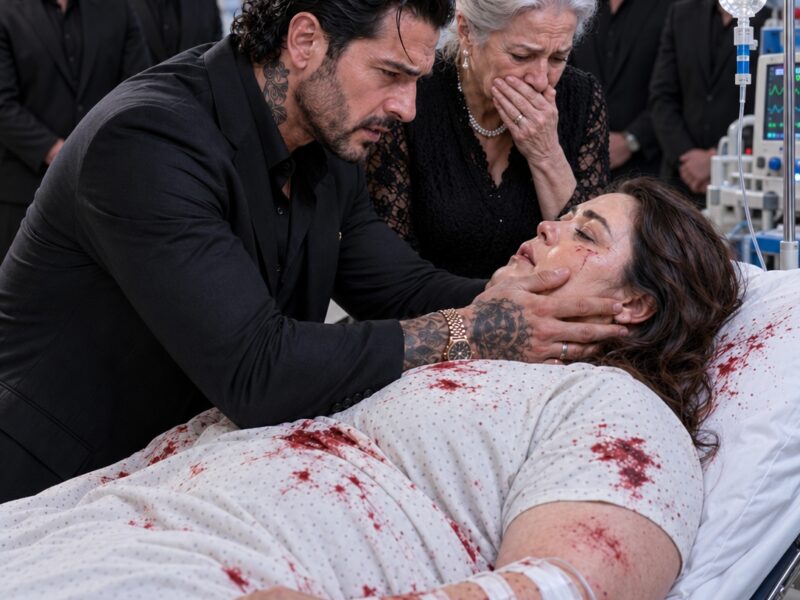
She Took Five Bullets Meant for a Mafia Boss’s Mother—Then the Woman Everyone Overlooked Became the One Person His Entire Empire Couldn’t Afford to Lose
The story below is adapted from the plot you supplied, preserving the central elements—Beatrice Gallagher, Sweet Rebellion bakery, Caterina and Dominic Russo, the cathedral attack, the five bullets, the hospital threat, the internal betrayal, and Beatrice’s transformation—while rebuilding the psychology, logic, pacing, and emotional consequences into a more grounded modern American drama.
The first bullet struck Beatrice Gallagher before she understood there had been a gunshot.
One second she was standing on the white stone steps of St. Agatha’s Cathedral in Brooklyn, one hand still extended toward an elderly woman whose rosary she had just retrieved from the ground.
The next, something slammed into her left shoulder hard enough to spin her halfway around.
Then came the sound.
Sharp.
Violent.
Wrong for a Tuesday morning.
Someone screamed.
Beatrice saw the elderly woman’s face change.
Saw confusion become recognition.
Saw two men near the cathedral doors reach inside their coats.
And then Beatrice saw the black SUV sitting crooked at the curb.
Its rear window was open.
A man inside was aiming directly at the woman beside her.
Beatrice did not think.
Thinking came later.
Thinking belonged to people who had time.
She threw herself forward.
Her arms wrapped around the older woman’s shoulders just as another impact punched into her side.
Then another.
Then two more in such quick succession that pain stopped arriving as separate events and became one enormous white burst consuming everything.
Beatrice fell.
The older woman went down beneath her.
Her cheek struck cold stone.
Someone shouted, “Caterina!”
Gunfire answered from the cathedral entrance.
Tires screamed.
Glass shattered.
The SUV lurched back into traffic.
Beatrice tried to breathe.
Her body refused.
She could smell incense drifting through the open cathedral doors.
Rain.
Burned powder.
And vanilla.
Vanilla?
For one absurd second, she remembered the three-tier cassata cake sitting unattended beside the retaining wall.
She had spent six hours decorating it.
She almost laughed.
Nothing came out.
The older woman underneath her was moving now.
Trying to push herself upward.
“Oh my God.”
Her voice trembled.
“Sweetheart.”
Warm hands touched Beatrice’s face.
“Look at me.”
Beatrice opened her eyes.
The woman’s elegant cream coat was streaked with red.
Too much red.
Beatrice wanted to apologize.
“I ruined…”
“What?”
“The cake.”
The older woman stared at her.
Then her face crumpled.
“Forget the damn cake.”
Sirens were approaching.
One of the bodyguards knelt beside them.
“Mrs. Russo, we need to move.”
“No.”
“Ma’am—”
“I am not moving.”
The guard looked toward Beatrice.
His expression changed.
“Ambulance is thirty seconds out.”
The older woman gripped Beatrice’s hand.
“You stay with me.”
Beatrice’s vision narrowed.
“You hear me?”
She did.
Barely.
“What’s your name?”
“Beatrice.”
“Beatrice what?”
“Gallagher.”
“I’m Caterina.”
Beatrice’s mouth tried to form a smile.
“I know now.”
Caterina pressed Beatrice’s hand between both of hers.
“Why did you do that?”
The question seemed strange.
Beatrice’s mind moved slowly.
Because you were there.
Because you were older.
Because the men had been shooting.
Because nobody should have had to stand alone in front of something like that.
She managed only four words.
“You couldn’t move fast.”
Caterina began crying.
Beatrice thought that was unnecessary.
Then the gray October sky folded inward.
The last thing she heard was Caterina Russo screaming at somebody not to let her die.
Three hours earlier, Beatrice had been arguing with a pastry bag.
“Come on,” she muttered.
The cream refused to cooperate.
A pale green ribbon of ricotta frosting collapsed against the side of the cake she had been decorating since four-thirty that morning.
Beatrice stared at it.
The cake stared back.
“You’re doing this deliberately.”
From the kitchen doorway, her assistant, Jamal Brooks, said, “You know cakes aren’t sentient, right?”
“Unproven.”
“They also don’t hold grudges.”
“This one does.”
Jamal crossed the narrow kitchen of Sweet Rebellion and examined the damage.
At twenty-two, he had enough confidence for two people and enough culinary-school debt for twelve.
He tilted his head.
“It looks fine.”
Beatrice gave him a look.
“Get out.”
“You pay me.”
“Temporarily.”
He grinned.
Sweet Rebellion occupied twelve hundred square feet on a side street in Dyker Heights, squeezed between a locksmith and a family-owned pharmacy. The front windows fogged during winter because the ovens were old and the insulation was worse.
Beatrice loved every inch of it.
She had bought the bakery three years earlier using savings, two credit cards, a small-business loan, and what her younger sister called “a level of optimism that should probably be regulated.”
Business had never become easy.
Some months were good.
Some involved moving numbers between accounts until they looked less frightening.
The ovens broke regularly.
The delivery van was twelve years old.
The landlord had recently announced another rent increase.
But at five in the morning, before the street woke, the bakery belonged completely to her.
Butter warming.
Coffee brewing.
Flour dust floating through pale light.
In that room, her body was not something to apologize for.
It was useful.
Strong enough to lift sacks of flour.
Steady enough to pipe roses.
Patient enough to knead dough until tension transformed into structure.
Beatrice was thirty-one, tall, broad-hipped, soft through the middle, and thoroughly exhausted by strangers believing any of those facts required commentary.
She had learned to make jokes first.
It prevented other people from deciding what kind were allowed.
Jamal leaned against the prep table.
“You nervous about St. Agatha’s?”
“It’s a cake delivery.”
“To the Russo charity event.”
“It is a Catholic charity bake sale.”
“Hosted by Caterina Russo.”
Beatrice looked up.
“Who?”
Jamal stared.
“You’re kidding.”
“Should I know?”
“The Russos?”
“Still nothing.”
“Dominic Russo?”
Beatrice returned to the frosting.
“Sounds like a real-estate attorney.”
Jamal whispered, “Crime family.”
She stopped.
“No.”
“Yes.”
“You watch too many documentaries.”
“My uncle Sal won’t even park near Russo restaurants.”
“Your uncle Sal thinks parking meters are federal surveillance.”
“Separate issue.”
Beatrice carefully smoothed the green ribbon back into place.
“Whoever ordered this cake paid in full.”
“Cash.”
“Legal tender.”
“And requested no invoice.”
Beatrice hesitated.
Jamal folded his arms.
“Exactly.”
“It’s a church fundraiser.”
“That is how all excellent mob stories begin.”
She pointed the pastry bag at him.
“If I get murdered, clear my browser history.”
“What’s in it?”
“Mostly wholesale butter prices.”
“That somehow makes it sadder.”
She laughed.
At seven forty-five, Beatrice loaded the finished cake into the van.
Three tiers.
Pistachio sponge.
Ricotta filling.
Candied orange.
White chocolate latticework.
Tiny sugar roses around the base.
It was the kind of cake that made people look twice.
Beatrice knew something about wanting to be looked at for the right reason.
Her mother, Helen Gallagher, had loved beautiful things.
Not expensive things.
Beautiful.
A clean tablecloth.
Fresh bread.
Flowers growing through cracks in concrete.
Helen had died five years earlier after a long illness, leaving Beatrice with recipes written on stained index cards and one recurring instruction.
Feed people before deciding whether you understand them.
Beatrice tried.
Some people made it difficult.
By nine, a cold wind had moved across Brooklyn.
St. Agatha’s Cathedral rose at the end of the block in pale stone and dark wood, old enough to have survived several versions of New York.
Beatrice parked illegally for what she promised herself would be four minutes.
She opened the back doors.
The cake seemed larger than it had inside the bakery.
“You and I are going to cooperate,” she told it.
It did not answer.
She carried the first box toward the steps.
That was when she saw the older woman.
Silver hair.
Cream coat.
A small leather handbag.
Beautiful without appearing interested in being noticed.
A rosary had slipped from her fingers and fallen beside the bottom step.
The woman tried to bend.
Stopped.
One hand moved toward her hip.
Beatrice set the cake box down immediately.
“Please.”
The woman looked up.
“I’ve got it.”
Beatrice retrieved the wooden beads.
They were worn smooth with age.
When she placed them into the woman’s hand, the older woman looked directly at her.
Not at her coat.
Not at her stomach.
Not at the sweat along Beatrice’s forehead from carrying forty pounds of cake.
Her eyes.
“Thank you.”
“Of course.”
“My hands aren’t what they used to be.”
“My knees have been negotiating their retirement since twenty-eight.”
The woman laughed.
A real laugh.
Warm.
“You’re funny.”
“Mostly under pressure.”
The woman touched the rosary.
“What’s your name?”
“Beatrice.”
“Caterina.”
“Nice to meet you.”
“You’re delivering something?”
Beatrice pointed toward the enormous box.
“Cake.”
Caterina’s eyes brightened.
“You made it?”
“With considerable emotional suffering.”
Another laugh.
“Then I should see it before Father Michael lets one of his volunteers destroy it.”
Beatrice smiled.
She was about to offer her arm.
Then the engine roared.
Everything after that happened too fast for either woman to understand.
At Bellevue Hospital, Dominic Russo arrived twelve minutes after his mother.
He did not run.
Dominic had been trained young never to run toward bad news.
Running made other people panic.
Instead, he moved through the emergency entrance with six men behind him, each step controlled enough to make the doctors and security officers watching him more nervous than shouting would have.
He was forty-three.
Six foot two.
Dark suit.
Dark overcoat.
Gray beginning at his temples earlier than he liked.
His father had been murdered when Dominic was twenty-four.
By twenty-six, Dominic had inherited companies, alliances, debts, enemies and responsibilities he had never wanted but had become exceptionally good at carrying.
People described him as ruthless.
Dominic considered that word lazy.
He could be ruthless.
He could also be patient.
Polite.
Generous.
Vindictive.
All of those things existed inside the same man.
The real problem was that most people preferred simple descriptions.
“Where’s my mother?”
A hospital administrator approached.
“Mr. Russo—”
“Where?”
“Private waiting area.”
Dominic walked through the double doors.
Then stopped.
Caterina sat on a gray sofa.
Alive.
Uninjured.
Covered in someone else’s blood.
For the first time since the phone call, Dominic’s control slipped.
“Ma.”
He crossed the room.
Caterina stood just before he reached her.
He took her face in both hands.
“Where are you hit?”
“I’m not.”
“Your coat—”
“Not mine.”
Dominic froze.
Caterina grabbed his wrists.
“A woman covered me.”
“What woman?”
“She was delivering a cake.”
He stared.
“Five shots, Dominic.”
His mother’s voice broke.
“She took them all.”
Something inside him went cold.
“Why?”
Caterina shook her head.
“She didn’t know me.”
That answer made even less sense.
Dominic understood loyalty when bought.
Fear when earned.
Family obligation.
Business calculation.
He understood people stepping in front of violence because they had been trained to.
A stranger?
No.
That belonged to another world.
Caterina’s fingers tightened around his sleeves.
“She picked up my rosary thirty seconds before.”
“Where is she?”
“Surgery.”
A doctor entered shortly afterward.
Dr. Adrian Kaplan looked exhausted.
His cap had left a red line across his forehead.
“Mrs. Russo?”
“Yes.”
“Mr. Russo?”
Dominic stepped forward.
“How is she?”
Kaplan hesitated.
That was enough to frighten Caterina.
“She’s alive.”
Caterina crossed herself.
Dominic did not move.
“Continue.”
“Five gunshot wounds. Shoulder, flank, lower back, and two to the right thigh. We controlled the bleeding.”
“Spinal damage?”
“No.”
“Major organs?”
“One round passed dangerously close to the kidney. No direct penetration.”
Caterina exhaled shakily.
“Will she walk?”
“We believe so. She’ll need substantial rehabilitation.”
Dominic looked through the reinforced ICU window.
A woman lay surrounded by machines.
He could barely reconcile her with the story.
Her dark-blond hair had been pulled away from her face.
Her skin was pale.
Bandages crossed her shoulder and side.
She looked ordinary.
That was what struck him.
Not weak.
Not plain.
Ordinary.
Somebody who should have been arguing with a landlord or deciding what to cook for dinner.
Not bleeding because of Russo enemies.
“What’s her name?”
“Beatrice Gallagher.”
Caterina whispered it.
“Beatrice.”
Dominic repeated it silently.
Kaplan continued.
“She was fortunate.”
Dominic’s eyes sharpened.
“Fortunate?”
“The trajectories could have been catastrophic. Her body absorbed and redirected some of the impact better than we might have expected, but I want to be clear—there’s no miraculous armor here. She survived because the bullets missed several critical structures by very narrow margins, your mother’s bodyguards applied pressure immediately, and we got her into surgery fast.”
Dominic appreciated that answer.
Facts.
No mythology.
“Can she be moved?”
“Absolutely not.”
“Good.”
The doctor seemed surprised.
“I assumed you might—”
“Why?”
Kaplan wisely decided not to answer.
Dominic looked at his mother.
“Who did it?”
Caterina’s face changed.
“We both know.”
The Moretti family.
There had been tension for six months.
Warehouse disputes.
Territory.
A federal investigation forcing old partnerships into panic.
Dominic had expected retaliation.
He had increased Caterina’s security.
Not enough.
He turned toward Vincent Hale, his chief of security.
“Find the vehicle.”
“We’re on it.”
“And everybody who knew her schedule.”
Vincent nodded.
Dominic looked through the glass again.
The woman in the bed had entered his war without consent.
Something about that felt intolerable.
“Her bakery.”
Caterina looked up.
“What?”
Dominic asked Kaplan, “Did she have personal effects?”
“Emergency staff documented them.”
A nurse checked.
“Wallet. Keys. Phone. Business card.”
She handed Dominic a clear evidence bag.
Inside, beneath a cracked phone screen, was a card.
SWEET REBELLION.
BAKERY & PASTRY.
BEATRICE GALLAGHER.
Dominic turned it over.
Nothing else.
“She owns it,” Caterina said.
“How do you know?”
“She told me she made the cake.”
His mother began crying again.
Dominic looked away.
His phone rang.
Vincent.
“What?”
“Someone tried to access the ICU floor.”
Dominic’s face went blank.
“Who?”
“Male. Hospital scrubs. No valid credentials.”
“Where is he?”
“Security detained him.”
“With what?”
A pause.
“Knife. Suppressor-equipped handgun.”
Caterina heard enough.
“Oh God.”
Dominic’s voice lowered.
“Police?”
“Already involved.”
“Good.”
That surprised Vincent.
Dominic knew it.
“Give them everything from the hospital. Video, weapon, identification.”
“And the man?”
“He stays alive.”
Another silence.
“Dominic?”
“I said alive.”
His mother watched him.
Dominic ended the call.
Caterina stepped closer.
“You’re changing rules.”
“No.”
“You are.”
“He’s evidence.”
“He also came to kill that girl.”
Dominic’s jaw tightened.
“Exactly.”
Caterina understood.
A dead man answered nothing.
An alive one might explain how Beatrice Gallagher had become a target before she had even regained consciousness.
And who had inside information.
That afternoon, Dominic sat alone outside the ICU.
His mother had gone to change.
His men occupied the elevators and exits without interfering with hospital operations, a compromise Dominic had negotiated after Dr. Kaplan threatened to personally call the mayor if he turned intensive care into a fortress.
Dominic respected professionals who did not tremble.
A young man wearing a flour-streaked sweatshirt arrived at the security desk.
“Beatrice Gallagher.”
The receptionist looked up.
“Relationship?”
“Employee.”
Dominic watched.
“Family?”
“No.”
“Only family allowed.”
The young man’s face collapsed.
Dominic stood.
“Jamal?”
The man turned.
“How do you know my name?”
Dominic had spent the previous hour learning everything public about Sweet Rebellion.
“Beatrice employs you.”
Jamal looked at the men around him.
Recognition arrived.
“Oh.”
Dominic almost smiled.
“Exactly.”
Jamal’s fear quickly became anger.
“Is this your fault?”
Vincent took one step forward.
Dominic raised a hand.
Jamal continued.
“She was delivering your mother’s cake, right?”
“Yes.”
“And somebody shot her because of your family?”
“Yes.”
The blunt answer stopped him.
Dominic continued.
“She saved my mother.”
“I know.”
“How?”
“People are posting video.”
Dominic’s expression hardened.
“There’s video?”
“Some tourist.”
Vincent was already reaching for his phone.
Jamal looked toward the ICU.
“Can I see her?”
“No.”
“That’s not your decision.”
Dominic stared.
Jamal swallowed.
But he did not back down.
Interesting.
“You’re right.”
Vincent looked at his boss.
Dominic turned toward the nurse.
“Can her employee be listed as a designated visitor when she wakes?”
The nurse looked at Jamal.
“We can ask Ms. Gallagher when she’s alert.”
“Do that.”
Jamal’s anger softened by one degree.
“What happens to the bakery?”
Dominic glanced at him.
“What do you mean?”
“She’s the owner. We’ve got payroll Friday. The landlord’s already threatening us over late rent.”
Dominic started to say he would handle it.
Then stopped.
This woman had already paid enough for Russo problems.
Turning her business into another Russo possession without asking would be one more violation disguised as generosity.
“What needs to happen for it to stay operational until she can decide?”
Jamal blinked.
“Payroll.”
“How much?”
“I’m not giving you her books.”
Dominic almost admired him.
“Good.”
He removed a card.
“Have her accountant contact mine. Temporary loan to the business. Market interest. Written terms. Beatrice can reject it when she wakes.”
Jamal stared.
“You want her to owe you?”
“No.”
“That’s literally what a loan is.”
Dominic paused.
“Then escrow.”
“What?”
“Funds placed with her attorney or accountant. No obligation unless she accepts.”
Jamal’s suspicion remained.
But he took the card.
“She’s going to hate you.”
Dominic looked through the glass.
“I suspect so.”
Beatrice woke thirty-six hours later.
Pain arrived first.
Then sound.
A machine beeping.
Air moving softly.
Somebody turning a page.
Her mouth felt like paper.
She opened her eyes.
A ceiling.
White.
Hospital.
Good.
Then she saw Caterina Russo asleep in a chair near the window.
The older woman’s head tilted to one side.
A rosary rested in her lap.
Beatrice tried to speak.
Nothing.
She moved her fingers.
Pain exploded through her shoulder.
A sound escaped.
Caterina woke immediately.
“Beatrice?”
Her chair scraped backward.
“Oh, thank God.”
She pressed the call button.
“Don’t move.”
Beatrice blinked.
“You…”
“Yes.”
Caterina’s eyes filled.
“I’m here.”
“You’re okay.”
The older woman stared at her.
Then laughed through tears.
“Yes, sweetheart. Because you’re completely insane.”
Beatrice tried to smile.
Her throat hurt.
A nurse entered.
Water.
Vitals.
Questions.
Pain level.
Orientation.
Beatrice answered slowly.
After the nurse left, Caterina remained.
“Why are you here?”
Caterina looked genuinely offended.
“Where else would I be?”
“At home?”
“You took five bullets for me.”
“You keep saying that like I planned it.”
“I don’t care.”
Beatrice closed her eyes.
“Cake.”
“What?”
“The cake.”
Caterina burst into tears and laughter simultaneously.
“Oh, honey.”
“It was expensive.”
“I will buy you a thousand cakes.”
“No.”
“You are arguing from intensive care.”
“I own a bakery.”
“I know.”
Beatrice reopened her eyes.
“How?”
“Your card.”
“Jamal?”
“Fine.”
“Bakery?”
“Also fine.”
Caterina hesitated.
“Mostly.”
Beatrice noticed.
“What does mostly mean?”
“Dominic arranged—”
“Who?”
“My son.”
Beatrice stared.
That name meant something.
The documentaries.
Newspaper photographs.
Jamal’s warning.
“Oh.”
Caterina smiled faintly.
“Yes.”
Beatrice looked around.
“Where is he?”
“Outside.”
“Why?”
“Because Dr. Kaplan says Dominic makes your blood pressure worse.”
Beatrice almost laughed.
Then pain stopped her.
“Accurate.”
The door opened.
Dominic Russo entered.
Beatrice knew him immediately.
He had the kind of face photographers liked.
Controlled.
Dark-eyed.
Expensive.
Danger attached to him not through theatrics but restraint.
He stopped several feet from the bed.
“How are you feeling?”
“Shot.”
Caterina covered her mouth.
Dominic’s expression nearly changed.
“Fair.”
Beatrice studied him.
“You’re the mafia boss.”
His mother sighed.
“Beatrice.”
“What? He knows.”
Dominic looked almost amused.
“Among other things.”
“Are the other things legal?”
“Some.”
“Excellent.”
Caterina stood.
“I’m going to get coffee.”
“Ma.”
She looked at Dominic.
“That was not a request.”
She left.
Dominic remained by the door.
Beatrice appreciated that.
Most powerful men assumed proximity belonged to them.
“You tried to move me?”
His eyebrows rose.
“Who told you?”
“Doctor.”
“I did not.”
“He said you asked.”
“I asked if movement was medically necessary for security. He said no.”
“And?”
“So you stayed.”
Beatrice studied him.
“What security?”
His face became serious.
“Someone tried to reach this floor while you were in surgery.”
Her heart monitor accelerated.
Dominic noticed.
“Alive?”
“What?”
“The person.”
“Yes.”
She exhaled.
He seemed surprised.
“You thought I would kill him?”
“You’re a crime boss.”
“I’m noticing you dislike euphemism.”
“Life’s short.”
He glanced at her bandages.
“Poor choice of phrase.”
Beatrice laughed, then grimaced.
“Don’t make me laugh.”
“Understood.”
“What happened?”
“The shooters were connected to the Moretti organization.”
“Why did they shoot your mother?”
“Message to me.”
“And why come after me?”
“You interfered.”
Beatrice looked down.
“I picked up a rosary.”
“You also prevented my mother from dying.”
“Timing issue.”
Dominic stepped slightly closer.
“I don’t know how to thank you.”
“You don’t.”
He stopped.
Beatrice continued.
“Your mother didn’t need to die.”
“That doesn’t explain taking five bullets.”
“I didn’t count.”
For the first time, he smiled.
Not much.
Enough.
Then Beatrice said, “I want to go home.”
His smile disappeared.
“You can’t.”
Her eyes narrowed.
“Medical reason?”
“Yes.”
“That sounded like a mafia reason.”
“Both.”
“I don’t accept the second.”
Dominic looked at her for a long moment.
Then nodded.
“Fine.”
“Fine?”
“The medical reason is sufficient.”
Beatrice relaxed slightly.
“My bakery.”
“Your accountant has access to temporary funds if you choose.”
Her suspicion returned.
“You bought my bakery?”
“No.”
“Good.”
“I considered it.”
“Of course you did.”
“I was advised you would object.”
“By whom?”
“Jamal.”
Beatrice smiled.
“Promote him.”
“I don’t employ him.”
“Exactly.”
Dominic’s phone vibrated.
He ignored it.
Beatrice noticed.
“Answer.”
“It can wait.”
“No.”
His expression changed.
“Why?”
“Because men who ignore calls while staring dramatically at wounded women tend to create worse problems later.”
Dominic looked at the phone.
Vincent.
He answered.
Listened.
Said only, “I’ll call back.”
Beatrice raised an eyebrow.
“What?”
“You definitely killed people.”
Dominic almost smiled again.
“Rest.”
“Bossy.”
“I’ve been told.”
After he left, Beatrice lay awake.
She had expected terror.
Instead she felt anger.
Her body hurt.
Her business was uncertain.
She had been pulled into a conflict she did not understand because she had helped an old woman pick up a rosary.
None of that was romantic.
None of it felt like destiny.
It felt unfair.
Caterina returned.
Beatrice looked at her.
“Your son is irritating.”
Caterina smiled.
“He likes you.”
“That’s unfortunate.”
“You knew him eight minutes.”
“Enough.”
The older woman sat.
“Beatrice.”
Something in her voice changed.
“I am sorry.”
“For what?”
“For bringing this into your life.”
“You didn’t invite bullets either.”
“My family did.”
Beatrice remained quiet.
Caterina’s hands trembled slightly.
“My husband raised Dominic to believe safety meant control.”
“Does he?”
“Yes.”
She sighed.
“He thinks if he can control every door, car, schedule and person around him, nothing terrible will happen.”
Beatrice looked toward the hallway.
“Did it work?”
Caterina’s eyes lowered.
“No.”
Two weeks passed.
Then three.
Beatrice improved.
Slowly.
The wounds became scars instead of emergencies.
Physical therapy began.
That was where humiliation found her again.
Not from other people.
From inside.
She could barely stand without support.
Her right leg trembled.
Her shoulder refused certain movements.
She had always been physically capable despite the assumptions strangers made about her body.
Now a walk across a room required concentration.
During one session, Beatrice failed to rise from a rehabilitation bench.
Again.
Again.
Again.
Finally she shoved the walker away.
“I’m done.”
Physical therapist Karen Mitchell crouched.
“For today?”
“For all of it.”
“No.”
Beatrice laughed bitterly.
“You don’t get to decide.”
“True.”
Karen remained calm.
“But neither does the worst five minutes of your morning.”
Beatrice looked away.
Her face burned.
“I’m too heavy.”
Karen’s expression sharpened.
“Too heavy for what?”
“This.”
“Rehabilitation?”
“My leg.”
“Your leg was shot twice.”
“I know.”
“So blame bullets before blaming your body.”
That landed.
Beatrice stared at the floor.
A man stood in the open doorway.
Dominic.
Of course.
Perfect.
“How long?”
she asked.
He entered.
“Long enough.”
“Leave.”
Karen looked between them.
“I’ll return in ten minutes.”
She left.
Beatrice glared at Dominic.
“Do not give me one of those inspirational speeches.”
“I wasn’t planning to.”
“Good.”
He pulled a chair closer.
Sat.
Beatrice waited.
Nothing.
“You’re just going to sit there?”
“Yes.”
“Why?”
“You told me not to give a speech.”
She wanted to be angry.
Instead she laughed once.
Then tears came.
Damn him.
“I hate this.”
“I know.”
“No, you don’t.”
“Probably not.”
Her hands tightened.
“My whole life, people have treated my body like it explained everything about me.”
Dominic said nothing.
“Too big to date. Too big for certain clothes. Too big to stand behind a bakery counter without customers assuming I ate everything.”
Her voice broke.
“I spent years learning not to care.”
He watched quietly.
“And now I can’t get out of a chair.”
“You will.”
“You don’t know that.”
“No.”
She looked at him.
“Then don’t promise.”
“I wasn’t going to.”
Good.
She needed truth.
Dominic leaned forward.
“What do you want from me?”
The question surprised her.
“Nothing.”
“That’s not true.”
“You think everyone wants something.”
“In my life, generally accurate.”
Beatrice wiped her face.
“I want you to stop looking guilty every time you see me.”
His eyes changed.
“That may be difficult.”
“Try.”
“You were shot because of my family.”
“I was shot because armed men decided murder was a reasonable business strategy.”
“They were aiming for my mother.”
“And?”
“I should have protected her better.”
Beatrice sighed.
“There it is.”
“What?”
“Control.”
Dominic went still.
“Your mother warned me.”
His eyebrows rose.
“She talks too much.”
“She said you think enough control prevents pain.”
Dominic looked toward the ocean outside the rehabilitation room.
The Russo family had moved Caterina and Beatrice after the hospital stabilized her, but not without consent.
That had taken an argument.
Beatrice had eventually agreed to recover at the Russo estate in Montauk because Dr. Kaplan recommended a private setting and the Moretti threat remained credible.
She agreed on conditions.
Her doctors chose medical care.
Jamal ran the bakery.
Dominic did not enter her rooms without permission.
No surveillance inside.
No one touched her finances.
Dominic had agreed to every condition.
He had hated at least three.
Beatrice continued.
“You’re not responsible for every bad thing people choose to do.”
“I’m responsible for the world around me.”
“Why?”
“Because if I’m not, people die.”
“That sounds exhausting.”
“It is.”
Something in his answer softened her.
Beatrice reached for the walker.
Dominic stood automatically.
“Don’t.”
He stopped.
“I need to do it.”
He nodded.
She pushed herself upright.
Pain shot through her thigh.
Her face tightened.
Dominic’s hands flexed at his sides.
He did not touch her.
One step.
Then another.
By the fourth, sweat covered her forehead.
By the seventh, she wanted to scream.
Dominic stayed exactly where she had told him.
When she reached the window, Beatrice turned.
“See?”
His expression made her pause.
He looked proud.
Not because he had helped.
Because he had not.
That mattered.
By the fifth week, Beatrice could walk with a cane.
The bakery reopened under Jamal’s supervision.
Sweet Rebellion survived.
Dominic visited once.
Beatrice did not learn until later.
He stood in line.
Paid full price.
Left a normal tip because Jamal told him excessive tipping was “creepy oligarch behavior.”
He bought six cannoli.
Caterina ate four.
At the estate, Beatrice eventually asked permission to use the kitchen.
The chef, Anthony DeLuca, looked insulted.
“You need permission?”
“It’s your kitchen.”
“It is Mr. Russo’s kitchen.”
“Then I definitely need permission.”
Anthony smiled.
“Use anything.”
Baking returned something physical therapy could not.
Competence.
Her hands remembered.
Measure.
Fold.
Whisk.
Wait.
She baked bread first because bread forgave imperfections.
Then cookies.
Then lemon cake.
The house changed.
Dominic noticed.
He came downstairs one evening and smelled browned butter.
He stopped.
His father’s mansion had smelled like cigars and aftershave when Dominic was young.
His own homes tended to smell like nothing.
Neutrality had always seemed safe.
Now vanilla moved through the hallway.
He followed it.
Beatrice stood at the marble counter wearing loose black pants and an oversized sweater.
Her cane leaned nearby.
She was kneading brioche.
“You’re supposed to be resting.”
She did not look up.
“You’re supposed to be terrifying.”
“I contain multitudes.”
“Congratulations.”
Dominic leaned against the doorway.
“What are you making?”
“Brioche.”
“Why?”
“Because violence makes me want carbohydrates.”
He almost laughed.
Then saw how tightly she was working the dough.
“You’re angry.”
“I’m kneading.”
“You’re punishing flour.”
She stopped.
“Vincent told me your people hit three Moretti businesses.”
Dominic’s face changed.
“Vincent should not discuss operations with you.”
“I asked why half the men here look like they haven’t slept.”
“That is not your concern.”
Beatrice looked at him.
“Then neither am I.”
He went silent.
She continued kneading.
Dominic stepped inside.
“The Morettis attacked my mother.”
“And me.”
“Yes.”
“So I’m allowed to know whether people are dying because of it.”
His jaw tightened.
“We hit financial operations.”
“Meaning?”
“Warehouses. Cash flow. Contracts.”
“No bodies?”
“Not because of my orders.”
Beatrice studied him.
“I need honest answers if I’m staying here.”
“Staying?”
“Recovering.”
He nodded.
“Understood.”
She returned to the dough.
After a while:
“Why haven’t you asked?”
“Asked what?”
“Why I jumped.”
Dominic looked at her.
“I did.”
“No. You asked how.”
He considered.
“Then why?”
Beatrice’s hands slowed.
“I don’t know.”
“That seems impossible.”
“Fine.”
She wiped flour on a towel.
“When I was nine, my father collapsed in a grocery store.”
Dominic waited.
“People walked around him.”
His expression changed.
“A lot of them probably thought somebody else would help.”
She looked down.
“One woman stopped.”
“Did he survive?”
“Yes.”
“For how long?”
“Fourteen more years.”
Dominic understood.
“One stranger gave you fourteen years.”
“Yes.”
Beatrice looked at him.
“I think maybe I’ve spent my whole life believing that when you’re the person close enough to help, you help.”
“That simple?”
“No.”
Her mouth twitched.
“Nothing is simple.”
The alarm sounded three nights later.
Not the main system.
A short security pulse.
Beatrice woke instantly.
Her bedroom was dark.
She reached for the phone.
No signal.
Then somebody knocked.
Three times.
Pause.
Two.
The emergency code Dominic’s security team had taught her.
“Beatrice.”
Vincent’s voice.
She opened the door.
He stood outside with two guards.
“What happened?”
“Perimeter breach.”
“Dominic?”
“Downstairs.”
“Caterina?”
“Safe room.”
Beatrice grabbed her robe.
“I’m going to her.”
Vincent blocked the hallway.
“Dominic ordered—”
She looked at him.
Vincent sighed.
“Right.”
Her conditions.
Nobody moved her without explanation.
He stepped aside.
“I’ll escort you.”
They reached Caterina through a concealed corridor.
The older woman sat inside the safe room wearing a silk dressing gown and holding a pistol with both hands.
Beatrice stared.
Caterina shrugged.
“I contain multitudes.”
Beatrice laughed despite herself.
Then gunfire sounded somewhere far outside.
Her blood went cold.
Caterina took her hand.
“You’re shaking.”
“I hate that sound.”
“So do I.”
“You look calm.”
“I’m old.”
“That doesn’t explain anything.”
Caterina smiled sadly.
“I’ve simply been afraid longer.”
The lights flickered.
Vincent touched his earpiece.
Then his face changed.
“What?”
He did not answer.
Beatrice noticed.
“What?”
Vincent looked toward Caterina.
“East security station is down.”
“How?”
“Internal override.”
Caterina’s face went white.
“Someone inside.”
Vincent nodded.
The worst threats did not enter through gates.
They opened doors from within.
Dominic was in the underground security room when his head of operations called.
“Leo’s gone.”
Dominic stopped.
“Where?”
“No tracker.”
“Find him.”
“We found his phone.”
“Where?”
“Kitchen.”
Dominic stared at the monitors.
Leo Santoro had been beside him for eleven years.
His second-in-command.
Godfather to Vincent’s daughter.
The man who knew every backup route in the estate.
Dominic’s stomach went cold.
A camera flickered.
Then returned.
On-screen, three armed men entered through the service corridor.
The door opened for them.
Not forced.
Opened.
Dominic whispered, “Leo.”
The man beside him looked sick.
Then the radio crackled.
Leo’s voice.
“Dom.”
Dominic pressed transmit.
“You have thirty seconds to tell me I’m wrong.”
“You were always sentimental underneath.”
Dominic’s face emptied.
“What did Moretti offer?”
“Enough.”
“Money?”
“Freedom.”
Leo laughed.
“You think everybody wants to die protecting your name?”
“No.”
“But we do.”
Dominic remained calm.
“How many?”
“Enough.”
“What do you want?”
“Beatrice.”
Everything inside him froze.
“No.”
“There it is.”
Leo sounded pleased.
“The baker matters more than warehouses.”
Dominic looked toward the safe-room camera.
Beatrice sat beside Caterina.
Alive.
“For a civilian?” Leo continued. “You’re losing perspective.”
“She’s not involved.”
“She became involved when you moved her here.”
Dominic knew that.
It was one of the reasons guilt lived beneath his ribs.
“What does Vincent Moretti want with her?”
“A public death.”
Dominic’s hand tightened around the radio.
“Why?”
“Because she made his family look weak.”
“No.”
Dominic understood.
“She made my family look human.”
Silence.
Then Leo laughed.
“There’s the philosopher.”
Dominic cut the channel.
“Lock the safe room.”
His security man hesitated.
“We’ll trap them if—”
“Do it.”
Then another alarm sounded.
Fire.
Kitchen wing.
Beatrice smelled smoke before anyone said the word.
Vincent looked at the monitor.
“They’re forcing ventilation shutdown.”
Caterina stood.
“We move.”
“Where?”
“Secondary tunnel.”
Vincent opened the door.
They crossed two corridors.
Smoke gathered near the ceiling.
Beatrice’s injured leg slowed her.
She hated that.
“Go,” she told Caterina.
“No.”
“Caterina.”
The older woman gripped her arm.
“You took five bullets for me. I can wait twenty seconds.”
They reached the service kitchen.
Then the far doors exploded inward.
The blast knocked everyone down.
Beatrice’s shoulder struck tile.
Pain flashed.
Men entered through smoke.
Vincent fired toward the doorway.
Caterina dragged Beatrice behind a steel island.
For one surreal second, Beatrice stared at the industrial stove.
A pot of sugar syrup simmered on one burner.
Anthony had been preparing caramel earlier.
Nearby, trays of hot water.
Flour bins.
Metal pans.
A kitchen.
Her language.
Gunfire cracked.
Dominic appeared through the opposite corridor.
“Ma!”
Caterina shouted, “Here!”
Leo emerged from the smoke.
Beatrice recognized him.
He had eaten her cinnamon rolls yesterday.
That betrayal felt absurdly personal.
Leo took cover.
“Dominic!”
Dominic aimed.
Leo fired first.
Dominic dropped behind a counter.
Beatrice saw one of Leo’s men moving around the side.
Toward Dominic.
He could not see him.
Beatrice looked at the stove.
Then at Caterina.
“Cover your face.”
“What?”
“Trust me.”
Beatrice grabbed the long handle of the sugar pot.
It was heavy.
Too heavy for her injured shoulder.
She used both hands.
Pain tore through her.
She screamed.
Not from fear.
From effort.
The man turned.
Beatrice did not throw boiling sugar at him.
She could not.
Instead she heaved the pot sideways onto the floor between him and Dominic.
Molten caramel spread across the tile in a steaming sheet.
The man jumped backward instinctively.
Slipped.
His weapon skidded away.
Dominic saw him.
Moved.
Disarmed him.
Vincent tackled another intruder.
Leo shouted and ran toward the side exit.
Dominic started after him.
“Dominic!”
Beatrice’s voice stopped him.
He turned.
Smoke thickened.
Caterina was coughing.
Beatrice looked at him.
“Your mother.”
Two words.
Choice.
Dominic stared toward the exit where Leo had disappeared.
Years ago, he would have chased betrayal.
Punished it.
Made an example.
Instead, he turned back.
Lifted Caterina.
“Move.”
They escaped through the underground tunnel.
Police and emergency crews reached the estate twelve minutes later because Dominic had finally begun using legitimate systems instead of assuming his own organization should handle everything.
Leo was arrested the next morning at a private airfield.
Alive.
That decision mattered.
His testimony exposed Moretti financial networks, corrupt contractors, and two public officials.
It also revealed something Dominic had not expected.
The attack on Caterina had not been ordered solely by Vincent Moretti.
Leo had helped plan it.
Months earlier.
Before Beatrice ever appeared.
Dominic sat in the hospital waiting room reading the report.
Beatrice was being examined for smoke inhalation and the reopened wound in her shoulder.
Caterina sat beside him.
“He betrayed you before the bakery girl.”
“Yes.”
“You’ll blame yourself anyway.”
“Yes.”
His mother looked at him.
“You chose me tonight.”
Dominic did not respond.
“You let Leo run.”
“He was arrested.”
“That isn’t what I meant.”
She touched his hand.
“You chose people instead of vengeance.”
Dominic looked toward the treatment room.
“Beatrice told me to.”
“No.”
Caterina shook her head.
“She reminded you that you could.”
When Beatrice came out, her arm was in a sling.
Again.
She looked furious.
Dominic stood.
“No.”
She pointed at him.
“I don’t want to hear anything that begins with ‘I’m sorry.’”
He closed his mouth.
“Good.”
“Can I ask if you’re all right?”
“No.”
He almost smiled.
Beatrice sat.
“You knew Leo for eleven years?”
“Yes.”
“That hurts.”
“Yes.”
She looked at him.
“More than the business?”
“Much.”
“Good.”
Dominic frowned.
“Good?”
“Means you’re still human.”
He sat beside her.
For several seconds they said nothing.
Then Beatrice leaned back.
“My bakery.”
“Safe.”
“Jamal?”
“Safe.”
“Your mother?”
“Annoyed at everyone.”
“Normal.”
Dominic looked at her sling.
“You saved me.”
She closed her eyes.
“Do not start.”
“You did.”
“I spilled caramel.”
“You saw something I didn’t.”
“That happens when men stand dramatically in gunfights.”
His laugh escaped before he could stop it.
Beatrice looked at him.
The laugh faded.
Something shifted.
Not romance yet.
Something more dangerous.
Trust.
Three months later, Sweet Rebellion reopened fully.
Beatrice insisted on returning to work before anyone thought she should.
She compromised at four-hour shifts.
Physical therapy continued.
Her cane disappeared.
Then returned on bad days.
She stopped treating that as failure.
Dominic visited every Wednesday morning at seven-thirty.
The first time, Beatrice thought it was surveillance.
The second time, coincidence.
By the fourth:
“You like croissants.”
Dominic looked offended.
“I support local business.”
“You buy six.”
“I have staff.”
“You eat four.”
“Unproven.”
Caterina began coming Sundays.
She sat by the window with coffee and corrected everybody’s life choices.
Customers adored her.
Nobody knew who she was.
Or perhaps some did and valued breathing too much to mention it.
The Moretti case expanded.
Vincent Moretti was eventually indicted on conspiracy, racketeering, attempted murder, and several financial crimes.
Dominic cooperated through attorneys.
That decision angered several old allies.
“You’re giving family business to federal prosecutors?” one capo demanded.
Dominic looked around the table.
“My mother nearly died because we believed violence should answer violence forever.”
Silence.
He continued.
“If that is the tradition you want, find another family.”
Some did.
Most stayed.
Change was slower than Beatrice wanted.
Faster than Dominic’s father would have tolerated.
One evening after closing, Beatrice locked the bakery door.
Dominic remained inside.
“Why are you here?”
“I brought something.”
“If it is money, leave.”
“It isn’t.”
He placed a folder on the counter.
Beatrice opened it.
Sweet Rebellion’s building.
“For sale,” she read.
“Yes.”
She looked up.
“You bought it.”
“No.”
“You wanted to.”
“Yes.”
“But?”
“I remembered your face the last time I solved a problem without asking.”
“Growth.”
“I dislike it.”
She smiled.
Dominic slid another paper toward her.
“It’s the owner’s contact information. He agreed to hold the sale for thirty days so you can make an offer if you want.”
“How?”
“I asked.”
“With threats?”
“No.”
She stared.
He sighed.
“I paid him five thousand dollars for the option.”
“That is money.”
“You said not to give you money.”
“You paid someone else.”
“Legal distinction.”
“Emotional loophole.”
Dominic almost smiled.
“If you don’t want it, the option expires.”
Beatrice looked at the building paperwork.
For years, ownership had seemed impossible.
She had spent rent to build somebody else’s asset.
“How much?”
Dominic told her.
Her heart dropped.
“I can’t.”
“You don’t know that.”
“I do.”
“You have improved revenue.”
“You know my revenue?”
His face changed.
Beatrice pointed.
“Dominic.”
“Public estimates.”
“Liar.”
“Jamal talks.”
“Traitor.”
Dominic continued.
“Small-business financing. City grants. Seller financing.”
“You researched.”
“Yes.”
“Without applying for me?”
“Yes.”
She looked at him for a long time.
“Thank you.”
He seemed almost startled.
“You’re welcome.”
Beatrice eventually bought the building.
Not from Dominic.
Not with Russo money.
A bank loan.
A city commercial-stabilization grant.
Her own savings.
Jamal bought five percent of the bakery and became official partner.
On closing day, Caterina brought champagne.
Dominic brought nothing.
Beatrice noticed.
“Where’s my ridiculous gift?”
“You trained me out of it.”
“I regret everything.”
He smiled.
Then reached into his coat.
“One thing.”
She narrowed her eyes.
He handed her the wooden rosary.
The one from St. Agatha’s.
Caterina had replaced it after the shooting because blood had stained the original string.
Beatrice touched the beads.
“Why?”
“My mother wants you to have it.”
Caterina shook her head.
“No.”
Beatrice looked at her.
“She lies.”
“Dominic wants you to have it.”
He glared at his mother.
Caterina smiled.
“He thinks I don’t know he stole it from my prayer drawer.”
“I borrowed it.”
“Catholic theft.”
Beatrice laughed.
Then Dominic became serious.
“The first time you held this, you were a stranger.”
She looked at him.
“You don’t owe me your life.”
“I know.”
“You don’t owe me anything.”
“I know.”
“But I wanted you to have proof that one decent thing done without calculation can change more than anyone expects.”
Beatrice’s eyes burned.
She closed her fingers around the rosary.
“That was almost poetic.”
“I’m recovering.”
Months passed.
Dominic and Beatrice did not fall in love because danger made them confuse adrenaline with devotion.
That would have been easier.
They fell slowly.
Annoyingly.
Over coffee.
Paperwork.
Physical therapy complaints.
Arguments about whether Dominic owned too many black suits.
He did.
Arguments about whether Beatrice worked too much.
She did.
He learned to ask before helping.
She learned that accepting help did not automatically create debt.
One night after a charity dinner at St. Agatha’s, they stood on the same cathedral steps where everything had begun.
Beatrice looked at the stone.
“Somewhere around here.”
Dominic stood beside her.
“My mother still has nightmares.”
“So do I.”
He looked at her.
“You never said.”
“You never asked.”
His face tightened.
“Fair.”
Beatrice touched her side unconsciously.
Five scars remained.
She did not hide them.
Did not romanticize them either.
They hurt in cold weather.
One made sleeping on her left side uncomfortable.
Courage had invoices.
That was the part stories usually skipped.
“Do you regret it?” Dominic asked.
“What?”
“Saving her.”
Beatrice stared at him.
“That’s a terrible question.”
“I know.”
She thought.
“No.”
“Even knowing everything afterward?”
“Your family. The attacks. Leo.”
“Yes.”
She looked toward the cathedral doors.
“I regret that five men thought bullets were an acceptable answer to anything.”
“Three shooters.”
“You know what I mean.”
Dominic smiled faintly.
Beatrice continued.
“I don’t regret helping her.”
“Why?”
“Because if I start deciding whether someone deserves saving based on what their son does for a living, I become somebody I don’t want to be.”
Dominic’s smile disappeared.
“You make it difficult to hide from myself.”
“That sounds expensive.”
“More than real estate.”
They stood quietly.
Then Dominic said, “Dinner.”
“That was not a complete sentence.”
“Would you like to have dinner with me?”
“We have dinner constantly.”
“Not like that.”
Beatrice looked at him.
Finally.
After months.
“Are you asking me on a date?”
“Yes.”
“You look uncomfortable.”
“I am.”
“Good.”
He exhaled.
“Beatrice.”
“Yes.”
“Please.”
She smiled.
“Friday.”
Dominic looked relieved.
“One condition.”
His eyes narrowed.
“Of course.”
“No private restaurant.”
“Fine.”
“No six bodyguards sitting three tables away.”
“Two.”
“One.”
“Three.”
“Dominic.”
“Two outside.”
She considered.
“Fine.”
“And no buying the restaurant because the waiter is rude.”
“That happened once.”
“That I know of.”
Their first date was at a small Italian place in Carroll Gardens where the owner knew Caterina and refused to be impressed by Dominic.
Beatrice wore a navy dress.
Dominic wore a black suit.
Of course.
“You own other colors?”
“Yes.”
“Evidence?”
“No.”
Dinner was awkward for seven minutes.
Then Dominic spilled water.
Beatrice stared.
He looked offended by the glass.
“You did that.”
“I was present.”
“Interesting.”
“You frighten judges.”
“Water is unpredictable.”
She laughed so hard the neighboring table turned.
Dominic watched her.
“What?”
“Nothing.”
“That is never true.”
He hesitated.
“I like when you forget to be guarded.”
The sentence landed quietly.
Beatrice looked down.
“So do I.”
They kissed outside her bakery.
No gunfire.
No alarms.
No dramatic orchestra.
Just a city bus sighing at the curb and somebody arguing about parking across the street.
Beatrice preferred it.
The final reckoning came almost a year after the cathedral attack.
Vincent Moretti accepted a plea agreement.
Leo Santoro agreed to testify.
Dominic’s lawyers delivered evidence exposing the internal financial structures that had funded the attempted hit.
The old war ended not with an execution or burning warehouse but with court filings, asset seizures, prison sentences and several men discovering that silence was less valuable when prosecutors offered reduced time.
Caterina called it anticlimactic.
Beatrice called it adulthood.
At the annual St. Agatha’s charity event, the cathedral invited Beatrice as honored baker.
She refused “hero.”
Accepted “baker.”
Sweet Rebellion supplied desserts.
Jamal insisted on carrying the cake.
“Why?”
“Historical reasons.”
“I can carry it.”
“You were shot last time.”
“That correlation is weak.”
“You are not touching the cake.”
Caterina waited at the doors.
When Beatrice reached her, both women stopped.
For a second, neither spoke.
Then Caterina held out the rosary Beatrice had returned after deciding such a personal object belonged with its owner.
“Help me?”
Beatrice smiled.
She took Caterina’s arm.
Together, they climbed the steps.
Inside, people applauded.
Beatrice immediately hated it.
Caterina enjoyed every second.
Later, during the reception, Caterina stood at a microphone.
Beatrice whispered, “Absolutely not.”
Dominic whispered back, “I tried.”
“You are allegedly powerful.”
“Not with her.”
Caterina began.
“A year ago, a woman I did not know saw danger before I did.”
Beatrice closed her eyes.
Here we go.
“She had no reason to protect me.”
Caterina’s voice shook.
“No contract.”
“No blood obligation.”
“No family debt.”
The room quieted.
“She simply decided that because she was close enough to help, she would.”
Caterina looked toward Beatrice.
“That decision cost her months of pain.”
Beatrice swallowed.
“People like my family have spent generations talking about loyalty as though loyalty belongs to us.”
Caterina looked toward Dominic.
“We were wrong.”
Several men in the room shifted.
Good, Beatrice thought.
Let them be uncomfortable.
“Loyalty without choice is fear.”
Caterina continued.
“Protection without consent is control.”
Dominic looked at Beatrice.
Those were her words.
Caterina smiled faintly.
“Yes, Dominic. I stole that from her.”
A few people laughed.
Then Caterina’s voice softened.
“Beatrice Gallagher saved my life.”
She paused.
“But if all we remember is that she took five bullets, we make the mistake of believing suffering is what made her valuable.”
Beatrice’s eyes filled.
Caterina continued.
“She was valuable before anyone fired a weapon.”
Silence.
“She was valuable when she was carrying a cake and worried about parking tickets.”
Jamal snorted.
“She was valuable when her bakery struggled.”
“When strangers underestimated her.”
“When she believed the world saw too much of her body and too little of everything inside it.”
Beatrice could no longer look at anyone.
Dominic’s hand appeared beside hers.
Not taking.
Waiting.
She placed her hand in his.
Caterina finished.
“Courage did not transform Beatrice into someone worthy.”
Her voice broke.
“It simply forced the rest of us to finally see what had already been there.”
The applause began slowly.
Beatrice hated applause.
This time, she allowed it.
Afterward, Dominic found her alone in the cathedral garden.
“You escaped.”
“Your people are dramatic.”
“They’re Sicilian.”
“Not a defense.”
He stood beside her.
“Are you okay?”
“Yes.”
“Real yes?”
She looked at him.
“Real.”
He nodded.
Then reached into his coat.
Beatrice immediately frowned.
“No.”
“I haven’t done anything.”
“That pocket contains trouble.”
“Usually.”
“Dominic.”
He removed a small box.
She closed her eyes.
“Oh God.”
“That is not encouraging.”
“You picked a cathedral?”
“We were already here.”
“Efficient romance.”
“I panicked.”
She opened her eyes.
Dominic Russo looked nervous.
Actually nervous.
That changed everything.
“I planned a different speech.”
“How many pages?”
“None.”
“Then we’re safe.”
He almost smiled.
Then became serious.
“I spent most of my life thinking love meant keeping people close enough that nothing could happen to them.”
Beatrice listened.
“You taught me that people are not possessions you secure.”
“Expensive lesson.”
“Yes.”
“You’re welcome.”
He laughed softly.
Then:
“You saved my mother.”
Beatrice opened her mouth.
Dominic raised one finger.
“I know.”
She stopped.
“That is not why I love you.”
Her throat tightened.
“I love you because you argue when I’m wrong.”
“That seems unhealthy.”
“Because you built something before you ever met me.”
His eyes held hers.
“Because you refused to let money turn gratitude into ownership.”
Beatrice’s eyes filled.
“Because you are funny when you’re angry.”
“I’m hilarious.”
“And because you make a room feel less empty without ever trying to fill it.”
That one hurt.
In the good way.
Dominic opened the box.
The ring was simple.
Gold.
Small diamond.
Nothing theatrical.
Beatrice looked impressed.
“You listened.”
“I have survival instincts.”
He took a breath.
“Beatrice Gallagher, would you choose to build a life with me?”
Not belong to me.
Not become a Russo.
Choose.
She heard the difference.
So did he.
Beatrice smiled through tears.
“Yes.”
Dominic exhaled as though he had been underwater.
“But.”
His face fell.
“There’s a but.”
“Several.”
“I knew it.”
“I keep the bakery.”
“Obviously.”
“My name remains on the business.”
“Yes.”
“No giant wedding.”
“Fine.”
“Your mother does not control flowers.”
From inside the cathedral Caterina shouted, “I HEARD THAT.”
Beatrice laughed.
Dominic closed his eyes.
“Impossible woman.”
“Which one?”
“Both.”
Their wedding happened six months later.
Small.
Brooklyn.
Jamal made the cake because Beatrice was banned from working at her own wedding.
Caterina cried before the ceremony began.
Vincent Hale cried only after claiming allergies.
Beatrice walked without a cane.
Not because healing had erased every injury.
Because that happened to be a good day.
She wore a cream dress that followed her shape without trying to hide it.
No shapewear.
No apology.
Dominic saw her and forgot whatever carefully prepared expression he intended to wear.
Beatrice stopped in front of him.
“You look terrified.”
“I am.”
“Good.”
He smiled.
Years later, people would tell the story incorrectly.
They would say Beatrice Gallagher was an invisible, overweight baker until she took five bullets for a mafia matriarch and became impossible to ignore.
Beatrice hated that version.
She had never been invisible.
Other people had simply failed to look.
They would say Dominic Russo saved her afterward.
Also wrong.
Doctors saved her life.
Physical therapists taught her damaged muscles to trust movement again.
Jamal saved the bakery when Beatrice could not stand behind the counter.
Caterina gave her companionship when pain made the nights too long.
Dominic did something different.
He learned to stand beside her without standing in front of her.
That mattered.
Sweet Rebellion eventually expanded into the neighboring storefront.
Not because Russo money bought it.
Because Beatrice’s pistachio cake became locally famous after reporters discovered the cathedral story and customers began lining up around the block.
Beatrice hated the publicity.
She loved the revenue.
Jamal became co-owner.
They started a paid apprenticeship for women returning to work after long medical absences.
Caterina sat at her preferred table every Sunday.
Dominic continued pretending he bought six croissants for staff.
Nobody believed him.
One rainy October morning, almost six years after the shooting, Beatrice carried a small cake to St. Agatha’s.
Dominic walked beside her.
“You want me to carry it?”
“No.”
“It’s raining.”
“I have arms.”
“You were shot here.”
“Six years ago.”
“Still relevant.”
“Therapy.”
“For you or me?”
“Yes.”
He laughed.
At the cathedral steps, Caterina waited.
Older now.
Silver cane.
Same rosary.
She smiled when she saw Beatrice.
“There’s my girl.”
Beatrice kissed her cheek.
“Your son is annoying.”
“I know.”
“He tried to carry the cake.”
“Divorce him.”
Dominic sighed.
The three entered together.
No bodyguards immediately visible.
There were security measures.
Of course.
Dominic had changed.
He had not become stupid.
Inside, the charity hall smelled like coffee and cinnamon.
Children ran between tables.
Volunteers argued about raffle tickets.
Ordinary life.
Beatrice placed the cake down.
Caterina touched her arm.
“Do you think about it?”
“Sometimes.”
“The bullets?”
“Mostly the cake.”
Caterina laughed.
Then turned serious.
“I still don’t understand why you did it.”
Beatrice had been asked that question hundreds of times.
Reporters.
Doctors.
Therapists.
Family.
She had given different answers depending on what they wanted.
Instinct.
Adrenaline.
No time to think.
All true.
But incomplete.
She looked at Caterina.
“My mother used to say there are moments when life asks who you are before you have time to prepare an answer.”
Caterina waited.
“I guess that was mine.”
“And?”
Beatrice smiled.
“I liked the answer.”
Caterina’s eyes filled.
Dominic had been listening from several feet away.
He looked down.
Beatrice noticed.
“Don’t start crying.”
“I’m not.”
“Your whole family lies about tears.”
“Genetic.”
Beatrice laughed.
Outside, rain darkened the same white steps where blood had once spread across stone.
For years, people had treated those five bullets as the beginning of Beatrice Gallagher’s story.
They were wrong.
Her story had begun long before.
In a cramped bakery.
Beside hospital beds.
Behind counters where customers sometimes looked through her.
In every room where she chose not to shrink despite being taught she should.
The bullets did not make her courageous.
They revealed courage that had already survived quieter wounds.
Dominic did not give her worth.
He learned to recognize it.
Caterina did not make her family.
She asked whether Beatrice wanted to belong.
And Beatrice herself never became powerful because dangerous men bowed their heads when she entered.
She became powerful when she realized she no longer cared whether they did.
Later that afternoon, after the charity guests left, Beatrice stood alone for a moment at the bottom of the cathedral steps.
Dominic came beside her.
“Ready?”
She looked at the street.
Traffic.
Rain.
A delivery truck double-parked illegally.
Somewhere nearby, somebody was burning coffee.
New York continuing exactly as it always had.
Beatrice slipped her hand into Dominic’s.
“Yes.”
He waited.
She smiled.
“You’re not going to ask if I need help?”
“No.”
“Growth.”
“Painful.”
They started walking.
At the curb, Beatrice looked back once.
Not at the place she had fallen.
At the cathedral doors.
Six years earlier, she had been a baker making a delivery.
She still was.
Among other things.
And that, she thought, was the part of the story everyone always missed.
She had never needed to become somebody else to deserve being seen.









