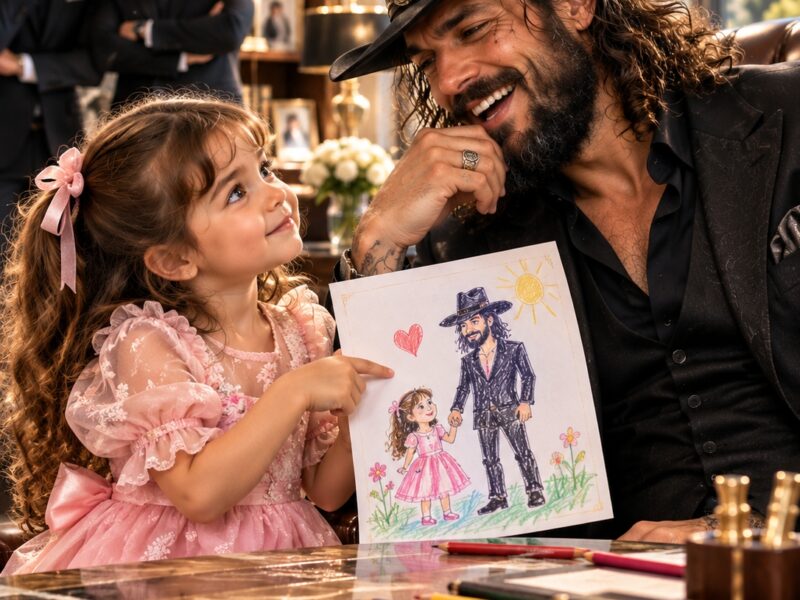
“Sign Here, Mafia Boss!” the Maid’s Toddler Demanded—Then One Purple Pen Exposed the Secret Everyone in His House Had Been Hiding
Three-year-old Luca walked into the most feared man’s private meeting wearing a yellow raincoat, slapped a crumpled paper onto his desk, and ordered him to sign.
Everyone expected Alessandro Romano to have the child removed—until Luca announced that the mafia boss owed him his life because of what he had seen in the garden.
Alessandro laughed harder than anyone in the room had heard in years, but by nightfall, the toddler’s ridiculous “contract” had become the first clue to a betrayal buried inside his own house.
The door to Alessandro Romano’s private office opened four inches, stopped, then moved again.
Every man at the long oak table went silent.
Vittorio Greco had been halfway through explaining why a shipment worth nearly two million dollars had arrived eleven days late. Dante Moretti, Alessandro’s security chief, stood against the wall with his arms folded. Carlo Ferri, the youngest executive in the room, had a pen frozen above his notebook.
Nobody looked toward the door immediately.
In that house, interruptions did not happen by accident.
Then a purple plastic pen appeared through the gap.
It was held upright like a torch.
A tiny hand followed.
Then a yellow raincoat.
Then three-year-old Luca Morales stepped into the room carrying a wrinkled sheet of printer paper in his other fist.
Nobody breathed.
Luca did not know that.
He did not know who Vittorio Greco was.
He did not know why two security guards stood outside the east wing whenever black sedans lined the circular driveway.
He did not know that grown men lowered their voices when they said Alessandro Romano’s name.
He only understood one obvious fact.
Every adult in the room was facing the man at the head of the table.
Therefore, that man was in charge.
Luca walked straight toward him.
Vittorio half rose.
“Don Alessandro, I’ll—”
“Sit down,” Alessandro said.
He never looked away from the child.
Vittorio sat.
Luca reached the large leather chair at the head of the table and considered the distance between himself and the polished desktop.
Then he grabbed the armrest and started climbing.
Dante pushed off the wall.
Alessandro lifted two fingers.
Dante stopped.
It took Luca almost thirty seconds.
His raincoat was slippery.
His shoes squeaked against the leather.
He grunted once with the determination of a man moving furniture.
Finally, he wedged himself between Alessandro’s arm and the edge of the chair.
He placed the purple pen on the table.
Smoothed the crumpled page with both hands.
Then pushed it toward the most feared man in the room.
“Sign here.”
Nobody moved.
Alessandro looked down.
The page contained a crooked circle, several purple lines, something resembling a house, and a very dark mark near the bottom that Luca had apparently decided was a signature line.
“Excuse me?”
Luca tapped the paper.
“You have to sign.”
Vittorio stared at the ceiling.
Carlo pressed his lips together so tightly they turned white.
Dante’s face had gone completely blank.
Outside the office, Marisol Morales came running down the hallway.
She had worked in the Romano estate for eleven months.
Long enough to know the rules.
Do not enter the east wing during meetings.
Do not interrupt Don Romano unless the building is on fire.
And absolutely do not lose your toddler inside the house while seven business cars are parked outside.
She reached the office just in time to hear her son announce:
“You owe me your life.”
Marisol stopped so hard one shoe slid on the marble.
Inside, Alessandro tilted his head.
“And how exactly do I owe you my life?”
Luca had clearly prepared for this.
“Because yesterday there was a spider.”
Alessandro blinked.
“A spider.”
“A giant one.”
Luca spread both hands.
“It was this big.”
It was not possible for any spider to be that big.
Nobody corrected him.
“You were in the garden,” Luca continued, “and you were walking and talking on your phone, and you didn’t see it.”
Alessandro’s expression remained serious.
“I see.”
“And I yelled.”
“Yes?”
“And you stopped.”
“I remember that.”
“If you didn’t stop, you step on him.”
“Terrible.”
“He gets mad.”
“Understandable.”
“And then you die.”
Silence.
Luca pushed the paper another inch.
“So you owe me.”
He picked up the purple pen.
“That’s the rule.”
For five full seconds, Alessandro Romano did nothing.
Then his mouth moved.
Barely.
He pressed one fist against it.
His shoulders shook once.
A sound escaped him.
Carlo looked down at his notebook.
Vittorio’s eyes widened.
Dante stared straight ahead.
Alessandro turned toward the rain-streaked windows as if the gray garden outside might help him recover.
It did not.
He looked back at Luca.
The child was still waiting.
Perfectly serious.
Pen raised.
And Alessandro Romano laughed.
Not politely.
Not the controlled, social laugh he occasionally produced at charity dinners.
He bent forward until one hand touched the table.
The laugh came from somewhere deep enough that it seemed to surprise him.
Carlo broke first.
A wheezing sound escaped through his fingers.
Then Vittorio laughed because everybody else had, though his sounded uncertain.
Even Dante’s mouth twitched.
Outside the office, Marisol leaned against the wall.
She had expected anger.
The laughter frightened her more.
She had heard the old staff say that Alessandro had not laughed like that since his wife died.
Inside, Alessandro finally lifted his head.
His eyes were wet.
“A spider.”
“A giant spider,” Luca corrected.
“Of course.”
Alessandro held out his hand.
“The pen.”
Luca gave it to him.
The purple plastic looked ridiculous between Alessandro’s long fingers.
He examined the paper as solemnly as any contract ever placed before him.
Then signed his name across the line.
Alessandro Romano.
A sweeping signature in purple ink.
He raised the paper.
“Gentlemen, witness this legally binding agreement.”
Luca nodded.
Satisfied.
That should have been the end of it.
Instead, it was the first time anyone in the house realized that the child had seen more in the garden than a spider.
Marisol entered the room almost breathless.
“Don Romano, I’m so sorry.”
She went directly to Luca.
“I turned around for ten seconds.”
Luca frowned.
“It was more.”
“Luca.”
Alessandro lifted one hand.
“He hasn’t done anything wrong.”
Marisol looked at him.
She had never heard him say her name before.
She was not sure he knew it.
Then he said:
“Marisol.”
That frightened her all over again.
“Yes, sir?”
“Breathe.”
She tried.
It did not help.
Luca pulled his signed contract toward himself.
“He signed.”
“I can see that.”
“He owes me his life.”
“I heard that too.”
Alessandro leaned back.
“What brought him here?”
“My sitter is sick. Mrs. Bellini said he could stay in the staff kitchen.”
“I told him not to leave.”
“I was folding linens.”
“I turned around—”
“You don’t have to explain.”
Marisol stared.
In eleven months, she had never heard Alessandro interrupt an apology.
He looked toward Luca.
“Why were you carrying a contract?”
Luca thought.
“It’s important.”
“Obviously.”
“I made it.”
“I can see.”
“You have to keep it.”
Alessandro raised an eyebrow.
“I thought it belonged to you.”
“No.”
Luca pushed the paper back.
“You signed. Now it’s yours.”
Alessandro looked at the page again.
Something in his face changed.
Not enough for Vittorio or Carlo to name.
Dante noticed.
Marisol did too.
The office was dark wood, gray stone, shelves of legal books, and a single framed photograph angled slightly away from Alessandro’s desk.
No toys.
No family pictures.
No color.
The purple signature looked almost absurdly alive in the middle of it.
Alessandro folded the page once.
Carefully.
Then slid it into the inside pocket of his charcoal jacket.
“Safe.”
Luca smiled.
Then pointed toward the photograph.
“Who’s that?”
The room changed.
Alessandro’s eyes went toward the frame.
His late wife, Alina, stood beside a lake in the photograph.
Wind lifting her dark hair.
Smiling at the person behind the camera.
No one in the office mentioned her.
Not even Dante.
“Someone I loved,” Alessandro said.
Luca looked at him.
“Where is she?”
“She died.”
The answer was simple.
So was Luca’s response.
“Oh.”
He thought for several seconds.
Then climbed down from the chair.
Marisol rushed to catch him.
He ignored her and looked up at Alessandro.
“Your room is sad.”
Vittorio looked suddenly fascinated by the grain of the table.
Alessandro did not react.
Luca added:
“It’s too quiet.”
Marisol’s face went white.
“Luca.”
But Alessandro said:
“He’s not wrong.”
Then Luca remembered something.
“I have birthday Saturday.”
Alessandro almost smiled.
“You do?”
“I’m four.”
“You’re three.”
“Saturday I’m four.”
“Fair correction.”
“We have cake.”
“That sounds promising.”
“You come.”
Marisol closed her eyes.
“Luca.”
The boy pointed at Alessandro’s jacket.
“You signed.”
Alessandro looked down at the pocket containing the purple contract.
“I suppose I did.”
“So you come.”
Dante finally spoke.
“Don Alessandro has commitments.”
Luca looked at him.
“Are you his mom?”
Carlo coughed into his hand.
Alessandro turned away to hide another smile.
“No,” Dante said.
“Then he can answer.”
Dante had negotiated union disputes, handled security crises, and once spent fourteen hours in a hospital waiting room without moving from a single chair.
A three-year-old had defeated him in six words.
Alessandro looked at Luca.
“What time?”
Marisol stared.
“Sir.”
“Saturday,” Luca said. “After nap.”
“Very precise.”
“Four.”
Alessandro nodded.
“I’ll be there.”
Luca held out his small hand.
Alessandro shook it.
The meeting ended fifteen minutes later.
Not because business was finished.
Because nobody in the room could recover the same gravity after watching the head of the Romano family negotiate a birthday appearance with a toddler in a yellow raincoat.
Vittorio left first.
His smile returned before he reached the hallway.
Dante remained behind.
Marisol carried Luca toward the staff quarters, whispering furiously in Spanish.
When the office door closed, Alessandro took the paper from his jacket.
He unfolded it.
Dante watched.
“You’re keeping it.”
“Yes.”
“It’s purple.”
“I noticed.”
“You signed a blank page.”
“There’s a circle.”
“Of course.”
Alessandro studied the paper.
Then:
“Did you verify Vittorio’s flood story?”
Dante’s expression changed.
“Yes.”
“And?”
“There was no flood on Route Seventeen.”
Alessandro raised his eyes.
“None?”
“No road closure. No severe weather. Nothing that explains eleven days.”
The warmth left Alessandro’s face.
The man who had laughed with Luca disappeared.
In his place sat the leader Dante had served for seventeen years.
“Where was the shipment?”
“We don’t know yet.”
“Driver?”
“Missing from work since Tuesday.”
“Family?”
“His wife says he went fishing.”
“Does he fish?”
“No.”
Alessandro folded Luca’s paper again.
“Find him.”
“Quietly.”
Dante nodded.
Then glanced at the jacket pocket.
“Saturday.”
“What about it?”
“The Calabrians have people in town.”
Alessandro stared.
“It’s a child’s birthday in the staff courtyard.”
“It’s also the first predictable social event you’ve attended on the property in years.”
Alessandro understood immediately.
He looked toward Alina’s photograph.
“I gave my word.”
“To a three-year-old.”
“He’ll be four.”
Dante sighed.
“I’ll arrange security.”
“Invisible.”
“Always.”
That evening, Marisol carried a sleeping Luca across the garden to the small staff apartment she shared with him.
The rain had weakened to a mist.
His purple pen was still in his fist.
She had almost reached her door when she saw the envelope.
Heavy cream paper.
No stamp.
No name.
Slid beneath the door.
Marisol shifted Luca against her shoulder and picked it up.
Inside was one line.
Your son is not the only one who saw what happened in the garden. Ask yourself why Don Romano did not.
She read it twice.
Then a third time.
The cold moved from her fingertips upward.
The garden.
Yesterday.
Luca yelling about a spider.
She had been inside polishing silver.
She had heard his voice through an open service window.
“Stop!”
Then laughter from one of the gardeners.
Later Luca told her he had saved “the big boss” from a spider.
She had treated it like every story small children tell.
A dinosaur near the shed.
A dragon in the laundry.
An invisible man behind the couch.
Now she carried him inside and locked the door.
Luca slept through everything.
Marisol sat at the kitchen table until midnight.
The note lay beneath the yellow light.
At one in the morning, she woke Luca accidentally while checking that the window latch was secure.
“Mama?”
“I’m sorry.”
“Is morning?”
“No.”
He rolled over.
“Spider?”
Marisol froze.
“Luca.”
He rubbed his eyes.
“Tell me about the spider.”
“Tomorrow.”
“Now.”
She sat beside him.
“Where was it?”
“Garden.”
“I know.”
“Where exactly?”
“By lion.”
The stone lion stood near a clipped hedge along the east walkway.
“Was anyone there?”
Luca’s eyes were nearly closed.
“A man.”
“What man?”
“Garden man.”
“One of Mr. Romano’s gardeners?”
Luca shrugged.
“He had gloves.”
Most gardeners wore gloves.
Marisol relaxed slightly.
Then Luca said:
“Nice shoes.”
She looked at him.
“What?”
“Garden men have dirty shoes.”
“This man had shiny ones.”
He yawned.
“He hide.”
“Where?”
“Behind tree.”
“Why?”
“Maybe spider.”
Then he fell asleep.
Marisol remained sitting.
The next morning, she went to Señora Betty Bellini.
Betty had run the Romano household longer than Marisol had been alive.
She was sixty-eight, silver-haired, five feet tall, and capable of silencing a kitchen with one raised eyebrow.
She listened in the pantry while Marisol told her everything.
The note.
Luca.
The man.
The shiny shoes.
Betty did not interrupt.
When Marisol finished, Betty held out her hand.
“Paper.”
She studied it.
Smelled it.
Held it toward the fluorescent light.
“Expensive.”
“What do I do?”
Betty’s eyes narrowed.
“Nothing yet.”
“Nothing?”
“You continue working.”
“My son saw a stranger near Don Romano.”
“And someone wants you frightened enough to say it to the wrong person.”
Marisol stared.
“You think the note is a trap?”
“I think anybody who leaves warnings under doors instead of walking into an office has a reason.”
“Should we tell Dante?”
Betty hesitated.
That frightened Marisol more.
“What?”
“Dante meets Vittorio Greco every morning for coffee.”
“They’re friends?”
“They’ve worked together twenty years.”
Betty folded the note.
“I’m not accusing Dante.”
“But until we know where the leak is, we don’t hand everyone the same information.”
Marisol leaned against the pantry shelves.
“You make it sound like this happens all the time.”
“It doesn’t.”
“That’s why I’m worried.”
Betty tucked the note into her apron.
“I’ll find a safe way to get it to Alessandro.”
She never got the chance.
At two that afternoon, one of Alessandro’s assistants came into the laundry.
“Ms. Morales?”
Marisol’s hands went cold.
“Yes?”
“Mr. Romano would like to see you.”
Betty looked up from the linen inventory.
Their eyes met.
Marisol wiped her hands on her apron.
The walk to the east wing felt twice as long as usual.
When she entered Alessandro’s office, he was standing beside the window.
No jacket.
White shirt sleeves rolled to the elbows.
A wrapped box sat on a small chair beside his desk.
“For Luca,” he said.
Marisol looked at the box.
Blue paper.
A red ribbon.
“Sir, you did not have to—”
“I know.”
“What is it?”
“A train.”
He looked faintly embarrassed.
“I asked Dante what children like.”
Marisol almost laughed.
Almost.
“He suggested a train.”
“Then the gate guard said a bigger train.”
“So now there is apparently enough railway equipment in that box to cross New Jersey.”
Her throat tightened.
“That is too much.”
“It’s a toy.”
Then his expression changed.
“I need to ask you something.”
Marisol’s hands clasped.
“Yesterday in the garden.”
Her pulse jumped.
“Did Luca tell you anything unusual?”
This was the decision.
Betty’s warning.
The anonymous note.
The most powerful man in the house asking directly.
Marisol had spent most of her adult life surviving by knowing when not to speak.
She had come to New Jersey at twenty-three.
Worked hotel laundry.
Office cleaning.
Private homes.
She knew how easily a worker could become “difficult.”
How quickly a single mother could lose shifts.
How often wealthy people called silence professionalism when what they really wanted was invisibility.
She looked at Alessandro.
Then at the gift for Luca.
Then at the photograph of Alina.
“Sir.”
“Yes?”
“He said he saw a man behind the hedge.”
Alessandro did not move.
“What man?”
“He thought gardener.”
“But he had gloves.”
“Shiny shoes.”
“Luca said he hid.”
Alessandro’s eyes went toward the garden.
“Exactly where?”
“Near the stone lion.”
Dante’s team had swept that path at six in the morning.
Alessandro knew it.
He also knew Luca had shouted at him around nine.
“Anything else?”
Marisol swallowed.
“There was a note.”
His head turned.
“What note?”
“Señora Betty has it.”
Ten minutes later, Betty stood in Alessandro’s office with Marisol beside her.
Alessandro read the cream paper once.
Then twice.
Ask yourself why Don Romano did not.
His jaw tightened.
“Warning or threat?”
Betty said:
“I don’t know.”
He turned the page over.
A faint pencil mark sat in the bottom corner.
A circle with a small line through it.
Betty inhaled sharply.
“What?”
She stepped closer.
“I know that mark.”
Alessandro looked at her.
“From where?”
Betty’s face changed.
“Alina.”
The name settled into the room.
“She used to draw it at the bottom of letters when she was young.”
Alessandro’s expression emptied.
“My wife has been dead nine years.”
“I know.”
“Are you sure?”
Betty nodded.
“She put it on notes to her mother.”
“Recipes.”
“Birthday cards.”
“Anything private.”
Marisol watched color leave Alessandro’s face.
It was the first time she understood that power did not make grief smaller.
It merely gave grief larger rooms to hide inside.
Alessandro dismissed everyone.
Then locked the office door.
For three hours, nobody entered.
He opened a compartment behind Alina’s photograph that he had not touched since the year she died.
Inside were letters.
Dozens.
Some folded in half.
Some still in envelopes.
He read them one by one.
The mark appeared again and again.
A circle crossed by a short line.
Alina’s private signature.
His wife had died on a wet road nine years earlier.
The official story within Alessandro’s world had been simple.
A rival group had forced her driver off the road.
The driver survived.
Alina did not.
Dante found evidence linking the vehicle to men associated with a Calabrian crew.
Alessandro had spent years believing it.
He punished partnerships.
Cut business ties.
Spent money and influence making sure those men never touched his companies again.
He had never questioned the foundation.
Grief likes certainty.
Certainty gives pain somewhere to point.
Now somebody had placed Alina’s private mark on a note tied to a stranger in his garden.
At six, Alessandro called Dante in.
Dante entered carrying a file.
“We found Vittorio’s driver.”
“Where?”
“Motel near the port.”
“Why?”
“He says Vittorio ordered shipment held.”
“For eleven days?”
“Yes.”
“Reason?”
“He claims he doesn’t know.”
Alessandro stared.
“Do you believe him?”
“He’s terrified.”
“That wasn’t my question.”
Dante paused.
“No.”
Alessandro placed the anonymous note on the desk.
Turned it around.
“Do you know this symbol?”
Dante looked.
For the first time in seventeen years, Alessandro watched his security chief lose composure completely.
Color drained from Dante’s face.
His right hand shook once.
Then disappeared behind his back.
Alessandro’s voice became quiet.
“What do you know?”
Dante sat without being asked.
That alone was an answer.
“Alessandro.”
“No.”
He had not called him by first name in years.
“What do you know?”
Dante looked at the mark.
“I never wanted you to learn this way.”
The clock on the mantel ticked.
Alessandro stood.
“Learn what?”
Dante closed his eyes.
“The night Alina died.”
The room seemed to shrink.
“It was not what I told you.”
Alessandro did not speak.
Dante continued.
“The Calabrian vehicle was real.”
“But the driver had been hired through an intermediary.”
“Three years later, I found payments.”
“From whom?”
Dante’s jaw tightened.
“Someone connected to Vittorio’s brother.”
Alessandro stared at him.
“Vittorio.”
“I could not prove he gave the order.”
“But his brother arranged the money.”
“And you hid that from me.”
“Yes.”
“Six years.”
“Yes.”
“Why?”
Dante looked up.
“You were barely functioning.”
“You stopped sleeping.”
“You were looking for reasons to destroy everything around you.”
“I thought if I told you someone inside the family might have been involved, you would tear the entire organization apart.”
“So you lied.”
“I told myself I was protecting you.”
Alessandro laughed once.
No humor.
“Everybody enjoys protecting me from my own life.”
Dante stood.
“I was wrong.”
“Very.”
“I have regretted it every day.”
“Not enough to tell me.”
“No.”
Dante’s voice cracked.
“Not enough.”
Alessandro turned away.
For several seconds, the old response rose.
Punishment.
Severance.
Removal.
It was what people expected from him.
It was what grief had trained him to do.
Then his fingers touched the folded purple contract in his jacket.
He had put it there that morning without thinking.
A child’s crooked drawing.
A ridiculous claim.
You owe me your life.
He heard Luca’s voice.
Your room is too quiet.
Alina used to say something similar.
Not the words.
The meaning.
She hated the office.
Not because of the business.
Because Alessandro brought no life into it.
“You lied to me for six years,” he said.
“Yes.”
“That debt remains.”
“I understand.”
“But I’m not settling it tonight.”
Dante looked up.
Alessandro faced him.
“Can you still do your job?”
“Yes.”
“Can I trust you tonight?”
Dante swallowed.
“With your life.”
“That is not what I asked.”
Dante held his gaze.
“Yes.”
Alessandro nodded.
“Then prove it.”
The investigation stayed quiet.
No threats.
No dramatic confrontations.
Alessandro had learned over the years that people who believed they were unobserved made better evidence than frightened men.
His attorney, Elena Mercer, was called in.
Elena was fifty-one, former federal prosecutor, now general counsel for Romano Holdings.
She had spent eight years pushing Alessandro’s legitimate companies farther from the informal networks his father had built.
She read the shipment records.
The anonymous note.
The driver statements.
Then looked at Alessandro.
“You want my professional opinion?”
“I’m paying for it.”
“Good.”
“Stop treating this like family business.”
“What?”
“Treat it like corporate sabotage.”
“Preserve records.”
“Get external forensic review.”
“No private searches.”
“No missing hard drives.”
“No conversations in parking garages.”
Dante shifted.
Elena looked at him.
“That was directed at you.”
“I gathered.”
Alessandro almost smiled.
She continued.
“If Vittorio diverted company cargo and falsified shipping explanations, you may have fraud, theft, interference with contracts.”
“And Alina?”
Elena became quiet.
“That is different.”
“Different investigation.”
“Different evidence.”
“Do not contaminate one trying to prove the other.”
Alessandro nodded.
That restraint cost him.
Waiting always did.
Meanwhile, Marisol considered leaving.
She stood in the staff apartment Wednesday night packing Luca’s clothes into a grocery bag.
Betty found her.
“What are you doing?”
“I have a child.”
“I noticed.”
“There was a stranger in the garden.”
“A note under my door.”
“I work twenty feet from men discussing things I don’t understand.”
“And my son walks into offices because he sees a piece of paper.”
Betty sat at the table.
“So leave.”
Marisol stopped.
She had expected argument.
“What?”
“If you believe Luca is unsafe, leave.”
“No job is worth your child.”
Marisol stared.
Betty continued.
“But do not leave because fear made the decision before facts did.”
“What facts would make this safe?”
“Alessandro doubled the outer guard.”
“Changed contractor access.”
“Sent half the weekend staff home.”
“Moved Luca’s birthday from your apartment to the main courtyard where cameras are better.”
Marisol frowned.
“He did what?”
“He asked me whether you would be offended.”
“He asked?”
“Yes.”
“He can learn.”
Marisol sat.
Betty folded one of Luca’s shirts.
“Also, your son has told every cook in the house that Don Romano is attending his birthday.”
“I know.”
“If you cancel now, there will be a riot.”
Despite herself, Marisol laughed.
That was the first time she had laughed since the note.
Thursday, Alessandro found Luca in the kitchen drawing on cardboard.
This time, he had permission to be there.
Marisol watched from across the room.
Alessandro stood five feet away.
Did not approach until Luca noticed.
“You came back.”
“I live here.”
“Oh.”
Luca held up a page.
“This is you.”
The drawing was a large black rectangle with legs.
Alessandro accepted this.
“Very accurate.”
“This is me.”
A yellow circle.
“And Mama.”
A red line with hair.
“And this.”
Luca pointed to small purple shape.
“The spider?”
“No.”
“Bad man.”
Alessandro’s expression sharpened.
Marisol stopped wiping the counter.
“What bad man?”
“The garden man.”
Luca returned to coloring.
“He was talking.”
“To whom?”
Luca shrugged.
“Phone.”
“What did he say?”
Marisol intervened.
“Luca, only what you remember.”
Betty had warned her.
Do not turn child into witness you accidentally coach.
Luca frowned.
“He said somebody was late.”
Alessandro crouched.
“Who?”
“I don’t know.”
“Did he say a name?”
Luca thought so hard his eyebrows touched.
“Vee.”
Marisol’s stomach dropped.
Alessandro remained still.
“Vee?”
“Like letter.”
Then Luca got bored.
“Want cookie?”
Alessandro looked at Marisol.
Neither needed to say the name.
Vittorio.
That evening, external reviewers confirmed the delayed shipment had been diverted to a warehouse leased by a shell company.
Vittorio’s brother was one of its hidden beneficiaries.
Still not enough to prove everything.
Enough to move.
Then Elena found something else.
The cream stationery used for the warning note came from a small shop near the harbor.
One customer had ordered the exact stock in bulk.
Alina Romano.
Years earlier.
The shop owner remembered because Alina had commissioned custom envelopes for a charity foundation.
After her death, unused stock had been boxed and moved to estate storage.
Betty checked.
One box was missing.
Not an outsider.
Someone inside the estate had access to Alina’s paper.
That changed the meaning of the note.
It was not sent by Vittorio.
Or at least not obviously.
Someone was warning them.
Someone close.
Dante’s internal review produced a name.
Carlo Ferri.
The youngest man at the original meeting.
Carlo admitted it immediately.
He had discovered irregular access logs weeks earlier.
Saw Vittorio’s men using restricted loading areas.
He became suspicious but feared going directly to Alessandro because Vittorio had allies among senior staff.
So he used the only symbol he thought would guarantee Alessandro paid attention if the note eventually reached him.
Alina’s mark.
“How did you know it?” Alessandro asked.
Carlo looked embarrassed.
“My mother worked with Mrs. Romano’s foundation.”
“She kept old thank-you letters.”
“You copied her private symbol.”
“Yes.”
Alessandro’s eyes hardened.
“That was cruel.”
“I know.”
“You used my dead wife to frighten a housekeeper.”
“I know.”
“Why not come to me?”
Carlo’s answer was quiet.
“Because everyone says you already know everything.”
The sentence landed harder than Alessandro expected.
Carlo continued.
“Vittorio has known you since you were twenty.”
“Dante has known you longer than I’ve been in the company.”
“I’m thirty-two.”
“If I accuse Vittorio and I’m wrong, I’m finished.”
“If I say nothing and I’m right, maybe somebody gets hurt.”
“So I wrote note.”
“Badly.”
“Yes.”
Alessandro sat back.
Power had created a strange problem.
Everyone assumed he knew everything.
Therefore people hid things until certainty became danger.
“What did you see in garden?”
“A man Vittorio uses for off-books errands.”
“Why didn’t you stop him?”
“I didn’t know why he was there.”
“Then Luca yelled.”
“The man left.”
Carlo swallowed.
“I thought he might have been testing access.”
“Then birthday invitation happened.”
“And I knew Saturday could be opportunity.”
The pieces finally aligned.
Vittorio had not planned to hurt Luca.
The birthday party itself was useful because it gave him predictable access to Alessandro in a relaxed setting.
His objective was business control.
Not spectacle.
Vittorio believed Alessandro had grown distracted.
Too much attention on converting companies legitimate.
Too much money spent on compliance.
Too little appetite for old intimidation.
The delayed shipment was designed to make major clients lose confidence.
The garden intrusion was surveillance.
The birthday would be another test.
A moment to confirm where Alessandro stood and whether his security structure could be penetrated.
Elena asked the question nobody else did.
“Why not cancel?”
Alessandro looked at her.
“The party.”
“Yes.”
“You now know someone may use it against you.”
“Cancel it.”
Marisol sat across the office because Alessandro had insisted she be included in any decision affecting Luca.
That alone surprised her.
She looked at him.
“Cancel.”
Alessandro turned.
“You agree?”
“Yes.”
“My son will cry.”
“He’ll survive.”
Elena nodded approvingly.
Alessandro leaned back.
For years he had confused keeping promises with never changing course.
Alina had accused him of that once.
You think consistency makes you honorable even when the situation changes.
He looked at Marisol.
“If we move it?”
“Where?”
“Main garden.”
“Open.”
“Guests screened.”
“No business people.”
“No one you don’t know.”
Marisol considered.
“Can I invite whoever Luca wants?”
“Yes.”
“He wants the dishwasher.”
“Fine.”
“The old gardener.”
“Fine.”
“Your driver.”
“Fine.”
“He wants Dante because Dante is ‘grumpy but tall.’”
Dante looked offended.
Elena smiled.
Marisol said:
“And no business meeting during cake.”
Alessandro looked at Dante.
“Add it to security protocol.”
“I’m not writing that.”
“You are now.”
The party remained.
But it was no longer a trap Alessandro controlled alone.
That mattered.
Marisol knew.
Elena knew.
Betty knew.
Dante knew.
Even Carlo knew enough to cooperate.
No one person held entire plan.
Saturday arrived bright and cold.
The rain finally cleared.
Blue and yellow streamers hung crooked across the courtyard.
Betty made three cakes because she did not trust children to choose one flavor.
Luca wore a paper crown and a navy sweater.
He carried his purple pen everywhere.
Alessandro arrived at four.
No convoy.
One car.
Dante drove.
Alessandro carried the enormous train set.
Luca screamed when he saw it.
Marisol covered her mouth.
“You said a toy.”
“It is technically one toy.”
“The box is bigger than he is.”
“Dante chose it.”
Dante immediately said:
“That is false.”
Luca ran toward Alessandro.
Then stopped.
Remembered something.
Ran back to table.
Grabbed paper.
Returned.
“Sign.”
Alessandro took purple pen.
“What am I signing today?”
“Birthday.”
“Specific.”
“And cake.”
“Dangerous language.”
“Sign.”
Alessandro signed.
Luca tucked page into his crown.
Children arrived.
Staff families.
Kitchen workers.
Drivers.
One gardener brought his two grandsons.
For an hour, nothing happened.
That was what made tension worse for adults.
Luca ran circles around fountain.
Marisol carried lemonade.
Betty argued with a caterer over frosting.
Dante stood near a hedge pretending not to watch every entrance.
Alessandro sat beneath a sycamore tree eating a slice of yellow cake.
He had not attended a child’s birthday since Alina’s niece turned six, nearly a decade earlier.
The noise hurt at first.
Then it didn’t.
At five twenty-three, gate security called Dante.
Vittorio Greco had arrived.
No invitation.
Gift bag in hand.
Alessandro watched Dante receive message.
Marisol saw both men look at one another.
Her stomach tightened.
“Do we send him away?” Dante asked quietly.
Alessandro looked toward Luca.
The boy was showing another child how to make a paper crown.
“Yes.”
Then he stopped.
Not because pride changed his mind.
Because Elena, standing nearby, said:
“If he leaves peacefully, good.”
“If he refuses, we learn more.”
Alessandro considered.
“Let him enter courtyard only.”
“No access to house.”
“Security beside him.”
Marisol crossed her arms.
“And if I say no?”
Alessandro looked at her.
“Then no.”
She stared.
He meant it.
This was Luca’s birthday.
Her child.
Her decision mattered.
Marisol looked across yard.
Luca laughing.
Plenty of adults.
Security she could see and some she could not.
She nodded once.
“Five minutes.”
Vittorio entered at five-thirty.
Warm smile.
Perfect coat.
Gift bag.
He greeted Marisol first.
“Happy birthday to your boy.”
“Thank you.”
He crouched.
“Luca.”
The child looked suspiciously at gift.
“Is that mine?”
“Very direct.”
“Yes.”
Vittorio laughed.
Inside bag was silver whistle.
“For brave boys.”
Marisol stepped forward.
“No.”
Vittorio looked up.
“Excuse me?”
“No small metal toys unless I check them.”
Her voice stayed calm.
“A house rule.”
Alessandro almost smiled.
Vittorio handed whistle to her.
“Of course.”
Marisol gave it to Dante.
Dante did not inspect it there.
He simply placed it in evidence pouch from his coat.
Vittorio noticed.
The smile altered.
Barely.
Alessandro stood.
“Vittorio.”
“I didn’t expect you.”
“A Romano invitation is difficult to resist.”
“You weren’t invited.”
Silence.
Vittorio recovered.
“Then perhaps I misunderstood.”
“Perhaps.”
Alessandro gestured toward cake.
“Five minutes.”
Vittorio glanced toward garden windows.
Then toward east hedge.
A signal.
Nothing answered.
Dante saw it.
So did Carlo near service entrance.
Vittorio’s confidence shifted.
Alessandro spoke pleasantly.
“I prefer small parties now.”
“Easier to see who belongs.”
Vittorio’s gaze returned.
“What exactly are you saying?”
“That you should enjoy cake.”
The children began singing happy birthday.
Off-key.
Loud.
Luca stood on chair.
His crown sideways.
Vittorio’s hand slipped into coat pocket.
Dante moved.
Not dramatically.
One step.
Enough.
“Phone,” Dante said.
Vittorio stared.
“This is absurd.”
“Phone.”
Vittorio looked at Alessandro.
“You’re letting staff humiliate me?”
Alessandro’s expression remained calm.
“No.”
“I’m allowing security to preserve a company device relevant to an internal investigation.”
That phrase changed everything.
Not mafia justice.
Corporate evidence.
Lawyers.
Records.
Consequences that did not disappear into a back room.
Elena appeared from the terrace.
“Mr. Greco, company counsel has issued preservation notice.”
“You are required to surrender Romano Holdings equipment before leaving.”
Vittorio laughed.
“You’ve turned into a board meeting.”
“Correct.”
“That’s why everyone thinks you’re weak.”
Alessandro looked at him.
“No.”
“That’s why men like you kept assuming I needed fear more than evidence.”
Vittorio’s smile vanished.
“You think paperwork saves you?”
“No.”
“It saves everyone from having to trust my anger.”
Dante took the phone.
Vittorio did not resist.
He was escorted out the same gate he entered.
No shouting.
No public scene.
Most parents never realized anything happened.
The children finished singing.
Luca blew out candles in wrong order.
Then demanded everyone redo song.
While cake was served, Dante returned with preliminary information.
The whistle contained a small electronic tag.
Nothing dangerous.
Just a device that could confirm proximity to a receiver.
A tracking and signaling tool.
Marisol’s face tightened.
Vittorio had put it in her child’s hand.
Alessandro saw her expression.
“I’m sorry.”
Marisol looked at him.
“For what?”
“For letting him through gate.”
“You asked me.”
“I agreed.”
“That matters.”
“It does not make result harmless.”
“No.”
She looked toward Luca.
“He never touched it after I took it.”
Alessandro nodded.
“Still.”
Marisol lowered her voice.
“Then make sure consequence is real.”
“I intend to.”
But not the way Vittorio expected.
External investigators received the diverted-shipment files.
The shell-company ownership.
The unauthorized access records.
The device.
The internal communications found on company equipment.
Romano Holdings suspended Vittorio immediately.
His voting authority was frozen under partnership agreement pending investigation.
A law firm outside New Jersey took control of review.
Clients were notified only as required.
Within two weeks, evidence supported civil claims for diverted assets and fraud.
Law-enforcement referrals followed through counsel.
Not every allegation became a charge.
Not every suspicion was proven.
Alina’s death remained the hardest.
The financial records were old.
The intermediaries dead or unreachable.
Dante’s six-year concealment damaged credibility.
But one surviving driver gave a statement placing Vittorio’s brother in the chain of arrangements leading to the road incident.
Not enough to rewrite history completely.
Enough for Alessandro to know the rival family had not been sole cause.
Enough to understand his grief had been directed by people who benefited from his anger.
That truth hurt differently.
No satisfying villain could absorb all of it.
Vittorio had not personally driven the car.
Dante had not caused the crash.
Alessandro himself had chosen years of retaliation based on incomplete information.
Responsibility spread.
Messily.
Like real life.
A month after the birthday, Alessandro called Dante into the office.
The purple contract sat framed on a shelf.
Dante noticed.
“You framed it.”
“Luca complained folding damages legal documents.”
“Of course.”
Alessandro placed another paper on desk.
Dante read.
Resignation from security command.
Effective immediately.
His face went still.
“You’re firing me.”
“I’m removing you from command.”
“Why distinction?”
“Because I’m not erasing seventeen years.”
“But I’m also not pretending six years of deception disappear because you helped uncover Vittorio.”
Dante nodded.
“What happens to me?”
“You stay through transition.”
“Then consult if Elena approves.”
“No direct authority.”
Dante looked at page.
“I understand.”
Alessandro studied him.
“Do you?”
“Yes.”
“You thought protecting me justified taking my choices.”
“Yes.”
“It didn’t.”
“No.”
“Then learn from it.”
Dante signed.
No dramatic punishment.
No forgiveness either.
Consequence.
The kind Alessandro was learning mattered more than vengeance.
Carlo received formal reprimand for accessing private estate supplies and using Alina’s symbol.
But he was also promoted into compliance review after six months.
Not because Alessandro trusted him completely.
Because he had told an ugly truth eventually and accepted scrutiny.
Betty called that “rewarding the thief who returns the silver.”
Elena called it “retaining a useful employee under supervision.”
Both were correct.
Marisol expected to be fired when investigation ended.
Instead, Alessandro asked her to meet with human resources.
That frightened her more than the first office summons.
The HR director slid a folder across conference table.
“Mr. Romano asked us to review childcare policy for household employees.”
Marisol looked at Alessandro.
He sat at opposite end.
Not head.
That was deliberate.
“We had no emergency childcare provision,” he said.
“You lost a day’s pay if sitter failed.”
“Unless Betty made informal exception.”
Marisol said:
“That is normal.”
“That does not make it good.”
She opened folder.
Backup childcare stipend.
Emergency paid personal days.
Clear policy allowing children in designated staff areas with supervision.
No special rule only for her.
Everyone.
Marisol looked up.
“You did this because Luca walked into your office.”
“I did this because the only reason he was here unsupervised was a system that made you choose between wages and childcare.”
She stared at him.
“You know people will say you did it because you like him.”
“They may.”
“And?”
“I’m learning people say things regardless.”
That almost made her smile.
He added:
“No publicity.”
“No photographs.”
“No foundation announcement.”
That did make her smile.
“You’re learning fast.”
“I have aggressive teachers.”
Over winter, Luca became a familiar but controlled presence.
Not wandering.
Rules were rules.
He visited the kitchen after preschool some afternoons.
Sometimes Alessandro passed through.
Sometimes he stopped.
Sometimes he did not.
That distinction mattered.
Luca did not become a magical child who cured grief.
Alessandro still had difficult mornings.
Still avoided certain dates.
Still woke some nights remembering rain on asphalt and a phone call he had missed because he had been in another meeting.
But he turned Alina’s photograph toward the room.
That was something.
He moved the framed purple contract beside it.
That was something too.
One January afternoon, Marisol found Alessandro sitting alone in the sunroom while snow collected along the terrace.
Luca was home with a cold.
The house was unusually quiet.
“Do you miss him?”
Marisol asked before thinking.
Alessandro looked up.
“Your son?”
“Yes.”
He considered.
“The kitchen is quieter.”
Marisol leaned against doorway.
“Careful.”
“He’ll hear you said that and move in.”
Alessandro almost smiled.
Then:
“I used to think quiet meant control.”
“What do you think now?”
“Sometimes it means nobody feels allowed to make noise.”
Marisol did not answer.
That was not a sentence she expected from him.
He looked at snow.
“Alina hated this house.”
“Why?”
“Too formal.”
“She used to leave shoes in hall just to annoy the staff.”
Marisol smiled.
“Betty?”
“Mostly Betty.”
“I cannot imagine Betty losing an argument over shoes.”
“She didn’t.”
“Alina kept doing it anyway.”
For first time, Alessandro told someone on staff a story about his wife that did not end in death.
That mattered too.
February brought court filings in the Vittorio matter.
Romano Holdings recovered most of the diverted shipment money through asset freezes and insurance claims.
Vittorio’s civil position collapsed.
His criminal exposure remained under review.
He gave interviews through attorneys denying involvement in any threat against Alessandro.
Some of his claims might even have been true.
The garden intrusion had been surveillance.
The whistle a tracker.
The shipment diversion financial pressure.
But there was no evidence he intended physical harm at Luca’s birthday.
Alessandro insisted Elena say that plainly.
“Why help him?” Dante asked.
“Truth isn’t help.”
“He would not do same for you.”
“That is his problem.”
Spring came.
Marisol received a promotion to household operations coordinator after Betty announced she would reduce her hours.
Marisol protested.
“I clean rooms.”
Betty snapped:
“You manage people.”
“Schedules.”
“Supplies.”
“Emergencies.”
“You also told Don Romano no in his own garden.”
“That alone qualifies you for management.”
Marisol laughed.
The raise mattered.
The title mattered less.
What mattered most was that it came through a written role with hours and benefits.
Not private favor.
No debt.
She signed the offer herself.
When Alessandro saw her later, he said:
“Congratulations.”
“You did not decide it?”
“Betty recommended.”
“HR approved.”
“I signed budget.”
“Good.”
Marisol looked at him.
“Because if you had handed me title because Luca made you laugh, I would have refused.”
“I know.”
“How?”
“You have told me no enough times.”
That summer, Alessandro hosted no large parties.
He did, however, allow Luca to use a corner of the main garden for a small vegetable patch.
This began because Luca planted a bean in one of the formal rose beds.
The head gardener nearly resigned.
A compromise was reached.
Three raised boxes.
Tomatoes.
Beans.
Basil.
Luca put hand-painted signs in all of them.
One said:
DON’T STEP. IMPORTANT BUSINESS.
Alessandro passed it one morning.
“Very official.”
Luca, now four, looked up.
“You need sign.”
“Of course.”
He produced purple pen.
Alessandro signed the wooden marker.
The gardener looked physically pained.
Marisol laughed from terrace.
It became a ritual.
Every time Luca invented a new rule, Alessandro had to sign.
No meetings during cake.
No yelling at pigeons.
No wearing “sad face” at breakfast.
At least two cookies at Christmas.
Dante, now consulting rather than commanding, called it “constitutional government.”
Elena called it “extortion by preschooler.”
Alessandro signed anyway.
But the next birthday mattered most.
By then, Vittorio had sold his remaining ownership interest under legal pressure.
The internal fraud case had settled.
Several people lost jobs.
Two managers were indicted for financial crimes unrelated to the old road case.
Dante remained on advisory contract but no longer controlled security.
Carlo led a smaller compliance team under Elena.
Romano Holdings looked different.
Less feared.
More audited.
Alessandro considered that progress.
Luca turned five on a warm Saturday.
The party was held in the same courtyard.
No hidden security trap.
No unexpected business guests.
Just children.
Cake.
Paper crowns.
Betty complaining about frosting.
Dante arriving with a toy that made too much noise.
Elena giving Luca a book because she refused to contribute to chaos.
Marisol stood beside the lemonade table.
Alessandro came at four exactly.
Luca ran toward him carrying paper.
Purple pen.
“Sign here, Mafia Boss!”
Every adult nearby froze for a different reason.
Marisol covered her face.
“Luca.”
Alessandro stopped.
“Where did you learn that phrase?”
Luca pointed at Dante.
Dante immediately said:
“That is not true.”
Betty laughed so hard she had to sit down.
Alessandro looked at Luca.
“What am I signing?”
Luca held up page.
The handwriting had improved slightly.
Still crooked.
“Promise.”
“What promise?”
“You come next year.”
Alessandro took pen.
“What if I’m busy?”
“You signed last time.”
“That is difficult legal precedent.”
Luca narrowed his eyes.
“Sign.”
Alessandro laughed.
Not the shocked laughter of first meeting.
Something easier now.
Familiar.
He signed.
Then Luca took paper.
Looked at signature.
Nodded.
“Okay.”
He ran back to children.
Alessandro stood holding the purple pen.
Marisol walked over.
“You know he thinks you belong to him now.”
“I signed documents.”
“That was your mistake.”
“Yes.”
They watched Luca chase another child around fountain.
Alessandro said:
“I used to think that first paper saved my life because it made me laugh.”
Marisol looked at him.
“And now?”
He glanced toward stone lion near hedge.
Where Luca once saw a man.
Where everything began.
“Now I think it saved me because it made me pay attention.”
Marisol considered.
“To spider?”
“To everything.”
The truth was less romantic than the stories staff eventually told.
Luca did not single-handedly defeat a conspiracy.
He did not expose every secret.
He did not magically heal a grieving man.
A child noticed something adults had trained themselves not to notice.
A stranger behind a hedge.
A sad room.
A man who needed to laugh.
Then adults had to do the hard part.
Tell the truth.
Preserve evidence.
Accept consequences.
Change systems.
Admit where protection had become control.
Admit where loyalty had become silence.
Years later, Luca barely remembered that first meeting.
He remembered the yellow raincoat.
The purple pen.
How soft Alessandro’s office carpet felt beneath his shoes.
He did not remember Vittorio.
Or the late shipment.
Or the note.
Marisol remembered everything.
So did Alessandro.
The first purple contract remained framed in his office.
Beside Alina’s photograph.
Not hidden.
Not folded away.
Visitors occasionally asked about it.
Alessandro never gave the full story.
He would only say:
“A very aggressive negotiator once saved me from a spider.”
Most people assumed it was a joke.
He let them.
On Luca’s eighteenth birthday, Alessandro attended dinner at a small Italian restaurant in Newark.
No guards at the table.
No business meeting.
Marisol sat beside her son.
Betty, eighty-three and still correcting everybody, complained that pasta was overcooked.
Dante wore a hearing aid he pretended not to need.
Elena arrived late from court.
Carlo brought a bottle of wine nobody opened because Luca was still technically underage.
After dessert, Luca reached into his jacket.
“Before we leave.”
Alessandro groaned.
“No.”
Everyone laughed.
Luca placed a sheet of paper on table.
Purple pen.
Alessandro stared.
“You still carry that color?”
“It’s tradition.”
“What am I signing?”
Luca smiled.
“Read it.”
For once, there were actual words.
I, Alessandro Romano, acknowledge that eighteen years ago I was saved from a giant spider and have therefore been legally obligated to attend Luca Morales’s birthdays ever since.
Below it:
I further acknowledge that a promise made to a child still counts when the child grows up.
Alessandro read it twice.
Then looked at Luca.
“You’re going to law school, aren’t you?”
“Maybe.”
“That is unfortunate.”
“Sign.”
Alessandro picked up purple pen.
His hand was older now.
More lines.
A small tremor at thumb.
Still steady enough.
He signed.
Everyone clapped.
Alessandro looked toward Marisol.
She was crying quietly.
“Why are you crying?”
“My son is eighteen.”
“That seems unrelated to me.”
“You encouraged this.”
“I was coerced.”
Luca folded contract.
Carefully.
Then gave it back.
“You keep it.”
Alessandro held paper.
Same instruction as first time.
Same purple ink.
Different room.
Different life.
He slipped it into inside pocket of his jacket.
Next to his heart.
“Safe.”
Luca smiled.
And this time, the room was anything but quiet.









