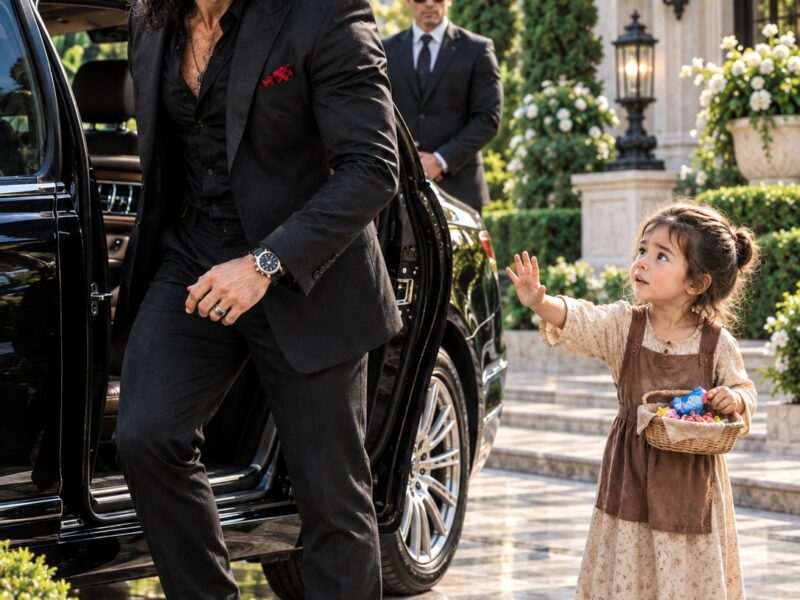
“Stop! Don’t Get in That Car!” the Maid’s Toddler Warned the Mafia Boss—He Froze
Mia Ruiz dropped her wooden truck before anyone else understood she was afraid.
It hit the marble floor with a sharp little crack.
Then the three-year-old ran directly toward the most dangerous man in the house.
“Stop!”
Vincent Marchetti had one hand inside his overcoat and the other reaching for the front door.
He turned.
Mia planted herself between him and the black SUV waiting beneath the gray November sky.
“Don’t get in that car!”
The entire entrance hall went silent.
Alina Ruiz felt the polishing cloth slip from her fingers.
For eight months she had worked at the Marchetti estate in Lake Forest, Illinois, and she had learned one rule faster than all the others.
Do not interrupt Vincent Marchetti.
His legitimate companies employed thousands of people across Chicago logistics, restaurants, construction, and commercial real estate.
The older businesses attached to his family name were discussed differently.
Quietly.
Usually after checking who was listening.
Vincent never called himself a mafia boss.
Newspapers occasionally did.
Federal investigators had used less theatrical language over the years.
Organized-crime associations.
Historic syndicate ties.
Legacy enterprises.
Alina did not care which label was technically correct.
She knew what happened when Vincent walked into a room.
Men twice his size stopped talking.
That morning, two of them stood behind him.
Dominic Russo, his director of security, went instantly alert.
Frank Caruso, who supervised vehicles and residential access, looked toward the front windows.
Mia looked only at Vincent.
Her cheeks were flushed.
Her small fists were clenched.
Alina hurried forward.
“Mia.”
Her daughter did not move.
“Baby, come here.”
“No.”
The word was barely louder than a whisper.
Alina’s stomach dropped.
Mia was not a defiant child.
Curious, yes.
Persistent, absolutely.
She once spent forty-five minutes asking why snow did not fall upward.
But when Alina used that tone, she came.
Not now.
Vincent looked at the child.
Then at Alina.
“Is she afraid of cars?”
“No, sir.”
Alina hated how quickly the answer came.
It sounded defensive.
“She loves cars.”
Mia’s wooden truck lay behind her near the staircase.
Vincent noticed it too.
Frank checked his watch.
“Boss, we’re already twelve minutes behind.”
Vincent had a meeting downtown with three men from a shipping consortium that did not tolerate last-minute changes.
Everyone in the house knew because security had been moving since before sunrise.
Vincent ignored Frank.
He crouched.
The gesture startled Alina more than anger would have.
Vincent Marchetti did not crouch for anyone.
Up close, his expression remained controlled.
Forty-two years old.
Dark hair touched with gray.
Black overcoat cut so perfectly it made every other coat in the room look temporary.
His face had the stillness of someone who had spent most of his adult life learning not to reveal what surprised him.
“Mia.”
The child stared at him.
“Yes?”
“Why shouldn’t I get in the car?”
Her lip trembled.
Alina moved closer.
“It’s okay.”
Mia pointed through the open front door.
The SUV idled at the edge of the circular drive.
“The man.”
Vincent’s eyes changed.
“What man?”
“Under it.”
Dominic looked toward the vehicle.
Frank frowned.
Mia continued.
“At dark.”
Vincent’s voice softened.
“When it was dark?”
She nodded.
“He went under.”
“With what?”
Mia looked frustrated.
Adults required too many words.
“A light.”
She made a tiny circle with her fingers.
“Little light.”
“What did he do?”
“He put a black thing.”
Alina felt cold move through her body.
Frank exhaled sharply.
“Boss.”
Vincent did not look away from Mia.
“When did you see this?”
The child held up three fingers.
Vincent looked at Alina.
“Three days?”
Alina shook her head.
“I don’t know.”
Their staff apartment occupied the east side of the carriage building.
Mia’s bedroom window overlooked part of the garage drive.
Alina suddenly remembered waking two nights earlier and finding Mia standing beside the window.
She had assumed the child was watching rain.
“Mia.”
Alina knelt.
“Was it the night it rained?”
Mia nodded.
“Big rain.”
Three nights ago.
Frank gave a short, uncomfortable laugh.
“Kids dream.”
Nobody responded.
He tried again.
“Vincent, she’s three.”
That finally made Vincent look at him.
Frank stopped speaking.
Vincent rose.
“Dominic.”
“Yes.”
“Move everybody away from the SUV.”
Frank’s face tightened.
“Boss, seriously?”
Vincent turned.
“I said everybody.”
Dominic did not ask whether the order was reasonable.
He stepped outside.
Two security officers near the SUV moved back.
The driver got out.
Vincent took his phone from his coat.
Alina expected him to call one of the family’s private mechanics.
Instead he called his attorney.
“Evelyn.”
He listened.
“Yes, now.”
Another pause.
“I need the county bomb squad contacted through your office.”
Frank stared.
Vincent’s gaze stayed on the vehicle.
“No one touches it until they arrive.”
He ended the call.
Frank stepped closer.
“You’re calling law enforcement onto the property because a toddler said she saw somebody under a car?”
Vincent looked at him.
“Yes.”
The answer was so simple it left nowhere to argue.
Frank lowered his voice.
“You know what kind of attention that brings.”
“I do.”
“The meeting—”
“Can wait.”
“It can’t.”
Vincent finally faced him fully.
“If I am wrong, I lose an hour.”
His eyes shifted to the SUV.
“If she is right, I keep the rest of my life.”
Frank’s jaw tightened.
Nobody moved.
Mia reached for Alina’s hand.
Alina took it.
Twenty-eight minutes later, an unmarked county vehicle entered the property.
Then another.
The bomb technicians made everyone move inside and away from the front windows.
Mia was taken to the staff kitchen.
Alina tried to give her cereal.
She refused.
“Mr. Vincent car bad?”
“We don’t know.”
“He not go?”
“No.”
That seemed to calm her.
Mia ate one dry Cheerio.
Then another.
Alina stared at her daughter.
“You saw a man outside at night.”
Mia nodded.
“Why didn’t you tell Mommy?”
The child looked down.
“I tell Bunny.”
Alina closed her eyes.
Of course.
“Why not me?”
“You sleepy.”
That answer hurt more than it should have.
Alina worked ten-hour shifts.
Sometimes twelve.
She cleaned houses for people whose garages were larger than the apartment she had lost after rent increased the previous year.
The Marchetti job came with staff housing and health insurance.
That was why Mia lived on the property.
That was why Alina tolerated the strange hours.
That was why, when she fell asleep, she fell hard.
“Next time you see something that scares you, wake me.”
Mia looked serious.
“Even sleep?”
“Especially sleep.”
The kitchen door opened.
Dominic stood there.
His face told Alina the answer before he spoke.
“They found something.”
Alina’s hand tightened around the chair.
“What?”
Dominic looked at Mia.
Then back at Alina.
“A device fixed underneath the vehicle.”
He did not explain more.
He did not need to.
Mia whispered:
“Black thing.”
Dominic looked at her.
For the first time in the eight months Alina had known him, the security chief looked uncertain about what to say to a child.
Finally:
“You were right.”
Mia returned to her cereal.
Adults being slow was not new to her.
The house changed after that.
Not dramatically.
There was no shouting.
No one ran with guns.
That made the tension worse.
Doors closed.
Phones rang behind them.
Security officers who usually joked quietly near the service entrance stopped joking.
The shipping meeting was cancelled.
Vincent remained in his study with Evelyn Shaw, his attorney, Dominic, and county investigators.
Frank Caruso waited outside.
That interested Alina.
Frank was normally inside every security conversation.
At noon, Evelyn entered the kitchen.
She was sixty, silver-haired, immaculate, and had once told Alina that expensive shoes were only useful if you could still run in them.
Today she wore flats.
“Ms. Ruiz.”
Alina stood.
“Yes?”
“I need to ask you not to discuss what Mia saw with her.”
Alina stiffened.
“I already asked her why she didn’t tell me.”
“That’s fine.”
Evelyn sat across from her.
“But from now on, no questions about what the man looked like.”
“Why?”
“Because she may become a witness.”
Alina’s stomach twisted.
“No.”
Evelyn’s expression softened slightly.
“I understand.”
“No, you don’t.”
Alina pulled Mia closer.
“She is three.”
“Yes.”
“She is not going into some room full of men asking her questions.”
“No.”
Evelyn spoke evenly.
“If investigators decide they need her recollection, it will be done by a trained child interviewer.”
“You can be involved in arranging it.”
“No Marchetti employee will question her.”
Alina looked toward the hallway.
“Does Mr. Marchetti agree with that?”
“Yes.”
The answer surprised her.
“He said it before I did.”
Alina looked down at Mia.
The child was feeding Bunny imaginary cereal.
“What happens to us?”
“Today?”
“After today.”
Evelyn waited.
That was not comforting.
“Someone put something under his car.”
Alina’s voice dropped.
“My daughter saw them.”
“If whoever did it learns that—”
“We don’t know that they know.”
“That is not an answer.”
“No.”
Evelyn nodded.
“It isn’t.”
Alina appreciated the honesty.
“What does Vincent want?”
“He wants you moved into the main residence temporarily.”
“No.”
Evelyn blinked.
Alina stood.
“No.”
“The main residence has better security.”
“It also belongs to the man somebody just tried to kill.”
“That is true.”
“I have a sister in Evanston.”
“Mia and I can stay there.”
Evelyn considered.
“Would you accept security if it were recommended by law enforcement?”
“Recommended.”
“Not ordered by him.”
Evelyn almost smiled.
“I see why he likes you.”
“He doesn’t know me.”
“That may be changing.”
Alina did not answer.
That afternoon the bomb technicians removed the device and transferred it into evidence.
No one at the estate was allowed near it.
That annoyed several of Vincent’s older associates.
Good, Evelyn thought.
Annoyance was survivable.
By three, the preliminary facts were simple.
The object beneath the SUV was not accidental.
It had been placed deliberately.
The garage security system showed no authorized visitor during the likely time window.
One exterior camera had gone offline for eleven minutes shortly after 2:00 a.m. three nights earlier.
Vincent sat at his study desk reading the report.
Dominic stood across from him.
Frank stood beside the windows.
Evelyn remained seated.
“No camera failure?”
Vincent asked.
Dominic shook his head.
“Manual interruption.”
“From where?”
“Garage control cabinet or administrator access.”
“How many people have administrator access?”
“Three.”
“Names.”
“Me.”
“Frank.”
“And Nolan from the security vendor.”
“Nolan was in Indiana that night.”
“Confirmed?”
“His vehicle toll records and hotel entry support it.”
Vincent looked at Frank.
Frank’s face had been pale all morning.
Now it hardened.
“You think I did this.”
Vincent closed the report.
“I think your name is on a list.”
“After nine years.”
“Time employed is not evidence.”
Frank looked offended.
“It used to mean something.”
“It means I owe you a fair investigation.”
Vincent leaned back.
“Not blindness.”
Frank looked away.
Dominic placed another page on the desk.
“There’s more.”
“Raw gate log from the vendor.”
Vincent read.
An access credential assigned to Frank Caruso had opened the service gate at 1:54 a.m.
Frank stared.
“That’s impossible.”
“You were home?”
“Yes.”
“Anyone have your code?”
“No.”
“Card?”
“In my wallet.”
“Where was the wallet?”
Frank’s expression shifted.
“Kitchen counter.”
“At home?”
“Yes.”
“Anybody else there?”
“My wife.”
“My nephew was staying over.”
Vincent did not react.
“Your nephew’s name?”
“Anthony.”
Dominic spoke.
“He works contract security.”
Frank turned sharply.
“What are you doing?”
“Checking.”
“You went through my family?”
“We checked everyone attached to the credential.”
Frank looked at Vincent.
“This is insane.”
Vincent said nothing.
Frank’s voice rose.
“I checked that SUV at six fifteen this morning.”
“The normal sweep.”
“I saw nothing.”
Vincent’s eyes narrowed.
“You personally checked it.”
“Yes.”
“And missed a device large enough for a technician to find once he knew to look.”
Frank flushed.
“I didn’t crawl under the car.”
“Standard sweep doesn’t require that.”
Vincent nodded.
“That may be part of the problem.”
Frank stared.
“You’re blaming protocol now?”
“I’m examining it.”
“There’s a difference.”
Frank laughed without humor.
“You sound like Evelyn.”
Evelyn looked up.
“A compliment at last.”
No one smiled.
Vincent turned toward Dominic.
“Preserve the vehicle logs.”
“Every garage camera.”
“Gate vendor data.”
“Do not confront the nephew.”
“Police handle contact.”
Frank looked stunned.
“You’re giving this to police?”
“Yes.”
“Vincent.”
“Sit down.”
“I am sitting.”
“Then stop acting like you’re about to climb out of your skin.”
Frank’s mouth closed.
Vincent had known him nine years.
Frank had driven his father to chemotherapy.
Carried Katherine Marchetti’s coffin.
Once slept three nights in a hospital chair after Dominic was shot during a warehouse robbery years before Vincent took over.
Trust did not disappear quickly.
That was the problem.
It frayed one thread at a time.
At four thirty, Alina left with Mia.
Her sister, Rosa, waited at a police station parking lot in Evanston because nobody wanted the transfer happening at the estate gate.
Vincent came outside before they left.
Alina saw him approaching and immediately became tense.
Mia did the opposite.
“Mr. Vincent.”
He stopped several feet away.
“Hello, Mia.”
“No bad car?”
“No bad car.”
“You get new one?”
“Yes.”
She considered.
“Check under.”
Dominic looked away.
Vincent’s mouth almost moved.
“I will.”
Mia seemed satisfied.
Alina shifted her bag.
“We’re leaving.”
“I know.”
“I’m not asking permission.”
“I know.”
That irritated her less than it should have.
Vincent looked at her.
“County investigators recommended temporary relocation.”
“Yes.”
“My sister agreed.”
“Yes.”
“I did not give them her address.”
“Good.”
She paused.
“You’re really not sending anyone?”
“Not unless you ask.”
“What if you think I need it?”
“Then I tell you.”
“You decide.”
“Still you.”
Alina studied him.
There were stories about Vincent Marchetti.
Men disappearing.
Business owners suddenly deciding to sell.
Rival families changing plans after one conversation.
She had no idea which stories were true.
This version of him looked tired.
Not weak.
Tired.
“Thank you.”
He nodded.
Then Mia held out the wooden truck.
Vincent looked at it.
“For me?”
“No.”
She pointed beneath his coat.
“Car.”
He frowned.
Mia pushed the truck under a nearby bench.
Then got down on her knees and looked underneath.
“Look low.”
The adults went quiet.
Vincent understood.
“Okay.”
He crouched beside her.
Looked under the bench.
“There it is.”
Mia smiled.
That was the first time Alina saw Vincent Marchetti smile.
It lasted less than a second.
Then it was gone.
Two days later, Mia sat with a forensic child interviewer.
Alina sat behind observation glass with a victim advocate.
No Vincent.
No Dominic.
No Marchetti employee.
The interviewer did not ask, “Was Frank there?”
She did not ask, “Did the man put a bomb under the car?”
She began with toys.
Colors.
The weather.
Then:
“Tell me about the night you looked out your window.”
Mia held Bunny.
“Rain.”
“What did you see?”
“Car.”
“What happened with the car?”
“Man go down.”
“Show me.”
Mia used a toy figure.
Placed it beneath a plastic car.
“What happened next?”
“He had light.”
“What did the light look like?”
“White.”
“What else?”
“Frank door.”
Alina stopped breathing.
The interviewer remained neutral.
“What is Frank door?”
“Mr. Frank open big door.”
“Did you see Mr. Frank?”
Mia nodded.
“What happened?”
“He talk man.”
Alina closed her eyes.
The interviewer did not react.
“What did you hear?”
Mia shook her head.
“Rain loud.”
“Then what?”
“Mr. Frank go.”
“Man go down.”
“Then?”
“Little red.”
She touched the toy car’s underside.
Then pulled the figure away.
That was all.
Not a confession.
Not proof.
But enough to change where investigators looked.
Frank had told Vincent he left the estate at 10:40 that night.
Vehicle records showed his car did leave.
His phone connected to his home Wi-Fi forty minutes later.
But at 1:49 a.m., another vehicle entered through the service gate using his credential.
The exterior camera gap began five minutes later.
Police obtained footage from a gas station two miles away.
A dark pickup matching the service-gate vehicle passed at 1:36.
Plate partially visible.
Registered to a small HVAC company.
The company owner said the truck had been borrowed that night.
By whom?
A contract security technician named Anthony Caruso.
Frank’s nephew.
Dominic brought the update to Vincent.
Vincent closed his eyes.
“Where is Anthony?”
“With police.”
“Talking?”
“Lawyer present.”
Vincent looked out the window.
“And Frank?”
“In the west sitting room.”
“Waiting.”
Vincent’s hands flattened on his desk.
“Bring him.”
Frank entered without his jacket.
He looked older than he had three days earlier.
Dominic stayed near the door.
Evelyn sat beside Vincent.
Frank looked at her.
“Attorney.”
“For him?”
“For the company.”
“I have my own.”
“Good.”
Vincent pointed to the chair.
Frank sat.
Vincent placed nothing dramatic on the desk.
No weapon.
No photograph.
Only a printed access log.
“Your nephew used your credential.”
Frank stared at it.
No denial.
That was answer enough.
Vincent waited.
Frank rubbed both hands over his face.
“I didn’t know.”
“Know what?”
“What they were going to put under the vehicle.”
Evelyn’s pen stopped.
Vincent remained still.
“Start again.”
Frank looked at him.
“They came to me two months ago.”
“Who?”
“Men connected to Callahan Freight.”
Vincent’s expression hardened.
The Callahan name had followed his family for thirty years.
Competitors first.
Enemies later.
Then something more complicated.
The Marchettis controlled regional freight contracts.
The Callahans controlled terminals and union relationships on the other side of the state line.
They had fought.
Settled.
Fought again.
Vincent had spent six years moving both families toward legitimate contracts because he was tired of inherited wars.
“Why you?”
Vincent asked.
Frank swallowed.
“Anthony owes money.”
“To them?”
“To one of their bookmaking people.”
“How much?”
“Enough.”
Vincent’s jaw tightened.
“Numbers.”
“One hundred eighty thousand.”
Dominic swore softly.
Frank continued.
“He got into sports betting.”
“Then borrowed.”
“Then borrowed to cover what he borrowed.”
Vincent stared.
“And Callahan offered to forgive it.”
“If?”
“I opened the service gate.”
“Turned off one camera.”
“Let their guy under the SUV.”
“What did they tell you he was doing?”
“Tracker.”
“GPS.”
“They said they wanted to know your route to the Alvarez meeting.”
Vincent’s face changed.
“You believed them.”
Frank looked away.
“I wanted to.”
“That is not what I asked.”
“No.”
Frank’s voice broke.
“I didn’t believe it.”
Silence.
Vincent sat back.
Frank continued.
“I told myself if it was a tracker, nobody got hurt.”
“If it was something worse, maybe your morning sweep would catch it.”
Dominic stared.
“You were the morning sweep.”
“I know.”
“Then why didn’t you?”
Frank’s jaw trembled.
“I got scared.”
There it was.
Not villainy.
Not strategy.
Cowardice.
Frank looked at Vincent.
“At six fifteen I went under the front with a flashlight.”
“I saw the edge of it.”
“I knew.”
Vincent’s expression did not change.
Frank’s eyes filled.
“I knew.”
“And you still let me walk downstairs.”
“I thought if I told you, Anthony was dead.”
“You thought if you didn’t, I might be.”
Frank said nothing.
Vincent stood.
Dominic tensed.
Not because he expected Vincent to hit him.
Because an older version of the Marchetti family might have done worse.
Vincent walked to the window.
Outside, November rain darkened the terrace.
“Nine years.”
Frank lowered his head.
Vincent spoke without turning.
“You had nine years to learn one thing about me.”
“What?”
“That I would have helped your nephew.”
Frank laughed bitterly.
“You say that now.”
Vincent turned.
“I paid for your wife’s cancer treatment.”
“You think I would not pay a bookmaker to keep a twenty-three-year-old alive long enough to testify?”
“It wasn’t just money.”
“What else?”
Frank swallowed.
“They had pictures.”
“My sister’s kids.”
“School.”
“Soccer.”
“Home.”
Dominic’s face hardened.
Vincent’s did not.
“You should have told me.”
“I thought I was protecting them.”
“No.”
Vincent returned to the desk.
“You were deciding for everyone who was allowed to carry risk.”
“That is different.”
Frank stared.
It was exactly what Vincent himself had done most of his life.
The recognition hurt.
Evelyn closed her notebook.
“Vincent.”
He looked at her.
“This conversation ends here.”
Frank’s attorney was already waiting downstairs.
Police had his nephew.
Anything else belonged in formal statements.
Vincent nodded.
“Dominic.”
“Yes?”
“Take Frank to his lawyer.”
Frank stood.
He looked at Vincent.
“What happens to me?”
Vincent did not answer.
Not because he planned something secret.
Because for once, consequences would not be his private property.
“Your attorney will explain that.”
Frank stared.
Then understood.
“You’re giving me to them.”
“I’m giving evidence to them.”
“What they do with you is not mine to invent.”
Frank’s face crumpled.
Not dramatically.
Just enough that Vincent saw the man who had once held his father’s coat outside an oncology ward.
“Vincent.”
He stopped.
“I am sorry.”
Vincent looked at him for a long time.
“I believe you.”
Frank’s eyes lifted.
“That does not make it smaller.”
Frank left.
Dominic closed the door behind him.
For several seconds, Vincent said nothing.
Then he picked up the report and threw it across the room.
Paper scattered.
Evelyn watched.
“That help?”
“No.”
“Good.”
He looked at her.
“I hate you.”
“You pay me too much for that to be true.”
Dominic bent to collect pages.
Vincent stopped him.
“Leave them.”
He sat again.
“How did Callahan know about the Alvarez meeting?”
Dominic straightened.
That was the next question.
The meeting had not been public.
Only seven people knew.
Vincent.
Dominic.
Frank.
Evelyn.
His driver.
Two executives.
Frank had admitted opening the gate.
He had not explained who inside Vincent’s business had supplied the schedule.
The betrayal was wider.
That evening Alina received a photograph on her phone.
No message.
Just one image.
Mia’s bedroom window at the staff apartment.
Taken from outside the estate fence.
Alina’s hand went numb.
Rosa saw her face.
“What?”
Alina showed her.
Rosa swore.
Mia sat on the floor ten feet away building a block tower.
Alina called Detective Brooks before anyone else.
That decision mattered.
Then she called Evelyn.
Not Vincent.
Evelyn answered immediately.
“Send me the image.”
“I already sent it to Detective Brooks.”
“Good.”
A pause.
“Vincent will want to move you.”
“I know.”
“Do you want to hear the options?”
“Yes.”
Not orders.
Options.
By midnight, detectives had the metadata.
Nothing useful.
The image had been stripped.
The number came from a disposable service.
But the photograph did one thing clearly.
Whoever was behind the attempt knew Mia had seen something.
Alina did not sleep.
At two in the morning, she stood in Rosa’s kitchen drinking cold coffee.
Her sister leaned against the counter.
“You need to leave Illinois.”
“No.”
“Alina.”
“No.”
“You have a kid.”
“I know.”
“They photographed her bedroom.”
“I know.”
“Then what are you doing?”
Alina put down the mug.
“If I run without a plan, I lose my job.”
“My housing.”
“Mia’s preschool.”
“Everything.”
Rosa stared.
“That matters less than breathing.”
“Yes.”
“But people with money always get to say that because they can replace everything tomorrow.”
Rosa went quiet.
Alina’s eyes filled.
“I can’t.”
The next morning, Vincent called.
Not at two.
Not through Dominic.
At nine.
Alina answered.
“I saw the photograph.”
“Evelyn told me.”
“What do you want to do?”
The question caught her off guard.
“Me?”
“Yes.”
“You already know what you want.”
“Yes.”
“What?”
“I want you and Mia inside a guarded house in another state until this is finished.”
Alina almost laughed.
“At least you admit it.”
“I am practicing honesty.”
“Do you want what I want?”
“Yes.”
“What is that?”
“I want to stay with Rosa.”
“Keep Mia’s routine.”
“Go back to work eventually.”
“Not live like a prisoner because somebody around you betrayed you.”
Vincent closed his eyes.
“Fair.”
“You don’t sound like you mean fair.”
“I mean unpleasant.”
“Different word.”
“I am learning.”
She smiled despite herself.
Then became serious.
“Detective Brooks wants a patrol check near the house and a camera installed.”
“I agreed.”
Vincent paused.
“You agreed?”
“Because she asked.”
“Not because you would.”
Silence.
Point received.
“I will not send anyone else.”
“Thank you.”
“Mia okay?”
Alina looked toward the living room.
Her daughter had drawn three cars.
One had a smiling face.
“She thinks you need a blue car now.”
Vincent looked at the black SUV being loaded onto a forensic tow truck outside his study window.
“Tell her I’ll consider it.”
“She’ll hold you to that.”
“I’m beginning to understand.”
The second layer broke open through bookkeeping.
Not guns.
Not threats.
Numbers.
Evelyn had ordered an independent audit of travel scheduling after Frank’s confession.
One payment stood out.
A consulting invoice from a logistics subcontractor called Northline Strategy.
Ordinary amount.
Ordinary description.
But Northline had no employees.
Its registered address was a mailbox in Kenosha.
Bank records obtained later through subpoena showed payments moving from Northline to a Callahan-associated freight broker.
Who approved Northline invoices?
Matthew Marchetti.
Vincent’s cousin.
Chief operating officer of Marchetti Logistics.
The man who sat beside Vincent every Christmas.
The man whose father and Vincent’s father were brothers.
Dominic read the report twice.
“No.”
Vincent said nothing.
“Matthew hates Callahan.”
“Maybe.”
“His father nearly died because of them.”
“Maybe hatred became business.”
Dominic looked angry.
“You really think he—”
“I think his name is on the paper.”
“That is what I thought about Frank.”
Dominic stopped.
Vincent continued.
“We verify.”
Matthew arrived at the estate that afternoon because Vincent asked him to review a contract.
No ambush.
No armed circle.
Evelyn sat in the room.
So did outside forensic accountant Leah Park.
Matthew noticed immediately.
“What is this?”
Vincent slid the invoice forward.
“Northline Strategy.”
Matthew glanced.
“What about it?”
“You approved seventeen invoices.”
“So?”
“What do they do?”
“Route consulting.”
“For what routes?”
“Regional overflow.”
“Name an employee.”
Matthew’s eyes lifted.
“What?”
“One.”
“Any employee.”
Matthew leaned back.
“Vincent.”
“Name one.”
Silence.
Evelyn folded her hands.
Matthew looked at her.
Then at Leah.
Then at the door.
Dominic stood outside, visible through glass.
Matthew laughed.
“You think I tried to kill you.”
Vincent’s expression remained flat.
“I think you approved payments to a shell that sent money into Callahan’s network.”
Matthew’s face changed.
“Where did you get bank data?”
“Legally.”
“That must hurt.”
“More than you know.”
Matthew stood.
Vincent did not.
“Sit.”
“No.”
“Then stand.”
That annoyed him more.
“You have spent six years turning this family into a corporation.”
Matthew said.
“Compliance departments.”
“Outside directors.”
“Audits.”
“Men who built this with our fathers have to ask permission from lawyers to move money.”
“Yes.”
“You call that progress.”
“I do.”
Matthew’s face reddened.
“I call it surrender.”
Vincent stared.
“There it is.”
Matthew went still.
Vincent continued.
“You gave Callahan my schedule.”
Matthew looked toward Evelyn.
His lawyer had not been called because he had not yet been accused formally.
Now he understood he needed one.
“I’m done talking.”
“Good.”
Vincent pressed the intercom.
“Dominic.”
The door opened.
Matthew flinched.
Vincent saw it.
Dominic entered.
“Walk Matthew downstairs.”
“His phone stays with him.”
“He calls counsel.”
Matthew looked surprised.
“You’re letting me leave.”
“Yes.”
Vincent’s voice cooled.
“Did you expect a basement?”
Matthew said nothing.
Vincent leaned back.
“That expectation is part of why we are here.”
Matthew walked out.
Leah Park waited until the door closed.
“He is going to destroy records.”
“No.”
Evelyn answered.
“His access was frozen ten minutes before he entered the house.”
Vincent looked at her.
“You did that without asking.”
“Yes.”
He almost smiled.
“Good.”
The investigation widened.
Northline invoices.
Callahan broker accounts.
Meeting schedules.
Matthew’s deleted emails recovered from company archives.
One message mattered.
ALVAREZ DEAL TUESDAY. EAST BRIDGE. STANDARD SUV.
Sent to a private address later linked to Callahan’s logistics adviser.
Another:
F.C. CONFIRMED ACCESS. KEEP THIS CLEAN.
F.C.
Frank Caruso.
The case now had structure.
Matthew supplied schedule.
Frank supplied access.
Callahan operatives supplied the device.
Whether Matthew knew it was intended to kill Vincent remained uncertain.
That distinction mattered legally.
It also mattered personally.
Vincent wanted to believe his cousin had intended leverage, intimidation, anything short of murder.
Evelyn told him wanting was irrelevant.
He hated her for being right.
Police arrested Matthew at his attorney’s office.
Callahan-connected financial accounts were frozen.
Anthony Caruso agreed to cooperate.
Frank did too.
In exchange, prosecutors considered the threats against his family and his cooperation.
No private punishment.
No disappearance.
No cellar.
The Marchetti family was stunned.
Vincent’s uncle arrived at the estate furious.
“You let them arrest family.”
Vincent stood behind his desk.
“I let investigators use evidence.”
“Your father would be ashamed.”
Vincent’s face went still.
“My father taught us to hide every weakness until it became an infection.”
His uncle slammed a palm onto the desk.
“Family handles family.”
“That is what created this.”
“You think courts protect us?”
“No.”
Vincent leaned forward.
“I think secrets protected the wrong people.”
His uncle stared.
“You’ve become soft.”
Vincent smiled without warmth.
“Someone tried to kill me with a device under my car.”
“I’m still here.”
“Soft seems survivable.”
His uncle left.
Dominic remained.
After a long silence:
“You meant that?”
“Which part?”
“About secrets.”
Vincent looked through the window.
Mia’s words came back.
The man was under it at dark.
He put something.
The child had seen what trained men missed because she had no theory to protect.
No assumption about loyalty.
No hierarchy telling her who could be dangerous.
“I think we built systems designed to confirm what we already believed.”
Dominic frowned.
“That sounds like Evelyn.”
“I need new friends.”
“You have no friends.”
“Helpful.”
The Callahans did not disappear quietly.
Their attorney issued denials.
Their companies claimed rogue subcontractors acted without authorization.
A newspaper received records from the Marchetti family’s past.
Old casino interests.
Payments to union consultants.
Photographs of Vincent’s father with men later convicted of racketeering.
The message was obvious.
If Vincent kept cooperating, Callahan would drag his entire family history into daylight.
Dominic showed him the article drafts.
“We can stop some of this.”
“How?”
“Lawyers.”
“Threats?”
Dominic said nothing.
Vincent looked at him.
“No.”
“They are using your father against you.”
“He’s dead.”
“They can damage the company.”
“Maybe.”
“Employees.”
“Investors.”
“I know.”
Dominic leaned forward.
“You built all of this to get away from what he was.”
“And if I protect it by acting like him?”
Dominic stopped.
Vincent called Evelyn.
“Give investigators everything relevant.”
Her silence lasted two seconds.
“Everything?”
“Everything they lawfully request.”
“Some of the historic subsidiaries are ugly.”
“I know.”
“You may trigger regulatory reviews unrelated to the attack.”
“I know.”
“Financially?”
“Painful.”
“Reputationally?”
“Worse.”
Vincent looked toward the driveway.
A new SUV waited.
Blue.
Mia had won.
“Do it.”
That decision shocked more people than any act of retaliation could have.
The Callahans expected war.
Vincent gave them auditors.
Subpoenas.
Federal grand jury testimony.
Financial disclosures.
Independent directors.
Old shell companies were dissolved.
Two Marchetti subsidiaries paid civil penalties over reporting practices inherited from Vincent’s father.
One retired executive was charged with tax fraud unrelated to the car attack.
Vincent did not interfere.
His uncle stopped speaking to him.
Three long-time associates resigned.
Investors complained that he had exposed the company unnecessarily.
Vincent slept better.
Not well.
Better.
Alina returned to the estate six weeks later.
Not because Vincent summoned her.
Because Detective Brooks told her the immediate threat had been contained and Alina decided she needed her job.
She arrived at seven fifteen.
Mia held the wooden truck.
Vincent was leaving at seven twenty.
Blue SUV.
Three independent inspections had already been logged.
He saw them in the hallway.
Stopped.
Mia gasped.
“Blue!”
Vincent looked toward Alina.
“I was outvoted.”
“By whom?”
He pointed to Mia.
The child ran to the window.
“Check under.”
Dominic sighed.
“We did.”
Mia looked at him.
“You?”
“Yes.”
“Mr. Vincent too?”
Dominic looked offended.
“The boss does not crawl beneath vehicles.”
Vincent removed his overcoat.
Dominic stared.
“Vincent.”
He crouched beside the SUV.
Not under it.
Low enough to use the inspection mirror the mechanic had left nearby.
Mia watched solemnly.
Vincent looked.
Then stood.
“Clear.”
Mia smiled.
“Good.”
Alina covered her mouth.
Not laughing would have been rude.
Vincent saw.
“You find this amusing.”
“A little.”
He put his coat back on.
“I have meetings.”
“Try not to cancel thirty-two million dollars over a toddler today.”
“That was Nicholas Rourke.”
Alina blinked.
Vincent’s mouth moved.
She laughed.
He had a dry sense of humor.
Who knew.
Life at the estate normalized slowly.
Frank never returned.
Dominic became director of both security and compliance liaison, which he complained was an insult to his personality.
Every access system was rebuilt around independent logging.
No single security chief could erase a camera interruption without creating a second record outside the estate network.
Vincent stopped believing expensive security meant perfect security.
That lesson cost less than the alternative.
Mia’s life changed less.
Alina insisted on that.
No private school paid by Vincent.
No trust fund.
No apartment deed.
When Vincent offered to cover housing for Alina and Mia away from the staff quarters, Alina said:
“No.”
He had expected that.
“Why?”
“Because gratitude is not rent.”
“I am not buying gratitude.”
“I know.”
“Then what?”
“I don’t want Mia growing up thinking saving a rich man earns prizes.”
Vincent stared at her.
“She did something kind.”
“Yes.”
“That is enough.”
He nodded.
“What would help?”
Alina thought.
“Emergency childcare.”
“For me?”
“For staff.”
“Half the people here are one cancelled sitter away from missing a shift.”
Vincent looked embarrassed.
Good.
Three months later, the estate contracted licensed backup childcare for employees.
Not called the Mia Program.
Alina made sure.
She kept cleaning.
Then stopped.
Not because Vincent rescued her.
Because she had been taking evening classes in facilities management for a year and accepted a supervisor position at a hotel in downtown Chicago.
She told Vincent on a Thursday.
He stared.
“You’re leaving.”
“Yes.”
“Why didn’t you tell me you were studying?”
“You never asked.”
The sentence landed.
He nodded.
“When do you start?”
“January.”
“Do you need a reference?”
“Yes.”
“Anything else?”
“No.”
He almost offered money.
She saw it.
“Don’t.”
“I didn’t say anything.”
“Your face did.”
Vincent sighed.
“Everyone reads my face now.”
“You need a worse face.”
“I thought I had one.”
Her last day at the estate, Mia ran through the entrance hall dragging the wooden truck.
The same staircase.
Same marble.
Same front door.
Different feeling.
Vincent stood near the blue SUV.
Mia stopped.
“Wait.”
Dominic groaned.
“What now?”
Mia crouched.
Looked under the vehicle.
Then stood.
“All good.”
Vincent nodded.
“Thank you, inspector.”
She held out one hand.
He crouched.
Mia whispered:
“You not scared now?”
The question surprised him.
“Was I scared before?”
She nodded.
“When I say stop.”
Vincent looked at Alina.
Alina shrugged.
Children noticed.
He turned back to Mia.
“Yes.”
“I was.”
Mia considered.
“It okay.”
Vincent’s throat tightened.
“Is it?”
“Mommy scared sometimes.”
Alina looked away.
Mia continued.
“She still goes.”
Vincent smiled.
“Your mother is smarter than most people I know.”
“I know.”
Alina laughed.
Then Mia climbed into her mother’s car.
Not the blue SUV.
Not Vincent’s world.
Her own.
That mattered.
The criminal cases took almost two years.
Frank pled guilty to conspiracy-related charges and received consideration for cooperation and documented coercion against his family.
Anthony received a reduced sentence after testifying.
Matthew fought the charges longer.
Recovered communications eventually showed he knew Callahan intended “permanent removal,” language prosecutors argued made his claimed ignorance impossible to believe.
A jury agreed.
Several Callahan executives were convicted on conspiracy and attempted-murder charges.
No warehouse confrontation.
No private exile.
No street war.
The newspapers seemed disappointed.
Vincent was not.
During Matthew’s sentencing, his cousin looked at him across the courtroom.
“You chose strangers over family.”
Vincent did not answer until they were outside.
Evelyn stood beside him.
Reporters shouted questions.
Vincent paused.
Then said quietly enough that only Evelyn heard:
“No.”
“I chose facts over permission.”
She looked at him.
“Not bad.”
“Don’t sound surprised.”
“I am always surprised.”
The Marchetti empire became smaller afterward.
Cleaner too.
Vincent sold businesses whose histories he could not defend.
He moved the logistics company through an independent board.
Dominic complained that board committees were more frightening than mobsters.
Vincent agreed.
His uncle died still angry with him.
That hurt.
Vincent did not rewrite it into peace.
Some endings remained unfinished.
Alina built a different life.
Her hotel promoted her twice in three years.
She moved out of the staff apartment and into a two-bedroom place in Evanston with a balcony large enough for Mia to leave three plastic trucks in the rain.
Mia started kindergarten.
Then first grade.
She forgot most details of the night she saw the man under the SUV.
Children often did.
She remembered the important shape.
Someone was hiding.
She warned someone.
An adult listened.
Alina considered that enough.
Vincent saw them occasionally.
Not constantly.
Birthdays.
Staff reunions.
Once at a hotel charity event where Alina was running operations and ordered Vincent away from a loading entrance.
“You cannot stand there.”
“This is a public hallway.”
“It is my loading schedule.”
He moved.
Dominic witnessed it.
“I have waited fifteen years for this.”
Vincent ignored him.
Whatever grew between Vincent and Alina grew slowly enough that neither could confuse it with debt.
For almost two years, nothing happened.
He dated once.
She dated twice.
Mia disliked one of Alina’s dates because he chewed too loudly.
Alina ignored the review.
Eventually Vincent asked Alina to dinner.
Not at his house.
Not in a private club.
A restaurant in Evanston where nobody cared who he was.
She looked at him.
“Is this gratitude?”
“No.”
“Protection?”
“No.”
“Guilt?”
“Probably some.”
She almost smiled.
“Bad answer.”
“I’m trying not to lie.”
That earned him dinner.
Only dinner.
Then another.
Then months.
Vincent never became Mia’s replacement father.
Mia already had a father whose relationship with Alina had ended before she was born and who lived in Arizona.
Complicated.
Present inconsistently.
Real.
Vincent did not compete with him.
That mattered to Alina more than flowers.
Four years after the morning in the marble hallway, Mia was seven.
Vincent drove to Alina’s apartment for dinner.
Blue SUV still.
He parked.
Got out.
Mia came running down the building steps.
“Wait!”
Vincent froze.
Some reflexes never died.
Alina stopped behind her.
“What?”
Mia pointed.
“Your tire.”
Vincent looked.
Flat.
Completely ordinary.
He stared at Mia.
She grinned.
“You scared.”
He laughed.
A real laugh.
“No.”
“Yes.”
“Maybe.”
Alina walked down the steps.
“You know most people just say, ‘You have a flat tire.’”
Mia shrugged.
“Stop works.”
Vincent could not argue.
He opened the trunk for the spare.
Then stopped.
Alina raised an eyebrow.
“What?”
“I have roadside assistance.”
She laughed.
“Personal growth.”
“Extreme.”
They went upstairs and let someone else change the tire.
Later, after dinner, Mia fell asleep on the couch with a movie still playing.
Alina carried a blanket over.
Vincent watched her tuck it around the child.
“You know what I remember most?”
Alina asked.
“The device?”
“No.”
“Frank?”
“No.”
“The blue car?”
She smiled.
“The way you froze.”
Vincent leaned back.
“I had been warned by armed men.”
“Lawyers.”
“Federal agents.”
“My father.”
“Enemies.”
“None of them ever stopped me with one sentence.”
Alina sat across from him.
“Mia was terrified.”
“I know.”
“She still ran toward you.”
“I know.”
He looked at the sleeping girl.
“That is the part I remember.”
Not the device.
Not Callahan.
Not Matthew.
A three-year-old child crossing polished marble because she believed an adult was about to be hurt and had not yet learned that powerful people were supposed to be frightening.
Alina said:
“You listened.”
Vincent looked at her.
“I almost didn’t.”
“But you did.”
He shook his head.
“That feels like a very low standard.”
“Sometimes low standards save lives.”
He laughed softly.
Outside, evening traffic moved along the wet street.
No guards.
No estate walls.
No men waiting for orders.
Just headlights passing beneath the apartment windows.
Vincent looked down at his hands.
“My father used to say the safest man in the room is the one everyone fears.”
Alina waited.
“He was wrong.”
“What is safer?”
Vincent looked toward Mia.
“The person people are not afraid to warn.”
Alina’s expression softened.
No grand speech followed.
No neat promise.
Mia shifted beneath the blanket and mumbled something about trucks.
Alina smiled.
Vincent did too.
The next morning, the blue SUV was waiting at the curb with a new tire.
Vincent walked toward it.
Then stopped.
For one second, he heard a three-year-old voice echo through four years of memory.
Stop.
Don’t get in that car.
He looked beneath it.
Nothing there.
Then he got in.









