The Duke Gave Me a Ruined Estate to Get Rid of Me, But I Turned It Into the County’s Most Valuable Land
He called it a gift.
Everyone else understood it was exile.
By the next harvest, men who had laughed at that land were asking me how I saved it.
By the time Duke Hartwell offered me Ashborne Ridge, I had learned that generosity could be a beautifully dressed form of disposal.
The papers lay between us on his desk, clipped in a leather folder with his family crest pressed into the cover. Not an actual crest, of course. This was Kentucky, not England, and the Hartwells only pretended to be old nobility when investors were present. Still, the embossed horse and oak tree had opened more doors than most college degrees ever would.
Outside his library windows, November rain blurred the rolling pasture behind Hartwell House until the fences looked like pencil lines smudged by a careless hand. The room smelled of leather, cold coffee, and the faint lemon oil his housekeeper used on furniture that had belonged to four generations of men who believed owning land meant understanding it.
Duke sat across from me in a charcoal sweater, his sleeves pushed back, his expression composed enough to be mistaken for kindness by someone who had not spent two years watching him make difficult things disappear with courtesy.
His real name was Declan Hartwell III.
Everyone called him Duke because his grandfather had started it as a joke, and wealthy families are very good at turning jokes into titles if the joke flatters them enough.
“The transfer would be clean,” he said. “The house, the surrounding acreage, the leases, the equipment listed in the schedule, and the operating account I’ve attached for essential repairs.”
I looked at the folder, not at him.
That was safer.
For nearly two years since my husband died, I had lived at Hartwell House because the family insisted it was practical. My late husband, Noah, had been Duke’s cousin and the only Hartwell man who could enter a room without measuring its usefulness. When an aneurysm took him from me at thirty-nine, the family moved me into the east guest wing with soft voices, funeral flowers, and enough pity to make breathing difficult.
At first, I thought it was care.
Then I understood.
Care asks what you need.
Management decides what to do with you.
Duke had never been cruel to me. That would have been simpler. He paid the expenses tied to Noah’s estate. He assigned me rooms with a good view of the paddocks. He made sure I had a car, invitations, a place at holiday dinners, and the particular kind of respect that makes a woman feel like a valuable chair nobody knows where to put.
But respect without attention becomes another locked room.
“Why Ashborne Ridge?” I asked.
Duke leaned back slightly.
“Because it’s empty.”
“That is not an answer. It is a condition.”
His mouth tightened.
A small movement.
Enough.
“The property has been underused for years,” he said. “It would give you independence.”
“Independence,” I repeated.
“Would you prefer dependency?”
I finally looked up.
There it was, dressed as logic.
Duke had a talent for making decisions sound like choices after he had already removed every other option. He was not lying exactly. Ashborne Ridge would legally be mine if I signed. But a person can hand you land the same way someone hands you a coat at the end of a visit.
Politely.
While making it clear the visit is over.
“What condition is it in?” I asked.
His gaze shifted toward the rain.
“Poor.”
“How poor?”
“The main house has been closed for seven years. The northern roof needs work. There are three tenant houses still occupied, two vacant. Some acreage is leased. The orchard is… diminished.”
“Diminished.”
“The word in the report is ‘nonperforming.’”
I almost smiled.
The Hartwell family could make death sound like accounting.
“What about revenue?”
“Limited.”
“What about debt?”
“No mortgage.”
“What about deferred maintenance?”
He paused.
Too long.
“Substantial.”
I rested my fingertips on the leather folder.
“You are giving me an estate that costs more than it earns.”
“I am giving you property without mortgage and enough seed money to address urgent repairs.”
“Because you think it will provide me independence.”
“Yes.”
“Or because I have become inconvenient in your house.”
Rain whispered against the glass.
Duke’s face did not change much, but his eyes did. Something sharpened behind them.
“You are not inconvenient.”
“No?”
“No.”
“Then what am I?”
The question surprised both of us.
For two years, I had been Noah’s widow. The poor young widow. The useful widow at charity dinners. The one people seated beside elderly aunts because grief had made me respectable but not threatening. I had been a guest, a relation, a responsibility, a quiet woman in tasteful black who knew where to stand in photographs.
Duke looked at me for a long moment.
Then he said, “You deserve a place of your own.”
It was almost the right answer.
That made it worse.
I glanced down at the papers again. For years, decisions about my life had arrived already folded and sealed: the hospital forms, the funeral schedule, the trust disbursement, the room assignments, the staff instructions, the social invitations judged appropriate for a widow. Even kindness had come through someone else’s hand.
Ashborne Ridge might be a ruin.
It might be a burden dressed as generosity.
But inside that folder sat one fact different from all the others.
If I signed, it would be mine.
“May I see the estate accounts?” I asked.
Duke blinked.
“Before signing?”
“Before deciding what must be done.”
The corner of his mouth moved.
“Then you accept?”
“I accept the property,” I said. “I make no promises about remaining grateful for the manner in which it was given.”
For the first time that afternoon, Duke looked almost amused.
Then almost ashamed.
Both expressions vanished before they could become useful.
Three weeks later, my truck passed between two leaning stone pillars marked ASHBORNE RIDGE.
The letters had weathered into ghost shapes. Virginia creeper climbed the left post. One gate hung crooked, the rusted hinge groaning in the wind as I drove through. My tires crackled over gravel hidden beneath leaves. The lane curved uphill through overgrown fields and long dead grass.
Then the house appeared.
It sat on a rise facing the valley, broad and gray and tired, with dark windows and a porch sagging slightly at one end. The white paint had peeled down to the old wood beneath. Gutters overflowed with black leaves. A shutter hung by one hinge on the second floor, tapping softly in the wind like a finger against bone.
Behind the house, the old orchard sloped toward a creek. Beyond that stood a long stone building I assumed had once been a mill. Its wheel was motionless, half swallowed by moss. The barn roof had a visible dip at the center. A flock of crows lifted from the pasture as my truck rolled to a stop.
A man waited on the porch.
Late sixties. Narrow shoulders. Weathered face. Brown jacket worn shiny at the elbows. He looked at my truck, then at the two suitcases in the back, with the resignation of someone expecting another owner who would soon leave.
I stepped out.
Cold air moved under my coat.
“You’re Mr. Calder?”
“Elias Calder, ma’am. Steward here thirty-one years.”
“Vivian Hart.”
He nodded at the name. Not warmly.
No one at Ashborne had reason to welcome another Hartwell-adjacent decision.
I looked at the house Duke had given me to remove me from his.
“Where are the ledgers?”
Elias stared.
Not at my face.
At my boots, which were expensive, polished, and completely wrong for the mud.
“The ledgers?”
“Yes.”
He looked toward the house.
“Most ladies ask to see the bedrooms first.”
“I’ve seen bedrooms.”
His mouth twitched despite himself.
“Breakfast room, then.”
The breakfast room had not hosted breakfast in years. It smelled of damp paper, soot, mouse droppings, and old apples. A cloudy window overlooked the side yard where bramble swallowed a collapsed fence. Elias worked the key in a swollen cabinet until the lock gave with a rusty complaint.
He brought out ledgers, lease books, payroll sheets, repair estimates, tax notices, and correspondence tied with string.
I took off my gloves.
Elias hovered.
“You can leave them.”
“Some of those books are fragile.”
“So am I, according to everyone who sent me here. Sit down, Mr. Calder.”
He did not sit.
But he stayed.
I spent the afternoon turning pages beside a fire that smoked whenever the wind shifted. By dusk, I understood why Duke had called the property underused.
Underused was almost generous.
Three tenant cottages stood empty because their roofs had failed. Two occupied families were months behind on rent. The dairy herd had been sold down twice after winters of poor feed. The orchard income had declined every year, though I found no serious record of pruning, grafting, drainage work, or replanting. The mill had been listed as inactive for nearly a decade. The barn roof had been patched five times instead of replaced once.
“How many people work here directly?” I asked.
Elias rubbed a thumb along the edge of the table.
“Regularly? Seven. Sometimes nine.”
“Five years ago?”
“Seventeen.”
“And ten?”
“Twenty-four, if you count seasonal orchard hands.”
“Where did they go?”
“Railroad. Louisville. Some to neighboring farms. Some stopped waiting.”
I looked down at the wages column.
“Stopped finding work here, you mean.”
His mouth tightened.
Elias Calder had served Ashborne longer than I had known Noah. He resented me. I understood that. He had watched people with clean coats and confident signatures ignore decay for years, and now another woman from Hartwell House had arrived with luggage and questions.
I did not blame him for the resentment.
I also did not let it delay the work.
The next morning, he suggested we tour the estate by truck.
I said, “We’ll walk.”
“My lady, the ground is wet.”
“I have other boots.”
He looked surprised when I appeared ten minutes later wearing old work boots and a wool skirt pinned up above the mud. They had been Noah’s sister’s boots, found in a storage room at Hartwell House. Too large, but manageable.
The air was cold enough to sting. Frost clung to the grass along the lane. Hedges had grown so thick in places that two carts could barely pass. The first occupied cottage had a patched roof and three children wearing boots that had plainly belonged to older siblings. Their mother, Mrs. Bell, opened the door with flour on her hands and fear in her eyes, as if an owner’s visit could only mean trouble.
“Good morning,” I said. “I’m here to understand what needs repair.”
She glanced at Elias.
He gave nothing away.
Inside, damp had blackened the wall near the chimney. A draft cut under the back door. The youngest child coughed into her sleeve.
No one complained dramatically.
That troubled me more than complaint would have.
People who believe help may come describe problems.
People who have learned not to expect help describe weather.
At the next cottage, Mr. Avery, an elderly tenant with hands swollen from arthritis, showed me a drainage ditch filled with leaves, silt, and old neglect. Behind his house, water pooled at the edge of a grazing field.
“How long has this flooded?” I asked.
He looked at Elias.
“How long?” I repeated gently.
“Six years, ma’am. Worse these last three.”
I wrote it down.
By noon, my hem was muddy, my gloves soaked through, and my notebook filled with questions: drainage, rent dates, livestock losses, roof slates, orchard varieties, transport costs, market distances, feed prices, who had sons gone to town, whose daughters took in sewing, which tenants paid late from misfortune and which paid late because nobody pressed them.
When we returned to the manor, Elias stopped in the hall.
“If you mean to sell, I could prepare a more useful summary than all this wandering.”
I removed my gloves slowly.
“Do you expect me to sell?”
“Most would.”
“Most owners do not ask for ledgers before bedrooms either.”
His expression shifted.
Not respect.
Not yet.
Confusion, perhaps.
“Ashborne hasn’t paid its way in years,” he said.
“Then I need to know whether the problem is the land, the management, or both.”
That night, alone in the bedroom Elias had ordered aired for me, I sat on the edge of the narrow bed and listened to rain drip somewhere inside the wall. My candle flame bent in the draft. The room had yellowed wallpaper, a cracked pitcher on the washstand, and a bedspread that smelled faintly of cedar and dust.
For one sharp moment, I missed Hartwell House.
Not Duke.
Not the careful dinners or the side glances from elderly aunts.
I missed heat that worked. Roofs that did not leak. Rooms that were not waiting for me to prove I deserved them.
Then I thought of Duke’s library.
The folder.
His calm voice.
It would give you independence.
Maybe he had meant it.
Maybe he had also meant, Go be independent somewhere I do not have to look at you.
Both could be true.
I stood, moved the basin beneath the drip, and opened the first repair estimate.
If Ashborne was exile, I would at least understand the country.
The first month was not romantic.
There were no sweeping transformations, no grateful tenants lining the drive, no sudden discovery of buried silver in the attic. There was cold, mold, arithmetic, suspicion, and a roof estimate large enough to make me sit down before finishing the second page.
I dismissed no one.
I gave no grand speeches.
I asked for costs, names, dates, alternatives, and proof.
The eastern roof required immediate work before winter destroyed the upper rooms. Two empty cottages needed new slate before the structures failed entirely. The dairy required feed planning. Several tenants needed revised rent schedules, but not all for the same reason. A family dealing with illness received time. A tenant who had sold wool at a profit and still paid nothing received a visit from Elias and me together.
“Fairness,” I told Elias as we walked back from that meeting, “is not the same as softness.”
He looked at me sideways.
“You sound like Mr. Noah.”
The name struck unexpectedly.
I stopped.
Elias looked as if he regretted speaking.
“You knew my husband?”
“He visited summers as a boy.”
“I didn’t know.”
“He liked the mill.”
“The mill?”
Elias pointed down the slope, toward the moss-dark stone building by the creek.
“Used to spend whole afternoons there watching the wheel.”
I turned toward it.
In the fading light, the old mill looked less like a ruin and more like an unanswered question.
“Tomorrow,” I said, “I want to see it.”
For the first time since my arrival, Elias Calder looked interested.
The old mill stood at the lower edge of the southern fields, half hidden behind alder, blackberry canes, and twenty years of nobody insisting that useful things remain useful. Its stone walls were damp but straight. The roof sagged slightly near the back. The great wooden wheel was moss-covered, green-black and still. The race channel leading from the creek had clogged with silt and fallen branches.
I spent an hour walking the channel.
“When did the water weaken?” I asked.
“It didn’t,” Elias admitted. “The gate jammed after a storm, and nobody repaired it.”
“Why?”
He gave the answer of a man accustomed to defending decisions he had not made.
“Trustees said the cost wasn’t justified compared with Ashborne’s income.”
“That sounds like deciding a starving horse isn’t worth feeding because it’s thin.”
Elias looked away.
I almost smiled.
“Who knows millwork nearby?”
“Thomas Bell. Less than two miles. Bad knee now, but he knows wheels and gears better than anyone.”
“Mrs. Bell’s husband?”
“Her brother-in-law.”
“Ask him to come.”
Thomas Bell arrived two days later with a cane, a tobacco-stained coat, and the expression of a man prepared to be disappointed. He entered the mill and spent two hours inside with Elias while I waited near the creek, watching water press against the blocked gate.
When he emerged, he had dust on his sleeves and something like reluctant excitement in his face.
“The wheel needs rebuilding,” he said. “Gearing worn. Race must be cleared. But the stone’s better than it looks, and the flow is good.”
“Could it serve Ashborne farms?”
“Ashborne and three neighboring ones, if they wished.”
“How much?”
He named a figure.
I did not approve it.
Not that day.
I asked for volume estimates, likely tolls, current transport costs, repair timelines, timber options, labor availability, and what could go wrong that he had not yet mentioned.
He stared at me.
“You want the cheerful version or the true one?”
“The true one.”
His smile showed two missing teeth.
“Then I’ll need paper.”
By February, Ashborne had begun to change in ways visitors would not have noticed.
That is how real repair often begins.
The repaired cottages kept heat. Drainage ditches reopened. Sheep losses dropped after we moved the flock out of the exposed northern pasture before bad weather. The dairy cleared its first modest surplus in March. Modest, I had learned, could pay for nails, feed, winter wages, and one chimney repair if no one wasted it.
The orchard demanded more patience.
Two former fruit men returned for seasonal work after Elias found them in the next town. Under their direction, diseased branches were cut, old drains reopened, surviving trees marked for grafting, and dead rows scheduled for replacement. I spent mornings walking among bare branches, learning to see the difference between dead wood and dormant life.
There was a great deal of both at Ashborne.
One March evening, I sat in the dining room with ledgers spread beneath three lamps while rain moved softly across the windows. Elias placed a market report beside my elbow.
“The dairy cleared a surplus this month,” he said.
“How much?”
He told me.
Small number.
Beautiful number.
I wrote it down.
He lingered.
“What is it?”
“The orchard may bear better than expected.”
I looked up.
“Expected by whom?”
His mouth moved.
“Point taken.”
Outside, Ashborne remained gray, wet, and unfinished. The main house still needed paint. The eastern wing stayed closed. Several fields needed rotation changes. The mill repairs had only begun.
But something had shifted.
Tenants came with questions rather than apologies. Laborers asked for work before leaving for town. Elias brought me original accounts instead of summaries. The estate everyone had described as a burden had begun, quietly and unmistakably, to answer back.
Duke Hartwell first realized something had changed when his steward placed quarterly reports on his desk at Hartwell House and left one sheet slightly apart from the others.
Ashborne Ridge.
Vivian Hart’s accounts.
At least, that is what he told me later.
He glanced at the figures without much interest.
Then looked again.
Repair expenses were high, but not reckless. Rent collection had improved. Livestock losses had fallen. Dairy income showed a surplus. Labor spending had risen, yet emergency expenses had dropped. Most surprising was a note concerning the old Ashborne mill, scheduled to reopen within weeks.
Duke rode out in late April.
He did not announce himself early enough for courtesy. A letter arrived the same morning he did, which was very like him.
I met him outside the house wearing a walking skirt, muddy boots, and gloves marked with soil at the fingertips.
“You might have written,” I said.
“I did.”
“Your letter arrived this morning.”
“Then technically I did write.”
I looked at him.
He accepted defeat with reasonable grace.
He followed me across the estate.
The lane was cleared now, wide enough for two carts. Boundary walls had been repaired in visible stretches. New slate showed dark on cottage roofs. Smoke rose from chimneys that had been cold when I arrived. At the mill, the wheel was turning slowly but steadily, water striking the paddles with a deep rhythmic sound that seemed to travel through my ribs.
Duke stopped before it.
“How much did this cost?”
I told him.
His eyebrows rose slightly.
“And the return?”
“If neighboring farms continue using it, repairs recover within four years. Sooner if grain prices hold.”
“You sound certain.”
“I sound informed.”
He glanced at me.
I allowed myself that one.
We climbed toward the orchard next. Pruned branches lay stacked between rows. Drainage channels cut clean lines through the slope. The oldest trees remained twisted and scarred, but buds had begun to show on several limbs.
“I was told these orchards were exhausted,” Duke said.
“They were neglected.”
“The distinction appears expensive.”
“Less expensive than abandoning productive land because no one bothered to examine it.”
He looked across the fields.
There was no mistaking the rebuke.
Good.
We passed tenants who greeted me directly. Mr. Avery asked about fencing timber. Mrs. Bell reminded me that Thomas wanted a decision on spare gearing storage. A boy from one cottage ran up to hand Elias a repaired harness strap, then nodded to me without fear.
Duke noticed.
Of course he did.
He noticed everything once he decided to look.
“You have changed a great deal here,” he said at last.
“No.”
He turned.
“I changed what was failing.”
“That sounds like a distinction designed to avoid praise.”
“It is a distinction designed to avoid misunderstanding.”
We stood above the mill, the sound of water steady below.
“Ashborne was not worthless before I came,” I said. “The land was here. The water was here. The people were here. The skills were here. What was missing was attention.”
Duke had no immediate answer.
Months earlier, he had given me Ashborne because it seemed easier than continuing to account for my presence inside his ordered life. Standing there among repaired walls, working fields, and people who now trusted my judgment, he understood that he had mistaken neglect for lack of value twice.
I looked toward the wheel turning in afternoon light.
“You did not give me something valuable because you recognized its worth,” I said. “You gave me what you had stopped looking at.”
His face changed.
Not much.
Enough.
The county began talking by midsummer.
People always call recovery sudden when they were not present for the work.
Sir Malcolm Avery came to inspect the mill and spent two hours asking about toll rates, transport costs, and how we persuaded neighboring farms to bring grain to us instead of the old route. Mrs. Fenwick from Easton Park requested the name of my orchard foreman. Two farmers from adjoining land asked whether Ashborne would mill their grain.
“We could charge more,” Elias observed after the second request. “They have nowhere closer.”
“Then proximity is already our advantage. We don’t need to turn it into exploitation.”
He sighed.
“You make profit sound morally inconvenient.”
“Only lazy profit.”
He smiled into his ledger.
The first serious orchard harvest exceeded even Elias’s cautious estimates. Instead of selling through the old merchant who had handled Ashborne produce for years at poor rates, I invited three bids and negotiated transport separately. The difference paid for two additional cottage repairs and new fencing along the western pasture.
At the August market, I heard a man say Ashborne’s recovery was a “charming experiment.”
Another asked whether I intended to continue managing the estate myself once the novelty had worn off.
“I imagine I shall continue as long as the work requires management,” I replied. “Estates are inconsiderate that way.”
Elias turned away to hide a smile.
I did not mind the dismissals as much as I once would have. Ashborne’s ledgers had become a more reliable measure of reality than anyone’s opinion.
Still, attention brought complications.
A merchant offered a generous contract in exchange for exclusive rights to future orchard harvests. I declined after calculating the arrangement would become restrictive within three years. Two tenants from neighboring estates asked to move onto Ashborne land. I refused both applications until I could confirm accepting them would not displace existing families.
Success, I discovered, created temptations just as failure created desperation.
Duke heard about these decisions indirectly.
Letters from neighboring owners mentioned Ashborne with admiration that bordered on surprise. His own steward reported that tenants under Hartwell House leases were comparing drainage schedules and rent practices with mine.
At a county dinner in September, Sir Malcolm raised a glass and said, “Hartwell, you discarded the one property everyone now wishes they owned.”
Duke’s expression remained composed.
But the remark stayed with him.
He requested Ashborne’s latest market figures three days later.
The numbers were no longer modest.
They were disciplined.
Orchard receipts had risen sharply. Mill income was steady. Repairs were being paid without new borrowing. Arrears were falling. Ashborne had not become rich, but it had become resilient.
What unsettled Duke most, I think, was not that I had been right.
It was that other people had begun noticing it too.
The following autumn exposed weaknesses that summer prosperity had hidden. Heavy September rain delayed harvest across the county. Grain prices fell just as several farms tied to Hartwell House needed expensive drainage work. Duke’s steward brought figures to him in the library one gray morning and, apparently, remained standing after placing them on the desk.
Three northern tenants needed reductions.
Two fields might lose another season without drainage.
Repair expenses had been deferred so long they had multiplied.
Duke recognized the pattern because he had seen the healed version of it at Ashborne.
Two days later, he rode to my estate in the rain.
I received him in the office, not the drawing room. Ledgers covered one end of the table, along with drainage maps, rent schedules, letters from produce merchants, and a half-eaten apple I had forgotten.
He removed his wet gloves.
“This is becoming a habit,” I said. “You appear whenever the weather is unpleasant.”
“This is Kentucky. The weather gives me ample opportunity.”
“What do you need?”
The directness spared him the trouble of pretending the visit was social.
He placed a Hartwell tenancy schedule on the table.
“Advice.”
I looked first at the papers.
Then at him.
“Mine?”
“That is generally what one seeks when asking you.”
“You did not always.”
“No,” he said.
No defense.
That was new.
I opened the schedule.
The conversation became practical quickly. Which farms flooded? Which rents were consistently late? Who controlled transport? Were repair expenses tracked by farm or buried in the general estate account? Several answers displeased me.
“You cannot tell whether a farm is genuinely unproductive if every expense disappears into one line,” I said. “And reducing every rent equally rewards poor management in one place while failing to address bad drainage in another.”
“What would you do?”
“Inspect them separately. All of them. The troubled ones first.”
He almost smiled.
“Numbers without circumstances are merely tidy,” I added.
“There it is.”
“What?”
“The sentence that makes my steward regret inviting you.”
“You invited me.”
“I am already bracing myself.”
I spent an hour marking the schedule, identifying which Ashborne practices might transfer and which would not. I refused to present my estate as a universal solution. Different soil, different tenants, different obligations required different answers.
When I finished, Duke gathered the pages.
“Would you come to Hartwell House and inspect the northern farms with my steward?”
I sat back.
“To be heard, or to be agreed with politely and ignored afterward?”
“To be heard seriously.”
“That is not the same as obeyed.”
“No.”
He met my gaze.
“If your conclusions are inconvenient, I will require reasons before rejecting them.”
I considered him.
Then closed my ledger.
“Very well. I will come.”
There was no gratitude in his relief and no triumph in my agreement.
For the first time, Hartwell House was not offering me a room, an allowance, or an obligation.
It was asking for something I had built for myself.
My judgment.
The northern farms taught me more about Duke than any dinner at his table ever had.
For three days we crossed wet fields, inspected ditches clogged with silt, spoke with tenants whose leases had not been revised in a decade, and listened to a steward accustomed to giving conclusions rather than explaining how he had reached them.
I did not spare Duke because the land was his.
“This drainage estimate assumes the lower field is worth preserving as pasture,” I said one afternoon, standing at the edge of a waterlogged meadow while wind flattened dead grass around our boots. “It may not be.”
“You would abandon it?”
“I would stop spending money to make it something the soil resists becoming. Willow, perhaps. Or seasonal grazing after proper channels are cut. But not because Ashborne does either. Because this land is telling you something different.”
He glanced at me.
“You speak of fields as if they have opinions.”
“They do. Owners are simply very good at interrupting them.”
He laughed.
Briefly.
Unexpectedly.
I had heard Duke laugh in company before, polished and socially appropriate. This was different enough that I noticed.
Then I returned to the drainage map.
Our work settled into an unexpected rhythm. He no longer introduced my suggestions as favors he was willing to consider. He asked questions. Challenged figures when they deserved challenging. Changed his mind when evidence required it.
I, in turn, discovered that his earlier detachment had concealed neither stupidity nor indifference. He had trusted systems that seemed to function because wealth could absorb their failures. Once he began examining those systems closely, he proved unwilling to defend them merely because they were his.
That mattered more than I wanted it to.
One evening, after the last tenant meeting, we remained in the Hartwell estate office while the house settled around us. A low fire burned behind the grate. I reviewed revised lease proposals while Duke compared repair schedules.
“You reduced this one too far,” I said.
He moved his chair closer.
I pointed to the figure.
“Mr. Hale’s western acreage failed because of flooding, but his dairy income improved. Lowering full rent erases the difference between temporary damage and actual inability to pay.”
“At Ashborne, you would adjust only the affected acres.”
“Yes.”
“You enjoy telling me where I’m wrong.”
“Only because you provide such varied opportunities.”
His mouth moved at one corner.
“There was a time you would not have said that to me.”
I looked down at the papers.
“There was a time you did not ask what I thought.”
The quiet between us was not uncomfortable.
That made it more dangerous.
Duke closed the ledger.
“I thought providing for you was the same as knowing what you needed.”
“Most people do. Provision is easier than attention.”
He accepted that without retreating behind rank, money, or courtesy.
“And Ashborne?” he asked.
“Ashborne required attention whether I wished to give it or not.”
“You gave it more than that.”
I looked at him.
“Do not turn the estate into a story about me proving you wrong.”
“I was not going to.”
“Good.”
“I was going to say I mistook competence I had not bothered to observe for dependence.”
The words were plain and therefore difficult to dismiss.
I did not reward them with forgiveness he had not requested.
“That was your mistake,” I said.
“Yes,” Duke answered.
No defense.
Outside, rain moved against the windows.
Inside, the fire settled.
Something between us changed shape without asking permission.
The county agricultural gathering had always been more interested in inheritance than innovation. That year, Ashborne made both difficult to ignore.
By noon, the exhibition grounds were crowded with landowners, tenant farmers, merchants, livestock breeders, and society members moving between displays of produce, machinery, and estate reports pinned beneath canvas awnings. I arrived with Elias and Thomas Bell carrying records from the mill, orchard yields, dairy figures, drainage costs, and comparative rent data.
I expected questions.
I did not expect people to already know the numbers.
“Your orchard receipts nearly doubled,” one gentleman said, examining the report.
“After correcting for the poor first season, yes.”
“Your arrears fell as well.”
“Because we stopped pretending every late payment had the same cause.”
By afternoon, the Ashborne table was one of the busiest at the gathering. A county inspector praised drainage improvements. A neighboring steward requested copies of the mill arrangements. Mrs. Fenwick congratulated me for refusing the exclusive orchard contract she had apparently considered “cleverly predatory.”
The attention was flattering for perhaps nine minutes.
After that, it became work.
I corrected exaggerations. Refused miracle language. Explained that nothing about Ashborne had happened suddenly, except other people’s decision to notice.
Duke watched much of it from across the exhibition hall.
Near the end of the formal luncheon, Sir Malcolm Avery lifted his glass toward Duke.
“Hartwell, we owe you congratulations. Placing Mrs. Hart at Ashborne may prove the shrewdest decision any landowner here has made in years.”
Several people laughed approvingly.
I became very still.
The compliment was harmless on its surface.
It also rewrote everything.
It transformed my work into Duke’s foresight. It turned Ashborne’s recovery into the outcome of a powerful man wisely positioning a capable woman where she belonged.
Duke could have accepted it.
No one would have challenged him.
Instead, he set down his glass.
“I cannot accept that compliment.”
The table quieted gradually.
Sir Malcolm looked surprised.
Duke continued without drama.
“I gave Mrs. Hart Ashborne because I considered the property troublesome and believed transferring it would resolve an inconvenient family obligation. I did not recognize its potential. I did not anticipate what she would accomplish there.”
Several expressions changed.
I did not move.
“Whatever Ashborne has become,” Duke said, “is the result of her judgment, her management, and the people she chose to trust with the work. I deserve credit only for having been wrong in a particularly useful direction.”
This time, the laughter was softer.
Uncertain.
He looked at me across the length of the table.
He did not look away.
There was no apology in the statement because the moment did not require one. He had simply refused to let admiration for Ashborne erase the truth of how it had been given.
That mattered.
Later, as the awards committee inspected the final reports, I stood near the exhibition doors watching late sunlight fall across crates of apples from Ashborne’s southern orchard. Elias joined me, holding a folded notice from the county society.
“They want a full inspection next spring,” he said.
“For what purpose?”
He handed me the paper.
Ashborne Ridge had been placed under consideration for the society’s highest annual distinction in estate management.
I read it once.
Then again.
Around me, the gathering continued in the noisy, practical way such events always did. Nothing had changed yet.
But for the first time, the county was preparing to judge Ashborne not as the neglected estate Duke had discarded, but against the finest properties it possessed.
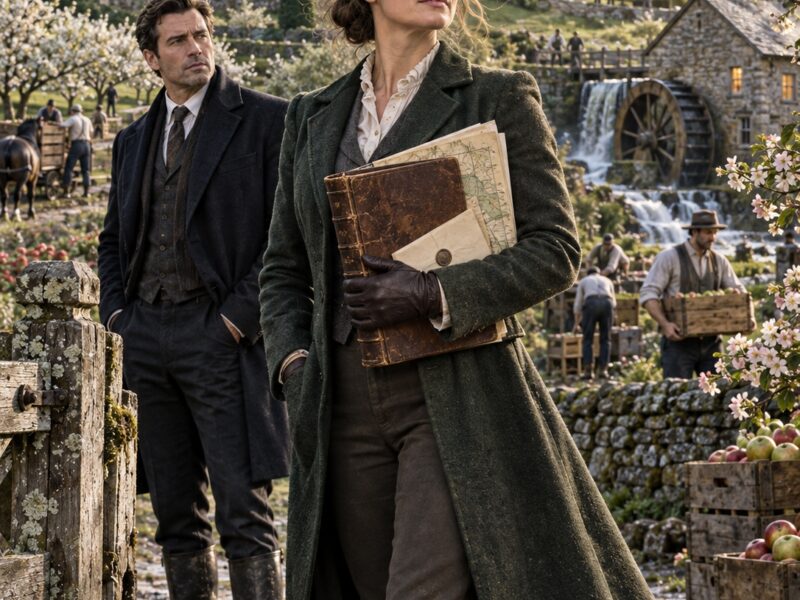
The inspectors came the following April, when the orchards were in bloom and the mill race ran full from spring rain.
I did not prepare a performance.
I showed them repaired cottages, drainage works, tenant accounts, mill ledgers, dairy records, orchard contracts, fields that still required improvement, and the southern lowland that had not yet decided whether it wanted to be useful or expensive.
When one inspector remarked that most owners hid their weakest acreage during such visits, I answered, “Weak land does not become stronger because it is omitted from a report.”
Elias looked so pleased he nearly forgot to look stern.
The inspection lasted two days.
Questions were asked of tenants without me present. Accounts were checked against receipts. Repairs were examined for durability, not appearance. Thomas demonstrated the mill machinery and explained how neighboring farms used it. Nothing about Ashborne was perfect.
That mattered to me.
I had never wanted perfection.
I wanted an estate capable of sustaining itself without disguising failure as tradition.
The result arrived three weeks later in an envelope bearing the seal of the County Agricultural Society.
I opened it at the dining room table where two years earlier I had first celebrated a modest monthly surplus.
Ashborne Ridge had received the highest distinction for estate management, citing productivity, restoration, tenant conditions, diversified income, and long-term improvements undertaken without reckless borrowing.
Elias read the letter twice.
Then removed his spectacles, polished them unnecessarily, and said, “Well.”
I smiled.
“A stirring speech.”
By evening, the news had traveled farther than the original notice. County papers described Ashborne as one of the best-managed estates in the district. I disliked the exaggeration but accepted the judgment beneath it.
The work had been seen accurately enough.
Duke arrived the following afternoon without ceremony.
He found me near the southern orchard, where workers were checking young grafts against late frost. Blossoms moved lightly overhead, pale against the blue-gray sky. For a while, neither of us mentioned the award.
Then he said, “The county appears to have reached the conclusion you began with.”
“Which conclusion?”
“That Ashborne was worth the trouble.”
“I was not certain of that when I arrived.”
“You behaved as though you were.”
“No,” I said. “I behaved as though uncertainty was not a reason to neglect it.”
He absorbed that.
It was one of the things he had learned to do around me.
“They are calling it the finest estate in the county.”
“They are being generous.”
“You dislike praise almost as much as you dislike bad accounting.”
“Praise is less useful.”
We walked between the rows in silence. The mill wheel turned below us, steady and low. Beyond it, the manor’s eastern roof had been repaired, its windows open to spring air.
“I have been thinking about the day I gave you this place,” Duke said.
“That seems dangerous.”
“It was easier then to believe I was solving a practical problem.”
I waited.
“I thought I understood what would make your life simpler,” he continued. “I did not understand that I had never seriously asked what kind of life you intended to make.”
“You were not required to understand me.”
“No,” he said. “But I was required not to mistake assumption for understanding.”
He stopped near the old stone wall overlooking the millstream.
“I was wrong about Ashborne,” he said. “And about you.”
I turned toward him.
There was no request hidden in the admission. No demand for absolution. No attempt to fold my achievement back into his development.
That made it easier to receive.
“You were,” I said.
Duke laughed softly.
“I should have expected nothing gentler.”
“You have improved your expectations.”
His smile remained a moment longer than usual.
Then he looked toward the manor.
“What will you do now?”
I glanced at the orchard, the mill, the cottages, the fields still arguing with drainage, the ledger waiting on my desk, the tenants who would arrive next week with new troubles, new requests, new evidence.
“Work,” I said.
He nodded.
That, finally, was a language we both understood.
Duke returned to Hartwell House that evening.
I remained at Ashborne, where leases still required review, orchard trees still required pruning, and the next season would bring problems no award could solve.
On the mantel in my study, the county certificate rested beside the first ledger I had opened on the night of my arrival. One represented recognition. The other represented reality.
I valued the ledger more.
Not because the award meant nothing.
Because the ledger had known the truth before anyone praised it.
Ashborne Ridge had become the county’s finest estate, not because a powerful man had given it away, not because society finally noticed, and not because exile had turned into some romantic blessing.
It became valuable because I refused to confuse being overlooked with being without value.
That was the lesson the land taught me.
Dead branches are not always dead.
A broken mill is not always useless.
A neglected field is not always poor.
And a woman quietly handed someone else’s problem may discover, if she is willing to read the accounts, walk the mud, ask the questions, and withstand the insult hidden inside the gift, that she has not been discarded at all.
She has been handed proof.
That evening, after the workers had gone and the last pale light left the orchard, I walked alone to the old mill. Water struck the wheel in steady rhythm. The sound moved through the dusk like a heartbeat.
I thought of Duke’s library.
The rain.
The leather folder.
His careful voice telling me the transfer would give me independence.
He had not been entirely wrong.
He had only failed to understand that independence is not given.
It is taken seriously.
I stood there until the lamps in the manor windows glowed behind me. Then I turned back toward the house that no longer felt like exile.
It felt like mine.









